Archive for the ‘General’ Category

InCROIable…Dorian McIlroy reports

28 February, 2011

The penalty for winning a competition here on ViroBlogy is writing an article for ViroBlogy – 2nd prize would, of course be writing TWO articles.  Mind you, as two-time winner, regular commenter Dorian McIlroy gets to do just that.  He has volunteered to report daily from CROI 2011, the 18th Conference on Retroviruses and Opportunistic Infections in Boston, that’s on right now.  Thanks Dr D!

“So here I am in the snow in Boston at the 18th CROI. The opening talk is from Bryan Cullen (Duke, USA) on viruses and micro RNA, known as miRNA. As readers may know, there are three main functions types of RNA inside cells. Messenger RNA (mRNA) is the intermediate between a sequence of DNA and the protein that the DNA sequence encodes. It carries the message, so to speak, telling the protein synthesis machinery what protein to make.  The two other main types of RNA (tRNA and rRNA) are involved in the translation of the mRNA message into protein.

However, in addition to these common or garden types of RNA, cells also produce very small RNA molecules, that do not code for proteins, and are not directly involved in protein synthesis. So what are they for? Well, we will have to wait till Prof. Cullen tells us. Right now, John Coffin (Tufts, USA) is giving the opening talk. There are about 4000 delegates, all lined up in a big auditorium. As you can imagine, the speaker is a little tiny blob at a lectern way, way up at the front. Fortunately, the
speaker’s head and torso is projected on a big screen at the same time.  The films of all the talks are available on the CROI website (www.retroconference.org), which kind of defeats the purpose of  my writing these blog posts I guess…..[NO!  Ed]

But  on with Bryan Cullen. miRNAs are expressed in all multicellular organisms. There are over 1000 of these miRNAs in humans, and their role is to regulate mRNAs – so in fact they control gene expression. In plants and insects, some miRNAs have anti-viral functions, but this is not the case in mammals. In fact, at least one human virus (HCV) uses a host cell miRNA for its own replication.

In addition, some DNA viruses – mostly herpesviruses – also code for miRNAs. One of these is Epstein-Barr Virus (EBV) which is associated with several cancers. When EBV infects B-lymphocytes from the blood, these cells grow in an uncontrolled way (that is, they become pre-cancerous).   It turns out that only one of the EBV miRNAs (BHRF1-2 if you really want
to know) is involved in turning normal B-cells into pre-cancerous cells.  Dr Cullen then goes on to explain an interesting technique called “PAR-CLIP” that allows you to identify the target genes of a particular miRNA, and gives us a list of the cellular genes targeted by  BHRF1-2.

Take-home message – some oncogenic DNA viruses use miRNAs to manipulate host cell biology, and this is involved in their ability to induce cancer.

This is followed by a harrowing story from Fred Hersch, of his own brush with death due to HIV/AIDS. Fortunately, he survived, due to the extraordinary efforts of the ICU at St Vincent’s hospital in New York, and is now playing piano for us all.

After the musical interlude, Anthony Harries (now at the International Union against TB and kung diseases in Paris) gives an excellent talk (hey – not that the first talk wasn’t excellent too) describing his time as head of HIV/AIDS health care in Malawi. He was there when HIV seroprevalence rose from less than 1% to about 15% in the adult population. For several years in the 1990s and the beginning of the century, no treatment was available to stop people from dying. During that
period, 90% of patients diagnosed with stage 4 AIDS were dead one year later. That began to change, he says, with the world AIDS conference in Durban in 2000, where international efforts to make antiretroviral therapy (ART) available in sub-Saharan Africa began to take shape. He then goes on to explain how ART is implemented in Malawi – and shows how coffin sales in one district have plummeted over the last few years. This is the real clinical success of making ART available – the decade-long wave of deaths has abated.

That was the good news. Now for the bad news. Transmission rates are still high – with an estimated 70 000 new HIV infections in Malawi each year. So the HIV problem has certainly not gone away, it has just been contained.  Secondly, current guidelines for starting ART depend on a HIV+ individual’s CD4+ T-cell count, and if you don’t have the means to determine the CD4 count (of the 400 ART centres in Malawi, only about 50 have the machines to measure CD4 T-cell counts), then you can’t start treating all the people who need it. He ends by making a convincing case for, at the very least, giving ART to all pregnant seropositive women in Malawi (and I guess, in the whole of Africa), with a clear recommendation that they continue on medication indefinitely. The objectives of this approach would be to keep mothers alive and healthy while their children
are growing up, and to ensure that the next generation of children are born HIV-free.

And that’s it for the first day.”

Dorian
Rinderpest: gone, but not forgotten – yet.

5 November, 2010

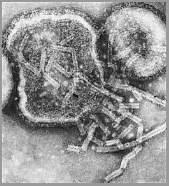
Rinderpest virus infects cattle, buffalo and several species of antelope among other animals: it is a member of the genus Morbillivirus,family Paramyxoviridae, and is related to measles and mumps viruses in humans, distemper virus in dogs, and a variety of relatively newly-described viruses in marine mammals.  It also almost certainly gave rise to measles virus sometime around the 11th-12th centuries CE, as an originally zoonotic infection – sourced in domestic animals – took root in humans and began to be passed around (see MicrobiologyBytes).

Electron micrograph of a morbillivirus particle showing the membrane, matrix, and inner helical nucleocapsid. Image by LM Stannard

The ICTVdB generic description of morbilliviruses is as follows:

Virions consist of an envelope and a nucleocapsid. Virus capsid is enveloped. Virions are spherical to pleomorphic; filamentous and other forms are common. Virions measure (60-)150-250(-300) nm in diameter; 1000-10000 nm in length. Surface projections are distinctive spikes of haemagglutinin (H) and fusion (F) glycoproteins covering evenly the surface. Surface projections are 9-15 nm long; spaced 7-10 nm apart. Capsid/nucleocapsid is elongated with helical symmetry. The nucleocapsid is filamentous with a length of 600-800(-1000) nm and a width of 18 nm. Pitch of helix is 5.5 nm.

The Mr of the genome constitutes 0.5% of the virion by weight. The genome is not segmented and contains a single molecule of linear negative-sense, single-stranded RNA. Virions may also contain occasionally a positive sense single-stranded copy of the genome (thus, partial self-annealing of extracted RNA may occur). The complete genome is 15200-15900 nucleotides long.

Wikipedia describes rinderpest virus as “…an infectious viral disease of cattle, domestic buffalo, and some species of wildlife. The disease was characterized by fever, oral erosions, diarrhea, lymphoid necrosis, and high mortality.”   And: “The term Rinderpest is taken from German, and means cattle-plague.”

The Food and Agriculture Organisation (FAO) has a Division of Animal Production and Health: their web site details a campaign known as the Global Rinderpest Eradication Programme (GREP), which has been going since 1994.

With very little fanfare, I might point out: as a practicing teaching virologist, I was totally unaware of it.  Anyway: they state that:

Rinderpest has been a dreaded cattle disease for millennia, causing massive losses to livestock and wildlife on three continents. This deadly cattle plague triggered several famines and caused the loss of draught animal power in agricultural communities in the 18th, 19th and 20th centuries.

…which is a little of an understatement: Wikipedia tells us that

“Cattle plagues recurred throughout history, often accompanying wars and military campaigns. They hit Europe especially hard in the 18th century, with three long pandemics which, although varying in intensity and duration from region to region, took place in the periods of 1709–1720, 1742–1760, and 1768–1786. There was a major outbreak covering the whole of Britain in 1865/66.”

“Later in history, an outbreak in the 1890s killed 80 to 90 percent of all cattle in Southern Africa, as well as in the Horn of Africa [and resulted in the deaths of many thousands of people who depended on them]. Sir Arnold Theiler was instrumental in developing a vaccine that curbed the epidemic. [my insert / emphasis] More recently, a rinderpest outbreak that raged across much of Africa in 1982–1984 cost at least an estimated US$500 million in stock losses”.

When commenting on the significance of the achievement, John Anderson, the head of the FAO, described GREP’s announcement that Rinderpest had been eradicated as:

The biggest achievement of veterinary history“.

The 19th century southern African outbreak was devastating enough that people still remember it as a legendary time of hardship – and then there was the 1980s outbreak.  Another South African interest in rinderpest is that the legendary Sir Arnold Theiler had a hand in making a vaccine: he did this around the turn of the 20th century, by simultaneously injecting animals with blood from an infected animal and antiserum from a recovered animal: this protected animals for long enough to allow their immune systems to respond to the virus – but was rather risky, even though it was used for several decades.

In the 1920s J. T. Edwards in what is now the Indian Veterinary Research Institute serially passaged the virus in goats: after 600 passages it no longer caused disease, but elicited lifelong immunity. However, it could still cause disease in immunosuppressed cattle.

In 1962, Walter Plowright and R.D. Ferris used tissue culture to develop a live-attenuated vaccine grown in calf kidney cells.  Virus that had been passaged 90 times conferred immunity without disease even in immunosuppressed cattle, was stable, and did not spread between animals.  This vaccine was the one that allowed the prospect of eradicating the virus, and earned Plowright a World Food Prize in 1999.

But a memory may be all rinderpest is any more – as the GREP site says the following:

“The last known rinderpest outbreak in the world was reported in 2001 (Kenya). Based on the above-mentioned investigations, FAO is confident that all rinderpest virus lineages will prove to be extinct.”

This was also announced via the BBC on the 14th October, 2010.  They said:

The eradication of the virus has been described as the biggest achievement in veterinary history and one which will save the lives and livelihoods of millions of the poorest people in the world.

And the significant bit:

If confirmed, rinderpest would become only the second viral disease – after smallpox – to have been eliminated by humans.

Let us reiterate that: only the second viral disease, ever, to have been eliminated.  And how was this possible?  Unlike smallpox, which has only humans as a natural and reservoir host (although it almost certainly also got into us from animals), rinderpest attacked a wider range of hosts.  However, it seemed mainly to have a reservoir in domesticated cattle, and it did not have an arthropod vector; moreover, the vaccine was cheap and effective.

This is momentous news: we may well have succeeded in ridding the planet of what has been a very significant disease of livestock and of wild animals, which has caused untold agricultural loss throughout recorded history, and which has resulted in enormous human hardship as well.  We have also made a natural species go extinct – but it won’t be missed.  Like smallpox, it was completely sequenced some time ago, so we could theoretically recreate it if we ever needed to.

From GREP:

Though the effort to eradicate rinderpest has encountered many obstacles over the past several decades, the disease remains undetected in the field since 2001. As of mid 2010, FAO is confident that the rinderpest virus has been eliminated from Europe, Asia, Middle East, Arabian Peninsula, and Africa. This has been a remarkable achievement for veterinary science, evidence of the commitment of numerous countries, and a victory for the international community.

Amen.  However – it’s not quite time to celebrate as the certification is only planned for 2011.

And now for mumps, and measles too.

They DO get everywhere, don’t they?

21 October, 2010

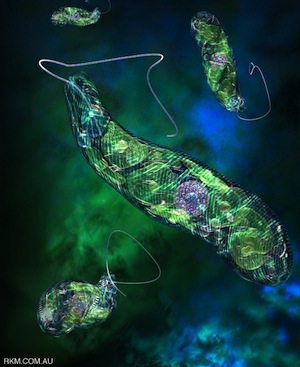
Euglena cells in pondwater. Image copyright Russell Kightley, http://www.rkm.com.au

Thanks to AJ Cann’s MicrobiologyBytes, and The Scientist:

Decoding the Genome of Chlorella Microalgae, a Promising Genus for Biofuel Production

ScienceDaily (Oct. 13, 2010)
“…the analysis of the Chlorella genome has also revealed numerous genes governing the synthesis of flagellar proteins, which suggests that this species could have a sexual cycle that has gone unnoticed until now. Last but not least, the ability of Chlorella algae to synthesize chitin could have been inherited from a virus (itself endowed with chitinase activity) having secured exclusive use of its host against other viruses incapable of piercing through its protective shell. This “monopoly” scenario illustrates a new mode of co-evolution between viruses and their hosts.”

Gotta love ’em – because maybe we and many other things couldn’t be here without ’em.  This builds on previous evidence that retroviruses probably helped in the evolution of placental mammals, that much of the planet’s oxygen may be due to viruses, and that viruses often aid hosts in developing resistance against them.

However, the parent paper is always preferable to a commentary – and I am indebted to Guillaume Blanc – the corresponding author – for a copy of the paper; our otherwise reliable library service fell down on access to the Plant Cell!  This allows me to quote the following (bold text my emphases):

The Chlorella variabilis NC64A Genome Reveals Adaptation to Photosymbiosis, Coevolution with Viruses, and Cryptic Sex

Guillaume Blanc et al., Plant Cell Advance Online Publication
Published on September 17, 2010; 10.1105/tpc.110.076406

With 233 predicted enzymes involved in carbohydrate metabolism, NC64A appears much better equipped for synthesizing and modifying polysaccharides than the other sequenced chlorophytes that have between 92 (O. tauri) and 168 (C. reinhardtii) of such predicted enzymes…. However, we did not find homologs of the Arabidopsis proteins involved in the synthesis of cellulose (cellulose synthase CesA) or hemicellulose (hemicellulose syn- thase CLS), the major components of the primary cell wall of land plants. Instead, experimental evidence suggests that the cell wall of Chlorella species, including NC64A, contain glucosamine polymers such as chitin and chitosan….

Chitin is a natural component of fungal cell walls and of the exoskeleton of arthropods but is not normally present in green algae. The origin of chitin and its derivatives in the Chlorella genus has long been an enigma. Except for the plant-type chitinase gene, which is found in land plants (but not in chlorophytes apart from Chlorella), the four gene classes involved in forming and remodeling chitin cell walls (i.e., chitin synthase, chitin deacetylase, chitinase, and chitosanase) are absent in all the other fully sequenced Viridiplantae species. By contrast, homologs for each of these families exist in genomes of Chlorella viruses. The viral genes are presumably involved in degradation of the Chlorella cell wall (chitinase and chitosanase)… and production of chitinous fibers on the external surface of virus-infected cells (chitin synthase and chitin deacetylase) …. Phylogenetic analysis suggests that the Chlorella ancestor exchanged the bacterial-type chitinase and chitin-deacetylase genes with the chloroviruses.

And as I have often said (well, mostly to myself, but also in MicrobiologyBytes) – “Profound Insight (No. 4): in order to understand viruses, we should all be working on seawater…. That is where the diversity is, after all; that is where the gene pool that gave rise to all viruses came from originally – and who knows what else is being cooked up down there?”.

Amen.  But let’s add ponds to that.

And so it’s over – is it??

26 August, 2010

The WHO recently declared the H1N1 “swine flu” pandemic to be over – on August 10th, 2010.   From the AFP article:

“The world is no longer in phase six of the pandemic alert. We are now moving into the post-pandemic period,” WHO Director General Margaret Chan said

….

Swine flu has killed more than 18,449 people and affected some 214 countries and territories since it was uncovered in Mexico and the United States in April 2009, according to WHO data.

The new virus spread swiftly worldwide despite drastic measures including a week long shutdown in Mexico, prompting the UN health agency to scale up its alerts and declare a pandemic on June 11, 2009, banishing kisses and frowning on handshakes.

Fears about the impact of swine flu on unprotected populations and a harmful mutation sparked a rush for hundreds of millions of dollars worth of specially-developed vaccines and a flurry of public health precautions.

However, those concerns dwindled in late 2009 to be replaced by recriminations in Western nations about the cost of unused vaccines and what some European critics regarded as an unjustified scare.

Amazing, that: the world authorities get it right, help mitigate what could have been a nasty pandemic – then get it in the neck for being alarmist, and helping drug companies make a profit.

Further from the article:

After petering out in Europe and the United States before their winter flu season was over, in recent months swine flu has affected parts of South Asia and “limited areas” of tropical South and Central America, as well as Africa for their second season.

But unlike 2009, when A(H1N1) ousted most other types of flu viruses around the world, known seasonal viruses now are prevalent and even dominant in countries such as South Africa.

Yeeessssss…and that’s all very well, because do you know what happened in South Africa?  They’ve only just released H1N1 vaccine stockpiled for health workers for the duration of the Soccer World Cup, is what – late in the flu season, and almost too late to do any good.  Meaning exactly what was predicted at the beginning of the pandemic, came to pass: there was not enough vaccine for developing countries, and even a year after its emergence, it was still not being distributed evenly.

Not a very good practice run for the Big One, if you ask me: still not enough vaccine being made quickly enough; vaccine not being distributed to at-risk countries; too much fussing over the welcome news that it was not as bad as it could have been.

I’m going to put my faith in plants….

Venter can do WHAT for influenza??

5 June, 2010

I have kept out of commenting on what J Craig Venter and others have done recently, given that many others have done so, and done so well – however, there is recurring mention of what “this technology” could do for influenza vaccines specifically, which has both puzzled and intrigued me, given a distinct lack of obviousness.

So I will comment, if only to clarify this issue for me and anyone else who cares.

To give some background, the New Scientist issue of the 29th of May has a guest editorial by J Craig Venter, Clyde Hutchison and Hamilton Smith, where they discuss some of the implications of their having made a totally synthetic and viable Mycoplasma mycoides genome (see also Science, DOI: 10.1126/science.1190719).

So what, exactly, is it they did?  OK, so they spent US$40 million or so constructing a genome, in segments, from sequence information housed in an electronic database, via chemical synthesis of long stretches of DNA.  They then assembled these segments into a singular genome in yeast, and then inserted this into cells of the closely-related Mycoplasma capricolum which had been stripped of their genomes – and incidentally, rendered unable to destroy the incoming genome as “foreign”, by a process which is now proprietary.  These cells then expressed the new DNA, which allowed them to multiply, and to take on all of the characteristics of the synthetic M mycoides, given that all of the original cell constituents from the original bug (proteins, mRNA, membranes, etc) would be turned over in time, and become those specified by the new genomes.

This is a big deal – a really, really big deal – but at the same time, they themselves recognise it is an incremental step in a long series of steps that started with Arthur Kornberg’s lab making the first complete synthetic and viable genome of a virus (phiX174) by in vitro synthesis from virion DNA, polymerase and nucleotides.  In fact they modestly point out that this is not even the first  complete cell genome that has been synthesised; it is the largest, however, and the one that worked.  They were not so modest in missing out a few other landmarks before their own complete synthesis of phiX174 in 2003, however: for example, the first synthesis of a functional plasmid, and the first generation of a RNA virus genome from a cDNA copy, and the complete synthesis of an infectious poliovirus genome, are not mentioned.

So what is it they did not do?

Well, they did not “create life”, however much even relatively respectable publications might claim they did: life is a lot more complex than chemicals, and people have “rebooted” cells before with exogenous genomes; what they did is not really qualitatively different to infecting a cell with a synthetic virus.

They have also not done anything that is immediately useful: their new organism differs from the original only in having a few genes missing, and a long literary message and ownership-encoding “watermark” inserted.

More positively, they have also most emphatically not opened the floodgates for bioterrorists to mail order complete poxvirus or anthrax genomes: as I have noted here previously,

“…There are more than enough nasty agents out there that are relatively easy to obtain, and do simple kitchen-based microbiology with, to keep entire cave complexes and Montana libertarian enclaves busy for years, without resorting to complicated molecular biology”.

Or spending $40 million dollars.  And I will say it again….

So aside from the details, what have they done?  In the NS editorial, Venter et al. say this:

“We now have the means to design and build a cell that will define the minimal set of instructions necessary for life, and to begin the design of cells with commercial potential, such as fuel production from carbon dioxide. We can assemble genome-sized stretches of DNA that can also be used to mix and match natural and synthetic pieces to make genomes with new capabilities.

Synthesising DNA in this way is still expensive, but we expect the cost to fall dramatically. This may make the complete synthesis of genomes competitive with the alteration of natural genomes to add new capabilities to bacterial cells. It should also be practical to synthesise simple eukaryotes, such as yeast, to which it is already possible to add extra chromosomes. The construction of large pieces of synthetic DNA and their introduction into a receptive cytoplasm is no longer a barrier. The limits to progress in synthetic biology are now set by our ability to design genomes with particular properties.”

Right: so what they have done is set the benchmark for what is possible – rather than what should be done.

Because it is a lot easier to do things such as they propose by other ways – as is pointed out in the companion article to the NS editorial.  For that matter, I am sure one could more easily end up with a completely synthetic and much larger cellular genome by incrementally replacing genome chunks by homologous recombination or transposon-mediated insertion / Cre-Lox deletion, and have it cost far less and be less subject to error, than by synthesising it de novo.

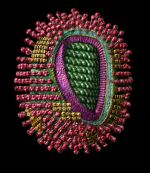
Influenza virus - Copyright Russell Kightley Media

And how does any of this relate to influenza vaccines?

The only comment I can find in the NS article that sheds light on this is the comment:

“As soon as next year, the flu vaccine you get could be made synthetically,” he [Venter] says.

Except that this has been possible for years already, after the poliovirus synthesis…?  I think it was rather a badly-chosen example rather than any actual plan; however, there is not a lot of point in making a synthetic influenza virus genome, given that the attenuated originals already work quite well as vaccines – and we don’t yet understand how to specify avirulence in influenza, so any synthetic version would necessarily be a copy of an extant version.

So hype rather than fact for ‘flu; promise rather than substance for carbon dioxide sequestration and biofuels – but still the coolest thing since sequencing your own dog…B-)

dsRNA: new-new therapy, or…?

1 April, 2010

We plant virologists – or almost-former plant virologists, in my case – have a slightly cynical attitude towards the all-new, all-encompassing craze among cell biologists and mainstream virologists that is siRNA, and all its purported applications.

This is because the phenomenon of RNA silencing was first discovered in the context of unexpected resistance in transgenic plants to the homologous virus, mediated by transgenes that either produced no measurable amount of protein, or mRNAs that were not translatable.  The phenomenon was known as “post-transcriptional gene silencing” back then, among plant molecular biologists and virologists – until, that is, it was taken up by the mammalian and insect cell biology folk, whereupon its origins were quickly forgotten, and the Nobels went to…well, let us just say, not to whom some folk thought they ought.

But I digress:  suffice it to say that siRNA has now been amply demonstrated to be not only the eukaryotic cell’s (and especially those of plants) adaptive nucleic acid-based immune response to virus infection, but also a widely used means of regulation of gene expression (see here).  Needless to say, its potential uses for gene and disease therapy are also multiplying daily – which is when people forget the roots of the science.   At first sight, the New Scientist issue of 23rd March – which has an excellent article on the use of siRNA-based strategies to combat insect pests – goes some way to redressing that, given that the science has found its way back to plants.  It is especially interesting that delivering siRNA-eliciting constructs in insects can be achieved by simply feeding them dsRNA of the appropriate sequence, rather than by use of chemically-altered or encapsulated material.

 However, and here’s where one can see that no-one except plant virologists reads the plant virology literature (the converse being untrue, naturally), a problem crops up when the article goes on to discuss whether or not dsRNA is safe.  In a side box in the article, this is said:

Is it safe?

Using gene silencing, or RNA interference (RNAi) to target specific pests while leaving other species unharmed sounds like an enormous step forward. But can we be sure that the key ingredient – double-stranded RNA (dsRNA) – won’t have unexpected side effects in people?

Although most RNA in cells is single-stranded, all plants and animals also produce dsRNA to regulate the activity of their own genes. “There are lots of dsRNAs in the plant and animal products that we eat every day,” says Michael Czech, a molecular biologist at the University of Massachusetts Medical School in Worcester, who is exploring ways to use RNAi to treat type II diabetes. “Those RNA molecules are rapidly chopped up by the enzymes in our gut and are non-toxic.”

There is also a second line of defence in the form of enzymes in our blood that break down dsRNA. “You could inject dsRNA into primates at moderate doses and nothing would happen, [my emphasis]” says Daniel Anderson of the David H. Koch Institute for Integrative Cancer Research at the Massachusetts Institute of Technology, who is designing drugs based on RNAi.

Ummmm…sorry, that simply isn’t true: as long ago as the early 1970s, plant and fungal virologists had hit on the idea of using antibodies specific for dsRNA to detect the molecules in extracts of hosts infected with dsRNA (and even ssRNA) viruses.  Here’s two examples of papers from then:

Detection of mycoviruses using antiserum specific for dsRNA.
Moffitt EM, Lister RM.  Virology. 1973 Mar;52(1):301-4.

Immunochemical detection of double-stranded ribonucleic acid in leaves of sugar cane infected with Fiji disease virus.
Francki RI, Jackson AO.  Virology. 1972 Apr;48(1):275-7.

And of course, using antibodies to dsRNA implies that one can raise them in the first place…which, as I recall (my career started shortly afterwards, and I read these papers), was as a consequence of raising antisera to dsRNA-containing phytoreovirus and cryptovirus virions.  It was later found that sera to synthetic ds oligoribonucleic acids also detect dsRNAs – all of which means that injection of dsRNAs is likely to elicit antibodies against them.  With who knows what corollaries…because not too many plant virologists were too worried about long-term effects in the mainly bunnies that they injected.

Of course, the route to dsRNA pesticide effects is via the insect gut – and the same New Scientist article has this to say about dosing humans thus:

“There are lots of dsRNAs in the plant and animal products that we eat every day,” says Michael Czech, a molecular biologist at the University of Massachusetts Medical School in Worcester, who is exploring ways to use RNAi to treat type II diabetes. “Those RNA molecules are rapidly chopped up by the enzymes in our gut and are non-toxic.”

Ye-es…they would say that, wouldn’t they?  And no-one knew you could make Abs to dsRNA before someone noticed phytoreovirus antiserum bound dsRNA – so it would be a very interesting exercise to assay sera from individuals or animals previously exposed to multiple rounds of dsRNA rotavirus infection, and see whether these contained dsRNA-specific Abs, wouldn’t it?  The NS article negates some of its own reassurances by saying:

So there is good reason to think sprays containing dsRNAs lethal to insects, or plants modified to produce them, will pass all the safety tests. However, if the RNA was altered in a way that allows it to get into human cells, perhaps as a result of changes intended to make it persist longer in the environment, it might cause problems. “If you modify the dsRNA – by encapsulating it or changing the RNA molecule – then you are imposing a new chemistry that could have toxic effects on humans,” Czech cautions.

Yeah – like encapsidating it like a virus does….

And it is all probably a bit of a sideshow, in that we are in fact exposed to dsRNAs in our diet all the time: especially if one eats organic, the fresh fruits and uncooked vegetables will be rife with dsRNA-containing fungal viruses; even material containing ss+RNA viruses contains significant amounts of replicative form dsRNA  (including insect material, BTW) – so a little more used as pesticide probably wouldn’t hurt.

We hope.

Gene discrimination

3 September, 2009

In the latest online issue of Nature, there is an article entitled “Keeping genes out of terrorists’ hands“, by Erika Check Hayden.  Like an article a little while ago in Nature Biotechnology, it makes the apparently quite reasonable point that

“the way that the industry screens orders for hazardous toxins and genes, such as pieces of deadly viruses and bacteria…could be crucial for global biosecurity”.

Yes.  Well.  They would say that, wouldn’t they??  “They” being anyone in the developed world who has a paranoid fantasy about bearded extremists in caves (or crew-cut extremists in leafy suburbs) gleefully unwrapping their couriered DNA and brewing up a nice little necrotising poxvirus, or an airborne Ebola, or possibly an H5N1 variant that spreads human-to-human better than the present versions.

I wrote the following reply to the article:

While “all right-thinking people” – for which, read “those easily scared by the unrealistic prospect of mail-order killer bugs” may agree that some kind of limitations are required on what synthetic DNA is sent out, and to whom…there is a baby being thrown out with the bathwater here.

My laboratory has just, despite many previously successful orders from the same company, been denied permission (or told to obtain clearance from the relevant government, which amounts to the same thing) to have a coat protein gene synthesised for a bluetongue virus (BTV) strain now found all over western Europe. Because, apparently, BTV is on the “Australia Group”‘s prohibited list of biological agents – and South Africa is not a signatory to this group, which started out for arms control but has apparently ramified somewhat.

This is so ridiculous as to beggar belief: the viruses are endemic to Africa; the world’s expert on cDNA cloning of their genomes is in South Africa; why would anyone want to build a BTV from synthetic DNA when they could go out and sample a sheep for some REAL virus??

A closer look at the list throws up all sorts of interesting things. It is prohibited, for example, to order genes for H5N1 influenza – although curiously, not pandemic H1N1 – and dengue viruses. This rather puts a spoke in the wheels of anyone who might want to…oh, let’s say…MAKE A VACCINE to those agents, in any country not signatory to the agreement – where the viruses happen to be endemic!!

The ways of limiting spread of genes that are being proposed are first, unnecessary; second – discriminatory in the extreme.

And may just provide a good deal of business for firms operating in developing countries who otherwise would have been ignored because of quality issues. Imagine that: a lab in Pakistan, or South Africa, or Indonesia, using home-made genes to make a vaccine.

Because that is a LOT more likely than using them to make a pathogen.

I know of a passage written some years ago in a reputable science magazine which described how easy it would be to smuggle naturally-occurring foot and mouth disease virus worldwide – with no science involved whatever.  I have enough purified material of a particular plant virus in my cold room right now to kill all the wheat grown in my country – given some carborundum and a crop sprayer.

There are enough people on this planet infected with pandemic H1N1 who live in close enough proximity to birds infected with H5N1 to make coinfection of one or the other with both a certainty – the only uncertainty remaining being what will come of it.  For that matter, where DID the H1N1 come from?  Where did Lujo virus come from?

We DON’T NEED TO MAKE VIRUSES from mail-order DNA – and only Craig Venter et al. could even dream of making whole microbes.  There are more than enough nasty agents out there that are relatively easy to obtain, and do simple kitchen-based microbiology with, to keep entire cave complexes and Montana libertarian enclaves busy for years, without resorting to complicated molecular biology.

So DO let’s keep things in perspective, shall we??  And let reputable labs doing reputable work order the materials they need to work with.

It’s Not Going Awaaa-ay, contd.

28 May, 2009

From ProMED Mail, this morning:


To summarize the current situation, as of 6:00 AM GMT on 26 May 2009 a total of 12 954 cases and 92 deaths of influenza A (H1N1) infection have been officially reported to WHO from 46 countries, up from 12 515 confirmed cases and 91 deaths from 46 countries on 23 May 2009.

According to a later PAHO update (from 18:00 GMT-4) a total of 12 536 confirmed cases and 95 deaths are attributable to the novel influenza A (H1N1) virus infection in 15 countries in the Americas region. There is mention of a case in Chile with a history of travel to the Dominican Republic. According to newswires today (26 May 2009) and earlier (see prior ProMED-mail posts), there have been several cases in other countries with a history of travel to the Dominican Republic, even though the Dominican Republic has not officially confirmed any cases of influenza A (H1N1) as yet.

According to newswires, Singapore has confirmed its 1st case and New York City has confirmed 2 additional deaths attributable to influenza A (H1N1) infection — both in individuals with history of preexisting diseases.

For a map of reported confirmed cases, worldwide, as of 06:00 GMT 26 May 2009, see here.

Mod.MPP


So: with >10x the number of confirmed cases than there were suspected cases in Mexico at the start of the outbreak, we have 92 deaths in ~13 000 cases.  This means the case fatality rate is 0.7% – compared to the accepted figure of 0.2% for normal flu.  Not much different to the previous figure I calculated just 9 days ago – and it’s still spreading.  4000 more cases in that period.

We’re in for a long winter, here in the southern hemisphere…and us without a vaccine.  Ah, well.

Mimivirus unveiled

22 May, 2009

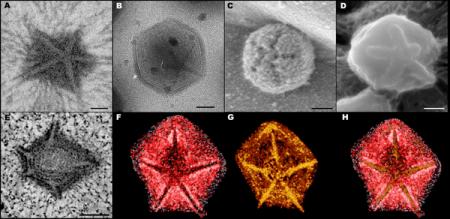
Alan Cann blogged on May 13th 2008 on mimivirus structure, in “Mimivirus and the Stargate“, following publication of a PLoS Biology paper on “Distinct DNA Exit and Packaging Portals in the Virus Acanthamoeba polyphaga mimivirus by Abraham Minsky’s group at the Weizman Institute in Israel.  This paper has some stunning EM images and cryoEM reconstructions, which prompt their summary statement:

“…we identified a large tunnel in the Mimivirus capsid that is formed shortly after infection, following a large-scale opening of the capsid [which they term the “stargate”]. The tunnel allows the whole viral genome to exit in a rapid, one-step process. DNA encapsidation is mediated by a transient aperture in the capsid that, we suggest, may promote concomitant entry of multiple segments of the viral DNA molecule.”

Given that PLoS Biology has an Open Access policy which  “…allow[s] anyone to download, reuse, reprint, modify, distribute, and/or copy articles in PLoS journals, so long as the original authors and source are cited”,  I HAVE to share these pictures with you.


Mimivirus Stargate

Mimivirus Stargate

(A) TEM image of cryo-fixed sectioned and stained extracellular Mimivirus particles revealing a star-shaped structure at a unique vertex.
(B) Cryo-TEM image of a whole vitrified fiber-less Mimivirus.
(C) SEM image of the star-shaped structure in a mature extracellular Mimivirus particle.
(D) Cryo-SEM of an immature, fiber-less particle.
(E) Tomographic slice of a mature intracellular Mimivirus particle captured at a late (12 h post infection) infection stage.
(F and G) Volume reconstruction of the particle shown in (E), revealing the presence of an outer (red) and inner (orange) capsid shells. The star-shaped structure is present in both shells but adopts partially open (dark, star-like region), and completely sealed configurations in the outer and inner shells, respectively.
(H) Superposition of the two shells in (F) and (G).
Scale bars, 100 nm in (A, B, D, and E), and 200 nm in (C).

Schematic Representation of a Mimivirus Particle at Its Final Uncoating Stage

Zauberman N, Mutsafi Y, Ben Halevy D, Shimoni E, Klein E, et al. (2008) Distinct DNA exit and packaging portals in the virus PLoS Biol 6(5): e114.   doi:10.1371/journal.pbio.0060114


Schematic Representation of a Mimivirus Particle at Its Final Uncoating Stage

Schematic Representation of a Mimivirus Particle at Its Final Uncoating Stage


The capsid (red) is opened at the stargate, allowing for fusion of the viral and phagosome membranes (light and dark blue, respectively), thus forming a star-shaped membrane conduit.

Zauberman N, Mutsafi Y, Ben Halevy D, Shimoni E, Klein E, et al. (2008) Distinct DNA exit and packaging portals in the virus PLoS Biol 6(5): e114.   doi:10.1371/journal.pbio.0060114


 I commented at the time of Alan’s blog that:

“It is becoming apparent to me – especially now as I do a 10-year revision of my Web teaching material – that there is a hitherto unsuspected level of complexity in the way big viruses get their genomes into cells – and back out into virions. Phycodnaviruses may emulate phages in dissolving their way through cell walls AND injecting DNA; now mimiviruses have special mechanisms for both loading virions and getting their DNA out.

Watch this space: a major growth area in structural biology and virology.”

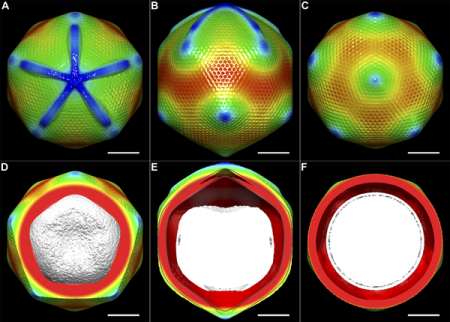
And, of course, it has come to pass: Michael Rossmann’s group at Purdue University and their collaborators have just published a paper entitled “Structural Studies of the Giant Mimivirus” , also in PLoS Biology, in which they explore in greater detail aspects of the structure, particularly as this is related to getting DNA out of the particles.

Their paper has the most stunning images and reconstructions, including images which show that the “starfish” shaped portal seems to be detachable – and that the unique stargate-associated 5-fold rotational axis of symmetry also has associated with it a depression in the inner nucleocapsid, which is undoubtedly associated with delivery of the DNA within.

Stargate

(A–C) Surface-shaded rendering of cryoEM reconstruction of untreated Mimivirus. (A) Looking down the starfish-shaped feature associated vertex, (B) looking from one side, and (C) looking from the opposite side of the “starfish”-associated vertex.

(D) The “starfish”-associated vertex was removed to show the internal nucleocapsid with its concave surface facing the special vertex.

(E) Central slice of the reconstruction looking from the side of the particle showing the concave face of the nucleocapsid and the low density space beneath the “starfish”-associated vertex. A perfectly icosahedral particle is outlined in gray to show the extension of the unique vertex.

(F) Central slice of the reconstruction looking along the 5-fold axis from the starfish-shaped feature showing the enveloped nucleocapsid surrounded by a lower density space. The coloring is based on radial distance from the center of the virus. Gray is from 0 to 1,800 Å, red from 1,800 to 2,100 Å, and rainbow coloring from red to blue between 2,100 and 2,500 Å.

The scale bars in all panels represent 1,000 Å.

doi:10.1371/journal.pbio.1000092.g005

This latest paper makes summary comments as follows:

“The enveloped genome within the larger viral capsid, perhaps supported by fibers …, has some similarity to eukaryotic cells. In contrast, the external peptidoglycan component mimics bacterial cell walls …. In addition, the existence of a unique vertex in Mimivirus, possibly for genome delivery …, is reminiscent of tailed bacteriophages. These observations are consistent with other results …, implying that Mimiviruses and some other large icosahedral dsDNA viruses have gathered genes from eukaryotic, prokaryotic, as well as archaeal origins [my emphasis].

The three-dimensional cryoEM reconstruction reported here, which was made possible in part by relaxing the icosahedral symmetry, is of a virus whose volume is an order of magnitude larger than has previously been reported. Thus, the detection of a unique vertex may have been missed in other structural studies in which strict icosahedral symmetry had been imposed [my emphasis].”

There are two important points here – one of which may be wrong.

The first is that mimiviruses et alia “…have gathered genes from eukaryotic, prokaryotic, as well as archaeal origins”: given the evolutionary speculations published by Susan-Monti et al. (Virus Research 117 (2006) 145–155), who say:

“Our current hypothesis is that DNA viruses are of deep evolutionary origin close to the origin of the other domains of life.”,

and point out the virus does not seem to have exchanged much DNA (=horizontal gene transfer) with its host despite a presumably ancient association.  This builds on Suhre et al. (PNAS 102 : 14689-14693, 2005), who say:

“Our bioinformatics and comparative genomics study revealed a unique feature of Mimivirus among the eukaryotic domain [sic]: the presence of a highly conserved AAAATTGA motif in the immediate 5′ upstream region of 50% of its protein-encoding genes. By analogy with the known promoter structures of unicellular eukaryotes, amoebal organisms in particular, we propose that this motif corresponds to a TATA box-like core promoter element. This element, and its conservation, appears to be specific of the Mimivirus lineage and might correspond to an ancestral promoter structure predating the radiation of the eukaryotic kingdoms ….

Mimivirus genes exhibiting this type of promoter might be ancestral as well. [my emphasis].”

Thus, it is possibly more likely that eukaryotes and possibly prokaryotes have garnered genes from mimi- and other viruses, rather than the converse!

The second point, given that they ARE a structural biology group, is much more likely: missing unique non-icosahedral capsid structures because of averaging could mean there is a whole world of specialised machinery in large DNA viruses which has simply been missed up till now.

I reiterate, watch this research space….  Anyone interested in mimivirus basics would also be well advised to look here.

…And the Virus Rolled On….

4 May, 2009

ProMED – that ever-so-reliable source of breaking epidemiological news – gives us this as of yesterday.

From the WHO:

Influenza A(H1N1) – update 11 — 3 May 2009 [abridged]
As of 3 May 2009, 17 countries have officially reported 898 cases of influenza A(H1N1) infection, and 20 deaths.
Mexico has reported 506 confirmed human cases of infection, including 19 deaths. The higher number of cases from Mexico in the past 48 hours reflects ongoing testing of previously collected specimens.
The United States Government has reported 226 laboratory confirmed human cases, including one death.
The following countries have reported laboratory confirmed cases with no deaths:


  • Austria (1),
  • Canada (85),
  • Colombia (1),
  • China, Hong Kong Special Administrative Region (1),
  • Costa Rica (1),
  • Denmark (1),
  • El Salvador (2),
  • France (2),
  • Germany (8),
  • Ireland (1),
  • Israel (3),
  • Netherlands (1),
  • New Zealand (4),
  • Republic of Korea (1),
  • Spain (13),
  • Switzerland (1)
  • the United Kingdom (15)

Further information on the situation will be available on the WHO [/CDC] website on a regular basis.

WHO advises no restriction of regular travel or closure of borders.

 It is considered prudent for people who are ill to delay international travel and for people developing symptoms following international travel to seek medical attention, in line with guidance from national authorities.

 
And finally, pigs with the virus: 

Canada on [2 May 2009] reported the identification of the A(H1N1) virus in a swine herd in Alberta. It is highly probable that the pigs were exposed to the virus from a Canadian farm worker recently returned from Mexico, who had exhibited flu-like symptoms and had contact with the pigs.

There is no indication of virus adaptation through transfer from human to pigs at this time.

There is no risk of infection from this virus from consumption of well-cooked pork and pork products. [my bold/red]

 From South Africa’s News24:

 
Swine flu vaccine in the works
29/04/2009 14:01  – (SA)  


 Geneva – Four laboratories are at “various stages” of working on a seed virus that is a precursor in a future vaccine against swine flu, the World Health Organisation said on Tuesday.

“There are currently four of our reference laboratories who are working with seed virus, they are at various stages of producing seed virus needed to make the vaccines,” said WHO spokesperson Gregory Hartl.

Hartl said however that the laboratories – in Britain, Canada and the United States – have not been asked to begin production in an extensive manner.

WHO on Monday recommended that the UN agency “take steps to facilitate the development” of a vaccine against the swine flu virus found in the latest outbreak that has likely caused more than 150 deaths in Mexico and has spread worldwide.

But the panel stopped short of recommending a complete shift in global vaccine production capacity, warning that it would be “prudent” to continue regular seasonal vaccine production as well.

A spokesperson in Paris for Sanofi Pasteur, a subsidiary of the French pharmaceutical maker Sanofi-Aventis, had said that the time needed to make a flu vaccine is about four months.

Scaling up production of a vaccine is another hurdle. The main approach is to grow the virus samples in time-honoured fashion in embryo chicken eggs, which is slow and clumsy.

Production capacity of flu vaccines has tripled since 2007 in response to the Sars and H5N1 scares, according to a WHO-funded study published in February.

– AFP

More from News24:

Egypt works on H5N1 chicken vaccine

In news that partially redeems the very controversial decision to cull the country’s pigs – apparently based on a need to regularise the industry, rather than panic over transmission from pigs – AFP details how Egypt plans to produce its own vaccine within two years.

A useful graphic explaining how reassortant viruses occur.

Information on how the virus may have originated:

New virus may be a hybrid

Last updated: Monday, May 04, 2009

The new virus that has killed as many as 177 people and spread globally is a hybrid that appears to have mixed with another hybrid virus containing swine, bird and human bits, US researchers reported.

Raul Rabadan and colleagues at Columbia University in New York analysed the published genetic sequences from the H1N1 virus that has brought the world to the brink of a pandemic. “The closest relatives to the virus we have found are swine viruses,” Rabadan said.

“Six segments of the virus are related to swine viruses from North America, and the other two from swine viruses isolated in Europe/Asia,” they wrote in the online journal Eurosurveillance.

The US Centres for Disease Control and Prevention said last week after discovering this virus in two US children that it had four virus types – two swine, an avian and a human component. It may be even more complex than that.

‘This strain looks like another hybrid’
Influenza viruses mutate constantly, and they also swap genetic material with one another promiscuously – especially if an animal or person is infected with two strains at once.

Rabadan’s team said this particular strain looked partly like another hybrid, or what scientists call a reassortant, virus. “The North American ancestors are related to the multiple reassortants, H1N2 and H3N2 swine viruses isolated in North America since 1998,” they wrote.

“In particular, the swine H3N2 isolates from 1998 were a triple reassortment of human, swine and avian origin.”

For those in search of graphics for their webinar/presentation on flu pandemics: from the US National Archives.

http://www.archives.gov/exhibits/influenza-epidemic/records-list.html

The Influenza Epidemic of 1918 via kwout

http://www.archives.gov/exhibits/influenza-epidemic/records-list.html

And for light relief away from deadly viruses:

“Who would win in a fight: Gandalf or Darth Vader? What about Neo versus Harry Potter?”