Archive for the ‘Evolution’ Category

dsRNA: new-new therapy, or…?

1 April, 2010

We plant virologists – or almost-former plant virologists, in my case – have a slightly cynical attitude towards the all-new, all-encompassing craze among cell biologists and mainstream virologists that is siRNA, and all its purported applications.

This is because the phenomenon of RNA silencing was first discovered in the context of unexpected resistance in transgenic plants to the homologous virus, mediated by transgenes that either produced no measurable amount of protein, or mRNAs that were not translatable.  The phenomenon was known as “post-transcriptional gene silencing” back then, among plant molecular biologists and virologists – until, that is, it was taken up by the mammalian and insect cell biology folk, whereupon its origins were quickly forgotten, and the Nobels went to…well, let us just say, not to whom some folk thought they ought.

But I digress:  suffice it to say that siRNA has now been amply demonstrated to be not only the eukaryotic cell’s (and especially those of plants) adaptive nucleic acid-based immune response to virus infection, but also a widely used means of regulation of gene expression (see here).  Needless to say, its potential uses for gene and disease therapy are also multiplying daily – which is when people forget the roots of the science.   At first sight, the New Scientist issue of 23rd March – which has an excellent article on the use of siRNA-based strategies to combat insect pests – goes some way to redressing that, given that the science has found its way back to plants.  It is especially interesting that delivering siRNA-eliciting constructs in insects can be achieved by simply feeding them dsRNA of the appropriate sequence, rather than by use of chemically-altered or encapsulated material.

 However, and here’s where one can see that no-one except plant virologists reads the plant virology literature (the converse being untrue, naturally), a problem crops up when the article goes on to discuss whether or not dsRNA is safe.  In a side box in the article, this is said:

Is it safe?

Using gene silencing, or RNA interference (RNAi) to target specific pests while leaving other species unharmed sounds like an enormous step forward. But can we be sure that the key ingredient – double-stranded RNA (dsRNA) – won’t have unexpected side effects in people?

Although most RNA in cells is single-stranded, all plants and animals also produce dsRNA to regulate the activity of their own genes. “There are lots of dsRNAs in the plant and animal products that we eat every day,” says Michael Czech, a molecular biologist at the University of Massachusetts Medical School in Worcester, who is exploring ways to use RNAi to treat type II diabetes. “Those RNA molecules are rapidly chopped up by the enzymes in our gut and are non-toxic.”

There is also a second line of defence in the form of enzymes in our blood that break down dsRNA. “You could inject dsRNA into primates at moderate doses and nothing would happen, [my emphasis]” says Daniel Anderson of the David H. Koch Institute for Integrative Cancer Research at the Massachusetts Institute of Technology, who is designing drugs based on RNAi.

Ummmm…sorry, that simply isn’t true: as long ago as the early 1970s, plant and fungal virologists had hit on the idea of using antibodies specific for dsRNA to detect the molecules in extracts of hosts infected with dsRNA (and even ssRNA) viruses.  Here’s two examples of papers from then:

Detection of mycoviruses using antiserum specific for dsRNA.
Moffitt EM, Lister RM.  Virology. 1973 Mar;52(1):301-4.

Immunochemical detection of double-stranded ribonucleic acid in leaves of sugar cane infected with Fiji disease virus.
Francki RI, Jackson AO.  Virology. 1972 Apr;48(1):275-7.

And of course, using antibodies to dsRNA implies that one can raise them in the first place…which, as I recall (my career started shortly afterwards, and I read these papers), was as a consequence of raising antisera to dsRNA-containing phytoreovirus and cryptovirus virions.  It was later found that sera to synthetic ds oligoribonucleic acids also detect dsRNAs – all of which means that injection of dsRNAs is likely to elicit antibodies against them.  With who knows what corollaries…because not too many plant virologists were too worried about long-term effects in the mainly bunnies that they injected.

Of course, the route to dsRNA pesticide effects is via the insect gut – and the same New Scientist article has this to say about dosing humans thus:

“There are lots of dsRNAs in the plant and animal products that we eat every day,” says Michael Czech, a molecular biologist at the University of Massachusetts Medical School in Worcester, who is exploring ways to use RNAi to treat type II diabetes. “Those RNA molecules are rapidly chopped up by the enzymes in our gut and are non-toxic.”

Ye-es…they would say that, wouldn’t they?  And no-one knew you could make Abs to dsRNA before someone noticed phytoreovirus antiserum bound dsRNA – so it would be a very interesting exercise to assay sera from individuals or animals previously exposed to multiple rounds of dsRNA rotavirus infection, and see whether these contained dsRNA-specific Abs, wouldn’t it?  The NS article negates some of its own reassurances by saying:

So there is good reason to think sprays containing dsRNAs lethal to insects, or plants modified to produce them, will pass all the safety tests. However, if the RNA was altered in a way that allows it to get into human cells, perhaps as a result of changes intended to make it persist longer in the environment, it might cause problems. “If you modify the dsRNA – by encapsulating it or changing the RNA molecule – then you are imposing a new chemistry that could have toxic effects on humans,” Czech cautions.

Yeah – like encapsidating it like a virus does….

And it is all probably a bit of a sideshow, in that we are in fact exposed to dsRNAs in our diet all the time: especially if one eats organic, the fresh fruits and uncooked vegetables will be rife with dsRNA-containing fungal viruses; even material containing ss+RNA viruses contains significant amounts of replicative form dsRNA  (including insect material, BTW) – so a little more used as pesticide probably wouldn’t hurt.

We hope.

Measles in Zimbabwe

22 January, 2010

As if they didn’t have enough to deal with, what with the after-effects of economic collapse and hyperinflation – oh, and there was that cholera epidemic – Zimbabwe is facing an outbreak of measles that has already killed at least 10 people.  ProMED reports that members of an “Apostolic sect” – one of many fundamentalist evangelical movements in this part of Africa – had a meeting, at which the disease was probably spread to the children. 

Paramyxovirus virion, showing envelope and helical nucleocapsid. Linda Stannard, UCT

The sect apparently does not believe in vaccination.  In the words of a prior ProMED report,

“Most of the cases were among members of religious groups that shun conventional medical treatment as a matter of adherence to their faiths.  Health officials in some of the measles-affected areas have been forced to enlist the assistance of the police to force members of an apostolic sect to immunise their children.”

The outbreak is part of a bigger, countrywide epidemic, which has apaprently killed more than 40 people since December 2009, with

“…fatalities …almost doubled from 22 on 29 Dec 2009 to at least 41 currently, and the number of suspected cases countrywide has increased from 340 to 1052 during the same period…”

Truly unbelievable to me how people continue to allow children to die because of religious or other unfounded beliefs – but this is nothing new.  Witness the polio vaccination fiasco in Nigeria in recent years, which seriously dented the WHO’s campaign to eradicate the wild-type virus; in fact, witness the utterly witless campaign in the UK and other supposedly developed countries to “naturally vaccinate” children by exposure to wild-type viruses.  However, love them or hate them, the US seems to have it right: in many states, children may not attend school if unvaccinated – and their parents may be fined or even jailed.

In South Africa, parents of children starting school have to show a vaccination certificate – which is as it should be.

Phylogeography of HCV: slave trade spread the virus

19 October, 2009

Hepatitis C virus particles. Copyright Russell Kightley Media

Today a welcome guest blog by a PhD student in the lab, Aderito Monjane: this paper was presented by him in a recent lab journal club, and I thought it was interesting enough to get a wider airing.

Phylogeography and molecular epidemiology of hepatitis C virus genotype 2 in Africa

Peter V. Markov, Jacques Pepin, Eric Frost, Sylvie Deslandes, Annie-Claude Labbe´ and Oliver G. Pybus

Journal of General Virology (2009), 90, 2086–2096

Hepatitis C virus (HCV) is an important human pathogen. There are 170 million chronically infected people worldwide, and 2-4 million new cases of infection annually. The disease manifests itself late – liver cirrhosis and hepatocellular carcinoma – and in the USA alone 9000 people die of it each year.

HCV is quite diverse. Six genotypes have been identified, and each further classified into subtypes. Some of these subtypes are geographically localized and others are globally distributed. Endemic subtypes are found in the tropics (e.g. genotype 2 and 1 are found in west Africa; genotype 4 in central Africa and the middle East), whereas ‘epidemic’ subtypes are more widely distributed.

The case for the spread, genetic diversity and origin of HCV genotype 2 is very interesting. Phylogenetic studies using sequences sampled from individuals in a) west Africa (around Gambia, Senegal), b) and slightly more to the east of these countries (around Ghana, Benin), and c) central Africa (around Cameroon and Central African Republic) revealed interesting facts.

  • West Africa is the origin of HCV genotype 2 and this region has the greatest amount of viral diversity. This genetic diversity decreases as one moves further to central Africa
  • Sequences from west Africa are found in regions outside of west Africa, e.g. in central Africa, Madagascar and the Caribbean island Martinique, thus reaffirming that west Africa is the origin of HCV genotype 2
  • The proportion of HCV genotype 2 relative to other genotypes decreases from west to central Africa. This reaffirms that there is movement of HCV genotype 2 from west to east.

Phylogenetic and molecular clock trees showed that the oldest common ancestor to the HCV genotype 2 isolates in existence worldwide came into being in the year 1091 (actually, there is 95% confidence that it was between year 709-1228), and in 1470 the first HCV genotype 2 strains afflicting individuals in the African continent came into being.

The connection between these existing HCV genotype 2 strain, the transatlantic slave trade, and the use of mass vaccination or treatment of illnesses is interesting in that it shows the inadvertent spread of viruses globally by human activities.

Ghana was the major port for slave trade. So it is perhaps of no coincidence that HCV genotype 2 strains found in the Caribbean island Martinique (as well as most of its human population) resemble the strains found currently in the Ghana-Benin region. Movement of African troops under French colonial rule from Senegal and Mauritius during WWI has also resulted in the global spread of current epidemic HCV-2 strains. An insidious effect of mass-treatment campaigns is exemplified in the different ways HCV genotype 2 spread in Cameroon and Guinea-Bissau. In Cameroon, under French colonial rule, doctors treated European colonialists and African natives against illnesses such as syphilis and yaws using intravenous drugs, before there was any awareness of blood-borne viral transmissions. As a result, by the 60’s HCV cases were higher in Cameroon compared to Guinea-Bisau, where the Portuguese colonialists used intravenous drugs to treat the European colonialists and their immediate workers only.

In summary, this study shows that there is west to east movement of HCV genotype 2, and decreasing genetic diversity away from the origin of diversity.

Influenza virus A H1N1 2009: gets to parts the other flu doesn’t reach

14 September, 2009

Flu virus life cycle. Copyright Russell Kightley Media

The September 2009 issue of Nature Biotechnology has a letter concerning the receptor specificity of AH1N1 2009 pandemic influenza virus – which accounts pretty well for why it CAN be pretty nasty, and for why it may get nastier yet.

Childs et al., in a letter entitled “Receptor-binding specificity of pandemic influenza A (H1N1) 2009 virus determined by carbohydrate microarray“, describe what amounts to a tour de force analysis of the receptor binding of a number of influenza viruses, which concludes with the statement that:

“The differences in receptor binding between the 2009 pandemic and seasonal H1N1 viruses may therefore account, at least in part, for the higher virus replication and greater pathology reported in the lungs of ferrets, mice and nonhuman primates infected with pandemic viruses, than observed with contemporary seasonal viruses.”

Which would help explain why some otherwise healthy young people are dying of the virus, while others are getting only mildly ill.  But we get ahead of ourselves: in January last year I wrote in MicrobiologyBytes about recpetor specificities of A-type influenza viruses, in the context of how H5N1 was less likely to mutate to easy human-to-human transmissibility than had origianlly been thought.

I wrote at the time:

According to a letter in the January 2008 issue of Nature Biotechnology, it is a characteristic structural topology, and not just the α2,6 linkage, that enables specific binding of HA to α2,6 sialylated glycans. The authors state:

…recognition of this topology may be critical for adaptation of HA to bind glycans in the upper respiratory tract of humans. An integrated biochemical, analytical and data mining approach demonstrates that HAs from the human-adapted H1N1 and H3N2 viruses, but not H5N1 (bird flu) viruses, specifically bind to long α2-6 sialylated glycans with this topology. This could explain why H5N1 viruses have not yet gained a foothold in the human population.

Apparently the critical shape in humans is umbrella-like, whereas the avian receptor is characteristically cone-like. Again from the paper:

The topology of α2-3 and α2-6 is governed by the glycosidic torsion angles of the trisaccharide motifs-Neu5Aca2-3Galb1-3/4GlcNAc and Neu5Aca2-6Galb1-4GlcNAc, respectively (Supplementary Fig. 3 online).

Ram Sasisekharan and colleagues showed that human-adapted viruses with mixed α2,3/α2,6 binding ability that bound the umbrella-type receptor were efficiently transmitted, whereas viruses with the same basic specificity that did not have HA binding specificity to “long” α2,6, were not.

The present paper reports the following investigation:

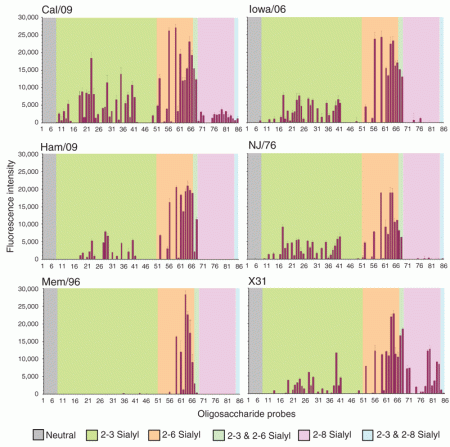
“We have compared directly, by carbohydrate microarray analysis, the receptor-binding characteristics of two isolates of the novel pandemic H1N1 virus, Cal/09 and A/Hamburg/5/2009 (Ham/09), with those of a seasonal human H1N1 virus, A/Memphis/14/96-M (Mem/96), as representative of a virus well adapted to humans [and a reassortant human H3N2 virus A/Aichi/2/68 x PR8 (X31)]. As the HA of the novel H1N1 pandemic virus originated from a virus similar to triple reassortant swine H1N1 viruses, we compared one such example, A/Iowa/1/2006 (Iowa/06), isolated from a human infection, and an older close relative of classical swine H1N1 viruses, A/New Jersey/76 (NJ/76), the human isolate that initiated the concern of a pandemic threat in 1976.”

This is a really comprehensive analysis – for such a short communication – which throws up a number of interesting points.  First, I was not aware it was possible to do “carbohydrate microarrays”!  Second, the paper shows quite conclusively that the swine-derived AH1N1 viruses have a significantly wider range of receptor specificities than a standard seasonal AH1N1 virus, and – but to a lesser extent – than the reassortant H3N2 virus X31.

Carbohydrate microarray analyses of the six viruses investigated.
From the following article (with permission from NBT):
Receptor-binding specificity of pandemic influenza A (H1N1) 2009 virus determined by carbohydrate microarray.
Robert A Childs, Angelina S Palma, Steve Wharton, Tatyana Matrosovich, Yan Liu, Wengang Chai, Maria A Campanero-Rhodes, Yibing Zhang, Markus Eickmann, Makoto Kiso, Alan Hay, Mikhail Matrosovich & Ten Feizi.
Nature Biotechnology 27, 797 – 799 (2009).
doi:10.1038/nbt0909-797

flu_receptor

Legend:
Numerical scores for the binding signals are shown as means of duplicate spots at 5 fmol per spot (with error bars). The microarrays consisted of eighty sialylated and six neutral lipid-linked oligosaccharide probes, printed on nitrocellulose-coated glass slides. These are listed in Supplementary Table 1 and arranged according to sialic acid linkage, oligosaccharide backbone chain length and sequence. The various types of terminal sialic acid linkage are indicated by the colored panels as defined at the bottom of the figure.

And what does all this mean, exactly?  The authors sum it up well:

These results indicate that no major change in receptor-binding specificity of the HA was required for the emergent pandemic virus to acquire human-like characteristics and become established in the human population. …

The broader specificity, namely, the ability to bind to 2-3- in addition to 2-6-linked receptors is also pertinent to the greater virulence of the pandemic virus than seasonal influenza viruses observed in animal models, and its capacity to cause severe and fatal disease in humans, despite the generally mild nature of most infections. Binding to 2-3-linked receptors is thought to be associated with the ability of influenza viruses to infect the lower respiratory tract where there is a greater proportion of 2-3- relative to 2-6-linked sialyl glycans, although long chain 2-3-linked sialyl (poly-N-acetyllactosamine) sequences are present in ciliated bronchial epithelial cells in humans where they are the receptors for another human pathogen, Mycoplasma pneumoniae.

So there you have it: the viruses can get deeper in to your lungs than the standard flu – which, if it happens, can make you seriously ill.

So what happens if it gets better at binding the 2,3-type receptors in humans?  Well, we’re only in the middle of the pandemic.  We may yet find out the hard way.

Gene discrimination

3 September, 2009

In the latest online issue of Nature, there is an article entitled “Keeping genes out of terrorists’ hands“, by Erika Check Hayden.  Like an article a little while ago in Nature Biotechnology, it makes the apparently quite reasonable point that

“the way that the industry screens orders for hazardous toxins and genes, such as pieces of deadly viruses and bacteria…could be crucial for global biosecurity”.

Yes.  Well.  They would say that, wouldn’t they??  “They” being anyone in the developed world who has a paranoid fantasy about bearded extremists in caves (or crew-cut extremists in leafy suburbs) gleefully unwrapping their couriered DNA and brewing up a nice little necrotising poxvirus, or an airborne Ebola, or possibly an H5N1 variant that spreads human-to-human better than the present versions.

I wrote the following reply to the article:

While “all right-thinking people” – for which, read “those easily scared by the unrealistic prospect of mail-order killer bugs” may agree that some kind of limitations are required on what synthetic DNA is sent out, and to whom…there is a baby being thrown out with the bathwater here.

My laboratory has just, despite many previously successful orders from the same company, been denied permission (or told to obtain clearance from the relevant government, which amounts to the same thing) to have a coat protein gene synthesised for a bluetongue virus (BTV) strain now found all over western Europe. Because, apparently, BTV is on the “Australia Group”‘s prohibited list of biological agents – and South Africa is not a signatory to this group, which started out for arms control but has apparently ramified somewhat.

This is so ridiculous as to beggar belief: the viruses are endemic to Africa; the world’s expert on cDNA cloning of their genomes is in South Africa; why would anyone want to build a BTV from synthetic DNA when they could go out and sample a sheep for some REAL virus??

A closer look at the list throws up all sorts of interesting things. It is prohibited, for example, to order genes for H5N1 influenza – although curiously, not pandemic H1N1 – and dengue viruses. This rather puts a spoke in the wheels of anyone who might want to…oh, let’s say…MAKE A VACCINE to those agents, in any country not signatory to the agreement – where the viruses happen to be endemic!!

The ways of limiting spread of genes that are being proposed are first, unnecessary; second – discriminatory in the extreme.

And may just provide a good deal of business for firms operating in developing countries who otherwise would have been ignored because of quality issues. Imagine that: a lab in Pakistan, or South Africa, or Indonesia, using home-made genes to make a vaccine.

Because that is a LOT more likely than using them to make a pathogen.

I know of a passage written some years ago in a reputable science magazine which described how easy it would be to smuggle naturally-occurring foot and mouth disease virus worldwide – with no science involved whatever.  I have enough purified material of a particular plant virus in my cold room right now to kill all the wheat grown in my country – given some carborundum and a crop sprayer.

There are enough people on this planet infected with pandemic H1N1 who live in close enough proximity to birds infected with H5N1 to make coinfection of one or the other with both a certainty – the only uncertainty remaining being what will come of it.  For that matter, where DID the H1N1 come from?  Where did Lujo virus come from?

We DON’T NEED TO MAKE VIRUSES from mail-order DNA – and only Craig Venter et al. could even dream of making whole microbes.  There are more than enough nasty agents out there that are relatively easy to obtain, and do simple kitchen-based microbiology with, to keep entire cave complexes and Montana libertarian enclaves busy for years, without resorting to complicated molecular biology.

So DO let’s keep things in perspective, shall we??  And let reputable labs doing reputable work order the materials they need to work with.

H1N1 – view on a pandemic

26 August, 2009

Well, “The Big One” that we have all been waiting for since 1968 – or 1977, if you count the accidental re-release of the original humanised H1N1 as a pandemic – is well and truly here.  A nice little animated graphic for depicting how it arose, while a bit simplistic, is available here.

And what have we learned?  Has civilisation fallen; have populations been decimated?

Well, quite a lot; no, and no, in answer.  Explanations for some of this are contained in a survey just released.  Here from the News24 report published today, sourced from SAPA:

Paris – More than half the fatalities from H1N1 swine flu have been among young adults, according to one of the first surveys to gather mortality data from across the globe for the new A(H1N1) virus.

The analysis of 574 pandemic deaths from 28 countries through mid-July, released this week, also found that being diabetic or obese significantly boosted the risk of dying.

Neither children nor the elderly are as vulnerable as initial reports indicated, found the study, published by Eurosurveillance, the monitoring arm of the European Centre for Disease Prevention and Control.

“Most deaths (51%) occurred in the age group of 20-to-49 year-olds, but there is considerable variation depending on country or continent,” the researchers reported.

Only 12% of those who died were 60 or older.

All of these features – high mortality among young adults and the obese, but not the very young or elderly – are sharply different than for the seasonal flu.

More than 90% of deaths from seasonal flu – which claims 250 000 to 500 000 lives annually according to the WHO – are in people over 65.

By contrast, with the pandemic H1N1, “the elderly seem to be protected from infection to some extent, perhaps due to previous exposure to similar strains”, the study conjectured.

Persons born before 1957, other studies have suggested, were almost certainly exposed to the milder seasonal A(H1N1) viruses that evolved from the terrible pandemic of 1918, which left some 40 million dead.

With the 2009 strain, “when infection does occur, however, the percentage of deaths in elderly cases seems to be higher that in others”.

One common target across both pandemic and season strains is pregnant women, according to the study, led by Philippe Barboza of the French Institute for Public Health Surveillance….

And that’s the sinister part…here in South Africa, of 18 fatalities known to have been associated with pandemic AH1N1 infection, NINE were pregnant women, mostly in the third trimester of pregnancy.  In a report published yesterday, SA’s Minister of Health Dr Aaron Motsoaledi said the following:

“We find it very worrying that there is an increasing number of pregnant women who are succumbing to this pandemic,” Motsoaledi said.

“The directive to all health care workers… is to put pregnant women with flu-like symptoms (even if they are mild) on Tamiflu treatment.

“Doctors should not wait for any tests before such treatment is administered.”

Further on in the same report:

On Monday, the National Institute for Communicable Diseases [NICD] also said pregnancy had been identified as a particular risk factor for severe H1N1 flu.

It said that in the second and especially the third trimester, urgent treatment with antiviral drugs should be considered even before any laboratory results were received.

The institute added however that most H1N1 flu cases in South Africa remained mild and “self-limiting”.

Routine H1N1 testing for everyone with flu-like illness was still not recommended.

Nationwide, there had been 5 118 laboratory-confirmed cases of H1N1 flu, it said.

The figure is essentially meaningless, given that most suspected flu cases are not laboratory-diagnosed (it costs R700, or ~US$70, for a single test) and the pandemic flu is pretty much indistinguishable from seasonal, and may in fact have supplanted the normal flu.  It certainly has in Australia and Argentina, which remain the two worst-hit southern hemisphere countries, and probably has in South Africa too: the CDC has a very useful map illustrating this, accessible here.

International news, via the CDC site, is the following:

As of August 13, the World Health Organization (WHO) regions have reported over 182,166 laboratory-confirmed cases of 2009 H1N1 influenza virus (2009 H1N1) with 1,799 deaths. The laboratory-confirmed cases represent an underestimation of total cases in the world as many countries now focus surveillance and laboratory testing only in persons with severe illness. The 2009 H1N1 influenza virus continues to be the dominant influenza virus in circulation in the world.

One very important piece of information further down this report is the following:

There have been no significant changes detected in the 2009 H1N1 influenza virus isolated from persons in the Southern Hemisphere as compared to viruses isolated from persons in the Northern Hemisphere.

This is important because the frantic rush to make vaccines to combat the expected northern hemisphere upsurge in infections in their autumn season – October or so – depends upon the virus not having changed much from the seed material which was derived from virus isolated earlier this year.  This could negate some of theh fears that the much-anticipated “second wave” of virus infections could be a lot worse than the first.

Good news on the vaccine front – for Australians at least – is that an Australian company, CSL Ltd, has the world’s first data from human trials of a pandemic strain vaccine, and looks set to be able to provide Australia with 21 million doses of vaccine – and 2 million doses of the vaccine at the end of the month.

Other vaccine news is also fairly encouraging, notwithstanding a rather alarming report in New Scientist recently about the new strain growing only half as well in eggs as seasonal flu types: while this remains a worry, newer, faster-growing variants have been derived and distributed – though possibly not in time for a northern hemisphere autumn roll-out.

Mind you, all of this production relies on the well-proven-but-seriously-archaic 1930s technology of growing live virus in hen’s eggs: we are still trapped, in the 21st century, into having to use early 20th century methods to produce vaccines for fast-adapting pathogens.  Things ARE changing: various pharma companies are diversifying into mammalian and insect cell culture; people (including us!) are investigating making recombinant subunit vaccines in plants (see here) – and there is at least the tantalising possibility that “universal vaccines” may become available in the not-too-distant future.  These will exploit all or part of the highly conserved M2 “ion channel” protein of influenza viruses as recombinant subunit vaccines.

However, all of this is at least six months in the future for conventional vaccines, and many years hence for newer offerings.  Meantime – there is disturbing news concerning trans-species transmissions of pandemic AH1N1 viruses.

ProMED Mail (ProMED Digest V2009 #394) reports that “Chile finds H1N1 swine flu in turkeys“:

Chilean health authorities announced on Thursday night [20 Aug 2009] that they had detected and controlled an outbreak of swine flu in 2 turkey farms, according to a communication from the Agricultural and Livestock Service (SAG).

“The presence of an influenza type A virus was detected in 2 farms in the Valparaiso Region, and immediate precautionary measures were adopted to prevent the dissemination of the disease and to protect the population’s health,” said the text.

And again from ProMED on 20th August, quoting The Straits Times and AFP:

A 2nd Australian piggery was placed in quarantine due to swine flu on Wednesday [19 Aug 2009] as the number of human deaths from the virus reached 121.

Authorities ordered a biosecurity lockdown at the piggery in Victoria state amid concerns the virus could mutate and return to humans in a more deadly form.

Another piggery in New South Wales state has been quarantined since late July [2009], although the state government said most of the animals had recovered from the disease.

Victoria Agriculture Minister Joe Helper said tests confirmed the presence of influenza at the piggery after its owners reported earlier this week that the animals were not eating.

‘It is important to stress that this is not a human health issue and that national and international food authorities continue to advise that pork and pork products are safe to eat,’ he said.

Media reports said the pigs were believed to have contracted the virus from workers at the property who were suffering the human form of the disease.

Health experts fear swine flu in humans, which is easily spread but has a relatively low fatality rate, could mutate in other animals and emerge in a more virulent form. [my emphasis]

So: two independent incidents, on different continents, of pandemic AH1N1 viruses getting into different species of farmed livestock – and luckily controlled.

What would have happened if domestic fowl and/or pigs had been infected in places like Vietnam, Thailand, Indonesia, Turkey and Egypt – where highly pathogenic avian H5N1 influenza viruses appear to be endemic, and not well controlled?  Given the complex origins of the current pandemic virus – from several swine, avian and human viruses – it could be a recipe for disaster, on a scale even greater than the 1918 pandemic.

The REAL Big One.  Let’s all help get a vaccine, people!!

First African-developed HIV vaccine goes to trial

21 July, 2009

Finally, finally, a product of our 10-odd-year-old South African HIV vaccine development programme goes into Phase I human trial, in South Africa!

I say “our” because I was part of the overall team; however, the two vaccines which comprise the SA AIDS Vaccine Initiative (SAAVI) / HIV Vaccine Trials Network (HVTN) trial – designated SAAVI 102/HVTN 073 – were designed and developed by others.

The vaccines consist of a DNA component, consisting of an artificial “polygene” dubbed Grttn (for Gag-RT-Tat-Nef) and a truncated Env (gp150) cloned separately into vector plasmids, and the same genes recombined under the control of different promoters into the genome of a poxvirus (Modified Vaccinia Ankara, MVA).  These and their testing in mice and non-human primates have been described in published work: see here and here for relevant journal articles on the MVA and DNA components.

From the July 20th SAAVI press release:

The test vaccines – called SAAVI MVA-C and SAAVI DNA-C2 – have shown promising results in animal testing. The SAAVI DNA-C2 vaccine was constructed in South Africa using a plasmid backbone provided by the Dale and Betty Bumpers Vaccine Research Center (VRC) of NIAID, while the MVA vaccine was designed by the team at UCT and constructed and manufactured in the USA.

“Reaching this important milestone of translating our discoveries in the laboratory to testing in humans would not have been possible without the support of a large team of people from the University of Cape Town, together with national and international collaborations.  An effective vaccine against HIV/AIDS remains a top global health priority and it is our hope that the evaluation of these vaccines in clinical trial will provide some important answers that will bring us closer towards this goal,” says Prof. Anna-Lise Williamson, leader of the vaccine development team and joint staff member of UCT’s Institute for Infectious Disease and Molecular Medicine, and the National Health Laboratory Services (NHLS).

The SAAVI DNA-C2 was constructed in South Africa and manufactured in the US by Althea Technologies. The MVA vaccine was manufactured by Therion Biologics, USA. The vaccines will be tested in a prime-boost approach where the SAAVI DNA-C2 vaccine will be given to prime the immune response and the SAAVI MVA-C vaccine to boost or enhance the immune response.

National and international press got hold of the story in a big way – unsurprisingly, given as there is the 5th IAS Conference on AIDS Pathogenesis going in in Cape Town at the same time, which incidentally has its own live blog feed.

The University of Cape Town is obviously pleased with the press release (see here); however, the launch had its fair share of controversy: Associated Press reporter Michelle Faul posted a story yesterday entitled “South Africa begins AIDS vaccine trial, cuts funds“, which has been taken up by a wide spectrum of especially foreign media.  According to Faul:

“South Africa launched a high-profile trial of an AIDS vaccine created by its own researchers Monday, a proud moment in a nation where government denial, neglect and unscientific responses have helped fuel the world’s worst AIDS crisis.

After a government official lauded the project at a ceremony at Cape Town’s Crossroads shantytown, the scientist leading the research said state funding had been halted.

The contrast between Monday’s hopeful vaccine launch and the revelation of funding cuts raised questions about whether the government was backsliding on its pledge to combat AIDS.

Anna-Lise Williamson, an AIDS researcher at the University of Cape Town, told The Associated Press the clinical trial would continue with U.S. money. But she said South Africa’s Department of Science and Technology had pulled its funding in March, while the project’s other sponsor, the state electricity utility Eskom, did not renew its contract when it expired last year.

Neither government spokesmen nor Eskom immediately returned calls seeking comment about funding cuts.”

In the midst of light, there is darkness…frequently, thanks to ESKOM

I have blogged on my personal view elsewhere; suffice it to say that bad decisions were made, and  9 years worth of momentum has effectively been lost – along with a number of very experienced personnel, and many years worth of accumulated and very relevant experience.

For an illustration of the product pipeline which existed behind the current trial offerings – and which may now never be developed – click here  for published descriptions of our plasmid- and BCG-vectored and virus-like particle (VLP) subunit vaccines.

But who knows, this current trial may even show promise – and then it will all have been worth it.  Let’s live in hope!

Where the new H1N1 came from

29 June, 2009

Mixing of flu viruses to produce a new strain. copyright Russell Kightley Media

In Nature 459, 1122-1125 (25 June 2009): Smith et al. on “Origins and evolutionary genomics of the 2009 swine-origin H1N1 influenza A epidemic“.

In March and early April 2009, a new swine-origin influenza A (H1N1) virus (S-OIV) emerged in Mexico and the United States1. During the first few weeks of surveillance, the virus spread worldwide to 30 countries (as of May 11) by human-to-human transmission, causing the World Health Organization to raise its pandemic alert to level 5 of 6. This virus has the potential to develop into the first influenza pandemic of the twenty-first century. [I thought a pandemic alert level of 6 meant it had already?? – Ed] Here we use evolutionary analysis to estimate the timescale of the origins and the early development of the S-OIV epidemic. We show that it was derived from several viruses circulating in swine, and that the initial transmission to humans occurred several months before recognition of the outbreak. A phylogenetic estimate of the gaps in genetic surveillance indicates a long period of unsampled ancestry before the S-OIV outbreak, suggesting that the reassortment of swine lineages may have occurred years before emergence in humans, and that the multiple genetic ancestry of S-OIV is not indicative of an artificial origin. Furthermore, the unsampled history of the epidemic means that the nature and location of the genetically closest swine viruses reveal little about the immediate origin of the epidemic, despite the fact that we included a panel of closely related and previously unpublished swine influenza isolates. Our results highlight the need for systematic surveillance of influenza in swine, and provide evidence that the mixing of new genetic elements in swine can result in the emergence of viruses with pandemic potential in humans.
[my bolded sections – Ed]

An important paper for a number of reasons – not the least of which is pigs have

Depiction of virus mixing in a pig

been pushed to the fore as a potential source of new and dangerous human flu viruses.

Through no fault of their own, I might add: the only pigs proven to have had the new virus were probably infected by a handler who had been to Mexico!

The most important observation to emerge from this is that pigs should be surveilled systematically and worldwide – to stop yet another possible avenue for zoonotic infection for us vulnerable humans.

Down, Lujo!

4 June, 2009

I am indebted to Ms Ngimezi Phiri – muli bwanji! – in the MCB2016F class, to whom I have just lectured Virology, for pointing this out – from Yahoo! News:

Scientists identify new lethal virus in Africa

By MIKE STOBBE, AP Medical Writer  Thu May 28, 9:15 pm ET

ATLANTA – Scientists have identified a lethal new virus in Africa that causes bleeding like the dreaded Ebola virus. The so-called “Lujo” virus infected five people in Zambia and South Africa last fall. Four of them died, but a fifth survived, perhaps helped by a medicine recommended by the scientists.

It’s not clear how the first person became infected, but the bug comes from a family of viruses found in rodents, said Dr. Ian Lipkin, a Columbia University epidemiologist involved in the discovery.

“This one is really, really aggressive” he said of the virus.

A paper on the virus by Lipkin and his collaborators was published online Thursday on in PLoS Pathogens.”

Of course, regular readers of this blog will be familiar with the Zambian arenavirus discovered under tragic circumstances last October, and covered here as follows:

Now the agent has a name – albeit an unfortunate victim of political compromise; they are calling it “Lujo” after Lusaka (where it came from, sort of) and Johannesburg, where nearly everyone who got it was treated.

The (relatively) rapid characterisation of the virus owes a lot to modern technology: in the words of the authors (MCB3019F take note – this is serious viromics…):

“RNA extracts from two post-mortem liver biopsies (cases 2 and 3) and one serum sample (case 2) were independently submitted for unbiased high-throughput pyrosequencing. The libraries yielded between 87,500 and 106,500 sequence reads. Alignment of unique singleton and assembled contiguous sequences to the GenBank database … using the Basic Local Alignment Search Tool (blastn and blastx; …) indicated coverage of approximately 5.6 kilobases (kb) of sequence distributed along arenavirus genome scaffolds: 2 kb of S segment sequence in two fragments, and 3.6 kb of L segment sequence in 7 fragments (Figure 2) [see here for depiction of arenavirus genome]. The majority of arenavirus sequences were obtained from serum rather than tissue, potentially reflecting lower levels of competing cellular RNA in random amplification reactions.”

Sequence data was used to allow primer synthesis for cDNA PCR to fill in gaps, and the whole genome is now available.  It is a novel arenavirus, with all genome segments giving the same sort of phylogenetic tree topology, which shows the virus to be near the root of Old World arenaviruses.

The authors conclude:

“To our knowledge is LUJV the first hemorrhagic fever-associated arenavirus from Africa identified in the past 3 decades. It is also the first such virus originating south of the equator (Figure 1). The International Committee on the Taxonomy of Viruses (ICTV) defines species within the Arenavirus genus based on association with a specific host, geographic distribution, potential to cause human disease, antigenic cross reactivity, and protein sequence similarity to other species. By these criteria, given the novelty of its presence in southern Africa, capacity to cause hemorrhagic fever, and its genetic distinction, LUJV appears to be a new species.”

Ex Africa, semper aliquid novi(rus)…B-)

It’s Not Going Awaaa-ay, contd.

28 May, 2009

From ProMED Mail, this morning:


To summarize the current situation, as of 6:00 AM GMT on 26 May 2009 a total of 12 954 cases and 92 deaths of influenza A (H1N1) infection have been officially reported to WHO from 46 countries, up from 12 515 confirmed cases and 91 deaths from 46 countries on 23 May 2009.

According to a later PAHO update (from 18:00 GMT-4) a total of 12 536 confirmed cases and 95 deaths are attributable to the novel influenza A (H1N1) virus infection in 15 countries in the Americas region. There is mention of a case in Chile with a history of travel to the Dominican Republic. According to newswires today (26 May 2009) and earlier (see prior ProMED-mail posts), there have been several cases in other countries with a history of travel to the Dominican Republic, even though the Dominican Republic has not officially confirmed any cases of influenza A (H1N1) as yet.

According to newswires, Singapore has confirmed its 1st case and New York City has confirmed 2 additional deaths attributable to influenza A (H1N1) infection — both in individuals with history of preexisting diseases.

For a map of reported confirmed cases, worldwide, as of 06:00 GMT 26 May 2009, see here.

Mod.MPP


So: with >10x the number of confirmed cases than there were suspected cases in Mexico at the start of the outbreak, we have 92 deaths in ~13 000 cases.  This means the case fatality rate is 0.7% – compared to the accepted figure of 0.2% for normal flu.  Not much different to the previous figure I calculated just 9 days ago – and it’s still spreading.  4000 more cases in that period.

We’re in for a long winter, here in the southern hemisphere…and us without a vaccine.  Ah, well.