Archive for the ‘Viruses’ Category

Viruses as nanomachines! Or: what you can believe from YouTube

6 December, 2010

I have for some years now been teaching my undergrad students that virus particles are nanomachines: that is, they are highly sophisticated nanoscale (read: ultramicroscopic) devices whose function is to specifically deliver genetic material into an environment where it can be expressed and replicated, so as to make more virus particles.

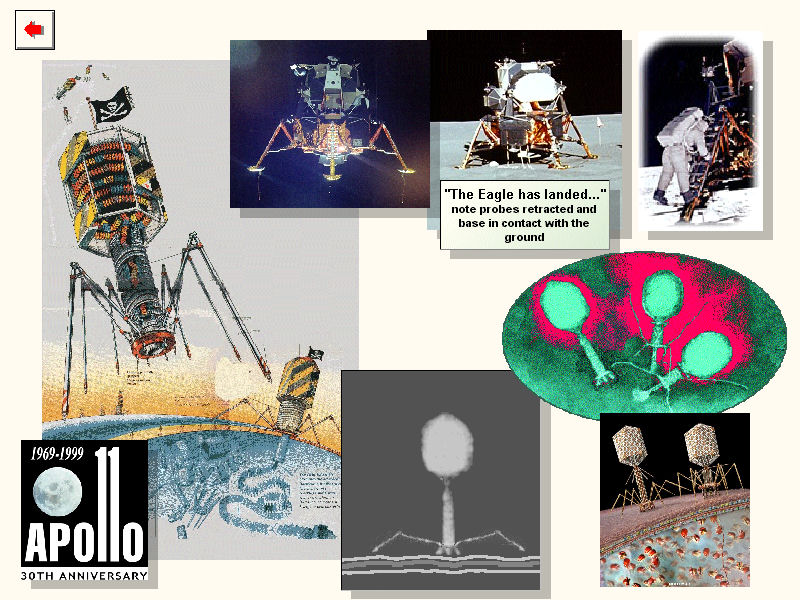
Nanoscale von Neumann machines, then – and if you want to see what a macroscale vN machine could do, just watch “2010: Odyssey Two“.

Ah, but what’s a von Neumann machine, you ask?  Well, I note Wikipedia has the following:

  • Self-replicating machines, a class of machines that can replicate themselves
  • Universal Constructors, self-replicating cellular automata
  • Von Neumann probes, hypothetical space probes capable of self-replication
  • Nanorobots capable of self-replication

I especially like the last two – because, as I showed in a previous blog post, I like the idea of virus particles or virions as “inner space craft”.  That this neatly marries my recreational and professional reading is no coincidence – because they cross-pollinate one another, in that I get ideas about the nature of viruses from SF, and my virology training informs scenarios I would like to write about.  Someday.  Soon, possibly.  Really.  Instead of writing about parallel universes contactable via the internet….

However, there is more to viruses and nanotechnology than phages with contractile tails, whether or not they have been around for billions of years: mimiviruses too have both nanoscale DNA loading and rapid-delivery systems, as previously discussed here.

Although I have a passing fondness for possibly my most successful animation – made from actual EMs, done by Linda Stannard.

T4 phage infecting a cell

So it was with some pleasure I saw recently on YouTube a video labelled “Viruses are nanotechnology (how a virus works)“.  I was a little less pleased when a voice confidently announced that “…a virus isn’t alive, people – it’s non-metabolising…”, as if that was the sole and necessary criterion for life.  I am at one with another Polish-named person – one Bernard Korzeniewski – in thinking  that life is (from MicrobiologyBytes)

The phenomenon associated with the replication of self-coding informational systems” © E.P. Rybicki, 1996. Incidentally, I find another person with a Polish name has said something very similar, in 2001 – which means it must be true. Bernard Korzeniewski describes life as: “A network of inferior negative feedbacks subordinated to a superior positive feedback.”

See, no mention of metabolism – or even of cells!  But what got the hairs on the back of my neck standing up, however, was some of the rest of it – delivered in a smooth, folksy manner, with stunning video footage.  Absolute cr@p, most of it: viruses are too complicated to have evolved, so they have to be alien nanotech???

Obviously some weird kind of conspiracy theory cross technobabble – but very seductive, to the uninformed.  Some of the comments are also just out of this world – literally!

Fortunately, there are some real science videos out there too – some of which I have also used in lecturing, if only to illustrate just how cool structural biology can be when used to study viruses.  Prime among these is one of T4 virus (Enterobacteria phage T4) infecting E coli; another magical one  from the same source is a depiction of the molecular motor which winds DNA into T4 heads.  A longer video has Michael Rossman, whose lab did the structural work behind the videos, explaining how the phenomenon could be useful in understanding viruses like herpesviruses in humans, which also appear to have molecular motors for DNA delivery – and, of course, how we can mess with them.

Self-assembly of viruses is also a good topic for video – and the full-length  Seyet T4 video is stunning in this regard.  So too is this one, showing a PhiX174 microvirus particle assembling.  One of my favourites, though, is the simplest: this is the depiction of how simple shapes can be induced to self-assemble into a virus-like particle – just by shaking.

I suppose, like everything, you get what you pay for with YouTube: which is nothing, most of the time.

But every now and then, a gem – which is what makes it fun to look.  I’m off to hunt down a Rolling Stones video virus replication videos!

The largest marine virus yet

13 November, 2010

This is another welcome guest post from Gillian de Villiers, a Scientific Officer in our Vaccine Group.  This was presented as a Journal Club article recently, and fit so well into my continuing theme of “viral diversity from water” that I asked her to write it up.  Thanks Gillian!

Giant virus with a remarkable complement of genes infects marine zooplankton

Matthias G. Fischer, Michael J. Allen, William H. Wilson, and Curtis A. Suttle

PNAS published ahead of print October 25 2010 www.pnas.org/content/early/2010/10/15/1007615107

This publication covers the sequencing of the genome of Cafeteria roenbergensis virus(CroV).  This nucleocytoplasmic large DNA virus (NCLDV) is the largest marine virus described to date, and its closest relative is Acanthamoeba polyphaga Mimivirus.

Among the questions raised in this paper are:

  • what is the evolutionary origin of big viruses?
  • Did they get their genes from horizontal gene transfer (including from eukaryotes), or
  • are the “eukaryotic” genes viral in origin?

Spoiler alert: the authors do not answer this question.

Please note: this is a virus from a seawater host.  It is the largest marine virus yet found, but how hard has anyone been looking?  This ties in with Ed’s theme that we should be looking for viral diversity and interesting things in the water, because interesting things have been found there.

Some background…

This lytic virus strain was isolated off the coast of Texas in the 1990s.  The host, Cafeteria roenbergensis was originally misidentified as a Bodo species.  It is a major micro flagellate grazer (microzooplanton = major ocean predator) a 2-6um “bicoecid heterokant phagotrophic flagellate” and has been found in multiple marine environments including surface waters, deep sea sediment and hydrothermal vents.

In other words, the host is an extremely significant part of the ocean ecosystem, and has been found in most places.  The authors note that protists host the largest viruses known and that other giant viruses probably are widespread in the oceans, but so far only the Acanthamoeba-infecting giant viruses have been characterised (Acanthamoeba does not live in the ocean). Viral infections of cyanobacteria play a significant role in global oxygen production; in a similar way the viral infections by CroV may have implications for carbon and other nutrient cycling and the “food chain” in the oceans, although this is beyond the scope of the article.]

Results

The genome is the second-largest viral genome described and at 730kb is very AT rich.  Approximately 618kb is thought to be coding with 544 predicted protein-coding genes.  At least 274 genes are expressed during infection.  22 percent of CroV CDSs (coding sequences) were probably best related to eukaryotic genes.  Most CroV CDSs had unknown function, but 32% of CDSs could be assigned a putative function.

For enzymatic functions that have not previously been reported in any other viruses you can refer to Table S1 of the Supplemental materials.

This is similar to CroV’s closest known relative, Mimivirus, where of 911 predicted genes only 300 were assigned a predicted function (see table).  Only 1/3 of their genes are common to these two viruses!  This suggests tremendous diversity within the nucleocytoplasmic large DNA viruses, as they may have common evolutionary origins for some genes, but not for others.  As viruses are not monophyletic (although the NCLDVs may be) and can be considered to be bags of protein that contain genetic material and share a strategy (rather than an origin) this may not be particularly surprising.  But I find it amazing that so many potential genes, and so many unique potential genes, have been found in these organisms.

Included in the genes assigned function are genes involved in translation.  CroV encodes an isoleucyl-tRNA synthetase and putative homologs of eukaryotic translation initiation factors.  22 tRNA genes and two putative tRNA-modifying enzymes: tRNA pseudouridine 5S synthase and tRNAIle lysidine synthetase were found.  Mimivirus also has four tRNA synthetases and several putative translation factors.

Cafeteria roenbergensis virus Acanthamoeba polyphaga Mimivirus
~730kb dsDNA genome ~1200kb dsDNA genome
300nm capsid 500-750nm capsid (publications differ)
Largest marine virus yet described Largest virus yet described
Second-largest virus yet described
544 predicted genes 911 predicted genes
174 genes with predicted function 300 genes with predicted function
Host: Cafeteria roenbergensis Host: Acanthamoeba castellani (amoeba)
Habitat: marine environment Habitat: soil (?freshwater)
Genes shared with Mimivirus ~ 1/3 Genes shared with CroV ~ 1/5

Similarly to other large DNA viruses a number of DNA repair genes were found.  This includes a base excision repair pathway that appears complete.  In addition crov115’s gene product is predicted to be a CPD class 1 photolyase, the first viral homologue in its class.  Crov149 appears to be part of a recently described photolyase/cytochrome group found in several bacterial phyla and euryarchaeotes, but not among established types of photolyase.  The authors suggest that the only eukaryote with this gene, Paramecium tetraurelia may have acquired it by horizontal gene transfer from a giant virus

CroV also has transcription-related genes including eight DNA-dependent RNA polymerase II subunits, six transcription factors involved in transcription initiation, elongation, and termination, a tri-functional mRNA capping enzyme, a poly (A) polymerase, as well as helicases.  Mimivirus provides considerably more genes for protein transcription and translation than most viruses, and sets up its own ‘virus factory’ in the cytoplasm of the cell.  It is possible that CroV has a similar strategy, with viral gene transcription independent of the host and occurring in the cytoplasm.

Of the three DNA topoisomerases, two are very similar to the counterparts in Mimivirus.  CroV TopoIB is the first viral homolog of the eukaryotic subfamily, but the Mimivirus TopoIB appears to be from the bacterial group.  Although the evolutionary origin appears to differ, the topoisomerases are presumably important in transcription, translation or packaging of giant virus genomes, as they appear in both CroV and Mimivirus genomes.

CroV has four inteins: self-splicing proteins.  They are found in DNA-dependent DNA polymerase B (PolB), TopoIIA, DNA-dependent RNA polymerase II subunit 2 (RPB2) and the large subunit of ribonucleotide reductase (RNR).  Inteins have previously been found in viruses infecting eukaryotes, including Mimivirus PolB.  CroV TopoIIA intein is the first case of an intein in a DNA topoisomerase gene.

Microarray analysis on the 12-18 hr infection cycle showed around half the predicted genes, and 63% of the tested genes were expressed during infection.  Work on Mimivirus and PBSC-1 showed transcription of nearly all predicted genes, so this work may underestimate the true transcriptional activity of CroV.  CroV gene expression has an early phase 0-3 hrs after infection affecting 150 genes, and a late phase affecting 124 genes 6 hrs or later post-infection including all the structural components predicted.  A conserved early promoter motif “AAAAATTGA” was identified in 35% of CDSs and is nearly identical to the Mimivirus early promoter motif “AAAATTGA”.  A promoter element for genes transcribed during the late phase of CroV infection was found that is unrelated to the putative late promoter motif in Mimivirus.

A genomic fragment involved in carbohydrate metabolism was also found.  This 38kb fragment includes enzymes for biosynthesis of 3-deoxy-D-manno-octulosonate (KDO).  This is part of the lipopolysaccharide layer in gram-negative bacteria and is found in the green alga Chlorella and the cell wall of higher plants. Ten of the enzymes involved in carbohydrate metabolism were expressed, suggesting a role in viral glycoprotein biosynthesis, suggesting the virion surface may be coated with KDO- or sialic acid-like glycoconjugates. 

There are no homologs in Mimivirus suggesting this region must have been acquired after the CroV and Mimivirus lineages split (or that the Mimivirus lineage lost it subsequently?).  This may have been acquired from bacteria, however GC content is even lower than for the rest of the CroV genome, and a number of the proteins are phylogenetically between bacterial and eukaryotic homologs.

Phylogenetics and Speculations

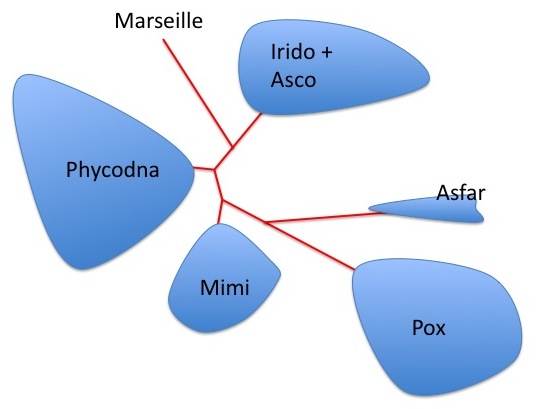
Phylogenetic reconstruction of NCLDV members. Redrawn and simplified from Fig. 4. The unrooted Bayesian Inference tree was generated from a 263-aa alignment of conserved regions of DNA polymerase B

CroV is an addition to the group of NCLDVs including Ascoviridae, Asfarviridae, Iridoviridae, Mimiviridae, Phycodnaviridae, Poxviridae and Marseillevirus, which are presumed to be monophyletic. CroV seems to be the closest known relative to Mimivirus although it is substantially smaller.  The topology of the NCLDV tree strongly suggests the five largest viral genomes (all mimiviruses) are more closely related to each other than to other NCLDV families.  They may have originated from an ancestral virus that was already an NCLDV that encoded more than 150 proteins.

Mimivirus is the most studied NCLDV, and is the largest.  Most Mimivirus genes have no cellular homologs and may be very ancient, with 1/3 of genes having originated through gene and genome duplication and less than 15% of the genes having potentially been acquired by horizontal gene transfer from eukaryotes and bacteria.  The CroV genome analysis is consistent with this view of giant virus evolution, with gene duplication and lineage-specific expansion contributing to the size of the CroV genome.  The 38kb carbohydrate metabolism fragment may be a potential case of large-scale horizontal gene transfer from a bacterium.  The PolB gene of CroV has high similarity with those of other marine isolates so it may represent a major group of marine viruses, that despite being virtually unknown have ecological significance.

CroV again shows overlap between large viruses and cellular life forms, adding to questions about the evolutionary history of giant viruses as well as what life itself is.

Rinderpest: gone, but not forgotten – yet.

5 November, 2010

Rinderpest virus infects cattle, buffalo and several species of antelope among other animals: it is a member of the genus Morbillivirus,family Paramyxoviridae, and is related to measles and mumps viruses in humans, distemper virus in dogs, and a variety of relatively newly-described viruses in marine mammals.  It also almost certainly gave rise to measles virus sometime around the 11th-12th centuries CE, as an originally zoonotic infection – sourced in domestic animals – took root in humans and began to be passed around (see MicrobiologyBytes).

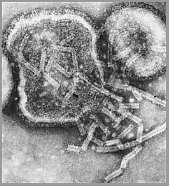
Electron micrograph of a morbillivirus particle showing the membrane, matrix, and inner helical nucleocapsid. Image by LM Stannard

The ICTVdB generic description of morbilliviruses is as follows:

Virions consist of an envelope and a nucleocapsid. Virus capsid is enveloped. Virions are spherical to pleomorphic; filamentous and other forms are common. Virions measure (60-)150-250(-300) nm in diameter; 1000-10000 nm in length. Surface projections are distinctive spikes of haemagglutinin (H) and fusion (F) glycoproteins covering evenly the surface. Surface projections are 9-15 nm long; spaced 7-10 nm apart. Capsid/nucleocapsid is elongated with helical symmetry. The nucleocapsid is filamentous with a length of 600-800(-1000) nm and a width of 18 nm. Pitch of helix is 5.5 nm.

The Mr of the genome constitutes 0.5% of the virion by weight. The genome is not segmented and contains a single molecule of linear negative-sense, single-stranded RNA. Virions may also contain occasionally a positive sense single-stranded copy of the genome (thus, partial self-annealing of extracted RNA may occur). The complete genome is 15200-15900 nucleotides long.

Wikipedia describes rinderpest virus as “…an infectious viral disease of cattle, domestic buffalo, and some species of wildlife. The disease was characterized by fever, oral erosions, diarrhea, lymphoid necrosis, and high mortality.”   And: “The term Rinderpest is taken from German, and means cattle-plague.”

The Food and Agriculture Organisation (FAO) has a Division of Animal Production and Health: their web site details a campaign known as the Global Rinderpest Eradication Programme (GREP), which has been going since 1994.

With very little fanfare, I might point out: as a practicing teaching virologist, I was totally unaware of it.  Anyway: they state that:

Rinderpest has been a dreaded cattle disease for millennia, causing massive losses to livestock and wildlife on three continents. This deadly cattle plague triggered several famines and caused the loss of draught animal power in agricultural communities in the 18th, 19th and 20th centuries.

…which is a little of an understatement: Wikipedia tells us that

“Cattle plagues recurred throughout history, often accompanying wars and military campaigns. They hit Europe especially hard in the 18th century, with three long pandemics which, although varying in intensity and duration from region to region, took place in the periods of 1709–1720, 1742–1760, and 1768–1786. There was a major outbreak covering the whole of Britain in 1865/66.”

“Later in history, an outbreak in the 1890s killed 80 to 90 percent of all cattle in Southern Africa, as well as in the Horn of Africa [and resulted in the deaths of many thousands of people who depended on them]. Sir Arnold Theiler was instrumental in developing a vaccine that curbed the epidemic. [my insert / emphasis] More recently, a rinderpest outbreak that raged across much of Africa in 1982–1984 cost at least an estimated US$500 million in stock losses”.

When commenting on the significance of the achievement, John Anderson, the head of the FAO, described GREP’s announcement that Rinderpest had been eradicated as:

The biggest achievement of veterinary history“.

The 19th century southern African outbreak was devastating enough that people still remember it as a legendary time of hardship – and then there was the 1980s outbreak.  Another South African interest in rinderpest is that the legendary Sir Arnold Theiler had a hand in making a vaccine: he did this around the turn of the 20th century, by simultaneously injecting animals with blood from an infected animal and antiserum from a recovered animal: this protected animals for long enough to allow their immune systems to respond to the virus – but was rather risky, even though it was used for several decades.

In the 1920s J. T. Edwards in what is now the Indian Veterinary Research Institute serially passaged the virus in goats: after 600 passages it no longer caused disease, but elicited lifelong immunity. However, it could still cause disease in immunosuppressed cattle.

In 1962, Walter Plowright and R.D. Ferris used tissue culture to develop a live-attenuated vaccine grown in calf kidney cells.  Virus that had been passaged 90 times conferred immunity without disease even in immunosuppressed cattle, was stable, and did not spread between animals.  This vaccine was the one that allowed the prospect of eradicating the virus, and earned Plowright a World Food Prize in 1999.

But a memory may be all rinderpest is any more – as the GREP site says the following:

“The last known rinderpest outbreak in the world was reported in 2001 (Kenya). Based on the above-mentioned investigations, FAO is confident that all rinderpest virus lineages will prove to be extinct.”

This was also announced via the BBC on the 14th October, 2010.  They said:

The eradication of the virus has been described as the biggest achievement in veterinary history and one which will save the lives and livelihoods of millions of the poorest people in the world.

And the significant bit:

If confirmed, rinderpest would become only the second viral disease – after smallpox – to have been eliminated by humans.

Let us reiterate that: only the second viral disease, ever, to have been eliminated.  And how was this possible?  Unlike smallpox, which has only humans as a natural and reservoir host (although it almost certainly also got into us from animals), rinderpest attacked a wider range of hosts.  However, it seemed mainly to have a reservoir in domesticated cattle, and it did not have an arthropod vector; moreover, the vaccine was cheap and effective.

This is momentous news: we may well have succeeded in ridding the planet of what has been a very significant disease of livestock and of wild animals, which has caused untold agricultural loss throughout recorded history, and which has resulted in enormous human hardship as well.  We have also made a natural species go extinct – but it won’t be missed.  Like smallpox, it was completely sequenced some time ago, so we could theoretically recreate it if we ever needed to.

From GREP:

Though the effort to eradicate rinderpest has encountered many obstacles over the past several decades, the disease remains undetected in the field since 2001. As of mid 2010, FAO is confident that the rinderpest virus has been eliminated from Europe, Asia, Middle East, Arabian Peninsula, and Africa. This has been a remarkable achievement for veterinary science, evidence of the commitment of numerous countries, and a victory for the international community.

Amen.  However – it’s not quite time to celebrate as the certification is only planned for 2011.

And now for mumps, and measles too.

They DO get everywhere, don’t they?

21 October, 2010

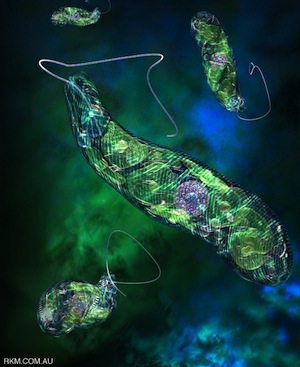
Euglena cells in pondwater. Image copyright Russell Kightley, http://www.rkm.com.au

Thanks to AJ Cann’s MicrobiologyBytes, and The Scientist:

Decoding the Genome of Chlorella Microalgae, a Promising Genus for Biofuel Production

ScienceDaily (Oct. 13, 2010)
“…the analysis of the Chlorella genome has also revealed numerous genes governing the synthesis of flagellar proteins, which suggests that this species could have a sexual cycle that has gone unnoticed until now. Last but not least, the ability of Chlorella algae to synthesize chitin could have been inherited from a virus (itself endowed with chitinase activity) having secured exclusive use of its host against other viruses incapable of piercing through its protective shell. This “monopoly” scenario illustrates a new mode of co-evolution between viruses and their hosts.”

Gotta love ’em – because maybe we and many other things couldn’t be here without ’em.  This builds on previous evidence that retroviruses probably helped in the evolution of placental mammals, that much of the planet’s oxygen may be due to viruses, and that viruses often aid hosts in developing resistance against them.

However, the parent paper is always preferable to a commentary – and I am indebted to Guillaume Blanc – the corresponding author – for a copy of the paper; our otherwise reliable library service fell down on access to the Plant Cell!  This allows me to quote the following (bold text my emphases):

The Chlorella variabilis NC64A Genome Reveals Adaptation to Photosymbiosis, Coevolution with Viruses, and Cryptic Sex

Guillaume Blanc et al., Plant Cell Advance Online Publication
Published on September 17, 2010; 10.1105/tpc.110.076406

With 233 predicted enzymes involved in carbohydrate metabolism, NC64A appears much better equipped for synthesizing and modifying polysaccharides than the other sequenced chlorophytes that have between 92 (O. tauri) and 168 (C. reinhardtii) of such predicted enzymes…. However, we did not find homologs of the Arabidopsis proteins involved in the synthesis of cellulose (cellulose synthase CesA) or hemicellulose (hemicellulose syn- thase CLS), the major components of the primary cell wall of land plants. Instead, experimental evidence suggests that the cell wall of Chlorella species, including NC64A, contain glucosamine polymers such as chitin and chitosan….

Chitin is a natural component of fungal cell walls and of the exoskeleton of arthropods but is not normally present in green algae. The origin of chitin and its derivatives in the Chlorella genus has long been an enigma. Except for the plant-type chitinase gene, which is found in land plants (but not in chlorophytes apart from Chlorella), the four gene classes involved in forming and remodeling chitin cell walls (i.e., chitin synthase, chitin deacetylase, chitinase, and chitosanase) are absent in all the other fully sequenced Viridiplantae species. By contrast, homologs for each of these families exist in genomes of Chlorella viruses. The viral genes are presumably involved in degradation of the Chlorella cell wall (chitinase and chitosanase)… and production of chitinous fibers on the external surface of virus-infected cells (chitin synthase and chitin deacetylase) …. Phylogenetic analysis suggests that the Chlorella ancestor exchanged the bacterial-type chitinase and chitin-deacetylase genes with the chloroviruses.

And as I have often said (well, mostly to myself, but also in MicrobiologyBytes) – “Profound Insight (No. 4): in order to understand viruses, we should all be working on seawater…. That is where the diversity is, after all; that is where the gene pool that gave rise to all viruses came from originally – and who knows what else is being cooked up down there?”.

Amen.  But let’s add ponds to that.

Sing the flues….

3 September, 2010

Seeing as it’s officially over – well, the odd people still dying might dispute this, but the WHO Has Spoken – I thought I would share this with you, seeing as I agree 100% with the sentiments (I wanted it called Mexico Flu).  Arvind Varsani, my one-time PhD student now in The Land of the Long Black White Cloud, sent me this link today – thanks Arv!  You win a free ViroBlogy article!  I expect it within a month.

And so it’s over – is it??

26 August, 2010

The WHO recently declared the H1N1 “swine flu” pandemic to be over – on August 10th, 2010.   From the AFP article:

“The world is no longer in phase six of the pandemic alert. We are now moving into the post-pandemic period,” WHO Director General Margaret Chan said

….

Swine flu has killed more than 18,449 people and affected some 214 countries and territories since it was uncovered in Mexico and the United States in April 2009, according to WHO data.

The new virus spread swiftly worldwide despite drastic measures including a week long shutdown in Mexico, prompting the UN health agency to scale up its alerts and declare a pandemic on June 11, 2009, banishing kisses and frowning on handshakes.

Fears about the impact of swine flu on unprotected populations and a harmful mutation sparked a rush for hundreds of millions of dollars worth of specially-developed vaccines and a flurry of public health precautions.

However, those concerns dwindled in late 2009 to be replaced by recriminations in Western nations about the cost of unused vaccines and what some European critics regarded as an unjustified scare.

Amazing, that: the world authorities get it right, help mitigate what could have been a nasty pandemic – then get it in the neck for being alarmist, and helping drug companies make a profit.

Further from the article:

After petering out in Europe and the United States before their winter flu season was over, in recent months swine flu has affected parts of South Asia and “limited areas” of tropical South and Central America, as well as Africa for their second season.

But unlike 2009, when A(H1N1) ousted most other types of flu viruses around the world, known seasonal viruses now are prevalent and even dominant in countries such as South Africa.

Yeeessssss…and that’s all very well, because do you know what happened in South Africa?  They’ve only just released H1N1 vaccine stockpiled for health workers for the duration of the Soccer World Cup, is what – late in the flu season, and almost too late to do any good.  Meaning exactly what was predicted at the beginning of the pandemic, came to pass: there was not enough vaccine for developing countries, and even a year after its emergence, it was still not being distributed evenly.

Not a very good practice run for the Big One, if you ask me: still not enough vaccine being made quickly enough; vaccine not being distributed to at-risk countries; too much fussing over the welcome news that it was not as bad as it could have been.

I’m going to put my faith in plants….

Doctor, there’s a…pig virus in my vaccine??

6 June, 2010

rotavirus particle

I have for some time taught my third year students about how one must weigh relative risk vs. relative benefit when it comes to vaccination – with the Wyeth live rotavirus vaccine that was withdrawn in 2000 or so due to isolated incidents of intussusception (=telescoping of the bowel) as an object example.

Consider: the vaccine MAY have caused a couple of incidents (which granted, were serious) – but on the whole was protective, and well tolerated.  The publication referred to has this as the relative risk:

“…epidemiologic evidence supports a causal relationship, with a population attributable risk of ~1 per 10 000 (range of 1 in 5000 to 1 in 12 000) vaccine recipients.”

While this may be an unacceptable risk in a North American community – which is where it was tested, where children mostly just get sick from rotavirus infection – what about in a developing country, where the risk of an infant dying from rotavirus diarrhoea is far higher than 1 / 10 000?  Indeed, the same article says:

“Because perceptions of vaccine safety derive from the relative disease burdens of the illness prevented and adverse events induced, the acceptance of rare adverse events may vary substantially in different settings. [ my emphasis]”

Yes – like the vaccine may well have done a great deal of good, and very little harm, in a developing country setting where rehydration therapy is not the norm.  But it was pulled, and the world had to wait for Merck’s Rotateq pentavalent live vaccine and GSK’s Rotarix tetravalent live vaccine, YEARS later, and probably a lot of children died that may not have needed to.

I note that the Merck product has this as a warning, too:

“In post-marketing experience, intussusception (including death) and Kawasaki disease have been reported in infants who have received RotaTeq”.

So the vaccine has the same risk profile as Wyeth’s – yet it has been widely distributed, and is apparently highly effective – as is Rotarix.  In fact, in 2009 the WHO issued a recommendation “…that health authorities in all nations routinely vaccinate young children against rotavirus…”.

And then…news that must have made many a heart sink, in March 2010:

Pig virus contamination halts GSK Rotarix use

“GlaxoSmithKline’s oral rotavirus vaccine Rotarix has been temporarily shelved in the U.S. due to a pig-virus contamination. Researchers stumbled on DNA from porcine circovirus type 1–believed nonthreatening to humans–while using new molecular detection techniques. More work is being done to determine whether the whole virus or just DNA pieces are present.

Additional testing has confirmed presence of the matter in the cell bank and seed from which the vaccine is derived, in addition to the vaccine itself. So the vaccine has been contaminated since its early stages of development.”

The finding of the porcine circovirus type 1 (PCV-1) DNA in the vaccine was due to what seems to have been publication of an academic investigation in February 2010 of “Viral Nucleic Acids in Live-Attenuated Vaccines” by Eri L Delwart and team, mainly from Blood Systems Research Institute and University of California, San Francisco.  They used deep sequencing and microbial array technology to:

“…examine eight live-attenuated viral vaccines. Viral nucleic acids in trivalent oral poliovirus (OPV), rubella, measles, yellow fever, varicella-zoster, multivalent measles/mumps/rubella, and two rotavirus live vaccines were partially purified, randomly amplified, and pyrosequenced. Over half a million sequence reads were generated covering from 20 to 99% of the attenuated viral genomes at depths reaching up to 8,000 reads per nucleotides.”

And they found:

“Mutations and minority variants, relative to vaccine strains, not known to affect attenuation were detected in OPV, mumps virus, and varicella-zoster virus. The anticipated detection of endogenous retroviral sequences from the producer avian and primate cells was confirmed. Avian leukosis virus (ALV), previously shown to be noninfectious for humans, was present as RNA in viral particles [!!], while simian retrovirus (SRV) was present as genetically defective DNA.”

Whooooo…possibly live animal retroviruses in human vaccines??  But most importantly for our purposes:

Rotarix, an orally administered rotavirus vaccine, contained porcine circovirus-1 (PCV1), a highly prevalent nonpathogenic pig virus, which has not been shown to be infectious in humans. Hybridization of vaccine nucleic acids to a panmicrobial microarray confirmed the presence of endogenous retroviral and PCV1 nucleic acids.”

I don’t know about you, but I’d be more worried about the retroviruses!  The authors concluded [my emphases in bold and red]:

“Given that live-attenuated viral vaccines are safe, effective, and relatively inexpensive, their use against human and animal pathogens should be encouraged. The application of high-throughput sequencing and microarrays provides effective means to interrogate current and future vaccines for genetic variants of the attenuated viruses and the presence of adventitious viruses. The wide range of sequences detectable by these methods (endogenous retroviruses, bacterial and other nucleic acids whose taxonomic origin cannot be determined, and adventitious viruses, such as PCV1) is an expected outcome of closer scrutiny to the nucleic acids present in vaccines and not necessarily a reflection of unsafe products. In view of the demonstrated benefit and safety of Rotarix, the >implications (if any) for current immunization policies of the detection of PCV1 DNA of unknown infectivity for humans need to be carefully considered.”

So they find all these bits of adventitious nucleic acids in a live human vaccine, then tell us it’s all right?  They go to say, however:

“As an added note, recent testing by GSK indicates that PCV1 was also present in the working cell bank and viral seed used for the generation of Rotarix used in the extensive clinical trials that demonstrated the safety and efficacy of this vaccine. These trials indicate a lack of detectable pathogenic effects from PCV1 DNA on vaccinees.”

So: a clinical trial in retrospect, then??  Interesting idea, that – it’s OK because they inadvertently tested it already and no obvious harm came of it!  Mind you, the same thing happened with SV40 in poliovirus vaccines over a lot longer period and on a much larger scale – and while the jury is still out on long-term effects, it appears as though there were none.

The first outcome of the finding, though, was that the FDA recommended in March that use of Rotarix be suspended, pending further investigations.

The same GSK press release reminds us that:

“Rotavirus is the leading cause of severe gastroenteritis among children below five years of age and it is estimated that more than half a million children die of rotavirus gastroenteritis each year – a child a minute [my bold – Ed]. It is predicted that rotavirus vaccination could prevent more than 2 million rotavirus deaths over the next decade. The continued availability of rotavirus vaccines around the world remains critical from a public health perspective to protect children from rotavirus disease. “

Cementing the risk/benefit argument very firmly and pre-emptively, then!

The next development was that Merck’s Rotateq, initially thought to be free of PCVs, was found to contain both PCV-1 AND PCV-2 DNA.  From their press release:

“In March 2010, an independent research team and the FDA tested for PCV DNA in rotavirus vaccines; at that time, PCV DNA was not detected in ROTATEQ by the assays that were used initially. Subsequently, Merck initiated PCV testing of ROTATEQ using highly sensitive assays. Merck’s testing detected low levels of DNA from PCV1 and PCV2 in ROTATEQ. Merck immediately shared these results with the FDA and other regulatory agencies.”

Alarming at first sight – but a variety of someones had done their relative risk calculations, and by mid-May, both vaccines had been cleared by the FDA – much to Merck and GSK stockholder relief, one imagines.

“The agency’s decision follows a May 7 recommendation from an FDA advisory panel, which said the PCV contamination didn’t appear to be harmful to humans and the vaccines’ benefits outweighed any “theoretical” risk the products might pose.

In announcing its decision, FDA said that both vaccines have strong safety records, including clinical trials of the vaccines in tens of thousands of patients, plus clinical experience with their administration in millions more. PCV isn’t known to cause illness in humans, whereas the rotavirus these vaccines ward off can cause severe illness and even death.”

All in all, what appears to be a sensible, logical decision, based on evidence – whether collected in retrospect or not – and common sense.  After all, as GSK points out in a press release,

“[PCV] is found in everyday meat products and is frequently eaten with no resulting disease or illness.”

Like plant viruses in vegetables, retroviruses in undercooked chicken and other meat, and a myriad other viruses and bacteria that live in, on, and with us – you really can’t keep away from everything.

But there’s still a good case to be made for killed vaccines….
dsRNA: new-new therapy, or…?

1 April, 2010

We plant virologists – or almost-former plant virologists, in my case – have a slightly cynical attitude towards the all-new, all-encompassing craze among cell biologists and mainstream virologists that is siRNA, and all its purported applications.

This is because the phenomenon of RNA silencing was first discovered in the context of unexpected resistance in transgenic plants to the homologous virus, mediated by transgenes that either produced no measurable amount of protein, or mRNAs that were not translatable.  The phenomenon was known as “post-transcriptional gene silencing” back then, among plant molecular biologists and virologists – until, that is, it was taken up by the mammalian and insect cell biology folk, whereupon its origins were quickly forgotten, and the Nobels went to…well, let us just say, not to whom some folk thought they ought.

But I digress:  suffice it to say that siRNA has now been amply demonstrated to be not only the eukaryotic cell’s (and especially those of plants) adaptive nucleic acid-based immune response to virus infection, but also a widely used means of regulation of gene expression (see here).  Needless to say, its potential uses for gene and disease therapy are also multiplying daily – which is when people forget the roots of the science.   At first sight, the New Scientist issue of 23rd March – which has an excellent article on the use of siRNA-based strategies to combat insect pests – goes some way to redressing that, given that the science has found its way back to plants.  It is especially interesting that delivering siRNA-eliciting constructs in insects can be achieved by simply feeding them dsRNA of the appropriate sequence, rather than by use of chemically-altered or encapsulated material.

 However, and here’s where one can see that no-one except plant virologists reads the plant virology literature (the converse being untrue, naturally), a problem crops up when the article goes on to discuss whether or not dsRNA is safe.  In a side box in the article, this is said:

Is it safe?

Using gene silencing, or RNA interference (RNAi) to target specific pests while leaving other species unharmed sounds like an enormous step forward. But can we be sure that the key ingredient – double-stranded RNA (dsRNA) – won’t have unexpected side effects in people?

Although most RNA in cells is single-stranded, all plants and animals also produce dsRNA to regulate the activity of their own genes. “There are lots of dsRNAs in the plant and animal products that we eat every day,” says Michael Czech, a molecular biologist at the University of Massachusetts Medical School in Worcester, who is exploring ways to use RNAi to treat type II diabetes. “Those RNA molecules are rapidly chopped up by the enzymes in our gut and are non-toxic.”

There is also a second line of defence in the form of enzymes in our blood that break down dsRNA. “You could inject dsRNA into primates at moderate doses and nothing would happen, [my emphasis]” says Daniel Anderson of the David H. Koch Institute for Integrative Cancer Research at the Massachusetts Institute of Technology, who is designing drugs based on RNAi.

Ummmm…sorry, that simply isn’t true: as long ago as the early 1970s, plant and fungal virologists had hit on the idea of using antibodies specific for dsRNA to detect the molecules in extracts of hosts infected with dsRNA (and even ssRNA) viruses.  Here’s two examples of papers from then:

Detection of mycoviruses using antiserum specific for dsRNA.
Moffitt EM, Lister RM.  Virology. 1973 Mar;52(1):301-4.

Immunochemical detection of double-stranded ribonucleic acid in leaves of sugar cane infected with Fiji disease virus.
Francki RI, Jackson AO.  Virology. 1972 Apr;48(1):275-7.

And of course, using antibodies to dsRNA implies that one can raise them in the first place…which, as I recall (my career started shortly afterwards, and I read these papers), was as a consequence of raising antisera to dsRNA-containing phytoreovirus and cryptovirus virions.  It was later found that sera to synthetic ds oligoribonucleic acids also detect dsRNAs – all of which means that injection of dsRNAs is likely to elicit antibodies against them.  With who knows what corollaries…because not too many plant virologists were too worried about long-term effects in the mainly bunnies that they injected.

Of course, the route to dsRNA pesticide effects is via the insect gut – and the same New Scientist article has this to say about dosing humans thus:

“There are lots of dsRNAs in the plant and animal products that we eat every day,” says Michael Czech, a molecular biologist at the University of Massachusetts Medical School in Worcester, who is exploring ways to use RNAi to treat type II diabetes. “Those RNA molecules are rapidly chopped up by the enzymes in our gut and are non-toxic.”

Ye-es…they would say that, wouldn’t they?  And no-one knew you could make Abs to dsRNA before someone noticed phytoreovirus antiserum bound dsRNA – so it would be a very interesting exercise to assay sera from individuals or animals previously exposed to multiple rounds of dsRNA rotavirus infection, and see whether these contained dsRNA-specific Abs, wouldn’t it?  The NS article negates some of its own reassurances by saying:

So there is good reason to think sprays containing dsRNAs lethal to insects, or plants modified to produce them, will pass all the safety tests. However, if the RNA was altered in a way that allows it to get into human cells, perhaps as a result of changes intended to make it persist longer in the environment, it might cause problems. “If you modify the dsRNA – by encapsulating it or changing the RNA molecule – then you are imposing a new chemistry that could have toxic effects on humans,” Czech cautions.

Yeah – like encapsidating it like a virus does….

And it is all probably a bit of a sideshow, in that we are in fact exposed to dsRNAs in our diet all the time: especially if one eats organic, the fresh fruits and uncooked vegetables will be rife with dsRNA-containing fungal viruses; even material containing ss+RNA viruses contains significant amounts of replicative form dsRNA  (including insect material, BTW) – so a little more used as pesticide probably wouldn’t hurt.

We hope.

Measles in Zimbabwe

22 January, 2010

As if they didn’t have enough to deal with, what with the after-effects of economic collapse and hyperinflation – oh, and there was that cholera epidemic – Zimbabwe is facing an outbreak of measles that has already killed at least 10 people.  ProMED reports that members of an “Apostolic sect” – one of many fundamentalist evangelical movements in this part of Africa – had a meeting, at which the disease was probably spread to the children. 

Paramyxovirus virion, showing envelope and helical nucleocapsid. Linda Stannard, UCT

The sect apparently does not believe in vaccination.  In the words of a prior ProMED report,

“Most of the cases were among members of religious groups that shun conventional medical treatment as a matter of adherence to their faiths.  Health officials in some of the measles-affected areas have been forced to enlist the assistance of the police to force members of an apostolic sect to immunise their children.”

The outbreak is part of a bigger, countrywide epidemic, which has apaprently killed more than 40 people since December 2009, with

“…fatalities …almost doubled from 22 on 29 Dec 2009 to at least 41 currently, and the number of suspected cases countrywide has increased from 340 to 1052 during the same period…”

Truly unbelievable to me how people continue to allow children to die because of religious or other unfounded beliefs – but this is nothing new.  Witness the polio vaccination fiasco in Nigeria in recent years, which seriously dented the WHO’s campaign to eradicate the wild-type virus; in fact, witness the utterly witless campaign in the UK and other supposedly developed countries to “naturally vaccinate” children by exposure to wild-type viruses.  However, love them or hate them, the US seems to have it right: in many states, children may not attend school if unvaccinated – and their parents may be fined or even jailed.

In South Africa, parents of children starting school have to show a vaccination certificate – which is as it should be.

Phylogeography of HCV: slave trade spread the virus

19 October, 2009

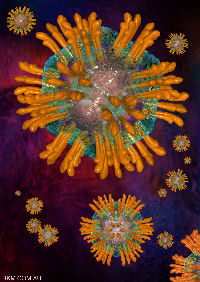
Hepatitis C virus particles. Copyright Russell Kightley Media

Today a welcome guest blog by a PhD student in the lab, Aderito Monjane: this paper was presented by him in a recent lab journal club, and I thought it was interesting enough to get a wider airing.

Phylogeography and molecular epidemiology of hepatitis C virus genotype 2 in Africa

Peter V. Markov, Jacques Pepin, Eric Frost, Sylvie Deslandes, Annie-Claude Labbe´ and Oliver G. Pybus

Journal of General Virology (2009), 90, 2086–2096

Hepatitis C virus (HCV) is an important human pathogen. There are 170 million chronically infected people worldwide, and 2-4 million new cases of infection annually. The disease manifests itself late – liver cirrhosis and hepatocellular carcinoma – and in the USA alone 9000 people die of it each year.

HCV is quite diverse. Six genotypes have been identified, and each further classified into subtypes. Some of these subtypes are geographically localized and others are globally distributed. Endemic subtypes are found in the tropics (e.g. genotype 2 and 1 are found in west Africa; genotype 4 in central Africa and the middle East), whereas ‘epidemic’ subtypes are more widely distributed.

The case for the spread, genetic diversity and origin of HCV genotype 2 is very interesting. Phylogenetic studies using sequences sampled from individuals in a) west Africa (around Gambia, Senegal), b) and slightly more to the east of these countries (around Ghana, Benin), and c) central Africa (around Cameroon and Central African Republic) revealed interesting facts.

  • West Africa is the origin of HCV genotype 2 and this region has the greatest amount of viral diversity. This genetic diversity decreases as one moves further to central Africa
  • Sequences from west Africa are found in regions outside of west Africa, e.g. in central Africa, Madagascar and the Caribbean island Martinique, thus reaffirming that west Africa is the origin of HCV genotype 2
  • The proportion of HCV genotype 2 relative to other genotypes decreases from west to central Africa. This reaffirms that there is movement of HCV genotype 2 from west to east.

Phylogenetic and molecular clock trees showed that the oldest common ancestor to the HCV genotype 2 isolates in existence worldwide came into being in the year 1091 (actually, there is 95% confidence that it was between year 709-1228), and in 1470 the first HCV genotype 2 strains afflicting individuals in the African continent came into being.

The connection between these existing HCV genotype 2 strain, the transatlantic slave trade, and the use of mass vaccination or treatment of illnesses is interesting in that it shows the inadvertent spread of viruses globally by human activities.

Ghana was the major port for slave trade. So it is perhaps of no coincidence that HCV genotype 2 strains found in the Caribbean island Martinique (as well as most of its human population) resemble the strains found currently in the Ghana-Benin region. Movement of African troops under French colonial rule from Senegal and Mauritius during WWI has also resulted in the global spread of current epidemic HCV-2 strains. An insidious effect of mass-treatment campaigns is exemplified in the different ways HCV genotype 2 spread in Cameroon and Guinea-Bissau. In Cameroon, under French colonial rule, doctors treated European colonialists and African natives against illnesses such as syphilis and yaws using intravenous drugs, before there was any awareness of blood-borne viral transmissions. As a result, by the 60’s HCV cases were higher in Cameroon compared to Guinea-Bisau, where the Portuguese colonialists used intravenous drugs to treat the European colonialists and their immediate workers only.

In summary, this study shows that there is west to east movement of HCV genotype 2, and decreasing genetic diversity away from the origin of diversity.