Archive for the ‘General Virology’ Category

Deliberate extinction: now for Number 3

3 August, 2011

I have written previously about the Rinderpest virus eradication campaign – and now it appears as though the final nail has in fact been hammered into the coffin’s lid while I wasn’t looking.  I thank my son Steven for noticing!

It was officially announced on 26th June, in Rome – the headquarters of the Food and Agriculture Organisation (FAO) – that “…for only the second time in history, a disease has been wiped off the face of the earth”.

From a New York Times article:

The long but little-known campaign to conquer rinderpest is a tribute to the skill and bravery of “big animal” veterinarians, who fought the disease in remote and sometimes war-torn areas — across arid stretches of Africa bigger than Europe, in the Arabian desert and on the Mongolian steppes.


The victory is also proof that the conquest of smallpox was not just an unrepeatable fluke, a golden medical moment that will never be seen again. Since it was declared eradicated in 1980, several other diseases — like polio, Guinea worm, river blindness, elephantiasis, measles and iodine deficiency — have frustrated intensive, costly efforts to do the same to them. The eradication of rinderpest shows what can be done when field commanders combine scientific advances and new tactics.

… The modern eradication campaign began in 1945, when the Food and Agriculture Organization was founded. But it became feasible only as vaccines improved. An 1893 version made from the bile of convalescent animals was replaced by vaccines grown in goats and rabbits and finally in laboratory cell lines; a heat-stable version was developed in the 1980s.

The interesting thing about Rinderpest virus is that it is probably a consequence of human’s development of agriculture and especially the keeping of livestock, that got it into animals in the first place: it is closely enough related to measles virus that it probably only diverged from it some time around CE 1000.

So it’s not just us that get animal viruses – our pets and our livestock can get them from us, too.

But it’s now time to concentrate on the next two: polioviruses and measles.  Vaccinate, brothers and sisters, vaccinate!!

From monkeys to humans, or…?

15 July, 2011

Adenovirus

A new Nature News item makes for interesting reading: it details how a new adenovirus, which had devastated a captive colony of titi monkeys, also jumped into a researcher working with them – and then into a family member who had had no other contact with the monkeys.

I put this comment up there:

While it may be unusual for adenoviruses to do this, there are a number of viruses which jump from monkeys to people – not the least of which are the HIVs.

This article, however, also raises to possibility that the virus may have gone the other way – that is, from humans to monkeys. This is also not that unusual; in fact, measles is a major risk factor in certain primate facilities, as certain monkeys can contract it easily, and often die.

The other possibility – that it came from a rodent or other animal – is potentially worrying, given that the virus was hitherto uncharacterised, and rodents tend to be ubiquitous.

Just goes to show: we really, really do need a Global Virome project, to pick up on all the little nasties out there.

Measles just won’t go away

6 June, 2011

I have written before in ViroBlogy about measles resurging in Africa (see: Measles in Zimbabwe from January 2010) – and now Larry Madoff, the Editor of the very worthy ProMED, makes the case that it is resurging all over.  And in the case of developed countries, largely because of simple stupidity.

From Larry:

Once nearly eradicated in much of the developed world, measles outbreaks are becoming more frequent in 2011. They are the result of increased global travel, lower rates of vaccination in poorer counties – and parents choosing not to vaccinate their children in the U.S., Europe and elsewhere [my emphasis] because of the now widely discredited myth that the measles, mumps and rubella vaccine causes autism.

Whenever people are on the move, there are risks of infectious diseases moving with them.

… [ fundraising message removed: go here to donate]

Measles kills an estimated 165,000 people each year, mostly in poor countries. Since January, however, measles outbreaks reported on ProMED mail have occurred not only in poorer nations such as Bangladesh, Somalia, and Pakistan, but in such countries as France, Spain, England, Canada, Australia, New Zealand, and within the U.S. from Massachusetts to Utah, Minnesota to New Jersey. An outbreak of measles in the Canary Islands and several South American countries, in fact, appears to be the result of unvaccinated British and German tourists bringing the disease to their shores.

As I said, then: stupidity, in the case of unvaccinated tourists.  And lack of vaccine or problems in delivery in the case of the poorer nations.

The first is easy to fix: simply don’t let any tourists in without proof of measles vaccination, as presently happens in Brazil for yellow fever, for example.  It would be done for all the wrong reasons, but hey, whatever works!

The second…is harder.  Measles vaccines are good: they are effective and safe, whether given singly or in combination (eg: measles-mumps-rubella; MMR) – and pretty cheap; cheap enough to be included in the free Extended Programme of Immunisation (EPI) bundle in many countries.  But the simple fact is that they are not getting to many of the folk who need them – and given that you need a minimum of 80% coverage to get “herd immunity”, the virus just keeps on being transmitted around.

And measles is not a trivial disease, whatever the lay population thinks: if it can kill or cause severe complications in healthy, well-fed children, imagine how much worse the consequences of infection are in malnourished, sickly children. As mentioned above, 165 000 people – and mainly children – die every year from measles.

From the WHO Measles Fact Sheet:

Measles is a highly contagious vaccine-preventable disease caused by the measles virus, a member of the genus Morbillivirus in the family Paramyxoviridae. It is spread by droplets or direct contact with nasal or throat secretions of infected persons; less commonly by airborne spread or by articles freshly soiled with secretions of nose and throat. Measles is one of the most readily transmitted communicable diseases and probably the best known and most deadly of all childhood rash/fever illnesses. [my emphasis].

The scale of the problem can be seen here:

Anywhere that isn’t blue has less than 90% coverage – and look at Africa…mostly 50-79% coverage, and that is simply not enough.

Look again at the complications of natural measles infections – from the CDC Measles Complications page:

About 30% of measles cases develop one or more complications, including

  • Pneumonia, which is the complication that is most often the cause of death in young children.
  • Ear infections occur in about 1 in 10 measles cases and permanent loss of hearing can result.
  • Diarrhea is reported in about 8% of cases.

These complications are more common among children under 5 years of age and adults over 20 years old.

Even in previously healthy children, measles can be a serious illness requiring hospitalization. As many as 1 out of every 20 children with measles gets pneumonia, and about 1 child in every 1,000 who get measles will develop encephalitis. (This is an inflammation of the brain that can lead to convulsions, and can leave the child deaf or mentally retarded.) For every 1,000 children who get measles, 1 or 2 will die from it. Measles also can make a pregnant woman have a miscarriage, give birth prematurely, or have a low-birth-weight baby.

In developing countries, where malnutrition and vitamin A deficiency are common, measles has been known to kill as many as one out of four people. It is the leading cause of blindness among African children. [my emphases]

Sub-acute sclerosing panencephalitis (SSPE) is a very rare, but fatal degenerative disease of the central nervous system that results from a measles virus infection acquired earlier in life. Analysis of data from an outbreak of measles in the United States during 1989-1991 suggests a rate of 4-11 cases of SSPE per 100,000 cases of measles. A risk factor for developing this disease is measles infection at an early age.

If this doesn’t scare you, then you are invincibly ignorant.  Or simply stupid.  Which the Bill & Melinda Gates Foundation is not – they have supported new measles vaccine development since 2000; they are also recently involved along with the Lions Club International Foundation in the Measles Initiative, which is:

“…a worldwide effort to protect children from measles and strengthen routine immunization services. UNICEF, World Health Organization (WHO), U.S. Centers for Disease Control (CDC), American Red Cross, and the United Nations Foundation are among the organizations contributing to these efforts since 2001.”

From their site:

An estimated 164,000 people – 450 a day – died from this easily preventable disease in 2008. Costing less than US $1 to vaccinate a child, the measles control strategy represents one of the most cost-effective health interventions available.

Yet, many developing countries that are facing multiple health challenges have limited funds, making financial support from the Measles Initiative critical. A steep decline in donor investment has resulted in a significant funding gap. Unless conditions improve, the shortfall will put the goal and millions of children at risk.

We can eradicate measles.  We really, really can – but it starts with vaccinating your children, and yourself.  Then helping vaccinate others.


XMRV: More nails in the coffin

5 June, 2011

Except that the title could be “More nails from the Coffin”, given the involvement of someone of that name in amassing the growing weight of evidence against XMRV as an actual natural pathogen – but I digress.

The Nature News blog of 31st May has a very damning collation of views and evidence from around the scientific community – but chief among these is the fact that Science, which published the original paper describing the finding of XMRV in human-derived specimens, has called on the authors to retract it.  The evidence – partly gathered by John Coffin – seems clear: XMRV is a recombinant retrovirus which is a chimaera of two mouse viruses which got into cells derived from a human prostate tumour when these were cocultured with mouse cells.  It is not a “natural” virus, but a laboratory accident; it probably has no relevance to any human disease.

Another interesting and more philosophical view derived from the XMRV saga is that of The Independent, of 3rd June: Steve Connor in “Science Studies” points out that this is, in fact, how science really works – or should work.  That is, that someone publishes something that is really interesting – but which becomes contentious because other can’t replicate it, and eventually is wholly or partially discredited.  All out in the open, in the scientific press.

Some folk – acting with perfect hindsight – then bemoan the fact that the original article was published at all; others are horrified at the waste of money as people dig around and around in the same hole.  What they forget is that progress has been made, whether or not the initial revelation was in fact true.  And that is how science should work.

And because of that sort of iteration, XMRV is going the same way as cold fusion, folks.  And here’s a goodbye….

Prune(lla) juice shall set you free

25 May, 2011

I couldn’t resist that title, even though it has a qualifier for the sake of correctness: it stems from South African graffiti from the 1970s or so (collected into a book by Arnold Benjamin), and I was irresistibly reminded of it by a paper recently published in Virology Journal.  Of course, it is a pity that Prunella vulgaris is in fact a mint, and not a stone fruit, but there you go.  Yet more evidence that herbal extracts can act against viruses – and in this case, against one that really, really does does need some antagonists.

Inhibition of HIV-1 infection by aqueous extracts of Prunella vulgaris L.

ChoonSeok Oh, Jason Price, Melinda A Brindley, Mark P Widrlechner, Luping Qu, Joe-Ann McCoy, Patricia Murphy, Cathy Hauck and Wendy Maury*

Virology Journal 2011, 8:188 doi:10.1186/1743-422X-8-188  Published: 23 April 2011

Background

The mint family (Lamiaceae) produces a wide variety of constituents with medicinal properties. Several family members have been reported to have antiviral activity, including lemon balm (Melissa officinalis L.), sage (Salvia spp.), peppermint (Mentha × piperita L.), hyssop (Hyssopus officinalis L.), basil (Ocimum spp.) and self-heal (Prunella vulgaris L.). To further characterize the anti-lentiviral activities of Prunella vulgaris, water and ethanol extracts were tested for their ability to inhibit HIV-1 infection.

Results

Aqueous extracts contained more anti-viral activity than did ethanol extracts, displaying potent antiviral activity against HIV-1 at sub μg/mL concentrations with little to no cellular cytotoxicity at concentrations more than 100-fold higher. Time-of-addition studies demonstrated that aqueous extracts were effective when added during the first five hours following initiation of infection, suggesting that the botanical constituents were targeting entry events. Further analysis revealed that extracts inhibited both virus/cell interactions and post-binding events. While only 40% inhibition was maximally achieved in our virus/cell interaction studies, extract effectively blocked post-binding events at concentrations similar to those that blocked infection, suggesting that it was targeting of these latter steps that was most important for mediating inhibition of virus infectivity.

Conclusions

We demonstrate that aqueous P. vulgaris extracts inhibited HIV-1 infectivity. Our studies suggest that inhibition occurs primarily by interference of early, post-virion binding events. The ability of aqueous extracts to inhibit early events within the HIV life cycle suggests that these extracts, or purified constituents responsible for the antiviral activity, are promising microbicides and/or antivirals against HIV-1 [my emphasis].

Worm specificity: transmission of a plant virus

20 May, 2011

I have taught – when I did teach that is, two years ago now – for years that most plant viruses are transmitted by one or other form of vector, and that this transmission is very often relatively specific, even though it usually does not involve multiplication of the virus in the vector.  Unfortunately, this is an under-studied area (like most of plant virology), and even more so now in this era of folding plant virology into “biotic stress” and other concocted disciplinary areas.

However: amid the gloom is a bright light (or two – see here as well for some local SA news), and it comes from a PLoS Pathogens paper entitled “Structural Insights into Viral Determinants of Nematode Mediated Grapevine fanleaf virus Transmission” [need to leave out the italics there, guys; only a species name as an abstract concept gets italicised, and this is an entity you’re talking about!].

Schellenberger P, Sauter C, Lorber B, Bron P, Trapani S, et al. (2011). PLoS Pathog 7(5): e1002034. doi:10.1371/journal.ppat.1002034

Many animal and plant viruses rely on vectors for their transmission from host to host. Grapevine fanleaf virus (GFLV), a picorna-like virus from plants, is transmitted specifically by the ectoparasitic nematode Xiphinema index. The icosahedral capsid of GFLV, which consists of 60 identical coat protein subunits (CP), carries the determinants of this specificity. Here, we provide novel insight into GFLV transmission by nematodes through a comparative structural and functional analysis of two GFLV variants. We isolated a mutant GFLV strain (GFLV-TD) poorly transmissible by nematodes, and showed that the transmission defect is due to a glycine to aspartate mutation at position 297 (Gly297Asp) in the CP. We next determined the crystal structures of the wild-type GFLV strain F13 at 3.0 Å and of GFLV-TD at 2.7 Å resolution. The Gly297Asp mutation mapped to an exposed loop at the outer surface of the capsid and did not affect the conformation of the assembled capsid, nor of individual CP molecules. The loop is part of a positively charged pocket that includes a previously identified determinant of transmission. We propose that this pocket is a ligand-binding site with essential function in GFLV transmission by X. index. Our data suggest that perturbation of the electrostatic landscape of this pocket affects the interaction of the virion with specific receptors of the nematode’s feeding apparatus, and thereby severely diminishes its transmission efficiency. These data provide a first structural insight into the interactions between a plant virus and a nematode vector.

And yes, they do – and illuminate very nicely the concept of structural complementarity as a means of ensuring specific transmission by any vector of a plant virus.  That this can happen in the absence of any replication of the virus in the vector, as is the case here and in fact for most plant virus / vector associations, indicates that an evolutionary process that probably started with fortuitous low-efficiency transmission by pure random chance of an ancestor GFLV  by the nematode, resulted in selection of increasingly more efficiently transmitted viral variants.

The same sort of thing has undoubtedly happened for specific aphid transmission of viruses like Cucumber mosaic virus and other cucumoviruses [note to virologists: correct usage!] and Potato virus Y and other potyviruses, and my favourite geminiviruses.

I look forward to an explosion of research in this area, not the least because it may lead to simple agents that specifically block the transmission.  One can hope…B-)

Should remaining stockpiles of smallpox virus be destroyed?

19 April, 2011

Our Department has a journal club every Friday, when research folk (staff and students) get together to hear a postgrad student present an interesting new paper.  Last Friday Alta Hattingh from my lab gave a thought-provoking and insightful presentation on whether or not smallpox virus should be destroyed – so I asked her to turn it into a blog post.

Should remaining stockpiles of smallpox virus (Variola) be destroyed? 

Raymond S. Weinstein

Emerging Infectious Diseases (2011), Vol 17(4): 681 – 683
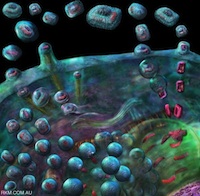
Smallpox virus replication cycle.  Russell Kightley Media

Smallpox virus replication cycle. Russell Kightley Media

Smallpox is believed to have emerged in the Middle East approximately 6000 to 10 000 years ago and is one of the greatest killers in all of human history, causing the death of up to 500 million people in the 20th century alone.  Smallpox is the first virus to ever be studied in detail and it is also the first virus for which a vaccine was developed.  Smallpox was beaten by the Jenner vaccine (first proposed in 1796) and the disease was declared eradicated in 1980 in one of the greatest public health achievements in human history.

The last officially acknowledged stocks of variola are held by the United States at the Centres for Disease Control and Prevention (consisting of 450 isolates) and in Russia at the State Research Centre of Virology and Biotechnology (various sources place the number of specimens at ~150 samples, consisting of 120 strains).  This includes strains that were collected during the Cold War as potential for biological weapons due to their increased virulence. Then, there is also the added possibility that stolen smallpox cultures are in the hands of terrorists organizations.

In 2011 the World Health Organisation (WHO) plans to announce its recommendation for the destruction of all known remaining stockpiles of smallpox virus.  They have wanted to destroy the virus ever since 1980 when the Secretary of Health and Human Services, Louis Sullivan, promised destruction of US stockpiles within 3 years. This never happened in the US or Russia and no official recommendation for destruction have been recommended by the World Health Assembly.  In 2007 the final deadline for a decision was postponed until 2011 as no consensus could be reached among the executive board of the WHO.

The only real benefit that could be gained from destroying all known remaining stockpiles of smallpox virus in the world would be the prevention of causing a lethal epidemic due to theft or accidental release of the virus.  However, according to Weinstein destruction would only provide an illusion of safety and that the drawbacks of eliminating variola from existence are many.

In this paper Weinstein mentions the possible reasons behind the hesitance to destroy smallpox.  The prolonged existence of smallpox along with the important clinical implications of its high infectivity and mortality rates suggests that the human immune system evolved under the disease’s evolutionary influence.  In the last decade research has been done which suggests that variola (and vaccinia) have the ability to alter the host immune response by targeting various components of the immune system.  We are only beginning to understand the complex pathophysiology and virulence mechanisms of the smallpox virus.  An example of the importance of smallpox in human evolution is the CC-chemokine receptor null mutation (CCR5Δ32), which first appeared in Europe ~3500 years ago one person and today it can be found in ~10% of all those from northern European decent.  The mutation prevents expression of the CCR5 receptor on the surface of many immune cells and provides resistance to smallpox.  This same mutation also confers nearly complete immunity to HIV. In a recent study done by Weinstein and co-workers (2010) it was postulated that exposure to vaccinia and variola may have previously inhibited successful spread of HIV, suggesting that we swopped out one major disease for another. By eliminating the variola stockpiles from existence on-going research in this direction might be hampered and the possibility future studies employing intact virus will be rendered impossible.

Finally, we are capable of creating a highly virulent smallpox-like virus from scratch or a closely related poxvirus through genetic manipulation.  This renders moot any argument for the destruction of remaining stockpiles of smallpox in the belief that it would be for the benefit of protecting mankind.

In an editorial of the Vaccine journal, the editors make a compelling case in favour for the destruction of remaining stockpiles of smallpox virus.    To follow is their take on the situation:

Why not destroy the remaining smallpox virus stocks?

Editorial (by J. Michael Lane and Gregory A. Poland)

Vaccine (2011), Vol 29:  2823 – 2824

The Advisory Committee on Variola Virus Research (created in 1998 as part of the WHO) concluded that live variola is no longer necessary except to continue attempts to create an animal model which might mimic human smallpox and assist in the licensure of new generation vaccines and antivirals.

The editors feel that scientific recommendation for keeping smallpox stocks need to be scrutinized and that a number of political and ethical issues need to be addressed.  Below are comments by editors on these issues:

Scientific issues:

The smallpox virus is no longer needed to elucidate its genome, 49 strains have been sequenced and published, the editors feel that there is no need to sequence additional strains.  The smallpox virus can be destroyed as it is possible to reconstruct it from published sequences or to insert the genes of interest into readily available strains of vaccinia or monkeypox.  Refinements regarding diagnostics can be made by using other orthopoxviruses or parts of the smallpox strains already sequenced; vaccines have been produced that are far less reactogenic than the first and second generation of vaccinia vaccines and they are very effective against other orthopoxviruses.  Finally, the development of an animal model is difficult to perfect as variola is host-specific, thus there are no guarantees that a model will be found that mimics the pathophysiology of smallpox in humans.

Political/ethical issues:

The US is a supporter of the WHO and the UN and failure to comply with the request of the World Health Assembly jeopardizes the US’s potential to work with the UN to further their foreign policy and population health goals.  Biological weapons have been banned from the US military arsenal and there is no way they would use a biological weapons such as smallpox whether it be in offense or defence.  The editors reckon that the risk of a biological warfare attack using smallpox is highly unlikely as terrorists who have the knowledge and sophistication to grow and prepare smallpox for dispersal would realize that they could cause harm to their own countries.  Apart from that, Western nations have the facilities to isolate and vaccinate against smallpox in a timely manner.

According to the editors there is no ethical way to justify maintaining an eradicated virus.  Even though the possibility of accidental release is very small, it is an unacceptable risk.  Maintenance of the smallpox virus stocks is expensive and time consuming, it also burdens the CDC without scientific merit and their resources are better used to protect the public from infectious diseases.

In conclusion the editors maintain that the remaining smallpox stocks should be destroyed and the world should make possession of the virus an “international crime against humanity”.

We are presented with two very different views with regards to whether or not smallpox virus stocks should be destroyed forever.  The WHO meets again this year to decide the final fate of smallpox. Will the board reach consensus or will the smallpox virus yet again receive a stay of execution? 

Note added 1 Oct 2015

Interestingly, I found the following text written by me in my archive of articles – published as a Letter in the now sadly defunct HMS Beagle, in 1999:

HMS Beagle

( Updated May 28, 1999 · Issue 55) http://news.bmn.com/hmsbeagle/55/viewpts/letters

Use logic, not fear

The destruction of all (known) stocks of smallpox virus (Reprieve for a Killer: Saving Smallpox by Joel Shurkin) seems to be a very emotive issue. Perhaps, if people looked at it less in terms of a threat, and more in terms of a resource, most of the problem would go away. For example, although the original article made mention of monkey pox, and how it was almost as dangerous as smallpox, and appeared to be adapting to human-to-human spread, nothing has been said about investigating why smallpox was so much more effective at spreading within human populations than monkey pox is. It is all very well having the smallpox genome sequence; however, without the actual DNA, it is difficult to recreate genome fragments of the size that may be needed to make recombinant viruses to investigate the phenomenon of host/transmission adaptation. Additionally, without the actual virus, it will be impossible to compare the effects of a doctored vaccine strain with the real thing. Destroying known stocks of the virus will not affect the stocks that are most likely to be used for bioterrorism. It will, however, handicap research into ways of combating the virus/understanding how it worked in the first place.
What are you looking for?

18 April, 2011

It is quite educational sometimes, to look and see what it is people are looking for, when they end up on ViroBlogy.  Here are the queries over the course of the last month:

Search Views
ebola 577
ebola virus 64
rolling circle 44
how did viruses evolve 29
mimivirus 21
despair posters 19
flaviviridae 17
lassa fever 14
bacterial dna replication 11
ebola virus patients 11
viroblogy 9
where did viruses evolve from 9
ebola pictures 9
rift valley fever 9
what did viruses evolve from 9
geminivirus 8
west nile virus structure 8
ebola patient 8
where h1n1 came from 7
ebola virus pictures 7

I count 6 mentions of Ebola, 4 of virus evolution generally…and a gratifyingly high number of queries on rolling circle replication, given our lab’s interest in it.  Of course, I have had long had an obsession with Ebola and similar nasties, and have been deeply interested in the evolution of viruses ever since I started studying them, so it is good to see others share my interests!

So in the spirit of giving people what they want, look for blog posts with titles like “The evolution of viruses using rolling circle replication: its complete non-relevance to Ebola and H1N1 influenza viruses”.  But seriously – I will be putting up some more posts around the most popular subject areas, if only to help make sure that The Truth Gets Out There.

Ed Rybicki

InCROIable quatre!

3 March, 2011

This morning, I’m afraid I experienced rather more secondary effects from the previous night’s entertainment. Thanks to my friend Sylvie, I got invited to the Walker lab party, where I found myself hopelessly outclassed, both scientifically and alcoholically*. Over the course of the evening, I’m sure we worked out exactly how to both cure HIV infection, and produce an effective vaccine, but by the time I awoke (somewhat disorientedly) this morning, it had all disappeared in a mist of Sam Adams.

XMRV – the incredible vanishing virus

As you may recall, in 2009 a new retrovirus called XMRV was reported to be associated with chronic fatigue syndrome (CFS – Lombardi and colleagues 2009). It had previously been reported to be associated with prostate cancer. These results have been the subject of much controversy, and today there was a one-hour discussion session on XMRV. Speakers gave two-minute presentations of their recent results, and this was followed by comments from the floor. The highlights were as follows:

Four different labs, using different techniques reported that they basically did not find XMRV in humans.

William Switzer (CDC, USA) – Tested 45 CFS patients and 42 controls using the same technique as that reported in the Lombardi paper, and looked for serology by Western blot. ZERO POSITIVES.

Timothy Henrich (Brigham and Women’s Hospital, USA) – Tested 293 diverse and varied patients, and 3 CFS patients reported to be XMRV positive in a previous study by nested PCR. ZERO POSITIVES.

Mary Kearney (NCI Frederick, USA) – developed a quantitative PCR assay with single-copy sensitivity to detect XMRV. Reported experimental infection in two macaques. In those two animals, XMRV proviral DNA persisted in blood cells, and was consistently detected. Using this technique, they tested 134 prostate cancer patients, and 4 patients previously reported as XMRV positive in the Lombardi study. ZERO POSITIVES.

Finally, Oya Cingoz (Tufts, USA) and Vinay Pathak (NCI Frederick, USA) reported on the origins of XMRV. This virus was first described in a protstate cancer cell line called 22Rv1, which secretes XMRV. This cell line definitely carries the virus, but how did it get there?

Like many immortalized cell lines, 22Rv1 started out as a human tumor transplanted into immunodeficient “nude” mice in what is known as a xenograft. It was passaged in this way many times in different types of mouse – suggesting that 22Rv1 may have acquired XMRV from its mouse hosts. This is plausible because mice carry many types of endogenous retroviruses in their genomes. Cingoz and Pathak showed that althoug XMRV is not identical to any known mouse retroviruses, the left-hand (5′) half of XMRV is identical to one particular mouse retrovirus, while the right-hand (3′) half is identical to a different mouse retrovirus. XMRV is therefore a new virus produced by recombination between two distinct mouse viruses. This all happened since 1992, when the prostate cancer that gave rise to 22Rv1 was first transplanted into nude mice. It is not a virus that has been circulating in human beings.

One would have liked to have heard the other side of the story from the authors of the Lombardi paper, but they didn’t show up to face the data. I guess that tells its own story.

So just to wind up, XMRV is NOT associated with CFS, and does not appear to be present in the human population (although one might wonder whether researchers working with the 22Rv1 line might in fact be at risk of infection).

If you have CFS, do not buy a test for XMRV (they are entirely BOGUS, as Simon Singh might have said), and do not ask your doctor for antiretroviral medication (unless you are HIV positive, of course). It will be a waste of money, and you will just get the side effects of the medication, without any benefit.

And that was it for the 18th CROI!

Dorian

* OK, maybe only scientifically

…and my thanks, Dorian, for a job really well done! – Ed

InCROIable trois…

2 March, 2011

Going into day 3, and the only ill effect carried over from last night’s French AIDS research party is a mild ringing in the ears from ANRS director François Delfraissy’s experiments with audio feedback, while he was thanking us all for our efforts. Next time, please don’t stand so close to the speakers when you’re talking into the microphone, Professor Delfraissy!

One of this morning’s plenary talks was from Stephen Cherepanov, on the structure of the HIV integrase complex, but since this has already been covered in Viroblogy, I don’t need to say any more about it. Rather fortunately, because describing the 3-D structures of the integrase-DNA complex would have been far, far beyond my literary prowess. “Yes, well, try to imagine a couple of short tube-shaped sections, close together, but held at an angle – not parallel to one another. Those are the ends of the proviral DNA, just before strand-transfer. They’re being held in place by what looks something like a Henry Moore sculpture, and the wiggly orange bit, close to one end of short tube-shaped DNA ends – that’s the active site of the enzyme.” You see what I mean?

Anyway, later on there was a session on HIV-host cell interactions, one of which harked back to those pesky microRNAs from the other day. Carlos de Noronha (Albany Med Coll, USA) told a story that led from Vpr – one of the HIV’s small proteins – to micro RNA. Vpr has several effects on infected host cells, including cell cycle arrest (infected cells stop dividing) and inducing expression of molecules on the surface of the infected cell that prevent infected cells being killed by “Natural Killer” cells of the immune system. The way Vpr does this, apparently, is by interacting with a ubiquitin ligase complex (DECAF1-CRL4). Ubiquitin ligases stick a protein called ubiquitin onto other proteins, and this ubiquitin tag marks its victim for destruction. De Noronha’s group set out to identify what other cellular proteins are ubiquitinylated by DECAF1-CRL4, and could therefore be influenced by Vpr. Their hunt turned up Dicer, which is involved in producing miRNAs. They showed that Vpr does indeed induce DECAF1-CRL4 to tag Dicer for degradation, and that viruses deficient in Vpr replicate efficiently  only when Dicer is artificially depleted. Now it’s not at all clear why destroying Dicer is useful for the virus, but in answer to a question, de Noronha suggested that infected cells may use miRNA to shut down expression of host factors necessary for HIV replication. In that case, it would be useful for HIV to block production of cellular miRNA.

Micro RNA came back again in the afternoon when Mary Carrington (NCI Frederick) presented data in press in Nature dissecting an association between a genetic polymorphism in HLA-C, and control of HIV infection. The HLA region of the genome controls, to a large extent, the immune response against infectious diseases, including viruses. It is also extremely polymorphic (that is, variable between individuals) and this polymorphism is what ensures that the human race would not be entirely wiped out if an extremely nasty, new infection were to appear. Because of the variability in the immune response between individuals, no virus can be perfectly adapted to every individual in the whole population. Variations in HLA-B genes modify the HLA-B proteins, and this alters their ability to present HIV epitopes, which in the end results in people with certain HLA-B variants (or alleles) such as HLA-B57 and B27 controlling HIV infection better.

The HLA-C polymorphism associated with control of HIV infection, however, does not alter the HLA-C protein, so until this afternoon, it has been rather mysterious how it might work. Well, to cut a long story illustrated by several slides short, it turns out that the protective HLA-C alleles have modifications in the 3′ non-coding region of the gene, and these changes occur in a microRNA (miR-148) binding site. In variants which can be targeted by miR-148, the level of HLA-C expression on the surface of cell are lower. Variants associated with better control of HIV infection “escape” from miRNA148 control, and result in higher HLA-C expression. Moral of the story – even “silent” gene polymorphisms can in fact be functional, and rather strangely, it appears that avoiding control by microRNA can be a mechanism of host defence as well as a means of virus attack.

Also, a very interesting talk from David Evans (Harvard, USA) about how different primate lentiviruses avoid being retained on the surface of the infected cell by Tetherin. One interesting point that he illustrated was that HIV-1 type M viruses are much better at escaping from Tetherin’s grip than HIV-1 type O and type N viruses. This could be one reason why HIV-1 type M viruses are more infectious, and why they, rather than the other two types of HIV-1, caused the current HIV pandemic.

Dorian