Archive for the ‘General Virology’ Category

InCROIable Deux

1 March, 2011

In which the redoubtable Dorian reports further on the doings at CROI 2011.

Neutralizing HIV

Michel Nussenzweig (Rockefeller, USA) gave everyone an immunology lesson in order to explain what makes broadly neutralizing anti-HIV antibodies so special. So carrying on with the immunology lesson theme, I should just point out that neutralizing antibodies are those that not only stick to the surface of a virus, but actually prevent it from infecting a susceptible cell. So far, all effective antiviral vaccines work because they can induce these neutralizing antibodies. So that’s what neutralization is, now where does the “broadly” part come in? HIV is of course a highly variable virus, so “narrowly” neutralizing antibodies only neutralize a small number of HIV variants, while “broadly” neutralizing antibodies can block infection from a wide range of different HIV variants.

To date, none of the HIV vaccine candidates tested has been able to induce broadly neutralizing anti-HIV antibodies effectively, and most HIV-infected people do not make this type of antibody during natural infection. However some people with HIV infection do produce broadly neutralizing antibodies (It should be stressed however, that HIV+ individuals who make broadly neutralizing antibodies are not cured of their infection). The reason for studying antibodies from such people is that if we can understand how broadly neutralizing antibodies are formed during natural infection, then perhaps we might find a way to induce the same kind of antibodies with a HIV vaccine.

Using a variety of fantastically ingenious techniques, Nussenzweig showed us that the magical processes of hypermutation and affinity maturation are essential for the potency and the breadth of broadly neutralizing anti-HIV antibodies. These processes occur in the germinal centres of lymph nodes, and he presented some amazing imagery data to show that the maturation of antibodies is controlled by the CD4+ T-cells in the germinal centre that “help” B-cells produce antibodies. So the final message, I guess, is that CD4+ T-cell responses are going to be essential for a vaccine to be able to induce a good neutralizing antibody response.

However, that still doesn’t resolve the “broad” part of the problem – how to focus the antibody response onto the sensitive parts of the virus. Indeed, as a presentation in the afternoon from Laurent Verkoczy (Duke Univ. USA) showed, this may be extremely difficult to achieve. For one broadly neutralizing epitope on HIV (the so-called MPER epitope), the antibodies that bind to this site on the virus are also auto-reactive. In a mouse model, he showed that the cells that carry these antibodies are “strangled at birth” by the mechanisms that prevent our immune system from damaging ourselves. These antibodies have therefore probably been deleted from most people’s immune repertoire, and are therefore not available to be selected and amplified by vaccination.

So I’m afraid no-one has yet found the way to induce these broadly neutralizing antibodies.

A virus that slows down HIV

GBV-C is a virus infecting humans that is transmitted by sex, blood transfusion, and from mother to child – rather like HIV. It is a flavivirus (other family members include yellow fever virus, and hepatitis C virus), and because of its mode of transmission, GBV-C is often found in HIV seropositive people. It does not seem to cause disease in people who are infected either acutely, or chronically. Now, you might expect that being infected by two different viruses at the same time would be worse than just being infected by one. But remarkably, the 20-40% of HIV+ individuals who have chronic GBV-C infection have SLOWER disease progression than those who only have HIV infection (at least in European/North American patient cohorts).

There were two talks presenting results trying to explain this intriguing observation. Molly Perkins (NIAID, USA) presented data from a study of HIV-infected patients in the Gambia. She found that GBV-C coinfection did not change T-cell activation, but reduced expression of the HIV coreceptor CCR5 on T-cells. In direct contrast to these results, Jack Stapleton (U Iowa, USA) presented data showing the exact opposite. In his study, GBV-C lowered T-cell activation, but had no effect on CCR5 expression.

How can two groups looking at the same question get such discordant results? Jack Stapleton noted that the different studies on this topic have been conducted in different regions of the world. Both HIV and GBV-C show geographical variation – that is to say, the HIV that infects people in Iowa is not the same as the HIV that infects people in the Gambia, and the same goes for GBV-C. So one plausible explanation may be that different types of GBV-C have different biological effects.

Not wanting to send the room into an uproar, I didn’t ask the question that immediately sprung to my mind – when are we going to test GBV-C infection as a therapeutic intervention?

Dorian
Lecturer in Microbiology, University of Nantes

InCROIable…Dorian McIlroy reports

28 February, 2011

The penalty for winning a competition here on ViroBlogy is writing an article for ViroBlogy – 2nd prize would, of course be writing TWO articles.  Mind you, as two-time winner, regular commenter Dorian McIlroy gets to do just that.  He has volunteered to report daily from CROI 2011, the 18th Conference on Retroviruses and Opportunistic Infections in Boston, that’s on right now.  Thanks Dr D!

“So here I am in the snow in Boston at the 18th CROI. The opening talk is from Bryan Cullen (Duke, USA) on viruses and micro RNA, known as miRNA. As readers may know, there are three main functions types of RNA inside cells. Messenger RNA (mRNA) is the intermediate between a sequence of DNA and the protein that the DNA sequence encodes. It carries the message, so to speak, telling the protein synthesis machinery what protein to make.  The two other main types of RNA (tRNA and rRNA) are involved in the translation of the mRNA message into protein.

However, in addition to these common or garden types of RNA, cells also produce very small RNA molecules, that do not code for proteins, and are not directly involved in protein synthesis. So what are they for? Well, we will have to wait till Prof. Cullen tells us. Right now, John Coffin (Tufts, USA) is giving the opening talk. There are about 4000 delegates, all lined up in a big auditorium. As you can imagine, the speaker is a little tiny blob at a lectern way, way up at the front. Fortunately, the
speaker’s head and torso is projected on a big screen at the same time.  The films of all the talks are available on the CROI website (www.retroconference.org), which kind of defeats the purpose of  my writing these blog posts I guess…..[NO!  Ed]

But  on with Bryan Cullen. miRNAs are expressed in all multicellular organisms. There are over 1000 of these miRNAs in humans, and their role is to regulate mRNAs – so in fact they control gene expression. In plants and insects, some miRNAs have anti-viral functions, but this is not the case in mammals. In fact, at least one human virus (HCV) uses a host cell miRNA for its own replication.

In addition, some DNA viruses – mostly herpesviruses – also code for miRNAs. One of these is Epstein-Barr Virus (EBV) which is associated with several cancers. When EBV infects B-lymphocytes from the blood, these cells grow in an uncontrolled way (that is, they become pre-cancerous).   It turns out that only one of the EBV miRNAs (BHRF1-2 if you really want
to know) is involved in turning normal B-cells into pre-cancerous cells.  Dr Cullen then goes on to explain an interesting technique called “PAR-CLIP” that allows you to identify the target genes of a particular miRNA, and gives us a list of the cellular genes targeted by  BHRF1-2.

Take-home message – some oncogenic DNA viruses use miRNAs to manipulate host cell biology, and this is involved in their ability to induce cancer.

This is followed by a harrowing story from Fred Hersch, of his own brush with death due to HIV/AIDS. Fortunately, he survived, due to the extraordinary efforts of the ICU at St Vincent’s hospital in New York, and is now playing piano for us all.

After the musical interlude, Anthony Harries (now at the International Union against TB and kung diseases in Paris) gives an excellent talk (hey – not that the first talk wasn’t excellent too) describing his time as head of HIV/AIDS health care in Malawi. He was there when HIV seroprevalence rose from less than 1% to about 15% in the adult population. For several years in the 1990s and the beginning of the century, no treatment was available to stop people from dying. During that
period, 90% of patients diagnosed with stage 4 AIDS were dead one year later. That began to change, he says, with the world AIDS conference in Durban in 2000, where international efforts to make antiretroviral therapy (ART) available in sub-Saharan Africa began to take shape. He then goes on to explain how ART is implemented in Malawi – and shows how coffin sales in one district have plummeted over the last few years. This is the real clinical success of making ART available – the decade-long wave of deaths has abated.

That was the good news. Now for the bad news. Transmission rates are still high – with an estimated 70 000 new HIV infections in Malawi each year. So the HIV problem has certainly not gone away, it has just been contained.  Secondly, current guidelines for starting ART depend on a HIV+ individual’s CD4+ T-cell count, and if you don’t have the means to determine the CD4 count (of the 400 ART centres in Malawi, only about 50 have the machines to measure CD4 T-cell counts), then you can’t start treating all the people who need it. He ends by making a convincing case for, at the very least, giving ART to all pregnant seropositive women in Malawi (and I guess, in the whole of Africa), with a clear recommendation that they continue on medication indefinitely. The objectives of this approach would be to keep mothers alive and healthy while their children
are growing up, and to ensure that the next generation of children are born HIV-free.

And that’s it for the first day.”

Dorian

No hypothetical vaccines please!

14 January, 2011

A new editorial in Elsevier’s Vaccine, by Gregory Poland and JR Hollingworth, gives one much food for thought…especially if one and one’s associates are engaged in vaccinology, however quixotic that quest may be.

Especially quixotic when certain editors take 11 months not to publish one’s HIV vaccine paper, but that’s a story for another day…!

The article is entitled “From Science II to Vaccinology II: A new epistemology“, and is a thoughtful and quite intellectually challenging piece of work.

I have previously indicated that I am not a fan of hypothesis-driven science, however well entrenched it is in the psyches of most who practice it – in fact, I have gone as far as claiming elsewhere (thanks, Alan C!):

“Profound Insight No. 1: hypotheses are the refuge of the linear-thinking.

…I am quite serious in disliking hypothesis-driven science: I think it is a irredeemably reductionist approach, which does not easily allow for Big Picture overviews, and which closes out many promising avenues of investigation or even of thought. And I teach people how to formulate them so they can get grants and publications in later life, but I still think HDS is a tyranny that should be actively subverted wherever possible.”

And here we have two eminent scientists agreeing with me!  Not that they know that they are (or care, I am sure), and nor is it important – for what they have done is write a tight and carefully reasoned justification for moving away from the classical approach in vaccinology, as the complexities of the immune system and responses to pathogens and vaccines render the reductionist approach inadequate to address the problems at hand, and especially those presented by rapidly-mutating viruses.

This really is quite a profound suggestion for change, as the world of vaccinology is notoriously conservative, and it is really difficult to get people even to discuss only mildly paradigm-nudging concepts – oh, like cellular responses possibly being as important for protection against papillomaviruses as sterilising antibody responses? – let alone publish them.

Their final paragraph is especially apposite:

As we move into the world of Vaccinology II, or the “second golden age of vaccinology”, success will come only with the willingness to minimize the current Newtonian framework of thinking, and to adapt a new framework (Science II) that requires novel advanced bioinformatic and chaos theory-like analytic approaches, as well as multi-level systems biology approaches to studying currently unpredictable and uncertain self-organizing complex systems such as host immune response generation. Such work is difficult, expensive, challenging, and absolutely necessary if major advances are to occur in vaccine biology generally, and vaccine immunogenetics specifically.

This is fundamental stuff: I sincerely hope people in the field of HIV vaccines in particular give it some heed, as there the funding paradigm has actually shifted back towards requiring that everything be “hypothesis-driven”  – and I think this is a retrograde step, when the funding agencies (NIH, Gates Foundation) need to take more, rather than fewer risks, if we are to make any meaningful progress in our lifetimes.

While I am also not a fan of “systems biology” – because I think it is a catch-all term for what amounts to multidisciplinary research, and many of its proponents are brash snake-oil salesmen – modern vaccinology  really is a fertile field to plough using the new approaches.  Poland and Hollingworth put it well:

Similarly, as applied to understanding host variations as causative of inter-individual heterogeneity in immune responses  to such viruses, a Newtonian–Descartian view is entirely inadequate….

Rather than general principles, Vaccinology II and the new biology  is increasingly informed by principles such as pattern recognition, systems with non-linear qualities, and complex networks—often  focused at the individual, rather than population, level.

Amen to that.  Now, to get some money to do that…!!  B-)

It being that time of the year….

2 January, 2011

…one’s thoughts turn to frivolity rather than virology, but hold! – one must always be serious.  Therefore – a competition!!  And Happy New Year, BTW.

So: what do the following particles have in common?  A three-part answer, this; the first fairly easy, the second more difficult, and the third quite obscure.  The winner will, as previously, get to write a guest blog for ViroBlogy!!  Dorian, limber up there.  Varsani, you’re disqualified, so too anyone from my lab – unless well disguised. *

Hint 1: yes, they are

Hint 2: you could catch them together?

Hint 3: strange as it may seem, these are identical.

I hope this is sufficiently obscure?  Have fun, won’t you.

* = this qualifies as Hint 4.

HIV: catching it from all sides

10 December, 2010

Back when I started teaching virology – 1981 it was, so I’ve been doing it for 30 years come January! – there were precious few agents that did anything to viruses, apart from antibodies and that wonderful new and precious stuff called interferon.  Oh, and nucleoside analogues like adenine arabinoside (araA), ribavirin, and the legendary amantadine and rimantidine – which pretty much only covered herpes- and influenza viruses, according to Fenner and White’s Medical Virology of 1986.

And then along came HIV….and everything changed.

All of a sudden, we have an embarrassment of riches – against retroviruses, anyway.  Consider the following:

  • Nucleoside and nucleotide reverse transcriptase inhibitors (NRTI) inhibit reverse transcription
  • Non-nucleoside reverse transcriptase inhibitors (NNRTI)
  • Protease inhibitors (PIs) target viral assembly
  • Integrase inhibitors inhibit integration of viral DNA into the DNA of the infected cell
  • Entry inhibitors (or fusion inhibitors) interfere with binding, fusion and entry of HIV-1 to the host cell by blocking one of several targets.
  • Maturation inhibitors inhibit the last step in gag processing in which the viral capsid polyprotein is cleaved

Of course the above serve to vindicate most thoroughly my “Entrance, Entertainment and Exit” mantra / mnemonic for virus replication, in that they block entrance, interfere with entertainment (replication), and mess with exit too.

But wait, there’s more: a brand-new paper in PLoS Pathogens describes the wide-spectrum anti HIV-1 and -2 activity of a new class of small molecule antiretroviral compounds.  These directly target HIV-1 capsid (CA; p24 protein) via binding into a “pocket” in the N-terminus, and thereby interfere with both assembly and uncoating of virions.

HIV Capsid is a Tractable Target for Small Molecule Therapeutic Intervention.
Blair WS, Pickford C, Irving SL, Brown DG, Anderson M, et al. (2010)
PLoS Pathog 6(12): e1001220. doi:10.1371/journal.ppat.1001220   Published December 9, 2010

Abstract:
Despite a high current standard of care in antiretroviral therapy for HIV, multidrug-resistant strains continue to emerge, underscoring the need for additional novel mechanism inhibitors that will offer expanded therapeutic options in the clinic. We report a new class of small molecule antiretroviral compounds that directly target HIV-1 capsid (CA) via a novel mechanism of action. The compounds exhibit potent antiviral activity against HIV-1 laboratory strains, clinical isolates, and HIV-2, and inhibit both early and late events in the viral replication cycle. We present mechanistic studies indicating that these early and late activities result from the compound affecting viral uncoating and assembly, respectively. We show that amino acid substitutions in the N-terminal domain of HIV-1 CA are sufficient to confer resistance to this class of compounds, identifying CA as the target in infected cells. A high-resolution co-crystal structure of the compound bound to HIV-1 CA reveals a novel binding pocket in the N-terminal domain of the protein. Our data demonstrate that broad-spectrum antiviral activity can be achieved by targeting this new binding site and reveal HIV CA as a tractable drug target for HIV therapy.

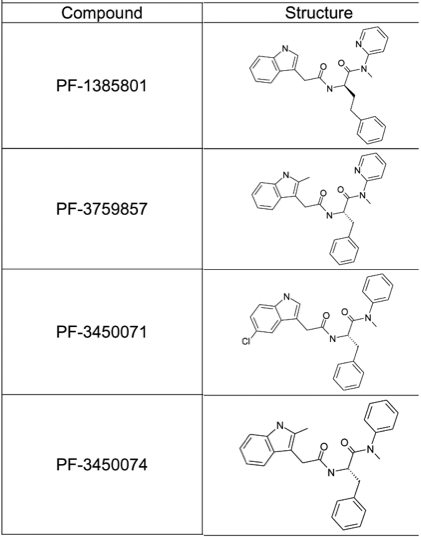
So, yet another target in HIV for chemotherapeutic agents – but what, exactly, are these new magic bullets?

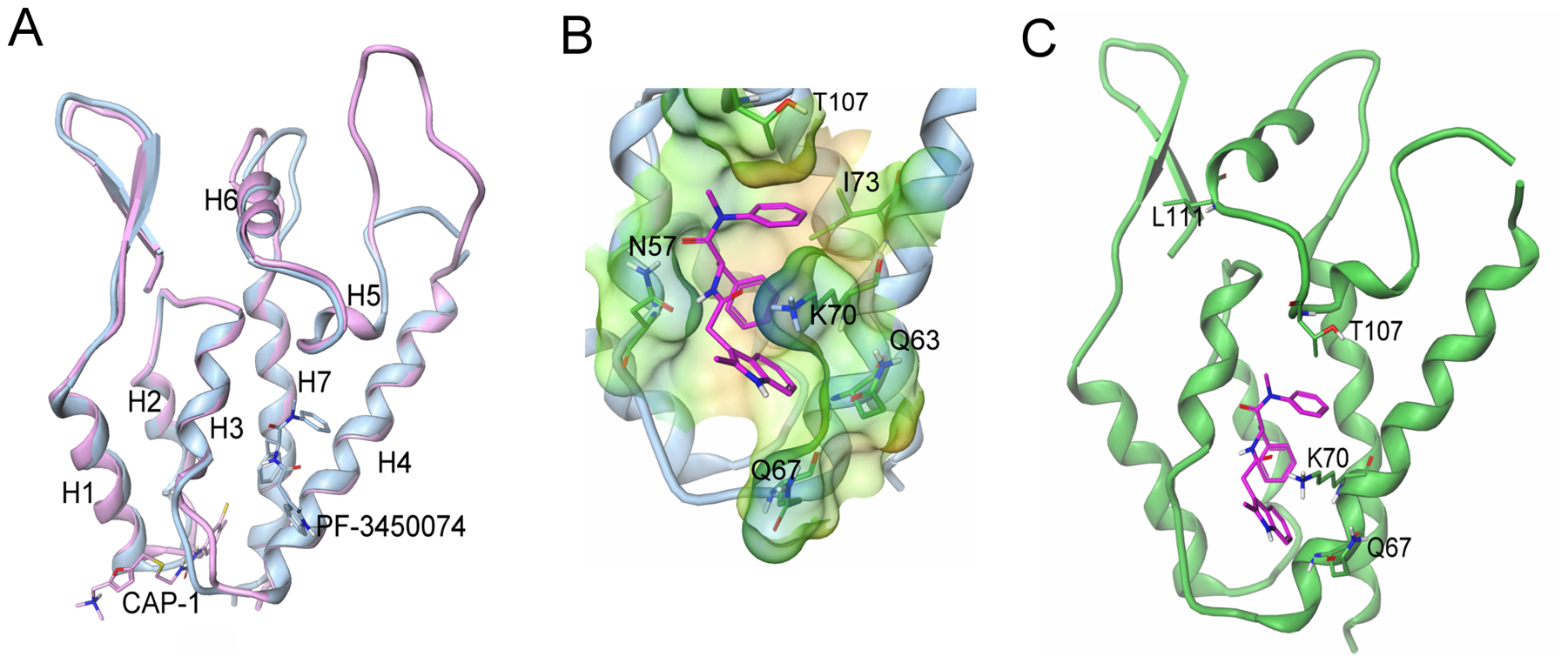
And in Figure 5 of the original paper, you can see what it is that they do:

Figure 5: Structure of the novel inhibitor binding site and context in the NTD

a) Overlays of capsid structures with PF-3450074 in blue and CAP-1 in pink bound to capsid N-terminal domain; b) Close up view of PF-3450074 site (binding site residues labelled in black, R1-3 sub-pockets labelled in purple)…. c) Location of resistant mutations (purple) in relation to PF-3450074 capsid binding site.

The authors conclude their article with this:

The broad spectrum activity of this series [of drugs] is particularly exciting and highlights this novel mechanism [binding the CA protein] as a significant therapeutic opportunity.

Definitely not an over-stated conclusion!  And nicely rounding out a recent series of HIV-combatting articles and developments covered here recently.  And let me also refer you here to AJ Cann’s most recent post, on HIV entry – which, surprisingly, is still not a nailed-down and simple model.  And which I discovered literally while writing this, so seriously hot off the press.

Viruses as nanomachines! Or: what you can believe from YouTube

6 December, 2010

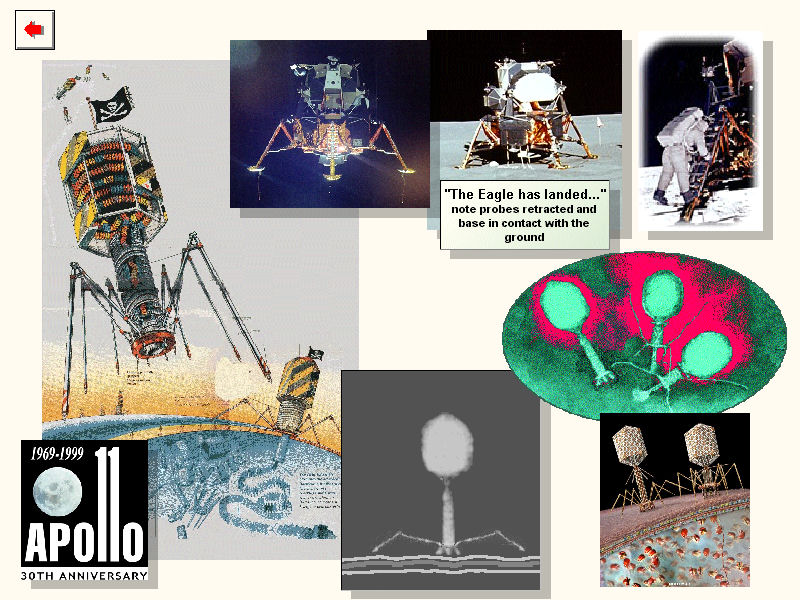
I have for some years now been teaching my undergrad students that virus particles are nanomachines: that is, they are highly sophisticated nanoscale (read: ultramicroscopic) devices whose function is to specifically deliver genetic material into an environment where it can be expressed and replicated, so as to make more virus particles.

Nanoscale von Neumann machines, then – and if you want to see what a macroscale vN machine could do, just watch “2010: Odyssey Two“.

Ah, but what’s a von Neumann machine, you ask?  Well, I note Wikipedia has the following:

  • Self-replicating machines, a class of machines that can replicate themselves
  • Universal Constructors, self-replicating cellular automata
  • Von Neumann probes, hypothetical space probes capable of self-replication
  • Nanorobots capable of self-replication

I especially like the last two – because, as I showed in a previous blog post, I like the idea of virus particles or virions as “inner space craft”.  That this neatly marries my recreational and professional reading is no coincidence – because they cross-pollinate one another, in that I get ideas about the nature of viruses from SF, and my virology training informs scenarios I would like to write about.  Someday.  Soon, possibly.  Really.  Instead of writing about parallel universes contactable via the internet….

However, there is more to viruses and nanotechnology than phages with contractile tails, whether or not they have been around for billions of years: mimiviruses too have both nanoscale DNA loading and rapid-delivery systems, as previously discussed here.

Although I have a passing fondness for possibly my most successful animation – made from actual EMs, done by Linda Stannard.

T4 phage infecting a cell

So it was with some pleasure I saw recently on YouTube a video labelled “Viruses are nanotechnology (how a virus works)“.  I was a little less pleased when a voice confidently announced that “…a virus isn’t alive, people – it’s non-metabolising…”, as if that was the sole and necessary criterion for life.  I am at one with another Polish-named person – one Bernard Korzeniewski – in thinking  that life is (from MicrobiologyBytes)

The phenomenon associated with the replication of self-coding informational systems” © E.P. Rybicki, 1996. Incidentally, I find another person with a Polish name has said something very similar, in 2001 – which means it must be true. Bernard Korzeniewski describes life as: “A network of inferior negative feedbacks subordinated to a superior positive feedback.”

See, no mention of metabolism – or even of cells!  But what got the hairs on the back of my neck standing up, however, was some of the rest of it – delivered in a smooth, folksy manner, with stunning video footage.  Absolute cr@p, most of it: viruses are too complicated to have evolved, so they have to be alien nanotech???

Obviously some weird kind of conspiracy theory cross technobabble – but very seductive, to the uninformed.  Some of the comments are also just out of this world – literally!

Fortunately, there are some real science videos out there too – some of which I have also used in lecturing, if only to illustrate just how cool structural biology can be when used to study viruses.  Prime among these is one of T4 virus (Enterobacteria phage T4) infecting E coli; another magical one  from the same source is a depiction of the molecular motor which winds DNA into T4 heads.  A longer video has Michael Rossman, whose lab did the structural work behind the videos, explaining how the phenomenon could be useful in understanding viruses like herpesviruses in humans, which also appear to have molecular motors for DNA delivery – and, of course, how we can mess with them.

Self-assembly of viruses is also a good topic for video – and the full-length  Seyet T4 video is stunning in this regard.  So too is this one, showing a PhiX174 microvirus particle assembling.  One of my favourites, though, is the simplest: this is the depiction of how simple shapes can be induced to self-assemble into a virus-like particle – just by shaking.

I suppose, like everything, you get what you pay for with YouTube: which is nothing, most of the time.

But every now and then, a gem – which is what makes it fun to look.  I’m off to hunt down a Rolling Stones video virus replication videos!

Farewell, Frank Fenner!

23 November, 2010

While visiting the Australian National University in Canberra recently, I noticed in the lobby outside their Club dining room, a most interesting tapestry.  Interesting, because it looked like a colourised electron micrograph (it depicts myxomavirus), and because it had a plaque beneath it commemorating their own Professor Frank Fenner.  I was familiar with him because he authored an extremely useful book – Medical Virology – which I had used for educating myself and for teaching; I was also aware that he was an extremely eminent poxvirologist who had been active in the field for decades – and was still working despite having retired in 1979.

Variola virus, the agent of smallpox. Image courtesy Russell Kightley Media.

And then today I heard that he had died this week, at the age of 95.

Virology is still a young field, as I discover while trying to research its history for my sabbatical project: the concept dates only from 1898; only a couple of generations of scientists have been active in this field since it started – and Frank Fenner probably overlapped with nearly all of them.  He was born in 1914, which meant he was in at the morning of virology as we know it, while many of the first practitioners were still around – and he stayed active until very recently, when the science had changed almost out of all recognition.  He will be missed.

I am sharing this message that was sent out by the Director of the John Curtin School of Medical Research at ANU, where Fenner worked as an Emeritus Professor, as it is probably the best short account of his life.

“It is with great sadness that I communicate to you the passing of Professor Frank Fenner.

Frank John Fenner AC, CMG, MBE, FRS, FAA (born 21 December 1914, died 22 November 2010) was an Australian scientist with a distinguished career in the field of virology. His two greatest achievements are cited as overseeing the eradication of smallpox during his term as Chairman of the Global Commission for the Certification of Smallpox Eradication, and the control of Australia’s rabbit plague through the introduction of myxoma virus.

Professor Fenner was Director of the John Curtin School from 1967 to 1973. During this time he was also Chairman of the Global Commission for the Certification of Smallpox Eradication. In 1973 Professor Fenner was appointed to set up the new Centre for Resource and Environmental Studies at the Australian National University (ANU). He held the position of Director until 1979.

Professor Fenner has been elected a fellow of numerous faculties and academies, including Foundation Fellow of the Australian Academy of Science (1954), Fellow of the Royal Society (1958), and Foreign Associate of the United States National Academy of Sciences (1977). During his career Professor Fenner received many awards. Among these are the Britannica Australia Award for Medicine (1967), the Australia and New Zealand Association for the Advancement of Science Medal (1980), the World Health Organization Medal (1988), the Japan Prize (1988), the Senior Australian Achiever of the Year (1999), the Albert Einstein World Award for Science (2000), and the Prime Minister’s Science Prize (2002).

A man of decisive scientific action and strong opinions, Professor Fenner’s last interview with The Australian is extremely thought provoking and can be found here:

http://www.theaustralian.com.au/higher-education/frank-Fenner-sees-no-hope-for-humans/story-e6frgcjx-1225880091722

A summary of Frank’s remarkable career can be found here:

http://jcsmr.anuedu.au/about/Fenner/index.phphttp://jcsmr.anu.edu.au/about/Fenner/index.php

The last public recognition of Professor Frank Fenner’s accomplishments occurred here at JCSMR during the First International Meeting on Translational Medicine earlier this month: On 1 November 2010 Professor Fenner received a standing ovation by world leaders in academic medicine during the opening of the Conference and on 2 November 2010 he was recognized by the Conference as he and Sir Gus Nossal stood by their portraits, which hang side by side at the National Portrait Gallery. A picture of Professor Fenner at JCSMR taken on 1 November 2010 next to Gus Nossal is attached.

Further notices will be sent with information regarding Professor Fenner as plans to honor his accomplishments evolve.

With best regards,

Julio

Professor Julio Licinio
Director John Curtin School of Medical Research
The Australian National University
Canberra, ACT 2601, Australia ”

Thanks to Bertram Jacobs of ASU for sharing this with me.

Ed Rybicki

Integrating the enemy

23 November, 2010

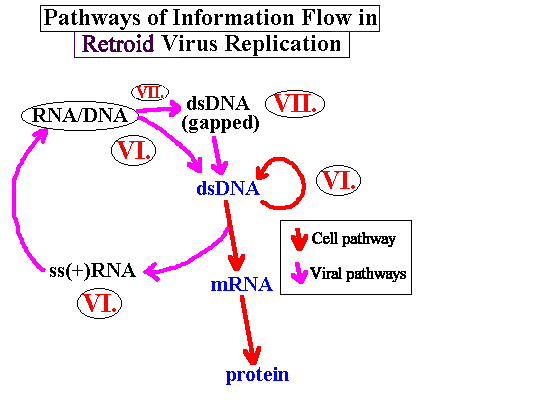
Ever since I first discovered them as a student, sometime in 1976, I have found retroviruses fascinating.  Not quite as fascinating as Ebola, possibly, but captivating nonetheless.  The whole concept of a virus that converts a perfectly ordinary mRNA into dsDNA, then  inserts it into the host chromosome as a provirus in a eukaryotic version of lysogeny – was truly wonderful.

And as the years have gone by, I have seen no reason to lessen the feeling of wonderment: other

The Retroid Virus Replication Cycle

viruses – now called pararetroviruses, including both hepadnaviruses and plant viruses – whose replication  starts at a different position in the  cycle have been found; these and retroviruses have been integrated into a whole family of “reverse transcribing elements” – retrons – which include prokaryote transposons; HIV burst in on the scene, and suddenly we know so much about how the immune system works, because a virus messes with it so well.

But the actual mechanics of one particular process have consistently escaped elucidation – until now.  The 11 November issue of Nature contains, apart from only the second SF short-short story by a South African (kudos, Anand!), a Letter of great interest.

The mechanism of retroviral integration from X-ray structures of its key intermediates
Goedele N. Maertens, Stephen Hare & Peter Cherepanov
Nature 468,326–329 (11 November 2010) doi:10.1038/nature09517

To establish productive infection, a retrovirus must insert a DNA replica of its genome into host cell chromosomal DNA. This process is operated by the intasome, a nucleoprotein complex composed of an integrase tetramer (IN) assembled on the viral DNA ends. The intasome engages chromosomal DNA within a target capture complex to carry out strand transfer, irreversibly joining the viral and cellular DNA molecules. Although several intasome/transpososome structures from the DDE(D) recombinase superfamily have been reported, the mechanics of target DNA capture and strand transfer by these enzymes remained unclear. Here we report crystal structures of the intasome from prototype foamy virus in complex with target DNA, elucidating the pre-integration target DNA capture and post-catalytic strand transfer intermediates of the retroviral integration process. [my emphasis – Ed] The cleft between IN dimers within the intasome accommodates chromosomal DNA in a severely bent conformation, allowing widely spaced IN active sites to access the scissile phosphodiester bonds. Our results resolve the structural basis for retroviral DNA integration and provide a framework for the design of INs with altered target sequences.

Basically, these folk have managed to freeze-frame several different stages of the process in crystals, by clever use of synthetic DNA targets – and then solved the structures.  NOT trivial, and the pictures are absolutely superb.  So are the movies…but you need to subscribe to Nature to see those.

Harking back to a previous post – Entrance, Entertainment and Exit, anyone? –  the more we know about viruses, the more we can mess with them.  And this is a VERY good step along that road.

The largest marine virus yet

13 November, 2010

This is another welcome guest post from Gillian de Villiers, a Scientific Officer in our Vaccine Group.  This was presented as a Journal Club article recently, and fit so well into my continuing theme of “viral diversity from water” that I asked her to write it up.  Thanks Gillian!

Giant virus with a remarkable complement of genes infects marine zooplankton

Matthias G. Fischer, Michael J. Allen, William H. Wilson, and Curtis A. Suttle

PNAS published ahead of print October 25 2010 www.pnas.org/content/early/2010/10/15/1007615107

This publication covers the sequencing of the genome of Cafeteria roenbergensis virus(CroV).  This nucleocytoplasmic large DNA virus (NCLDV) is the largest marine virus described to date, and its closest relative is Acanthamoeba polyphaga Mimivirus.

Among the questions raised in this paper are:

  • what is the evolutionary origin of big viruses?
  • Did they get their genes from horizontal gene transfer (including from eukaryotes), or
  • are the “eukaryotic” genes viral in origin?

Spoiler alert: the authors do not answer this question.

Please note: this is a virus from a seawater host.  It is the largest marine virus yet found, but how hard has anyone been looking?  This ties in with Ed’s theme that we should be looking for viral diversity and interesting things in the water, because interesting things have been found there.

Some background…

This lytic virus strain was isolated off the coast of Texas in the 1990s.  The host, Cafeteria roenbergensis was originally misidentified as a Bodo species.  It is a major micro flagellate grazer (microzooplanton = major ocean predator) a 2-6um “bicoecid heterokant phagotrophic flagellate” and has been found in multiple marine environments including surface waters, deep sea sediment and hydrothermal vents.

In other words, the host is an extremely significant part of the ocean ecosystem, and has been found in most places.  The authors note that protists host the largest viruses known and that other giant viruses probably are widespread in the oceans, but so far only the Acanthamoeba-infecting giant viruses have been characterised (Acanthamoeba does not live in the ocean). Viral infections of cyanobacteria play a significant role in global oxygen production; in a similar way the viral infections by CroV may have implications for carbon and other nutrient cycling and the “food chain” in the oceans, although this is beyond the scope of the article.]

Results

The genome is the second-largest viral genome described and at 730kb is very AT rich.  Approximately 618kb is thought to be coding with 544 predicted protein-coding genes.  At least 274 genes are expressed during infection.  22 percent of CroV CDSs (coding sequences) were probably best related to eukaryotic genes.  Most CroV CDSs had unknown function, but 32% of CDSs could be assigned a putative function.

For enzymatic functions that have not previously been reported in any other viruses you can refer to Table S1 of the Supplemental materials.

This is similar to CroV’s closest known relative, Mimivirus, where of 911 predicted genes only 300 were assigned a predicted function (see table).  Only 1/3 of their genes are common to these two viruses!  This suggests tremendous diversity within the nucleocytoplasmic large DNA viruses, as they may have common evolutionary origins for some genes, but not for others.  As viruses are not monophyletic (although the NCLDVs may be) and can be considered to be bags of protein that contain genetic material and share a strategy (rather than an origin) this may not be particularly surprising.  But I find it amazing that so many potential genes, and so many unique potential genes, have been found in these organisms.

Included in the genes assigned function are genes involved in translation.  CroV encodes an isoleucyl-tRNA synthetase and putative homologs of eukaryotic translation initiation factors.  22 tRNA genes and two putative tRNA-modifying enzymes: tRNA pseudouridine 5S synthase and tRNAIle lysidine synthetase were found.  Mimivirus also has four tRNA synthetases and several putative translation factors.

Cafeteria roenbergensis virus Acanthamoeba polyphaga Mimivirus
~730kb dsDNA genome ~1200kb dsDNA genome
300nm capsid 500-750nm capsid (publications differ)
Largest marine virus yet described Largest virus yet described
Second-largest virus yet described
544 predicted genes 911 predicted genes
174 genes with predicted function 300 genes with predicted function
Host: Cafeteria roenbergensis Host: Acanthamoeba castellani (amoeba)
Habitat: marine environment Habitat: soil (?freshwater)
Genes shared with Mimivirus ~ 1/3 Genes shared with CroV ~ 1/5

Similarly to other large DNA viruses a number of DNA repair genes were found.  This includes a base excision repair pathway that appears complete.  In addition crov115’s gene product is predicted to be a CPD class 1 photolyase, the first viral homologue in its class.  Crov149 appears to be part of a recently described photolyase/cytochrome group found in several bacterial phyla and euryarchaeotes, but not among established types of photolyase.  The authors suggest that the only eukaryote with this gene, Paramecium tetraurelia may have acquired it by horizontal gene transfer from a giant virus

CroV also has transcription-related genes including eight DNA-dependent RNA polymerase II subunits, six transcription factors involved in transcription initiation, elongation, and termination, a tri-functional mRNA capping enzyme, a poly (A) polymerase, as well as helicases.  Mimivirus provides considerably more genes for protein transcription and translation than most viruses, and sets up its own ‘virus factory’ in the cytoplasm of the cell.  It is possible that CroV has a similar strategy, with viral gene transcription independent of the host and occurring in the cytoplasm.

Of the three DNA topoisomerases, two are very similar to the counterparts in Mimivirus.  CroV TopoIB is the first viral homolog of the eukaryotic subfamily, but the Mimivirus TopoIB appears to be from the bacterial group.  Although the evolutionary origin appears to differ, the topoisomerases are presumably important in transcription, translation or packaging of giant virus genomes, as they appear in both CroV and Mimivirus genomes.

CroV has four inteins: self-splicing proteins.  They are found in DNA-dependent DNA polymerase B (PolB), TopoIIA, DNA-dependent RNA polymerase II subunit 2 (RPB2) and the large subunit of ribonucleotide reductase (RNR).  Inteins have previously been found in viruses infecting eukaryotes, including Mimivirus PolB.  CroV TopoIIA intein is the first case of an intein in a DNA topoisomerase gene.

Microarray analysis on the 12-18 hr infection cycle showed around half the predicted genes, and 63% of the tested genes were expressed during infection.  Work on Mimivirus and PBSC-1 showed transcription of nearly all predicted genes, so this work may underestimate the true transcriptional activity of CroV.  CroV gene expression has an early phase 0-3 hrs after infection affecting 150 genes, and a late phase affecting 124 genes 6 hrs or later post-infection including all the structural components predicted.  A conserved early promoter motif “AAAAATTGA” was identified in 35% of CDSs and is nearly identical to the Mimivirus early promoter motif “AAAATTGA”.  A promoter element for genes transcribed during the late phase of CroV infection was found that is unrelated to the putative late promoter motif in Mimivirus.

A genomic fragment involved in carbohydrate metabolism was also found.  This 38kb fragment includes enzymes for biosynthesis of 3-deoxy-D-manno-octulosonate (KDO).  This is part of the lipopolysaccharide layer in gram-negative bacteria and is found in the green alga Chlorella and the cell wall of higher plants. Ten of the enzymes involved in carbohydrate metabolism were expressed, suggesting a role in viral glycoprotein biosynthesis, suggesting the virion surface may be coated with KDO- or sialic acid-like glycoconjugates. 

There are no homologs in Mimivirus suggesting this region must have been acquired after the CroV and Mimivirus lineages split (or that the Mimivirus lineage lost it subsequently?).  This may have been acquired from bacteria, however GC content is even lower than for the rest of the CroV genome, and a number of the proteins are phylogenetically between bacterial and eukaryotic homologs.

Phylogenetics and Speculations
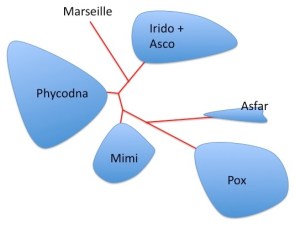
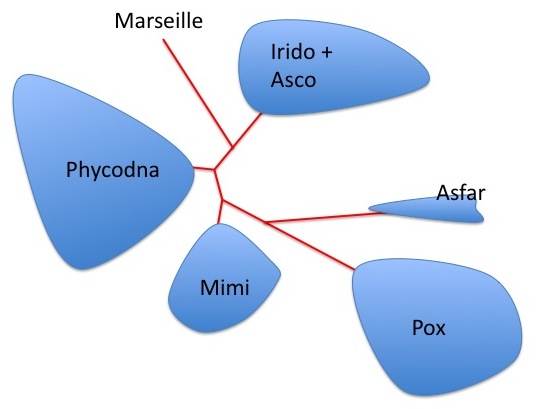
Phylogenetic reconstruction of NCLDV members. Redrawn and simplified from Fig. 4. The unrooted Bayesian Inference tree was generated from a 263-aa alignment of conserved regions of DNA polymerase B

CroV is an addition to the group of NCLDVs including Ascoviridae, Asfarviridae, Iridoviridae, Mimiviridae, Phycodnaviridae, Poxviridae and Marseillevirus, which are presumed to be monophyletic. CroV seems to be the closest known relative to Mimivirus although it is substantially smaller.  The topology of the NCLDV tree strongly suggests the five largest viral genomes (all mimiviruses) are more closely related to each other than to other NCLDV families.  They may have originated from an ancestral virus that was already an NCLDV that encoded more than 150 proteins.

Mimivirus is the most studied NCLDV, and is the largest.  Most Mimivirus genes have no cellular homologs and may be very ancient, with 1/3 of genes having originated through gene and genome duplication and less than 15% of the genes having potentially been acquired by horizontal gene transfer from eukaryotes and bacteria.  The CroV genome analysis is consistent with this view of giant virus evolution, with gene duplication and lineage-specific expansion contributing to the size of the CroV genome.  The 38kb carbohydrate metabolism fragment may be a potential case of large-scale horizontal gene transfer from a bacterium.  The PolB gene of CroV has high similarity with those of other marine isolates so it may represent a major group of marine viruses, that despite being virtually unknown have ecological significance.

CroV again shows overlap between large viruses and cellular life forms, adding to questions about the evolutionary history of giant viruses as well as what life itself is.

HPV vaccines: good, but out of reach for most

28 October, 2010

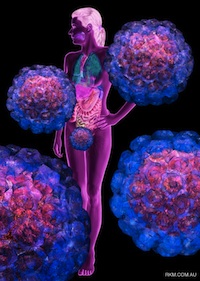
Human papillomavirus and cervical cancer - copyright Russell Kightley Media

The fact that genital Human papillomaviruses (HPVs) cause cervical cancer in women, as well as a variety of other growths and lesions in both men and women, is not in dispute.  The fact that cervical cancer is a major and growing scourge of women in developing countries is also non-contentious: of the more than 500 000 cases and 300 000 deaths due to the disease every year, more than 80% occur in the developing world.  This is largely because, unlike their counterparts in the developed world, poor Third World women either do not get screened using the relatively simple cytological detection method known as the Papanicolau (Pap) smear, or do not get treated thereafter.  Thus, cervical cancer really is a disease of poverty, given that most deaths occur due to a lack of simple procedures being provided in clinics.

The best method of prevention of an infectious disease is almost always a vaccine: HPV vaccines have been around a while now, and have proved to be both safe and efficacious – both primary requirements of a vaccine.  Both Merck and GlaxoSmithKline’s vaccines – the yeast-produced Gardasil and insect cell-produced Cervarix respectively – are virus-like particles (VLPs) composed of the major HPV coat protein L1 only; Cervarix contains particles of the high-risk HPV types (or species) 16 and 18 and Gardasil contains VLPs derived from HPVs 16 and 18 as well as the genital wart-causing 6 and 11.

The vaccines are both “blockbusters” – that is, they both have sales of over US$1 billion – are are possibly the best-researched human vaccines ever made.  They are also possibly among the most expensive: Gardasil went on sale in the USA at $120 per dose – and a full treatment consists of 3 doses, for a total cost per person treated of $360; Cervarix retails at around the same price.

This is so far beyond the budget of most people in most countries as to be akin to their expectation of winning a lottery – and of the order of 1000x as expensive as possibly the most widely distributed vaccine in the world, which is Bacillus Calmette-Guerin (BCG), the Mycobacterium tuberculosis vaccine.

It is a sad fact of life that the whole WHO Expanded Programme on Immunisation – EPI – six vaccine bundle of polio, measles, neonatal tetanus, diphtheria, pertussis (whooping cough) and tuberculosis vaccines “… costs no more than US$1 … (at UNICEF-discounted prices), and another US$14 for programme costs (laboratories, transport, the cold chain, personnel and research) to fully immunize a child”.  It is also a sad fact that the new generation of vaccines – exemplified by the yeast-made recombinant hepatitis B virus (HBV) subunit vaccine – are expensive even when discounted after patents have expired: thus, HBV vaccine launched at US$150 for three doses in 1986, and came down to around $10 now.  It is included in EPI bundles in some countries because of even greater discounting (down to ~$1); however, its cost is generally greater than the rest of the bundle combined.

So what should happen with HPV vaccines?  How are they going to get to the people who need them most, at the price they can afford – which is nothing?  The simple answer is that governments and international agencies must buy them, as is presently the case with the EPI package – and that they must be very heavily discounted, to allow this.

In fact, at the recent Papillomavirus Conference in July in Montreal (which we should write up in more detail elsewhere), I heard that the Mexican government has managed to secure  HPV vaccine at US$27/dose – or 25% of the regular price – for a campaign they are mounting in some regions to supply vaccine for free.  So it is possible – however, even this price is far too high, as it represents about the per capita per annum public health expenditure in the poorest countries who probably need it most.

It raises my blood pressure, therefore, when I read that in several highly-developed western countries there are a number of controversies (see also here) around HPV vaccination: yet again, on the heels of the measles and MMR (measles-mumps-rubella viruses) vaccines-cause-autism idiocy, people who can afford vaccines are among the most stupid when it comes to having them.

The facts, as opposed to the hype, are these:

  • the vaccines were proven to be safe in extended clinical trials
  • they were proven to be efficacious in preventing infection and development of precancerous lesions and genital warts – in men as well as in women

Inflammatory stories about deaths due to HPV vaccines are just that – stories.  A recent publication from India, where the government suspended a vaccine study due to deaths of girls involved in the trial, puts things into perspective:

“The causes of death had been scrutinized by the State Government and reported to ICMR and Drugs Controller General of India; all were satisfied that no death was vaccine-related [ my emphasis]. We understand that there is an unusually high frequency of death among girls in this community, which is what deserves immediate enquiry and remedial interventions….
The death of a 14-year old British girl shortly after receiving HPV Vaccine,evoked considerable media attention across the world. The necropsy studies showed that she had malignant tumor affecting her heart and lungs…. The vaccine was not her cause of death.”

There is also considerable silliness surrounding the vaccination of girls – and, hopefully, boys! – against what is very largely a sexually transmitted virus.

Do people have the same problem with HBV?

Or – is it possible?? – they don’t know that it is also frequently a sexually-transmitted disease, among adults at least?

In any case, the kinds of prudishness-by-proxy that result in non-vaccination against HPV or HBV are simple foolishness.

And I would be happy to tell anyone so.

Meantime, we want to make HPV vaccines in plants. Any sponsors??