Archive for the ‘history’ Category

Crystallising the tobacco mosaic virus

6 July, 2015

We saw last week how sulphur dioxide released from the Laki fissure system accounted for many deaths due to poisoning. We will stay with poisons this week as well, for virus has its roots in the Latin term for “poison”

Sourced through Scoop.it from: www.thehindu.com

Nice article – and from a newspaper in India, no less!  Adds to the history of virology in a very accessible way.

See on Scoop.itVirology News

Superbug threat prompts West to revisit Soviet-era virus therapy

4 July, 2015

Alarmed by rising resistance to antibiotics scientists and governments are taking a fresh look at bacteria-chomping viruses first isolated a century ago from the stools of patients recovering from

Sourced through Scoop.it from: www.reuters.com

So nearly 100 years after Felix d’Herelle started championing phage therapy, the West is finally taking notice?  I’t actually way past time that they were taken seriously: the Eliava Institute in Georgia has nearly that long a history (d’Herelle influenced the founder to start their enormous collection of phages) of successful treatment of bacterial infections, but westerners have stayed wedded to increasingly ineffective antibiotics for the last 70-something years.

I know what I might work on in my old age….

See on Scoop.itVirology News

Creating more effective vaccines against flu virus

4 July, 2015

Flu vaccines can be something of a shot in the dark. Not only must they be given yearly, there’s no guarantee the strains against which they protect will be the ones circulating once the season arrives. New research by Rockefeller University scientists and their colleagues suggests it may be possible to harness a previously unknown mechanism within the immune system to create more effective and efficient vaccines against this ever-mutating virus.

Sourced through Scoop.it from: www.news-medical.net

So: antibody-antigen complexes work better than antigen alone – and sialylation of the antibody is important.  Vaccinology really is entering the 21st century!

See on Scoop.itVirology News

The guru speaks: new eBooks on viruses!

24 June, 2015

I have to thank my long-time digital media guru, Alan J Cann, for reviewing our humble eBook offerings in MicrobiologyBytes.  You good man!  Much appreciated, and it will not have escaped our attention that this endorsement may actually result in sales.  If so, a glass or three of the finest red is yours if you come to these shores, good sir B-)

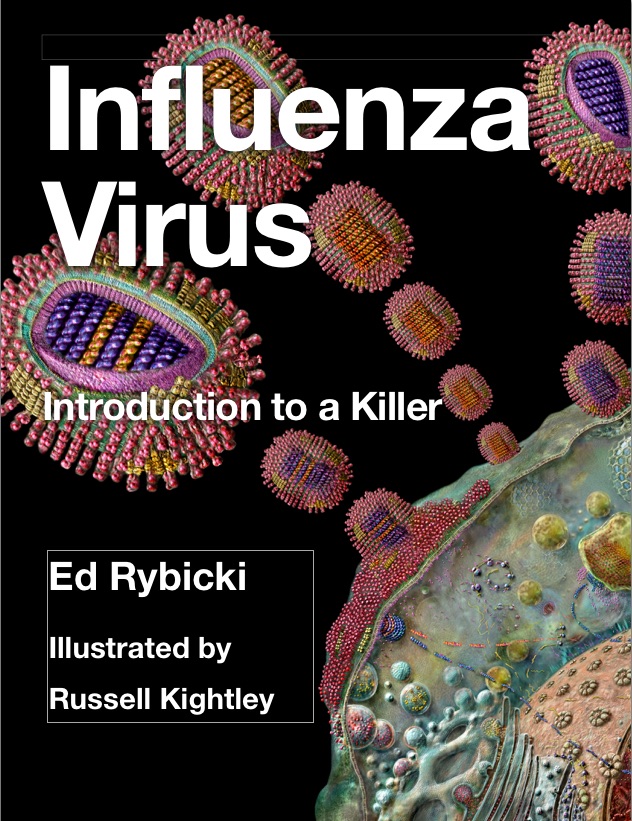
eBook on “Influenza Virus: Introduction to a Killer”

17 June, 2015

For some five years now, I have been simultaneously writing two ebooks on viruses. The one – originally part of a longer effort not yet finished – is “A Short History of the Discovery of Viruses” which is also advertised on Virology News; the other is a labour of love on influenza.

Labour of love for me because I got more into it the more I read, and because Russell Kightley’s images were so amazing.

Both were written using Apple’s iBooks Author app; both are designed to be read by Apple’s iBooks app on iPad, iPhone or Mac.

So here it is:

Influenza Virus: Introduction to a Killer

Enjoy. Buy!

Influenza_1-6-15_sample_iba


Viruses and Human Cancer: The Molecular Age

1 April, 2015

Hepatitis C virus

A suspicion that other viruses were involved in post-transfusion-(PTF) related hepatitis was first aired by Harvey J Alter and colleagues, after proof in 1972 that some PTF-related hepatitis cases had no HBV antigen associated with them.  By 1977 hepatitis A virus (HAV, infectious hepatitis) had been excluded as well, and the term “non-A, non-B” hepatitis (NANB) was coined.  By 1978, transmission studies using human serum injected into chimpanzees showed that

“Hepatitis was transmitted by serum derived from patients with chronic as well as acute hepatitis, strongly suggesting a chronic carrier state for the agent responsible for non-A, non-B hepatitis. Non-A, non-B hepatitis thus seems to be due to a transmissible agent which can persist and remain infectious for long periods”.

There was also evidence from Japan the same year that there might be a novel antigen – hepatitis C (HC) antigen – associated with NANB PTF hepatitis.  In 1979, it was suggested from ultrastructural studies in cells from infected chimpanzees that more than one NANB agent might exist; by 1980 Alter had concluded that that the NANB hepatitis agent(s) played a dominant role in the pathogenesis of PTF hepatitis. In 1987, in an interesting application of essentially the same technology used to characterise the first viruses, Alter’s group used polycarbonate membranes to filter the infectious agent, and showed it was  30-60 nm in diameter, and therefore highly unlikely to be a retrovirus, as had been suggested by some.

Also in 1987, Michael Houghton, Qui-Lim Choo, and George Kuo at Chiron Corporation collaborated with  DW Bradley at the CDC in using the much newer technology of constructing a random-primed cDNA clonal library from RNA extracted from human plasma in a lambda phage expression vector, and screening proteins expressed from the library against NANB hepatitis-infected patient serum.  They discovered one sequence that produced a protein fragment that bound antibodies, sequenced it, and used the sequence to “primer walk” through the entire genome by repeated cDNA generation, cloning and sequencing.  They published their finding in 1989 of

“…an RNA molecule present in NANBH infections that consists of at least 10,000 nucleotides and that is positive-stranded with respect to the encoded NANBH antigen. These data indicate that this clone is derived from the genome of the NANBH agent and are consistent with the agent being similar to the togaviridae or flaviviridae”.

The agent was unique among viruses characterised until then, as no virus particle had yet been seen, let alone isolated. Alter and his team meanwhile tested for the presence of the virus in NANB patient samples, and in 1989 also published a paper – back-to-back with the previous – on

“An assay for circulating antibodies to a major etiologic virus of human non-A, non-B hepatitis”.

The sequence of the putative agent allowed cloning and expression of a putative capsid protein in yeast, which allowed large-scale screening of patient samples and donated blood.  From their paper:

“These data indicate that HCV is a major cause of NANBH throughout the world”.

There was also already evidence that NANBH was associated with hepatocellular carcinoma (HCC) in Japan: M Sakamoto and colleagues showed that 90% of HBsAg-seronegative patients, who were also overwhelmingly HBV DNA-negative, showed evidence of chronic hepatitis in the non-cancerous liver, and 29% had a history of blood transfusion. This was followed as early as 1989 by evidence that 65% Italian HCC patients had antibodies to HCV, and again the same year by evidence from Spain that 75% of HCC patients had HCV antibodies, which

“…indicate[s] that HCV infection may have a role in the pathogenesis of hepatocellular carcinoma, even in patients with chronic liver disease apparently related to other agents such as alcohol”.

By 1990, K Kiyosawa and colleagues felt able to state that:

“These data suggest the slow, sequential progression from acute hepatitis C virus-related non-A, non-B hepatitis through chronic hepatitis and cirrhosis to hepatocellular carcinoma and support a causal association between hepatitis C virus and hepatocellular carcinoma”.

These findings rapidly led to the revelations that hepatitis C virus (HCV) was implicated in both an acute and relatively mild illness that lasts only a few weeks, and a chronic form that is usually more serious and can last lifelong.  Between 15–45% of infected persons spontaneously clear the virus within 6 months; however, the remaining 55–85% will develop chronic HCV infection.

Up to 150 million people globally are chronically infected with HCV.  Moreover – also from the WHO site – a significant number of these people will develop liver cirrhosis or liver cancer, and up to 500 000 people die worldwide every year from HCV-related liver disease.

There is as yet no vaccine against HCV infection, although trials are quite far advanced – and one candidate combination prime-boost strategy from Eleanor Barnes and coworkers seemed to show promise as of the end of 2014.  This consisted of

“…a replicative defective simian adenoviral vector (ChAd3) and modified vaccinia Ankara (MVA) vector encoding the NS3, NS4, NS5A, and NS5B proteins of HCV genotype 1b” – which is using two well-characterised viruses as gene vectors to combat a third.

The authors make the point that the responses they achieved in human volunteers are similar to those seen in people who control natural infections.

Meanwhile, chemotherapy for chronic infections is both a realistic and well-established area: there are a number of treatments on the market already, and there have been significant recent developments which may make treatment even more effective.

HCV particles were finally characterised from cell culture-grown virus: both enveloped and non-enveloped pleomorphic spherical particles were found, of around 60 nm and 45 nm in diameter respectively.  This agrees well with the estimation by filtration of 30-60 nm previously determined in 1987.  The virus is classified as a ss(+)RNA genome flavivirus, similar to yellow fever virus, in the genus Hepacivirus, family Flaviviridae

Kaposi sarcoma herpesvirus

Moritz Kaposi in 1872 described what was originally called an “idiopathic multiple pigmented sarcoma of the skin”, which present as

“…disseminated blood- or bruise-coloured skin lesions (flat plaques or nodules) in the skin, usually on the lower extremities though sometimes on the hands and arms”.

What was subsequently called Kaposi Sarcoma, or KS, was at first thought to occur only among elderly men of Jewish, Arabic or Mediterranean origin; however by the 1950s it was realised it was quite common in sub-Saharan Africa, which led to the first suggestions that it might be caused by a virus.

In 1981-1982, however, the CDC received reports of KS occurring in otherwise healthy young homosexual men in California – often together with Pneumocystis carinii pneumonia, which was also previously very rare.  The disease was also much more aggressive, and spread beyond the skin into other tissues including bone, the mouth, gastrointestinal tract and lungs.

While there was at this time still no clue as to why this should be, the link to sexual acts as well as the previous observation that KS occasionally appeared in immune-suppressed organ transplant patients, led epidemiologists to discover the sexual transmission of immunodeficiency that led to the discovery of HIV and its causation of AIDS.

Valerie Beral and colleagues working at the CDC in the late 1980s used epidemiological data on KS in AIDS patients to build a compelling case for the tumour being caused by another sexually transmitted virus.  In a landmark paper in The Lancet, they announced in 1990, on the basis of painstaking and traditional-style investigation of 8 years’ worth of information from more than 90 000 people with AIDS collected in the US by the CDC since 1981, that:

“In the United States Kaposi’s sarcoma is at least 20000 times more common in persons with [AIDS] than in the general population and 300 times more common than in other immunosuppressed groups…Kaposi’s sarcoma was commoner among those who had acquired the human immunodeficiency virus (HIV) by sexual contact than parenterally, the percentage with Kaposi’s sarcoma ranging from 1% in men with haemophilia to 21% in homosexual or bisexual men. Women were more likely to have Kaposi’s sarcoma if their partners were bisexual men rather than intravenous drug users”.

The UK Cancer Research site on KS has an excellent account of the study as well as of its impact – one aspect of which was the proof in 1994 that indeed a virus was involved, using modern.  This was published by Y Chang and colleagues in Science, and detailed the use of the very modern technique of:

“Representational difference analysis … to isolate unique sequences present in more than 90 percent of Kaposi’s sarcoma (KS) tissues obtained from patients with acquired immunodeficiency syndrome (AIDS). These sequences were not present in tissue DNA from non-AIDS patients, but were present in 15 percent of non-KS tissue DNA samples from AIDS patients. The sequences are homologous to, but distinct from, capsid and tegument protein genes of the Gammaherpesvirinae, herpesvirus saimiri and Epstein-Barr virus. These KS-associated herpesvirus-like (KSHV) sequences appear to define a new human herpesvirus.”

This became human herpesvirus 8 (HHV-8), the newest of the seven viruses known to cause human cancers.

Adeno-associated virus

A report in Nature Genetics in August 2015 implicates adeno-associated virus type 2 (AAV2) in causation of human hepatocellular carcinoma (HCC) – specifically by means of insertional mutagenesis, in “cancer driver” genes.  Clonal integrations – with the same genome at the same site(s) – were found in 11 of 193 HCCs sampled, and the authors noted multiple insertions in some tumours, with significant effects on gene expression.

It is especially interesting that tumours with integrated viral genomes were found in non-cirrhotic liver (9 of 11 cases) and tumours in patients without known risk factors (6 of 11 cases).  The authors suggest a clear pathogenic role for AAV2 in these cases, and conclude that “AAV2 is a DNA virus associated with oncogenic insertional mutagenesis in human HCC”.
Back to Contents

Rinderpest and its eradication

30 March, 2015

Rinderpest virus infects cattle, buffalo and several species of antelope among other animals: it is a member of the genus Morbillivirus, family Paramyxoviridae, and is related to measles and mumps viruses in humans, distemper virus in dogs, and a variety of relatively newly-described viruses in marine mammals.  It also almost certainly gave rise to measles virus sometime around the 11th-12th centuries CE, as an originally zoonotic infection – sourced in domestic animals – took root in humans and began to be passed around (see here).

Wikipedia describes rinderpest virus as

“…an infectious viral disease of cattle, domestic buffalo, and some species of wildlife. The disease was characterized by fever, oral erosions, diarrhea, lymphoid necrosis, and high mortality.”  

And:

“The term Rinderpest is taken from German, and means cattle-plague.”

“Cattle plagues” have occurred throughout recorded history, often associated with the large-scale movement of animals accompanying military campaigns.  Europe was badly hit in the 1700s, with three epizootics in 1709–1720, 1742–1760, and 1768–1786, and a major British outbreak in 1865/66.

Of particular interest in South African folklore, an outbreak in the 1890s killed up to 90 percent of all cattle in southern and north-west Africa, and resulted in the deaths of many thousands of people who depended on them. It was devastating enough that people still remember it as a legendary time of hardship. Sir Arnold Theiler was instrumental in developing a vaccine that curbed the epidemic – by simultaneously injecting animals with blood from an infected animal and antiserum from a recovered animal. This protected animals for long enough to allow their immune systems to respond to the virus, but was rather risky, even though it was used for several decades.

In the 1920s J. T. Edwards in what is now the Indian Veterinary Research Institute serially passaged the virus in goats: after 600 passages it no longer caused disease, but elicited lifelong immunity. However, it could still cause disease in immunosuppressed cattle.

In 1924 the World Organisation for Animal Health (OIE) was formed, largely in response to rinderpest. This took on coordination of eradication efforts, which until then had been largely done on an individual country basis by means of vaccination.

This was followed by the Inter-African Bureau of Epizootic Diseases in 1950, with the aim of eliminating rinderpest from Africa. In 1962, Walter Plowright and R.D. Ferris used tissue culture to develop a live-attenuated vaccine grown in calf kidney cells.  Virus that had been passaged 90 times conferred immunity without disease even in immunosuppressed cattle, was stable, and did not spread between animals.  This vaccine was the one that allowed the prospect of eradicating the virus, and earned Plowright a World Food Prize in 1999.

Mass vaccination campaigns following outbreaks had, by 1972, eliminated rinderpest in all of Asia except for Lebanon and India. In the 1980s, a Sudan outbreak spread throughout Africa, killing millions of cattle, as well as much wildlife. The response was the initiation of the Pan-African Rinderpest Campaign in 1987, which made use of mass vaccination and surveillance to combat the disease. By the 1990s, all regions of Africa except for Sudan and Somalia were declared rinderpest-free.

By 1996, the complete nucleotide sequence of the virulent Kabete “O” strain of rinderpest had been obtained by Michael Baron and co-workers.  This could now be compared to that of the vaccine strain derived from it by Plowright and Ferris in 1962, that had been sequenced earlier, Despite the very different pathogenivities of the two viruses, there were only 87 base changes between them. It was interesting that  the Kabete strain – isolated in Kenya in 1910 – had been passaged by animal-to-animal transfer since then, and only 10 times since the derivation of the vaccine strain from it.  This provides a rare resource for determination of the determinants of pathogenicity.

The Food and Agriculture Organisation (FAO) has a Division of Animal Production and Health: their web site details a campaign known as the Global Rinderpest Eradication Programme (GREP), which has been going since 1994.  This had succeeded in reducing outbreaks to being small and infrequent by the late 1990s.  The last confirmed case of rinderpest was reported in Kenya in 2001. Final vaccinations were given in 2006; the last surveillance operations in 2009 failed to find any evidence of the disease.

By 14th October 2010, the BBC News site had this to say:

“The eradication of the virus has been described as the biggest achievement in veterinary history and one which will save the lives and livelihoods of millions of the poorest people in the world….”

If confirmed, rinderpest would become only the second viral disease – after smallpox – to have been eliminated by humans.”

A news item from the FAO site dated 25 May 2011, declared that:

“The national Delegates of Members of the World Organisation for Animal Health (OIE) declared today that rinderpest, one of the deadliest diseases of cattle and of several other animal species, is now eradicated from the surface of the earth.

At the organisation’s 79th annual General Session in Paris, France the national Delegates of OIE Members unanimously adopted Resolution 18/2011 which officially recognized, following thorough control by the OIE with the support of FAO, that all 198 countries and territories with rinderpest-susceptible animals in the world are free of the disease”.

When commenting on the significance of the achievement, John Anderson, the head of the FAO, described GREP’s announcement that rinderpest had been eradicated as:

“The biggest achievement of veterinary history“.

Like the smallpox eradication, even though much of the campaign happened in the era of modern virology, it was classical virological and disease control measures that were responsible for the success of the operation – with some assistance from molecular diagnostics towards the end.

This is only the second viral disease, ever, to have been eliminated.  And how was this possible?  Unlike smallpox, which has only humans as a natural and reservoir host (although it almost certainly also got into us from animals), rinderpest attacked a wider range of hosts.  However, it seemed mainly to have a reservoir in domesticated cattle, and it did not have an arthropod vector; moreover, the vaccine was cheap and effective.

This is momentous news: we may well have succeeded in ridding the planet of what has been a very significant disease of livestock and of wild animals, which has caused untold agricultural loss throughout recorded history, and which has resulted in enormous human hardship as well

We have also made a natural species go extinct – but it won’t be missed.  Like smallpox, it was completely sequenced some time ago, so we could theoretically recreate it if we ever needed to.

Back to Contents

Maize streak virus: the early history

30 March, 2015

The history of maize streak virus research is generally taken as starting in 1901, with the publication of the

The cover of the "Fuller Report"

The cover of the “Fuller Report”

by “Claude Fuller, Entomologist”. However, in the Report he does make reference to articles in the “Agricultural Journal” for August 3rd and 31st, 1900, and quotes personal sources as having noticed the disease of “mealie variegation” as early as the 1870s.  He comments that:

“…mealie growers…have been acquainted with variegated mealies…for at least 20 years…”, and “…Thomas Kirkman…has known the disorder for 30 years past…”.

His conclusions, although carefully arrived at, were very wrong. Fuller claimed the disease was due to soil deficiency or a “chemical enzyme” in soils, and could be combatted by intensive cultivation and “chemical manures”. However, his carefully-written account is still of great historical interest, and the observations are valuable as they are objective accounts of a skilled scientist.  The records of streaked grasses in particular are useful, as we still collect such samples to this day.  Fuller was later sadly a victim of one the first traffic accidents in what was then Lourenco Marques in Mozambique.

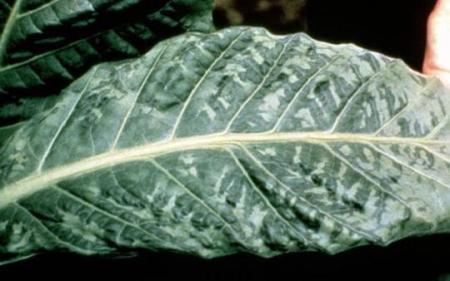
Streak symptoms in a maize leaf

The disease – now known as maize streak disease (MSD) – occurs only in Africa and adjacent Indian Ocean islands, where it is one of the worst occurring in maize.  The causal agent was discovered to be a virus by HH Storey in 1932, who termed it maize streak virus (MSV). The virus was found to be obligately transmitted by the leafhopper Cicadulina mbila, also by Storey, in 1928. In 1978, MSV was designated the type virus of the newly described group taxon Geminivirus.

Early studies indicated that there were several distinctly different African streak viruses adapted to different host ranges (Storey & McClean, 1930; McClean, 1947). These studies were based on the transmission of virus isolates between different host species and symptomatology.

In a subsequent study of streak virus transmission between maize, sugarcane, and Panicum maximum, the relatively new technique of immunodiffusion was employed, using antiserum to the maize isolate. From the results it was concluded that the maize, sugarcane, and Panicum isolates were strains of the same virus, MSV (Bock et al., 1974). The maize isolate was given as the type strain. The virus was only properly physically characterised in 1974, when the characteristic geminate or doubled particles were first seen by electron microscopy, and only found to be a single-stranded circular DNA virus in 1977 (Harrison et al., 1977).

Maize streak virus: photo from Robert G Milne in 1978

Maize streak virus: photo from Robert G Milne in 1978

The first isolates of MSV were sequenced in 1984 (Kenya, S Howell, 1984; Nigeria, P Mullineaux et al., 1984), and the virus was found to have a single component of single-stranded circular DNA (sscDNA), and to be about 2700 bases in size. The two isolates were about 98% identical in sequence. The second team took delight in noting that the first sequence was in fact of the complementary and not the virion strand.

A major advance in the field occurred in 1987, when Nigel Grimsley et al. showed that a tandem dimer clone of MSV-N in an Agrobacterium tumefaciens Ti plasmid-derived cloning vector, was infectious when the bacterium was injected into maize seedlings. Subsequently, Sondra Lazarowitz (1988) obtained the sequence of an infectious clone of a South African isolate (from Potchefstroom) – MSV-SA – and showed that it also shared about 98% identity with the first two sequences.

Since the early days other transmission tests and more sophisticated serological assays were performed on a wide range of streak isolates from different hosts and locales, and it was claimed that all forms of streak disease in the Gramineae in Africa were caused by strains of the same virus, MSV. This view changed as more and more viruses were characterised, however, and it became obvious that there were distinctly separate groupings of viruses that constituted different species: these were sugarcane streak viruses (SSV, see Hughes et al., 1993), the panicum streak viruses (PanSV, see Briddon et al., 1992), and the maize streak viruses. Together these viruses constituted an African streak virus group (see Hughes et al., 1992; Rybicki and Hughes, 1990), distinct from an Australasian striate mosaic virus group, and other more distantly related viruses (see here for the state of the art in 1997).  These studies together with a later one by Rybicki et al. in 1998 also pointed up the utility of the polymerase chain reaction (PCR) for amplification, detection and subsequent sequencing of DNA from diverse mastreviruses.

A more modern and comprehensive account can also be found here, in a recent review written for Molecular Plant Pathology.

Back to Contents

Human retroviruses and cancer

13 March, 2015

The very early discovery of avian viruses associated with cancer, and the subsequent failure for many years to isolate similar viruses from mammals, gave some researchers the idea that possibly birds were unique in this regard.  However, “RNA tumour viruses” or oncornaviruses, as they were known for a time, were first demonstrated to affect mammals when mouse mammary tumours were shown to be due to a virus by John Bittner in 1936, by transmission in milk. He also demonstrated vertical transmission, or inheritance of the virus. 

The nature of the agent was not known at the time, but by 1951 L Gross had shown that leukaemia could be passaged in mice using cell-free extracts.  In 1958 W Bernhard had proposed a classification of what were to become known as retroviruses on the basis of electron microscopy.  In 1964 a mouse sarcoma virus and a feline leukaemia virus had been isolated, and in 1969 bovine leukaemia was shown to be a viral disease.  1970 saw the description of reverse transcriptase from retroviruses, and in 1971 the first primate leukaemia virus – from gibbons – was described, and the first retrovirus (foamy virus) described from humans.  Bovine leukaemia virus was characterised as a retrovirus in 1976.

It is not surprising, therefore, that many labs tried to find cancer-causing disease agents in humans.  However, such effort had been put into finding oncornaviruses associated with human tumours, with such lack of success, that it led to people talking of “human rumour viruses” – a useful list of which can be seen here.  Nevertheless, by 1980 Robert Gallo’s group had succeeded in findingtype C retrovirus particles from fresh and cultured lymphocytes of a patient with cutaneous T-cell lymphoma”, which they called human T-cell leukaemia virus (HTLV).  The breakthrough was made possible by their prior discovery of “T cell growth factor”, now called interleukin 2 (IL-2), which meant human T cells could be successfully cultured for the first time.  A group of Japanese researchers described an “Adult T cell leukemia virus” (ATLV) in 1982: this proved to be the same as what became HTLV-1, given the description also in 1982 by Gallo’s group of another retrovirus associated with a T-cell variant of hairy cell leukaemia, which they dubbed HTLV-2. 

HTLV-1 is associated with the rare and genetically-linked adult T-cell leukaemia, found mainly in southern Japan, as well as with a demyelinating disease called “HTLV-I associated myelopathy/tropical spastic paraparesis (HAM/TSP)” and HTLV-associated uveitis and infective dermatitis.  The areas of highest prevalence are Japan, Africa, the Caribbean islands and South America.  HTLV-2 had a mainly Amerindian and African pygmy distribution, although it is now found worldwide, and causes a milder form of HAM/TSP, as well as arthritis, bronchitis, and pneumonia.  It is is also frequent among injecting drug users.  However, except for rare incidences of cutaneous lymphoma in people coinfected with HIV, and the fact of its origin in a hairy cell leukaemia, there is no good evidence that HTLV-2 causes lymphoproliferative disease.  The two viruses infect between 15 and 20 million people worldwide.  HTLV-1 infections can lead to an often rapidly fatal leukaemia.

By 2005 another two viruses had joined the family: HTLV-3 and HTLV-4 were described from samples from Cameroon that were presumably zoonoses – being associated with bushmeat hunters – and which are not associated with disease.  Interestingly, all the HTLVs have simian counterparts – indicating species cross-over at some point in their evolution.   Collectively they are known as the primate T-lymphotropic viruses (PTLVs) as they consitute an evolutionarily related group.  Another relative is bovine leukaemia virus.

The HTLV-1/STLV-1 and HTLV-2/STLV-2 relationships are relatively ancient, at more than 20 000 years since divergence.  However, their evolution differs markedly in that STLV-I occurs in Africa and Asia among at least 19 species of Old World primates, while STLV-2 has only been found in bonobos, or  Pan paniscus dwarf chimpanzees from DR Congo.  It is therefore quite possible that there are other HTLVs undiscovered in primates in Africa and elsewhere, that may yet emerge into the human population.

Human immunodeficiency virus type 1 (HIV-1) was for a time after its discovery in 1983 called HTLV-III by the Gallo group and lymphadenopathy virus (LAV) by the Montagnier group; however, evidence later obtained from sequencing and genome organisation showed by 1986 that it was in fact a lentivirus, related to viruses such as feline immunodeficiency virus (FIV) and the equine infectious anaemia virus discovered in 1904, and it was renamed.  Francoise Barre-Sinoussie and Luc Montagnier were awarded a half share in a 2008 Nobel Prize, commemorated here

HIV particle.  Russell Kightley Media

HIV particle. Russell Kightley Media

in Viroblogy.

HIV is indirectly implicated in cancer because it creates an environment through immunosuppression that allows the development of opportunistic tumours that would normally be controlled by the immune system: these include HPV-related cervical cancer, and Kaposi’s sarcoma caused by Human herpesvirus 8 (see later).  It is also possible that HIV may directly cause lymphoma development in AIDS patients by insertional activation of cellular oncogenes, although this appears to be rare.

Back to Contents

Epstein-Barr Virus and Hepatitis B Virus

13 March, 2015

Epstein-Barr Virus

While the early discoveries of Ellerman and Bang and Rous might have predicted that retroviruses would be found associated with human cancers, in fact it was a herpesvirus that was the first viral agent implicated in a human cancer.  This was what was called the Epstein-Barr virus – now Human herpesvirus 4 – that was discovered in 1964 by Michael Epstein, Bert Achong and Yvonne Barr in specimens from a  Burkitt lymphoma patient sent from Uganda by the surgeon Denis Burkitt.  The virus was later implicated in infectious mononucleosis or glandular fever, also known as the “kissing disease” or because it tends to get spread around by intimate contact between college students.

A human herpesvirus. Copyright Linda M Stannard

A human herpesvirus. Copyright Linda M Stannard

The virus is carried by up to 95% of adults worldwide, after mainly asymptomatic infections as children.  It is implicated in causing over 95% of nasopharyngeal carcinomas, nearly 50% of Hodgkin lymphoma, and about 10% of gastric carcinomas – for a total of nearly 200 000 cancers worldwide per year.  There is still no vaccine, although candidates are in clinical trial.

Hepatitis B virus

The next virus to be definitively linked to a human cancer was Hepatitis B virus (HBV), that had been discovered more or less accidentally during serological studies in the 1960s by Baruch Blumberg and colleagues.  However, a transmissible agent had been implicated in “serum hepatitis” as early as 1885, when A Lurman showed that contaminated lymph (serum) was to blame for an outbreak in a shipyard in Bremen after a smallpox prevention exercise.  Subsequently, reuse of hypodermic needles first introduced in 1909 was shown to be responsible for spreading the disease.

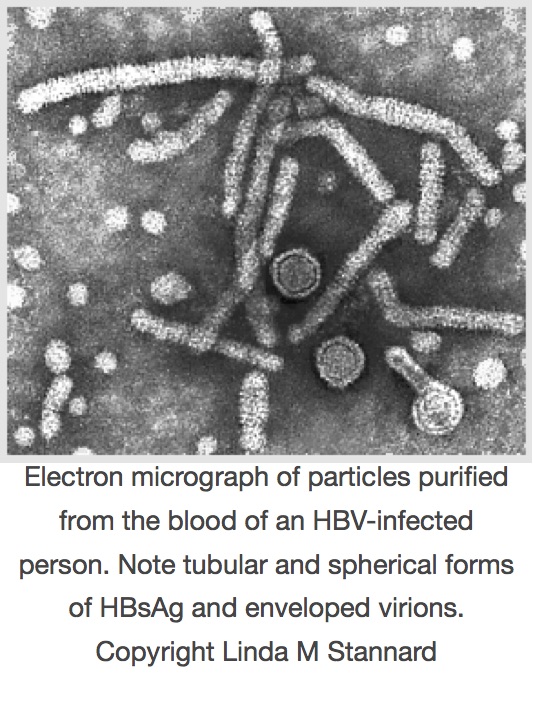
Blumberg’s “initial discoveries were based primarily on epidemiologic, clinical, and serological observations”; however, by 1968 the “Australia antigen” was seen to consist of 22 nm empty particles, now known to be composed of capsid protein or “surface antigen”, and by 1970 a 42 nm DNA-containing “Dane particle” was found which is now known to be the virion.  Blumberg had by 1972 patented a vaccine derived by purification of 22 nm particles composed of HBV surface antigen (HBsAg) from donor blood, a process pioneered by Maurice Hilleman.  By 1975 Blumberg and others had also implicated HBV in the causation of primary hepatic carcinoma, now known as hepatocellular carcinoma (HCC) and a serious complication of chronic infection with HBV, especially if acquired in early life.  The vaccine was licenced for use in 1982, meaning it was the first anti-cancer vaccine, and the first viral subunit vaccine.  Blumberg shared the 1976 Nobel Prize in Physiology or Medicine with D Carleton Gajdusek – who described the first prion-caused diseases – for “…their discoveries concerning new mechanisms for the origin and dissemination of infectious diseases”.

hbv particles

By 1979 the whole HBV genome had been cloned and sequenced, and molecular biology studies could start in earnest. A recombinant HBsAg produced in yeast was subsequently licenced in 1986, and has supplanted the earlier one.  It is being used in a many countries as part of the EPI (Extended Programme of Immunisation) bundle given to infants, as there is more risk of chronic infection the younger the person is that is infected.  Given that upwards of 2 billion people have been infected, and the over 300 million people that are chronically infected with HBV have a 15-25% risk of dying prematurely from HBV-related causes, there is the potential to make a very significant impact on liver disease.

Back to Contents