Archive for the ‘Uncategorized’ Category

Full genomic analysis of an influenza A (H1N2) virus identified during 2009 pandemic in Eastern India: evidence of reassortment event between co-circulating A(H1N1)pdm…

13 October, 2012

See on Scoop.itVirology News

“During the pandemic [Influenza A(H1N1)pdm09] period in 2009-2010, an influenza A (Inf-A) virus with H1N2 subtype (designated as A/Eastern India/N-1289/2009) was detected from a 25 years old male from Mizoram (North-eastern India).

The outcome of this full genome study revealed a unique reassortment event where the N-1289 virus acquired it’s HA gene from a 2009 pandemic H1N1 virus with swine origin and the other genes from H3N2-like viruses of human origin.

Conclusions
This study provides information on possibility of occurrence of reassortment events during influenza season when infectivity is high and two different subtypes of Inf Aviruses co-circulate in same geographical location.”


This is interesting, and soberign news: it shows how easily this sort of thing can happen; it is perhaps fortunate that both the NA of the new virus came from a circulating type, as otherwise the virus could have spread as far and been as serious as the new H1N1.


I thank Russell Kightley for the reassortant influenza virus graphic.


See on www.virologyj.com

Genomic Variation in Seven Khoe-San Groups Reveals Adaptation and Complex African History

1 October, 2012

See on Scoop.itVirology and Bioinformatics from Virology.ca

“The history of click-speaking Khoe-San, and African populations in general, remains poorly understood. We genotyped ∼2.3 million SNPs in 220 southern Africans and found that the Khoe-San diverged from other populations ≥100,000 years ago, but structure within the Khoe-San dated back to about 35,000 years ago. Genetic variation in various sub-Saharan populations did not localize the origin of modern humans to a single geographic region within Africa; instead, it indicated a history of admixture and stratification. We found evidence of adaptation targeting muscle function and immune response, potential adaptive introgression of UV-light protection, and selection predating modern human diversification involving skeletal and neurological development. These new findings illustrate the importance of African genomic diversity in understanding human evolutionary history.”


Ex Africa, semper aliquid novi…or old, in this case!

See on www.sciencemag.org

The Gemini Virus

29 September, 2012

See on Scoop.itVirology and Bioinformatics from Virology.ca

“With a nod to the movie Contagion, The Gemini Virus is a vivid (the audience will become mysophobia agoraphobic), exhilarating lethal virus thriller. Part of the fun is the reactions of people as some welcome the biblical End of Days while others blame the government. Fast-paced from the first cough and sneeze, the storyline never takes a respite as the Gemini Virus goes viral.”


A pity that geminiviruses (the real ones) only infect plants, isn’t it?


Geminivirus graphic courtesy of Russell Kightley Media

See on themysterygazette.blogspot.fr

Begomovirus–whitefly mutualism is achieved through repression of plant defences by a virus pathogenicity factor – ZHANG – 2012 – Molecular Ecology – Wiley Online Library

25 September, 2012

See on Scoop.itVirology and Bioinformatics from Virology.ca

“Plant-mediated interactions between herbivorous arthropods and pathogens transmitted by herbivores are important determinants of the population dynamics of both types of organisms in the field. The role of plant defence in mediating these types of tripartite interactions have been recognized but rarely examined especially at the physiological and molecular levels. Our previous work shows that a worldwide invasive whitefly can establish mutualism with the begomovirus Tomato yellow leaf curl China virus (TYLCCNV) via crop plants. Here, we show that TYLCCNV and betasatellite co-infection suppresses jasmonic acid defences in the plant. Impairing or enhancing defences mediated by jasmonic acid in the plant enhances or depresses the performance of the whitefly. We further demonstrate that the pathogenicity factor βC1 encoded in the betasatellite is responsible for the initiation of suppression on plant defences and contributes to the realization of the virus–vector mutualism. By integrating ecological, mechanistic and molecular approaches, our study reveals a major mechanism of the plant-mediated mutualism between a virus and its vector. As the test plant is an important economic crop, the results also have substantial implications for developing novel strategies for management of crop viruses and the insect vectors associated with them.”


I noted previously in Virology News and here that researchers in China had found in 2007 that the B biotype of Bemisia tabaci greatly enhanced its own survival by transmitting begomoviruses – and now this group have figured out why.  Fascinating interaction between a tiny virus, an even smaller satellite DNA, and host plants and insect vectors.  The original paper, BTW, can be found here:

http://www.plosone.org/article/info%3Adoi%2F10.1371%2Fjournal.pone.0000182

See on onlinelibrary.wiley.com

Virology – Plant virus expression vectors set the stage as production platforms for biopharmaceutical proteins

16 September, 2012

See on Scoop.itVirology News

“Transgenic plants present enormous potential as a cost-effective and safe platform for large-scale production of vaccines and other therapeutic proteins. A number of different technologies are under development for the production of pharmaceutical proteins from plant tissues. One method used to express high levels of protein in plants involves the employment of plant virus expression vectors. Plant virus vectors have been designed to carry vaccine epitopes as well as full therapeutic proteins such as monoclonal antibodies in plant tissue both safely and effectively. Biopharmaceuticals such as these offer enormous potential on many levels, from providing relief to those who have little access to modern medicine, to playing an active role in the battle against cancer. This review describes the current design and status of plant virus expression vectors used as production platforms for biopharmaceutical proteins.”


And of course, let it not be forgotten that our group has pioneered the use of mastreviruses in this regard: maize streak virus in 1999-2001, and bean yellow dwarf in 2010 and since.

Investigation of the potential of maize streak virus to act as an infectious gene vector in maize plants.

Palmer KE, Rybicki EP.
Arch Virol. 2001;146(6):1089-104.

Generation of maize cell lines containing autonomously replicating maize streak virus-based gene vectors.
Palmer KE, Thomson JA, Rybicki EP.
Arch Virol. 1999;144(7):1345-60.


High level protein expression in plants through the use of a novel autonomously replicating geminivirus shuttle vector.
Regnard GL, Halley-Stott RP, Tanzer FL, Hitzeroth II, Rybicki EP.
Plant Biotechnol J. 2010 Jan;8(1):38-46. Epub 2009 Nov 19.


…not to mention a treatise on ssDNA virus vectors in plants:


Virus-Derived ssDNA Vectors for the Expression of Foreign Proteins in Plants.
Rybicki EP, Martin DP.
Curr Top Microbiol Immunol. 2011 Oct 29. [Epub ahead of print]

See on www.sciencedirect.com

Reconstruction of the 1918 Influenza Virus: Unexpected Rewards from the Past

14 September, 2012

See on Scoop.itVirology News

“The influenza pandemic of 1918–1919 killed approximately 50 million people. The unusually severe morbidity and mortality associated with the pandemic spurred physicians and scientists to isolate the etiologic agent, but the virus was not isolated in 1918. In 1996, it became possible to recover and sequence highly degraded fragments of influenza viral RNA retained in preserved tissues from several 1918 victims. These viral RNA sequences eventually permitted reconstruction of the complete 1918 virus, which has yielded, almost a century after the deaths of its victims, novel insights into influenza virus biology and pathogenesis and has provided important information about how to prevent and control future pandemics.”


ProMed Mail [ProMED Digest V2012 #487] adds this analysis:


“By sequencing the 1918 virus, researchers were able to confirm that
the viruses that caused influenza pandemics in 1957, 1968, and 2009 were all descended in part from the 1918 virus. Studies showed that the 2009 pandemic virus had structural similarities with the 1918
virus and explained why younger people, who had never been exposed to the 1918 virus or its early descendants, were most vulnerable to infection by the 2009 influenza virus


As a result, public health officials were able to target limited
vaccine supplies to predominantly younger people, who needed vaccine protection most, rather than the elderly, who were at lower risk of infection in 2009 but are traditionally the most important target group for vaccination. Further, determining the physical structure of parts of the 1918 virus, particularly the portions that are consistent across influenza viruses, has informed the ongoing development of candidate “universal” influenza vaccines that may be given infrequently yet protect broadly against multiple influenza viruses.”


Pandemic reassortment graphic courtesy of Russell Kightely Media

See on mbio.asm.org

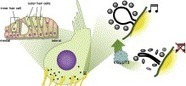
Have You Heard? Viral-Mediated Gene Therapy Restores Hearing

7 September, 2012

See on Scoop.itVirology News

“Genetic loss of VGLUT3 in cochlear inner hair cells results in profound deafness. In this issue of Neuron, Akil et al. (2012) show that AAV-mediated introduction of wild-type VGLUT3 in the genetically deaf mouse cochlea results in significantly improved hearing.”


Profoundly cool – using a defective virus to target specific cell types, to restore something as fundamental as hearing.  This could go a long way to restoring some of the potential that the gene therapy field was seen to have, before the disasters of death associated with recombinant adenovirus use, and leukaemia with recombinant retroviruses.

See on www.sciencedirect.com

Recurvirostridae

23 August, 2012

See on Scoop.itVirology News

It’s a virus family!!  Or – a bird??  How confusing.  Someone needs to change their taxonomy.  Thanks to Russell Kightley for the keen observation.

See on en.wikipedia.org

Nobel fight over African HIV centre

28 June, 2012

See on Scoop.itVirology News

Laureates question choice of interim scientific director.

See on www.nature.com

Non-canonical translation in RNA viruses

23 June, 2012

See on Scoop.itVirology News

“Viral protein synthesis is completely dependent upon the translational machinery of the host cell. However, many RNA virus transcripts have marked structural differences from cellular mRNAs that preclude canonical translation initiation, such as the absence of a 5′ cap structure or the presence of highly structured 5′UTRs containing replication and/or packaging signals. Furthermore, whilst the great majority of cellular mRNAs are apparently monocistronic, RNA viruses must often express multiple proteins from their mRNAs. In addition, RNA viruses have very compact genomes and are under intense selective pressure to optimize usage of the available sequence space. Together, these features have driven the evolution of a plethora of non-canonical translational mechanisms in RNA viruses that help them to meet these challenges. Here, we review the mechanisms utilized by RNA viruses of eukaryotes, focusing on internal ribosome entry, leaky scanning, non-AUG initiation, ribosome shunting, reinitiation, ribosomal frameshifting and stop-codon readthrough. The review will highlight recently discovered examples of unusual translational strategies, besides revisiting some classical cases.”


Great article for anyone interested in how RNA viruses subvert cellular processes.

See on vir.sgmjournals.org