Archive for the ‘Influenza viruses’ Category

Venter can do WHAT for influenza??

5 June, 2010

I have kept out of commenting on what J Craig Venter and others have done recently, given that many others have done so, and done so well – however, there is recurring mention of what “this technology” could do for influenza vaccines specifically, which has both puzzled and intrigued me, given a distinct lack of obviousness.

So I will comment, if only to clarify this issue for me and anyone else who cares.

To give some background, the New Scientist issue of the 29th of May has a guest editorial by J Craig Venter, Clyde Hutchison and Hamilton Smith, where they discuss some of the implications of their having made a totally synthetic and viable Mycoplasma mycoides genome (see also Science, DOI: 10.1126/science.1190719).

So what, exactly, is it they did?  OK, so they spent US$40 million or so constructing a genome, in segments, from sequence information housed in an electronic database, via chemical synthesis of long stretches of DNA.  They then assembled these segments into a singular genome in yeast, and then inserted this into cells of the closely-related Mycoplasma capricolum which had been stripped of their genomes – and incidentally, rendered unable to destroy the incoming genome as “foreign”, by a process which is now proprietary.  These cells then expressed the new DNA, which allowed them to multiply, and to take on all of the characteristics of the synthetic M mycoides, given that all of the original cell constituents from the original bug (proteins, mRNA, membranes, etc) would be turned over in time, and become those specified by the new genomes.

This is a big deal – a really, really big deal – but at the same time, they themselves recognise it is an incremental step in a long series of steps that started with Arthur Kornberg’s lab making the first complete synthetic and viable genome of a virus (phiX174) by in vitro synthesis from virion DNA, polymerase and nucleotides.  In fact they modestly point out that this is not even the first  complete cell genome that has been synthesised; it is the largest, however, and the one that worked.  They were not so modest in missing out a few other landmarks before their own complete synthesis of phiX174 in 2003, however: for example, the first synthesis of a functional plasmid, and the first generation of a RNA virus genome from a cDNA copy, and the complete synthesis of an infectious poliovirus genome, are not mentioned.

So what is it they did not do?

Well, they did not “create life”, however much even relatively respectable publications might claim they did: life is a lot more complex than chemicals, and people have “rebooted” cells before with exogenous genomes; what they did is not really qualitatively different to infecting a cell with a synthetic virus.

They have also not done anything that is immediately useful: their new organism differs from the original only in having a few genes missing, and a long literary message and ownership-encoding “watermark” inserted.

More positively, they have also most emphatically not opened the floodgates for bioterrorists to mail order complete poxvirus or anthrax genomes: as I have noted here previously,

“…There are more than enough nasty agents out there that are relatively easy to obtain, and do simple kitchen-based microbiology with, to keep entire cave complexes and Montana libertarian enclaves busy for years, without resorting to complicated molecular biology”.

Or spending $40 million dollars.  And I will say it again….

So aside from the details, what have they done?  In the NS editorial, Venter et al. say this:

“We now have the means to design and build a cell that will define the minimal set of instructions necessary for life, and to begin the design of cells with commercial potential, such as fuel production from carbon dioxide. We can assemble genome-sized stretches of DNA that can also be used to mix and match natural and synthetic pieces to make genomes with new capabilities.

Synthesising DNA in this way is still expensive, but we expect the cost to fall dramatically. This may make the complete synthesis of genomes competitive with the alteration of natural genomes to add new capabilities to bacterial cells. It should also be practical to synthesise simple eukaryotes, such as yeast, to which it is already possible to add extra chromosomes. The construction of large pieces of synthetic DNA and their introduction into a receptive cytoplasm is no longer a barrier. The limits to progress in synthetic biology are now set by our ability to design genomes with particular properties.”

Right: so what they have done is set the benchmark for what is possible – rather than what should be done.

Because it is a lot easier to do things such as they propose by other ways – as is pointed out in the companion article to the NS editorial.  For that matter, I am sure one could more easily end up with a completely synthetic and much larger cellular genome by incrementally replacing genome chunks by homologous recombination or transposon-mediated insertion / Cre-Lox deletion, and have it cost far less and be less subject to error, than by synthesising it de novo.
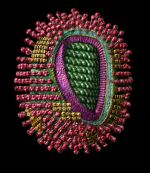
Influenza virus - Copyright Russell Kightley Media

And how does any of this relate to influenza vaccines?

The only comment I can find in the NS article that sheds light on this is the comment:

“As soon as next year, the flu vaccine you get could be made synthetically,” he [Venter] says.

Except that this has been possible for years already, after the poliovirus synthesis…?  I think it was rather a badly-chosen example rather than any actual plan; however, there is not a lot of point in making a synthetic influenza virus genome, given that the attenuated originals already work quite well as vaccines – and we don’t yet understand how to specify avirulence in influenza, so any synthetic version would necessarily be a copy of an extant version.

So hype rather than fact for ‘flu; promise rather than substance for carbon dioxide sequestration and biofuels – but still the coolest thing since sequencing your own dog…B-)

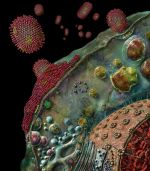
So it wasn’t so bad…THIS time.

13 January, 2010

Influenza A viruses mixing in susceptible hosts


I have been waiting with great interest to see what would happen in the wrong northern hemisphere 2009-2010 winter season with the Mexican – sorry; politically incorrect, aka pandemic H1N1 – flu – and it has pretty much happened, and it wasn’t nearly as bad as it could have been.

From ProMED:


INFLUENZA PANDEMIC (H1N1) (05): VACCINE UPDATE

**********************************************

A ProMED-mail post
Date: Mon 11 Jan 2010
Source: Reuters News [edited]

Countries re-think swine flu vaccine orders

– ——————————————-

The United States said on Monday [11 Jan 2010] it had cut in half its order for influenza pandemic (H1N1) 2009 virus vaccine from Australia’s CSL Ltd, but said it is not certain how far orders from other suppliers will be trimmed. While U.S. officials are still calculating how much swine flu vaccine they will need, it is becoming increasingly clear that the United States will not need all 251 million doses it ordered from 5 companies. …

Several other governments have started to cut orders for [pandemic] H1N1 vaccines because the pandemic has not turned out to be as deadly as originally feared and most people need only one dose, not 2, to be fully protected.

…Germany’s Bild newspaper reported that the German government had agreed to cut its vaccine order with GlaxoSmithKline Plc by one-3rd. The newspaper said the agreement would save states about 133 million euros (USD 193 million). On Friday [8 Jan 2010], Britain said it was in talks with Glaxo about reducing supplies. ….

…While the pandemic is slowing down in North America, the World Health Organization said on Monday [11 Jan 2010] the virus was still active in parts of central, eastern and southeastern Europe, North Africa and South Asia. Governments are torn between trying to encourage companies to make influenza vaccine and wasting money on doses that are never given. But bulk antigen — the vaccine before it is put into a syringe – — can be stored and might be used in next year’s seasonal vaccine.

The U.S. government was still promoting vaccination, reminding people that influenza is unpredictable and that [pandemic] H1N1 could come back in a 3rd wave. One potentially large market for the vaccine is children. Children under 10 need 2 doses of vaccine to be fully protected and some U.S. school districts were planning more vaccination clinics this week to get children a 2nd dose. …
[Byline: Maggie Fox]

– —

Communicated by:
ProMED-mail Rapporteur Mary Marshall

Communicated by:
ProMED-mail


…and so it begins…

21 October, 2009

The northern hemisphere flu season, that is – with the imponderable being just how much of it will be due to the pandemic AH1N1 2009 strain.

And whether or not enough vaccine will be available, soon enough.

News links from today:

US, Mexico face shortage of H1N1 flu vaccine  (LA Times)

CDC: H1N1 vaccine behind schedule (CBS News)

…and how some people are scared of the vaccine, rather than of the flu:

H1N1 vaccine embraced, but also feared American Medical News

Some Parents Undecided about H1N1 Vaccine LocalNews8.com 

Influenza virus A H1N1 2009: gets to parts the other flu doesn’t reach

14 September, 2009

Flu virus life cycle. Copyright Russell Kightley Media

The September 2009 issue of Nature Biotechnology has a letter concerning the receptor specificity of AH1N1 2009 pandemic influenza virus – which accounts pretty well for why it CAN be pretty nasty, and for why it may get nastier yet.

Childs et al., in a letter entitled “Receptor-binding specificity of pandemic influenza A (H1N1) 2009 virus determined by carbohydrate microarray“, describe what amounts to a tour de force analysis of the receptor binding of a number of influenza viruses, which concludes with the statement that:

“The differences in receptor binding between the 2009 pandemic and seasonal H1N1 viruses may therefore account, at least in part, for the higher virus replication and greater pathology reported in the lungs of ferrets, mice and nonhuman primates infected with pandemic viruses, than observed with contemporary seasonal viruses.”

Which would help explain why some otherwise healthy young people are dying of the virus, while others are getting only mildly ill.  But we get ahead of ourselves: in January last year I wrote in MicrobiologyBytes about recpetor specificities of A-type influenza viruses, in the context of how H5N1 was less likely to mutate to easy human-to-human transmissibility than had origianlly been thought.

I wrote at the time:

According to a letter in the January 2008 issue of Nature Biotechnology, it is a characteristic structural topology, and not just the α2,6 linkage, that enables specific binding of HA to α2,6 sialylated glycans. The authors state:

…recognition of this topology may be critical for adaptation of HA to bind glycans in the upper respiratory tract of humans. An integrated biochemical, analytical and data mining approach demonstrates that HAs from the human-adapted H1N1 and H3N2 viruses, but not H5N1 (bird flu) viruses, specifically bind to long α2-6 sialylated glycans with this topology. This could explain why H5N1 viruses have not yet gained a foothold in the human population.

Apparently the critical shape in humans is umbrella-like, whereas the avian receptor is characteristically cone-like. Again from the paper:

The topology of α2-3 and α2-6 is governed by the glycosidic torsion angles of the trisaccharide motifs-Neu5Aca2-3Galb1-3/4GlcNAc and Neu5Aca2-6Galb1-4GlcNAc, respectively (Supplementary Fig. 3 online).

Ram Sasisekharan and colleagues showed that human-adapted viruses with mixed α2,3/α2,6 binding ability that bound the umbrella-type receptor were efficiently transmitted, whereas viruses with the same basic specificity that did not have HA binding specificity to “long” α2,6, were not.

The present paper reports the following investigation:

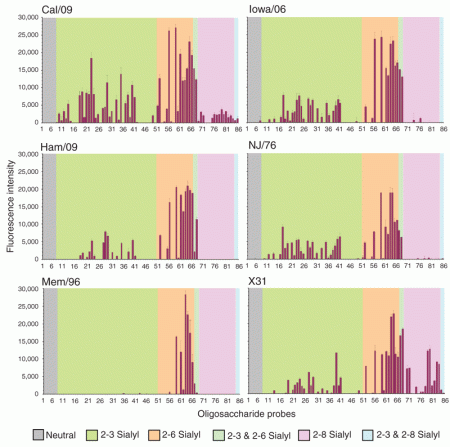
“We have compared directly, by carbohydrate microarray analysis, the receptor-binding characteristics of two isolates of the novel pandemic H1N1 virus, Cal/09 and A/Hamburg/5/2009 (Ham/09), with those of a seasonal human H1N1 virus, A/Memphis/14/96-M (Mem/96), as representative of a virus well adapted to humans [and a reassortant human H3N2 virus A/Aichi/2/68 x PR8 (X31)]. As the HA of the novel H1N1 pandemic virus originated from a virus similar to triple reassortant swine H1N1 viruses, we compared one such example, A/Iowa/1/2006 (Iowa/06), isolated from a human infection, and an older close relative of classical swine H1N1 viruses, A/New Jersey/76 (NJ/76), the human isolate that initiated the concern of a pandemic threat in 1976.”

This is a really comprehensive analysis – for such a short communication – which throws up a number of interesting points.  First, I was not aware it was possible to do “carbohydrate microarrays”!  Second, the paper shows quite conclusively that the swine-derived AH1N1 viruses have a significantly wider range of receptor specificities than a standard seasonal AH1N1 virus, and – but to a lesser extent – than the reassortant H3N2 virus X31.

Carbohydrate microarray analyses of the six viruses investigated.
From the following article (with permission from NBT):
Receptor-binding specificity of pandemic influenza A (H1N1) 2009 virus determined by carbohydrate microarray.
Robert A Childs, Angelina S Palma, Steve Wharton, Tatyana Matrosovich, Yan Liu, Wengang Chai, Maria A Campanero-Rhodes, Yibing Zhang, Markus Eickmann, Makoto Kiso, Alan Hay, Mikhail Matrosovich & Ten Feizi.
Nature Biotechnology 27, 797 – 799 (2009).
doi:10.1038/nbt0909-797

flu_receptor

Legend:
Numerical scores for the binding signals are shown as means of duplicate spots at 5 fmol per spot (with error bars). The microarrays consisted of eighty sialylated and six neutral lipid-linked oligosaccharide probes, printed on nitrocellulose-coated glass slides. These are listed in Supplementary Table 1 and arranged according to sialic acid linkage, oligosaccharide backbone chain length and sequence. The various types of terminal sialic acid linkage are indicated by the colored panels as defined at the bottom of the figure.

And what does all this mean, exactly?  The authors sum it up well:

These results indicate that no major change in receptor-binding specificity of the HA was required for the emergent pandemic virus to acquire human-like characteristics and become established in the human population. …

The broader specificity, namely, the ability to bind to 2-3- in addition to 2-6-linked receptors is also pertinent to the greater virulence of the pandemic virus than seasonal influenza viruses observed in animal models, and its capacity to cause severe and fatal disease in humans, despite the generally mild nature of most infections. Binding to 2-3-linked receptors is thought to be associated with the ability of influenza viruses to infect the lower respiratory tract where there is a greater proportion of 2-3- relative to 2-6-linked sialyl glycans, although long chain 2-3-linked sialyl (poly-N-acetyllactosamine) sequences are present in ciliated bronchial epithelial cells in humans where they are the receptors for another human pathogen, Mycoplasma pneumoniae.

So there you have it: the viruses can get deeper in to your lungs than the standard flu – which, if it happens, can make you seriously ill.

So what happens if it gets better at binding the 2,3-type receptors in humans?  Well, we’re only in the middle of the pandemic.  We may yet find out the hard way.

…and the virus marches on….

1 September, 2009

From News24 this evening:

SA’s H1N1 deaths now 27

2009-09-01 17:03

Cape Town – The number of swine flu deaths in South Africa has risen to 27, and confirmed infections to 5 841, the National Institute for Communicable Diseases said on Tuesday.

“There is also ongoing and widespread community transmission,” it said in a statement.

Of the 27 fatal cases, 12 were pregnant women, five of whom had no identified underlying conditions.

The institute repeated its standard warning that people with depressed immunity, asthma, diabetes, or chronic lung, kidney and heart problems, or who were pregnant should seek early treatment with antivirals.

and on 26th August:

SA wants own H1N1 flu vaccine

2009-08-26 22:29

Cape Town – South Africa has no choice but to develop its own H1N1 flu vaccine, Health Minister Aaron Motsoaledi said on Wednesday, citing concerns treatment will not be available to poorer nations.

“South Africa has arrived at a situation where we have no option but to start developing our own vaccine capacity, not only for H1N1, but generally,” Motsoaledi told parliament.

“The disturbing feature about today’s world… has been expressed by the minister of health for Cambodia… who noted that the developed world, after producing the vaccine, may want to cover their own population first before thinking about the developing world,” Motsoaledi said.

Anyone remember reading that before, anywhere?  Watch this space….

Chimaeric plant virus stimulates influenza virus-specific CD8+ T-cell responses

1 September, 2009

Plant-produced potato virus X chimeric particles displaying an influenza virus-derived peptide activate specific CD8+ T cells in mice

 Chiara Lico, Camillo Mancini, Paola Italiani, Camilla Betti, Diana Boraschi, Eugenio Benvenuto, Selene Baschieri

 Vaccine (2009) 27: 5069 – 5076

 The authors used plant Potexvirus Potato virus X (PVX) to display the Db-restricted nonapeptide ASNENMETM of the nucleoprotein (NP) from influenza A virus (strain A/PR/8/34) to activate specific CD8+ T cells in mice. They paid great attention to the design of the NP-peptide to ensure optimum plant virus stability and antigen processing. The modified NP-peptide was fused to the N-terminal of the coat protein (CP) from PVX creating the pVXSma-NP construct that was subsequently inoculated into tobacco leaves. The resulting chimeric virus particles (NP-CVP) were stable and pure with a yield of approximately 1.1 mg NP-CVP / g fresh leaf tissue. Endotoxin tests were also performed to exclude their contribution to the immunoregulatory effects of the CVPs. Mice were inoculated with two different doses of NP-CVP (50 µg or 167 µg) with or without incomplete Freund’s adjuvant (IFA). The IFN-γ ELISPOT assays indicated that NP-CVPs activated the ASNENMETM-specific CD8+ response, especially the highest concentration of the NP-CVP without the adjuvant. Results also indicated that the CP of PVX contained T helper epitopes that contributed to the CD8+ T cell response. Thus, PVX is not only an epitope carrier but an adjuvant as well. This study illustrates the potential of implementing plant viruses displaying foreign epitopes to elicit T cell responses in vaccine development.

Contributed by Dr Elizabeth (Liezl) Mortimer

H1N1 – view on a pandemic

26 August, 2009

Well, “The Big One” that we have all been waiting for since 1968 – or 1977, if you count the accidental re-release of the original humanised H1N1 as a pandemic – is well and truly here.  A nice little animated graphic for depicting how it arose, while a bit simplistic, is available here.

And what have we learned?  Has civilisation fallen; have populations been decimated?

Well, quite a lot; no, and no, in answer.  Explanations for some of this are contained in a survey just released.  Here from the News24 report published today, sourced from SAPA:

Paris – More than half the fatalities from H1N1 swine flu have been among young adults, according to one of the first surveys to gather mortality data from across the globe for the new A(H1N1) virus.

The analysis of 574 pandemic deaths from 28 countries through mid-July, released this week, also found that being diabetic or obese significantly boosted the risk of dying.

Neither children nor the elderly are as vulnerable as initial reports indicated, found the study, published by Eurosurveillance, the monitoring arm of the European Centre for Disease Prevention and Control.

“Most deaths (51%) occurred in the age group of 20-to-49 year-olds, but there is considerable variation depending on country or continent,” the researchers reported.

Only 12% of those who died were 60 or older.

All of these features – high mortality among young adults and the obese, but not the very young or elderly – are sharply different than for the seasonal flu.

More than 90% of deaths from seasonal flu – which claims 250 000 to 500 000 lives annually according to the WHO – are in people over 65.

By contrast, with the pandemic H1N1, “the elderly seem to be protected from infection to some extent, perhaps due to previous exposure to similar strains”, the study conjectured.

Persons born before 1957, other studies have suggested, were almost certainly exposed to the milder seasonal A(H1N1) viruses that evolved from the terrible pandemic of 1918, which left some 40 million dead.

With the 2009 strain, “when infection does occur, however, the percentage of deaths in elderly cases seems to be higher that in others”.

One common target across both pandemic and season strains is pregnant women, according to the study, led by Philippe Barboza of the French Institute for Public Health Surveillance….

And that’s the sinister part…here in South Africa, of 18 fatalities known to have been associated with pandemic AH1N1 infection, NINE were pregnant women, mostly in the third trimester of pregnancy.  In a report published yesterday, SA’s Minister of Health Dr Aaron Motsoaledi said the following:

“We find it very worrying that there is an increasing number of pregnant women who are succumbing to this pandemic,” Motsoaledi said.

“The directive to all health care workers… is to put pregnant women with flu-like symptoms (even if they are mild) on Tamiflu treatment.

“Doctors should not wait for any tests before such treatment is administered.”

Further on in the same report:

On Monday, the National Institute for Communicable Diseases [NICD] also said pregnancy had been identified as a particular risk factor for severe H1N1 flu.

It said that in the second and especially the third trimester, urgent treatment with antiviral drugs should be considered even before any laboratory results were received.

The institute added however that most H1N1 flu cases in South Africa remained mild and “self-limiting”.

Routine H1N1 testing for everyone with flu-like illness was still not recommended.

Nationwide, there had been 5 118 laboratory-confirmed cases of H1N1 flu, it said.

The figure is essentially meaningless, given that most suspected flu cases are not laboratory-diagnosed (it costs R700, or ~US$70, for a single test) and the pandemic flu is pretty much indistinguishable from seasonal, and may in fact have supplanted the normal flu.  It certainly has in Australia and Argentina, which remain the two worst-hit southern hemisphere countries, and probably has in South Africa too: the CDC has a very useful map illustrating this, accessible here.

International news, via the CDC site, is the following:

As of August 13, the World Health Organization (WHO) regions have reported over 182,166 laboratory-confirmed cases of 2009 H1N1 influenza virus (2009 H1N1) with 1,799 deaths. The laboratory-confirmed cases represent an underestimation of total cases in the world as many countries now focus surveillance and laboratory testing only in persons with severe illness. The 2009 H1N1 influenza virus continues to be the dominant influenza virus in circulation in the world.

One very important piece of information further down this report is the following:

There have been no significant changes detected in the 2009 H1N1 influenza virus isolated from persons in the Southern Hemisphere as compared to viruses isolated from persons in the Northern Hemisphere.

This is important because the frantic rush to make vaccines to combat the expected northern hemisphere upsurge in infections in their autumn season – October or so – depends upon the virus not having changed much from the seed material which was derived from virus isolated earlier this year.  This could negate some of theh fears that the much-anticipated “second wave” of virus infections could be a lot worse than the first.

Good news on the vaccine front – for Australians at least – is that an Australian company, CSL Ltd, has the world’s first data from human trials of a pandemic strain vaccine, and looks set to be able to provide Australia with 21 million doses of vaccine – and 2 million doses of the vaccine at the end of the month.

Other vaccine news is also fairly encouraging, notwithstanding a rather alarming report in New Scientist recently about the new strain growing only half as well in eggs as seasonal flu types: while this remains a worry, newer, faster-growing variants have been derived and distributed – though possibly not in time for a northern hemisphere autumn roll-out.

Mind you, all of this production relies on the well-proven-but-seriously-archaic 1930s technology of growing live virus in hen’s eggs: we are still trapped, in the 21st century, into having to use early 20th century methods to produce vaccines for fast-adapting pathogens.  Things ARE changing: various pharma companies are diversifying into mammalian and insect cell culture; people (including us!) are investigating making recombinant subunit vaccines in plants (see here) – and there is at least the tantalising possibility that “universal vaccines” may become available in the not-too-distant future.  These will exploit all or part of the highly conserved M2 “ion channel” protein of influenza viruses as recombinant subunit vaccines.

However, all of this is at least six months in the future for conventional vaccines, and many years hence for newer offerings.  Meantime – there is disturbing news concerning trans-species transmissions of pandemic AH1N1 viruses.

ProMED Mail (ProMED Digest V2009 #394) reports that “Chile finds H1N1 swine flu in turkeys“:

Chilean health authorities announced on Thursday night [20 Aug 2009] that they had detected and controlled an outbreak of swine flu in 2 turkey farms, according to a communication from the Agricultural and Livestock Service (SAG).

“The presence of an influenza type A virus was detected in 2 farms in the Valparaiso Region, and immediate precautionary measures were adopted to prevent the dissemination of the disease and to protect the population’s health,” said the text.

And again from ProMED on 20th August, quoting The Straits Times and AFP:

A 2nd Australian piggery was placed in quarantine due to swine flu on Wednesday [19 Aug 2009] as the number of human deaths from the virus reached 121.

Authorities ordered a biosecurity lockdown at the piggery in Victoria state amid concerns the virus could mutate and return to humans in a more deadly form.

Another piggery in New South Wales state has been quarantined since late July [2009], although the state government said most of the animals had recovered from the disease.

Victoria Agriculture Minister Joe Helper said tests confirmed the presence of influenza at the piggery after its owners reported earlier this week that the animals were not eating.

‘It is important to stress that this is not a human health issue and that national and international food authorities continue to advise that pork and pork products are safe to eat,’ he said.

Media reports said the pigs were believed to have contracted the virus from workers at the property who were suffering the human form of the disease.

Health experts fear swine flu in humans, which is easily spread but has a relatively low fatality rate, could mutate in other animals and emerge in a more virulent form. [my emphasis]

So: two independent incidents, on different continents, of pandemic AH1N1 viruses getting into different species of farmed livestock – and luckily controlled.

What would have happened if domestic fowl and/or pigs had been infected in places like Vietnam, Thailand, Indonesia, Turkey and Egypt – where highly pathogenic avian H5N1 influenza viruses appear to be endemic, and not well controlled?  Given the complex origins of the current pandemic virus – from several swine, avian and human viruses – it could be a recipe for disaster, on a scale even greater than the 1918 pandemic.

The REAL Big One.  Let’s all help get a vaccine, people!!

While you have the flu….

7 August, 2009

…as I think I do…

KEEP_CALM_AND_DON'T_SNEEZE

Thanks Michael Rolfe!

H1N1: coming to a South African home near you, soon

14 July, 2009

And after a very pleasant holiday, I come back to work to find…85 cases of confirmed pandemic H1N1 in South Africa!

Yes, it is true – at least, as far as the National Institute for Communicable Diseases (NICD) Director, Prof Barry Schoub, is concerned: he was featured yesterday on eTV News explaining how it was all going.  And it is “mild” according to him: it looks the same as standard flu, although most cases so far are due to people bringing it into the country, without much community spread…yet

In an article just published by the Independent Online (IOL), Kanina Foss says:

Swine flu cases will probably spike when schools reopen next week. Health officials will monitor schools, but are still advising that mild cases should be treated no differently from seasonal flu.

Only patients with serious symptoms – such as high fever, persistent vomiting, pain in the chest, or shortness of breath – should seek medical assistance. These are symptoms that people would seek medical assistance for anyway, says National Institute for Communicable Diseases (NICD) deputy director Lucille Blumberg.

The number of confirmed swine flu cases in South Africa is 75 [since modified, see above]. Once this number reaches 100, the NICD will stop counting. It will focus instead on severe cases and those at high risk because of compromised immune systems, such as HIV-positive people.  The institute will also monitor schools.  Counting cases was resource intensive, said the NICD on Monday, and served no more purpose than counting cases of seasonal flu. The overwhelming majority of cases worldwide had been mild, and had required no special treatment.

The World Health Organisation (WHO) has said the spread of the H1N1 virus is inevitable, and the NICD is expecting many more South Africans will be infected. It is unsure how the country’s high HIV prevalence will affect the severity of infections.

“It’s something we need to monitor very carefully,” said Blumberg.

The highest number of confirmed cases are in Gauteng (39), followed by the Eastern Cape (nine), and Western Cape (five).

Oh, and in my other persona, a post on AIDS denialism….

Where the new H1N1 came from

29 June, 2009

Mixing of flu viruses to produce a new strain. copyright Russell Kightley Media

In Nature 459, 1122-1125 (25 June 2009): Smith et al. on “Origins and evolutionary genomics of the 2009 swine-origin H1N1 influenza A epidemic“.

In March and early April 2009, a new swine-origin influenza A (H1N1) virus (S-OIV) emerged in Mexico and the United States1. During the first few weeks of surveillance, the virus spread worldwide to 30 countries (as of May 11) by human-to-human transmission, causing the World Health Organization to raise its pandemic alert to level 5 of 6. This virus has the potential to develop into the first influenza pandemic of the twenty-first century. [I thought a pandemic alert level of 6 meant it had already?? – Ed] Here we use evolutionary analysis to estimate the timescale of the origins and the early development of the S-OIV epidemic. We show that it was derived from several viruses circulating in swine, and that the initial transmission to humans occurred several months before recognition of the outbreak. A phylogenetic estimate of the gaps in genetic surveillance indicates a long period of unsampled ancestry before the S-OIV outbreak, suggesting that the reassortment of swine lineages may have occurred years before emergence in humans, and that the multiple genetic ancestry of S-OIV is not indicative of an artificial origin. Furthermore, the unsampled history of the epidemic means that the nature and location of the genetically closest swine viruses reveal little about the immediate origin of the epidemic, despite the fact that we included a panel of closely related and previously unpublished swine influenza isolates. Our results highlight the need for systematic surveillance of influenza in swine, and provide evidence that the mixing of new genetic elements in swine can result in the emergence of viruses with pandemic potential in humans.
[my bolded sections – Ed]

An important paper for a number of reasons – not the least of which is pigs have

Depiction of virus mixing in a pig

been pushed to the fore as a potential source of new and dangerous human flu viruses.

Through no fault of their own, I might add: the only pigs proven to have had the new virus were probably infected by a handler who had been to Mexico!

The most important observation to emerge from this is that pigs should be surveilled systematically and worldwide – to stop yet another possible avenue for zoonotic infection for us vulnerable humans.