Archive for the ‘Influenza viruses’ Category

And now it’s here

24 June, 2009

Yes, H1N1 “Mexico” flu is in South Africa: from the Mail & Guardian of 18th June.

H1N1 flu virus in the country, the Department of Health said on Thursday.

Spokesperson Fidel Hadebe said the results of laboratory tests confirmed the case in the early hours of Thursday. [after apparently having shown signs of fever in Atlanta! – Ed R]

Hadebe said the patient, a 12-year-old child, arrived in South Africa from the United States on Sunday.

The child had flu-like symptoms and was admitted to a private hospital on Monday morning.

“The patient was kept in isolation and discharged after a few days in hospital. He is well and recovering in isolation at home,” he said.

“All contacts have been followed up and given necessary advice and treatment.”

The case was dealt with in accordance with the World Health Organisation and the health department guidelines, Hadebe said.

More details were not immediately available.

Last week, the World Health Organisation declared the outbreak a pandemic. – Sapa 

 Latest news on the global front from ProMED:

As of 07:00 GMT+2 today [22 Jun 2009], there have been a total of 52 160 cases with 231 deaths attributable to influenza A(H1N1) infection confirmed to WHO from 92 countries. New countries that have confirmed cases and reported to WHO since the last update (19 Jun 2009) include: Algeria, Bangladesh, Brunei Darussalam, Fiji and Slovenia.

In addition, according to newswires, new countries reporting cases since the release of the daily WHO summary include Antigua and Iran.

There are still newswires mentioning confirmation of 2 cases of H1N1 in Ethiopia, but official confirmation to WHO is still pending. In addition, there are newswires mentioning suspected cases in Cote d’Ivoire and the Democratic Republic of the Congo (Kinshasa), but until there is mention of laboratory confirmation, these should be viewed as suspected cases and not confirmed cases. – Mod.MPP

So it’s in Africa for sure, and probably quite widespread.  In the Nature issue of the 11th June, Erika Check Hayden had this to say concerning the southern hemisphere flu season which is presently upon us:

People in poor nations already suffer from a higher incidence of conditions, such as malnutrition and HIV, that make them more vulnerable to the new virus. In addition, they are likely to be left out of the global scramble for a vaccine, which has already started as nations such as the United States and Britain rush to tie up vaccine contracts.

But perhaps the biggest global challenge is arriving now, as the Southern Hemisphere enters its flu season and swine flu threatens many of the least-ready countries. “In general, the developing countries are not prepared,” Oshitani says. The World Bank has released billions of dollars for preparedness in these regions, but many developing nations still do not have plans for dealing with a pandemic — and some that do have simply cut and pasted versions of plans from developed countries, which do not apply to poorer nations unable to afford vaccines and antivirals. 

Which is nothing new to readers of this blog…but alarming all over again.

Good news – potentially – comes from the realms of vaccine pharming: at the Plant-Based Vaccines and Antibodies meeting in Verona recently, Marc-Andre D’Aoust of Medicago Inc and Vidadi Yusibov of Fraunhofer USA detailed how they had managed to produce pilot batches of several grams of purified pandemic H1N1 HA protein from plants, in less than a month from obtaining the sequence.

I know I’d eat the plant directly, if it’d keep the flu away – but that’s just me.  Don’t try this at home…!
…In Fact, It’s Coming Here

10 June, 2009

From ProMED this morning:

INFLUENZA A (H1N1) – WORLDWIDE (60): EGYPT (CAIRO)

**************************************************

A ProMED-mail post

Date: Tue 9 Jun 2009
Source: Angola Press Agency (Angop) [in French, trans. Mod.FE, edited]

The influenza A (H1N1) virus has been detected in 2 foreign students of the American University of Cairo while [another 140 students] have been placed in quarantine, as we learnt from the medical services and the establishment.

Police officers wearing masks were stationed in front of their university dormitory in the Zamaleck area between the 2 arms of the Nile. Nobody was allowed either to go in or to come out.

“Two students were confirmed positive for the H1N1 virus.  Consequently, the residence was placed under quarantine for 24 hours,” a representative of the university declared, adding that a 3rd student who had fever, had been hospitalized for precautionary motives. All the students shall be subjected to a screening test.

The 1st Egyptian case of influenza A was detected last Tuesday [2 Jun 2009]. It is a 12-year-old American girl who arrived on holiday in Cairo. It is equally the 1st case detected in Africa.

Communicated by: ProMED-mail

[This is an update providing some details of the 1st case of influenza A (H1N1) in Egypt and Africa as a whole. Despite all the awareness of this novel virus raised in the last month in most countries in the world, it seems the disease is spreading steadily across the globe.

This new outbreak is particularly concerning as there is concurrent circulation of H5N1 virus in both human and poultry populations, increasing the pathways by which a highly transmissible and high mortality virus could evolve. [EPR: my bold]

ProMED-mail will be interested in the sequence of events following the detection of cases of influenza A (H1N1) in Egypt. – Mods.FE/PC]

And so it begins….  While a lot of people are eagerly watching the unfolding, essentially in real time, of what MUST be termed a pandemic whether the WHO wants to call it that or not, there is a very real human element to this unfolding phenomenon.

That is, a LOT of people in Africa and elsewhere in the developing world will get sick – and many may die, whether or not this is a “mild” flu.  Declan Butler, writing in the 27th May online version of Nature, says this:

“With the influenza season over in the temperate Northern Hemisphere, and just getting under way on the other side of the world, scientists are watching the A(H1N1) swine flu virus to see where it goes next and whether it will reassort with other flu viruses, or mutate, to cause more severe disease or acquire resistance to antiviral drugs.

Some researchers are warning, however, that such changes might be more likely to occur not in the northern or southern temperate zones where flu is seasonal, but in the narrow, often-overlooked belt of tropical countries where flu circulates all year round.”

And later:

“Surveillance is not just academic; it is key to getting early warnings of events that call for swift adaptations of control strategies. Swine flu is currently sensitive to the antiviral drug oseltamivir (Tamiflu), for example, but seasonal H1N1 is resistant. Were the new virus to acquire resistance, that would render redundant the Tamiflu stockpiled by many nations as part of their pandemic plans.

Tropical countries may be pivotal in such changes. “Tropical zones are the black box of influenza,” says Antoine Flahault, dean of the French School of Public Health in Rennes and Paris. Tropical southeast Asian countries in particular are a hotbed of flu viruses, ranging from H9N2 in children in Hong Kong and China, to H6N1 in birds and, by far the most prevalent, H4N6 in ducks and other waterbirds. The threat of reassortments occurring in poor tropical countries is compounded by the fact that humans tend to live in close proximity with livestock. “If it reassorts, who knows what could result,” says Shortridge.”

What a pleasant prospect…!  As for the sociopolitical side, the WHO is holding off declaring this to be Stage 6 of a pandemic – for who knows what reason, given that human-to-human sustained chains of transmission have been amply demonstrated outside of the place of origin.

Debora MacKenzie, writing in the 22nd May issue of New Scientist, says the following:

“The WHO rules for declaring different degrees of flu pandemic threat are based on epidemiology (how the virus is spreading) for good reasons. This is because any new flu virus to which most of the world has little immunity, and which spreads well enough person-to-person to escape its continent of origin, is very likely to go global, and to cause more sickness and death than flu usually does. That is the definition of a flu pandemic.

The virus’s ability to spread is what matters. H5N1 bird flu has travelled across Eurasia, mainly in birds, but it hasn’t spread readily in people, so it isn’t a pandemic.

The Mexican swine flu H1N1, however, has. When it spread across the Americas, the WHO followed its rules and declared it a level 5 situation; one down from a pandemic. When it starts spreading outside the Americas, through “community transmission” – meaning it crops up generally, not just in people who have visited Mexico or New York recently or their contacts – that means it’s got a foothold globally.

A flu that can do that is very unlikely to stop there. The WHO rules make that a full-blown level 6 pandemic.

And frankly, that is starting to happen. As I write, the number of confirmed cases in Japan (and that’s just people sick enough to see a doctor and get tested) has jumped by 35 in the past 24 hours, to nearly 300, mostly due to that perennial vector of flu, the gregarious teenager. The main cluster started without any known links to the Americas.

Meanwhile in Europe, countries are deliberately not testing cases that could be community acquired – almost as if someone doesn’t want to trigger level 6.”

I wonder why….  Global economic meltdown, possibly?  We watch and wait.  Meantime, the last word from New Scientist again – from an editorial in the June 6th issue:

Just do the swine flu tests
06 June 2009

GREEK doctors and flu scientists are saying what New Scientist revealed two weeks ago: swine flu could be spreading round Europe undetected because people without known links to flu aren’t being tested (see “Europe should test more broadly for swine flu”).

Maybe countries worry that if they test, they’ll be forced to use precious antiviral medicines on a mild strain. Maybe they just want this virus to spread quietly, so people will become immune to its successors. Maybe a basic understanding of epidemiology is lacking, though that seems unlikely.

But we know one thing: the only item of faith you need in science is that it’s better to know than not to know. If Europe’s leaders want everyone’s trust – trust they will need if this virus really does go global – it should emulate Australia, and do the tests.”

Amen.

It’s Not Going Awaaa-ay, contd.

28 May, 2009

From ProMED Mail, this morning:


To summarize the current situation, as of 6:00 AM GMT on 26 May 2009 a total of 12 954 cases and 92 deaths of influenza A (H1N1) infection have been officially reported to WHO from 46 countries, up from 12 515 confirmed cases and 91 deaths from 46 countries on 23 May 2009.

According to a later PAHO update (from 18:00 GMT-4) a total of 12 536 confirmed cases and 95 deaths are attributable to the novel influenza A (H1N1) virus infection in 15 countries in the Americas region. There is mention of a case in Chile with a history of travel to the Dominican Republic. According to newswires today (26 May 2009) and earlier (see prior ProMED-mail posts), there have been several cases in other countries with a history of travel to the Dominican Republic, even though the Dominican Republic has not officially confirmed any cases of influenza A (H1N1) as yet.

According to newswires, Singapore has confirmed its 1st case and New York City has confirmed 2 additional deaths attributable to influenza A (H1N1) infection — both in individuals with history of preexisting diseases.

For a map of reported confirmed cases, worldwide, as of 06:00 GMT 26 May 2009, see here.

Mod.MPP


So: with >10x the number of confirmed cases than there were suspected cases in Mexico at the start of the outbreak, we have 92 deaths in ~13 000 cases.  This means the case fatality rate is 0.7% – compared to the accepted figure of 0.2% for normal flu.  Not much different to the previous figure I calculated just 9 days ago – and it’s still spreading.  4000 more cases in that period.

We’re in for a long winter, here in the southern hemisphere…and us without a vaccine.  Ah, well.

INFLUENZA VACCINES: A Conference Report

21 May, 2009

THIRD INTERNATIONAL CONFERENCE ON INFLUENZA VACCINES FOR THE WORLD, 27 – 30 APRIL 2009, CANNES, FRANCE

 REPORT by Dr Elizabeth Mortimer

Subinit Vaccine Group, UCT

 In general, the conference encompassed a wide array of subjects which included pandemic awareness and strategies, antiviral development and stockpiling, socio-economic implications, clinical safety trials of seasonal and H5N1 vaccines, influenza virus evolution, new techniques including antigenic cartography, new vaccine production systems (plant-produced and virus-like particle (VLP)-based vaccines) and novel adjuvant developments. Pharmaceutical companies also used the conference as a platform to discuss their own products via satellite symposiums for example ‘Novartis’ discussed their promising and safe adjuvant MF59® while ‘Sanofi Pasteur’ introduced their new micro-injection intra-dermal vaccine.

Influenza virus

Influenza virus

Speakers like John Oxford (Retroscreen Virology Ltd, UK) and David Fedson (Independent, France) highlighted the fact that an influenza pandemic is imminent (as currently underscored by the H1N1 influenza outbreak). John Oxford specifically discussed the 1918 pandemic and the lessons to be learned from it. John Oxford discussed general pandemic preparedness and global vaccine demand. Approximately 12% of the world’s countries produce influenza vaccines and these countries use 55-60% of the global vaccine demand. It was reiterated that during a pandemic, the remainder of countries especially the developing countries will struggle to get hold of newly produced pandemic vaccine stock. This will eventually lead to a global political crisis. Therefore, the need to use cell-based (tissue culture) instead of the egg-based vaccines for rapid up-scaling of pandemic vaccine production was considered essential. The importance of developing and including adjuvants in vaccine stocks was also discussed during the conference, especially by Derek O’Hagan (Novartis vaccines, USA), Alex von Gabain (Intercell AG, Austria) and Horoshi Kido (University of Tokushima, Japan). Most speakers suggested that pre-pandemic preparedness by stockpiling is necessary, while some argued that the focus should be on vaccinating live stock (for example against H5N1) to limit outbreaks in the human population. For H5N1 prepandemic preparedness, ‘Novartis’ also presented and discussed the efficacy of their AFLUNOV® (A/Vietnam/1194/2004) and AFLUNOV®-like (A/turkey/Turkey/1/2005) vaccines containing the MF59® adjuvant (oral and numerous poster presentations).

 When considering seasonal influenza vaccines, clinical trials from vaccines produced in various countries were discussed. Vaccines were compared (LAIV versus TIV) as well as their administration (intramuscular versus intranasal). Some speakers, for example Kristen Nichol (University Minnesota, USA) remarked on vaccines specifically designed for the elderly, while Peter Richmond (Western Australia Department of Health, Australia), discussed influenza vaccines for children. The current seasonal influenza vaccine deficiencies were discussed by Arnold Monto (University of Michigan, USA), which include the overestimation of the efficacy of vaccines, the breadth of protection, the duration of protection and needle administration. Most speakers agreed that there is room for improvement and that vaccines that are currently FDA approved (USA), are designed for the individual rather than for the population.

 The topics that were of specific of interest to me were plant-based and VLP-based vaccines. Plant-based vaccines are cheap and can quickly be scaled-up, which are major advantages when a pandemic strikes. Vidadi Yusibov (Fraunhofer USA, USA) presented his group’s plant-based subunit vaccines based on various seasonal and pandemic influenza strains. Yusibov’s group specialised in large scale transient Agro-infiltration of tobacco plants using launch vectors that target recombinant protein expression to the endoplasmic reticulum (ER), to avoid complex glycosylation. They investigated glycosylation of plant-produced recombinant proteins like haemagglutinin (HA) and it was found to be correctly glycosylated and should therefore be safe for human vaccines. Their plant-produced HA vaccine will enter phase I human trials later this year (2009). In addition, this group proved that when the Brisbane H3N2 influenza strain that killed a number of children in Australia was published, they were able to design the sequence, optimise and produce purified HA (800mg/kg plant tissue) within 36 days of announcement. They proved that plant-based vaccines can be produced at a faster rate than traditional egg-based vaccines that can take up to 6 months to produce.

 Nathalie Landry’s group (Medicago Inc, Canada) also focussed on plant-produced vaccines, specifically VLPs containing HA. These self-assembled particles of HA bud out of the plasma of plants. VLPs based on the H5N1 strain were purified by conventional methods (ion exchange) and tested in mice and ferrets. The plant-based vaccine was able to elicit a humoral and cellular immunity in these animals. They are going to do a phase I human trial in August 2009 with 48 subjects.

 When considering other VLP-based vaccines, Ted Ross (University of Pittsburgh, USA) discussed a vaccine that was based on the 1918 H1N1 virus which caused 20 – 50 million deaths worldwide. HA and neuraminidase (NA) were incorporated into a lentiviral core (HIV Gag particles). The intranasally administered VLPs protected mice and ferrets against lethal virus challenge. It was also shown that the vaccine was cross-protective against other strains found in the same phylogenetic clade. Martin Bachman (Cytos Biotechnology, Switzerland) discussed VLPs containing the ectodomain of the matrix 2 protein (M2e) or partial HA proteins of various seasonal influenza strains. These VLPs were expressed via insect cells (baculovirus-mediated) and Escherichia coli and were shown to be protective.

 Lastly, a very interesting poster presentation by Kenny Roose (Ghent University, Belgium) depicted a vaccine that mimics the natural tetrameric structure of influenza M2e. M2e was fused to a modified form of yeast transcription factor’s leucine zipper domain which resulted in four chain coiled coils. This vaccine was able to elicit antibodies that were specific to the natural tetrameric M2e and protected mice against lethal challenge with H3N2 and H1N1.

It’s not going awaa-ay….

19 May, 2009

Fro ProMED Mail today:

To summarize the current situation, as of 6:00 AM GMT on 18 May 2009 there have been a total of 8829 cases and 74 deaths of influenza A (H1N1) infection officially reported to WHO coming from 40 countries, up from 8480 confirmed cases and 72 deaths from 39 countries yesterday (17 May 2009). Chile is the new country confirming cases through the WHO summary report. As of 18:00 GMT-4, there have been a total of 9372 cases and 79 deaths reported worldwide, with 14 countries in the Americas reporting cases. According to newswires, there has been the 1st confirmed case in Greece with a history of travel to the USA prior to onset. Newswires continue to demonstrate significant increases in confirmed cases in Japan during the past 24 hours.The USA has officially reported 5123 laboratory confirmed cases coming from 48 states (compared with 4714 cases from 47 states on 15 May 2009), and 5 deaths (all in individuals with pre-existing illnesses). Canada has reported 496 cases from 10 provinces with 1 death in an individual with pre-existing illness, unchanged from the 496 cases and one death reported from 10 provinces/territories on 15 May 2009.

For a map of reported confirmed cases, worldwide, as of 06:00 GMT 18 May 2009, see here” 
– Mod.MPP

So it is NOT going away…and has a case fatality rate, from these numbers, of 0.84%.  This is significantly higher than the ~0.2% quoted for annual flu epidemics – which, if they kill ~400 000 people per annum, must infect ~200 million people.

Meaning if this flu infects the same number of people, >1.6 million people may die, over and ABOVE the normal toll.

Are we there yet??

13 May, 2009

As I sit here in the grip of a rhino/toga/adenovirus infection [yes, acute rhinitis, just recovered from sore throat, feel like cr@p], it is hard to be optimistic about the demise of the Influenza A H1N1 “Mexico Flu” outbreak – but various media are now jumping as enthusiastically onto the “It Was All a False Alarm” bandwagon as they did onto the “We’re All Doomed” train.

Was it a false alarm?

Has the threatened pandemic gone away?

Peter Singer, the director of the McLaughlin-Rotman Centre for Global Health at University Health Network and University of Toronto, wrote this in Canada’s National Post on May 11th [bolded red comments my emphais]:

It’s been a fortnight since global attention began fixating on flu. There have been over 4,379 cases worldwide and more than 280 in Canada. We are likely past the midpoint of this episode and it’s not the “big one.” We learned lessons from SARS that we applied to this flu outbreak. This time, how have we done and what have we learned?

I would give Canadian public health authorities an A grade. …

I would give the global response a B grade. The human flu emergency turned into a mini Mad Cow-type crisis. Calling it “swine flu” initially skewered the international pork trade, even though public health authorities emphasized that you can’t catch flu from eating pork chops. In Egypt, authorities slaughtered pigs owned by a poor Christian minority group, fanning religious conflict. Afghanistan’s only known pig–in the Kabul zoo — has been quarantined. The casual musings of a World Health Organization official, and the outbreak in Alberta pigs, didn’t help.

The World Health Organization response was robust, but its pandemic scale sends the wrong signal to the public. It can reach its top level in a mild pandemic so it appears to foretell doomsday even if people around the world have only the sniffles. Meanwhile, some countries reacted to criticisms of their actions during SARS with questionable quarantines, such as with the group of healthy Quebec students [and Mexicans] quarantined in China.

Well, so far it looks like he agrees with the thesis that the “pandemic” scare was mostly hype.  But he goes on to warn us:

Did we cry wolf ? No. The flu virus is a wolf in sheep’s clothing. Flu, a cunning adversary, can mutate to be more transmissible, lethal and drug resistant. Some have argued the media is drawing attention away from other public health priorities; in fact the flu is probably drawing attention away from Paris Hilton. It is a sad coincidence, though, that while a million people died in the 1957 and 1968 flu pandemics, the same number, mostly children under five in Africa, die each year from malaria.

What is next? This flu episode will probably end like some TV shows: “to be continued.” We’ll be tuning into the flu season just starting in the southern hemisphere and our flu season here next fall.

The threat of flu is constant. It’s like the threat of terrorism. The virus needs to break through only once; we need to stop it every time. But this epidemic of H1N1 has left us better prepared for future pandemics.

So did you all register that?  Possibly, just possibly, the flu outbreak is dying away IN THE NORTHERN HEMISPHERE.  WHERE THE FLU SEASON IS OVER.  JUT IN TIME FOR THE SOUTHERN HEMISPHERE’S SEASON.  And this, we remind you, is followed in October or so by a new northern hemisphere flu season.

Singer finishes with:

In a severe pandemic, most sickness and death will be in the developing world. Unfortunately, the globalization of disease threats is greater than the globalization of health defences. Mexico’s anti-viral stockpile at the beginning of the epidemic was only one million doses for 110 million people [compared to Canada’s 55 million for ~20 million by the end], and there are concerns about future availability of flu vaccine in the developing world. Canada should help because we are compassionate and capable, and because, as this epidemic shows, we are all in this together in an interconnected world.

Amen, brother Singer…so in other words, the developing world epidemic is probably still coming, it will be worse than the outbreak we’ve just seen, and there will be way too few drugs to deal with it.

…And the Virus Rolled On….

4 May, 2009

ProMED – that ever-so-reliable source of breaking epidemiological news – gives us this as of yesterday.

From the WHO:

Influenza A(H1N1) – update 11 — 3 May 2009 [abridged]
As of 3 May 2009, 17 countries have officially reported 898 cases of influenza A(H1N1) infection, and 20 deaths.
Mexico has reported 506 confirmed human cases of infection, including 19 deaths. The higher number of cases from Mexico in the past 48 hours reflects ongoing testing of previously collected specimens.
The United States Government has reported 226 laboratory confirmed human cases, including one death.
The following countries have reported laboratory confirmed cases with no deaths:


  • Austria (1),
  • Canada (85),
  • Colombia (1),
  • China, Hong Kong Special Administrative Region (1),
  • Costa Rica (1),
  • Denmark (1),
  • El Salvador (2),
  • France (2),
  • Germany (8),
  • Ireland (1),
  • Israel (3),
  • Netherlands (1),
  • New Zealand (4),
  • Republic of Korea (1),
  • Spain (13),
  • Switzerland (1)
  • the United Kingdom (15)

Further information on the situation will be available on the WHO [/CDC] website on a regular basis.

WHO advises no restriction of regular travel or closure of borders.

 It is considered prudent for people who are ill to delay international travel and for people developing symptoms following international travel to seek medical attention, in line with guidance from national authorities.

 
And finally, pigs with the virus: 

Canada on [2 May 2009] reported the identification of the A(H1N1) virus in a swine herd in Alberta. It is highly probable that the pigs were exposed to the virus from a Canadian farm worker recently returned from Mexico, who had exhibited flu-like symptoms and had contact with the pigs.

There is no indication of virus adaptation through transfer from human to pigs at this time.

There is no risk of infection from this virus from consumption of well-cooked pork and pork products. [my bold/red]

 From South Africa’s News24:

 
Swine flu vaccine in the works
29/04/2009 14:01  – (SA)  


 Geneva – Four laboratories are at “various stages” of working on a seed virus that is a precursor in a future vaccine against swine flu, the World Health Organisation said on Tuesday.

“There are currently four of our reference laboratories who are working with seed virus, they are at various stages of producing seed virus needed to make the vaccines,” said WHO spokesperson Gregory Hartl.

Hartl said however that the laboratories – in Britain, Canada and the United States – have not been asked to begin production in an extensive manner.

WHO on Monday recommended that the UN agency “take steps to facilitate the development” of a vaccine against the swine flu virus found in the latest outbreak that has likely caused more than 150 deaths in Mexico and has spread worldwide.

But the panel stopped short of recommending a complete shift in global vaccine production capacity, warning that it would be “prudent” to continue regular seasonal vaccine production as well.

A spokesperson in Paris for Sanofi Pasteur, a subsidiary of the French pharmaceutical maker Sanofi-Aventis, had said that the time needed to make a flu vaccine is about four months.

Scaling up production of a vaccine is another hurdle. The main approach is to grow the virus samples in time-honoured fashion in embryo chicken eggs, which is slow and clumsy.

Production capacity of flu vaccines has tripled since 2007 in response to the Sars and H5N1 scares, according to a WHO-funded study published in February.

– AFP

More from News24:

Egypt works on H5N1 chicken vaccine

In news that partially redeems the very controversial decision to cull the country’s pigs – apparently based on a need to regularise the industry, rather than panic over transmission from pigs – AFP details how Egypt plans to produce its own vaccine within two years.

A useful graphic explaining how reassortant viruses occur.

Information on how the virus may have originated:

New virus may be a hybrid

Last updated: Monday, May 04, 2009

The new virus that has killed as many as 177 people and spread globally is a hybrid that appears to have mixed with another hybrid virus containing swine, bird and human bits, US researchers reported.

Raul Rabadan and colleagues at Columbia University in New York analysed the published genetic sequences from the H1N1 virus that has brought the world to the brink of a pandemic. “The closest relatives to the virus we have found are swine viruses,” Rabadan said.

“Six segments of the virus are related to swine viruses from North America, and the other two from swine viruses isolated in Europe/Asia,” they wrote in the online journal Eurosurveillance.

The US Centres for Disease Control and Prevention said last week after discovering this virus in two US children that it had four virus types – two swine, an avian and a human component. It may be even more complex than that.

‘This strain looks like another hybrid’
Influenza viruses mutate constantly, and they also swap genetic material with one another promiscuously – especially if an animal or person is infected with two strains at once.

Rabadan’s team said this particular strain looked partly like another hybrid, or what scientists call a reassortant, virus. “The North American ancestors are related to the multiple reassortants, H1N2 and H3N2 swine viruses isolated in North America since 1998,” they wrote.

“In particular, the swine H3N2 isolates from 1998 were a triple reassortment of human, swine and avian origin.”

For those in search of graphics for their webinar/presentation on flu pandemics: from the US National Archives.

http://www.archives.gov/exhibits/influenza-epidemic/records-list.html

The Influenza Epidemic of 1918 via kwout

http://www.archives.gov/exhibits/influenza-epidemic/records-list.html

And for light relief away from deadly viruses:

“Who would win in a fight: Gandalf or Darth Vader? What about Neo versus Harry Potter?”

Is This The Big One?

28 April, 2009

28th April 2009:

It just HAD to happen.

There was the world’s attention, focussed on H5N1 bird flu from Asia as The Next Big One – including doom and gloom pronouncements from right here (and here) – and of course, another flu comes from another source, in another location entirely.  You can, however, as previously highlighted here in ViroBlogy, use Google “Flu Trends” to track it – and now Google Maps too (thanks, Vernon!).

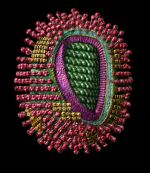
Flu life cycle

Flu life cycle

So what do we know?  On the 27th of  April, the Mexican government admitted to some 150 deaths, and over 1600 people apparently infected, in an epidemic caused by an Influenza A H1N1 virus that appeared to be a reassortant of viruses from pigs, birds and humans.  The virus has been dubbed “swine flu”; however, there is doubt as to whether it has been shown to even infect pigs, let alone been found in them, and it probably ought to be known as “Mexico Flu”.  There is the problem, of course, that apparently parts of the virus – and the N1 gene in particular – are of Eurasian swine flu origin, so exactly where it comes from may be forever obscure.

 As for current expert knowledge, the Centers for Disease Control and Prevention (CDC) and the World Health Organisation (WHO) have set up dedicated pages to track the potential pandemic – because that is what they are calling it.

The WHO has, as of the 27th April,

“…raised the level of influenza pandemic alert from the current phase 3 to phase 4.

http://blogs.wsj.com/health/2009/04/27/understanding-the-whos-global-pandemic-alert-levels/

Swine Flu: Understanding the WHO’s Global Pandemic-Alert Levels – Health Blog – WSJ via kwout

The change to a higher phase of pandemic alert indicates that the likelihood of a pandemic has increased, but not that a pandemic is inevitable.

As further information becomes available, WHO may decide to either revert to phase 3 or raise the level of alert to another phase.

This decision was based primarily on epidemiological data demonstrating human-to-human transmission and the ability of the virus to cause community-level outbreaks.

Given the widespread presence of the virus, the Director-General considered that containment of the outbreak is not feasible. The current focus should be on mitigation measures.”

All of which begs the questions: what IS it, and how BAD is it??  We know that by the 28th April, the virus had been confirmed in the USA (>40 cases), Spain, Canada, and according the the BBC, the UK, Brazil and New Zealand as well.

While financial markets are panicking , airlines are cancelling flights, and people in Mexico appear to be dying, people infected in the USA seem only to be getting ill, and then recovering.

The bad news is that the virus haemagglutinin – the H1 – is probably only distantly related to that of the currently circulating human variant, so the flu vaccines on release right now will be of only limited efficacy.

The good news – especially for Roche and GlaxoSmithKline – is that the antivirals Tamiflu and Relenza seem to work against the virus.

29th April 2009

The virus continues to spread: according to the WHO site,

“As of 19:15 GMT, 28 April 2009, seven countries have officially reported cases of swine influenza A/H1N1 infection. The United States Government has reported 64 laboratory confirmed human cases, with no deaths. Mexico has reported 26 confirmed human cases of infection including seven deaths. The following countries have reported laboratory confirmed cases with no deaths – Canada (6), New Zealand (3), the United Kingdom (2), Israel (2) and Spain (2).
….
WHO advises no restriction of regular travel or closure of borders. It is considered prudent for people who are ill to delay international travel and for people developing symptoms following international travel to seek medical attention, in line with guidance from national authorities.

There is also no risk of infection from this virus from consumption of well-cooked pork and pork products. Individuals are advised to wash hands thoroughly with soap and water on a regular basis and should seek medical attention if they develop any symptoms of influenza-like illness.

Of course, there is also the inevitable hype – and some humour (thanks, Suhail!):

With a byline reminiscent of the “Ebola Preston” which was coined to satirise the hype generated around the 1995 Ebola hype, we have

 30th April 2009:

…so of course, I talk to a journalist; and of course, I shouldn’t have…!  For an otherwise good article about pandemic preparedness in Africa [ignore the bit about no drug stockpile in South Africa, because apparently we have some], see here.  South Africans: look at info on influenza at the National Institute for Communicable Diseases (NICD) in Johannesburg.

The WHO yesterday raised the level of influenza pandemic alert from the current phase 4 to phase 5.  We owe the WHO Director-General, Dr Margaret Chan, for these comments:

On the positive side, the world is better prepared for an influenza pandemic than at any time in history.

Preparedness measures undertaken because of the threat from H5N1 avian influenza were an investment, and we are now benefitting from this investment.

For the first time in history, we can track the evolution of a pandemic in real-time.”

From the BBC today:

In Mexico, the epicentre of the outbreak, the number of confirmed cases rose to 97 – up from 26 on Wednesday….

  • The Netherlands confirms its first case of swine flu, in a three-year-old boy recently returned from Mexico. Cases have also been confirmed in Switzerland, Costa Rica and Peru
  • The number of confirmed cases in the US rose to 109 in 11 states
  • Japan reported its first suspected case of swine flu
  • China’s health minister says that the country’s scientists have developed a “sensitive and fast” test for spotting swine flu in conjunction with US scientists and the WHO. The country has recorded no incidence of the flu yet.
  • The WHO says it will now call the virus influenza A (H1N1).

And first prize for over-reaction of the year:

On Wednesday, Egypt began a mass slaughter of its pigs – even though the WHO says the virus was now being transmitted from human to human [and there is no evidence it was ever transmitted between pigs].


Index: ViroBlogy / MicrobiologyBytes flu-related posts

There’s gold in them old veins….

26 August, 2008

I have often spoken of “molecular archeology” in my lectures, and of the possibility of identifying past epidemic / pandemic strains of human flu in particular, by looking at which viruses are recognised by antibodies from people who lived through the epidemics.

A new paper in Nature ups the stakes in this game considerably: a team led by one James E Crowe Jr describes how 32 survivors of the 1918 Spanish Flu pandemic – born in or before 1915 – were “mined” for antibodies, and seven donors additionally were shown to have circulating B cells which secreted antibodies which bound the 1918 H1N1 virus haemagglutinin (HA).  The team isolated 5 monoclonal antibodies from these subjects, and showed that these potently neutralised the infectivity of the virus and bound the HA of a 1930 swine virus, but did not cross-react with the HAs of more recent human  H1-containing viruses.

http://www.nature.com/nature/journal/vaop/ncurrent/abs/nature07231.html

Neutralizing antibodies derived from the B cells of 1918 influenza pandemic survivors : Abstract : Nature via kwout

 This achievement is undoubtedly a tour de force of modern molecular immunology – but is it useful?

Well, one very obvious fact is that people can obviously maintain significant levels of humoral immunity to viruses that infected them – in the words of the authors – “…well into the tenth decade of life.”  This is good news indeed for vaccinees who received vaccines for viruses which do not change much, like measles, mumps and poliomyelitis viruses.  However, given that influenza virus even of one H and N type can change so as to be unrecognisable in just a few years – the MAbs they generated did not react to any great extent with presumptively H1N1 human isolates from 1943, 1947, 1977 and 1999 – this is only of any use if the original virus were to be re-introduced somehow.

There was an intriguing statement in the paper which may shed some light on a long-running controversy as to the origin of the 1977 H1N1 pandemic, when the virus reappeared in humans for the first time since the early 1950s – allegedly as a result of an escape from a Soviet biowarfare lab.

The 1F1 antibody bound and neutralized the 1977 virus, albeit to a lesser degree than either the 1918 or the Sw/30 viruses … and to a minimal degree the 1943 virus”.

Ye-e-e-sssss…strange, that.  So the 1977 virus was antigenically more similar to 1930s era viruses than to one from 1943??

The proposed use of the findings also elicit biowar scenarios: for example, the fact that passive immunisation of people with antibodies to a particular virus can help them get over infection with it is purely academic for MAb to the 1918 virus – or is it?

I hope it is.

Bird Flu Vaccine Launched – But For Whom?

22 May, 2008

The online 20 May issue of Nature News trumpets the release and marketing of a new H5N1 bird flu vaccine: GlaxoSmithKline’s Prepandrix has just been approved by the European Commission. 

Published online 20 May 2008 | Nature | doi:10.1038/news.2008.844

Bird flu vaccine to hit the shelves

Europe approves pandemic vaccine; countries must decide own strategies.

Tony Scully

The European Commission has approved a new vaccine against the H5N1 bird flu virus — the first vaccine designed to ward off a future pandemic. But how the drug, called Prepandrix, will be deployed by national governments remains unclear.The vaccine, produced by the UK drug giant GlaxoSmithKline, is aimed at the H5N1 strain currently circulating in birds as epidemiologists think that this is the most likely strain to cause a human pandemic. H5N1, which originated in south-east Asia and is carried by migrating birds and domestic poultry, has caused 382 human cases and 241 deaths worldwide since 2003.

Prepandrix targets an antigen from an H5N1 strain called A/Vietnam/1194/04, which has been detected in birds in Asia, Europe and Africa. Clinical tests have shown that the vaccine is also effective against other closely related variants of H5N1, such as H5N2. The release of the vaccine is seen as a gamble that any future pandemic strain will closely resemble the Vietnamese version used to derive the vaccine.

The article goes on to describe how “The first orders for Prepandrix were placed last year by Finland and Switzerland, before it had been approved by the European Commission. In 2007, sales for Prepandrix totalled US$284 million worldwide….”

Yes.  Well.  Um.  Where is the pandemic going to hit first?  Finland?  Switzerland?  I doubt it.  How about Indonesia, Thailand, Vietnam, Turkey, Egypt…or, horror of horrors, India or China?  All the places which will need a LOT of doses, cheap.

Do they stand any chance of getting them?  Not unless they have preordered.  And not – in the case a pandemic strikes – unless they are willing to take military action to prise their stocks out of the hands of the governments in the developed countries where the vaccines are made.

A senior WHO official stated the case very succinctly, at the Virus Africa virology conference in Cape Town in November 2005: “You people in the developing countries will be on your own if the pandemic comes.  You need to make your own vaccine…”.

We wait in hope.