Archive for the ‘Vaccines: General’ Category

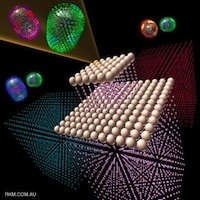
Nano Patents and Innovations: Powerful New Approach To Attack Flu Virus

28 May, 2012

See on Scoop.itVirology and Bioinformatics from Virology.ca

An international research team has manufactured a new protein that can combat deadly flu epidemics.

The paper, featured on the cover of the current issue of Nature Biotechnology, demonstrates ways to use manufactured genes as antivirals, which disable key functions of the flu virus, said Tim Whitehead, assistant professor of chemical engineering and materials science at Michigan State University.

See on nanopatentsandinnovations.blogspot.fr

ProMED-mail | MEASLES UPDATE 2012 (22)

28 May, 2012

See on Scoop.itVirology and Bioinformatics from Virology.ca

ProMED Mail is possibly THE premier infectious disease updating service in the world today, having sprung to fame during the Kikwit Ebola outbreak in 1995.  This is one of a series of posts on measles, which is documenting a very disturbing trend: the incidence of the disease is increasing in places where it should have been eradicated, because well-educated and sophisticated communities are not vaccinating their children – or themselves.


One very telling quote from the post:

“Measles is highly infectious so we must all do
everything possible to prevent the spread of it, particularly with an outbreak on our doorstep. … MMR vaccination is the only way to prevent
measles. If parents haven’t arranged for their children to be vaccinated – it’s not too late to have the jab. Parents don’t realise that measles is not just a case of a few spots – it can be a very serious illness. Symptoms include fever, cough, soreness of the eyes and a rash which spreads rapidly over the body. Serious complications affect one in 15 children. These include chest infections, fits, encephalitis (swelling of the brain), and brain damage. In very serious cases, measles can kill.”

See on www.promedmail.org

Pandemic 2009 H1N1 vaccination produces antibodies against multiple flu strains

27 May, 2012

See on Scoop.itVirology News

“The pandemic 2009 H1N1 vaccine can generate antibodies in vaccinated individuals not only against the H1N1 virus, but also against other influenza virus strains including H5N1 and H3N2.”


And a possible reason for this could be that the H1N1pdm virus’ haemagglutinin is a natural “ancestral” sequence – the kind that HIV vaccine researchers are looking for for gp120/160, which have been shown to elicit a wider spectrum of cross-reacting antibodies than “evolved” proteins, or ones that have been selected for antigenic escape in humans for a good few viral generations.


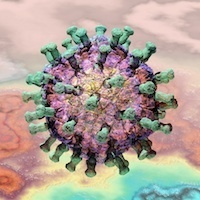
Flu vaccine graphic by Russell Kightley Media

See on www.eurekalert.org

Trends in Intussusception Hospitalizations Among US Infants Before and After Implementation of the Rotavirus Vaccination Program, 2000–2009

27 May, 2012

See on Scoop.itVirology News

“A small increase in intussusception rates was seen among infants aged 8–11 weeks, to whom most first doses of rotavirus vaccine were given, but no sustained population-level change in overall intussusception hospitalizations rates in US infants was observed after implementation of the US rotavirus vaccination program. Although an association between intussusception and rotavirus vaccination cannot be established by this ecologic analysis alone, even if the low risk with the first dose exists, it is outweighed by the well-documented benefits of vaccination of US infants”

This is a big deal- a very important, big deal: human rotavirus kills more than 500 000 people a year (mainly very little), and rotavirus vaccines have been bedevilled with the suspicion that they cause telescoping of the intestine, or intussusception.  Which can be fatal, and is not something you want happening to your healthy baby.

However, and however: I have taught my students for years to be aware of relative risks when talking about vaccines, and there is absolutely no doubt that even the Wyeth vaccine could have been considered “safe” in a developing country environment, where the threat of death due to diarrhoea and dehyderation caused by rotavirus, would have been far greater than any threat from the vaccine.

I thank Rusdsell Kightley Media for the rotavirus graphic

See on jid.oxfordjournals.org

Flu shot offers surprising benefits for pregnant women; Vaccine may fight stillbirth, preterm birth, and very low birth weight

25 May, 2012

See on Scoop.itVirology News

A new study announced Tuesday finds the H1N1 flu vaccine not only can protect you from getting sick but can actually benefit your baby.

Researchers from the University of Ottawa in Canada examined data from more than 55,000 child births in Ontario during an outbreak of H1N1, comparing mothers who were vaccinated to those who weren’t.

While prior research has found that pregnant women can safely get the flu shot at any stage of their pregnancies — something many doctors vehemently support — the new findings associate H1N1 vaccinations with a significantly reduced risk of stillbirth, preterm birth, and very low birth weight.

“These are all significant results, but especially interesting is the finding that the vaccinated mothers were one-third less likely to have a stillborn child,” said study researcher Deshayne Fell, a graduate student at McGill University who works with the birth record database. “This is one of the only studies large enough to evaluate the association between maternal flu vaccination and stillbirth — a very rare event.”


So much for the disinformation about dangers to pregnant women: in fact, Spanish Flu and the recent H1N1 pandemic were both especially dangerous for unprotected pregnant women.

See on www.nydailynews.com

Muslim leaders enlisted to help stamp out polio

25 May, 2012

See on Scoop.itVirology News

GENEVA (Reuters) – The last three countries where polio is still paralyzing children — Afghanistan, Pakistan and Nigeria — said on Thursday that they have enlisted Muslim women and religious leaders to allay fears of vaccination and wipe out the disease.
Polio cases are at an all-time low worldwide, following its eradication in India last year, raising hopes but also fears about a threat of resurgence especially in sub-Saharan Africa unless remaining reservoirs of polio virus are stamped out.

Conflict and insecurity is preventing health workers from reaching hundreds of thousands of children in Afghanistan and Pakistan with doses of polio vaccine, health ministers said.

See on www.reuters.com

Radical Therapy for HIV-Infected People?

18 May, 2012

To mark HIV Vaccine Awareness Day, 18th May – Journal Club – Lucian Duvenage:

Excision of HIV-1 Proviral DNA by Recombinant Cell Permeable Tre-Recombinase

Mariyanna, L., Priyadarshini, P., Hofmann-Sieber, H., Krepstakies, M., Walz, N., Grundhoff, A., Buchholz, F., Hildt, E., Hauber, J., 2012. Excision of HIV-1 proviral DNA by recombinant cell permeable tre-recombinase. PloS One 7, e31576.

Introduction

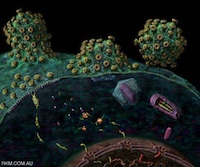
HIV Life Cycle. Russell Kightley Media, http://www.rkm.com.au

Highly active antiretroviral therapy (HAART) is a combination of drugs that has significantly elongated the lifespan HIV-infected people. HAART targets viral reverse transcriptase, protease and integrase. There are disadvantages including drug toxicity and the appearance of drug resistant HIV strains in people not adhering to or withdrawing from their treatment. There is a need for new therapies that not only block virus replication but also eliminate HIV from persistent viral reservoirs. An attractive option is Tre-recombinase, which been shown to excise provirus from the genomic DNA of infected cell cultures. The development of Tre recombinase is a previous publication (Sarkar, I., Hauber, I., Hauber, J., Buchholz, F., 2007. HIV-1 proviral DNA excision using an evolved recombinase. Science 316, 1912-5.)

The Tre recombinase was created from the Cre recombinase which is a well-known tool in mouse genetics. The authors were able to alter the specificity of the enzyme by many cycles of directed protein evolution.

The Cre recombinase precursor removes genomic DNA that is flanked by two loxP sites by recombination. The authors were able to alter the specificity for loxP sites to HIV-1 LTR (long terminal repeat) sites. LoxP and the HIV LTR had 50% sequence similarity.

The main problem with the development of antiviral agents is the delivery to infected cells in vivo, without causing adverse side effects.  There are many reported technologies for the delivery of macromolecules such as proteins, nucleic acids or peptides. The most popular currently is the use of protein transduction domains (PTD) also known as cell penetrating peptides (CPP) from different sources. These have been useful for the delivery of various genes and proteins, including site-specific recombinases. The best studied and most applied PTD’s are peptides derived from the basic domain of HIV-1 Tat. But recently a powerful cell permeable translocation motif (TLM) has been described. This TLM is derived from a hepatitis B virus surface antigen. This TLM peptide is able to enter cells very efficiently, without affecting the integrity of the cells, or interfering with intracellular signal transduction cascades.

This paper describes the delivery of Tre-recombinase into cells using these PTD’s including HIV Tat and the HBV TLM. These so-called cell-permeable Tre-recombinases could eventually be useful for antiretroviral therapy, especially for virus eradication.

Results

Proteins

Different protein fusions were created and expressed in E. coli ; Tre-recombinase is fused to His tag, with/without nuclear localisation signal (NLS) and with the PTD (HIV Tat) or TLM (translocation motif derived from hepatitis B) or TLM as an inverted repeat.

They tested the cellular toxicity of the protein at their highest concentration by alarmBlue assay in HeLa cells. The proteins were incubated with the cells for 48 h. None of the proteins had any significant effect on the cellular metabolism

Cell permeability

Interestingly, all of the proteins entered cells, even those without a PTD or nuclear translocation signal. The authors explain that the Cre enzyme precursor to Tre has been shown to transduce into mammalian cells without any help, and therefore it is likely that the Tre enzyme shares this property. The authors did remark that the signal intensities were higher for those proteins with a PTD, indicating higher transduction efficiency.

Analysis of Tre activity in HeLa cells

A transient reporter assay demonstrated the activity of the Tre fusions: The reporter construct contains the target LTR sites that flank a puromycin resistance gene. Tre enzyme activity results in the loss of this gene, and gives a smaller PCR product using primers that anneal to the vector backbone. Cells transfected with the reporter construct were incubated with the 1 µM of the various proteins for 5 hours. The positive control was co-transfected with a construct expressing the Tre enzyme. PCR was performed on DNA extracted from cells after 48 hours. The presence of the smaller PCR product indicated that recombination had happened, as in the positive control. All of the proteins had varying degrees of activity, but notably the protein with the TLM PTD had the highest activity, with no un-recombined product detected by the PCR.

The authors went on to demonstrate that the Tre fusion proteins were active on at the genomic level, i.e. on chromosomal DNA. They used cells with the reporter construct was stably integrated into the genome.

Interaction of proteins with LTR sequences in living T-cells

Co-immunoprecipitation (ChIP) assays were done on using HIV-1 -infected T-cells (CEM-SS) to demonstrate the interaction of two of the Tre fusion proteins with the HIV LTR target sequences. The results showed that the proteins interacted with target LTR sequences in the genome of infected T-cells.

Microarray

The authors performed a transcriptome anaylsis on cells exposed to the Tre fusion proteins, using human whole genome microarrays. They concluded that the proteins were unlikely to have a significant effect on gene expression in the host cells, as very few genes were regulated more than 2.5-fold.

Recombination of the full-length HIV proviral genome:

Up to this point, the Tre fusion proteins had been shown to be capable of excising reporter construct gene flanked by LTR sequences both at the episomal level and the chromosomal level. The authors also showed that the proteins bind to the target sequences in HIV-infected living T cells.

It was essential that the Tre fusions could excise that HIV proviral genome from the chromosomal DNA of HIV-infected cells. The aouthors generated HeLa cells and T cells infected with pseudotype HIV-1. These are cells with the full-length HIV provirus integrated into the genome.They chose one of their proteins (TLM fusion showing highest activity in the reporter assays) for transduction into these cells. After transduction, PCR was performed to detect the HIV circular recombination product. They found that the recombination activity increased in a dose-dependent manner in both the HeLA cells and the T-cells. They also sequenced the PC products and were able to confirm HIV sequences.

Discussion

Some novel therapies for the treatment of HIV focus on the eradication of the virus in infected individuals. These include RNA-based technologies such as RNA aptamers, siRNA and ribozymes, but while these have shown to reduce viral load and viral replication, they have so far failed in virus eradication. A recent approach aimed at virus eradication is the reduction of surface CCR-5 receptors, through the expression of engineered zinc finger nucleases. This results in fewer CCR-5 surface receptors and could prevent new infection by CCR-5 tropic HIV.

The other approach is the use of site specific recombinases like Tre, which can excise the provirus from the host genome, thus potentially eradicating the virus from the individual. Ideally, the gene expressing Tre could be delivered to and expressed in target cells using a viral vector. But there are safety concerns as most of these are derived from pathogenic viruses. Therefore it may be advantageous to deliver the Tre enzyme directly to host cells. One way of doing this is through protein translocation domains (PTD’s). Protein transduction domains (PTD’s) can deliver bioactive molecules, including genes, siRNA, proteins or liposomes into all types of cells in vitro and furthermore into various organs in vivo. But they have not been applied yet for human use. PTD’s are easily fused to any target protein through cloning and expression of the fusion protein. The LTM used in this paper, derived from hepatitis B virus surface antigen, has low immunogenicity and high spreading capacity.

One strategy of using cell-permeable Tre enyme could be to harvest T-cells from the patient by apheresis and transduce them in vitro. They could then potentially be expanded and reinfused into the patient. This could complement or even replace gene transfer procedures.

In this paper the expressed Tre fusion proteins could enter cells and act on the target sequences to excise the HIV provirus from the genome, but the Tat fusion and the TLM fusion had higher activity than those that didn’t have a PTD tag. In particular, fusion to the newly described domain (TLM) from hepatitis B was resulted highest activity. This may explained by the fact that, in contrast to HIV Tat, TLM does not rely on endocytosis to enter cells. This might preserve enzyme activity and protein half-life.

In conclusion, cell permeable Tre enzyme could eventually be useful as an anti-HIV therapy in the post-HAART era.

Setting up a platform for plant-based influenza virus vaccine production in South Africa

5 May, 2012

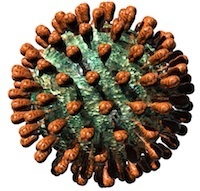
A virus-like particle formed by influenza virus haemagglutinin budding out of plant cells. By Russell Kightley Media

See it also on Scoop.itVirology News

Our (very) recently-published article on plant-made flu vaccines in BMC Biotechnology:

Setting up a platform for plant-based influenza virus vaccine production in South Africa

Elizabeth Mortimer, James M Maclean, Sandiswa Mbewana, Amelia Buys, Anna-Lise Williamson, Inga I Hitzeroth and Edward P Rybicki

Background
During a global influenza pandemic, the vaccine requirements of developing countries can surpass their supply capabilities, if these exist at all, compelling them to rely on developed countries for stocks that may not be available in time. There is thus a need for developing countries in general to produce their own pandemic and possibly seasonal influenza vaccines. Here we describe the development of a plant-based platform for producing influenza vaccines locally, in South Africa. Plant-produced influenza vaccine candidates are quicker to develop and potentially cheaper than egg-produced influenza vaccines, and their production can be rapidly upscaled. In this study, we investigated the feasibility of producing a vaccine to the highly pathogenic avian influenza A subtype H5N1 virus, the most generally virulent influenza virus identified to date. Two variants of the haemagglutinin (HA) surface glycoprotein gene were synthesised for optimum expression in plants: these were the full-length HA gene (H5) and a truncated form lacking the transmembrane domain (H5tr). The genes were cloned into a panel of Agrobacterium tumefaciens binary plant expression vectors in order to test HA accumulation in different cell compartments. The constructs were transiently expressed in tobacco by means of agroinfiltration. Stable transgenic tobacco plants were also generated to provide seed for stable storage of the material as a pre-pandemic strategy.

Results
For both transient and transgenic expression systems the highest accumulation of full-length H5 protein occurred in the apoplastic spaces, while the highest accumulation of H5tr was in the endoplasmic reticulum. The H5 proteins were produced at relatively high concentrations in both systems. Following partial purification, haemagglutination and haemagglutination inhibition tests indicated that the conformation of the plant-produced HA variants was correct and the proteins were functional. The immunisation of chickens and mice with the candidate vaccines elicited HA-specific antibody responses.

Conclusions
We managed, after synthesis of two versions of a single gene, to produce by transient and transgenic expression in plants, two variants of a highly pathogenic avian influenza virus HA protein which could have vaccine potential. This is a proof of principle of the potential of plant-produced influenza vaccines as a feasible pandemic response strategy for South Africa and other developing countries.”

I have mentioned time and again that going green is the sensible thing to do: here is a concrete example of how my research group is trying to go about it.  This is a very sensible technology for rapid-response vaccine production, and especially for emerging or orphan or pandemic virus threats.  We got really good expresion levels of H5N1 HA protein via transient expression in plants, and have already started on pandemic H1N1 HA expression.  Let’s hope some governmental types in SA take some notice!

I thank Russell Kightley Media for the specially-commissioned graphic of budded HA-only VLPs.


Engineered H5N1: the wheels grind on, and on, and on….

19 April, 2012

The Scientist has a nice collection of articles on this topic, which I have commented on all over the place, so I though I might consolidate some of it in one place.

In response to the article entitled “Deliberating Over Danger“, I wrote the following:

The point I and others have made before is that H5N1 and other influenza viruses are not waiting for us to let engineered versions loose, before they cause pandemics: all of the mutations noted by the Fouchier and Kawaoka groups are almost certainly present in the several environments where H5N1 viruses are now endemic – and all it takes for all of them to be present together is a little more mixing.

Don’t discount other flu subtypes, either: while everyone is obsessing about H5N1, H3N2 is busy popping out of pigs in the USA; H9N2 in birds in Bangladesh; H5N2 in ostriches in South Africa – and all it would take is one or a couple of fortuitous reassortments, and a whole new flu virus could be unleashed.

While the “deadly” H5N1s are being worked on in lockdown facilities.

If we don’t know what the virus does, we won’t know what it can do. If we don’t know what to look for, we may be taken unawares, when the next 1918-type pandemic strikes.

I want to have universal flu vaccines by then – so we won’t HAVE to worry about a new flu

.

There are also three newer articles covering the controversy: these are

  • H5N1 Researcher to Defy Dutch Gov’t?
  • (with my comment – “Export permit to publish something?  Really?  A complete misapplication of laws to material that should not be subject to them.”)
  • White House Weighs in on H5N1
  • Flu Review Criticized
  • (with my comment – “So after a full and frank hearing did not go his way, after changes had been made to the paper in question (Fouchier’s), Osterholm complains.  Such is life….”

There is the slightly older article – “Bird Flu Papers to Publish” – describing the reversal of the NSABB’s decision to ask for redaction of the two papers describing mammal-to-mammal aerosol-transmissible H5N1.

An interesting article also describes Yoshihiro Kawaoka’s results:

“First, he introduced two mutations—N224K and Q226L—into the haemagglutinin (HA) protein of H5N1 that made the virus capable of sticking to receptors on human tracheal cells. Then he created a chimeric virus by combining the mutated HA protein with genes from the H1N1 virus, which sparked a pandemic in 2009. Kawaoka identified another HA mutation, called N158D, that allowed the virus to spread between ferrets that were not in direct physical contact. A fourth mutation, T318I, also showed up in the H5N1 strain, but its role in making the virus more transmissible among mammals is less clear.”

So there you are: an actual recipe for aerosol-transmissible H5N1.  It was always going to come out somehow, and now these two papers will probably the most cited flu papers ever.  Nothing like a little hype!  Meanwhile, H5 and its brothers and sisters are out there mutating away, with no help needed from anyone.  Roll on universal flu vaccines!!

The origin of HIV: still so much garbage out there

20 February, 2012

While curating Virology News today, I came across another reprocessing of new that I had come across earlier concerning apparent natural protection of some African female sex workers against HIV infection: this was the intriguingly-entitled “African women’s genitals provide clue to HIV prevention“, in what appears to be an online Nigerian newspaper.

This recapitulates, very accurately, the information I reported in Virology News, which was the subject of a news release following the publication in the September 2011 edition of PLoS One of a study entitled “High Level of Soluble HLA-G in the Female Genital Tract of Beninese Commercial Sex Workers Is Associated with HIV-1 Infection”.  The gist of this is that:

“HIV-resistant sex workers in Africa have a weak inflammatory response in their vaginas – a surprise for the researchers, who were expecting the contrary considering the women’s high exposure to the virus.”

This may lend further credence to the observation that progression to AIDS in HIV-infected people is associated with a state of chronic immune activation – and that SIV-infected vervet monkeys do not exhibit such chromic immune activation, and do not progress like humans do.

What is interesting about the Nigerian article, however, is not what it reports – it is the online comments that follow it.  Here is a selection:

“Was HIV realy discovered in Africa ? Forget the western media propaganda . I have believed , for years , that HIV is a laboratory virus designed for genocide in the thick of apartheid inhuman policies in South Africa .”

“Neither did HIV originate  nor was it perculiar to Africa. It was the creation of the Western countries to stsyematically reduce African population. that the subjects of this study were exposed to HIV virus attests to this fact.”

And my personal favourite:

“So you have already swallowed up the white propaganda that the AIDS virus was first discovered in 1981 in a remote area of central Africa in the green monkey!  A fairy tale, which never explains why prior to its first clinical detection among western homosexual men in the late seventies, no case was found in Africans, and no animal or human population died off in Africa, yet the homosexual population of the west was seriously threatened until their protected sex campaign took off.

You must be unaware that about 35 years ago the Soviet KGB told the world the truth about AIDS….

Jakob Segal, a former biology professor at Humboldt University in then-East Germany, proposed that HIV was engineered at a U.S. military laboratory at Fort Detrick, by splicing together two other viruses, Visna and HTLV-1. According to his theory, the new virus, created between 1977 and 1978, was tested on prison inmates who had volunteered for the experiment in exchange for early release. He further suggested that it was through these prisoners, most of who were homosexuals, that the virus was spread to the population at large.”

What is depressing is that there is just one comment saying “…where HIV started is of little significance now. the issue is that our brothers Africans are the ones affected so we must work hard to find the cure and save our brothers.”

What is obvious is that, even in an environment such as one of the most developed nations in Africa, where intelligent science reporting is happening, the public seems to be alarmingly misinformed about the origin of HIV and predisposed to believe racist conspiracy theories that were debunked years ago.

FACT:
HIV did not come from “green monkeys” and was not discovered in 1981: the virus was described in 1983 and 1984, and HIV entered the  human population in central Africa multiple times, from chimpanzees and possibly also from gorillas, almost certainly via bushmeat – and this happened in the 1930s or even earlier.

FACT:
HIV could not possibly have resulted  from the splicing together of Visna virus and HTLV-1, as no HIV sequence bears any strong resemblance to either virus – and especially not to both of them in different parts of their genomes, as they would be expected to if they were artificial recombinants.  Moreover, the first HIV that has been reliably dated comes from a sample taken in the Congo in 1959.

All of these facts can be easily discovered by a trawl of either the scientific literature, or a first-level digest of that literature by reputable journalists.  All else is fiction…and malicious fiction at that, whether or not such supposed luminaries as Thabo Mbeki believe it.

12th May 2015

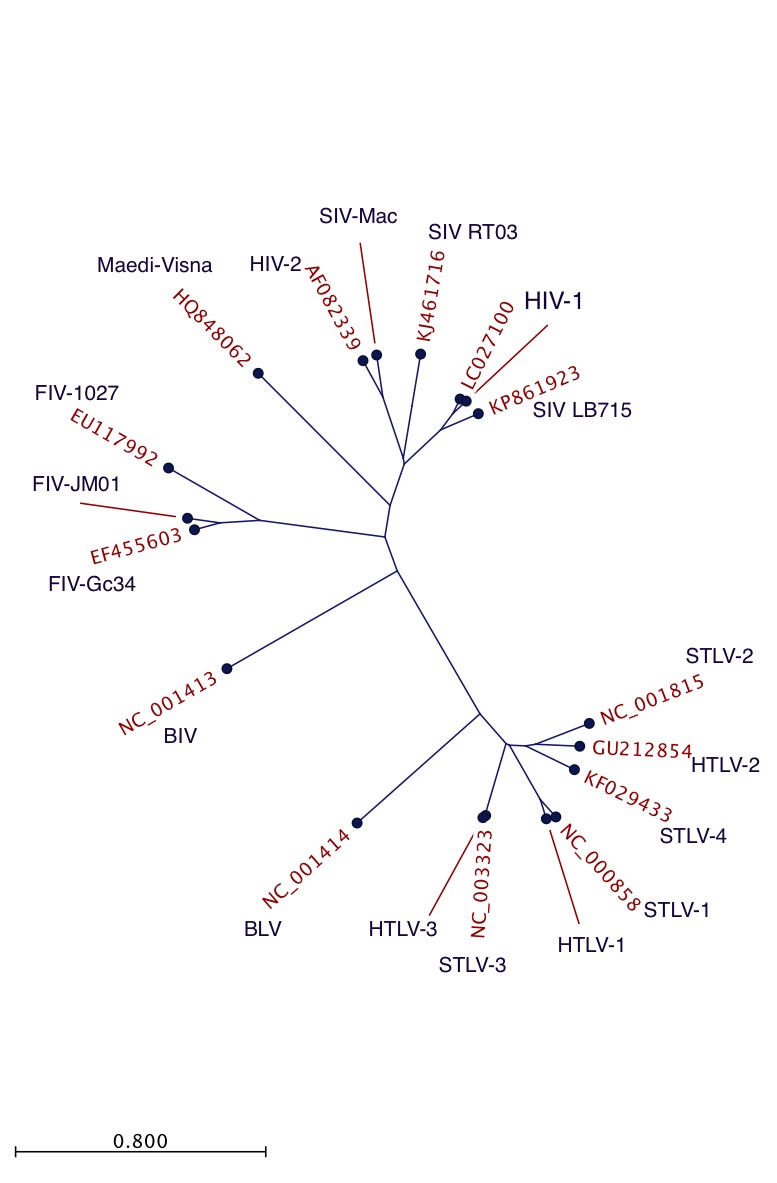
ANOTHER note added in response to Timothy Julian, below, who seems not to understand anything about retrovirus and especially lentivirus evolution.  Here is an unrooted radial relationship diagram (aka “phylogenetic” diagram) depicting whole genome sequence relationships between HIV-1, HIV-2, 2 SIVs, Maedi-Visna ad bovine leukaemia viruses, feline and bovine immunodeficiency and human and simian T-cell lymphotropic viruses.  Done by me today from Genbank sequences, using CLC Genomics Workbench ver 7.

Radial tree for retrovirus complete genome sequences

Radial tree for retrovirus complete genome sequences

What it shows is that:

  • there is a distinctive clustering of HIVs and of SIVs, with MVV as a apparently closer relative than the FIVs, in a cluster of lentiviruses that includes BIV – and I note HIV-1 is more closely related to an SIV than it is to HIV-2, and there are three branches to the H/SIV tree ALL of which are internal to MVV and the FIVs and BIV.
  • the H/STLVs cluster together as relatives, with HTLV-1/2/3 being most closelt related to STLV-1/2/3 – which, seeing as the HTLVs are supposed to have derived from the STLVs, is hardly surprising.
  • BLV is only distantly related to the TLV cluster, as is expected given that it is a leukaemia virus but one of a very different species

If HIV-1 derives from artificial constructs derived from FIVs, which are less closely related to  them than is MVV, then is the same true for the whole primate cluster?  Really?  When it is pretty obvious that they are (a) evolutionarily related most closely to one another, (b) evolutionarily diverged to quite a considerable extent?  So were they all made individually??  Then cleverly given to different bush-dwelling primates in Africa?  How desperately unlikely is that??  You appear not to have heard of teh principle of parsimony, which is that the simplest explanation that covers all of the facts is probably correct – which in this case, is that both HIVs and all of the SIVs have a common evolutionary origin, thousands of years ago – and that all lentiviruses also have a common origin, millions of years ago.

Seriously, Timothy: give it a rest.  You know less than Jon Snow.