Archive for the ‘Vaccines: General’ Category

HIV vaccines: some glimmer of hope??

19 October, 2009

Cells stimulated by HIV vaccines Copyright Russell Kightley Media

It has taken a while for me to get to this, because I have been waiting for the fallout / comment storm to settle a bit, so that I could get a good clear objective view.

And that is…that the recent Thai trial showed hints of promise, but was largely a failure.  At least it did no harm…!

First things first: Nature News’ Elie Dolgin had this to say on 24th September:

Vaccine protects against HIV virus [!!! sic – I had something to say about this, see Comments]

The largest HIV vaccine trial to date has shown moderate success at preventing infection by the virus.

The experimental vaccine — a combination of two older shots that failed to work on their own — reduced the risk of someone contracting HIV by nearly a third. Scientists, however, are still scratching their heads as to how the double-shot approach blocks the virus….

The US$119 million study involved more than 16,000 HIV-negative men and women from Thailand aged 18–30. The trial was launched in October 2003, conducted by the Thai health ministry and sponsored by the US Army Surgeon General. It tested a two-shot infection-fighting strategy using drugs made by Sanofi-Pasteur of Lyon, France, and VaxGen of Brisbane, Australia. Over the course of 24 weeks, participants received four doses of a ‘primer’ vaccine — a disabled bird virus [canarypox – Ed] containing synthetic versions of three HIV genes [ALVAC, subtype B env, gag and pro – Ed] — and two doses of a ‘booster’, which consisted of a protein called gp120 [AIDSVAX subtypes B/E – Ed], a major component of HIV’s outer coat.  [see here for link describing the components].   Clinicians tested for HIV infection every 6 months for 3 years….

Many HIV vaccine experts had previously criticized the approach as a waste of time because each of the vaccine components had a poor track record. The primer, called ALVAC, conferred little to no immune protection in multiple early-phase clinical trials, and the booster, called AIDSVAX, had flopped twice in high-profile, large-scale trials.

And here’s a thing: a high profile crew of scientists had, in 2004, written an open letter to Science magazine, stating in no uncertain terms that they thought the trial ought to be stopped.  In their words:

“Concerns are expressed by a group of AIDS researchers about the U.S. government’s plans to conduct a phase III trial of a combination HIV-1 vaccine in Thailand despite the cancellation of a trial of a very similar combination vaccine in the U.S.A. last year. One of the vaccine components, recombinant monomeric gp120, has already been shown to be ineffective in phase III trials in Thailand and the United States; the other component, a recombinant canarypox vector, is also poorly immunogenic. The scientific rationale that has been offered for the new trial in Thailand is considered by the authors to be weak.”

And now we have Dan Barouch – not a signatory to the 2004 letter, I note – quoted by Dolgin as saying:

“I don’t think anybody knows why this worked the way it did,” says Dan Barouch, an immunologist at the Beth Israel Deaconess Medical Center in Boston, Massachusetts. “It’s the largest step forward that’s ever occurred in the HIV-vaccine field, but there’s a tremendous amount of more work that will need to be done.”

But exactly what is it that people are hailing as a breakthrough here?  Dolgin again:

The two-pronged vaccine did not affect the amount of virus circulating in the blood of those who acquired HIV during the study. But it did show a protective effect — vaccinated individuals were 31% less likely to become infected. New infections occurred in 74 of the 8,198 people who received dummy shots, but only 51 of the 8,197 in the vaccine group [my emphasis – Ed], the researchers, led by Supachai Rerks-Ngarm of the Thai Ministry of Public Health’s Department of Disease Control, found.

Dorian McIlroy, a regular contributor to Viroblogy, had this to say on the 24th September in an email to me:

I just read the news story about the ALVAC/AIDSVAX trial results in Thailand.  From the numbers on this press release:

http://www3.niaid.nih.gov/news/newsreleases/2009/ThaiVaxStudy.htm

The significance level is extremely slim. For example, if you go to this site

http://www.statpages.org/ctab2x2.html

and type in the numbers you will find that p=0.048 by Fisher’s exact test.

If one more person in the vaccine arm had been infected, or if one less person in the placebo arm had been infected, the difference between the groups would not have been significant. [my emphasis – Ed]

None of the experts (Wayne Koff, Frances Gotch, for example) interviewed in different news stories seems to have noticed just how borderline the “statistical significance” really is, and seem to have accepted the bottom-line 30% reduction figure.

Ah well, I just thought I had to tell someone….

Dorian

Lecturer in Microbiology and Cell Biology,
University of Nantes

Others have also picked up on this – which shows just how desperately slim the hope is.  However, it does remain – although (pleasingly…B-) the pundits have been thrown into a state of confusion, as some strongly-held views have not been vindicated.  Another Nature News article – from Erika Check Hayden, on October 1st – has this to say:

As the dust settles from last week’s surprising announcement that an HIV vaccine combination may protect some people from the virus, scientists are talking about what else the vaccine trial might tell them.

On 24 September, leaders of a US$119-million study of 16,000 people in Thailand reported that the combination of two shots had reduced the risk of HIV infection by one-third …. Now, the vaccine’s fate will depend on whether scientists can figure out its ‘correlate of protection’ — in other words, what caused it to partially protect some people from HIV. The key does not seem to be anything scientists had predicted, which has led to much head-scratching — and some unease.

“It’s a humbling thing, because for the first time we got a positive signal and it doesn’t jump out at us as being related to any classical parameters you would expect from a successful vaccine,” says Anthony Fauci, head of the National Institute of Allergy and Infectious Diseases in Bethesda, Maryland, which supported the trial. “That tells us maybe we were not measuring the right thing.” [my emphasis – Ed]

Amen, brother Tony…a clearer proof of Clarke’s First Law I have yet to see.

So what ARE the things that fall out from this?  First, I would suspect, is that the value of a heterologous prime-boost combination seems to have been shown, albeit weakly.  Second, the use of a poxvirus vaccine in particular in combination with a protein may be a good thing to chase.  I note here that the South Africa / US joint Phase I human trial currently underway with the SAAVI DNA / SAAVI MVA (=modified vaccinia virus Ankara, a poxvirus) was almost certainly considerably more immunogenic in non-humanprimates than either of the ALVAC / AIDSVAX vaccines, so the gleam of hope may soon get brighter.

Third: take heed of Arthur C Clarke before you go sticking your neck out making predictions about HIV vaccines…B-)
Influenza virus A H1N1 2009: gets to parts the other flu doesn’t reach

14 September, 2009

Flu virus life cycle. Copyright Russell Kightley Media

The September 2009 issue of Nature Biotechnology has a letter concerning the receptor specificity of AH1N1 2009 pandemic influenza virus – which accounts pretty well for why it CAN be pretty nasty, and for why it may get nastier yet.

Childs et al., in a letter entitled “Receptor-binding specificity of pandemic influenza A (H1N1) 2009 virus determined by carbohydrate microarray“, describe what amounts to a tour de force analysis of the receptor binding of a number of influenza viruses, which concludes with the statement that:

“The differences in receptor binding between the 2009 pandemic and seasonal H1N1 viruses may therefore account, at least in part, for the higher virus replication and greater pathology reported in the lungs of ferrets, mice and nonhuman primates infected with pandemic viruses, than observed with contemporary seasonal viruses.”

Which would help explain why some otherwise healthy young people are dying of the virus, while others are getting only mildly ill.  But we get ahead of ourselves: in January last year I wrote in MicrobiologyBytes about recpetor specificities of A-type influenza viruses, in the context of how H5N1 was less likely to mutate to easy human-to-human transmissibility than had origianlly been thought.

I wrote at the time:

According to a letter in the January 2008 issue of Nature Biotechnology, it is a characteristic structural topology, and not just the α2,6 linkage, that enables specific binding of HA to α2,6 sialylated glycans. The authors state:

…recognition of this topology may be critical for adaptation of HA to bind glycans in the upper respiratory tract of humans. An integrated biochemical, analytical and data mining approach demonstrates that HAs from the human-adapted H1N1 and H3N2 viruses, but not H5N1 (bird flu) viruses, specifically bind to long α2-6 sialylated glycans with this topology. This could explain why H5N1 viruses have not yet gained a foothold in the human population.

Apparently the critical shape in humans is umbrella-like, whereas the avian receptor is characteristically cone-like. Again from the paper:

The topology of α2-3 and α2-6 is governed by the glycosidic torsion angles of the trisaccharide motifs-Neu5Aca2-3Galb1-3/4GlcNAc and Neu5Aca2-6Galb1-4GlcNAc, respectively (Supplementary Fig. 3 online).

Ram Sasisekharan and colleagues showed that human-adapted viruses with mixed α2,3/α2,6 binding ability that bound the umbrella-type receptor were efficiently transmitted, whereas viruses with the same basic specificity that did not have HA binding specificity to “long” α2,6, were not.

The present paper reports the following investigation:

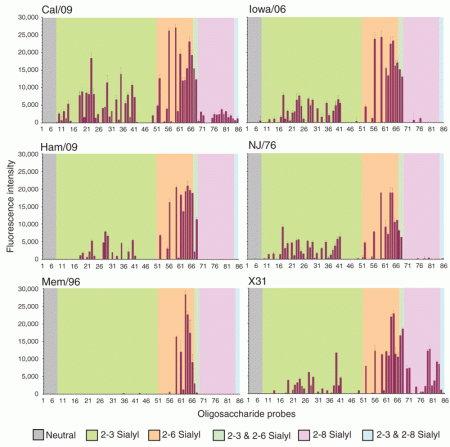
“We have compared directly, by carbohydrate microarray analysis, the receptor-binding characteristics of two isolates of the novel pandemic H1N1 virus, Cal/09 and A/Hamburg/5/2009 (Ham/09), with those of a seasonal human H1N1 virus, A/Memphis/14/96-M (Mem/96), as representative of a virus well adapted to humans [and a reassortant human H3N2 virus A/Aichi/2/68 x PR8 (X31)]. As the HA of the novel H1N1 pandemic virus originated from a virus similar to triple reassortant swine H1N1 viruses, we compared one such example, A/Iowa/1/2006 (Iowa/06), isolated from a human infection, and an older close relative of classical swine H1N1 viruses, A/New Jersey/76 (NJ/76), the human isolate that initiated the concern of a pandemic threat in 1976.”

This is a really comprehensive analysis – for such a short communication – which throws up a number of interesting points.  First, I was not aware it was possible to do “carbohydrate microarrays”!  Second, the paper shows quite conclusively that the swine-derived AH1N1 viruses have a significantly wider range of receptor specificities than a standard seasonal AH1N1 virus, and – but to a lesser extent – than the reassortant H3N2 virus X31.

Carbohydrate microarray analyses of the six viruses investigated.
From the following article (with permission from NBT):
Receptor-binding specificity of pandemic influenza A (H1N1) 2009 virus determined by carbohydrate microarray.
Robert A Childs, Angelina S Palma, Steve Wharton, Tatyana Matrosovich, Yan Liu, Wengang Chai, Maria A Campanero-Rhodes, Yibing Zhang, Markus Eickmann, Makoto Kiso, Alan Hay, Mikhail Matrosovich & Ten Feizi.
Nature Biotechnology 27, 797 – 799 (2009).
doi:10.1038/nbt0909-797

flu_receptor

Legend:
Numerical scores for the binding signals are shown as means of duplicate spots at 5 fmol per spot (with error bars). The microarrays consisted of eighty sialylated and six neutral lipid-linked oligosaccharide probes, printed on nitrocellulose-coated glass slides. These are listed in Supplementary Table 1 and arranged according to sialic acid linkage, oligosaccharide backbone chain length and sequence. The various types of terminal sialic acid linkage are indicated by the colored panels as defined at the bottom of the figure.

And what does all this mean, exactly?  The authors sum it up well:

These results indicate that no major change in receptor-binding specificity of the HA was required for the emergent pandemic virus to acquire human-like characteristics and become established in the human population. …

The broader specificity, namely, the ability to bind to 2-3- in addition to 2-6-linked receptors is also pertinent to the greater virulence of the pandemic virus than seasonal influenza viruses observed in animal models, and its capacity to cause severe and fatal disease in humans, despite the generally mild nature of most infections. Binding to 2-3-linked receptors is thought to be associated with the ability of influenza viruses to infect the lower respiratory tract where there is a greater proportion of 2-3- relative to 2-6-linked sialyl glycans, although long chain 2-3-linked sialyl (poly-N-acetyllactosamine) sequences are present in ciliated bronchial epithelial cells in humans where they are the receptors for another human pathogen, Mycoplasma pneumoniae.

So there you have it: the viruses can get deeper in to your lungs than the standard flu – which, if it happens, can make you seriously ill.

So what happens if it gets better at binding the 2,3-type receptors in humans?  Well, we’re only in the middle of the pandemic.  We may yet find out the hard way.

At last, a podcast! Of sorts….

6 September, 2009

Given that the bandwidth here in South Africa is so sadly lacking, I have refrained from doing what my less byte-challenged colleagues elsewhere do with gay abandon: yes, MicrobiologyBytes and virology blog, I speak of you!

However: given that a local newspaper saw fit to ask me about flu and other vaccines, and put up a podcast, I shall link to it from here.   A little abridged – so you can’t tell what we are actually working on – but not too bad (my wife tells me).

From The Times website

Gene discrimination

3 September, 2009

In the latest online issue of Nature, there is an article entitled “Keeping genes out of terrorists’ hands“, by Erika Check Hayden.  Like an article a little while ago in Nature Biotechnology, it makes the apparently quite reasonable point that

“the way that the industry screens orders for hazardous toxins and genes, such as pieces of deadly viruses and bacteria…could be crucial for global biosecurity”.

Yes.  Well.  They would say that, wouldn’t they??  “They” being anyone in the developed world who has a paranoid fantasy about bearded extremists in caves (or crew-cut extremists in leafy suburbs) gleefully unwrapping their couriered DNA and brewing up a nice little necrotising poxvirus, or an airborne Ebola, or possibly an H5N1 variant that spreads human-to-human better than the present versions.

I wrote the following reply to the article:

While “all right-thinking people” – for which, read “those easily scared by the unrealistic prospect of mail-order killer bugs” may agree that some kind of limitations are required on what synthetic DNA is sent out, and to whom…there is a baby being thrown out with the bathwater here.

My laboratory has just, despite many previously successful orders from the same company, been denied permission (or told to obtain clearance from the relevant government, which amounts to the same thing) to have a coat protein gene synthesised for a bluetongue virus (BTV) strain now found all over western Europe. Because, apparently, BTV is on the “Australia Group”‘s prohibited list of biological agents – and South Africa is not a signatory to this group, which started out for arms control but has apparently ramified somewhat.

This is so ridiculous as to beggar belief: the viruses are endemic to Africa; the world’s expert on cDNA cloning of their genomes is in South Africa; why would anyone want to build a BTV from synthetic DNA when they could go out and sample a sheep for some REAL virus??

A closer look at the list throws up all sorts of interesting things. It is prohibited, for example, to order genes for H5N1 influenza – although curiously, not pandemic H1N1 – and dengue viruses. This rather puts a spoke in the wheels of anyone who might want to…oh, let’s say…MAKE A VACCINE to those agents, in any country not signatory to the agreement – where the viruses happen to be endemic!!

The ways of limiting spread of genes that are being proposed are first, unnecessary; second – discriminatory in the extreme.

And may just provide a good deal of business for firms operating in developing countries who otherwise would have been ignored because of quality issues. Imagine that: a lab in Pakistan, or South Africa, or Indonesia, using home-made genes to make a vaccine.

Because that is a LOT more likely than using them to make a pathogen.

I know of a passage written some years ago in a reputable science magazine which described how easy it would be to smuggle naturally-occurring foot and mouth disease virus worldwide – with no science involved whatever.  I have enough purified material of a particular plant virus in my cold room right now to kill all the wheat grown in my country – given some carborundum and a crop sprayer.

There are enough people on this planet infected with pandemic H1N1 who live in close enough proximity to birds infected with H5N1 to make coinfection of one or the other with both a certainty – the only uncertainty remaining being what will come of it.  For that matter, where DID the H1N1 come from?  Where did Lujo virus come from?

We DON’T NEED TO MAKE VIRUSES from mail-order DNA – and only Craig Venter et al. could even dream of making whole microbes.  There are more than enough nasty agents out there that are relatively easy to obtain, and do simple kitchen-based microbiology with, to keep entire cave complexes and Montana libertarian enclaves busy for years, without resorting to complicated molecular biology.

So DO let’s keep things in perspective, shall we??  And let reputable labs doing reputable work order the materials they need to work with.

…and the virus marches on….

1 September, 2009

From News24 this evening:

SA’s H1N1 deaths now 27

2009-09-01 17:03

Cape Town – The number of swine flu deaths in South Africa has risen to 27, and confirmed infections to 5 841, the National Institute for Communicable Diseases said on Tuesday.

“There is also ongoing and widespread community transmission,” it said in a statement.

Of the 27 fatal cases, 12 were pregnant women, five of whom had no identified underlying conditions.

The institute repeated its standard warning that people with depressed immunity, asthma, diabetes, or chronic lung, kidney and heart problems, or who were pregnant should seek early treatment with antivirals.

and on 26th August:

SA wants own H1N1 flu vaccine

2009-08-26 22:29

Cape Town – South Africa has no choice but to develop its own H1N1 flu vaccine, Health Minister Aaron Motsoaledi said on Wednesday, citing concerns treatment will not be available to poorer nations.

“South Africa has arrived at a situation where we have no option but to start developing our own vaccine capacity, not only for H1N1, but generally,” Motsoaledi told parliament.

“The disturbing feature about today’s world… has been expressed by the minister of health for Cambodia… who noted that the developed world, after producing the vaccine, may want to cover their own population first before thinking about the developing world,” Motsoaledi said.

Anyone remember reading that before, anywhere?  Watch this space….

Chimaeric plant virus stimulates influenza virus-specific CD8+ T-cell responses

1 September, 2009

Plant-produced potato virus X chimeric particles displaying an influenza virus-derived peptide activate specific CD8+ T cells in mice

 Chiara Lico, Camillo Mancini, Paola Italiani, Camilla Betti, Diana Boraschi, Eugenio Benvenuto, Selene Baschieri

 Vaccine (2009) 27: 5069 – 5076

 The authors used plant Potexvirus Potato virus X (PVX) to display the Db-restricted nonapeptide ASNENMETM of the nucleoprotein (NP) from influenza A virus (strain A/PR/8/34) to activate specific CD8+ T cells in mice. They paid great attention to the design of the NP-peptide to ensure optimum plant virus stability and antigen processing. The modified NP-peptide was fused to the N-terminal of the coat protein (CP) from PVX creating the pVXSma-NP construct that was subsequently inoculated into tobacco leaves. The resulting chimeric virus particles (NP-CVP) were stable and pure with a yield of approximately 1.1 mg NP-CVP / g fresh leaf tissue. Endotoxin tests were also performed to exclude their contribution to the immunoregulatory effects of the CVPs. Mice were inoculated with two different doses of NP-CVP (50 µg or 167 µg) with or without incomplete Freund’s adjuvant (IFA). The IFN-γ ELISPOT assays indicated that NP-CVPs activated the ASNENMETM-specific CD8+ response, especially the highest concentration of the NP-CVP without the adjuvant. Results also indicated that the CP of PVX contained T helper epitopes that contributed to the CD8+ T cell response. Thus, PVX is not only an epitope carrier but an adjuvant as well. This study illustrates the potential of implementing plant viruses displaying foreign epitopes to elicit T cell responses in vaccine development.

Contributed by Dr Elizabeth (Liezl) Mortimer

H1N1 – view on a pandemic

26 August, 2009

Well, “The Big One” that we have all been waiting for since 1968 – or 1977, if you count the accidental re-release of the original humanised H1N1 as a pandemic – is well and truly here.  A nice little animated graphic for depicting how it arose, while a bit simplistic, is available here.

And what have we learned?  Has civilisation fallen; have populations been decimated?

Well, quite a lot; no, and no, in answer.  Explanations for some of this are contained in a survey just released.  Here from the News24 report published today, sourced from SAPA:

Paris – More than half the fatalities from H1N1 swine flu have been among young adults, according to one of the first surveys to gather mortality data from across the globe for the new A(H1N1) virus.

The analysis of 574 pandemic deaths from 28 countries through mid-July, released this week, also found that being diabetic or obese significantly boosted the risk of dying.

Neither children nor the elderly are as vulnerable as initial reports indicated, found the study, published by Eurosurveillance, the monitoring arm of the European Centre for Disease Prevention and Control.

“Most deaths (51%) occurred in the age group of 20-to-49 year-olds, but there is considerable variation depending on country or continent,” the researchers reported.

Only 12% of those who died were 60 or older.

All of these features – high mortality among young adults and the obese, but not the very young or elderly – are sharply different than for the seasonal flu.

More than 90% of deaths from seasonal flu – which claims 250 000 to 500 000 lives annually according to the WHO – are in people over 65.

By contrast, with the pandemic H1N1, “the elderly seem to be protected from infection to some extent, perhaps due to previous exposure to similar strains”, the study conjectured.

Persons born before 1957, other studies have suggested, were almost certainly exposed to the milder seasonal A(H1N1) viruses that evolved from the terrible pandemic of 1918, which left some 40 million dead.

With the 2009 strain, “when infection does occur, however, the percentage of deaths in elderly cases seems to be higher that in others”.

One common target across both pandemic and season strains is pregnant women, according to the study, led by Philippe Barboza of the French Institute for Public Health Surveillance….

And that’s the sinister part…here in South Africa, of 18 fatalities known to have been associated with pandemic AH1N1 infection, NINE were pregnant women, mostly in the third trimester of pregnancy.  In a report published yesterday, SA’s Minister of Health Dr Aaron Motsoaledi said the following:

“We find it very worrying that there is an increasing number of pregnant women who are succumbing to this pandemic,” Motsoaledi said.

“The directive to all health care workers… is to put pregnant women with flu-like symptoms (even if they are mild) on Tamiflu treatment.

“Doctors should not wait for any tests before such treatment is administered.”

Further on in the same report:

On Monday, the National Institute for Communicable Diseases [NICD] also said pregnancy had been identified as a particular risk factor for severe H1N1 flu.

It said that in the second and especially the third trimester, urgent treatment with antiviral drugs should be considered even before any laboratory results were received.

The institute added however that most H1N1 flu cases in South Africa remained mild and “self-limiting”.

Routine H1N1 testing for everyone with flu-like illness was still not recommended.

Nationwide, there had been 5 118 laboratory-confirmed cases of H1N1 flu, it said.

The figure is essentially meaningless, given that most suspected flu cases are not laboratory-diagnosed (it costs R700, or ~US$70, for a single test) and the pandemic flu is pretty much indistinguishable from seasonal, and may in fact have supplanted the normal flu.  It certainly has in Australia and Argentina, which remain the two worst-hit southern hemisphere countries, and probably has in South Africa too: the CDC has a very useful map illustrating this, accessible here.

International news, via the CDC site, is the following:

As of August 13, the World Health Organization (WHO) regions have reported over 182,166 laboratory-confirmed cases of 2009 H1N1 influenza virus (2009 H1N1) with 1,799 deaths. The laboratory-confirmed cases represent an underestimation of total cases in the world as many countries now focus surveillance and laboratory testing only in persons with severe illness. The 2009 H1N1 influenza virus continues to be the dominant influenza virus in circulation in the world.

One very important piece of information further down this report is the following:

There have been no significant changes detected in the 2009 H1N1 influenza virus isolated from persons in the Southern Hemisphere as compared to viruses isolated from persons in the Northern Hemisphere.

This is important because the frantic rush to make vaccines to combat the expected northern hemisphere upsurge in infections in their autumn season – October or so – depends upon the virus not having changed much from the seed material which was derived from virus isolated earlier this year.  This could negate some of theh fears that the much-anticipated “second wave” of virus infections could be a lot worse than the first.

Good news on the vaccine front – for Australians at least – is that an Australian company, CSL Ltd, has the world’s first data from human trials of a pandemic strain vaccine, and looks set to be able to provide Australia with 21 million doses of vaccine – and 2 million doses of the vaccine at the end of the month.

Other vaccine news is also fairly encouraging, notwithstanding a rather alarming report in New Scientist recently about the new strain growing only half as well in eggs as seasonal flu types: while this remains a worry, newer, faster-growing variants have been derived and distributed – though possibly not in time for a northern hemisphere autumn roll-out.

Mind you, all of this production relies on the well-proven-but-seriously-archaic 1930s technology of growing live virus in hen’s eggs: we are still trapped, in the 21st century, into having to use early 20th century methods to produce vaccines for fast-adapting pathogens.  Things ARE changing: various pharma companies are diversifying into mammalian and insect cell culture; people (including us!) are investigating making recombinant subunit vaccines in plants (see here) – and there is at least the tantalising possibility that “universal vaccines” may become available in the not-too-distant future.  These will exploit all or part of the highly conserved M2 “ion channel” protein of influenza viruses as recombinant subunit vaccines.

However, all of this is at least six months in the future for conventional vaccines, and many years hence for newer offerings.  Meantime – there is disturbing news concerning trans-species transmissions of pandemic AH1N1 viruses.

ProMED Mail (ProMED Digest V2009 #394) reports that “Chile finds H1N1 swine flu in turkeys“:

Chilean health authorities announced on Thursday night [20 Aug 2009] that they had detected and controlled an outbreak of swine flu in 2 turkey farms, according to a communication from the Agricultural and Livestock Service (SAG).

“The presence of an influenza type A virus was detected in 2 farms in the Valparaiso Region, and immediate precautionary measures were adopted to prevent the dissemination of the disease and to protect the population’s health,” said the text.

And again from ProMED on 20th August, quoting The Straits Times and AFP:

A 2nd Australian piggery was placed in quarantine due to swine flu on Wednesday [19 Aug 2009] as the number of human deaths from the virus reached 121.

Authorities ordered a biosecurity lockdown at the piggery in Victoria state amid concerns the virus could mutate and return to humans in a more deadly form.

Another piggery in New South Wales state has been quarantined since late July [2009], although the state government said most of the animals had recovered from the disease.

Victoria Agriculture Minister Joe Helper said tests confirmed the presence of influenza at the piggery after its owners reported earlier this week that the animals were not eating.

‘It is important to stress that this is not a human health issue and that national and international food authorities continue to advise that pork and pork products are safe to eat,’ he said.

Media reports said the pigs were believed to have contracted the virus from workers at the property who were suffering the human form of the disease.

Health experts fear swine flu in humans, which is easily spread but has a relatively low fatality rate, could mutate in other animals and emerge in a more virulent form. [my emphasis]

So: two independent incidents, on different continents, of pandemic AH1N1 viruses getting into different species of farmed livestock – and luckily controlled.

What would have happened if domestic fowl and/or pigs had been infected in places like Vietnam, Thailand, Indonesia, Turkey and Egypt – where highly pathogenic avian H5N1 influenza viruses appear to be endemic, and not well controlled?  Given the complex origins of the current pandemic virus – from several swine, avian and human viruses – it could be a recipe for disaster, on a scale even greater than the 1918 pandemic.

The REAL Big One.  Let’s all help get a vaccine, people!!

While you have the flu….

7 August, 2009

…as I think I do…

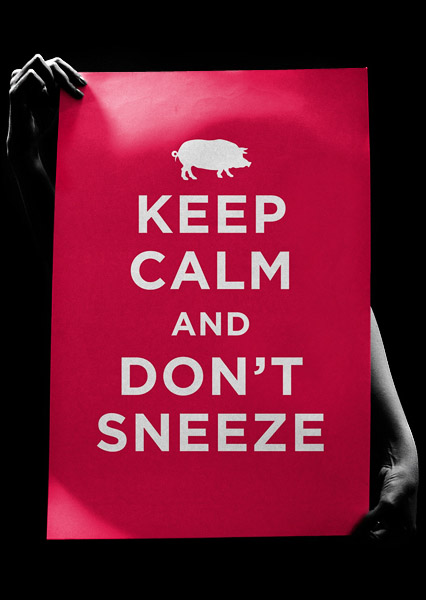
KEEP_CALM_AND_DON'T_SNEEZE

Thanks Michael Rolfe!

First African-developed HIV vaccine goes to trial

21 July, 2009

Finally, finally, a product of our 10-odd-year-old South African HIV vaccine development programme goes into Phase I human trial, in South Africa!

I say “our” because I was part of the overall team; however, the two vaccines which comprise the SA AIDS Vaccine Initiative (SAAVI) / HIV Vaccine Trials Network (HVTN) trial – designated SAAVI 102/HVTN 073 – were designed and developed by others.

The vaccines consist of a DNA component, consisting of an artificial “polygene” dubbed Grttn (for Gag-RT-Tat-Nef) and a truncated Env (gp150) cloned separately into vector plasmids, and the same genes recombined under the control of different promoters into the genome of a poxvirus (Modified Vaccinia Ankara, MVA).  These and their testing in mice and non-human primates have been described in published work: see here and here for relevant journal articles on the MVA and DNA components.

From the July 20th SAAVI press release:

The test vaccines – called SAAVI MVA-C and SAAVI DNA-C2 – have shown promising results in animal testing. The SAAVI DNA-C2 vaccine was constructed in South Africa using a plasmid backbone provided by the Dale and Betty Bumpers Vaccine Research Center (VRC) of NIAID, while the MVA vaccine was designed by the team at UCT and constructed and manufactured in the USA.

“Reaching this important milestone of translating our discoveries in the laboratory to testing in humans would not have been possible without the support of a large team of people from the University of Cape Town, together with national and international collaborations.  An effective vaccine against HIV/AIDS remains a top global health priority and it is our hope that the evaluation of these vaccines in clinical trial will provide some important answers that will bring us closer towards this goal,” says Prof. Anna-Lise Williamson, leader of the vaccine development team and joint staff member of UCT’s Institute for Infectious Disease and Molecular Medicine, and the National Health Laboratory Services (NHLS).

The SAAVI DNA-C2 was constructed in South Africa and manufactured in the US by Althea Technologies. The MVA vaccine was manufactured by Therion Biologics, USA. The vaccines will be tested in a prime-boost approach where the SAAVI DNA-C2 vaccine will be given to prime the immune response and the SAAVI MVA-C vaccine to boost or enhance the immune response.

National and international press got hold of the story in a big way – unsurprisingly, given as there is the 5th IAS Conference on AIDS Pathogenesis going in in Cape Town at the same time, which incidentally has its own live blog feed.

The University of Cape Town is obviously pleased with the press release (see here); however, the launch had its fair share of controversy: Associated Press reporter Michelle Faul posted a story yesterday entitled “South Africa begins AIDS vaccine trial, cuts funds“, which has been taken up by a wide spectrum of especially foreign media.  According to Faul:

“South Africa launched a high-profile trial of an AIDS vaccine created by its own researchers Monday, a proud moment in a nation where government denial, neglect and unscientific responses have helped fuel the world’s worst AIDS crisis.

After a government official lauded the project at a ceremony at Cape Town’s Crossroads shantytown, the scientist leading the research said state funding had been halted.

The contrast between Monday’s hopeful vaccine launch and the revelation of funding cuts raised questions about whether the government was backsliding on its pledge to combat AIDS.

Anna-Lise Williamson, an AIDS researcher at the University of Cape Town, told The Associated Press the clinical trial would continue with U.S. money. But she said South Africa’s Department of Science and Technology had pulled its funding in March, while the project’s other sponsor, the state electricity utility Eskom, did not renew its contract when it expired last year.

Neither government spokesmen nor Eskom immediately returned calls seeking comment about funding cuts.”

In the midst of light, there is darkness…frequently, thanks to ESKOM

I have blogged on my personal view elsewhere; suffice it to say that bad decisions were made, and  9 years worth of momentum has effectively been lost – along with a number of very experienced personnel, and many years worth of accumulated and very relevant experience.

For an illustration of the product pipeline which existed behind the current trial offerings – and which may now never be developed – click here  for published descriptions of our plasmid- and BCG-vectored and virus-like particle (VLP) subunit vaccines.

But who knows, this current trial may even show promise – and then it will all have been worth it.  Let’s live in hope!

H1N1: coming to a South African home near you, soon

14 July, 2009

And after a very pleasant holiday, I come back to work to find…85 cases of confirmed pandemic H1N1 in South Africa!

Yes, it is true – at least, as far as the National Institute for Communicable Diseases (NICD) Director, Prof Barry Schoub, is concerned: he was featured yesterday on eTV News explaining how it was all going.  And it is “mild” according to him: it looks the same as standard flu, although most cases so far are due to people bringing it into the country, without much community spread…yet

In an article just published by the Independent Online (IOL), Kanina Foss says:

Swine flu cases will probably spike when schools reopen next week. Health officials will monitor schools, but are still advising that mild cases should be treated no differently from seasonal flu.

Only patients with serious symptoms – such as high fever, persistent vomiting, pain in the chest, or shortness of breath – should seek medical assistance. These are symptoms that people would seek medical assistance for anyway, says National Institute for Communicable Diseases (NICD) deputy director Lucille Blumberg.

The number of confirmed swine flu cases in South Africa is 75 [since modified, see above]. Once this number reaches 100, the NICD will stop counting. It will focus instead on severe cases and those at high risk because of compromised immune systems, such as HIV-positive people.  The institute will also monitor schools.  Counting cases was resource intensive, said the NICD on Monday, and served no more purpose than counting cases of seasonal flu. The overwhelming majority of cases worldwide had been mild, and had required no special treatment.

The World Health Organisation (WHO) has said the spread of the H1N1 virus is inevitable, and the NICD is expecting many more South Africans will be infected. It is unsure how the country’s high HIV prevalence will affect the severity of infections.

“It’s something we need to monitor very carefully,” said Blumberg.

The highest number of confirmed cases are in Gauteng (39), followed by the Eastern Cape (nine), and Western Cape (five).

Oh, and in my other persona, a post on AIDS denialism….