SciVerse ScienceDirect TOP25 Hottest Articles

23 November, 2012

See on Scoop.itVirology News

Note: number 1 is the article on “In vitro evolution of H5N1 avian influenza virus toward human-type receptor specificity” – that you read about here first.


ViroBlogy: serving the virology community…B-)  Thank @MicrobeTweets!


Pandemic flu graphic courtesy of Russell Kightley Media

See on top25.sciencedirect.com

Medicago Announces 2012 Third Quarter Financial Results [Green Vaccines]

10 November, 2012

See on Scoop.itVirology News

“In the third quarter of 2012, we announced that we had successfully produced significantly more than 10 million doses of H1N1 influenza VLP vaccine at our commercial-scale facility in North Carolina and completed the DARPA project. In addition, we announced FDA authorization to initiate a Phase I clinical trial with IDRI for an H5N1 VLP vaccine to explore the possibility of enhanced protection with one dose of vaccine, continued development of the quadrivalent seasonal flu vaccine, and signed a commercial agreement with Philip Morris Products for influenza vaccines in China,” said Andy Sheldon, President and Chief Executive Officer of Medicago. “In 2013, we expect to see results from at least three clinical trials, which would reinforce our position with governments and companies to secure revenues and grant opportunities.”

Read more here: http://www.sacbee.com/2012/11/09/4974415/medicago-announces-2012-third.html#storylink=cpy


Still Going Green: the sensible thing to do.

See on www.sacbee.com

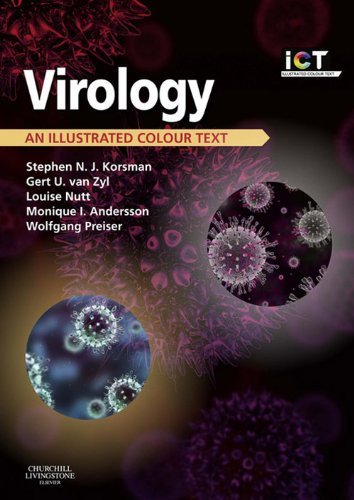
Virology: An Illustrated Colour Text

9 November, 2012

See on Scoop.itVirology News

“This is a concise, highly accessible introduction to medical virology, incorporating essential basic principles as well as a systematic review of viruses and viral diseases. It pays particular attention to developments in anti-viral therapy that are becoming increasingly effective in modern medicine. It is an ideal textbook for the information-overloaded student and an invaluable everyday companion for the busy professional who needs a good understanding of the current state of medical virology.

In keeping with the highly successful format of other Illustrated Colour Texts, it presents the subject as a series of succinct 2 page ‘learning units’, using a superb collection of clear illustrations and clinical photographs, concise yet comprehensive text and key point boxes to aid quick access to information and examination preparation.

So whether you are a medical student, junior doctor, medical scientist, trainee in infectious diseases or student on another allied medical course, this book is here to make your life easier! It will also provide a very solid foundation for any who plan to delve deeper into this fascinating field.”


It gives me great pelasure to be able to hype a book by colelagues from South Africa – and an eBook at that, given that it is available at a substantial discount for Kindle!  I shall be downloading it soonest.  Nice one, guys!

See on www.amazon.com

Together, we can do more….

17 October, 2012

It gives me great delight to pass on some news about an old friend: I have co-authored two papers with the Pappus (husband and wife), and have maintained a long association with Hanu as a favoured referee for Archives of Virology; he has gone on to achieve some distinction at Washington State University – and recently to have made a fundamental discovery in plant virology.  I thank Eric Sorenson of the Washington State Magazine for sending me this.

Viral alliances overcome plant defenses, according to newly published WSU research

Contact:
Hanu Pappu, professor and chair of plant pathology, Washington State University, 509-335-3752, hrp@wsu.edu

PULLMAN, Wash. – Washington State University researchers have found that viruses will join forces to overcome a plant’s defenses and cause more severe infections.

“These findings have important implications in our ability to control these viruses,” says Hanu Pappu, Sam Smith Distinguished Professor of Plant Virology and chair of WSU’s Department of Plant Pathology. “Mixed infections are quite common in the field, and now we know that viruses in these mixed infections are helping each other at the genetic level to overcome host defenses and possibly lead to the generation of new viruses.”

Pappu publishes his findings in the latest issue of the journal PLOS ONE. Joining him are Ph.D. student Sudeep Bag and Neena Mitter, associate professor at Australia’s University of Queensland.

The researchers focused on iris yellow spot virus and tomato spotted wilt virus after Bag discovered that, when they infect the same plant, they helped each other overcome a plant’s defense response. With Mitter’s help and sophisticated molecular techniques, Bag found both viruses dramatically changed their genetic expression, breaking down the plant’s defenses and leading to more severe disease.

Bag also found that genes from the tomato spotted wilt virus seemed to “aid and abet” iris yellow spot virus as it spread throughout the plant and caused more disease.

Growers should take this phenomenon into account, says Pappu, with broader management tactics that target more than one virus and possible variations.

The research was funded in part by the Specialty Crops Research Initiative of the National Institute of Food and Agriculture, a branch of the U.S. Department of Agriculture.

The paper, “Complementation between Two Tospoviruses Facilitates the Systemic Movement of a Plant Virus Silencing Suppressor in an Otherwise Restrictive Host,” can be found athttp://dx.plos.org/10.1371/journal.pone.0044803.

PS: the Pappus cook REALLY good food – as I discovered in Florida, at Chuck Niblett’s house, back in 1996 or so….

Anti-vaccine movement causes the worst whooping cough epidemic in 70 years [in the US]

17 October, 2012

See on Scoop.itVirology News

The great northwest of the U.S.is known for its natural beauty.  It’s also a high-tech region with a highly educated public – …(To vaccinate, or not to vaccinate…a report that suggests you should:

See on www.vaccinews.net

Major breakthrough in HIV prevention

17 October, 2012

See on Scoop.itVirology News

MELBOURNE researchers have developed cows’ milk that can defend human cells against HIV.

Lead researcher, University of Melbourne’s Marit Kramski said they vaccinated pregnant cows – which cannot contract human immunodeficiency virus – with an HIV protein [Env?] and studied the first milk produced by the cow after birth.

HIV cases in Australia on the rise

Dr Kramski said this first milk, called colostrum, produced milk high in antibodies to protect its newborn against disease.

The researchers were able to inhibit the virus from infecting cells when “combing the virus cells with milk” [sic – I think they mean combining the virus with milk containing antibodies].


I think this is very interesting, and has potential for trial in monkeys – not humans, because there is the little problem of the antibodies that would go into a virucidal cream being from cows – meaning they would elicit an immune response, unlike the humanised anti-HIV monoclonals being made in plants by the Fraunhofer Institute.


Still, using cow’s milk is an inventive thing to do – and sounds like a very cheap source of antibodies.  Except that colostrum is ONLY produced immediately after birth of a calf, so it will nothing like as cheap as milk.

See on www.heraldsun.com.au

Full genomic analysis of an influenza A (H1N2) virus identified during 2009 pandemic in Eastern India: evidence of reassortment event between co-circulating A(H1N1)pdm…

13 October, 2012

See on Scoop.itVirology News

“During the pandemic [Influenza A(H1N1)pdm09] period in 2009-2010, an influenza A (Inf-A) virus with H1N2 subtype (designated as A/Eastern India/N-1289/2009) was detected from a 25 years old male from Mizoram (North-eastern India).

The outcome of this full genome study revealed a unique reassortment event where the N-1289 virus acquired it’s HA gene from a 2009 pandemic H1N1 virus with swine origin and the other genes from H3N2-like viruses of human origin.

Conclusions
This study provides information on possibility of occurrence of reassortment events during influenza season when infectivity is high and two different subtypes of Inf Aviruses co-circulate in same geographical location.”


This is interesting, and soberign news: it shows how easily this sort of thing can happen; it is perhaps fortunate that both the NA of the new virus came from a circulating type, as otherwise the virus could have spread as far and been as serious as the new H1N1.


I thank Russell Kightley for the reassortant influenza virus graphic.


See on www.virologyj.com

Genomic Variation in Seven Khoe-San Groups Reveals Adaptation and Complex African History

1 October, 2012

See on Scoop.itVirology and Bioinformatics from Virology.ca

“The history of click-speaking Khoe-San, and African populations in general, remains poorly understood. We genotyped ∼2.3 million SNPs in 220 southern Africans and found that the Khoe-San diverged from other populations ≥100,000 years ago, but structure within the Khoe-San dated back to about 35,000 years ago. Genetic variation in various sub-Saharan populations did not localize the origin of modern humans to a single geographic region within Africa; instead, it indicated a history of admixture and stratification. We found evidence of adaptation targeting muscle function and immune response, potential adaptive introgression of UV-light protection, and selection predating modern human diversification involving skeletal and neurological development. These new findings illustrate the importance of African genomic diversity in understanding human evolutionary history.”


Ex Africa, semper aliquid novi…or old, in this case!

See on www.sciencemag.org

The Gemini Virus

29 September, 2012

See on Scoop.itVirology and Bioinformatics from Virology.ca

“With a nod to the movie Contagion, The Gemini Virus is a vivid (the audience will become mysophobia agoraphobic), exhilarating lethal virus thriller. Part of the fun is the reactions of people as some welcome the biblical End of Days while others blame the government. Fast-paced from the first cough and sneeze, the storyline never takes a respite as the Gemini Virus goes viral.”


A pity that geminiviruses (the real ones) only infect plants, isn’t it?


Geminivirus graphic courtesy of Russell Kightley Media

See on themysterygazette.blogspot.fr

Begomovirus–whitefly mutualism is achieved through repression of plant defences by a virus pathogenicity factor – ZHANG – 2012 – Molecular Ecology – Wiley Online Library

25 September, 2012

See on Scoop.itVirology and Bioinformatics from Virology.ca

“Plant-mediated interactions between herbivorous arthropods and pathogens transmitted by herbivores are important determinants of the population dynamics of both types of organisms in the field. The role of plant defence in mediating these types of tripartite interactions have been recognized but rarely examined especially at the physiological and molecular levels. Our previous work shows that a worldwide invasive whitefly can establish mutualism with the begomovirus Tomato yellow leaf curl China virus (TYLCCNV) via crop plants. Here, we show that TYLCCNV and betasatellite co-infection suppresses jasmonic acid defences in the plant. Impairing or enhancing defences mediated by jasmonic acid in the plant enhances or depresses the performance of the whitefly. We further demonstrate that the pathogenicity factor βC1 encoded in the betasatellite is responsible for the initiation of suppression on plant defences and contributes to the realization of the virus–vector mutualism. By integrating ecological, mechanistic and molecular approaches, our study reveals a major mechanism of the plant-mediated mutualism between a virus and its vector. As the test plant is an important economic crop, the results also have substantial implications for developing novel strategies for management of crop viruses and the insect vectors associated with them.”


I noted previously in Virology News and here that researchers in China had found in 2007 that the B biotype of Bemisia tabaci greatly enhanced its own survival by transmitting begomoviruses – and now this group have figured out why.  Fascinating interaction between a tiny virus, an even smaller satellite DNA, and host plants and insect vectors.  The original paper, BTW, can be found here:

http://www.plosone.org/article/info%3Adoi%2F10.1371%2Fjournal.pone.0000182

See on onlinelibrary.wiley.com