Anti-insect wheat trials underway

28 March, 2012

Via Scoop.itVirology News

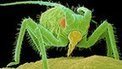
The first experiments with plants genetically-modified to repel aphids are under way in the UK.  Wheat has been engineered with a gene from a peppermint plant so that it emits a particular pheromone.

The smell is the alarm signal given off by aphids to warn of an attack by predators.

The researchers hope that this will act as a “no parking sign” to keep the pests at bay without needing insecticide.

This is the first trial of a plant deliberately modified to use pheromones to ward off pests.

The work is taking place at Rothamsted Research, the plant science centre in Hertfordshire


Nice place, Rothamsted: and aphids transmit viruses, so it’s right for this site.  Sort of.

Via www.bbc.co.uk

NOVAVAX Launches Phase II Clinical Trial of Seasonal Influenza Vaccine

27 March, 2012

Via Scoop.itVirology News

ROCKVILLE, Md. — Novavax, Inc. today announced that it has begun enrollment in a Phase II clinical trial of its quadrivalent seasonal influenza virus-like particle (VLP) vaccine candidate. This randomized, …

Via finance.yahoo.com

Salk announces polio vaccine — History.com This Day in History — 3/26/1953

27 March, 2012

Via Scoop.itVirology News

On March 26, 1953, American medical researcher Dr. Jonas Salk announces on a national radio show that he has successfully tested a vaccine against poliomyelitis, the virus that causes the crippling disease of polio.

Via www.history.com

The Wrong Policy Prescription for Pakistan’s Vaccine Program

27 March, 2012

Via Scoop.itVirology News

Just because legislating immunization coverage works in the United States doesn’t mean it will work in Pakistan. The main reason is that the drivers of under-vaccination in Pakistan and the United States are fundamentally different.

Via www.huffingtonpost.com

CIDRAP >> Fouchier anticipates resuming H5N1 studies soon

27 March, 2012

Via Scoop.itVirology News

“Fouchier told the audience that virulence is a tough issue to describe and needs to be clearly defined. He said the virus was virulent in ferrets that were inoculated deep within their lungs, and it was virulent in those who were sickened via the aerosol route, though they didn’t die.

“There’s a lot of quotes in the press that are simply wrong,” he said, adding that the definition of virulence touches on other factors such as dose, immune status of the host, and previous exposure to other types of flu. Fouchier said full publication of both studies would help clarify questions scientists and observers have about virulence of the lab-modified viruses.

During today’s webcast, Racaniello asked for more details about the study, but Fouchier said the NSABB asked him not to disclose details about the methods or mutations.

However, he said his group found a number of mutations in common when they sequenced the viruses that had made the jump to airborne spread. “Most of those were pretty interesting,” he said, adding that some of the mutations are the same ones Kawaoka’s group found, though that group took a different approach to the study. “That was a shock to me and to Yoshi,” he said.”


Meaning that we should be out there LOOKing for them…thanks, Vincent!

Image courtesy Russell Kightley Media

Via www.cidrap.umn.edu

MedImmune receives FDA approval for FluMist Quadrivalent vaccine

27 March, 2012

Via Scoop.itVirology News

FluMist Quadrivalent, a vaccine to prevent seasonal influenza in people ages 2 years through 49 years, has been approved today by the U.S. Food and Drug Administration.

Via www.news-medical.net

Antiviral Research – A DNA vaccination regime including protein boost and electroporation protects cattle against foot-and-mouth disease

27 March, 2012

Via Scoop.itVirology News

We thus demonstrate for the first time that cattle can be clinically protected against FMDV challenge following a DNA prime-protein boost strategy, and particularly when DNA vaccine is combined with GM-CSF and delivered by electroporation.


Thanks MicrobeTweets!

Via www.sciencedirect.com

Genetics of flu susceptibility: Why the flu is life-threatening for some, and quite mild for others

26 March, 2012

Via Scoop.itVirology News

A genetic finding could help explain why influenza becomes a life-threatening disease to some people while it has only mild effects in others.  New research led by the Wellcome Trust Sanger Institute has identified for the first time a human gene that influences how we respond to influenza infection.

People who carry a particular variant of a gene called IFITM3 are significantly more likely to be hospitalised when they fall ill with influenza than those who carry other variants, the team found. This gene plays a critical role in protecting the body against infection with influenza and a rare version of it appears to make people more susceptible to severe forms of the disease. The results are published in the journal Nature.


Graphic courtesy Russell Kightley Media

Via www.sciencedaily.com

Pupils receive new HIV syllabus with excitement  – Education |monitor.co.ug

26 March, 2012

Via Scoop.itVirology News

Primary going children from schools [in Uganda] where the new HIV syllabus is being piloted are embracing it with excitement, saying it would redeem the future generation of the deadly HIV/Aids.


Good news from Africa!

Via www.monitor.co.ug

HIV hookers peril for England fans – The Sun mobile

26 March, 2012

Via Scoop.itVirology News

Really??  HIV-infected Ukrainian hookers are the ONLY reason to avoid sex workers while on a football-watching excursion??

Via thesun.mobi