I am presently at the XX Encontro Nacional de Virologia (2oth National Congress of Virology) in Brasilia: this is just winding down – it´s the last afternoon – and it has been an amazing conference. I will be reporting on this in detail when I get home; suffice it to say that any meeting that can attract over 600 virologists in one country HAS to be quite something!
Virology in Brazil
4 November, 2009…and so it begins…
21 October, 2009The northern hemisphere flu season, that is – with the imponderable being just how much of it will be due to the pandemic AH1N1 2009 strain.
And whether or not enough vaccine will be available, soon enough.
News links from today:
US, Mexico face shortage of H1N1 flu vaccine (LA Times)
CDC: H1N1 vaccine behind schedule (CBS News)
…and how some people are scared of the vaccine, rather than of the flu:
H1N1 vaccine embraced, but also feared American Medical News
Some Parents Undecided about H1N1 Vaccine LocalNews8.com
AIDS vaccines in Paris
21 October, 2009Because he was in Paris attending the AIDS Vaccine 2009 meeting, and because I asked him to, Dorian McIlroy from the University of Nantes has written an account of the presentation of the recent Thailand HIV vaccine trial results. Thanks Dorian!
Ed Rybicki.
Here in Paris, the initial results from the Thai ALVAC/AIDSVAX vaccine trial have just been presented. The first presentation was by Dr Supachai Rerks-Ngarm, who was followed by Colonel Nelson Michael (who gave his presentation in uniform). This was a big double-blinded RCT, with more than 16000 participants, about 8000 people in each arm of the study. I am not a methodologist, but this trial does appear to me to have been very well-designed, carried-out, and analyzed. So I think one should unreservedly treat the results as high-quality.
 The headline result – a 31% reduction in HIV transmission in vaccine recipients was reported in the press in September, but the difference between the vaccine and placebo recipients was only just statistically significant. So the big question was, are the data convincing enough to reject the null hypothesis? That is, could the difference in the number of HIV infections in the two groups just be down to chance, rather than vaccine efficacy?
Both presenting scientists involved in the study gave talks that were very scientifically rigorous, explaining the why the data was analyzed the way it was, and what conclusions can and cannot be drawn from the trial.
With regards to the first question, it was pointed out that the statistical analysis of the primary endpoint (new HIV infections in the two groups) was decided before the data were unblinded. That is, the statisticians who analyzed the data did not choose their technique to manipulate the interpretation in any way.
The main statistical approach applied was Kaplan-Meier analysis, looking at the number of people infected in each group over time. Differences between vaccine and placebo arms were tested by the log-rank test. However, there were three different ways of determining exactly which of the people enrolled in the trial were included in the analysis. These were intention-to-treat (ITT), modified ITT, and per protocol (PP).
The ITT definition was everyone who was HIV seronegative at study entry, and received at least one injection. The modified ITT excluded 7 individuals who were found to be positive for HIV infection by PCR at study entry. The PP definition was, everyone who received all of the vaccinations at the allotted times. Now this was a rather strict definition, because a person who got a vaccination one day later than the schedule was excluded from the analysis, leaving only about 6000 people per group in the PP analysis.
Kaplan-Meier curves for all three analyses (ITT, mITT and PP) looked pretty good, and showed more infections in the placebo arm than in the vaccine arm, although the difference was only statistically significant (p=0.04) in the mITT analysis. The reason why the ITT analysis did not show a statistically significative difference was because 5 of the 7 people who were infected (PCR postitive, but not seropositive) at entry into the trial were in the vaccine arm. So a net increase of just three more infections (5 in vaccine arm – 2 in the placebo arm) in the vaccine group changed the p-value from 0.04 to 0.08. However, excluding people who were infected before the beginning of the trial is entirely justified, and it is clear that the mITT analysis was preferable to the raw ITT.
The comparison of the mITT and PP results was more interesting. Although the same tendency was observed (more infections in the placebo arm) the Kaplan-Meier curves looked much more similar. There may be two explanations for this. Firstly, since the number of people in each group was decreased, the statistical power of the test also went down – so the same effect would not be statistically significant. Another factor, that was pointed out by Col. Michael, was that the PP analysis automatically ruled out patients who became infected during the vaccine protocol. That is, over the first six months of the trial. Looking back at the Kaplan-Meier curves from the mITT analysis, the main difference between the vaccine and placebo groups accrued during the first year of the trial. Afterwards, new infections occurred pretty much at the same rate in the two groups. Most of these infections were excluded from the PP analysis, resulting in a non-significant difference between the two groups.
This for me, is the key to the interpretation of the trial. In my opinion, there was a protective effect of vaccination in this study (so yes, the data are convincing enough to reject the null hypothesis) – but it seems to have been short lived. Indeed, Col. Michael also mentioned that innate immune responses (presumably induced by the viral ALVAC vector that was injected four times during the 6 months of the vaccination protocol) could be involved in protection. No empty virus vector was used in the placebo arm, (described here : http://www.fda.gov/OHRMS/DOCKETS/AC/04/briefing/4072B2_2.doc) only “a mixture of virus stabilizer, and freeze drying medium”. So more short-lived, non-specific innate immune responses could have been induced in the vaccine arm compared to the placebo arm. This is also consistent with the higher frequency of adverse reactions in vaccine recipients compared to placebo recipients that was also reported in Dr Rerks-Ngarm’s talk.
If the partial protection that was observed in the Thai trial does turn out to have been due to a transient induction of innate immune responses due to the ALVAC vector, then I’m afraid we won’t be able to say that the ALVAC/AIDSVAX candidate vaccine induced an adaptive immune response that is able to protect people from HIV infection.
HIV vaccines: some glimmer of hope??
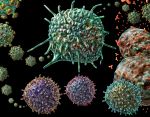
19 October, 2009Cells stimulated by HIV vaccines Copyright Russell Kightley Media
It has taken a while for me to get to this, because I have been waiting for the fallout / comment storm to settle a bit, so that I could get a good clear objective view.
And that is…that the recent Thai trial showed hints of promise, but was largely a failure. At least it did no harm…!
First things first: Nature News’ Elie Dolgin had this to say on 24th September:
Vaccine protects against HIV virus [!!! sic – I had something to say about this, see Comments]
The largest HIV vaccine trial to date has shown moderate success at preventing infection by the virus.
The experimental vaccine — a combination of two older shots that failed to work on their own — reduced the risk of someone contracting HIV by nearly a third. Scientists, however, are still scratching their heads as to how the double-shot approach blocks the virus….
The US$119 million study involved more than 16,000 HIV-negative men and women from Thailand aged 18–30. The trial was launched in October 2003, conducted by the Thai health ministry and sponsored by the US Army Surgeon General. It tested a two-shot infection-fighting strategy using drugs made by Sanofi-Pasteur of Lyon, France, and VaxGen of Brisbane, Australia. Over the course of 24 weeks, participants received four doses of a ‘primer’ vaccine — a disabled bird virus [canarypox – Ed] containing synthetic versions of three HIV genes [ALVAC, subtype B env, gag and pro – Ed] — and two doses of a ‘booster’, which consisted of a protein called gp120 [AIDSVAX subtypes B/E – Ed], a major component of HIV’s outer coat. [see here for link describing the components]. Clinicians tested for HIV infection every 6 months for 3 years….
Many HIV vaccine experts had previously criticized the approach as a waste of time because each of the vaccine components had a poor track record. The primer, called ALVAC, conferred little to no immune protection in multiple early-phase clinical trials, and the booster, called AIDSVAX, had flopped twice in high-profile, large-scale trials.
And here’s a thing: a high profile crew of scientists had, in 2004, written an open letter to Science magazine, stating in no uncertain terms that they thought the trial ought to be stopped. In their words:
“Concerns are expressed by a group of AIDS researchers about the U.S. government’s plans to conduct a phase III trial of a combination HIV-1 vaccine in Thailand despite the cancellation of a trial of a very similar combination vaccine in the U.S.A. last year. One of the vaccine components, recombinant monomeric gp120, has already been shown to be ineffective in phase III trials in Thailand and the United States; the other component, a recombinant canarypox vector, is also poorly immunogenic. The scientific rationale that has been offered for the new trial in Thailand is considered by the authors to be weak.”
And now we have Dan Barouch – not a signatory to the 2004 letter, I note – quoted by Dolgin as saying:
“I don’t think anybody knows why this worked the way it did,” says Dan Barouch, an immunologist at the Beth Israel Deaconess Medical Center in Boston, Massachusetts. “It’s the largest step forward that’s ever occurred in the HIV-vaccine field, but there’s a tremendous amount of more work that will need to be done.”
But exactly what is it that people are hailing as a breakthrough here? Dolgin again:
The two-pronged vaccine did not affect the amount of virus circulating in the blood of those who acquired HIV during the study. But it did show a protective effect — vaccinated individuals were 31% less likely to become infected. New infections occurred in 74 of the 8,198 people who received dummy shots, but only 51 of the 8,197 in the vaccine group [my emphasis – Ed], the researchers, led by Supachai Rerks-Ngarm of the Thai Ministry of Public Health’s Department of Disease Control, found.
Dorian McIlroy, a regular contributor to Viroblogy, had this to say on the 24th September in an email to me:
I just read the news story about the ALVAC/AIDSVAX trial results in Thailand. From the numbers on this press release:
http://www3.niaid.nih.gov/news/newsreleases/2009/ThaiVaxStudy.htm
The significance level is extremely slim. For example, if you go to this site
http://www.statpages.org/ctab2x2.html
and type in the numbers you will find that p=0.048 by Fisher’s exact test.
If one more person in the vaccine arm had been infected, or if one less person in the placebo arm had been infected, the difference between the groups would not have been significant. [my emphasis – Ed]
None of the experts (Wayne Koff, Frances Gotch, for example) interviewed in different news stories seems to have noticed just how borderline the “statistical significance” really is, and seem to have accepted the bottom-line 30% reduction figure.
Ah well, I just thought I had to tell someone….
Dorian
Lecturer in Microbiology and Cell Biology,
University of Nantes
Others have also picked up on this – which shows just how desperately slim the hope is. However, it does remain – although (pleasingly…B-) the pundits have been thrown into a state of confusion, as some strongly-held views have not been vindicated. Another Nature News article – from Erika Check Hayden, on October 1st – has this to say:
As the dust settles from last week’s surprising announcement that an HIV vaccine combination may protect some people from the virus, scientists are talking about what else the vaccine trial might tell them.
On 24 September, leaders of a US$119-million study of 16,000 people in Thailand reported that the combination of two shots had reduced the risk of HIV infection by one-third …. Now, the vaccine’s fate will depend on whether scientists can figure out its ‘correlate of protection’ — in other words, what caused it to partially protect some people from HIV. The key does not seem to be anything scientists had predicted, which has led to much head-scratching — and some unease.
“It’s a humbling thing, because for the first time we got a positive signal and it doesn’t jump out at us as being related to any classical parameters you would expect from a successful vaccine,” says Anthony Fauci, head of the National Institute of Allergy and Infectious Diseases in Bethesda, Maryland, which supported the trial. “That tells us maybe we were not measuring the right thing.” [my emphasis – Ed]
Amen, brother Tony…a clearer proof of Clarke’s First Law I have yet to see.
So what ARE the things that fall out from this? First, I would suspect, is that the value of a heterologous prime-boost combination seems to have been shown, albeit weakly. Second, the use of a poxvirus vaccine in particular in combination with a protein may be a good thing to chase. I note here that the South Africa / US joint Phase I human trial currently underway with the SAAVI DNA / SAAVI MVA (=modified vaccinia virus Ankara, a poxvirus) was almost certainly considerably more immunogenic in non-humanprimates than either of the ALVAC / AIDSVAX vaccines, so the gleam of hope may soon get brighter.
Third: take heed of Arthur C Clarke before you go sticking your neck out making predictions about HIV vaccines…B-)
Phylogeography of HCV: slave trade spread the virus
19 October, 2009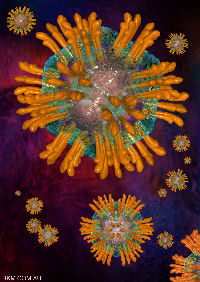
Hepatitis C virus particles. Copyright Russell Kightley Media
Today a welcome guest blog by a PhD student in the lab, Aderito Monjane: this paper was presented by him in a recent lab journal club, and I thought it was interesting enough to get a wider airing.
Phylogeography and molecular epidemiology of hepatitis C virus genotype 2 in Africa
Peter V. Markov, Jacques Pepin, Eric Frost, Sylvie Deslandes, Annie-Claude Labbe´ and Oliver G. Pybus
Journal of General Virology (2009), 90, 2086–2096
Hepatitis C virus (HCV) is an important human pathogen. There are 170 million chronically infected people worldwide, and 2-4 million new cases of infection annually. The disease manifests itself late – liver cirrhosis and hepatocellular carcinoma – and in the USA alone 9000 people die of it each year.
HCV is quite diverse. Six genotypes have been identified, and each further classified into subtypes. Some of these subtypes are geographically localized and others are globally distributed. Endemic subtypes are found in the tropics (e.g. genotype 2 and 1 are found in west Africa; genotype 4 in central Africa and the middle East), whereas ‘epidemic’ subtypes are more widely distributed.
The case for the spread, genetic diversity and origin of HCV genotype 2 is very interesting. Phylogenetic studies using sequences sampled from individuals in a) west Africa (around Gambia, Senegal), b) and slightly more to the east of these countries (around Ghana, Benin), and c) central Africa (around Cameroon and Central African Republic) revealed interesting facts.
- West Africa is the origin of HCV genotype 2 and this region has the greatest amount of viral diversity. This genetic diversity decreases as one moves further to central Africa
- Sequences from west Africa are found in regions outside of west Africa, e.g. in central Africa, Madagascar and the Caribbean island Martinique, thus reaffirming that west Africa is the origin of HCV genotype 2
- The proportion of HCV genotype 2 relative to other genotypes decreases from west to central Africa. This reaffirms that there is movement of HCV genotype 2 from west to east.
Phylogenetic and molecular clock trees showed that the oldest common ancestor to the HCV genotype 2 isolates in existence worldwide came into being in the year 1091 (actually, there is 95% confidence that it was between year 709-1228), and in 1470 the first HCV genotype 2 strains afflicting individuals in the African continent came into being.
The connection between these existing HCV genotype 2 strain, the transatlantic slave trade, and the use of mass vaccination or treatment of illnesses is interesting in that it shows the inadvertent spread of viruses globally by human activities.
Ghana was the major port for slave trade. So it is perhaps of no coincidence that HCV genotype 2 strains found in the Caribbean island Martinique (as well as most of its human population) resemble the strains found currently in the Ghana-Benin region. Movement of African troops under French colonial rule from Senegal and Mauritius during WWI has also resulted in the global spread of current epidemic HCV-2 strains. An insidious effect of mass-treatment campaigns is exemplified in the different ways HCV genotype 2 spread in Cameroon and Guinea-Bissau. In Cameroon, under French colonial rule, doctors treated European colonialists and African natives against illnesses such as syphilis and yaws using intravenous drugs, before there was any awareness of blood-borne viral transmissions. As a result, by the 60’s HCV cases were higher in Cameroon compared to Guinea-Bisau, where the Portuguese colonialists used intravenous drugs to treat the European colonialists and their immediate workers only.
In summary, this study shows that there is west to east movement of HCV genotype 2, and decreasing genetic diversity away from the origin of diversity.
Influenza virus A H1N1 2009: gets to parts the other flu doesn’t reach
14 September, 2009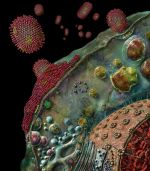
Flu virus life cycle. Copyright Russell Kightley Media
The September 2009 issue of Nature Biotechnology has a letter concerning the receptor specificity of AH1N1 2009 pandemic influenza virus – which accounts pretty well for why it CAN be pretty nasty, and for why it may get nastier yet.
Childs et al., in a letter entitled “Receptor-binding specificity of pandemic influenza A (H1N1) 2009 virus determined by carbohydrate microarray“, describe what amounts to a tour de force analysis of the receptor binding of a number of influenza viruses, which concludes with the statement that:
“The differences in receptor binding between the 2009 pandemic and seasonal H1N1 viruses may therefore account, at least in part, for the higher virus replication and greater pathology reported in the lungs of ferrets, mice and nonhuman primates infected with pandemic viruses, than observed with contemporary seasonal viruses.”
Which would help explain why some otherwise healthy young people are dying of the virus, while others are getting only mildly ill. But we get ahead of ourselves: in January last year I wrote in MicrobiologyBytes about recpetor specificities of A-type influenza viruses, in the context of how H5N1 was less likely to mutate to easy human-to-human transmissibility than had origianlly been thought.
I wrote at the time:
According to a letter in the January 2008 issue of Nature Biotechnology, it is a characteristic structural topology, and not just the α2,6 linkage, that enables specific binding of HA to α2,6 sialylated glycans. The authors state:
…recognition of this topology may be critical for adaptation of HA to bind glycans in the upper respiratory tract of humans. An integrated biochemical, analytical and data mining approach demonstrates that HAs from the human-adapted H1N1 and H3N2 viruses, but not H5N1 (bird flu) viruses, specifically bind to long α2-6 sialylated glycans with this topology. This could explain why H5N1 viruses have not yet gained a foothold in the human population.
Apparently the critical shape in humans is umbrella-like, whereas the avian receptor is characteristically cone-like. Again from the paper:
The topology of α2-3 and α2-6 is governed by the glycosidic torsion angles of the trisaccharide motifs-Neu5Aca2-3Galb1-3/4GlcNAc and Neu5Aca2-6Galb1-4GlcNAc, respectively (Supplementary Fig. 3 online).
Ram Sasisekharan and colleagues showed that human-adapted viruses with mixed α2,3/α2,6 binding ability that bound the umbrella-type receptor were efficiently transmitted, whereas viruses with the same basic specificity that did not have HA binding specificity to “long” α2,6, were not.
The present paper reports the following investigation:
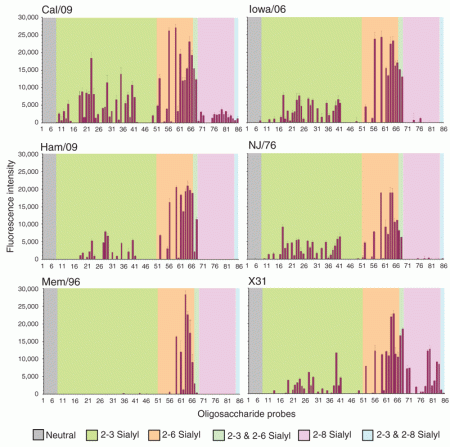
“We have compared directly, by carbohydrate microarray analysis, the receptor-binding characteristics of two isolates of the novel pandemic H1N1 virus, Cal/09 and A/Hamburg/5/2009 (Ham/09), with those of a seasonal human H1N1 virus, A/Memphis/14/96-M (Mem/96), as representative of a virus well adapted to humans [and a reassortant human H3N2 virus A/Aichi/2/68 x PR8 (X31)]. As the HA of the novel H1N1 pandemic virus originated from a virus similar to triple reassortant swine H1N1 viruses, we compared one such example, A/Iowa/1/2006 (Iowa/06), isolated from a human infection, and an older close relative of classical swine H1N1 viruses, A/New Jersey/76 (NJ/76), the human isolate that initiated the concern of a pandemic threat in 1976.”
This is a really comprehensive analysis – for such a short communication – which throws up a number of interesting points. First, I was not aware it was possible to do “carbohydrate microarrays”! Second, the paper shows quite conclusively that the swine-derived AH1N1 viruses have a significantly wider range of receptor specificities than a standard seasonal AH1N1 virus, and – but to a lesser extent – than the reassortant H3N2 virus X31.
Carbohydrate microarray analyses of the six viruses investigated.
From the following article (with permission from NBT):
Receptor-binding specificity of pandemic influenza A (H1N1) 2009 virus determined by carbohydrate microarray.
Robert A Childs, Angelina S Palma, Steve Wharton, Tatyana Matrosovich, Yan Liu, Wengang Chai, Maria A Campanero-Rhodes, Yibing Zhang, Markus Eickmann, Makoto Kiso, Alan Hay, Mikhail Matrosovich & Ten Feizi.
Nature Biotechnology 27, 797 – 799 (2009).
doi:10.1038/nbt0909-797
Legend:
Numerical scores for the binding signals are shown as means of duplicate spots at 5 fmol per spot (with error bars). The microarrays consisted of eighty sialylated and six neutral lipid-linked oligosaccharide probes, printed on nitrocellulose-coated glass slides. These are listed in Supplementary Table 1 and arranged according to sialic acid linkage, oligosaccharide backbone chain length and sequence. The various types of terminal sialic acid linkage are indicated by the colored panels as defined at the bottom of the figure.
And what does all this mean, exactly? The authors sum it up well:
These results indicate that no major change in receptor-binding specificity of the HA was required for the emergent pandemic virus to acquire human-like characteristics and become established in the human population. …
The broader specificity, namely, the ability to bind to 2-3- in addition to 2-6-linked receptors is also pertinent to the greater virulence of the pandemic virus than seasonal influenza viruses observed in animal models, and its capacity to cause severe and fatal disease in humans, despite the generally mild nature of most infections. Binding to 2-3-linked receptors is thought to be associated with the ability of influenza viruses to infect the lower respiratory tract where there is a greater proportion of 2-3- relative to 2-6-linked sialyl glycans, although long chain 2-3-linked sialyl (poly-N-acetyllactosamine) sequences are present in ciliated bronchial epithelial cells in humans where they are the receptors for another human pathogen, Mycoplasma pneumoniae.
So there you have it: the viruses can get deeper in to your lungs than the standard flu – which, if it happens, can make you seriously ill.
So what happens if it gets better at binding the 2,3-type receptors in humans? Well, we’re only in the middle of the pandemic. We may yet find out the hard way.
Plant therapy creeping in….
8 September, 2009The August issue of Nature Biotechnology has a very interesting snippet of news – from two points of view. From a strict virology point of view, it is interesting that commercial production of a therapeutic enzyme in an industrial plant can be shut down because of infection of their mammalian cell line with a contaminating mammalian virus.
From the second point of view…well, our lab has a very strong interest in producing recombinant proteins (and especially candidate vaccine proteins) in plants – and here is a story showing just why plants may be a really good alternative means of production for pharmaceuticals. First, the story:
Nature Biotechnology 27, 681 (2009) doi:10.1038/nbt0809-681a
Virus stalls Genzyme plant by Victor BethencourtGenzyme of Cambridge, Massachusetts, faces millions in lost revenue from its top-selling specialty drugs Cerezyme and Fabrazyme as result of a viral contamination at its Allston, Massachusetts plant. The company has announced that it will temporarily shut down the facility owing to a bioreactor contamination with Vesivirus 2117 [my emphasis – Ed], which does not cause human infections, but impairs growth of the biologics-producing Chinese hamster ovary (CHO) cells. It reportedly originated from tainted nutrient medium and belongs to the same strain that caused delays at the Allston site and its European biologics plant in Belgium last year. Genzyme anticipates supply constraints of Cerezyme (imiglucerase), a treatment for Gaucher disease, and Fabrazyme (agalsidase beta), used to treat Fabry disease, while the facility shuts down for 6 to 8 weeks to allow decontamination.
OK, really interesting, that: a vesivirus – genus Vesivirus, family Caliciviridae, nice link here for structure, and here for Genzyme’s press release – that is being transmitted around via cell culture media, between manufacturing plants. One of the perils of using mammalian cells to make things…!

The article goes on:
…With sales of $1.2 billion for Cerezyme and $494 million for Fabryzyme in 2008, analysts estimate the manufacturing crisis will result in $100–300 million in lost sales. The US Food and Drug Administration (FDA) has contacted rival manufacturers Shire of Basingstoke, UK, and Carmiel, Israel–based Protalix, who have enzyme replacement therapies for Gaucher disease in clinical trials, to file treatment protocols, which would allow physicians to use their drugs ahead of approval.
And of course, Protalix makes its glucocerebrocidase in cultured carrot cells, in disposable “bioreactor bags”…. In completely defined chemical media, with no risk of plant virus contamination – not that plant viruses can infect cultured plants cells, by any means short of being shot in on gold beads! Their web site Press Room page had this to say as of 25th August:
Aug. 25, 2009 (Business Wire) — Protalix BioTherapeutics, Inc. (NYSE-Amex:PLX), announced today that it has received Fast Track Designation from the U.S. Food and Drug Administration (FDA) for prGCD, the Company’s proprietary plant-cell expressed recombinant form of glucocerebrosidase (GCD) for the treatment of Gaucher disease.
I wrote the following about Protalix after attending the Plant-Based Vaccines and Antibodies Conference in Verona in June this year (September issue of Expert Rev Vaccines, 8: 1151-1155, 2009):
“Einat Almon-Brill (Protalix Biotherapeutics, Israel) described their production of recombinant human glucocerebrosidase (rGCD) as a therapy for Gaucher disease, caused by a hereditary mitochondrial defect. They used a contained disposable bioreactor system with suspension-cultured carrot or tobacco cells, and claimed there were no mammalian cell culture risk factors; they obtained uniform glycosylation, and the exposed mannose allowed rapid macrophage uptake. The rGCD half-life was twice as long as commercial product, and had been trialled in Europe, Israel, South Africa, and North and South America.”
I wish I’d bought stock…or had the money to, or knew how to! The time of plant-made pharmaceuticals – PMPs – is coming.
Be ready…B-)
At last, a podcast! Of sorts….
6 September, 2009Given that the bandwidth here in South Africa is so sadly lacking, I have refrained from doing what my less byte-challenged colleagues elsewhere do with gay abandon: yes, MicrobiologyBytes and virology blog, I speak of you!
However: given that a local newspaper saw fit to ask me about flu and other vaccines, and put up a podcast, I shall link to it from here. A little abridged – so you can’t tell what we are actually working on – but not too bad (my wife tells me).
Gene discrimination
3 September, 2009In the latest online issue of Nature, there is an article entitled “Keeping genes out of terrorists’ hands“, by Erika Check Hayden. Like an article a little while ago in Nature Biotechnology, it makes the apparently quite reasonable point that
“the way that the industry screens orders for hazardous toxins and genes, such as pieces of deadly viruses and bacteria…could be crucial for global biosecurity”.
Yes. Well. They would say that, wouldn’t they?? “They” being anyone in the developed world who has a paranoid fantasy about bearded extremists in caves (or crew-cut extremists in leafy suburbs) gleefully unwrapping their couriered DNA and brewing up a nice little necrotising poxvirus, or an airborne Ebola, or possibly an H5N1 variant that spreads human-to-human better than the present versions.
I wrote the following reply to the article:
While “all right-thinking people” – for which, read “those easily scared by the unrealistic prospect of mail-order killer bugs” may agree that some kind of limitations are required on what synthetic DNA is sent out, and to whom…there is a baby being thrown out with the bathwater here.
My laboratory has just, despite many previously successful orders from the same company, been denied permission (or told to obtain clearance from the relevant government, which amounts to the same thing) to have a coat protein gene synthesised for a bluetongue virus (BTV) strain now found all over western Europe. Because, apparently, BTV is on the “Australia Group”‘s prohibited list of biological agents – and South Africa is not a signatory to this group, which started out for arms control but has apparently ramified somewhat.
This is so ridiculous as to beggar belief: the viruses are endemic to Africa; the world’s expert on cDNA cloning of their genomes is in South Africa; why would anyone want to build a BTV from synthetic DNA when they could go out and sample a sheep for some REAL virus??
A closer look at the list throws up all sorts of interesting things. It is prohibited, for example, to order genes for H5N1 influenza – although curiously, not pandemic H1N1 – and dengue viruses. This rather puts a spoke in the wheels of anyone who might want to…oh, let’s say…MAKE A VACCINE to those agents, in any country not signatory to the agreement – where the viruses happen to be endemic!!
The ways of limiting spread of genes that are being proposed are first, unnecessary; second – discriminatory in the extreme.
And may just provide a good deal of business for firms operating in developing countries who otherwise would have been ignored because of quality issues. Imagine that: a lab in Pakistan, or South Africa, or Indonesia, using home-made genes to make a vaccine.
Because that is a LOT more likely than using them to make a pathogen.
I know of a passage written some years ago in a reputable science magazine which described how easy it would be to smuggle naturally-occurring foot and mouth disease virus worldwide – with no science involved whatever. I have enough purified material of a particular plant virus in my cold room right now to kill all the wheat grown in my country – given some carborundum and a crop sprayer.
There are enough people on this planet infected with pandemic H1N1 who live in close enough proximity to birds infected with H5N1 to make coinfection of one or the other with both a certainty – the only uncertainty remaining being what will come of it. For that matter, where DID the H1N1 come from? Where did Lujo virus come from?
We DON’T NEED TO MAKE VIRUSES from mail-order DNA – and only Craig Venter et al. could even dream of making whole microbes. There are more than enough nasty agents out there that are relatively easy to obtain, and do simple kitchen-based microbiology with, to keep entire cave complexes and Montana libertarian enclaves busy for years, without resorting to complicated molecular biology.
So DO let’s keep things in perspective, shall we?? And let reputable labs doing reputable work order the materials they need to work with.


 ViroBlogy