When is a virus not a virus?

3 March, 2009

A fascinating new post from Science Daily – for which, thanks Vaibhav Bhardwaj – raises again the problem of just exactly what is (and what is not) a virus?

The article in question describes a fascinating three-way interaction between a virus, a parasitic wasp, and a caterpillar – with a virus which happens to be part of the germline of the wasp, gets injected into the caterpillar as a free genome, and modifies its immune system so as to tolerate the wasp’s eggs.

From the article:

“Researchers have known for about 40 years that some species of parasitoid wasps inject these viruses, known as polydnaviruses, into the body cavities of caterpillars at the same time that they lay their eggs in the caterpillars. Because these “virus-like particles” have become an integral part of the wasp genome, some researchers have suggested they should no longer be considered viruses.”

Funny thing: that hasn’t stopped the International Committee on Taxonomy of Viruses (ICTV) from recognising as viruses agents such as Petunia vein clearing virus, a pararetrovirus (=DNA retrovirus) with an activatable integrated form, Banana streak virus, which is present in and activatable from the genomes of most Musa species, or even two whole  families of retrovirus-like retrotransposable elements in the Pseudoviridae and the Metaviridae.

So there is ample precedent for things that integrate into host genomes, that are also viruses – including, among vertebrates, where activatable endogenous retroviruses are the subject of much study – including a finding that prions may activate endogenous retroviruses in the human brain.

And what of polydnaviruses (family Polydnaviridae)?  Well, fascinating and unique beasts, these: the two genera so far described – Bracovirus and Ichnovirus – contain viruses which have a variable number of circular double-stranded DNA components, with components ranging in size from 2 to >31 kbp, for a total genome size between 150 – 250 kbp.  Both sets of viruses occur as integrated proviruses in the genomes of endoparasitic hymenopteran wasps, replicate by amplification of the host DNA, followed by excision of episomal genomes by site-specific recombination, and only produce particles by budding from (ichnoviruses) or lysis of (bracoviruses) calyx cells in the oviducts of female wasps during pupal-adult transition.  Moreover, the viruses in the two groups may well not be evolutionarily linked to one another, given that there is no antigenic or genome similarity, and the particles formed by the two groups are very different: ichnoviruses make ellipsoidal particles with double membranes containing one nucleocapsid; bracoviruses make single-enveloped particles containing one or more cylindrical nucleocapsids.  The latter may derive from nudiviruses, which appear to have contributed very substantially to wasp survival.

From another Science Daily article:

“What this means… is that nudiviruses infected wasps a few million years ago and that, over time, the viral DNA fully integrated into the wasp genome. As it currently stands, the wasps need the virus to survive, because the virus helps the insects lay eggs in caterpillars. The virus also needs the wasp to survive, because the virus can only replicate in the wasp’s ovaries. The virus cannot replicate inside the caterpillar, because all of its replication machinery is inside the wasp.”

 Particles are injected along with eggs into larvae of lepidopteran hosts; the DNA gets into secondary host cells and is expressed, but does not replicate -and this expression leads to some quite profound phsiological changes, many of which are responsible for successful parasitism.  The association between wasp and virus has been termed an “obligate mutualistic symbiosis”, and appears to have evolved over more than 70 million years.  It does nothing for the lepidopterans, however….

But nothing in this association would lead me to doubt their nature as viruses.  Viruses now dependent on a particular host, maybe, but there now appears to be a continuum in the virus life experience, from massive bigger-than-cell-genome mimiviruses, through parasitic viruses to tiny circoviruses – and including agents that have become irretrievably integrated into the genomes of other hosts, yet still have a partially independent existence, like pseudoviruses – and polydnaviruses.

Viruses are wonderful…B-)

We have a winner!!

10 February, 2009

OK, time’s up…and we have – a 50% winner!! Clayton, you got 1 and 4 spot-on; Dorian, you got 1 and 4 generically correct. Answers are:

  1. Maize streak virus (MSV), genus Mastrevirus, family Geminiviridae
  2. HIV-1C, genus Lentivirus, family Retroviridae
  3. AcMNPV, genus Nucleopolyhedrovirus, family Baculoviridae
  4. Enterobacteria phage T4, T4-like viruses, Myoviridae

See now, that wasn’t so hard, was it?

And the prize is…Clayton, you get to write a guest blog on the virus(es) of your choice!!  And we have ways and means of finding you, so I would do it if I were you…B-)

Thanks all (well, both) of you for entering; I will do this more often.

Solstice competition

23 December, 2008

OK, regulars: if New Scientist can have a regular summer solstice (yes, for us in the southern hemisphere it IS the summer solstice) competition, so can Viroblogy.

And it is this: name the generic affiliations of the four viruses in our header – and win a prize.

Now while the prize may be along the lines of:

  • first prize: a week in wintry Glasgow
  • second prize TWO weeks in wintry Glasgow!

there will still be a prize.  Entries in by 25th December so the Viroblogical offspring can choose a winner.

And a happy solstice / Yule / Saturnalia to you all.

ed-xmas-2008

Deadly Export

4 December, 2008

Hot on the heels of the arenavirus outbreak in South Africa recently – traced back to Zambia – comes the story of an unfortunate South African business traveller who took sick and then died in Brazil recently.  While it has been in the papers, as always, ProMED does it best:


Date: Wed, 3 Dec 2008 13:34:00 -0500 (EST)

From: ProMED-mail <promed@promed.isid.harvard.edu>

Subject: PRO/AH/EDR> Viral hemorrhagic fever – Brazil (02): (RJ) ex South Africa


VIRAL HEMORRHAGIC FEVER – BRAZIL (02): (RIO DE JANEIRO) ex SOUTH AFRICA

***********************************************************************

A ProMED-mail post

<http://www.promedmail.org>

ProMED-mail is a program of the

International Society for Infectious Diseases <http://www.isid.org>


Date: Tue 2 Dec 2008

Source: Ministry of Health, Brazil (in Portuguese trans. & summ.

Mod.MPP, edited]

<http://189.28.128.100/portal/aplicacoes/noticias/noticias_detalhe.cfm?co_seq_noticia=56538>


[The following additional information has been added to the Brazilian Ministry of Health statement included in the preceding ProMED-mail

post: Viral hemorrhagic fever – Brazil (RIO) ex South Africa: RFI, archive number 20081202.3792]


1. A 53-year-old man arrived in Brazil on 23 Nov [2008]. On 25 Nov [2008] he presented the 1st symptoms of a febrile hemorrhagic disease as yet undiagnosed.


2. On [28 Nov 2008], he went to 2 private hospitals in Rio de Janeiro, with a clinical picture of fever, chills, vomiting, hematuria, hepatomegaly, and small skin eruptions [?petechiae]. On [2 Dec 2008], the patient died.


5. One of the viruses suspected to be the cause of death of the patient is an [South African] arenavirus. It can be transmitted by direct contact with secretions or blood from rodents or from infected patients.


– —

Communicated by:

Naomi Bryant

Senior Information Analyst

National Travel Health Network and Centre (NaTHNaC) United Kingdom <http://www.nathnac.org/>


[Previously it was stated that there had been no reports of similar symptoms among health professionals who had contact with the patient, and that implementation of quarantine was not considered necessary.

Diagnoses of dengue, malaria, and ebola [hemorrhagic fever] had already been discarded. Other etiologies, such as leptospirosis, hepatitis, and hantaviruses will be investigated.


This additional new information suggests that the South African visitor had contracted his illness prior to arrival in Brazil, and not during travel within the country. The patient’s illness had been diagnosed as a viral hemorrhagic fever and the results of laboratory tests are awaited. There is as yet no direct evidence that the patient had contracted the novel arenavirus recently identified as the cause of an outbreak of disease associated with the treatment of a Zambian patient in South Africa. – Mod.CP]


Now it is a matter of fact that there are plenty of nasty arenaviruses and other haemorhhagic fever agents in South America: however, getting sick only two days after arrival would tend to point to an external (and probably South African) source for the infection.


Which, if it is an arenavirus, is rather worrying – given that we have seen such a thing only recently, and only in a very limited context.


I am sure the folk at the National Institute for Communicable Diseases (NICD) in Johannesburg, and especially the Special Pathogens Unit, who do surveillance for these sorts of nasties, are going to be busy – let us wish them luck.

———————————————————————————————————————

 And latest news (9/12/08): The Mail & Guardian web site carries this story as of 8th December.

SA man in Brazil did not die from arenavirus, says NICD

JOHANNESBURG, SOUTH AFRICA Dec 08 2008 14:35

The death of a South African man in Brazil was not caused by the arenavirus, the National Institute for Communicable Diseases (NICD) said on Monday.

The institute’s deputy director, Dr Lucille Blumberg, said laboratory tests had tested negative for the virus.


Tick-bite fever, acquired in South Africa, is the likely cause of the illness, as indicated by tests performed by the reference laboratory in Brazil.”

The fever, she said, was a well-documented cause of severe illness. It did not pose any risks to those who had been in close contact with infected people. — Sapa

And can be cured with antibiotics, seeing as it is caused by a rickettsial-type prokaryote.

Umm…no, they don’t

28 November, 2008

For shame, New Scientist!!  There I go recommending you to all and sundry – and especially my students – as a fount of general scientific knowledge, and you do this!!  In the 22nd November issue – freshly on my desk, down here in the Deepest South – there is, under the column heading “60 Seconds”, the following snippet:

Shot thwarts warts

A human papilloma virus vaccine already approved in women to prevent cervical cancer has proved equally effective in men against genital wartswhich can lead to cervical cancer in women. In a trial of the vaccine in 4000 men only three recipients developed HPV-related lesions compared with 31 who received a placebo.

Note the bolded section: BECAUSE IT IS VERY WRONG. 

No, New Scientist, genital warts in men do NOT lead to cervical cancer in women: warts in men and women are caused by a number of what are termed “low risk” viruses (for low cancer risk), and especially by HPV types 6 and 11 – which are two of the types included in Merck’s Gardasil.  The other two types in this vaccine – which are the same ones as in GlaxoSmithKline’s Cervarix – are the high cancer risk HPV types 16 and 18.  Which do NOT cause genital warts, in men or women: rather, they cause inapparent infections of the epithelial tissue of the penis in men, and of the vaginal and cervical mucosa in women. 

The lesions can most often only be seen in both men and women after they have been painted with an acetic acid solution – hence the name “aceto-white lesion”.

The fact that warts are apparently prevented in men is a very welcome development: this means that in all likelihood the other infections will be prevented too, and men will not be able to transmit HPV 16 and 18 to women.

Which is presumably what you meant.

AIDS Vaccine 2008: Cape Town

26 November, 2008
I was a presenter and rapporteur at this, one of the biggest of this series I have been to – over 900 delegates – held in the Cape Town International Convention Centre (CTICC) in October 2008.  This represents the first time that the organisers, the Global HIV Vaccine Enterprise, have held one of these annual conferences outside of North America or Europe – and certainly the first time in such a high HIV prevalence area (~11%).
The Abstract Book of the conference is now online, courtesy of the journal AIDS & Human Retroviruses, which prompts my publishing the written version of my rapporteur’s report, on Vaccine Concepts and Design.  The oral version had a lot more pictures and Star Wars references in it, but this one is more serious.  A more condensed version will also appear as part of a combined rapporteur’s report in the journal Human Vaccines sometime soon.


AIDS Vaccine 2008, Cape Town – Vaccine Concepts and Design

Ed Rybicki, Institute of Infectious Disease and Molecular Medicine, University of Cape Town

The fallout cloud from the failed STEP and Phambili clinical trials of the Merck adenovirus 5-vectored vaccines cast a long shadow over the conference, and especially over the area of vaccine concepts and design.  Inevitably, there was debate over whether or not T-cell response-based vaccines should ever be tested on a large scale again; and there appeared to be an intense and renewed interest in broadly-neutralising antibodies, and how to elicit them.  It was understandable, then, that those of whose stock in trade is T-cell vaccines were a little apprehensive going into this meeting: however, there was much to excite and much to enthuse, and in particular, several lines of evidence suggesting that T-cell vaccines are not dead and should still be vigorously pursued.

The conference opening was memorable for a number of reasons: among these was the Sizophila Choir of HIV+ folk from Cape Town, who moved many to tears with their amazing harmonies and hymns to ARVs.  Another, very important reason was the presence of South Africa’s new Minister of Health, Barbara Hogan: for the first time in years in a major forum, a senior member of the SA Government affirmed that HIV causes AIDS, and that the search for a vaccine was of paramount importance to SA and the rest of the world.

Arthur C Clarke’s Third Law states that “When an elderly and distinguished scientist says something is possible, he is almost certainly correct”: it was a pleasure, therefore, to hear the certainly distinguished Stanley Plotkin (Sanofi Pasteur / Univ Penn., PA) close the evening with a calm and reasoned explanation of why he thinks vaccines against HIV are possible.  He noted that HIV is not the only vaccine to see major difficulties in its development – and cited measles and CMV as object examples.  He suggested that multivalent vaccine(s) and regular boosters may be necessary; that the immune response needs neutralising Ab and CD4+ and CD8+ cells, in blood and mucosa – and pointed out that these are feasible to produce for other vaccines, so why not for HIV?

The most important Keynote/Plenary talks from the point of view of T-cell vaccines were those by Julie McElrath (Fred Hutchinson Cancer Res Inst, Seattle, WA; Plenary Session 1) on immune responses in the STEP trial; Tony Fauci (NIAID/NIH; Special Keynote) on future strategy, and Bruce Walker (Mass Gen / Harvard U; Plenary 2) on correlates of protective T-cell immunity.  Julie McElrath’s analysis of the STEP data was sobering, and potentially depressing, but there was a positive message: she said that T-cell epitope recognition as a result of the Merck Ad5 vaccine was inadequate, so we needed to use different strategy – such as a protein vaccine, which should almost certainly be adjuvanted for increased immunogenicity.  Tony Fauci summed up current strategic thinking very well, with his analogy of a radio dial, with Discovery and Development at opposite sides: he said that the failure of all large-scale vaccine trials to date meant we should turn the dial back to Discovery, with more focus on innate immunity, animal models and adjuvants, before any more large-scale trials were done.  Bruce Walker’s message, after an exhaustive analysis of “elite controllers”, was that these people have weaker CD8+ T-cell responses to HIV antigens – but they are significantly more Gag-focussed, and that stronger Env responses are correlated with increased risk of progression to AIDS.  His most important comment was that the Merck vaccine / STEP trial result was a failure of product, not of the concept, and that we are not barking the wrong tree with T-cell vaccines.

A novel introduction at the Conference was Special Session 02, Innovations in AIDS Vaccine Discovery: this was chaired by Wayne Koff (IAVI, NY), and had the objective of highlighting novel strategies for vaccine development.  K Reed Clark (Nationwide Children’s Hospital, Columbus, OH) presented a case for “reverse immunisation”, or using a DNA construct to express a humanised neutralising mAb: he used rAAV1 DNA to express scFv-h-C2-C3 IgG2 constructs for sustained delivery of neutralising Ab in macaques.  Sterilising immunity was achieved following NAb gene transfer in the face of a pathogenic SIV challenge, and he achieved sustained (1 yr) circulating levels of 200-400 ug/ml.  As a possible downside, there was an idiotypic anti-NAb response in animals which became  infected.  Sanjay Phogat (IAVI, NY) spoke on the use of immune complexes as vaccines: he used neutralising and non-neutralising MAb complexed to gp120 with an adjuvant (AdjuplexLAP) to generate quick and durable neutralising antibody responses against the Env protein, with immune sera neutralising 6 out of the 10 clade B viruses tested – far better and at much higher titre than adjuvanted gp120 alone.  Clayton Beard (Carolina Vaccine Inst, UNC, NC) had as his goal the use of a chimaeric live alphavirus (VEE) to create a simple self-replicating entity that presents the major antigens of HIV in vivo until an appropriate immune response suppresses its growth, leaving the recipient immune to HIV.  His almost complete redesign of VEE resulted in a virus expressing SIV/HIV Env and a SIV Gag modified to bind the VEE genomic encapsidation  signal, which replicates to titres of ~106/5 ml culture in Ghost cells.  All in all, this session was a welcome addition to the programme, and very well received.

Session OA02 – T-Cell Vaccines and Animal Models – contained several interesting approaches to T-cell vaccines.  Brad Jones (Univ Toronto) opened with a description of how T-cells specific for LINE-1 (long interpersed nuclear element) retrotransposon proteins were effective at eliminating HIV-1 and HIV-2-infected cells: apparently APOBEC-3 family proteins inhibit LINE-1 transposition, and HIV Vif interference with APOBEC allows aberrant LINE-1 expression in HIV-infected cells, which leads to MHC presentation of the LINE-1 proteome, and CTL killing of the affected cells.  A LINE-1-specific T-cell clone recognised, and killed within 2 hours, cells infected with 42 HIV isolates (37 of them primary isolates) from all subtypes, and HIV-2 isolates.  He argued that LINE-1 proteins represented a novel, stable vaccine target as they lacked variability, and speculated that anti-LINE-1 responses could be a part of natural control of HIV, as their T-cell clone was derived from an elite controller.  David Garber (Emory Univ, GA) spoke on the optimisation of modified vaccinia virus Ankara (MVA) to reduce expression of irrelevant antigenic targets: his group had essentially reduced the vector to immediate-early expression only outside of cells used for propagation, as well as lessening its immune evasion capacity by targetted deletions.  Modified vectors with gag and env genes performed 3-5 fold better than MVA in macaques, and it was possible to tune responses for better CD8+ or multifunctional responses.  Tomáš Hanke (Univ Oxford) presented a “universal T-cell vaccine”, HIVconsv: this was a DNA vaccine encoding a spectrum of T-cell epitopes separated by junction regions, derived from the HIV-1 proteome, concentrating on Gag and Pol, with some Env and Vif epitopes.  The vaccine potentially had 270 of a documented 1100 possible HIV-1 CD8+ T-cell epitopes.  T-cells from HIV-infected subjects were stimulated by vaccine epitopes: 11 of 12 subjects reacted to 2 or more peptide pools (covering, indicating good coverage.  Macaque immunisation resulted in a strong, broad response as assessed by ELISpot assay.  His hope was that the vaccine would redirect responses compared to natural infection, so as to negate immunodominance of one or a few epitopes.

Symposium 03 – Next Generation Vaccine Vectors – was a highlight of the Conference, with a number of excellent presentations.  Dan Barouch (Beth Israel Deaconess Med Ctre, Harvard) gave a tour de force talk on what amounted to a rerun of the Merck Ad5 vaccine efficacy trial in macaques, with a gag-only heterologous Ad26/Ad5 or Ad35/Ad5 vaccination regime.  The Ad26/Ad5 combination was best, 2x the Ad35/Ad5 response, which was 2x the Ad5/Ad5 response.  The Ad26/Ad5 regime gave long-term (500 day) durable partial protection against challenge, with a 3x greater breadth of epitope responses than to Ad5/Ad5.  The 26/5 regime elicited a good memory Gag-specific response, and similar to what Bruce Walker had said for elite human controllers, there was a significant correlation of the height and breadth of the Gag–specific response, and reduction of viral load.  Dan repeated Walker’s earlier comment, with some significant evidential weight to his iteration: the STEP trial was a failure of product, not of concept.

Louis Picker (Oregon Health & Science Univ, OR) discussed how a kinetic mismatch between replication and development of T-cell clones at the site of infection could result in infection taking hold – and further, that live attenuated SIV vaccines elicited mainly effector memory (EM) cells, whereas prime-boost vaccine regimes elicited mainly central memory (CM) cells.  His group used rhesus CMV – known to elicit mainly EM-dominated responses, and which can infect and reinfect monkeys, which remain infected lifelong – to vector SIV rev, nef, tat and gag genes into macaques.  In contrast to the CM response of Ad5-vectored genes, these elicited EM responses, enriched in bowel and lung and other mucosa.  Very weak Ab responses with no NAb were seen.  Protection against infection was seen in macaques challenged by repeat low-dose intrarectal SIV, with control groups infected at a median of two doses, and vaccinees taking 8: replication of virus was eliminated or controlled very early in infection, apparently by a CD8+ T-cell independent mechanism.  His message was that the CMV vaccine and the EM cell response drastically cut down transmission.

Anna-Lise Williamson (IIDMM, Univ Cape Town) closed out the session with an account of the vaccine development efforts in Cape Town under the auspices of the SA AIDS Vaccine Initiative (SAAVI).  Her group has brought a DNA and an MVA-vectored heterologous prime-boost multigene HIV vaccine combination to the point of human trial after successful broad-spectrum immunogenicity trials in baboons; however, they are also developing M bovis Bacillus Calmette-Guerin (BCG) auxotrophs and the limited host range Lumpy skin disease capripoxvirus (see also P16-02) as vectors, with very promising baboon and macaque immunogenicity results with HIV genes.  Additionally, the group has gone a long way in developing Pr55Gag and chimaeric Gag virus-like budded particles (VLPs) as vaccines, with good evidence of significant T-cell response boosts by VLPs of DNA-or BCG-primed immunity in mice and baboons.

An important sub-theme at the Conference was DNA vaccines: there has been a lot of disparaging talk in recent years concerning their potential efficacy; however, in the post-STEP era, the usurping adenovirus vectors have lost some popularity, and it seems the original genetic vectors have a new lease on life. 

George Pavlakis (NCI, Frederick, MD) in talk OA05-01 gave a masterly account of how electroporation of optimised DNA vaccines hugely enhanced humoral and mucosal responses.  He made the point forcefully that DNA vaccines had the advantage that there was no immune response to the vector, and that their preparation was rapid, scalable and safe – and that “increased expression improves the DNA vaccine result”.  He noted that different forms of antigen affect the immune response that electroporation as a means of delivery increases both antigen expression and immunogenicity; that natural cytokines delivered as DNAs were effective molecular adjuvants (eg: IL-12, IL-15), and that heterologous combinations such as DNA+protein, or DNA+viral vectors could be very effective.  In macaque vaccination experiments using gag, pol, nef and vif genes in combination with chemokine fusions, the group was able to get very high (30 000 sfu/106 cells) Ifnγ ELISpot results, with ~0.3% of total circulating T-cells being Ag-specific, and high serum Ab response.  They got a balance of central memory and effector CD4+/CD8+ cells, which is a shift of the type of response (central memory CD4+) obtained with previous DNA vaccines.

David Weiner (Univ Pennsylvania, PA) spoke in S03 on a very similar theme – electroporation and molecular adjuvants – and reiterated that optimisation of DNA yielded excellent results.  He also added manufacture as an optimization parameter, noting that it was now possible to get ~15 mg/ml of plasmid DNA: this allowed much higher, less dispersed doses of DNA.  He also noted that electroporation (EP) changes the phenotype of the response.  They tested an SIV DNA vaccine with IL-12, IL-15 or RANTES DNA as adjuvants in macaques: challenge showed IL-12, RANTES gave viral loads 2 log less than IL-15 DNA adjuvanted or DNA vaccine alone.  Concentrated DNA was as good an immunogen as Ad5, and much better when used with IL-12 DNA: there was increased magnitude of individual responses and increased polyfunctionality.

Fiona Tanzer (IIDMM, Univ Cape Town) in OA02-02 gave an excellent example of how to improve a DNA vector.  She used elements from Porcine circovirus (PCV) to significantly enhance expression from and immunogenicity of an already good DNA vector, increasing HIV Ag-specific Ifnγ ELISpot scores by 3 – 5-fold in mice using only 172 bases from the capsid gene promoter of PCV inserted upstream of a HIV-1 polygene vaccine construct. 

Taken together, these talks give an indication that DNA vectors for T-cell and other vaccines are alive and kicking, and on the verge of another growth phase in their deployment.  Improvements in manufacturing, antigen expression levels and DNA delivery, and parallel advances in the use of co-expressed molecular adjuvants, all herald a new era in heterologous prime-boost studies for HIV and other vaccines.

Two posters – one an oral abstract – stood out for me as vaccine design highlights of the very rich and well-attended sessions.  Darrin Martin (IIDMM, Univ Cape Town) spoke briefly on P19-08: designing a recombination-proof HIV vaccine.  His bioinformatic approach identifies “cold spots” for recombination in the HIV-1 genome, and suggests targets for polyepitope-based vaccines.  Champiat et al. (P12-15) found that APOBEC is a T-cell target in HIV+ people: this further extends the range of invariant, HIV-induced potential T-cell vaccine targets. 

A few plant production-related HIV vaccine posters caught the eye, as my group has been involved in this for years, and it is a field with much promise but as yet, no few realised achievements.  Cherni et al. (P02-03) presented interesting data on gp41 MPR on Hepatitis B virus core particles made in plants; Andersson et al. (P12-08) demonstrated that transgenic Arabidopsis expressing p24 is orally immunogenic; Meyers et al. (P12-10) showed that plant-produced vaccine-relevant HIV Ag boosted DNA primed T-cell responses; Regnard et al. (P18-08) showed that plant production of HIV antigens could be significantly increased by used of a replicating geminivirus-derived vector.

 As for other posters, Welte and Walwyn (Univ Witwatersrand, SA) in P01-01 demonstrated elegant mathematical modelling of acute infection and vaccine design – and Guerbois et al. (LB-32) had truly excellent expression of budded Gag-ΔV1V2Env particles from a measles-vectored vaccine. 

All in all, then, the HIV vaccine enterprise is battered but still functional.


Despair

25 November, 2008

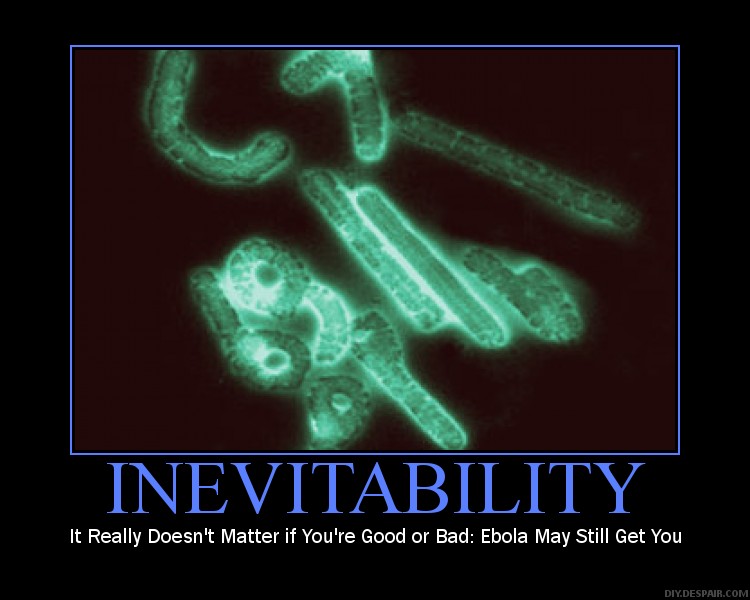
I have had much occasion to frequent the archives of Despair.com in search of demotivational posters with which to inspire my friends and colleagues…and now Alan Cann has given me the opening to display one of my better efforts.  He posted on a new Ebola virus found recently in western Uganda.

I will give you this….

ebola-poster1

Do corals get stress headaches?

20 November, 2008

The large DNA viruses – pox-, irido-, herpes-, asfar-, mimi- and baculoviruses and their ilk – have a deep and possibly complex evolutionary history, and there is considerable evidence to suggest long histories of co-speciation with host lineages.  Indeed, the herpesviruses – including those of particular interest to humans , 1 and 2 and varicella-zoster (chickenpox) and 8 (associated with Kaposi’s sarcoma) – seem to have co-speciated along with vertebrates, with human and simian cytomegaloviruses, for example.

Now there comes evidence from a metagenomic study (which should, of course, be metaviromic) that invertebrates such as corals also have a a variety of herpesviruses, and that these may well be stress-activated: Rebecca Thurber and colleagues, in the 25th November issue of PNAS, have published an analysis of the incidence and effects of hitherto-unknown herpesvirus-like agents found in finger corals in Hawaii.  Their abstract:

Metagenomic analysis indicates that stressors induce production of herpes-like viruses in the coral Porites compressa

During the last several decades corals have been in decline and at least one-third of all coral species are now threatened with extinction. Coral disease has been a major contributor to this threat, but little is known about the responsible pathogens. To date most research has focused on bacterial and fungal diseases; however, viruses may also be important for coral health. Using a combination of empirical viral metagenomics and real-time PCR, we show that Porites compressa corals contain a suite of eukaryotic viruses, many related to the Herpesviridae. This coral-associated viral consortium was found to shift in response to abiotic stressors. In particular, when exposed to reduced pH, elevated nutrients, and thermal stress, the abundance of herpes-like viral sequences rapidly increased in 2 separate experiments. Herpes-like viral sequences were rarely detected in apparently healthy corals, but were abundant in a majority of stressed samples. In addition, surveys of the Nematostella and Hydra genomic projects demonstrate that even distantly related Cnidarians contain numerous herpes-like viral genes, likely as a result of latent or endogenous viral infection. These data support the hypotheses that corals experience viral infections, which are exacerbated by stress, and that herpes-like viruses are common in Cnidarians.

Yet another demonstration – after the viromes of whole oceans – of the sheer brute power of modern sequencing technology and bioinformatics techniques, applied this time to a disease problem of oceanic invertebrates.  The authors again:

Environmental stress often results in coral bleaching, disease, and death. Increased temperature, nutrient loading, dissolved organic carbon pollution, and reductions in ambient seawater pH are of particular concern due to their effects on the coral-symbiont relationship, host homeostasis, microbial overgrowth, and skeletal deposition. To determine whether environmental perturbations shift the eukaryotic viral assemblage present in corals, these 4 parameters were manipulated, and the resulting viral consortia characterized through the generation of 6 metagenomes [!]

Basically, they purified virus-sized particles from seawater, extracted DNA, verified there was no cellular DNA present (by PCR for 16S and 18S rDNA), and amplified the viral DNA using a GenomiPhi phi29 plymerase-based genome amplification kit from GE Healthcare, and sent to 454 Life Sciences for pyrosequencing.

What came back was obviously a mountain of sequence data – which was archived at the San Diego State Center for Universal Microbial Sequencing – and then analysed for contigs or assemblable runs of sequences which looked like herpesvirus or other genomes.  The supplemental data to this paper gives a relationship dendrogram – which isn’t that informative, as it contains just one coral thymidylate kinase sequence, and that is grouped within a clade with human viruses with other vertebrate herpesviruses outside of those.

The final story, then, is that the intrepid coral viromicers (horrible, I know, but come up with a better one?) succeeded in showing that stresses do indeed activate herpes-like viruses in coral.  In their words:

The metagenomic and temporal experiments presented here demonstrate that exposure to stressors results in the production of a herpes-like virus or a consortium of herpes-like viruses in P. compressa corals.  Thermal stress, eutrophication, and decreasing seawater pH have each been shown to disrupt coral health. Increases in sea surface temperature causes coral bleaching and increased coral disease incidence (58, 59). Nutrient addition exacerbates coral diseases, and reduced pH results in loss of corallite deposition (60, 61). This study demonstrates that, in addition to symbiont loss and bacterial and fungal disease (62), temperature and nutrient elevation and pH reduction result in increased HLV production.

Another, more fundamental speculative comment:

Herpesviruses typically infect nervous tissue, and it is tempting to suggest that the herpes-like viruses in Cnidarians may have ancient origins, because Cnidarians are the first metazoans to develop rudimentary nervous systems….

So be kind to our poor fronded friends…they may be our close cousins in discomfort when stressed.

Google it

15 November, 2008

In the beginning was Google, and the world thought it was good.

In the second wave, Sergei Brin and friend created Google Earth, and the world loved it and incorporated it into their PowerPoint presentations.

In the third wave, the Googlers have created an awesome engine which monitors influenza outbreaks – lo, weeks ahead of the mighty CDC.

http://www.google.org/flutrends/

Google Flu Trends via kwout

And the world has looked on this, and said “Wow!”.  Or at least, Scientific American and other science-reporting other news media have.  And a good thing it is too: at a glance you can – in the USA anyway – see where flu trends are ominously increasing, and conclude “I don’t want to go there right now!”.

But has anyone stopped to think how they’re doing this?

It can only be by geographically locating every query they get about “flu and/or sniffles NOT cat”, can’t it?

So what do they do with queries like “biowar agent virus haemorrhagic fever”?  Pass them on to ECHELON, maybe?  I hope not – otherwise I have a file a metre thick, seeing as I have a morbid but professional interest in such things.  Oops – I wrote “ECHELON”.  Oh, bugger, I wrote “haemorrhagic”!  Ah, FTFAGOS*, I didn’t like my career anyway.

Ah, well – let us hope they only use their powers for good….

* = involves the words “game of soldiers”, “that” and “for”, among others.

Zambia fever, again

30 October, 2008

It looks as though this is petering out – in its Johannesburg incarnation, anyway.  From Health24 30th October 2008:

The virus that killed four people and infected another appears to have been contained.

The virus, identified as a member of the arenavirus family, which also includes the germ [sic] that causes Lassa fever. “There are currently no additional suspected cases,” the National Institute for Communicable Diseases said in a posting dated October 26, based on information received last week. “The outbreak appears to be contained and has been confined to individuals with very close contact in a health-care setting.” ….

The patients first experienced flu-like symptoms, but the illness worsened over the course of a week with diarrh[o]ea, a sore throat and a rash on the face and throat. Bleeding was not a prominent feature among the fatal cases, all of which lasted about nine to 12 days and ended in rapid deterioration with troubled breathing and circulatory failure, the report said.

Reuters Health, October 2008

OK, so the outbreak appears to be winding down: no new cases, old cases resolved – and no clue yet as to where the virus came from, or what the reservoir is.

Another news item from the same source:

Genetic testing indicate that the mysterious haemorrhagic disease which killed three people in the country is a new type of arenavirus, the SABC reported on Monday.

“We don’t know why it is so pathogenic. It is a new virus, not like Lassa,” Dr Ian Lipkin of Columbia University in New York Lipkin told a news conference at a meeting of infectious disease experts.

And then this, on 31st October 2008, also from Health24:

Arenavirus identified: authorities
Last updated: Thursday, October 30, 2008

“A new type of arenavirus has been identified as the cause of the deaths of four people since September, specialists at the National Institute for Communicable Diseases (NICD) in Johannesburg said on Thursday.

“There is no doubt we are dealing with a newly emerged virus,” said Janusz Paweska, head of the special pathology unit at the NICD. The virus belongs to the “old world” arenavirus, but until two weeks ago, they did not know they were dealing with a new virus.
….
Virus still to be named
The NICD worked with a network of specialists globally, and the virus was identified by themselves and a laboratory in Atlanta in the USA. At a press conference in Johannesburg, they said a name was still being chosen for the virus.

Professor Robert Swanepoel, a consultant for the specialist pathogens unit, said they would have to settle on one which did not create negative connotations for the area from which the first patients came. Traditionally viruses are named after the area that the first patients are known to originate from, for instance the Ebola and Marburg virus.

Swanepoel said they would not want to wipe out tourism in an area or create fearful associations.

– (Sapa, October 2008)

Shades of the fuss surounding the naming of the hantavirus causing a fatal pulmonary disease first described from around the Four Corners region of the US around 1993: this was first called Four Corners virus, then, when people there objected, Muerto Canyon virus with the same result, then Sin Nombre virus [=virus without a name in Spanish]….

I could suggest Bamba zonke virus [=take all], but that is frivolous – and It doesn’t matter what it is called.  It is just a really good idea to get out there and find it, and all its potential relatives, in their natural hosts. 

So that we know what the potential threat is.