EPO Revokes Monsanto Patent On Virus-Resistant Melon

26 January, 2016

The European Patent Office on 20 January revoked a patent held by Monsanto on virus-resistant melons for technical reasons, much to the glee of opponents of patents on conventional plants. [updated…

Sourced through Scoop.it from: www.ip-watch.org

Now this is NOT a victory for anti-GMO activists, but more for folk who are against the patenting of natural genomes – which this is, in fact, as "Monsanto was claiming melons with a natural resistance to plant viruses."  Which is not a good thing, in my mind, because it would mean companies could mine germ plasm collections for useful traits and then patent them.

See on Scoop.itVirology News

MCB Honours Blog Project

22 January, 2016

So: you’ve just been told that as part of the teaching requirements for your MCB Honours degree, you have to do an at-least monthly blog (=weblog).

No! you cry.  Yes, Vernon Coyne and Ed Rybicki insist, kindly but firmly.

How?! you ask.

Like this:

  1. Go here (https://wordpress.com/)WordPress_com__Create_a_free_website_or_blog
  2. Click “Create Website”Create_an_account_—_WordPress_com
  3. Choose a themeCreate_an_account_—_WordPress_com
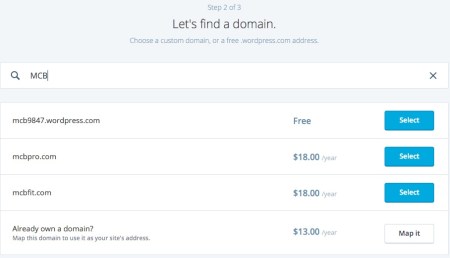
  4. Type “MCB” in the “Enter a domain” slotCreate_an_account_—_WordPress_com
  5. Select the FREE option offered:Create_an_account_—_WordPress_com
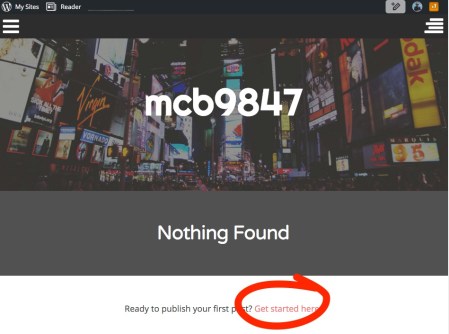
  6. And get to work!!mcb9847
  7. …with this as your composition screenNew_Post_‹_mcb9847_—_WordPress_com
  8. EXAMPLE:
    You want to blog on this paper here that you have just found.  Write as your title:
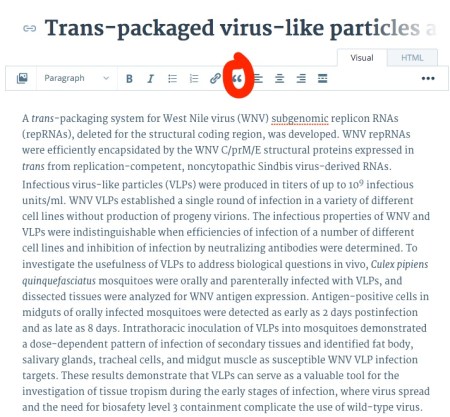
    Trans-packaged virus-like particles as vaccines” then copy and paste the abstract into the body of your post.  Position the cursor within the text, then click the indicated “Quote” control.Edit_Post_‹_mcb9847_—_WordPress_com
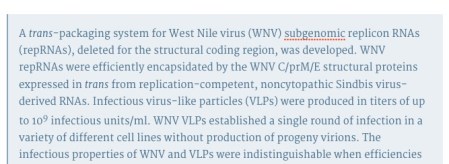
  9. This will show the text as being quoted – as in, not yours – and you can then add commentary.Edit_Post_‹_mcb9847_—_WordPress_com
    Here’s the link to the test page.
  10. This is the WHY of the exercise: we want to see that you can both select papers of interest to you and the Honours group, AND that you can write a concise and intelligent commentary to it – pointing out why it is cool / uncool / wrong / so right it’s awe-inspiring / etc.Like this example from my blogs.  To which I linked using the chain symbol at the top of the editing screen, and the URL of that specific blog post.“Online_‘recipes’_for_bird_flu_virus_add_to_bioterrorism_threat_”_No__No__they_don’t____ViroBlogy

What this exercise will hopefully teach you is (1) how to read quickly and analytically, (2) how to succinctly share your insights with others, (3) how to gain an entirely new means of scientific and social expression.

Oh, and we’re going to mark both the frequency with which you do this, and the quality of your contribution, AND the quality (and number) of the comments you make on your colleagues’ pages.

Have fun!  Please email your URL once you have created your site to both Vernon Coyne and Ed Rybicki.  May the Force be with you.

ViroBlogy: 2015 in review

30 December, 2015

The WordPress.com stats helper monkeys prepared a 2015 annual report for this blog.  I thank The Guru Cann for being one of the top referrers to this site!

Here’s an excerpt:

The concert hall at the Sydney Opera House holds 2,700 people. This blog was viewed about 37,000 times in 2015. If it were a concert at Sydney Opera House, it would take about 14 sold-out performances for that many people to see it.

Click here to see the complete report.

“Online ‘recipes’ for bird flu virus add to bioterrorism threat!” No. No, they don’t.

10 December, 2015

The means of engineering potentially deadly avian influenza is freely available on the internet.

Despite continuing global efforts to contain avian influenza, or bird flu, the means of engineering this potentially deadly H5N1 virus to render it transmissible to humans is freely available on the internet. So too are similar instructions for engineering a virus like the “Spanish flu”, which killed some 50 million people in the pandemic of 1918-19.

The digital floodgates opened in 2011 when a peak US regulatory watchdog came down in favour of scientists seeking to publishing their work engineering the H5N1 virus. The decision to uphold such “scientific freedom” was and remains, highly contentious among the global scientific community. Its implications, however, are readily available as online “recipes” for potentially dangerous viruses, which add a new risk to the already considerable challenges of maintaining global biosecurity in the 21st century. For all the recent advances in biomedical science, drugs, vaccines and technology, this is a challenge we remain ill-equipped to meet.

Read more: http://www.theage.com.au/comment/online-recipes-for-contagious-diseases-means-australias-bioterrorism-threat-is-real-20151208-gli97v.html#ixzz3tvWn63AE ;
Follow us: @theage on Twitter | theageAustralia on Facebook

Sourced through Scoop.it from: www.theage.com.au


OFFS: seriously!  Again?!  Someone else has just discovered that entire virus genomes are freely available via PubMed, along with papers on gain-of-function experiments, and immediately leaps to the conclusion that this means “…the means of engineering this potentially deadly H5N1 virus to render it transmissible to humans is freely available on the internet”.

I’m sorry, this is being simple-minded to the point of parody.  I have written elsewhere – here in ViroBlogy, and in Nature Biotech’s Bioentrepreneur blog section – on how it is MOST unlikely that bearded fellows in caves in Afghanistan or remote farms in Montana are going to whip up weaponised batches of H5N1 flu or Ebola.

Yes, the papers are available; yes, the sequences necessary to make a potentially (and I say potentially advisedly) deadly virus are available online; yes, one can bypass the blocks on getting resynthesised genes in developing countries (hint: China).

But could anyone outside of a sophisticated lab environment use these to make anything nasty?

No.

Seriously, no.

Just think about what you would need to make weaponised flu, for example.  There are two ways to go here, these being the totally synthetic route (“mail order” DNA – HATE that term!), with some serious molecular biology and cell culture at the end of it, and the “natural” route – which would involve getting a natural and nasty isolate of H5N1 / H7N9 / H9N2, and being able to culture it and engineer it as well.

Both routes require a minimum of a serious 4-yr-degree-level training in microbiology / mol biol, as well as laboratory resources that would include incubators, biohazard cabinets, and disposables and reagents that are not on your normal terrorist’s priority purchase list.

In fact, the kinds of resources you’d find at a University or Institute Infectious Disease unit – or state-sponsored biowarfare lab.

Seriously, now: in order to use the information that is “freely available”, you’d have to do what amounts to an entire postgrad degree’s worth of work just to set up the kinds of reverse genetics necessary to WORK with recombinant flu, presuming you already had an isolate, and even more than that if you were to start with synthesised DNA and try to recreate infectious virus.

Again, this is the kind of work they do in biowarfare / biodefence labs (funny how they’re pretty much the same thing, isn’t it?) – because it’s finicky, expensive, laborious – and potentially dangerous to the researcher.

And it’s interesting that the only rumoured escapes of biowarfare agents have been of flu in 1977 in the old Soviet Union, and of anthrax in Sverdlovsk in the USSR in 1979. And in the US in 2001, and again in 2014.  ALL of them from official facilities, I will discreetly point out.

Oh, there have been rumours that Saddam’s Iraq weaponised camelpox; that the USSR/Russia cloned Ebola into a poxvirus; that Al-Qaeda tested anthrax – but the first two took state resources, and if the third happened at all, it’s nothing that the UK and USA and friends hadn’t already done in the 1940s.

IT IS NOT THAT EASY TO MAKE RECOMBINANT VIRUSES.

Seriously.

See on Scoop.itVirology News

Testing out a textbook on Virology

5 December, 2015

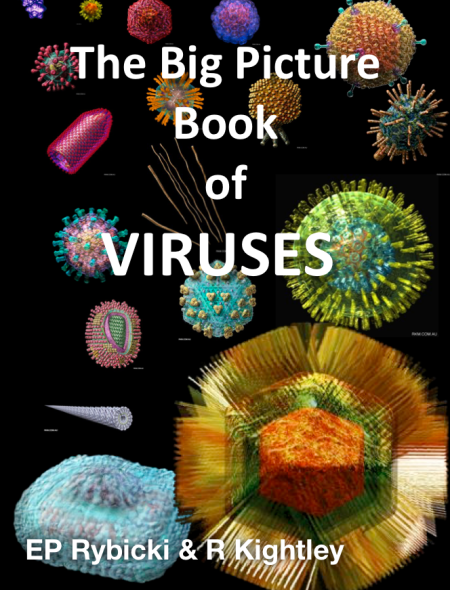
Like my recent books on History of Viruses and Influenza, I’m constructing an ebook Introduction to Virology textbook – and I’d like people’s opinions.

It’s going to look something like this:

Virus_Picture_Book_copy_2_iba


It will be based on my web pages that were so cruelly destroyed, but will be PROFUSELY illustrated, using all of the bells and whistles built into the iBooks Author app, with liberal use of Russell Kightley’s very excellent virus picture library.

And I will sell it for US$20 or less.

Tell me what you think of the taster – and there will be more.

“Plant cell pack” workshop

23 November, 2015

As molecular farmers, we were much impressed last year by a technology developed by the folk at the Fraunhofer IME in Aachen: this is “METHOD FOR THE GENERATION AND CULTIVATION OF A PLANT CELL PACK“, with Thomas Rademacher as sole inventor on the patent application.  Basically, this involves

  • making a “cookie” or cell pack with cultured plant cells, by suction of a suspension onto a membrane
  • drizzling recombinant Agrobacterium tumefaciens onto the cookie, then sucking away excess fluid
  • incubating the cell cookie in a humid environment for a few days, until the desired level of protein expression has been reached

There are all sorts of things one could dream up for the application of this technology, given that one can make cookies of all sorts of depths and widths, in everything from spin columns to multiwell plates – and high-throughput screening of expression constructs comes to mind immediately.

Now fortunately, Inga Hitzeroth of our Biopharming Research Unit here at UCT (the BRU) has a National Research Foundation-administered bilateral grant with the folk at the Fraunhofer IME, which has meant we have money for joint workshops and the like – so we are having a hands-on Workshop on “Plant Cell Packs for Transient Expression: Innovating the Field of Molecular Biopharming” affiliated to our “Virology Africa 2015” conference next week.  We plan to develop an illustrated manual along with a full suite of technical tips after the Workshop.

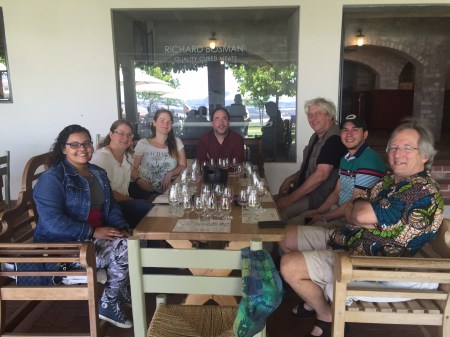
And as part of which, one has of course to feed and entertain the participants – hence our expedition to The Spice Route wine farm complex yesterday.  Hard work, this science…B-)

The BRU-IME Cookie Workshop team: from left; Romana Yanez (BRU), Tanja Holland, Susanne Bethke, Markus Sack, Juergen Drossard, Gueven Edgu all IME), Ed Rybicki (BRU)

The BRU-IME Cookie Workshop team: from left; Romana Yanez (BRU), Tanja Holland, Susanne Bethke, Markus Sack, Juergen Drossard, Gueven Edgu (all IME), Ed Rybicki (BRU)


Toward Eliminating Poliovirus In the Lab

18 November, 2015

As the world inches closer to polio eradication, laboratories studying the virus will have to bolster biosafety standards. Eventually, most will need to stop working with the pathogen entirely.

Sourced through Scoop.it from: www.the-scientist.com

EVENTUALLY.  I note smallpox is still in freezers; so too is rinderpest – we have vaccines against both of them…oh, wait – we have vaccines against polio too!

Nice thing about rinderpest and polio – not so sure about smallpox – is that they COULD be recreated as needed from synthesised cDNA.

However, we really need to do that ONLY after there’s been significant sequencing of all known variants, just in case we missed something.

See on Scoop.itVirology News

Rounding Up The Last Of A Deadly Cattle Virus

16 November, 2015

Rinderpest, or cattle plague, was declared eradicated in 2011. But many research institutes still have samples of the rinderpest virus in storage. Disease experts want those samples destroyed.

Sourced through Scoop.it from: www.npr.org

I have written a lot about rinderpest, and covered it in my book on virus history, as well as covering the debate on whether or not smallpox virus stocks should be eliminated.

And if they haven’t yet, despite years of debate, why should rinderpest virus stocks?

Consider: we have an effective vaccine(s); we still have the related peste des petits ruminants virus knocking around, with vaccines to it – so why shouldn’t stocks of the live virus strains be preserved?

How many viruses have in fact made it out of fridges, and back into the world?  Well, there was that purported 1977 H1N1 release in Russia/Mongolia…but can anyone think of another well-documented one?  Just one?

The fact is that it is FAR easier to deliberately spread endemic viruses around – like foot-and-mouth disease virus – than it would be to reactivate and spread something from a lab freezer.

Rather let us conduct an inventory of who has what, consolidate it like they did with smallpox, and forget about the unknowable, which is obscure freezers in far-flung rural centres where no-one remembers what is there – and where powercuts have probably thawed the samples more than once.

See on Scoop.itVirology News

Engineered bat virus stirs debate over risky research 

13 November, 2015

An experiment that created a hybrid version of a bat coronavirus — one related to the virus that causes SARS (severe acute respiratory syndrome) — has triggered renewed debate over whether engineering lab variants of viruses with possible pandemic potential is worth the risks.

Sourced through Scoop.it from: www.nature.com

You know something?  I reiterate my stance on engineered flu viruses.  Which is that it is NOT known that these coronaviruses will have pandemic potential; that they ARE being worked with under stringent containment, and no other similar NATURAL virus has escaped in recent memory; they DO provide valuable information on what is needed for such viruses to infect humans.

Which is all good, right?!

See on Scoop.itVirology News

“Set your phages to stun”

3 November, 2015

Engineered phage viruses show promise as targeted assassins – genetic manipulation might make it easier for them to gain regulatory approval

Many phage infect and replicate inside bacteria, killing them. This makes phages a possible alternative to antibiotics as resistance to these drugs grows. What’s more, most phages infect only one species or even a few strains within a species; antibiotics aren’t so selective.

But that specificity is a problem: it might not be clear which pathogenic bacterial strain is present in an infection, so a cocktail of several phages might be needed to guarantee effective treatment. Each may have to pass regulatory approval separately.

Timothy Lu and his colleagues at the Massachusetts Institute of Technology aim to get round this by making a single phage modifiable with bacteria-attacking machinery from other phages. In theory, that could reduce regulatory hold-ups.

Sourced through Scoop.it from: www.newscientist.com

Couldn’t resist that byline – it’s part of the article – so that I could get some mileage out of something mildly upsetting.

It’s just that someone else has yet AGAIN had my good idea before I did.

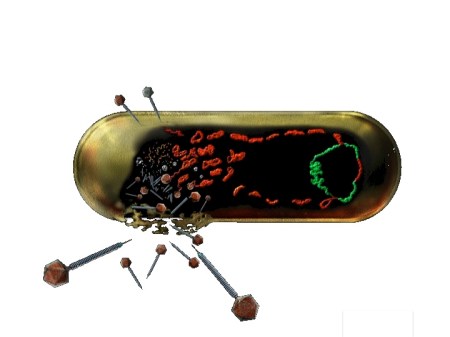
There I was, reading about and blogging on bacteria co-opting phage tail assemblies as weapons against other phages, and dreaming up ways of using them creatively – and someone else had gone and done it.

That is, used an engineered phage genome and presumably head structure with a variety of tail assemblies (which determine the binding specificity) in order to target as many bacterial types as possible.

Very clever!  It’s what may make phage therapy into a science instead of an art.

See on Scoop.itVirology News