Archive for the ‘Viruses’ Category

H5N1: coming soon to a ferret near you?

20 December, 2011

From Nature News today:

“It is a nightmare scenario: a human pandemic caused by the accidental release of a man-made form of the lethal avian influenza virus H5N1.

Yet the risk is all too real. Since September, news has been circulating about two groups of scientists who have reportedly created mutant H5N1 variants that can be transmitted between ferrets merely breathing the same air, generally an indicator that the virus could also spread easily among humans.”

And yet…and yet…we won’t know, will we? Until and unless a human catches the ferret-bred virus, OR one develops all by itself out here in the world, that has the same mutations – which we won’t know about, unless we are told what those are.

Wednesday 21st December
And updating this story: the BBC has an interview with Anthony Fauci – formerly head of the US NIH – on what will be happening with the information.  The answer – it will be “redacted”, so the conclusions are published, but not the methods the groups used to produce their viruses.  Apparently the redacted details will be shared with national health authorities and “reputable” universities and institutes.

I would be very interested to see who makes those decisions, and who is considered ‘reputable” – our group, at the best university in Africa and 103rd best in the world by some rankings, are not even reputable enough to be able to order bluetongue virus genes from DNA synthesis companies, for example.

Watch this space….

Help! We’re all going to die! Or – are we??

5 December, 2011

My son has just alerted me to a news item from the Russia Today site, which reports the following dry little item:

“A virus with the potential to kill up to half the world’s population has been made in a lab. Now academics and bioterrorism experts are arguing over whether to publish the recipe, and whether the research should have been done in the first place.

The virus is an H5N1 bird flu strain which was genetically altered to become much more contagious. It was created by Ron Fouchier of the Erasmus Medical Centre in Rotterdam, the Netherlands, who first presented his work to the public at an influenza conference in Malta in September.”

Right – nothing to get upset about, then?  Or….

Some background: what researchers did was to passage – that is, repeatedly infect new animals with virus from another animal – H5N1 influenza virus from birds, in ferrets.

Why ferrets?  Well, it was discovered by accident some 70+ years ago, that human flu viruses are very infectious in ferrets, and the reaction of ferrets to some extent predicts what will happen in humans – although they tend to die rather often from lab infections.

The result of the passaging was that the H5N1 became aerosol-transmissible – in other words, via droplets produced by sneezing – which was a new property.  From the article:

“After 10 generations, the virus had mutated to become airborne, which means ferrets became ill from merely being near other diseased animals.

A genetic study showed that the new, dangerous strain had only five mutations compared to the original one, and all of them were earlier seen in the natural environment – just not all at once. Fouchier’s strain is as contagious as the human seasonal flu, which kills tens of thousands of people each year, but is likely to cause many more fatalities if released.

“I can’t think of another pathogenic organism that is as scary as this one,”
Paul Keim, a microbial geneticist who has worked on anthrax for many years, told Science Insider. “I don’t think anthrax is scary at all compared to this.””

Hence the rather alarming headline on RT – which was

“Man-made super flu could kill half humanity”

Nothing scare-mongering there, then!

Let us dissect this so called apocalypse bug, though.

“Fouchier’s strain is as contagious as the human seasonal flu, which kills tens of thousands of people each year, but is likely to cause many more fatalities if released.”

In ferrets.  No-one has shown that it causes disease in humans at all.  And there’s another problem: the article reports that:

“…the US National Science Advisory Board for Biosecurity (NSABB)…[has] a very difficult decision to make. Fouchier wants his study to be published. So does virologist Yoshihiro Kawaoka, who led similar research in collaboration with the University of Wisconsin, Madison, and the University of Tokyo, and reached comparable results. And it is up to NSABB to give them the green light.”

Pardon me for being confused, but…the NSABB is a US body, right?  And Ron Fouchier and Yoshihiro Kawaoka are Dutch and Japanese, respectively?

And pardon me again, but isn’t it a good idea to know which mutations would turn H5N1 into a ravening, destructive supervirus?  So we can look for it??  I would also think the cat is at least half out of the bag, because didn’t Ron Fouchier report the thing at a large conference already?

Letting paranoid folk in one country decide what is in the best interests of world science is NOT a good idea, in my opinion – but as has already been made abundantly clear, the developed world does not much care about our opinion.

So it goes.

Goodbye, Mimi – we got Mega!

11 October, 2011

Through the unlikely medium of a local online version of a local daily paper, comes the following:

“A virus found in the sea off Chile is the biggest in the world, harbouring more than 1,000 genes, surprised scientists reported on Monday. The genome of Megavirus chilensis is 6.5 percent bigger than the DNA code of the previous virus record-holder, Mimivirus, isolated in 2003. “

The relevant article is from the group led by Jean-Michel Claverie, of the Institut de Microbiologie de la Méditerranée, in Marseilles, and appears in the October 10th online issue of PNAS.

From the abstract:

An electron micrograph of Megavirus: thanks to Jean-Michel Claverie

Here, we present Megavirus chilensis, a giant virus isolated off the coast of Chile, but capable of replicating in fresh water acanthamoeba. Its 1,259,197-bp genome is the largest viral genome fully sequenced so far. It encodes 1,120 putative proteins, of which 258 (23%) have no Mimivirus homologs. The 594 Megavirus/Mimivirus orthologs share an average of 50% of identical residues. Despite this divergence, Megavirus retained all of the

genomic features characteristic of Mimivirus, including its cellular-like genes. Moreover, Megavirus exhibits three additional aminoacyl-tRNA synthetase genes (IleRS, TrpRS, and AsnRS) adding strong support to the previous suggestion that the Mimivirus/Megavirus lineage evolved from an ancestral cellular genome by reductive evolution. The main differences in gene content between Mimivirus and Megavirus genomes are due to (i) lineages specific gains or losses of genes, (ii) lineage specific gene family expansion or deletion, and (iii) the insertion/migration of mobile elements (intron, intein).

I could argue with the choice of name as it does not conform to ICTV rules, as far as I can see – but then, neither did Mimivirus.  The important fact about the discovery – apart from the fact that it is a discovery, and therefore not amenable to hypothesising, which I rather like – is that it shows how very diverse these viruses are, and how long they must have been evolving.  For example, despite their morphological similarity, Mimi- and Megavirus genomes do not share nearly 25% of their ORFs – and sequence identities of  predicted homologous proteins are as low as 50%.

I have blogged earlier on Mimivirus structure and evolution – see “Mimivirus unveiled” – and it is nice to see that an important speculation from those earlier papers appears to be borne out here.  Namely, and quite important when considering both viral and cellular origins, is further evidence that very large viral genomes do not seem to have evolved by extensive horizontal gene transfer from cells, and in fact, the reverse may be true.  The authors state in their conclusion, in discussion of opposing views of the origin of these viruses:

“The potential origin of giant mimivirus-like genomes has been hotly debated, basically opposing two views. One is depicting Mimivirus as an extremely efficient gene “pickpocket,” explain- ing its large genome as the result of considerable HGTs from its host, bacteria, or other viruses. This scenario has been criticized in detail elsewhere [see paper for refs]. The opposite view claims that the level of HGT remained marginal (10%) and that most of the Mimivirus genes originated from an even more complex viral ancestor, itself eventually derived from an ancestral cellular genome.”

I have fond memories of an essay I won a school prize with, in about 1970, entitled “The Sea, and All that Therein Is”.  I should update it to “The Sea, and All the Viruses that Therein Are”…B-)

Virus Origins II

28 September, 2011

I have updated the blog on virus origins quite considerably – new pictures, more detail, more speculation!

Pathways on information flow for RNA viruses

Deliberate extinction: now for Number 3

3 August, 2011

I have written previously about the Rinderpest virus eradication campaign – and now it appears as though the final nail has in fact been hammered into the coffin’s lid while I wasn’t looking.  I thank my son Steven for noticing!

It was officially announced on 26th June, in Rome – the headquarters of the Food and Agriculture Organisation (FAO) – that “…for only the second time in history, a disease has been wiped off the face of the earth”.

From a New York Times article:

The long but little-known campaign to conquer rinderpest is a tribute to the skill and bravery of “big animal” veterinarians, who fought the disease in remote and sometimes war-torn areas — across arid stretches of Africa bigger than Europe, in the Arabian desert and on the Mongolian steppes.


The victory is also proof that the conquest of smallpox was not just an unrepeatable fluke, a golden medical moment that will never be seen again. Since it was declared eradicated in 1980, several other diseases — like polio, Guinea worm, river blindness, elephantiasis, measles and iodine deficiency — have frustrated intensive, costly efforts to do the same to them. The eradication of rinderpest shows what can be done when field commanders combine scientific advances and new tactics.

… The modern eradication campaign began in 1945, when the Food and Agriculture Organization was founded. But it became feasible only as vaccines improved. An 1893 version made from the bile of convalescent animals was replaced by vaccines grown in goats and rabbits and finally in laboratory cell lines; a heat-stable version was developed in the 1980s.

The interesting thing about Rinderpest virus is that it is probably a consequence of human’s development of agriculture and especially the keeping of livestock, that got it into animals in the first place: it is closely enough related to measles virus that it probably only diverged from it some time around CE 1000.

So it’s not just us that get animal viruses – our pets and our livestock can get them from us, too.

But it’s now time to concentrate on the next two: polioviruses and measles.  Vaccinate, brothers and sisters, vaccinate!!

Worm specificity: transmission of a plant virus

20 May, 2011

I have taught – when I did teach that is, two years ago now – for years that most plant viruses are transmitted by one or other form of vector, and that this transmission is very often relatively specific, even though it usually does not involve multiplication of the virus in the vector.  Unfortunately, this is an under-studied area (like most of plant virology), and even more so now in this era of folding plant virology into “biotic stress” and other concocted disciplinary areas.

However: amid the gloom is a bright light (or two – see here as well for some local SA news), and it comes from a PLoS Pathogens paper entitled “Structural Insights into Viral Determinants of Nematode Mediated Grapevine fanleaf virus Transmission” [need to leave out the italics there, guys; only a species name as an abstract concept gets italicised, and this is an entity you’re talking about!].

Schellenberger P, Sauter C, Lorber B, Bron P, Trapani S, et al. (2011). PLoS Pathog 7(5): e1002034. doi:10.1371/journal.ppat.1002034

Many animal and plant viruses rely on vectors for their transmission from host to host. Grapevine fanleaf virus (GFLV), a picorna-like virus from plants, is transmitted specifically by the ectoparasitic nematode Xiphinema index. The icosahedral capsid of GFLV, which consists of 60 identical coat protein subunits (CP), carries the determinants of this specificity. Here, we provide novel insight into GFLV transmission by nematodes through a comparative structural and functional analysis of two GFLV variants. We isolated a mutant GFLV strain (GFLV-TD) poorly transmissible by nematodes, and showed that the transmission defect is due to a glycine to aspartate mutation at position 297 (Gly297Asp) in the CP. We next determined the crystal structures of the wild-type GFLV strain F13 at 3.0 Å and of GFLV-TD at 2.7 Å resolution. The Gly297Asp mutation mapped to an exposed loop at the outer surface of the capsid and did not affect the conformation of the assembled capsid, nor of individual CP molecules. The loop is part of a positively charged pocket that includes a previously identified determinant of transmission. We propose that this pocket is a ligand-binding site with essential function in GFLV transmission by X. index. Our data suggest that perturbation of the electrostatic landscape of this pocket affects the interaction of the virion with specific receptors of the nematode’s feeding apparatus, and thereby severely diminishes its transmission efficiency. These data provide a first structural insight into the interactions between a plant virus and a nematode vector.

And yes, they do – and illuminate very nicely the concept of structural complementarity as a means of ensuring specific transmission by any vector of a plant virus.  That this can happen in the absence of any replication of the virus in the vector, as is the case here and in fact for most plant virus / vector associations, indicates that an evolutionary process that probably started with fortuitous low-efficiency transmission by pure random chance of an ancestor GFLV  by the nematode, resulted in selection of increasingly more efficiently transmitted viral variants.

The same sort of thing has undoubtedly happened for specific aphid transmission of viruses like Cucumber mosaic virus and other cucumoviruses [note to virologists: correct usage!] and Potato virus Y and other potyviruses, and my favourite geminiviruses.

I look forward to an explosion of research in this area, not the least because it may lead to simple agents that specifically block the transmission.  One can hope…B-)

…and again, XMRV. Or absence thereof.

14 May, 2011

So it is, again, we are driven to report evidence-based absence of evidence for a very contentious virus: the murine retrovirus known as XMRV.  From a preprint online publication in Journal of Virology:

Absence of XMRV and other MLV-related viruses in patients with Chronic Fatigue Syndrome
J. Virol., published ahead of print on 4 May 2011 doi: doi:10.1128/JVI.00693-11

Clifford H. Shin, Lucinda Bateman, Robert Schlaberg, Ashley M. Bunker, Christopher J. Leonard, Ronald W. Hughen, Alan R. Light, Kathleen C. Light, and Ila R. Singh

“Chronic fatigue syndrome (CFS) is a multi-system disorder characterized by prolonged and severe fatigue that is not relieved by rest. Attempts to treat CFS have been largely ineffective primarily because the etiology of the disorder is unknown. Recently CFS has been associated with xenotropic murine leukemia virus-related virus (XMRV) as well as other murine leukemia virus (MLV)-related viruses, though not all studies have found these associations. We collected blood samples from 100 CFS patients and 200 self-reported healthy volunteers from the same geographical area. We analyzed these in a blinded manner using molecular, serological and viral replication assays. We also analyzed samples from patients in the original study that reported XMRV in CFS. We did not find XMRV or related MLVs, either as viral sequences or infectious virus, nor did we find antibodies to these viruses in any of the patient samples, including those from the original study. We show that at least some of the discrepancy with previous studies is due to the presence of trace amounts of mouse DNA in the Taq polymerase enzymes used in these previous studies. Our findings do not support an association between CFS and MLV- related viruses including XMRV and off-label use of antiretrovirals for the treatment of CFS does not seem justified at present.”

I would have said “enough said, then!”  Except that this will not be the end.  Oh, no….

Should remaining stockpiles of smallpox virus be destroyed?

19 April, 2011

Our Department has a journal club every Friday, when research folk (staff and students) get together to hear a postgrad student present an interesting new paper.  Last Friday Alta Hattingh from my lab gave a thought-provoking and insightful presentation on whether or not smallpox virus should be destroyed – so I asked her to turn it into a blog post.

Should remaining stockpiles of smallpox virus (Variola) be destroyed? 

Raymond S. Weinstein

Emerging Infectious Diseases (2011), Vol 17(4): 681 – 683
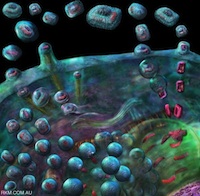
Smallpox virus replication cycle.  Russell Kightley Media

Smallpox virus replication cycle. Russell Kightley Media

Smallpox is believed to have emerged in the Middle East approximately 6000 to 10 000 years ago and is one of the greatest killers in all of human history, causing the death of up to 500 million people in the 20th century alone.  Smallpox is the first virus to ever be studied in detail and it is also the first virus for which a vaccine was developed.  Smallpox was beaten by the Jenner vaccine (first proposed in 1796) and the disease was declared eradicated in 1980 in one of the greatest public health achievements in human history.

The last officially acknowledged stocks of variola are held by the United States at the Centres for Disease Control and Prevention (consisting of 450 isolates) and in Russia at the State Research Centre of Virology and Biotechnology (various sources place the number of specimens at ~150 samples, consisting of 120 strains).  This includes strains that were collected during the Cold War as potential for biological weapons due to their increased virulence. Then, there is also the added possibility that stolen smallpox cultures are in the hands of terrorists organizations.

In 2011 the World Health Organisation (WHO) plans to announce its recommendation for the destruction of all known remaining stockpiles of smallpox virus.  They have wanted to destroy the virus ever since 1980 when the Secretary of Health and Human Services, Louis Sullivan, promised destruction of US stockpiles within 3 years. This never happened in the US or Russia and no official recommendation for destruction have been recommended by the World Health Assembly.  In 2007 the final deadline for a decision was postponed until 2011 as no consensus could be reached among the executive board of the WHO.

The only real benefit that could be gained from destroying all known remaining stockpiles of smallpox virus in the world would be the prevention of causing a lethal epidemic due to theft or accidental release of the virus.  However, according to Weinstein destruction would only provide an illusion of safety and that the drawbacks of eliminating variola from existence are many.

In this paper Weinstein mentions the possible reasons behind the hesitance to destroy smallpox.  The prolonged existence of smallpox along with the important clinical implications of its high infectivity and mortality rates suggests that the human immune system evolved under the disease’s evolutionary influence.  In the last decade research has been done which suggests that variola (and vaccinia) have the ability to alter the host immune response by targeting various components of the immune system.  We are only beginning to understand the complex pathophysiology and virulence mechanisms of the smallpox virus.  An example of the importance of smallpox in human evolution is the CC-chemokine receptor null mutation (CCR5Δ32), which first appeared in Europe ~3500 years ago one person and today it can be found in ~10% of all those from northern European decent.  The mutation prevents expression of the CCR5 receptor on the surface of many immune cells and provides resistance to smallpox.  This same mutation also confers nearly complete immunity to HIV. In a recent study done by Weinstein and co-workers (2010) it was postulated that exposure to vaccinia and variola may have previously inhibited successful spread of HIV, suggesting that we swopped out one major disease for another. By eliminating the variola stockpiles from existence on-going research in this direction might be hampered and the possibility future studies employing intact virus will be rendered impossible.

Finally, we are capable of creating a highly virulent smallpox-like virus from scratch or a closely related poxvirus through genetic manipulation.  This renders moot any argument for the destruction of remaining stockpiles of smallpox in the belief that it would be for the benefit of protecting mankind.

In an editorial of the Vaccine journal, the editors make a compelling case in favour for the destruction of remaining stockpiles of smallpox virus.    To follow is their take on the situation:

Why not destroy the remaining smallpox virus stocks?

Editorial (by J. Michael Lane and Gregory A. Poland)

Vaccine (2011), Vol 29:  2823 – 2824

The Advisory Committee on Variola Virus Research (created in 1998 as part of the WHO) concluded that live variola is no longer necessary except to continue attempts to create an animal model which might mimic human smallpox and assist in the licensure of new generation vaccines and antivirals.

The editors feel that scientific recommendation for keeping smallpox stocks need to be scrutinized and that a number of political and ethical issues need to be addressed.  Below are comments by editors on these issues:

Scientific issues:

The smallpox virus is no longer needed to elucidate its genome, 49 strains have been sequenced and published, the editors feel that there is no need to sequence additional strains.  The smallpox virus can be destroyed as it is possible to reconstruct it from published sequences or to insert the genes of interest into readily available strains of vaccinia or monkeypox.  Refinements regarding diagnostics can be made by using other orthopoxviruses or parts of the smallpox strains already sequenced; vaccines have been produced that are far less reactogenic than the first and second generation of vaccinia vaccines and they are very effective against other orthopoxviruses.  Finally, the development of an animal model is difficult to perfect as variola is host-specific, thus there are no guarantees that a model will be found that mimics the pathophysiology of smallpox in humans.

Political/ethical issues:

The US is a supporter of the WHO and the UN and failure to comply with the request of the World Health Assembly jeopardizes the US’s potential to work with the UN to further their foreign policy and population health goals.  Biological weapons have been banned from the US military arsenal and there is no way they would use a biological weapons such as smallpox whether it be in offense or defence.  The editors reckon that the risk of a biological warfare attack using smallpox is highly unlikely as terrorists who have the knowledge and sophistication to grow and prepare smallpox for dispersal would realize that they could cause harm to their own countries.  Apart from that, Western nations have the facilities to isolate and vaccinate against smallpox in a timely manner.

According to the editors there is no ethical way to justify maintaining an eradicated virus.  Even though the possibility of accidental release is very small, it is an unacceptable risk.  Maintenance of the smallpox virus stocks is expensive and time consuming, it also burdens the CDC without scientific merit and their resources are better used to protect the public from infectious diseases.

In conclusion the editors maintain that the remaining smallpox stocks should be destroyed and the world should make possession of the virus an “international crime against humanity”.

We are presented with two very different views with regards to whether or not smallpox virus stocks should be destroyed forever.  The WHO meets again this year to decide the final fate of smallpox. Will the board reach consensus or will the smallpox virus yet again receive a stay of execution? 

Note added 1 Oct 2015

Interestingly, I found the following text written by me in my archive of articles – published as a Letter in the now sadly defunct HMS Beagle, in 1999:

HMS Beagle

( Updated May 28, 1999 · Issue 55) http://news.bmn.com/hmsbeagle/55/viewpts/letters

Use logic, not fear

The destruction of all (known) stocks of smallpox virus (Reprieve for a Killer: Saving Smallpox by Joel Shurkin) seems to be a very emotive issue. Perhaps, if people looked at it less in terms of a threat, and more in terms of a resource, most of the problem would go away. For example, although the original article made mention of monkey pox, and how it was almost as dangerous as smallpox, and appeared to be adapting to human-to-human spread, nothing has been said about investigating why smallpox was so much more effective at spreading within human populations than monkey pox is. It is all very well having the smallpox genome sequence; however, without the actual DNA, it is difficult to recreate genome fragments of the size that may be needed to make recombinant viruses to investigate the phenomenon of host/transmission adaptation. Additionally, without the actual virus, it will be impossible to compare the effects of a doctored vaccine strain with the real thing. Destroying known stocks of the virus will not affect the stocks that are most likely to be used for bioterrorism. It will, however, handicap research into ways of combating the virus/understanding how it worked in the first place.

What are you looking for?

18 April, 2011

It is quite educational sometimes, to look and see what it is people are looking for, when they end up on ViroBlogy.  Here are the queries over the course of the last month:

Search Views
ebola 577
ebola virus 64
rolling circle 44
how did viruses evolve 29
mimivirus 21
despair posters 19
flaviviridae 17
lassa fever 14
bacterial dna replication 11
ebola virus patients 11
viroblogy 9
where did viruses evolve from 9
ebola pictures 9
rift valley fever 9
what did viruses evolve from 9
geminivirus 8
west nile virus structure 8
ebola patient 8
where h1n1 came from 7
ebola virus pictures 7

I count 6 mentions of Ebola, 4 of virus evolution generally…and a gratifyingly high number of queries on rolling circle replication, given our lab’s interest in it.  Of course, I have had long had an obsession with Ebola and similar nasties, and have been deeply interested in the evolution of viruses ever since I started studying them, so it is good to see others share my interests!

So in the spirit of giving people what they want, look for blog posts with titles like “The evolution of viruses using rolling circle replication: its complete non-relevance to Ebola and H1N1 influenza viruses”.  But seriously – I will be putting up some more posts around the most popular subject areas, if only to help make sure that The Truth Gets Out There.

Ed Rybicki

InCROIable…Dorian McIlroy reports

28 February, 2011

The penalty for winning a competition here on ViroBlogy is writing an article for ViroBlogy – 2nd prize would, of course be writing TWO articles.  Mind you, as two-time winner, regular commenter Dorian McIlroy gets to do just that.  He has volunteered to report daily from CROI 2011, the 18th Conference on Retroviruses and Opportunistic Infections in Boston, that’s on right now.  Thanks Dr D!

“So here I am in the snow in Boston at the 18th CROI. The opening talk is from Bryan Cullen (Duke, USA) on viruses and micro RNA, known as miRNA. As readers may know, there are three main functions types of RNA inside cells. Messenger RNA (mRNA) is the intermediate between a sequence of DNA and the protein that the DNA sequence encodes. It carries the message, so to speak, telling the protein synthesis machinery what protein to make.  The two other main types of RNA (tRNA and rRNA) are involved in the translation of the mRNA message into protein.

However, in addition to these common or garden types of RNA, cells also produce very small RNA molecules, that do not code for proteins, and are not directly involved in protein synthesis. So what are they for? Well, we will have to wait till Prof. Cullen tells us. Right now, John Coffin (Tufts, USA) is giving the opening talk. There are about 4000 delegates, all lined up in a big auditorium. As you can imagine, the speaker is a little tiny blob at a lectern way, way up at the front. Fortunately, the
speaker’s head and torso is projected on a big screen at the same time.  The films of all the talks are available on the CROI website (www.retroconference.org), which kind of defeats the purpose of  my writing these blog posts I guess…..[NO!  Ed]

But  on with Bryan Cullen. miRNAs are expressed in all multicellular organisms. There are over 1000 of these miRNAs in humans, and their role is to regulate mRNAs – so in fact they control gene expression. In plants and insects, some miRNAs have anti-viral functions, but this is not the case in mammals. In fact, at least one human virus (HCV) uses a host cell miRNA for its own replication.

In addition, some DNA viruses – mostly herpesviruses – also code for miRNAs. One of these is Epstein-Barr Virus (EBV) which is associated with several cancers. When EBV infects B-lymphocytes from the blood, these cells grow in an uncontrolled way (that is, they become pre-cancerous).   It turns out that only one of the EBV miRNAs (BHRF1-2 if you really want
to know) is involved in turning normal B-cells into pre-cancerous cells.  Dr Cullen then goes on to explain an interesting technique called “PAR-CLIP” that allows you to identify the target genes of a particular miRNA, and gives us a list of the cellular genes targeted by  BHRF1-2.

Take-home message – some oncogenic DNA viruses use miRNAs to manipulate host cell biology, and this is involved in their ability to induce cancer.

This is followed by a harrowing story from Fred Hersch, of his own brush with death due to HIV/AIDS. Fortunately, he survived, due to the extraordinary efforts of the ICU at St Vincent’s hospital in New York, and is now playing piano for us all.

After the musical interlude, Anthony Harries (now at the International Union against TB and kung diseases in Paris) gives an excellent talk (hey – not that the first talk wasn’t excellent too) describing his time as head of HIV/AIDS health care in Malawi. He was there when HIV seroprevalence rose from less than 1% to about 15% in the adult population. For several years in the 1990s and the beginning of the century, no treatment was available to stop people from dying. During that
period, 90% of patients diagnosed with stage 4 AIDS were dead one year later. That began to change, he says, with the world AIDS conference in Durban in 2000, where international efforts to make antiretroviral therapy (ART) available in sub-Saharan Africa began to take shape. He then goes on to explain how ART is implemented in Malawi – and shows how coffin sales in one district have plummeted over the last few years. This is the real clinical success of making ART available – the decade-long wave of deaths has abated.

That was the good news. Now for the bad news. Transmission rates are still high – with an estimated 70 000 new HIV infections in Malawi each year. So the HIV problem has certainly not gone away, it has just been contained.  Secondly, current guidelines for starting ART depend on a HIV+ individual’s CD4+ T-cell count, and if you don’t have the means to determine the CD4 count (of the 400 ART centres in Malawi, only about 50 have the machines to measure CD4 T-cell counts), then you can’t start treating all the people who need it. He ends by making a convincing case for, at the very least, giving ART to all pregnant seropositive women in Malawi (and I guess, in the whole of Africa), with a clear recommendation that they continue on medication indefinitely. The objectives of this approach would be to keep mothers alive and healthy while their children
are growing up, and to ensure that the next generation of children are born HIV-free.

And that’s it for the first day.”

Dorian