Archive for the ‘Uncategorized’ Category

Scientists find new botulinum toxin, withhold genetic details

12 October, 2013

See on Scoop.itVirology News

Scientists have discovered the first new type of botulinum toxin in 40 years, and in a highly unusual move, they are keeping the toxin’s genetic sequence data secret for now so that no one can make it in a lab before an effective antitoxin can be developed.

Until now, Clostridium botulinum was known to produce seven types of toxins, all of which cause paralysis by blocking neurotransmitters in humans and animals. The last one was discovered in 1970.

Ed Rybicki‘s insight:

What equine excreta!?  Really??  "We found a new botulinum toxin, but we won’t tell you what it is – but it can’t be neutralised by CDC antitoxins"??  Isn’t THAT enough information for your dedicated cave-dwelling biotechnologist to go out and look, via next-gen sequencing, for novel Clostridium strains??  Oh no – does what I’ve just written constitute a dangerous disclosure?  Should I censor myself??

Seriously, this pious "we have this cool new discovovery but can’t tell you what it is because nasty people may make it" mentality is just ridiculous.  What makes it MORE ridiculous is telling people about it at all in that case: no-one ever hear about reverse engineering, or simply going looking for something becaue you now know it’s there?

See on www.cidrap.umn.edu

Mammals Have Similar Virus-Killing Power [as] Seen In Plants

12 October, 2013

See on Scoop.itVirology News

Previous research has shown that plants and invertebrates use an immune response called the RNA interference(RNAi) pathway to build a weapon against a viral infection.

Two new studies from scientists at the University of California, Riverside have found that a similar pathway exists in mammals, but it is typically suppressed by viral proteins. The study researchers said if this suppression could be lifted, it would open the door to a completely new way to treat a viral infection.

In the studies, the scientists were able to remove the suppressor protein from the virus. This allowed laboratory mice to quickly eliminate an infection from the Nodamura virus from their system using the RNAi process, which dispatches small interfering RNAs (siRNAs) to kill the disease.

Ed Rybicki‘s insight:

I know of Shou-Wei Ding from many years ago, when he worked on the plant (and original) CMV and the 2b gene: it has long been suspected that mammals should be similar to their plant and insect cousins; it is heartening to see that in fact they are.

Of course, the mammal folk will now quickly cream all the kudos for this, and the Nobel will NOT go to a plant or insect virologist!

See on www.redorbit.com

US Congress shutsdown CDC, also other unimportant agencies

6 October, 2013

See on Scoop.itVirology News

So the US government is likely being shutdown, which will suspend the work of many government agencies, including the Center for Disease Control (CDC). But, fair citizens, I reassure you – in its wisdom, the US Congress has decided that the military’s salaries will be excluded from the shutdown.

With all due respect to military personnel, this is ludicrous. The US military is by far the world’s largest, there is little likelihood of any major war (the last great power war was in 1953), and no sign of minor wars starting, either. Suspended salaries may be bad for morale and long term retention, but they aren’t going to compromise US military power.

Contrast with the CDC’s work. The world’s deadliest war was the second world war, with 60 million dead, over a period of years (other wars get nowhere close to this). The Spanish flu killed 50-100 million on its own, in a single year. Smallpox couldn’t match that yearly rate, but did polish off 300-500 million of us during the 20th century. Bog standard flu kills between a quarter and a half million every year, and if we wanted to go back further, the Black Death wiped out at least a third of the population of Europe. And let’s not forget HIV with its 30 million deaths to date.

Ed Rybicki‘s insight:

What he said….

See on blog.practicalethics.ox.ac.uk

Progress stalled on coronavirus

5 October, 2013

See on Scoop.itVirology News

A year on from the first reported human case of infection with Middle East respiratory syndrome coronavirus (MERS-CoV), the world still has few answers to the most pressing question from a public-health perspective: what is the source of the steady stream of new cases? Only with this information can the outbreak be controlled.

Ed Rybicki‘s insight:

Strange how nationalism can trump common sense – in the face of something like MERS.

See on www.nature.com

The Plant Host Can Affect the Encapsidation of Brome Mosaic Virus (BMV) RNA: BMV Virions Are Surprisingly Heterogeneous

4 October, 2013

See on Scoop.itVirology News

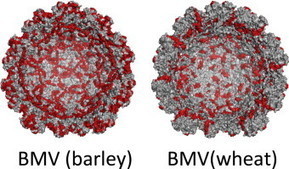
Brome mosaic virus (BMV) packages its genomic and subgenomic RNAs into three separate viral particles. BMV purified from barley, wheat, and tobacco have distinct relative abundances of the encapsidated RNAs. We seek to identify the basis for the host-dependent differences in viral RNA encapsidation. Sequencing of the viral RNAs revealed recombination events in the 3′ untranslated region of RNA1 of BMV purified from barley and wheat, but not from tobacco. However, the relative amounts of the BMV RNAs that accumulated in barley and wheat are similar and RNA accumulation is not sufficient to account for the difference in RNA encapsidation. Virions purified from barley and wheat were found to differ in their isoelectric points, resistance to proteolysis, and contacts between the capsid residues and the RNA. Mass spectrometric analyses revealed that virions from the three hosts had different post-translational modifications that should impact the physiochemical properties of the virions. Another major source of variation in RNA encapsidation was due to the purification of BMV particles to homogeneity. Highly enriched BMV present in lysates had a surprising range of sizes, buoyant densities, and distinct relative amounts of encapsidated RNAs. These results show that the encapsidated BMV RNAs reflect a combination of host effects on the physiochemical properties of the viral capsids and the enrichment of a subset of virions. The previously unexpected heterogeneity in BMV should influence the timing of the infection and also the host innate immune responses.


Ed Rybicki‘s insight:

Interesting!  I have a fondness for BMV; I have probably purified more of it than just about anyone else alive, and probably have more of it purified and on the shelf than anyone as well.  But I did not know this…nice to know someone’s still working on it, and finding new and interesting things!

See on www.sciencedirect.com

The Gemini Virus

1 October, 2013

See on Scoop.itVirology News

Available in: NOOK Book (eBook), Paperback, Hardcover, Audiobook. This science-based thriller from Wil Mara will chill you to your coreBob Easton thinks he has a cold. Before he dies in agony, four days later, he infects dozens of people.

Ed Rybicki‘s insight:

Of course, there are already geminiviruses in good standing: these infect plants rather than people, and do not make people cough, but make plants feel rather uncomfortable.

See on www.barnesandnoble.com

Oral immunogenicity of porcine reproductive and respiratory syndrome virus antigen expressed in transgenic banana

1 October, 2013

See on Scoop.itVirology News

Porcine reproductive and respiratory syndrome virus (PRRSV) is a persistent threat of economically significant influence to the swine industry worldwide. Recombinant DNA technology coupled with tissue culture technology is a viable alternative for the inexpensive production of heterologous proteins in planta. Embryogenic cells of banana cv. ‘Pei chiao’ (AAA) have been transformed with the ORF5 gene of PRRSV envelope glycoprotein (GP5) using Agrobacterium-mediated transformation and have been confirmed. Recombinant GP5 protein levels in the transgenic banana leaves were detected and ranged from 0.021%–0.037% of total soluble protein. Pigs were immunized with recombinant GP5 protein by orally feeding transgenic banana leaves for three consecutive doses at a 2-week interval and challenged with PRRSV at 7 weeks postinitial immunization. A vaccination-dependent gradational increase in the elicitation of serum and saliva anti-PRRSV IgG and IgA was observed. Furthermore, significantly lower viraemia and tissue viral load were recorded when compared with the pigs fed with untransformed banana leaves. The results suggest that transgenic banana leaves expressing recombinant GP5 protein can be an effective strategy for oral delivery of recombinant subunit vaccines in pigs and can open new avenues for the production of vaccines against PRRSV.


Ed Rybicki‘s insight:

Yah.  Um.  Well.  OK, the study actually showed results indicating that feeding piglets with transgenic banana leaf material containing PRRSV GP5 protein is an effective strategy to prevent disease after viral challenge, and to significantly decrease viral load.  Even if the expression levels were very low, and the amount of antigen per feed was of the order of 10 ug/dose – which, for a piglet, is VERY low for an oral dose!  So – a qualified success, then, which could doubtless be improved upon in terms of expression and dose and response.

But it’s back to the days of "a banana a day, keeps the vaccinator away".

Which, although it is a noble sentiment, simply is not practical for the reasons advanced – which have to do with the fact that bananas can be cultivated near where pigs are raised, and it is easy to include fresh leaves in food.

All of which ignores the fact that vaccines have to (a) be given in controlled doses, (b) the fresh material containing the doses has to be assayed to determine what the dose is.  All of which is a little difficult for a pig famer in a developing country, I would surmise.

All in all, however, the authors have shown that their vaccine is protective, and the concept has promise.  But just maybe they should look at using formulated extracts as a food additive, with a higher-yielding expression system.

See on onlinelibrary.wiley.com

DNA Preparation Tubes Contaminated with Novel ssDNA Virus

21 September, 2013

See on Scoop.itVirology News

A novel virus thought to have come from human samples appears to have been derived from seawater during the manufacture of tubes used to extract DNA.  

Ed Rybicki‘s insight:

I have a problem with the original report, in J Virol (http://jvi.asm.org/content/early/2013/09/05/JVI.02323-13.abstract?related-urls=yes&legid=jvi;JVI.02323-13v1): not that they discovered it, because that was done well.  However, they essentially REdiscovered something that was ±100% identical to a virus already sequenced and named by Chinese researchers – who did not use the Qiagen kits, apparently – and then gave it a new name!


Sorry, that is simply bad practice!  It also smacks of scientific imperialism of a sort that characterised early discovery work on HTLVs and on HIV, when US researchers calmly treated earlier characterisations as if they had never happened.


There is another leap that I do not think is justified: the authors claim that


"Analysis of environmental metagenome libraries detected PHV sequences in coastal marine waters of North America, suggesting that a potential association between PHV and diatoms (algae) that generate the silica matrix used in the spin columns may have resulted in inadvertent viral contamination during manufacture".

Really?  On the basis of presence of a sequence in a metagenomic trawl?  No resampling with specific primers on a fresh sample?   And surely the generation of the silica matrix is done under conditions that would totally destroy adventitiious DNA?

So – an interesting paper, and a valuable notification (although it might have been nicer if they’d shared their findings informally, to save other people like our Virology Diagnostics lab time and money).  But flawed, in my opinion.

See on www.the-scientist.com

New Hope for HIV Vaccine – New York Times

17 September, 2013

See on Scoop.itVirology News

“Kafkaesque” is not a word normally used to describe immune responses, but it’s how Dr. Louis J. Picker described what his experimental vaccine did to his rhesus monkeys: “It’s like their T-cells were turned into the East German secret police, hunting down infected cells until there were none left.”

Ed Rybicki‘s insight:

Cytomegalovirus as a HIV vaccine vector: smart idea; take something that operates by stealth and use it to vector something else that does too – and get what looks like a unique sort of immune response that MAY just result in clearance.

See on www.nytimes.com

Barley stripe mosaic virus: Structure and relationship to the tobamoviruses

11 September, 2013

See on Scoop.itVirology and Bioinformatics from Virology.ca

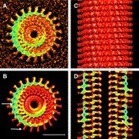
Barley stripe mosaic virus (BSMV) is the type member of the genus Hordeivirus, rigid, rod-shaped viruses in the family Virgaviridae. We have used fiber diffraction and cryo-electron microscopy to determine the helical symmetry of BSMV to be 23.2 subunits per turn of the viral helix, and to obtain a low-resolution model of the virus by helical reconstruction methods. Features in the model support a structural relationship between the coat proteins of the hordeiviruses and the tobamoviruses.


Ed Rybicki‘s insight:

Speaking as someone who has worked with both viruses – I think I purified them in 1977-78 – and was immersed in the literature on both, I can recommend this as an EXCELLENT piece of old-school structural virology.


It comes as litttle surprise to hear that BSMV CP is structurally related to TMV and its ilk – the particles look SO much alike – but it is nice to see it confirmed finally!  The TMV structure came out in 1986, again from Gerald Stubbs’ lab (and some beautiful structures are shown here – http://www.rcsb.org/pdb/101/motm.do?momID=109), so this one has been lagging awhile.


I can finally update a speculative "modular evolution" diagram I constructed a while back, with actual evidence: https://rybicki.wordpress.com/2008/03/19/from-what-did-viruses-evolve-or-how-did-they-initially-arise/


Meantime: I have a walk-in fridge full of highly purified virus particles, some dating back to the 1970s, just waiting to be structurally investigated….

See on www.sciencedirect.com