Archive for the ‘Uncategorized’ Category

Virophages, polintons, and transpovirons: a complex evolutionary network of diverse selfish genetic elements with different reproduction strategies

24 May, 2013

See on Scoop.itVirology News

The results of the phylogenomic analysis of the virophages and related genetic elements are compatible with the concept of network-like evolution of the virus world and emphasize multiple evolutionary connections between bona fide viruses and other classes of capsid-less mobile elements.

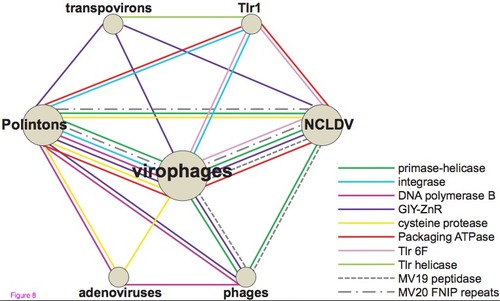
Altogether, virophages, polintons, a distinct Tetrahymena transposable element Tlr1, transpovirons, adenoviruses, and some bacteriophages form a network of evolutionary relationships that is held together by overlapping sets of shared genes and appears to represent a distinct module in the vast total network of viruses and mobile elements.

Ed Rybicki‘s insight:

Blow your MINDS, virologists…deep relationships between phages, human viruses, satellite viruses and big DNA viruses – as well as with diverse mobile elements within genomes.

See on www.virologyj.com

PLOS Pathogens: Plant Virus Ecology

24 May, 2013

See on Scoop.itVirology News

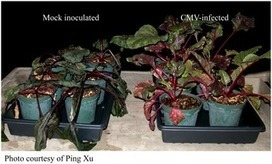
Viruses have generally been studied either as disease-causing infectious agents that have a negative impact on the host (most eukaryote-infecting viruses), or as tools for molecular biology (especially bacteria-infecting viruses, or phage). Virus ecology looks at the more complex issues of virus-host-environment interactions. For plant viruses this includes studies of plant virus biodiversity, including viruses sampled directly from plants and from a variety of other environments; how plant viruses impact species invasion; interactions between plants, viruses and insects; the large number of persistent viruses in plants that may have epigenetic effects; and viruses that provide a clear benefit to their plant hosts (mutualists). Plants in a non-agricultural setting interact with many other living entities such as animals, insects, and other plants, as well as their physical environment. Wild plants are almost always colonized by a number of microbes, including fungi, bacteria and viruses. Viruses may impact any of these interactions [1].

Ed Rybicki‘s insight:

Nice, reasoned review on something most human and animal virologists take no notice of whatsoever…B-)  OK, she does have "Plant Virus Biodiveristy" as her first heading, but hey, I misspelled my own name on my second paper when referring to my first!


The bottom line is that we notice plant viruses when they do things to our crop plants or companion plants – and not when they are in their natural (read: non-agricultural / horticultural) setting.  As Marilyn points out, plant viruses may interact with plant host, insect vector and humans – and with other pathogens and commensals and symbionts, making for a potentially VERY complex ecosystem.


Interestingly, "wild" plant viruses often cause persistent infections, and are efficiently transmitted vertically – and may even, as in the begomovirus-infected Abutilon, give rise to a pleasing phenotype that has resulted in spread, via cultivation, around the world.


The world needs more plant virologists.  It certainly has enough plant viruses!

See on www.plospathogens.org

Billions of dollars later and still no Aids vaccine – Times LIVE

20 May, 2013

See on Scoop.itVirology News

Latest news from South Africa, World, Politics, Entertainment and Lifestyle. The home of The Times and Sunday Times newspaper. (The hunt for an HIV vaccine has gobbled up $8-billion in the past decade with no real results.

Ed Rybicki‘s insight:

Beause of rampant band-wagon jumping and some ignoring of basic lessons from other lentiviruses…the Ad5 bandwagon was especially noticeable; it will be interesting to see what the new wagon will be, now that this has come to a grinding halt.  Poxviruses, anyone?

See on www.timeslive.co.za

China H7N9 Joint Mission Report 2013 (WHO)

20 May, 2013

See on Scoop.itVirology News

Ed Rybicki‘s insight:

An important document – because it lays out in detail just what a high-level team that went to China found during their travels.  And it is disturbing: the virus has 6 internal genes of H9N2, with the H7 HA and N9 NA – the first time the latter has been seen in humans.  I note that H9N2 keeps popping up in humans, but is not so nasty: the H7N9, however, is a low pathogenicity virus in chickens, but severe in humans.

See on www.who.int

Production of protective bluetongue virus-like particle vaccine in plants

17 May, 2013

See on Scoop.itVirology News

Plant expression systems based on nonreplicating virus-based vectors can be used for the simultaneous expression of multiple genes within the same cell. They therefore have great potential for the production of heteromultimeric protein complexes. This work describes the efficient plant-based production and assembly of Bluetongue virus-like particles (VLPs), requiring the simultaneous expression of four distinct proteins in varying amounts. Such particles have the potential to serve as a safe and effective vaccine against Bluetongue virus (BTV), which causes high mortality rates in ruminants and thus has a severe effect on the livestock trade. Here, VLPs produced and assembled in Nicotiana benthamiana using the cowpea mosaic virus-based HyperTrans (CPMV-HT) and associated pEAQ plant transient expression vector system were shown to elicit a strong antibody response in sheep. Furthermore, they provided protective immunity against a challenge with a South African BTV-8 field isolate.


The results show that transient expression can be used to produce immunologically relevant complex heteromultimeric structures in plants in a matter of days. The results have implications beyond the realm of veterinary vaccines and could be applied to the production of VLPs for human use or the coexpression of multiple enzymes for the manipulation of metabolic pathways.

 Generic reovirus-like particle by Russell Kightley Media

Ed Rybicki‘s insight:

While this has not been subject to the same hype as the FMDV VLPs featured here and all over the media recently, it is at least as big a deal – and yes, we are involved, and yes, we are highly stoked with what we did.


Because this is a four-protein virus-like particle, expressed via transient expression in N benthamiana, and assembled in yields high enough to allow purification of particles that were protective in a live virus challenge experiment in sheep.


Yes, protective in actual sheep, and competitive with the standard attentuated live virus vaccine – which is a seriously big deal!


Plus the electron micrographs of the particles are SO cool.  Congratulations, Eva and team, you have done really, really well.

See on www.ncbi.nlm.nih.gov
Fears grow over deadly new virus

13 May, 2013

See on Scoop.itVirology News

The World Health Organization warns that it appears “increasingly” likely that the new coronavirus can be passed between people in close contact.

Ed Rybicki‘s insight:

Yet ANOTHER damn virus to worry about…B-(  Thanks, Ken Yaw Agyeman-Badu!

See on www.bbc.co.uk

Potential for H3N2 influenza pandemic

13 May, 2013

See on Scoop.itVirology News

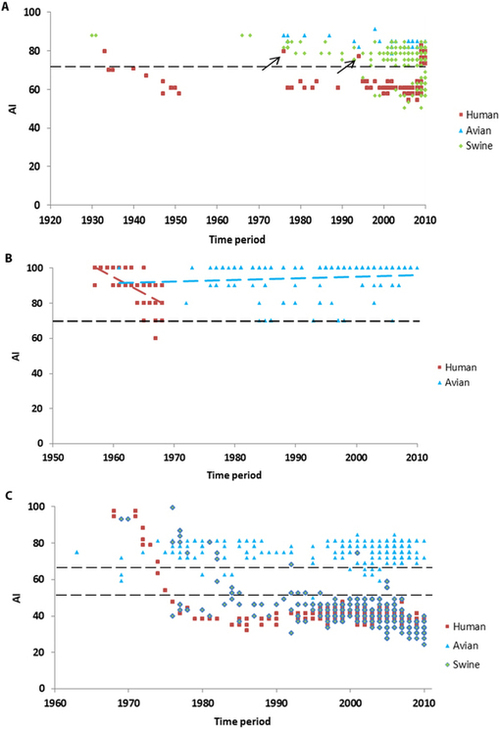
The 2009 swine-origin H1N1 influenza, though antigenically novel to the population at the time, was antigenically similar to the 1918 H1N1 pandemic influenza, and consequently was considered to be [ldquo]archived[rdquo] in the swine species before reemerging in humans. Given that the H3N2 is another subtype that currently circulates in the human population and is high on WHO pandemic preparedness list, we assessed the likelihood of reemergence of H3N2 from a non-human host. Using HA sequence features relevant to immune recognition, receptor binding and transmission we have identified several recent H3 strains in avian and swine that present hallmarks of a reemerging virus. IgG polyclonal raised in rabbit with recent seasonal vaccine H3 fail to recognize these swine H3 strains suggesting that existing vaccines may not be effective in protecting against these strains.

Vaccine strategies can mitigate risks associated with a potential H3N2 pandemic in humans.

Ed Rybicki‘s insight:

No-one think of H3N2…except, as it happens, these folk – who have shown quite convincingly that circulating strains of H3N2 in birds and pigs would be quite capable of avoiding vaccine-conferred immunity, and potentially of causing a pandemic, if they reassorted with human-infecting viruses.  


I can’t help but feel that there are several ticking influenza pandemic time bombs out there…H5N1, H7N9, and now H3N2.

See on www.nature.com

Cassava Viral Disease Spreads at Alarming Rate

10 May, 2013

See on Scoop.itVirology News

Scientists say a disease destroying entire crops of cassava has spread out of East Africa into the heart of the continent, is attacking plants as far south as Angola and now threatens to move west into Nigeria, the world’s biggest producer of the potato-like root that helps feed 500 million Africans.

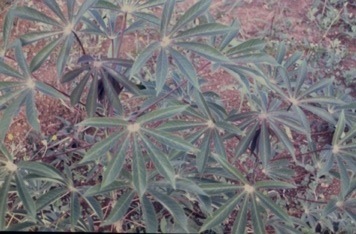
Photo: healthy cassava, Ed Rybicki, western Kenya, 1998

Ed Rybicki‘s insight:

This is a really big deal – and it comes just 15 years or so after another cassava scourge, caused by a recombinant begomovirus, swept out of Uganda.  That one was credited with helping to kill over 20 000 people, due to starvation and assocaited morbidity.  This one – Cassava brown streak virus, or CBSV – is a filamentous ssRNA potyvirus (genus Ipomovirus, family Potyviridae), spread by whiteflies ratehr than the usual potyvirus vector (aphids).


Gerhard Pietersen and I noted in 1999 that CBSV was an emerging virus, but not a serious problem (Adv Virus Res, 53, 127-175, 1999).

It has obviously emerged, and is.  Now to deal with it!

See on www.sci-tech-today.com

Recombinant Monovalent Llama-Derived Antibody Fragments (VHH) to Rotavirus VP6 Protect Neonatal Gnotobiotic Piglets against Human Rotavirus-Induced Diarrhea

10 May, 2013

See on Scoop.itVirology News

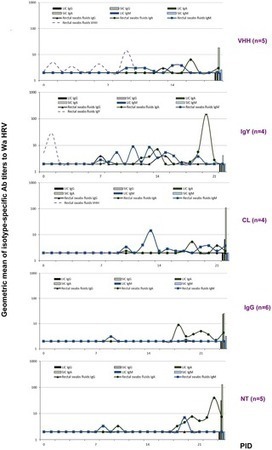
This study shows that the oral administration of rotavirus VP6-VHH nanoAb is a broadly reactive and effective treatment against rotavirus-induced diarrhea in neonatal pigs. Our findings highlight the potential value of a broad neutralizing VP6-specific VHH nanoAb as a treatment that can complement or be used as an alternative to the current strain-specific RVA vaccines. Nanobodies could also be scaled-up to develop pediatric medication or functional food like infant milk formulas that might help treat RVA diarrhea.

Ed Rybicki‘s insight:

Always nice to Scoop a paper from a co-author, in this case Andres Wigdorovitz and friends.  Nice work, too – shows that rotavirus VP6 is a useful recombinant protein target for use as a vaccine, given that llama single-chain Abs specific to it can protect.  But why not make them in plants, Andres??

See on www.plospathogens.org

Antigenic Drift of the Pandemic 2009 A(H1N1) Influenza Virus in a Ferret Model

10 May, 2013

See on Scoop.itVirology News

Infection with influenza virus leads to significant morbidity and mortality. Annual vaccination may prevent subsequent disease by inducing neutralizing antibodies to currently circulating strains in the human population. To escape this antibody response, influenza A viruses undergo continuous genetic variation as they replicate, enabling viruses with advantageous antigenic mutations to spread and cause disease in naïve or previously immune or vaccinated individuals. To date, the 2009 pandemic virus (A(H1N1)pdm09) has not undergone significant antigenic drift, with the result that the vaccine remains well-matched and should provide good protection to A(H1N1)pdm09 circulating viruses. In this study, we induced antigenic drift in an A(H1N1)pdm09 virus in the ferret model. A single amino acid mutation emerged in the dominant surface glycoprotein, hemagglutinin, which had a multifaceted effect, altering both antigenicity and virus receptor specificity. The mutant virus could not be isolated using routine cell culture methods without the virus acquiring additional amino acid changes, yet was fit in vivo. The implications for surveillance of circulating influenza virus are significant as current assays commonly used to assess vaccine mismatch, as well as to produce isolates for vaccine manufacture, are biased against identification of viruses containing only this mutation.


Ed Rybicki‘s insight:

There is a rather disturbing result in this paper: that is, that the mutation in the H1N1 HA that emerged in serial ferret transfers that was responsible for antigenic drift, resulted in a virus that could NOT be cultured by routine methods despite being quite happy in ferrets.  In fact, adapting the virus to culture meant it accumulated MORE mutations, meaning the thing they got out by "current assays" was NOT the same thing that was causing disease.


This is worrying for a number of reasons, not least of which is that informed decisions on probable vaccine efficiacy are made as a result of such assays – and the vaccines themselves, in some cases.  And if what these decisions are based on is incorrect…?


Time for some better science here, people – like next-gen sequencing rather than isolation as a measure of what is causing disease!

See on www.plospathogens.org