Archive for the ‘Uncategorized’ Category

Condoms not effective against HPV or herpes

23 June, 2012

See on Scoop.itVirology News

“Viral STDs make up the modern “4-H club.” Herpes simplex virus (HSV), human papilloma virus (HPV), hepatitis (B and C), and HIV are the most common STDs, causing pain, cancer, liver disease and AIDS, respectively.

Condoms significantly decrease transmission rates of the most life-threatening viruses, HIV and hep B and C.

Unfortunately, condoms do not do an adequate job of protecting against human papilloma or herpes simplex virus infections. Women diagnosed with HPV are often mystified and frustrated, having been “super careful,” or picky, in choosing intimate partners and faithfully using condoms for all intercourse.

But UCSF researchers have shown these viruses to be present on genital skin with no symptoms that might prompt diagnosis and treatment. That means HPV and HSV can be deposited on the condom’s outer surface from viral particles living on the scrotum, penile shaft not covered by the condom or vaginal/vulvar tissues.”


Interesting – because it’s been known a while that condoms are less effective in preventing spread of HPV than for bacterial STDs and HIV, and now we know why.  The only things that can really prevent the transmission of these agents, in the absence of abstinence, is vaccination.

See on www.sfgate.com

[dsRNA] Treatment for deadly bee virus promising

23 June, 2012

See on Scoop.itVirology News

“There’s buzz about a new treatment that could save bee populations from a deadly virus.
Researchers at the University of Manitoba have found a way to suppress the deformed-wing virus (DWV), which has had catastrophic effects on bee colonies worldwide, causing many to have crumpled or deformed wings.
Entomology PhD student Suresh Desai fed his bees double-stranded RNA, a treatment that prevented the virus from expressing itself in the host.
“It gives us a little bit of hope that we can manage this virus, because there is no control mechanism right now,” he said.
The study, published online on Insect Molecular Biology on June 12, showed bees fed the double-stranded RNA in a syrup and then inoculated with the virus had a much better survival rate than those who weren’t. RNA is much like DNA, but is in a single strand. It carries the genetic material of some viruses, including DWV. RNA is taken from the DWV and then converted into a double strand. When introduced in the bee, it suppresses the viral RNA.”


I find it fascinating that the dsRNA that we as plant virologists grew to know and love in the 1980s – because it’s easier to isolate from plants than ssRNA, and far more stable – has newly become so much more useful as an anti-viral therapeutic.  And you can isolate a tonne of dsRNA from virus-infected insects, too, so it’s also interesting why exogenous material should be effective.

See on www.winnipegfreepress.com

The subgenomic promoter of brome mosaic virus folds into a stem–loop structure capped by a pseudo-triloop that is structurally similar to the triloop of the genomic promoter

23 June, 2012

See on Scoop.itVirology News

In brome mosaic virus, both the replication of the genomic (+)-RNA strands and the transcription of the subgenomic RNA are carried out by the viral replicase. The production of (−)-RNA strands is dependent on the formation of an AUA triloop in the stem–loop C (SLC) hairpin in the 3′-untranslated region of the (+)-RNA strands. Two alternate hypotheses have been put forward for the mechanism of subgenomic RNA transcription. One posits that transcription commences by recognition of at least four key nucleotides in the subgenomic promoter by the replicase. The other posits that subgenomic transcription starts by binding of the replicase to a hairpin formed by the subgenomic promoter that resembles the minus strand promoter hairpin SLC. In this study, we have determined the three-dimensional structure of the subgenomic promoter hairpin using NMR spectroscopy. The data show that the hairpin is stable at 30°C and that it forms a pseudo-triloop structure with a transloop base pair and a nucleotide completely excluded from the helix. The transloop base pair is capped by an AUA triloop that possesses an extremely well packed structure very similar to that of the AUA triloop of SLC, including the formation of a so-called clamped-adenine motif. The similarities of the NMR structures of the hairpins required for genomic RNA and subgenomic RNA synthesis show that the replicase recognizes structure rather than sequence-specific motifs in both promoters.

See on rnajournal.cshlp.org

Dengue vaccine results from Thailand trial expected by September | The Jakarta Post

16 June, 2012

See on Scoop.itVirology News

The efficacy of the first dengue fever vaccine is expected to be known by September when results of tests on thousands of Thai children will be …

See on www.thejakartapost.com

GM Crops Offer Natural Pest Control | The Scientist

14 June, 2012

See on Scoop.itVirology News

“They found that across all sites as insecticide spraying declined, predatory arthropod populations rose, bringing down populations of aphids, insects that consume and damage crops by carrying viruses . In addition, the team also studied experimental Bt cotton plots, and found that where predator populations were high in the Bt cotton, they were correspondingly high in surrounding peanut and soybean plots, suggesting the benefits of increased predators spilled over to neighboring crops.”


In.  Your.  FACES!!  Loony.  Greenies.  Actual proven BENEFITS!!  From GM!!  From a long term, HUGE experiment!!  I’ve been waiting a while for this.

See on the-scientist.com

Canadian researchers thwart Ebola virus

14 June, 2012

See on Scoop.itVirology News

Cure has the longest treatment window so far resulting in full recovery – a full day…The treatment, in which injections of protein-grabbing antibodies stop a virus from replicating, has the longest treatment window so far resulting in full recovery – a full day. There’s just one catch: It can take up to two weeks for symptoms of the disease to appear.

In an article published Wednesday in Science and Translational Medicine, Gary Kobinger and several others outline the cocktail of antibodies they used to treat macaque monkeys infected with the most lethal strain of Ebola virus. All the macaques treated 24 hours after infection recovered, as did half of those treated after 48 hours.

I must learn how to do science via press release – looks like you get much more interest that way….
See on www.theglobeandmail.com

Single science council proposed for South Africa

12 June, 2012

See on Scoop.itVirology News

“A committee has advised South Africa’s government to set up a national council to steer the country’s research agenda and make recommendations on all major funding allocations to science and innovation.

The 15 to 20 member council would be chaired by the country’s deputy president and the science minister would be deputy chair, to ensure legitimacy across all government departments.

The council would include other ministers as well as representatives from academia and industry, says the committee’s report, published for public consultation on 6 May by the Department of Science and Technology.”

While a good idea in principle, this could work out just like SA’s last effort at consolidating funding bodies: the creation of the Technology and Innovation Agency resulted in the abrupt cessation of funding from the bodies it replaced, with only a trickle starting to become available now.

See on www.research-africa.net

Province on rabies alert | The New Age Online

12 June, 2012

See on Scoop.itVirology News

“A three-year-old boy from Umlazi [KwaZulu-Natal, SA] was close to becoming the fourth victim of rabies in the province following an outbreak of the disease that has killed three people in the past month.

The toddler has been at the Prince Mshiyeni Memorial Hospital for the past two weeks and, according to the department of environmental affairs, is showing signs of recovery.

“We have been in contact with his mother since he was admitted to hospital and she says there are improvements. He can now sit and has started swallowing liquids. He also responds when she calls his name but he still cannot speak properly,” said department spokesperson Jeffrey Zikhali.”


If that’s the case, then it’s close to being a miracle.  The problem appears to be lack of general immunisation of domestic animals, and a lack of government-supplied vaccine for free distribution.

See on www.thenewage.co.za

Virus poses added threat to isle honey bees – Hawaii News – Honolulu Star-Advertiser

11 June, 2012

See on Scoop.itVirology News

The varroa mite is causing a highly contagious virus to proliferate in honeybee colonies here and around the globe, Hawaii and British researchers have found.

Researchers from the University of Hawaii, the University of Sheffield in South Yorkshire, the British Marine Biological Association, and the British Food and Environmental Research Agency studied the pest in Hawaii.

Their research, reported Friday in the journal Science, showed how the varroa mite caused the virus, a known pathogen, to increase its frequency among honeybee colonies to 100 percent from 10 percent.

The study showed that along with this change, a millionfold increase in the number of virus particles infect- ing each bee and a huge reduction in viral strain diversity led to the single virulent virus that deforms wings.

See on www.staradvertiser.com

Vaccine gets credit for decline in sex infection [in New Zealand]

11 June, 2012

See on Scoop.itVirology News

“A nationwide drop in the number of genital warts cases has been attributed to the controversial HPV vaccine, which is free for teenage girls.

Sexual health clinics reported a 10 per cent decrease in genital warts last year compared to 2010, according to the Institute of Environmental Science and Research’s annual report on sexually transmitted infections.

Family Planning national medical advisor Christine Roke attributed the fewer first-time cases of genital warts to the HPV vaccine, which was introduced in late 2008.

“It reduces the chances of getting warts if people have it before they are sexually active.”

The vaccine – now a routine immunisation for 12-year-old girls – aims to protect women against human papillomavirus and the risk of developing cervical cancer later in life.”


Nice example of the knock-on effect in public health due to a vaccine – in this case, even though only girls are getting the papillomavirus vaccine, bot sexes are protected against spread of genital warts caused by the viruses.


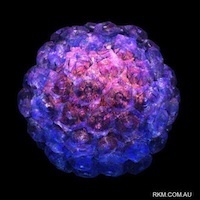
HPV graphic courtesy of Russell Kightley Media

See on www.stuff.co.nz