Archive for the ‘Uncategorized’ Category

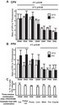
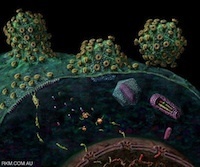
PLoS Pathogens: Mobilization of HIV Spread by Diaphanous 2 Dependent Filopodia in Infected Dendritic Cells

8 June, 2012

See on Scoop.itVirology and Bioinformatics from Virology.ca

“Paramount to the success of persistent viral infection is the ability of viruses to navigate hostile environments en route to future targets. In response to such obstacles, many viruses have developed the ability of establishing actin rich-membrane bridges to aid in future infections. Herein through dynamic imaging of HIV infected dendritic cells, we have observed how viral high-jacking of the actin/membrane network facilitates one of the most efficient forms of HIV spread. Within infected DC, viral egress is coupled to viral filopodia formation, with more than 90% of filopodia bearing immature HIV on their tips at extensions of 10 to 20 µm. Live imaging showed HIV filopodia routinely pivoting at their base, and projecting HIV virions at µm.sec−1 along repetitive arc trajectories. HIV filopodial dynamics lead to up to 800 DC to CD4 T cell contacts per hour, with selection of T cells culminating in multiple filopodia tethering and converging to envelope the CD4 T-cell membrane with budding HIV particles. Long viral filopodial formation was dependent on the formin diaphanous 2 (Diaph2), and not a dominant Arp2/3 filopodial pathway often associated with pathogenic actin polymerization. Manipulation of HIV Nef reduced HIV transfer 25-fold by reducing viral filopodia frequency, supporting the potency of DC HIV transfer was dependent on viral filopodia abundance. Thus our observations show HIV corrupts DC to CD4 T cell interactions by physically embedding at the leading edge contacts of long DC filopodial networks.”


A really nice microscopy paper, backed up by some good good molbiol, revealing another way virus – and in this case HIV – can hijack natural interactions of cells of the immune system to further its own spread.

See on www.plospathogens.org

Seasonal Trivalent Inactivated Influenza Vaccine Protects against 1918 Spanish Influenza Virus Infection in Ferrets

8 June, 2012

See on Scoop.itVirology News

“The influenza virus H1N1 pandemic of 1918 was one of the worst medical catastrophes in human history. Recent studies have demonstrated that the hemagglutinin (HA) protein of the 1918 virus and 2009 H1N1 pandemic virus [A(H1N1)pdm09], the latter now a component of the seasonal trivalent inactivated influenza vaccine (TIV), share cross-reactive antigenic determinants. In this study, we demonstrate that immunization with the 2010-2011 seasonal TIV induces neutralizing antibodies that cross-react with the reconstructed 1918 pandemic virus in ferrets. TIV-immunized ferrets subsequently challenged with the 1918 virus displayed significant reductions in fever, weight loss, and virus shedding compared to these parameters in nonimmune control ferrets. Seasonal TIV was also effective in protecting against the lung infection and severe lung pathology associated with 1918 virus infection. Our data demonstrate that prior immunization with contemporary TIV provides cross-protection against the 1918 virus in ferrets. These findings suggest that exposure to A(H1N1)pdm09 through immunization may provide protection against the reconstructed 1918 virus which, as a select agent, is considered to pose both biosafety and biosecurity threats.”


So, all you doomsayers – and yes, NSABB, I’m talkin’ to YOU – as expected by some, the resurrected Spanish Flu virus is NOT going to be an all-conquering scourge that depopulates the planet if it gets out.  Basically, anyone who has either had the H1N12009pdm or the modern vaccine, is almost certainly protected against the old virus.


Graphic courtesy of Russell Kightley Media

See on jvi.asm.org

Adam Baker – Zombie Apocalypse Survival.

6 June, 2012

See on Scoop.itVirology News

Adam Baker, author of Outpost and Juggernaut, shares a few survival tips for surviving the zombie apocalypse.


I thought I’d include this useful little “how to survive” video, seeing as engineered rabies viruses and whatnot will shortly precipitate the Viral Zombie Apocalypse…B-)

See on www.youtube.com

Differential assembly of Hepatitis B Virus core protein on single- and double-stranded nucleic acid suggest the dsDNA-filled core is spring-loaded

5 June, 2012

See on Scoop.itVirology and Bioinformatics from Virology.ca

“Hepatitis B Virus (HBV) cores assemble on viral RNA, which is reverse transcribed within the core to the partially dsDNA genome of mature HBV. However, constraining dsDNA, a stiff polymer, within a core necessarily requires far greater capsid stability than constraining ssRNA. We hypothesized that, unlike ssRNA, dsDNA would be a poor substrate for assembly. We examined titrations of ssDNA and dsDNA with purified HBV core protein, Cp183, by EMSA, EM, DLS, and etheno-DNA fluorescence. Cp183 bound ssDNA with high affinity to form virus-like capsids. However, Cp183 bound dsDNA poorly, forming a mixture of irregular complexes. Nonetheless, we observed some normal cores in dsDNA assembly reactions, indicating that the energy required to bend DNA could be similar to the protein–protein association energy. This similarity of energies suggests that dsDNA stresses mature HBV cores, in agreement with calculation, which may be the basis for the virus maturation signal and DNA release.”


A great paper – and one which harks back to an age where many studies on viruses were biophysical, because the molecular biological techniques we use now had simply not been invented.  I note frequent reference to Bancroft, 1970 – to a paper on self-assembly of plant viruses.  I also like the concept of HBV cores as a Jack-in-a-box: ready to pop open to deliver the goodies.

See on www.sciencedirect.com

PLoS Pathogens: Evolutionary Reconstructions of the Transferrin Receptor of Caniforms Supports Canine Parvovirus Being a Re-emerged and Not a Novel Pathogen in Dogs

3 June, 2012

See on Scoop.itVirology News

“Parvoviruses exploit transferrin receptor type-1 (TfR) for cellular entry in carnivores, and specific interactions are key to control of host range. We show that several key mutations acquired by TfR during the evolution of Caniforms (dogs and related species) modified the interactions with parvovirus capsids by reducing the level of binding. These data, along with signatures of positive selection in the TFRC gene, are consistent with an evolutionary arms race between the TfR of the Caniform clade and parvoviruses. As well as the modifications of amino acid sequence which modify binding, we found that a glycosylation site mutation in the TfR of dogs which provided resistance to the carnivore parvoviruses which were in circulation prior to about 1975 predates the speciation of coyotes and dogs. Because the closely-related black-backed jackal has a TfR similar to their common ancestor and lacks the glycosylation site, reconstructing this mutation into the jackal TfR shows the potency of that site in blocking binding and infection and explains the resistance of dogs until recent times. This alters our understanding of this well-known example of viral emergence by indicating that canine parvovirus emergence likely resulted from the re-adaptation of a parvovirus to the resistant receptor of a former host.”


Nice to see Colin Parrish is still working on canine parvoviruses: I remember playing a Nintendo game with him in Ithaca, NY in 1991, and talking about viruses….

It is interesting that the arms race between virus and host can revive, as it has in this case: for the canine lineage to have lost susceptibility to parvovirus, and then have the virus regain the ability to infect is an excellent example of how host-pathogen interactions can change.

See on www.plospathogens.org

Genome and proteome analysis of 7-7-1, a flagellotropic phage infecting Agrobacterium sp H13-3

1 June, 2012

See on Scoop.itVirology and Bioinformatics from Virology.ca

“The flagellotropic phage 7-7-1 infects motile cells of Agrobacterium sp H13-3 by attaching to and traveling along the rotating flagellar filament to the secondary receptor at the base, where it injects its DNA into the host cell.”


This is an interesting paper, because it describes a phage infecting Agrobacterium – and touches on a subject that has intrigued me for years, which is: How does a phage which attaches to a flagellum, get its genome inside the cell?  This throws some mud onto a previous model, which suggested a passive mode of transport like a well-oiled nut moving towards the head of a bolt, as in this case that would result in transport the other way.  Expectr more on this topic!


Image sourced from the paper

See on www.virologyj.com

What Do Human Parasites Do with a Chloroplast Anyway?

1 June, 2012

See on Scoop.itVirology News

“Apicomplexans are an important group of pathogens that include the causative agents of malaria, toxoplasmosis, and cryptosporidiosis. These single-celled eukaryotic parasites evolved from photosynthetic algae. A remnant chloroplast, called the apicoplast, is a telltale hold-over from this more benign past in the ocean. 1The apicoplast is essential for parasite growth and development and therefore a potential target for drug therapy. The fact that humans and animals lack chloroplasts suggests that using approaches to target the apicoplast may provide parasite specificity. What are the critical functions of the apicoplast that should be targeted? In addition to the obvious medical relevance this question has broader biological implications. Why do organisms maintain an ancient symbiotic relationship when the initial rationale for this relationship has fallen by the evolutionary wayside? A new study by Yeh and DeRisi provides important clues. Their work demonstrates that antibiotic-induced loss of the apicoplast in cultured malaria parasites can be chemically rescued by providing isopentenyl-pyrophosphate (IPP) in the medium. IPP is generated by the apicoplast resident isoprenoid biosynthesis pathway and is apparently the one apicoplast metabolite that the parasite cannot live without in the red blood cell. This finding could be of great importance for the development of drugs and vaccines. The ability to produce and maintain parasite lines that lack the apicoplast also offers exciting experimental possibilities for the future.”


Great review – and malaria is important enough to be considered an honorary virus (B-), so it is appropriate to cover it here.  The review also illustrates yet another aspect of the fascinating evolutionary propensity for eukaryotic algae, themsleves the result of endosymbiosis between a photosynthetic prokaryote and a eukaryote, for themselves becoming endosymbionts.

See on www.plosbiology.org

Superresolution imaging of HIV in infected cells with FlAsH-PALM

29 May, 2012

See on Scoop.itVirology News

“Imaging protein assemblies at molecular resolution without affecting biological function is a long-standing goal. The diffraction-limited resolution of conventional light microscopy (∼200–300 nm) has been overcome by recent superresolution (SR) methods including techniques based on accurate localization of molecules exhibiting stochastic fluorescence; however, SR methods still suffer important restrictions inherent to the protein labeling strategies. Antibody labels are encumbered by variable specificity, limited commercial availability and affinity, and are mostly restricted to fixed cells. Fluorescent protein fusions, though compatible with live cell imaging, substantially increase protein size and can interfere with their biological activity. We demonstrate SR imaging of proteins tagged with small tetracysteine motifs and the fluorescein arsenical helix binder (FlAsH-PALM). We applied FlAsH-PALM to image the integrase enzyme (IN) of HIV in fixed and living cells under experimental conditions that fully preserved HIV infectivity. The obtained resolution (∼30 nm) allowed us to characterize the distribution of IN within virions and intracellular complexes and to distinguish different HIV structural populations based on their morphology. We could thus discriminate ∼100 nm long mature conical cores from immature Gag shells and observe that in infected cells cytoplasmic (but not nuclear) IN complexes display a morphology similar to the conical capsid. Together with the presence of capsid proteins, our data suggest that cytoplasmic IN is largely present in intact capsids and that these can be found deep within the cytoplasm. FlAsH-PALM opens the door to in vivo SR studies of microbial complexes within host cells and may help achieve truly molecular resolution.”


Beautiful pictures, a great technique – and one which may allow ~1 nm resolution imaging inside cells in the near future.  Oh, and incidentally showed that HIV capsids persist all the way to the nuclear membrane.

See on www.pnas.org

African monkey meat that could be behind the next HIV

25 May, 2012

See on Scoop.itVirology News

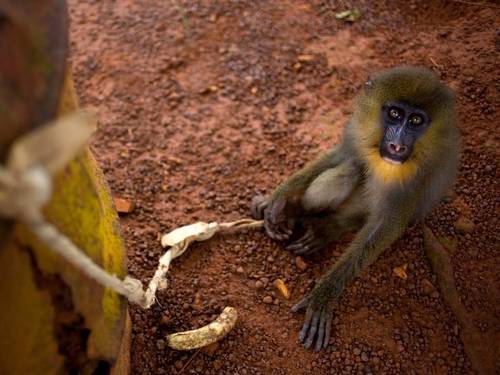
Eighty per cent of the meat eaten in Cameroon is killed in the wild and is known as “bushmeat”. The nation’s favoured dishes are gorilla, chimpanzee or monkey because of their succulent and tender flesh. According to one estimate, up to 3,000 gorillas are slaughtered in southern Cameroon every year to supply an illicit but pervasive commercial demand for ape meat .

“Everyone is eating it,” said one game warden. “If they have money they will buy gorilla or chimp to eat.”

Frankie, a poacher in the southern Dja Wildlife reserve who gave a fake name, said he is involved in the trade because he can earn good money from it, charging around £60 per adult gorilla killed. “I have to make a living,” he said. “Women come from the market and order a gorilla or a chimp and I go and kill them.”

 ————————————————————-

This is a big deal – and not because as, in the words of the article, “Britain is at risk from an outbreak caused by the lethal Ebola or Marburg viruses contained in illegal imports of bush meat from Africa”.


Because AFRICA is at risk from such diseases – and the death toll will be much higher here, where the standard of care is so much lower than in Europe.


And because we are losing the closest relatives that we as humans have – to human greed for meat.  How despicable, and how sad, is that?

See on www.independent.co.uk

Measles — United States, 2011 MMWR

16 May, 2012

See on Scoop.itVirology and Bioinformatics from Virology.ca

“In 2000, the United States achieved measles elimination (defined as interruption of year-round endemic measles transmission) (1). However, importations of measles into the United States continue to occur, posing risks for measles outbreaks and sustained measles transmission. During 2011, a total of 222 measles cases (incidence rate: 0.7 per 1 million population) and 17 measles outbreaks (defined as three or more cases linked in time or place) were reported to CDC, compared with a median of 60 (range: 37–140) cases and four (range: 2–10) outbreaks reported annually during 2001–2010. This report updates an earlier report on measles in the United States during the first 5 months of 2011 (2). Of the 222 cases, 112 (50%) were associated with 17 outbreaks, and 200 (90%) were associated with importations from other countries, including 52 (26%) cases in U.S. residents returning from abroad and 20 (10%) cases in foreign visitors. Other cases associated with importations included 67 (34%) linked epidemiologically to importations, 39 (20%) with virologic evidence suggesting recent importation, and 22 (11%) linked to cases with virologic evidence of recent importation. Most patients (86%) were unvaccinated or had unknown vaccination status.


The increased numbers of outbreaks and measles importations into the United States underscore the ongoing risk for measles among unvaccinated persons and the importance of vaccination against measles (3).”


Amen!!  It is VERY revealing that so many cases were associated with imported virus infections – 90%!!  And almost HALF of those came from Europe, rather than from some developing country.


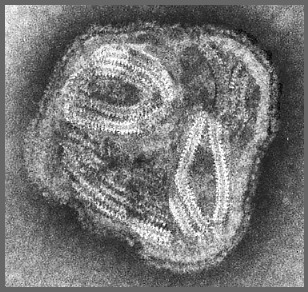
I thank Linda Stannard for the paramyxovirus EM

See on www.cdc.gov