Archive for the ‘Uncategorized’ Category
Why did you access ViroBlogy today?
25 July, 2016Protection of Cattle against Rinderpest by Vaccination with Wild-Type Peste des Petits Ruminants Virus
30 April, 2016Although rinderpest virus (RPV) has been eradicated in the wild, efforts are still continuing to restrict the extent to which live virus is distributed in facilities around the world and to prepare for any reappearance of the disease, whether through deliberate or accidental release. In an effort to find an alternative vaccine which could be used in place of the traditional live attenuated RPV strains, we have determined whether cattle can be protected from rinderpest by inoculation with vaccine strains of the related morbillivirus, peste des petits ruminants virus (PPRV). Cattle were vaccinated with wild-type PPRV or either of two established PPRV vaccine strains, Nigeria/75/1 or Sungri/96. All animals developed antibody and T cell immune responses to the inoculated PPRV. However, only the animals given wild-type PPRV were protected from RPV challenge. Animals given PPRV/Sungri/96 were only partially protected, and animals given PPRV/Nigeria/75/1 showed no protection against RPV challenge. While sera from animals vaccinated with the vaccine strain of RPV showed cross-neutralizing ability against PPRV, none of the sera from animals vaccinated with any strain of PPRV was able to neutralize RPV although sera from animals inoculated with wild-type PPRV were able to neutralize RPV-pseudotyped vesicular stomatitis virus.
Sourced through Scoop.it from: jvi.asm.org
I have written before in ViroBlogy about the eradication of rinderpest, and what a big deal that was – and here are people taking the gloomy view of wanting to have vaccines against it in case it gets used as a bioweapon, or escapes from fridges or freezers somewhere.
Not that these concerns aren’t valid – but surely it would be a better idea to use recombinant viruses expressing rinderpest envelope glycoproteins, rather than another live virus related to rinderpest which needs to be eradicated itself?
Just asking – but a recombinant poxvirus would seem to me to be a MUCH better option!
See on Scoop.it – Virology News
Dengue Virus Antibodies Enhance Zika Virus Infection
26 April, 2016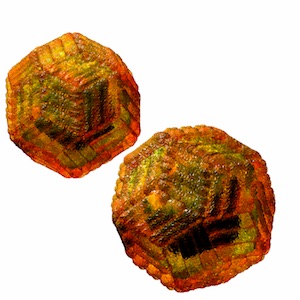
We tested the neutralizing and enhancing potential of well-characterized broadly neutralizing human anti-DENV monoclonal antibodies (HMAbs) and human DENV immune sera against ZIKV using neutralization and ADE assays. We show that anti-DENV HMAbs, cross-react, do not neutralize, and greatly enhance ZIKV infection in vitro. DENV immune sera had varying degrees of neutralization against ZIKV and similarly enhanced ZIKV infection.
Conclusions / Significance
Our results suggest that pre-existing DENV immunity will enhance ZIKV infection in vivo and may increase disease severity. A clear understanding of the interplay between ZIKV and DENV will be critical in informing public health responses in regions where these viruses co-circulate and will be particularly valuable for ZIKV and DENV vaccine design and implementation strategies.
Zika virus graphic from Russell Kightley Media
Sourced through Scoop.it from: biorxiv.org
This is a big deal: a really big deal. While people have been speculating around the issue for months now – yes, you, Neil Bodie! – this prepub appears to provide proof that prior immunity to the related dengue virus(es) may enhance Zika virus infection, without neutralising infectivity. This is termed “antibody-dependent enhancement” (ADE), and is also a major factor in dengue haemorrhagic fever which results from ADE due to reinfection with a different dengue type.
It is also interesting because this is one of the first high-profile uses of the online preprint archive bioRxiv (STUPID name!) for a virology paper – which may open the floodgates, as people see what a good idea it potentially is.
The possibility that ADE exacerbates Zika infection means that the manifestations of Zika may be very different depending upon the seroprevalence of dengue and possibly yellow fever virus antibodies in the target population: where this is very low – as in the USA or Europe – there may be no real problem. Where the seroprevalences are high – as is the case in Brazil and much of Central America – Zika infections may be much more severe.
We will wait and see.
See on Scoop.it – Virology News
New Zika Mouse Model Mimics Human Disease
6 April, 2016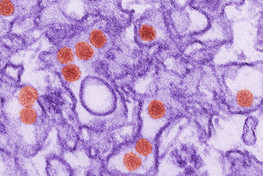
Researchers develop another mouse model of Zika virus infection that mimics the disease in humans.
Sourced through Scoop.it from: www.the-scientist.com
…and strains from Africa, Polynesia and Asia were used in it – and all did the same thing? Interesting…meaning there is no clear differentiation between “original” (=older) African strains and more recent incarnations? Meaning, obviously, that background immunity due to endemicity will probably prevent the nastiness seen in adult infections in S America? Possibly…watch this space!
“Minimal cell raises stakes in race to harness synthetic life”. Really??
29 March, 2016
Genomics entrepreneur Craig Venter has created a synthetic cell that contains the smallest genome of any known, independent organism. Functioning with 473 genes, the cell is a milestone in his team’s 20-year quest to reduce life to its bare essentials and, by extension, to design life from scratch.
Venter, who has co-founded a company that seeks to harness synthetic cells for making industrial products, says that the feat heralds the creation of customized cells to make drugs, fuels and other products. But an explosion in powerful ‘gene-editing’ techniques, which enable relatively easy and selective tinkering with genomes, raises a niggling question: why go to the trouble of making new life when you can simply tweak what already exists?
Thomas Deerinck and Mark Ellisman/NCMIR/UCSD
Each cell of JCVI-syn3.0 contains just 473 genes, fewer than any other independent organism.
Unlike the first synthetic cells made in 20101, in which Venter’s team at the J. Craig Venter Institute in La Jolla, California, copied an existing bacterial genome and transplanted it into another cell, the genome of the minimal cells is like nothing in nature. Venter says that the cell, which is described in a paper released on 24 March in Science2, constitutes a brand new, artificial species.
Sourced through Scoop.it from: www.nature.com
So: JC Venter and team have stripped down a pre-existing organism to what appears to be the essential set of genes, added “watermarks” and inspirational quotes – and this is part of a race to harness synthetic life? If so, they’re pretty much racing themselves, because precious few others are trying to do the same things.
And if you DID want to, why make a completely artificial cell genome? Why not use tailored viruses? It’s a great development, don’t get me wrong, but it is very much part of the “because we can” school of biology, rather than anything directed towards something as coherent as a race to harness synlife*.
* = I should TM that…B-)
See on Scoop.it – Virology News
Was I wrong on HIV/AIDS: Thabo Mbeki. Answer: yes. Yes, you were.
7 March, 2016
In 2002 a few of us here in South Africa wrote a booklet entitled “Castro Hlongwane…”‚ and sub-titled it “HIV/AIDS and the Struggle for the Humanisation of the African”.
AN OVERVIEW
Here is an excerpt from that booklet, which speaks for itself: “The first report on the incidence of HIV in South and Southern Africa was published in the “New England Journal of Medicine” and the “South African Medical Journal”, both in 1985. Two of the most important findings in this report were that in our country and region:
HIV infection was confined to male homosexuals; and,
HIV was not endemic in this region of the world.
To quote this report, it said: “The only positive subjects were in the group compromising male homosexuals. The majority of these positive subjects had either recently been to the United States or had had sexual contact with other homosexuals who had visited the United States…
Sourced through Scoop.it from: www.timeslive.co.za
Yes, Cde Mbeki, yes: you were wrong on HIV/AIDS, and you continue to be wrong. And if you are going to revisit your nonsense, then I am going to revisit mine – just to show what some people thought of you.
Because you wrote that “booklet”, Cde Mbeki. There are those of us who know how to see who authored something, and the copy I had of that scurrilous piece of rubbish said it came from your laptop. It was rubbish then, and can be seen to be even more rubbish now.
And if you are still a denialist, then I sincerely hope that there is a tribunal in your future.
See on Scoop.it – Virology News
How Mbeki’s character and his AIDS denialism are intimately linked
3 March, 2016
Critics say that Thabo Mbeki’s character matters less than his AIDS denialism. But these things are actually intimately linked.
Sourced through Scoop.it from: theconversation.com
So Thabo Mbeki is attempting to rewrite history, or at least his place in it, and he may or may not get to writing about his beliefs on HIV/AIDS.
As someone who was actively involved in telling him how wrong he was, I cannot say I am looking forward to seeing him attempt to explain himself.
Because he was wrong in so many ways: wrong in his disbelief; wrong in his actively courting the loony dissidents; wrong in buying into the “ARVs are just poisons” belief; wrong in buying into the conspiracy theories around Big Pharma.
And wrong not to believe scientists in his own country, who did their very best to convince him, using the best evidence on hand, that HIV causes AIDS, and ARVs mitigate the effects.
I think he should appear before a tribunal of some kind, one day, to explain himself – and be prepared to take the withering criticism of those like me who believe he was partially culpable in the deaths of several hundreds of thousands of people in South Africa who could otherwise have been saved by ARVs.
Manto Tshabala-Msimang should be alongside him, of course – but she has taken herself and her several livers off to the grave, and he would stand alone.
See on Scoop.it – Virology News
‘Alien DNA’ raining down on Earth could mix with Zika and form super disease – NOT!
2 March, 2016
“Scientists have warned that panspermia – the theory of genetic material raining down from space – could make Zika stronger and more deadly”
Genetic material falling on Earth from outer space could create a supercharged version of the Zika virus, scientists have warned.
Experts claim that the virus, which is spreading across the globe, will become more prevalent and deadly in the future.
Changes in Zika have already been noted, as it’s changed to be passable through sexual contact.
The disease, first discovered in monkeys in 1947, had previously only been transferable by mosquito bite.
But now, scientists are warning that it could mutate, growing stronger and spreading more easily – with its victims suffering more serious consequences.
They have warned that future strains could become worse thanks to panspermia – the theory of genetic material constantly raining down on Earth from outer space.
Sourced through Scoop.it from: www.mirror.co.uk
The bullshirt is strong with this one…I have to include some conspiracy nonsense from time to time, just to show what’s out there!
And what’s out there for Zika is Fred Hoyle’s old mate, Chandra Wickramasinghe, who really should stick to astronomy or astrophysics – because he’s just making an idiot of himself.
Consider these statements:
“Genetic material falling on Earth from outer space could create a supercharged version of the Zika virus, scientists have warned.”
“Changes in Zika have already been noted, as it’s changed to be passable through sexual contact.”
“Professor Chandra Wickramasinghe, of the University of Buckingham, has long held panspermia as a common route of viral and bacterial mutation….
Worryingly, he said, is the apparent ability of the Zika virus to pick up foreign DNA and adapt quickly to become more virulent.”
OK: just how, exactly, is Zika supposed to be able to interact with the genetic material falling from space? And how in heaven’s name can anyone tie sexual transmission of Zika – which has only not been documented before, NOT shown not to happen – with picking up genetic material? Which, if Professor W is to be believed, is DNA – and Zika is a (+)sense RNA virus, which are not much given to picking up DNA fragments?
As I said, bullshirt: Zika is quite capable of mutating all by itself, without extraplanetary influences.
See on Scoop.it – Virology News
Structural and molecular basis for Ebola virus neutralization by protective human antibodies
27 February, 2016
Ebola virus causes hemorrhagic fever with a high mortality rate and for which there is no approved therapy. Two human monoclonal antibodies, mAb100 and mAb114, in combination, protect nonhuman primates against all signs of Ebola virus disease, including viremia. Here, we demonstrate that mAb100 recognizes the base of the Ebola virus glycoprotein (GP) trimer, occludes access to the cathepsin-cleavage loop, and prevents the proteolytic cleavage of GP that is required for virus entry. We show that mAb114 interacts with the glycan cap and inner chalice of GP, remains associated following proteolytic removal of the glycan cap, and inhibits binding of cleaved GP to its receptor. These results define the basis of neutralization for two protective antibodies and may facilitate development of therapies and vaccines.
Sourced through Scoop.it from: science.sciencemag.org
Why is it that structural / molecular immunologic studies always "may facilitate development of therapies and vaccines"? Really?? How about looking at what the actual vaccines did in terms of eliciting sterilising immunity, or controlling viral load?
So nice work, but it characterises the mode of action of just two monoclonal antibodies from the spectrum of many thousand that would be involved in reaction to infection, and of the hundreds that are involved in vaccine responses, and the many in any single individual that would be involved in actual neutralisation of infectivity / ADCC / infected cell killing, etc.
What I’m getting at is that whole protein responses, in the context of live vaccine vector inoculations, are almost certainly more complex than anything that involves just these two antibodies, and elegant immunological / structural studies are a minor part of understanding the whole problem.
See on Scoop.it – Virology News
GM viruses could help prevent animal diseases jumping to humans
23 February, 2016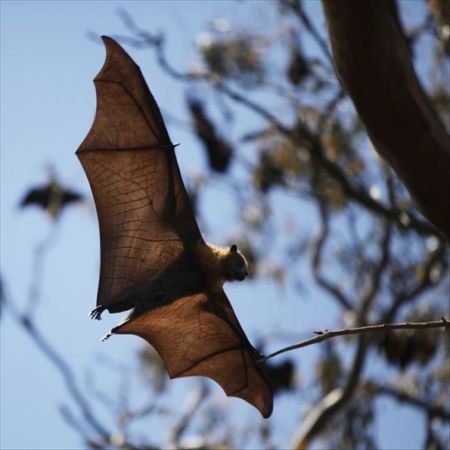
Vaccinating wildlife with genetically-modified viruses could one day help stop diseases like Ebola and MERS jumping from animals to humans, researchers say.
Sourced through Scoop.it from: www.abc.net.au
In principle, a great idea – BUT, as was pointed out, using live viruses in an effectively uncontrolled manner COULD result in all sort of unforeseen outcomes.
Like making a killer virus that drastically reduces numbers of a given species, like myxomatosis and RHDV did to rabbits [OK, they were supposed to].
Like making a virus that spreads to NON-target animals, and does…what? Start a zombie plague? Mutate to virulence, and cause havoc?
The point is, WE DON’T KNOW what may happen – and in circumstances like that, it may be safer to leave well alone!
See on Scoop.it – Virology News