My participation in an acrimonious exchange in the Comments section of a recent article in The Scientist by UCT’s own Nicoli Nattrass has brought something home to me that I had hoped was long dead. That is, that there are some apparently quite well-educated people who still believe that HIV either does not actually exist, or that it does not cause Acquired Immune Deficiency Syndrome (AIDS).
I find this almost unbelievable: that people in this day and age can make statements like
- “HIV has never been purified and isolated properly, the tests accordingly have no virological gold standard, but are validated against each other in a wholly circular fashion”, and
- “After 25 years HIV experts have yet to come up with an agreed method of action (how HIV causes AIDS)”, and
- “Even if I were to accept that there is such a thing as a unique, coherent viral entity HIV that infects T-cells, it proves nothing”,
boggles my mind. There are 236 870 papers at least in the scientific literature since the early 1980s on HIV: are we to understand that probably over a million authors from al over the world have willingly participated in a fraud that has to be the biggest ever perpetrated? Or do we believe that there is something called HIV, that it causes AIDS, and that the overwhelming proportion of the world’s scientists have no problem with this?
I know what I think – and I am going to reprise it here. I put this together in 2001 or thereabouts; however, nothing has changed. HIV still exists, it still causes AIDS, and anyone who denies this is truly, truly invincibly ignorant.
Human Immunodeficiency Virus (HIV) is a typical retrovirus of the genus Lentivirus, family Retroviridae: these are viruses which have single-stranded RNA as their genetic material, but multiply via a double-stranded DNA intermediate. The replication and classification of such viruses is discussed in greater detail on this site, as well as at the Leicester site.
The virus infects its target cells – which happen to mainly be helper T-lymphocytes, because these are the cells which have the highest density of the preferred receptor molecule – by specifically attaching to a protein carried on the surface of the cells known as CD4. This is shown here. An animated view of the whole infection process is shown here; a more detailed schematic animated view here. The process is discussed in detail here; however, what happens is that virus particles fuse with the target cells, and deliver their genetic material plus inside. This RNA is then converted into DNA by means of a unique viral enzyme called reverse transcriptase. The double-stranded DNA is then inserted randomly into a host cell chromosome by means of another viral enzyme (integrase). As part of the host chromosome it is expressed exactly the same way as host DNA – AND IS NOW PART OF THE CELL AND CANNOT BE REMOVED. This means that infected cells are infected for life, which is different to most other types of virus infections: cells harbouring viral DNA continue to make infectious virus particles until they die or are killed.

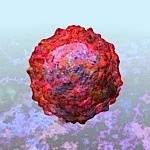
SEE HERE FOR GRAPHICAL REPRESENTATION OF THE CELLULAR INFECTION PROCESS (Courtesy Russell Kightley)
Definitions of AIDS
From the National Institute of Allergy and Infectious Diseases (NIAID) site

“An HIV-infected person is diagnosed with AIDS when his or her immune system is seriously compromised and manifestations of HIV infection are severe.
“The U.S. Centers for Disease Control and Prevention (CDC) currently defines AIDS in an adult or adolescent age 13 years or older as the presence of one of 26 conditions indicative of severe immunosuppression associated with HIV infection, such as Pneumocystis carinii pneumonia (PCP), a condition extraordinarily rare in people without HIV infection. Most other AIDS-defining conditions are also “opportunistic infections” which rarely cause harm in healthy individuals.
A diagnosis of AIDS also is given to HIV-infected individuals when their CD4+ T-cell count falls below 200 cells/cubic millimeter (mm3) of blood.
Healthy adults usually have CD4+ T-cell counts of 600-1,500/mm3 of blood. In HIV-infected children younger than 13 years, the CDC definition of AIDS is similar to that in adolescents and adults, except for the addition of certain infections commonly seen in pediatric patients with HIV. (CDC. MMWR 1992;41(RR-17):1; CDC. MMWR 1994;43(RR-12):1).
In many developing countries, where diagnostic facilities may be minimal, healthcare workers use a World Health Organization (WHO) AIDS case definition based on the presence of clinical signs associated with immune deficiency and the exclusion of other known causes of immunosuppression, such as cancer or malnutrition.
An expanded WHO AIDS case definition, with a broader spectrum of clinical manifestations of HIV infection, is employed in settings where HIV antibody tests are available (WHO. Wkly Epidemiol Rec. 1994;69:273).”
Evidence That HIV Causes AIDS
There is very little doubt among the vast majority of people working with HIV or with people with AIDS, that HIV causes AIDS (see above). The media tended to present everything in terms of a two-sided debate, with equal credence being given to both “sides”. This is very misleading for the population at large, as they are presented with two sets of information that receive equal billing – and they are not qualified to judge between the viewpoints.
Quite simply, there is a vast body of evidence supporting the proposition that HIV causes AIDS.
I have presented some of the most compelling below; there is an enormous body of other evidence available on the Web, let alone in medical libraries. The same cannot be said for the alternative view(s). Perhaps the “best” of the denialist sites is is probably the “Rethinking AIDS” site. This has a wealth of (dis)information on the subject, including such gems as the following, from Kary Mullis:
“If there is evidence that HIV causes AIDS, there should be scientific documents which either singly or collectively demonstrate that fact, at least with a high probability. There is no such document.” (Sunday Times London, 28 nov. 1993).
That this statement is nonsense is amply demonstrated by the following:
“The evidence that AIDS is caused by HIV-1 or HIV-2 is clear-cut, exhaustive and unambiguous. This evidence meets the highest standards of science. The data fulfill exactly the same criteria as for other viral diseases, such as poliomyelitis, measles and smallpox:
- Patients with acquired immune deficiency syndrome, regardless of where they live, are infected with HIV.
- If not treated, most people with HIV infection show signs of AIDS within 5-10 years. HIV infection is identified in blood by detecting antibodies, gene sequences or viral isolation. These tests are as reliable as any used for detecting other virus infections.
- Persons who received HIV-contaminated blood or blood products develop AIDS, whereas those who received untainted or screened blood do not.
- Most children who develop AIDS are born to HIV-infected mothers. The higher the viral load in the mother the greater the risk of the child becoming infected.
- In the laboratory HIV infects the exact type of white blood cell (CD4 lymphocytes) that becomes depleted in persons with AIDS.
- Drugs that block HIV replication in the test tube also reduce viral load and delay progression to AIDS. Where available, treatment has reduced AIDS mortality by more than 80%.
- Monkeys inoculated with cloned SIV DNA become infected and develop AIDS.
Further compelling data are available. HIV causes AIDS. It is unfortunate that a few vocal people continue to deny the evidence. This position will cost countless lives.”
From the NIAID site (excerpted):
AIDS and HIV infection are invariably linked in time, place and population group.
Historically, the occurence of AIDS in human populations around the world has closely followed the appearance of HIV. In the United States, the first cases of AIDS were reported in 1981 among homosexual men in New York and California, and retrospective examination of frozen blood samples from a U.S. cohort of gay men showed the presence of HIV antibodies as early as 1978, but not before then. Subsequently, in every region, country and city where AIDS has appeared, evidence of HIV infection has preceded AIDS by just a few years (CDC. MMWR 1981;30:250; CDC. MMWR 1981;30:305; Jaffe et al. Ann Intern Med 1985;103:210; U.S. Census Bureau; UNAIDS).
Many studies agree that only a single factor, HIV, predicts whether a person will develop AIDS.
Other viral infections, bacterial infections, sexual behavior patterns and drug abuse patterns do not predict who develops AIDS. Individuals from diverse backgrounds, including heterosexual men and women, homosexual men and women, hemophiliacs, sexual partners of hemophiliacs and transfusion recipients, injection-drug users and infants have all developed AIDS, with the only common denominator being their infection with HIV (NIAID, 1995).
In cohort studies, severe immunosuppression and AIDS-defining illnesses occur almost exclusively in individuals who are HIV-infected.
For example, analysis of data from more than 8,000 participants in the Multicenter AIDS Cohort Study (MACS) and the Women’s Interagency HIV Study (WIHS) demonstrated that participants who were HIV-seropositive were 1,100 times more likely to develop an AIDS-associated illness than those who were HIV-seronegative. These overwhelming odds provide a clarity of association that is unusual in medical research (MACS and WIHS Principal Investigators, 2000).
In developing countries, patterns of both rare and endemic diseases have changed dramatically as HIV has spread, with a far greater toll now being exacted among the young and middle-aged, including well-educated members of the middle class.
In developing countries, the emergence of the HIV epidemic has dramatically changed patterns of disease in affected communities. As in developed countries, previously rare, “opportunistic” diseases such as PCP and certain forms of meningitis have become more commonplace. In addition, as HIV seroprevalence rates have risen, there have been significant increases in the burden of endemic conditions such as tuberculosis (TB), particularly among young people. For example, as HIV seroprevalence increased sharply in Blantyre, Malawi from 1986 to 1995, tuberculosis admissions at the city’s main hospital rose more than 400 percent, with the largest increase in cases among children and young adults. In the rural Hlabisa District of South Africa, admissions to tuberculosis wards increased 360 percent from 1992 to 1998, concomitant with a steep rise in HIV seroprevalence. High rates of mortality due to endemic conditions such as TB, diarrheal diseases and wasting syndromes, formerly confined to the elderly and malnourished, are now common among HIV-infected young and middle-aged people in many developing countries (UNAIDS, 2000; Harries et al. Int J Tuberc Lung Dis 1997;1:346; Floyd et al. JAMA 1999;282:1087).
HIV can be detected in virtually everyone with AIDS.
Sensitive testing methods, including the polymerase chain reaction (PCR) and improved culture techniques, have enabled researchers to find HIV in patients with AIDS with few exceptions. HIV has been repeatedly isolated from the blood, semen and vaginal secretions of patients with AIDS, findings consistent with the epidemiologic data demonstrating AIDS transmission via sexual activity and contact with infected blood (Bartlett, 1999; Hammer et al. J Clin Microbiol 1993;31:2557; Jackson et al. J Clin Microbiol 1990;28:16).






 ViroBlogy


