Archive for the ‘Uncategorized’ Category

“Set your phages to stun”

3 November, 2015

Engineered phage viruses show promise as targeted assassins – genetic manipulation might make it easier for them to gain regulatory approval

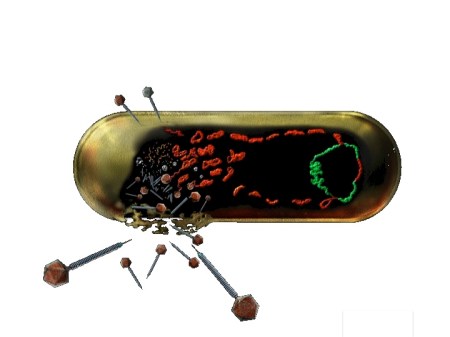
Many phage infect and replicate inside bacteria, killing them. This makes phages a possible alternative to antibiotics as resistance to these drugs grows. What’s more, most phages infect only one species or even a few strains within a species; antibiotics aren’t so selective.

But that specificity is a problem: it might not be clear which pathogenic bacterial strain is present in an infection, so a cocktail of several phages might be needed to guarantee effective treatment. Each may have to pass regulatory approval separately.

Timothy Lu and his colleagues at the Massachusetts Institute of Technology aim to get round this by making a single phage modifiable with bacteria-attacking machinery from other phages. In theory, that could reduce regulatory hold-ups.

Sourced through Scoop.it from: www.newscientist.com

Couldn’t resist that byline – it’s part of the article – so that I could get some mileage out of something mildly upsetting.

It’s just that someone else has yet AGAIN had my good idea before I did.

There I was, reading about and blogging on bacteria co-opting phage tail assemblies as weapons against other phages, and dreaming up ways of using them creatively – and someone else had gone and done it.

That is, used an engineered phage genome and presumably head structure with a variety of tail assemblies (which determine the binding specificity) in order to target as many bacterial types as possible.

Very clever!  It’s what may make phage therapy into a science instead of an art.

See on Scoop.itVirology News

Algal Virus Can Infect Mammalian Cells

30 October, 2015

The virus may also infect humans and affect the brain.

It’s relatively uncommon for viruses to infect organisms from different kingdoms of life. But now, scientists have determined that a particular virus known to infect green algae can also infect mouse macrophages, a type of immune cell. University of Nebraska-Lincoln researcher David Dunigan says that it’s the only known virus to be able to infect algal and mammalian cells.

In a study published this month in the Journal of Virology, Dunigan and his colleagues found that the virus, ATCV-1, was capable of entering and infecting mouse macrophages, and increasing in mass, suggesting that it was making copies of itself. Following introduction of the virus, the scientists witnessed other cellular changes consistent with infection including cell death, Dunigan says.

Sourced through Scoop.it from: www.newsweek.com

Apparently Vincent Racaniello says "…finding a virus that can infect organisms in different kingdoms is quite unusual and not something you see every day, though it’s not unheard of.”

I think it is seriously unheard of: apart from reports implicating amoebae-infecting mimiviruses in pneumonia, which is not as great a phylogenetic divide as green algae and humans, I can’t think of anything infecting organisms that are so diverse, UNLESS one of them preys on the other.

Like insects and plants, for example: there are insect- and plant-infecting rhabdoviruses and reoviruses and bunyaviruses.  However, these viruses infect insects and plants that have been bound up in a predator-prey relationship for many millions of years, and which have consequently shared their nanobiota.

This does NOT apply to this case, where there is no obvious link between free-living green algae and humans – as in, the algae do not colonise human skin or internal organs.

Just more proof – if we needed any – that viruses are awesome B-)

See on Scoop.itAquatic Viruses

Chinese government, Cansino start clinical trials of Ebola vaccine

15 October, 2015

By Shannon Ellis
Staff Writer
SHANGHAI – China has announced that it will be initiating phase I trials for Ad5-Ebov, a recombinant adenoviral Ebola vaccine co-developed by the Bioengineering

Sourced through Scoop.it from: www.bioworld.com

Finally!  All one can find is "Ebola vaccine" from most reports, with very little information as to WHAT vaccine.  And it’s an adenovirus 5 vectored Ebola envelope glycoprotein.

And it’s developed by the Chinese military…which makes them the third (and possibly 4th, if you believe rumours from South Africa pre-1994) military link to Ebola work, after the US and USSR/Russia.

Which may not be as sinister as it sounds, given the Chinese military has huge industrial interests – but still, the fact that they had a vaccine pretty much ready to go in a region with no exposure to the virus, means they are still thinking "bioweapon".

Which is a good thing in this instance, right? 

See on Scoop.itVirology News

Disease risks lie in ancient poo? Not really.

30 September, 2015

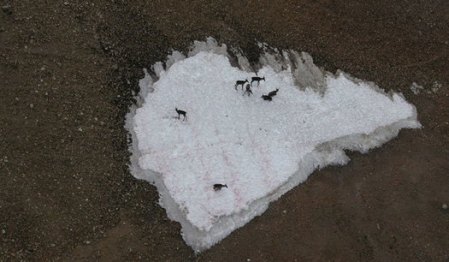
Defrosting ancient poo could reintroduce some age-old bugs to the modern world, scientists say.

Defrosting ancient poo could reintroduce some age-old bugs to the modern world, scientists say.

An extremely infectious and deadly ancient virus, released from a frozen slumber by warming climates, could play havoc with immune systems that have no experience of such germs.

A team of international biologists, including the University of Canterbury’s Arvind Varsani, has proven that such an incident is theoretically possible, after they resurrected an ancient virus from the 700-year-old frozen droppings of Canadian caribou.

With a little reconstruction, the DNA virus, christened the “caribou faeces-associated virus”, has gone on to infect modern-day plants, according to a paper published yesterday in Proceedings of the National Academy of Science.

Varsani said the team had proved ancient viruses were as worthwhile to study as today’s versions – as both may make up tomorrow’s germs

Sourced through Scoop.it from: www.stuff.co.nz

Arvind Varsani, again! He’s everywhere B-)

…and some scientists pooh-pooh such statements [sorry!], because – as with the Giant Killer Viruses From Tundra! sensationalism, there is NO proof that (a) there are myriad killer viruses in permafrost, (b) very little proof that they will infect anything outside of a lab.

Seriously: the French team that found pitho- and molliviruses had to use lab-cultured amoebae to resurrect them; Arvind and crew had to make agroinfectious partially dimeric clones of their virus and inject them into lab plants to make them infectious.

And there’ll be precious little of that going in in clearings in the tundra.

See on Scoop.itVirology News

Inter-Seasonal Influenza is Characterized by Extended Virus Transmission and Persistence

26 June, 2015

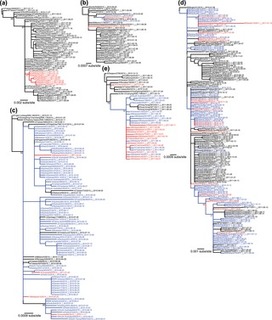
Author Summary Human influenza virus commonly causes disease in the winter months of temperate countries, but exhibits more complex patterns in tropical localities. Most studies of this complex seasonality have only considered viruses sampled within the “normal” influenza season. To help reveal the drivers of influenza seasonality we utilized viruses sampled outside of the normal influenza season, focusing on Australia which is characterized by a wide range of climates. Using a phylogenetic a

Sourced through Scoop.it from: journals.plos.org

Nice piece of work: helps reinforce the notion that influenza doesn’t actually go away, especially in tropical and subtropical areas!

See on Scoop.itVirology and Bioinformatics from Virology.ca

New Zealand Stresses that It Is High Plains Virus Free, and the Virus Struggles with an Identity Crisis

19 June, 2015

High Plains virus (HPV), a tentative member of the genus Emaravirus, causes a potentially serious economic disease in cereals. Recently, in this journal, Tatineni et al. (1) mistakenly reported HPV as being present in New Zealand, citing the paper by Lebas et al. from 2005 (2). The 2005 report clearly states that New Zealand is HPV free in both the abstract and the introduction (2). To date, HPV is not known to occur in New Zealand. The Ministry for Primary Industries of New Zealand has very strict regulations in place to prevent the importation of unwanted organisms such as HPV. For example, the importation of Zea maysseeds must follow the requirements stated in Import Health Standard 155.02.05 (for seed for sowing) (3), which includes testing of HPV by enzyme-linked immunosorbent assay (ELISA) or PCR. The Tatineni et al. statement (1) will mislead regulatory officials of New Zealand’s trading partners who regularly monitor world microbe dynamics in the scientific literature. In fact, there are plant biosecurity actions in place (4) that directly affect New Zealand’s international trade when a regulated plant virus like HPV is reported as present.


Sourced through Scoop.it from: jvi.asm.org

Sigh…as a former plant virologist, I am very familiar with the potential confusion of acronyms of names of viruses that cause severe diseases in plants and in humans – like CMV for both cucumber mosaic and cytomegaloviruses, and AMV for alfalfa mosaic and avian myeloblastosis viruses.

However, this is the first time I have heard of another HPV – which, I will point out, is Human papillomavirus, and was named WAY before any High Plains virus was dreamt up.

I do wish the various branches and species of virologists would consult an authoritative source (like the ICTV Reports) before dreaming up acronyms.

See on Scoop.itVirology News

Move Over, Bacteria! Viruses Make Their Mark as Mutualistic Microbial Symbionts

3 June, 2015

Viruses are being redefined as more than just pathogens. They are also critical symbiotic partners in the health of their hosts. In some cases, viruses have fused with their hosts in symbiogenetic relationships. Mutualistic interactions are found in plant, insect, and mammalian viruses, as well as with eukaryotic and prokaryotic microbes, and some interactions involve multiple players of the holobiont. With increased virus discovery, more mutualistic interactions are being described and more will undoubtedly be discovered.


Sourced through Scoop.it from: jvi.asm.org

Some day we may realise that this is the norm for viruses – and that what we thought we knew about viruses is simply the behaviour of a simplistic and destructive subset of them that we labelled "pathogens".

It is beyond question that all organisms on this planet have evolved in the midst of a cloud of viruses: they have certainly shaped the evolution of immune systems and responses, let alone having directly influenced our evolution in ways like conferring cell fusion ability on cells that become the placenta in mammals.

It should therefore come as no surprise that viruses are very often commensals and even symbiotes.  While we generally don’t understand just how we and our other cellular brethren might benefit from intimate association with viruses, I am sure that every new virome will shed light on this – as well as unearthing more and more of the biological dark matter that is viruses.

Nice one, Marilyn!

See on Scoop.itVirology News

Thimerosal: Clinical, epidemiologic and biochemical studies [a refutation]

12 May, 2015

“The culmination of the research that examines the effects of Thimerosal in humans indicates that it is a poison at minute levels with a plethora of deleterious consequences, even at the levels currently administered in vaccines.”


Source: www.sciencedirect.com

There is so much nonsense being written about vaccines, that it is necessary for responsible people to refute the nonsense wherever they see it.

Stephen Korsman, a clinical virologist of Groote Schuur Hospital and the SA National Health Laboratory Service, has done just this for this article.  My comments in square brackets:

"Disturbing.  1/7 authors had no [stated] conflict of interest.  The conflict of interest listed by the others was involvement in previous litigation.  Two of the authors are listed as being associated with CoMeD which promotes mercury-free drugs – surely that itself is a conflict of interest?  A company opposed to mercury?  They omit this affiliation from two authors – the first and last authors are affiliated to the “Institute of Chronic Illnesses, Inc” but in reality they are a father/son pair who run CoMeD with the other two.  So 4/7 authors run CoMeD – http://mercury-freedrugs.org/contactus.html  The “Institute for Chronic Illnesses, Inc” has the same physical address as CoMeD, so they’re probably the same people.


That indicates that this team has a significant agenda.  That doesn’t, however, mean that they cannot write a decently researched review article on their pet subject.  It just means their agenda may have introduced bias.  And judging by their history in the medical field, that bias may very well be real here too.


Mark Geier has his medical licence revoked for treating autism with leuprorelin, which seems to be a gnrh analogue of sorts.  They came up with this idea themselves.  Some useful reading: http://www.harpocratesspeaks.com/2011/05/charges-levied-against-mark-and-david.html  And there’s heaps more on Google about their history.  And Wikipedia, the source of all truth – https://en.wikipedia.org/wiki/Mark_Geier


Judging by what Google says about them, they look very much like Wakefield (the MMR-autism guy) and Duesberg (the HIV denialist guy who converted Mbeki).  They could well be the few true believers amidst a large population of gullible fools, but I doubt it.  Wikipedia can be wrong, but in this case it seems to be on the same side as credible scientists.  Same for the Holocaust – there could very well be a huge conspiracy amongst historians to get us to believe a lie, but it probably did happen the way it’s laid out in history books.


Given the authors’ background and history of nonsense in this field, I’d believe the article only if I could get to the same conclusion by doing my own review, and I don’t think my competence would let me do that adequately, so I’d have to wait for scientists I trust (who, I admit, may be deluded idiots who reject the Geier family’s truth) to produce their own.


Lastly, the article says this was an “Invited critical review.”  I.e. the journal knew who they were and asked them to write about it.  Much like our medical students wanted to hear both sides of the lipid story.  When they get the anti-vaccine lobby in to teach the medical students so they get to hear both sides of the vaccine story, I’ll have a fit.


The flu vaccine we’ve been given doesn’t seem to contain thiomersal, but the package insert says it may contain formaldehyde. [And so? All this means is that there may be minuscule traces of active HCHO, as it is SO reactive that it will have covalently bound -NH2 groups on the flu proteins and been rendered unreactive and harmless.  And, as far as I know, NO modern vaccines contain thiomersal any more.  Thanks Stephen!!].

See on Scoop.itVirology News

Defeating HIV

4 May, 2015

Recent discoveries are spurring a renaissance in HIV vaccine research and development.

Source: www.the-scientist.com

This is an excellent article, by a long-time anti-HIV researcher and treatment / vaccine advocate.  He covers pretty much everything of recent relevance, and is pretty even-handed compared to the generally more rabid "Env only!" or "Adeno only!" crowds of bandwagon jumpers.

See on Scoop.itVirology News

Ebola virus mutating, scientists say

29 January, 2015

Scientists at the Institut Pasteur in France who are tracking the Ebola outbreak in Guinea say the virus has mutated.

Source: www.bbc.com

I would be surprised it there weren’t evidence by now of adaptation to humans: never in any previous outbreak of EHD [Ebola haemorrhagic disease] has the person-person chain of transmission been sustained for so long, meaning never before has there been the opportunity for human-specific adaptations to become established.

The article points out that on consequence of mutation may be that the virus becomes less virulent, leading to a greater incidence of asymptomatic infection – of which there is already evidence from previous outbreaks, and which has been implicated in the lessening incidence of transmission because of increasing herd immunity.

However, this same property might lead to increased transmission to the non-exposed, because of a lack of signs that contacts with the infected person(s) should be avoided – and for a disease as lethal as EHD, even a reduced mortality rate still means you should avoid it at all costs.

The idea of developing a modified live measles virus vaccine as an Ebola virus vaccine vector, which is what the Institut Pasteur is apparently doing, seems to be a very good one.  Measles is still a major potential problem in that part of the world, necessitating regular infant immunisations, and coupling anti-measles with an anti-Ebola vaccine in those countries is probably very good use of both a proven vaccine and existing EPI infrastructure.


See on Scoop.itVirology News