Archive for the ‘Vaccines: General’ Category

It being that time of the year….

2 January, 2011

…one’s thoughts turn to frivolity rather than virology, but hold! – one must always be serious.  Therefore – a competition!!  And Happy New Year, BTW.

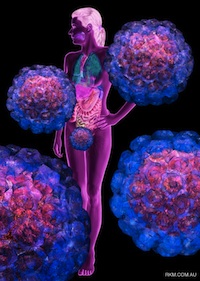
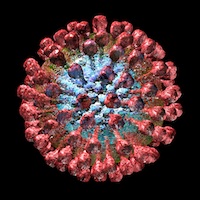
So: what do the following particles have in common?  A three-part answer, this; the first fairly easy, the second more difficult, and the third quite obscure.  The winner will, as previously, get to write a guest blog for ViroBlogy!!  Dorian, limber up there.  Varsani, you’re disqualified, so too anyone from my lab – unless well disguised. *

Hint 1: yes, they are

Hint 2: you could catch them together?

Hint 3: strange as it may seem, these are identical.

I hope this is sufficiently obscure?  Have fun, won’t you.

* = this qualifies as Hint 4.

HIV: catching it from all sides

10 December, 2010

Back when I started teaching virology – 1981 it was, so I’ve been doing it for 30 years come January! – there were precious few agents that did anything to viruses, apart from antibodies and that wonderful new and precious stuff called interferon.  Oh, and nucleoside analogues like adenine arabinoside (araA), ribavirin, and the legendary amantadine and rimantidine – which pretty much only covered herpes- and influenza viruses, according to Fenner and White’s Medical Virology of 1986.

And then along came HIV….and everything changed.

All of a sudden, we have an embarrassment of riches – against retroviruses, anyway.  Consider the following:

  • Nucleoside and nucleotide reverse transcriptase inhibitors (NRTI) inhibit reverse transcription
  • Non-nucleoside reverse transcriptase inhibitors (NNRTI)
  • Protease inhibitors (PIs) target viral assembly
  • Integrase inhibitors inhibit integration of viral DNA into the DNA of the infected cell
  • Entry inhibitors (or fusion inhibitors) interfere with binding, fusion and entry of HIV-1 to the host cell by blocking one of several targets.
  • Maturation inhibitors inhibit the last step in gag processing in which the viral capsid polyprotein is cleaved

Of course the above serve to vindicate most thoroughly my “Entrance, Entertainment and Exit” mantra / mnemonic for virus replication, in that they block entrance, interfere with entertainment (replication), and mess with exit too.

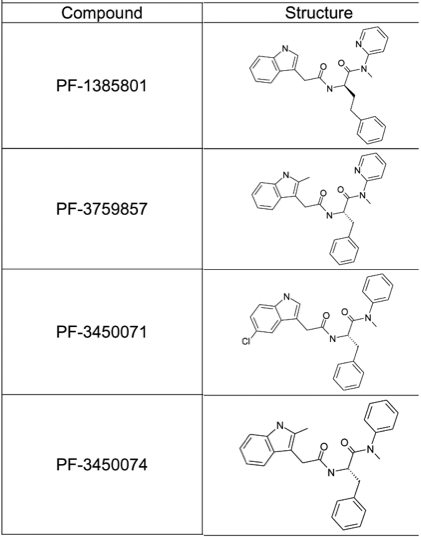
But wait, there’s more: a brand-new paper in PLoS Pathogens describes the wide-spectrum anti HIV-1 and -2 activity of a new class of small molecule antiretroviral compounds.  These directly target HIV-1 capsid (CA; p24 protein) via binding into a “pocket” in the N-terminus, and thereby interfere with both assembly and uncoating of virions.

HIV Capsid is a Tractable Target for Small Molecule Therapeutic Intervention.
Blair WS, Pickford C, Irving SL, Brown DG, Anderson M, et al. (2010)
PLoS Pathog 6(12): e1001220. doi:10.1371/journal.ppat.1001220   Published December 9, 2010

Abstract:
Despite a high current standard of care in antiretroviral therapy for HIV, multidrug-resistant strains continue to emerge, underscoring the need for additional novel mechanism inhibitors that will offer expanded therapeutic options in the clinic. We report a new class of small molecule antiretroviral compounds that directly target HIV-1 capsid (CA) via a novel mechanism of action. The compounds exhibit potent antiviral activity against HIV-1 laboratory strains, clinical isolates, and HIV-2, and inhibit both early and late events in the viral replication cycle. We present mechanistic studies indicating that these early and late activities result from the compound affecting viral uncoating and assembly, respectively. We show that amino acid substitutions in the N-terminal domain of HIV-1 CA are sufficient to confer resistance to this class of compounds, identifying CA as the target in infected cells. A high-resolution co-crystal structure of the compound bound to HIV-1 CA reveals a novel binding pocket in the N-terminal domain of the protein. Our data demonstrate that broad-spectrum antiviral activity can be achieved by targeting this new binding site and reveal HIV CA as a tractable drug target for HIV therapy.

So, yet another target in HIV for chemotherapeutic agents – but what, exactly, are these new magic bullets?

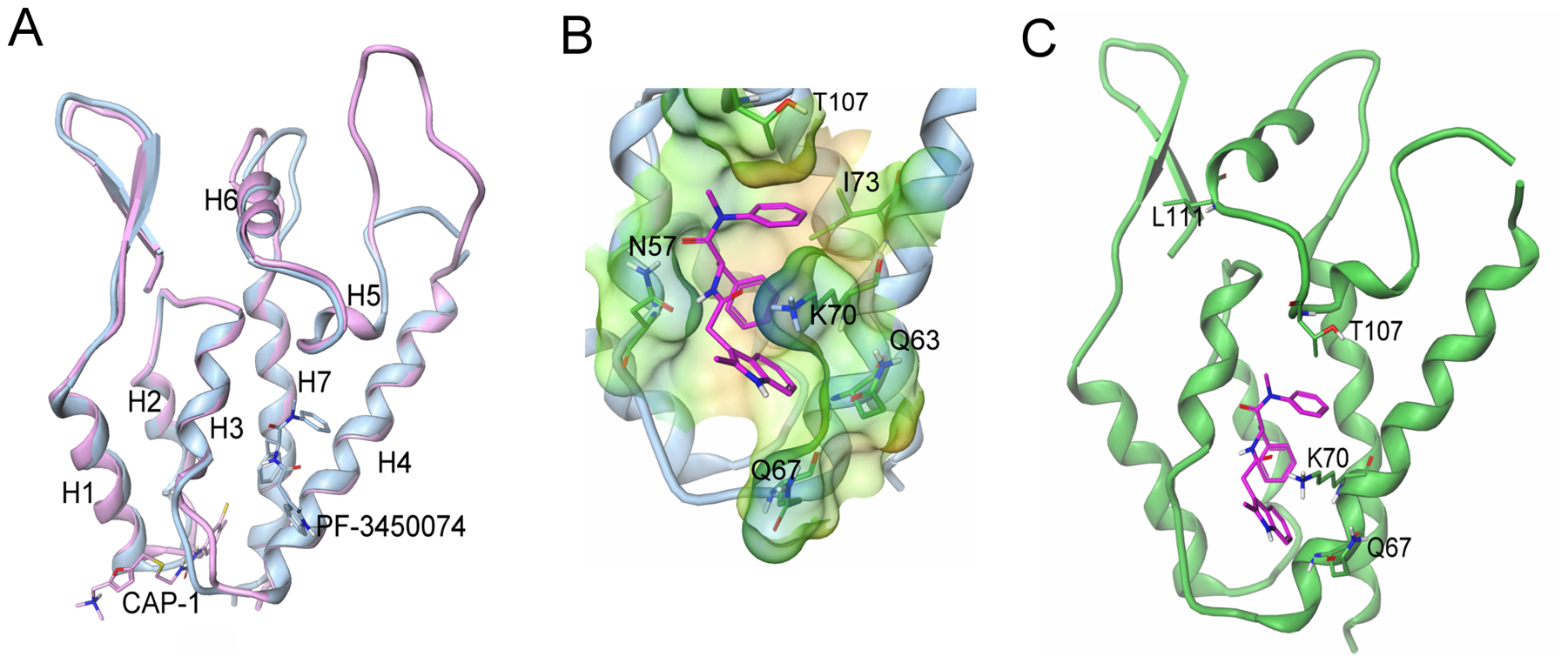
And in Figure 5 of the original paper, you can see what it is that they do:

Figure 5: Structure of the novel inhibitor binding site and context in the NTD

a) Overlays of capsid structures with PF-3450074 in blue and CAP-1 in pink bound to capsid N-terminal domain; b) Close up view of PF-3450074 site (binding site residues labelled in black, R1-3 sub-pockets labelled in purple)…. c) Location of resistant mutations (purple) in relation to PF-3450074 capsid binding site.

The authors conclude their article with this:

The broad spectrum activity of this series [of drugs] is particularly exciting and highlights this novel mechanism [binding the CA protein] as a significant therapeutic opportunity.

Definitely not an over-stated conclusion!  And nicely rounding out a recent series of HIV-combatting articles and developments covered here recently.  And let me also refer you here to AJ Cann’s most recent post, on HIV entry – which, surprisingly, is still not a nailed-down and simple model.  And which I discovered literally while writing this, so seriously hot off the press.

Prophylactically yours….

7 December, 2010

It’s not often we have something to report on locally – I rely on Alan Cann to do that…B-) – but I am very pleased to be able to do so now.

Hot on the heels of another South African success in the fight against HIV and AIDS comes the news (from the UCT Monday Paper) that:

Prophylactic antiretrovirals could check HIV infection

Assoc Prof Linda-Gail BekkerBeing there: UCT’s Assoc Prof Linda-Gail Bekker led the South African component of the six-country study on the prophylactic use of an antiretroviral tablet.

It’s a long way from being the final word in HIV prevention, but a major study involving UCT researchers and published in the New England Journal of Medicine reveals that the daily use of an antiretroviral tablet as a prophylactic could curb infection among those at high risk by nearly 44%.

The findings are based on an HIV-prevention trial conducted at 11 international sites in six countries (including the Desmond Tutu HIV Foundation [DTHF], associated with UCT’s Faculty of Health Sciences), from June 2007 to May 2010. The study, named the Pre-Exposure Prophylaxis Initiative (iPrEx), looked at the prophylactic use – in other words, for people not infected with HIV – of a tablet that contains two widely-used HIV medications, emtricitabine and tenofovir (FTC/TDF).

Results showed that high-risk individuals – men and transgender women who have sex with men – who took the tablet experienced an average of 43.8% fewer HIV infections than those who received a placebo. In all, 64 HIV infections were recorded among the 1 248 study participants who received a placebo pill, while 36 HIV infections were recorded among the 1 251 participants who received the study drug.

The iPrEx study found that this pre-exposure prophylaxis (PrEP) was more effective among those who reported taking the pill more regularly. Among participants who used the tablet on 50% or more of days, as measured by pill counts, bottle counts and self-reports, risk of HIV infection fell by 50.2%; while among those who used the pill on 90% or more of days, as determined by the same measures, the PrEP pill reduced infection risk by 72.8%.

“I think this is a very significant study in that what we have here is the first proof of concept that taking an antiretroviral prophylactically – in other words, taking it before exposure to HIV – would actually prevent HIV infection,” says UCT’s Associate Professor Linda-Gail Bekker, deputy director of the Desmond Tutu HIV Centre.

tablets (brand-named Truvada)As the tablets (brand-named Truvada) are readily available, anyone can buy and use these. But Bekker is quick to point out that a lot of work still has to be done on the treatment, especially on its use outside of trial conditions. (For example, the tablet can affect renal and liver function, so participants’ kidneys and livers were monitored closely.)

Also, those recently infected and still developing antibodies to the HIV (ie seroconverting) are cautioned not to take the tablet, as it exposes the virus to two agents, upping the risk of building resistance to the treatment. “You may inadvertently affect or impact your chances of good treatment down the line,” says Bekker.

Naturally, high-incidence countries like South Africa will take plenty of interest in the study. But at around R400 for 30 tablets, this may not be the treatment to turn things around for the country.

“It is unlikely that we will be able to treat our way out of this epidemic,” said the DTHF in a statement. “We are going to have to find innovative, affordable and practical ways to stop the ongoing transmission of HIV.”

Fortunately, the study found that participants did not relax their use of safer-sex practices. On the contrary, self-reported HIV-risk behaviour decreased among participants, while condom use increased.

Professor Anna-Lise Williamson, of UCT’s Institute for Infectious Disease and Molecular Medicine and a member of the South African AIDS Vaccine Initiative, welcomes the treatment as another valuable advance in curbing the spread of the disease, but remains cautious of the human-behaviour element. For one, she says, people have to recognise that they are at risk before they’ll commit to the tablet.

“But it gives people options, and the more options they have, perhaps they’ll find a prevention strategy that suits their lifestyles,” she says. “But in the long term, I still believe we need a vaccine to prevent HIV infection.”

Concerns about risk compensation – increases in risky behaviour prompted by decreases in perceived risk – will remain, says Bekker. For this, education will be essential.

Also, the tablet’s use as a prophylactic will have to be but one tool in an arsenal of measures.

“We’re going to have to layer different kinds of preventative strategies together to come up with foolproof prevention,” Bekker warns, “but it’s probably not going to be dependent on only one strategy.”

Amen.  So we have – in order of increasing efficacy – an HIV candidate vaccine regime, a vaginal gel, and now pre-exposure prophylaxis.  And if you combine them…??  Basically, an additive effect – except that the vaccine is not available….  Time to fast-track, people!!

Integrating the enemy

23 November, 2010

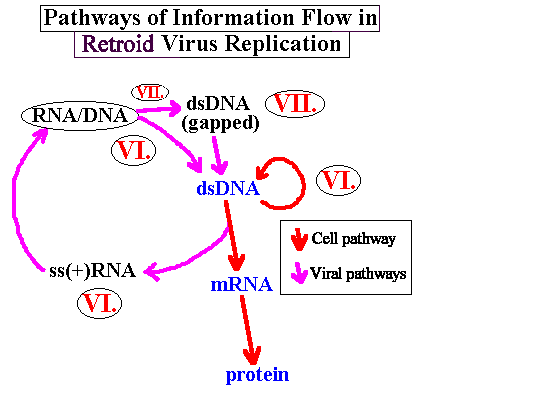
Ever since I first discovered them as a student, sometime in 1976, I have found retroviruses fascinating.  Not quite as fascinating as Ebola, possibly, but captivating nonetheless.  The whole concept of a virus that converts a perfectly ordinary mRNA into dsDNA, then  inserts it into the host chromosome as a provirus in a eukaryotic version of lysogeny – was truly wonderful.

And as the years have gone by, I have seen no reason to lessen the feeling of wonderment: other

The Retroid Virus Replication Cycle

viruses – now called pararetroviruses, including both hepadnaviruses and plant viruses – whose replication  starts at a different position in the  cycle have been found; these and retroviruses have been integrated into a whole family of “reverse transcribing elements” – retrons – which include prokaryote transposons; HIV burst in on the scene, and suddenly we know so much about how the immune system works, because a virus messes with it so well.

But the actual mechanics of one particular process have consistently escaped elucidation – until now.  The 11 November issue of Nature contains, apart from only the second SF short-short story by a South African (kudos, Anand!), a Letter of great interest.

The mechanism of retroviral integration from X-ray structures of its key intermediates
Goedele N. Maertens, Stephen Hare & Peter Cherepanov
Nature 468,326–329 (11 November 2010) doi:10.1038/nature09517

To establish productive infection, a retrovirus must insert a DNA replica of its genome into host cell chromosomal DNA. This process is operated by the intasome, a nucleoprotein complex composed of an integrase tetramer (IN) assembled on the viral DNA ends. The intasome engages chromosomal DNA within a target capture complex to carry out strand transfer, irreversibly joining the viral and cellular DNA molecules. Although several intasome/transpososome structures from the DDE(D) recombinase superfamily have been reported, the mechanics of target DNA capture and strand transfer by these enzymes remained unclear. Here we report crystal structures of the intasome from prototype foamy virus in complex with target DNA, elucidating the pre-integration target DNA capture and post-catalytic strand transfer intermediates of the retroviral integration process. [my emphasis – Ed] The cleft between IN dimers within the intasome accommodates chromosomal DNA in a severely bent conformation, allowing widely spaced IN active sites to access the scissile phosphodiester bonds. Our results resolve the structural basis for retroviral DNA integration and provide a framework for the design of INs with altered target sequences.

Basically, these folk have managed to freeze-frame several different stages of the process in crystals, by clever use of synthetic DNA targets – and then solved the structures.  NOT trivial, and the pictures are absolutely superb.  So are the movies…but you need to subscribe to Nature to see those.

Harking back to a previous post – Entrance, Entertainment and Exit, anyone? –  the more we know about viruses, the more we can mess with them.  And this is a VERY good step along that road.

Rinderpest: gone, but not forgotten – yet.

5 November, 2010

Rinderpest virus infects cattle, buffalo and several species of antelope among other animals: it is a member of the genus Morbillivirus,family Paramyxoviridae, and is related to measles and mumps viruses in humans, distemper virus in dogs, and a variety of relatively newly-described viruses in marine mammals.  It also almost certainly gave rise to measles virus sometime around the 11th-12th centuries CE, as an originally zoonotic infection – sourced in domestic animals – took root in humans and began to be passed around (see MicrobiologyBytes).

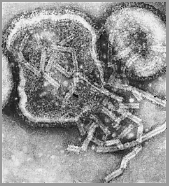
Electron micrograph of a morbillivirus particle showing the membrane, matrix, and inner helical nucleocapsid. Image by LM Stannard

The ICTVdB generic description of morbilliviruses is as follows:

Virions consist of an envelope and a nucleocapsid. Virus capsid is enveloped. Virions are spherical to pleomorphic; filamentous and other forms are common. Virions measure (60-)150-250(-300) nm in diameter; 1000-10000 nm in length. Surface projections are distinctive spikes of haemagglutinin (H) and fusion (F) glycoproteins covering evenly the surface. Surface projections are 9-15 nm long; spaced 7-10 nm apart. Capsid/nucleocapsid is elongated with helical symmetry. The nucleocapsid is filamentous with a length of 600-800(-1000) nm and a width of 18 nm. Pitch of helix is 5.5 nm.

The Mr of the genome constitutes 0.5% of the virion by weight. The genome is not segmented and contains a single molecule of linear negative-sense, single-stranded RNA. Virions may also contain occasionally a positive sense single-stranded copy of the genome (thus, partial self-annealing of extracted RNA may occur). The complete genome is 15200-15900 nucleotides long.

Wikipedia describes rinderpest virus as “…an infectious viral disease of cattle, domestic buffalo, and some species of wildlife. The disease was characterized by fever, oral erosions, diarrhea, lymphoid necrosis, and high mortality.”   And: “The term Rinderpest is taken from German, and means cattle-plague.”

The Food and Agriculture Organisation (FAO) has a Division of Animal Production and Health: their web site details a campaign known as the Global Rinderpest Eradication Programme (GREP), which has been going since 1994.

With very little fanfare, I might point out: as a practicing teaching virologist, I was totally unaware of it.  Anyway: they state that:

Rinderpest has been a dreaded cattle disease for millennia, causing massive losses to livestock and wildlife on three continents. This deadly cattle plague triggered several famines and caused the loss of draught animal power in agricultural communities in the 18th, 19th and 20th centuries.

…which is a little of an understatement: Wikipedia tells us that

“Cattle plagues recurred throughout history, often accompanying wars and military campaigns. They hit Europe especially hard in the 18th century, with three long pandemics which, although varying in intensity and duration from region to region, took place in the periods of 1709–1720, 1742–1760, and 1768–1786. There was a major outbreak covering the whole of Britain in 1865/66.”

“Later in history, an outbreak in the 1890s killed 80 to 90 percent of all cattle in Southern Africa, as well as in the Horn of Africa [and resulted in the deaths of many thousands of people who depended on them]. Sir Arnold Theiler was instrumental in developing a vaccine that curbed the epidemic. [my insert / emphasis] More recently, a rinderpest outbreak that raged across much of Africa in 1982–1984 cost at least an estimated US$500 million in stock losses”.

When commenting on the significance of the achievement, John Anderson, the head of the FAO, described GREP’s announcement that Rinderpest had been eradicated as:

The biggest achievement of veterinary history“.

The 19th century southern African outbreak was devastating enough that people still remember it as a legendary time of hardship – and then there was the 1980s outbreak.  Another South African interest in rinderpest is that the legendary Sir Arnold Theiler had a hand in making a vaccine: he did this around the turn of the 20th century, by simultaneously injecting animals with blood from an infected animal and antiserum from a recovered animal: this protected animals for long enough to allow their immune systems to respond to the virus – but was rather risky, even though it was used for several decades.

In the 1920s J. T. Edwards in what is now the Indian Veterinary Research Institute serially passaged the virus in goats: after 600 passages it no longer caused disease, but elicited lifelong immunity. However, it could still cause disease in immunosuppressed cattle.

In 1962, Walter Plowright and R.D. Ferris used tissue culture to develop a live-attenuated vaccine grown in calf kidney cells.  Virus that had been passaged 90 times conferred immunity without disease even in immunosuppressed cattle, was stable, and did not spread between animals.  This vaccine was the one that allowed the prospect of eradicating the virus, and earned Plowright a World Food Prize in 1999.

But a memory may be all rinderpest is any more – as the GREP site says the following:

“The last known rinderpest outbreak in the world was reported in 2001 (Kenya). Based on the above-mentioned investigations, FAO is confident that all rinderpest virus lineages will prove to be extinct.”

This was also announced via the BBC on the 14th October, 2010.  They said:

The eradication of the virus has been described as the biggest achievement in veterinary history and one which will save the lives and livelihoods of millions of the poorest people in the world.

And the significant bit:

If confirmed, rinderpest would become only the second viral disease – after smallpox – to have been eliminated by humans.

Let us reiterate that: only the second viral disease, ever, to have been eliminated.  And how was this possible?  Unlike smallpox, which has only humans as a natural and reservoir host (although it almost certainly also got into us from animals), rinderpest attacked a wider range of hosts.  However, it seemed mainly to have a reservoir in domesticated cattle, and it did not have an arthropod vector; moreover, the vaccine was cheap and effective.

This is momentous news: we may well have succeeded in ridding the planet of what has been a very significant disease of livestock and of wild animals, which has caused untold agricultural loss throughout recorded history, and which has resulted in enormous human hardship as well.  We have also made a natural species go extinct – but it won’t be missed.  Like smallpox, it was completely sequenced some time ago, so we could theoretically recreate it if we ever needed to.

From GREP:

Though the effort to eradicate rinderpest has encountered many obstacles over the past several decades, the disease remains undetected in the field since 2001. As of mid 2010, FAO is confident that the rinderpest virus has been eliminated from Europe, Asia, Middle East, Arabian Peninsula, and Africa. This has been a remarkable achievement for veterinary science, evidence of the commitment of numerous countries, and a victory for the international community.

Amen.  However – it’s not quite time to celebrate as the certification is only planned for 2011.

And now for mumps, and measles too.

HPV vaccines: good, but out of reach for most

28 October, 2010

Human papillomavirus and cervical cancer - copyright Russell Kightley Media

The fact that genital Human papillomaviruses (HPVs) cause cervical cancer in women, as well as a variety of other growths and lesions in both men and women, is not in dispute.  The fact that cervical cancer is a major and growing scourge of women in developing countries is also non-contentious: of the more than 500 000 cases and 300 000 deaths due to the disease every year, more than 80% occur in the developing world.  This is largely because, unlike their counterparts in the developed world, poor Third World women either do not get screened using the relatively simple cytological detection method known as the Papanicolau (Pap) smear, or do not get treated thereafter.  Thus, cervical cancer really is a disease of poverty, given that most deaths occur due to a lack of simple procedures being provided in clinics.

The best method of prevention of an infectious disease is almost always a vaccine: HPV vaccines have been around a while now, and have proved to be both safe and efficacious – both primary requirements of a vaccine.  Both Merck and GlaxoSmithKline’s vaccines – the yeast-produced Gardasil and insect cell-produced Cervarix respectively – are virus-like particles (VLPs) composed of the major HPV coat protein L1 only; Cervarix contains particles of the high-risk HPV types (or species) 16 and 18 and Gardasil contains VLPs derived from HPVs 16 and 18 as well as the genital wart-causing 6 and 11.

The vaccines are both “blockbusters” – that is, they both have sales of over US$1 billion – are are possibly the best-researched human vaccines ever made.  They are also possibly among the most expensive: Gardasil went on sale in the USA at $120 per dose – and a full treatment consists of 3 doses, for a total cost per person treated of $360; Cervarix retails at around the same price.

This is so far beyond the budget of most people in most countries as to be akin to their expectation of winning a lottery – and of the order of 1000x as expensive as possibly the most widely distributed vaccine in the world, which is Bacillus Calmette-Guerin (BCG), the Mycobacterium tuberculosis vaccine.

It is a sad fact of life that the whole WHO Expanded Programme on Immunisation – EPI – six vaccine bundle of polio, measles, neonatal tetanus, diphtheria, pertussis (whooping cough) and tuberculosis vaccines “… costs no more than US$1 … (at UNICEF-discounted prices), and another US$14 for programme costs (laboratories, transport, the cold chain, personnel and research) to fully immunize a child”.  It is also a sad fact that the new generation of vaccines – exemplified by the yeast-made recombinant hepatitis B virus (HBV) subunit vaccine – are expensive even when discounted after patents have expired: thus, HBV vaccine launched at US$150 for three doses in 1986, and came down to around $10 now.  It is included in EPI bundles in some countries because of even greater discounting (down to ~$1); however, its cost is generally greater than the rest of the bundle combined.

So what should happen with HPV vaccines?  How are they going to get to the people who need them most, at the price they can afford – which is nothing?  The simple answer is that governments and international agencies must buy them, as is presently the case with the EPI package – and that they must be very heavily discounted, to allow this.

In fact, at the recent Papillomavirus Conference in July in Montreal (which we should write up in more detail elsewhere), I heard that the Mexican government has managed to secure  HPV vaccine at US$27/dose – or 25% of the regular price – for a campaign they are mounting in some regions to supply vaccine for free.  So it is possible – however, even this price is far too high, as it represents about the per capita per annum public health expenditure in the poorest countries who probably need it most.

It raises my blood pressure, therefore, when I read that in several highly-developed western countries there are a number of controversies (see also here) around HPV vaccination: yet again, on the heels of the measles and MMR (measles-mumps-rubella viruses) vaccines-cause-autism idiocy, people who can afford vaccines are among the most stupid when it comes to having them.

The facts, as opposed to the hype, are these:

  • the vaccines were proven to be safe in extended clinical trials
  • they were proven to be efficacious in preventing infection and development of precancerous lesions and genital warts – in men as well as in women

Inflammatory stories about deaths due to HPV vaccines are just that – stories.  A recent publication from India, where the government suspended a vaccine study due to deaths of girls involved in the trial, puts things into perspective:

“The causes of death had been scrutinized by the State Government and reported to ICMR and Drugs Controller General of India; all were satisfied that no death was vaccine-related [ my emphasis]. We understand that there is an unusually high frequency of death among girls in this community, which is what deserves immediate enquiry and remedial interventions….
The death of a 14-year old British girl shortly after receiving HPV Vaccine,evoked considerable media attention across the world. The necropsy studies showed that she had malignant tumor affecting her heart and lungs…. The vaccine was not her cause of death.”

There is also considerable silliness surrounding the vaccination of girls – and, hopefully, boys! – against what is very largely a sexually transmitted virus.

Do people have the same problem with HBV?

Or – is it possible?? – they don’t know that it is also frequently a sexually-transmitted disease, among adults at least?

In any case, the kinds of prudishness-by-proxy that result in non-vaccination against HPV or HBV are simple foolishness.

And I would be happy to tell anyone so.

Meantime, we want to make HPV vaccines in plants. Any sponsors??

Lassa, come home!

21 October, 2010

Lassa virus: image copyright Russell Kightley Media

Lassa fever is a nasty acute viral haemorrhagic fever (HF), caused by Lassa virus.  This is a member of the genus Arenavirus, family Arenaviridae, comprising a collection of 2-component ss(-)RNA enveloped viruses which also includes Lymphocytic choriomeningitis virus – a favourite model organism – and a host of South American HF viruses.  It is also a BSL-4 pathogen, or “hot virus” – one that needs to be worked with in a spacesuit environment, meaning it is pretty difficult to study in the lab.

Arenaviruses are interesting for molecular virologists because of they are one of several ssRNA(-)RNA viruses with “ambisense” genomes, meaning their genomic RNAs have stretches which can be directly read into protein by ribosomes, instead of having to be transcribed first.

The virus and the fever are endemic in the West African countries of Nigeria – from where it was first described in 1969 – Sierra Leone, Liberia, Guinea and the Central African Republic, but almost certainly occur more widely.  There are an estimated 300 000 cases a year, with 5 000 deaths attributed to the virus annually – again, probably an underestimate, as in epidemics mortality can go up to 50%.  The virus is vectored by what is probably the most common type of rodent in equatorial Africa, multimammate rats in the genus Mastomys, mainly via aerosolised faces and urine, which contain high concentrations of virions.  The rat can maintain infection as a persistent asymptomatic state.  It is also possible to spread the disease from person to person, via body fluids.

The CDC has this to say about Lassa fever:

In areas of Africa where the disease is endemic (that is, constantly present), Lassa fever is a significant cause of morbidity and mortality. While Lassa fever is mild or has no observable symptoms in about 80% of people infected with the virus, the remaining 20% have a severe multisystem disease. Lassa fever is also associated with occasional epidemics, during which the case-fatality rate can reach 50%.

While this may seem to be of mild interest only to the international community – after all, it is a seasonal disease limited to one part of Africa, and only 5 000 people die annually, compared to 400 000+ for influenza – it is and remains a nasty disease, with significant side effects, which include temporary or permanent deafness in those who recover – various degrees of deafness occur in up to one-third of cases – and spontaneous abortion of about 95% of third trimester foetuses in infected mothers, and a death rate of >80% in the women.  Moreover, while the term “limited to West Africa” may make it sound of local interest only, it is worth noting that that part of Africa is bigger than the whole of Western Europe – in fact, it’s the size of the whole of the USA – and is home to close to 200 million people.  Moreover, there is serious concern that the incidence of Lassa fever may be increasing, and that it is emerging from its endemic regions into newer pastures with changing regional weather patterns.  However, while fears of rampant spread via air travel do exist, like “Ebola Preston“, these are largely scare stories – which are admirably efficiently debunked here.

A tragic fact about Lassa fever is that it is treatable with drugs, if caught early: JB McCormick and others showed in 1986 that intravenous ribavirin given within 6 days of the onset of fever reduced mortality of patients with a serum aspartate aminotransferase level greater than or equal to 150 IU per litre at the time of hospital admission, from 55% to 5% – whereas patients whose treatment began seven or more days after the onset of fever had a case-fatality rate of 26 percent.  Moreover, oral ribavirin was also effective in patients at high risk of death.

So WHY isn’t ribavirin distributed widely and freely in West Africa for use in clinics??  Why, indeed…that doyen of the US biowarfare / hot virus community, CJ Peters, had this to say in an online book:

Both antiviral vaccines and drugs suffer from major development problems. They would require an expensive developmental effort that has never been able to attract industrial support based on disease activity in endemic areas, even when the U.S. Department of Defense has expressed an interest and provided an additional market.

In other words, no-one would manufacture it for a market that couldn’t pay for it in a sustainable way – another of the unacceptable faces of modern capitalism.

There is hope, however – people are working on vaccines, and there have been significant successes in primate models: in 2005, Geisbert et al. described a

“…replication-competent vaccine against Lassa virus based on attenuated recombinant vesicular stomatitis virus vectors expressing the Lassa viral glycoprotein. A single intramuscular vaccination of the Lassa vaccine elicited a protective immune response in nonhuman primates against a lethal Lassa virus challenge. Vaccine shedding was not detected in the monkeys, and none of the animals developed fever or other symptoms of illness associated with vaccination. The Lassa vaccine induced strong humoral and cellular immune responses in the four vaccinated and challenged monkeys. Despite a transient Lassa viremia in vaccinated animals 7 d after challenge, the vaccinated animals showed no evidence of clinical disease.”

Very promising, at first glance.  This is, however, a live virus vaccine – with all of the attendant problems of purification of whole virus, contamination, manufacture, cold chain – and cost….  Given the recent global experience with virus vaccines both live and dead – and recent rotavirus and papillomavirus vaccines would be excellent recent examples, with unit costs at over US$40 per shot  – this vaccine will not debut, if it does so at all, at a cost that is even remotely affordable in the target market in West Africa.

Unless the target market is in fact the US military – which, given the fact that the lead author’s address is given as “Virology Division, United States Army Medical Research Institute of Infectious Diseases, Fort Detrick”, can be considered quite likely.

Another more recent, and – to my biased mind at least – more promising candidate vaccine, is one described by Luis M Branco et al. in a brand-new Virology Journal article.  This one is also associated with the US military –  with 3 of 11 authors with addresses “@usarmy.mil” – but describes a virus-like particle vaccine candidate rather than a recombinant live virus.

Lassa virus-like particles displaying all major immunological determinants as a vaccine candidate for Lassa hemorrhagic fever

Virology Journal 2010, 7:279 doi:10.1186/1743-422X-7-279

Published: 20 October 2010

Luis M Branco, Jessica N Grove, Frederick J Geske, Matt L Boisen, Ivana J Muncy, Susan A Magliato, Lee A Henderson, Randal J Schoepp, Kathleen A Cashman, Lisa E Hensley and Robert F Garry

Background

Lassa hemorrhagic fever (LHF) is a neglected tropical disease with significant impact on the health care system, society, and economy of Western and Central African nations where it is endemic. Treatment of acute Lassa fever infection with intravenous Ribavirin, a nucleotide analogue drug, is possible and greatly efficacious if administered early in infection. However, this therapeutic platform has not been approved for use in LHF cases by regulatory agencies, and the efficacy of oral administration has not been demonstrated. Therefore, the development of a robust vaccine platform generated in sufficient quantities and at a low cost per dose could herald a subcontinent-wide vaccination program. This would move Lassa endemic areas toward the control and reduction of major outbreaks and endemic infections. To date, several potential new vaccine platforms have been explored, but none have progressed toward clinical trials and commercialization. To this end, we have employed efficient mammalian expression systems to generate a Lassa virus (LASV)-like particle (VLP)-based modular vaccine platform.

Results

A mammalian expression system that generated large quantities of LASV VLP in human cells at small scale settings was developed. These VLP contained the major immunological determinants of the virus: glycoprotein complex, nucleoprotein, and Z matrix protein, with known post-translational modifications. The viral proteins packaged into LASV VLP were characterized, including glycosylation profiles of glycoprotein subunits GP1 and GP2, and structural compartmentalization of each polypeptide. The host cell protein component of LASV VLP was also partially analyzed, namely glycoprotein incorporation, though all host cell components remain largely unknown. All combinations of LASV Z, GPC, and NP proteins that generated VLP did not incorporate host cell ribosomes, a known component of native arenaviral particles, despite detection of small RNA species packaged into pseudoparticles. Although VLP did not contain the same host cell components as the native virion, electron microscopy analysis demonstrated that LASV VLP appeared structurally similar to native virions, with pleiomorphic distribution in size and shape. LASV VLP that displayed GPC or GPC+NP were immunogenic in mice, and generated a significant IgG response to individual viral proteins over the course of three immunizations, in the absence of adjuvants. Furthermore, sera from convalescent Lassa fever patients recognized VLP in ELISA format, thus affirming the presence of native epitopes displayed by the recombinant pseudoparticles.

Conclusions

These results established that modular LASV VLP can be generated displaying high levels of immunogenic viral proteins, and that small laboratory scale mammalian expression systems are capable of producing multi-milligram quantities of pseudoparticles. These VLP are structurally and morphologically similar to native LASV virions, but lack replicative functions, and thus can be safely generated in low biosafety level settings. LASV VLP were immunogenic in mice in the absence of adjuvants, with mature IgG responses developing within a few weeks after the first immunization. These studies highlight the relevance of a VLP platform for designing an optimal vaccine candidate against Lassa hemorrhagic fever, and warrant further investigation in lethal challenge animal models to establish their protective potential.

So what they have done is to make non-infectious particles which strongly resemble native virions of Lassa virus, at high yield in a mammalian cell expression system, under low containment conditions – meaning it is safe for workers. The VLPs are highly and appropriately immunogenic, and appear to have significant potential as a Lassa virus vaccine.  This is very similar to previously reported work on Rift Valley fever VLPs made in insect cells, and HPAI and pandemic influenza HA-containing VLPs made in plants, in that VLPs are produced at good yield in an established expression system.

Except that they’re using mammalian cells, with all of the cost implications inherent in that.  And they’re using transfection of plasmids – not the world’s cheapest method of producing proteins.  And they didn’t show efficacy….

Ah, well, there’s still hope – and they could still go green…B-)

Something rabid this way comes

5 October, 2010

Rabies virus: also known more officially as

The relevant ICTVdB (Intl Comm on Taxonomy of Viruses Database) page describes the viruses as follows:

Rabies virus virion

Morphology

Virions consist of an envelope and a nucleocapsid. Virus capsid is enveloped. Virions are bullet-shaped. Virions measure 45-100 nm in diameter; 100-430 nm in length. Surface projections are densely dispersed, distinctive spikes that cover the whole surface except for the quasi-planar end. Capsid/nucleocapsid is elongated with helical symmetry.

Nucleic Acid

The Mr of the genome constitutes 1-2% of the virion by weight. The genome is not segmented and contains a single molecule of linear, negative-sense, single-stranded RNA. The complete genome is 11900 nucleotides long, is fully sequenced.

A description of the replication of these viruses is given here.

There has been a fair bit of media fuss here in South Africa recently – and in Gauteng in particular – about a rabies outbreak, and the need to get pets and possibly dependants vaccinated against the virus.

The urgency of this campaign was underlined by the recently reported death of a child, scratched by a rabid puppy.

The literature available locally to inform prevention is a bit dated – 1997 – but it is comprehensive and well-researched.  This is a PDF document available here; more recent material can be found at the CDC site.

Important points to note about rabies are the following:

  • If untreated, it is effectively 100% fatal in both susceptible animals and in humans
  • There are effective vaccines for the prevention of infection – veterinarians and staff working with animals are routinely vaccinated – and
  • There is an effective therapy for people already bitten, which involves the injection of anti-rabies antibodies

News currently coming out of Gauteng Province reported in Business Day indicates that this outbreak is the first in that province in many years, and that over R30 million (~US$4 million) will be required to stamp it out – with the requirement that >70% of Gauteng’s estimated 1,4-million cats and dogs be vaccinated, otherwise the disease could become endemic.

While the disease has been known for centuries, and vaccines and therapy date back to the time of Louis Pasteur, it is alarming to realise that, in the words of the CDC Rabies Homepage,

“…Rabies in humans is 100% preventable through prompt appropriate medical care. Yet, more than 55,000 people, mostly in Africa and Asia, die from rabies every year – a rate of one person every ten minutes.”

A horrific disease to die of, and relatively easily preventable.  We just need more and cheaper vaccines and therapy.  Roll on the plants…!

Oh, and simple common sense, and widespread compliance….

Sing the flues….

3 September, 2010

Seeing as it’s officially over – well, the odd people still dying might dispute this, but the WHO Has Spoken – I thought I would share this with you, seeing as I agree 100% with the sentiments (I wanted it called Mexico Flu).  Arvind Varsani, my one-time PhD student now in The Land of the Long Black White Cloud, sent me this link today – thanks Arv!  You win a free ViroBlogy article!  I expect it within a month.

And so it’s over – is it??

26 August, 2010

The WHO recently declared the H1N1 “swine flu” pandemic to be over – on August 10th, 2010.   From the AFP article:

“The world is no longer in phase six of the pandemic alert. We are now moving into the post-pandemic period,” WHO Director General Margaret Chan said

….

Swine flu has killed more than 18,449 people and affected some 214 countries and territories since it was uncovered in Mexico and the United States in April 2009, according to WHO data.

The new virus spread swiftly worldwide despite drastic measures including a week long shutdown in Mexico, prompting the UN health agency to scale up its alerts and declare a pandemic on June 11, 2009, banishing kisses and frowning on handshakes.

Fears about the impact of swine flu on unprotected populations and a harmful mutation sparked a rush for hundreds of millions of dollars worth of specially-developed vaccines and a flurry of public health precautions.

However, those concerns dwindled in late 2009 to be replaced by recriminations in Western nations about the cost of unused vaccines and what some European critics regarded as an unjustified scare.

Amazing, that: the world authorities get it right, help mitigate what could have been a nasty pandemic – then get it in the neck for being alarmist, and helping drug companies make a profit.

Further from the article:

After petering out in Europe and the United States before their winter flu season was over, in recent months swine flu has affected parts of South Asia and “limited areas” of tropical South and Central America, as well as Africa for their second season.

But unlike 2009, when A(H1N1) ousted most other types of flu viruses around the world, known seasonal viruses now are prevalent and even dominant in countries such as South Africa.

Yeeessssss…and that’s all very well, because do you know what happened in South Africa?  They’ve only just released H1N1 vaccine stockpiled for health workers for the duration of the Soccer World Cup, is what – late in the flu season, and almost too late to do any good.  Meaning exactly what was predicted at the beginning of the pandemic, came to pass: there was not enough vaccine for developing countries, and even a year after its emergence, it was still not being distributed evenly.

Not a very good practice run for the Big One, if you ask me: still not enough vaccine being made quickly enough; vaccine not being distributed to at-risk countries; too much fussing over the welcome news that it was not as bad as it could have been.

I’m going to put my faith in plants….