DNA Preparation Tubes Contaminated with Novel ssDNA Virus

21 September, 2013

See on Scoop.itVirology News

A novel virus thought to have come from human samples appears to have been derived from seawater during the manufacture of tubes used to extract DNA.  

Ed Rybicki‘s insight:

I have a problem with the original report, in J Virol (http://jvi.asm.org/content/early/2013/09/05/JVI.02323-13.abstract?related-urls=yes&legid=jvi;JVI.02323-13v1): not that they discovered it, because that was done well.  However, they essentially REdiscovered something that was ±100% identical to a virus already sequenced and named by Chinese researchers – who did not use the Qiagen kits, apparently – and then gave it a new name!


Sorry, that is simply bad practice!  It also smacks of scientific imperialism of a sort that characterised early discovery work on HTLVs and on HIV, when US researchers calmly treated earlier characterisations as if they had never happened.


There is another leap that I do not think is justified: the authors claim that


"Analysis of environmental metagenome libraries detected PHV sequences in coastal marine waters of North America, suggesting that a potential association between PHV and diatoms (algae) that generate the silica matrix used in the spin columns may have resulted in inadvertent viral contamination during manufacture".

Really?  On the basis of presence of a sequence in a metagenomic trawl?  No resampling with specific primers on a fresh sample?   And surely the generation of the silica matrix is done under conditions that would totally destroy adventitiious DNA?

So – an interesting paper, and a valuable notification (although it might have been nicer if they’d shared their findings informally, to save other people like our Virology Diagnostics lab time and money).  But flawed, in my opinion.

See on www.the-scientist.com

New Hope for HIV Vaccine – New York Times

17 September, 2013

See on Scoop.itVirology News

“Kafkaesque” is not a word normally used to describe immune responses, but it’s how Dr. Louis J. Picker described what his experimental vaccine did to his rhesus monkeys: “It’s like their T-cells were turned into the East German secret police, hunting down infected cells until there were none left.”

Ed Rybicki‘s insight:

Cytomegalovirus as a HIV vaccine vector: smart idea; take something that operates by stealth and use it to vector something else that does too – and get what looks like a unique sort of immune response that MAY just result in clearance.

See on www.nytimes.com

Barley stripe mosaic virus: Structure and relationship to the tobamoviruses

11 September, 2013

See on Scoop.itVirology and Bioinformatics from Virology.ca

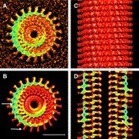
Barley stripe mosaic virus (BSMV) is the type member of the genus Hordeivirus, rigid, rod-shaped viruses in the family Virgaviridae. We have used fiber diffraction and cryo-electron microscopy to determine the helical symmetry of BSMV to be 23.2 subunits per turn of the viral helix, and to obtain a low-resolution model of the virus by helical reconstruction methods. Features in the model support a structural relationship between the coat proteins of the hordeiviruses and the tobamoviruses.


Ed Rybicki‘s insight:

Speaking as someone who has worked with both viruses – I think I purified them in 1977-78 – and was immersed in the literature on both, I can recommend this as an EXCELLENT piece of old-school structural virology.


It comes as litttle surprise to hear that BSMV CP is structurally related to TMV and its ilk – the particles look SO much alike – but it is nice to see it confirmed finally!  The TMV structure came out in 1986, again from Gerald Stubbs’ lab (and some beautiful structures are shown here – http://www.rcsb.org/pdb/101/motm.do?momID=109), so this one has been lagging awhile.


I can finally update a speculative "modular evolution" diagram I constructed a while back, with actual evidence: https://rybicki.wordpress.com/2008/03/19/from-what-did-viruses-evolve-or-how-did-they-initially-arise/


Meantime: I have a walk-in fridge full of highly purified virus particles, some dating back to the 1970s, just waiting to be structurally investigated….

See on www.sciencedirect.com

Plant-Based Antibodies, Vaccines and Biologics 5, Part 5

3 September, 2013

Session 6:Vaccines II

This was SUPPOSED to open with a report from Medicago Inc, on ‘Developing plant-made influenza vaccines: From discovery to commercial scale production’  – but didn’t, because they were all shaken up (in a good way) by having been effectively bought by Mitsubishi Tanabe Pharma Corporation, and no-one came.

This is a success story in its own right, however, as their recent and highly successful activities in the areas of making influenza vaccines and human rotavirus VLP-based vaccines in plants marked them out as a target for acquisition by Big(gish) Pharma – for which we commend them.

It is sad, however, that their only presence at the conference was on the back of my windbreaker B-)

Konstantin Musiychuk (Fraunhofer USA) was the first up, then, speaking on ‘Preclinical evaluation of VLP-based malaria transmission blocking vaccine’.  He described how there are 3 types of intervention that may work with malaria: these are at the pre-erythrocytic, blood stage, and transmission blocking stages of infection.  Antibodies to Pfs48/45, Pfs230 proteins block the fertility of or destroy the macrogamete.  Pfs25 and 28 Abs block the ookinete to oocyst developmental phase; all potentially block transmission.  Accordingly, they expressed these as fusions with the alfalfa mosaic virus (AMV) CP with mutation(s) to prevent glycosylation.  The Pfs25 protein was the best candidate; they cloned a mutated version (glyc-), fused at the N-terminus to AMV CP, and expressed via their TMV-based “launch vector” after vacuum infiltration.  He noted that the fusions have full-length and proteolysed products – which is needed for VLP formation as native CP is needed to avoid steric hindrance in assembly.  They obtained nice particles as shown by EM, showing surface decoration.  Dynamic light scattering [Ed: must get me one of those…] results show a nice tight range of 17nm particles.

They used the products with/out Alhydrogel as adjuvant, IM in mice: they got good titres maintained >170 days, with  2x inoculation.  They diluted test sera with naive human serum and used this to membrane-feed mosquitoes, then after 1 week dissected them and assayed for parasites: oocyte counts in mid-gut reflected efficient blocking of acquisition.  The adjuvant+ doses worked well down to 0.1 ug (100%).  Single doses of 1, 5 or 25 worked 100% as well.  After 6 months, 5 and 25 ug doses still gave 90%+ blocking.

They made GMP lots, very pure:  2 doses at 0 and 21 days resulted in complete blocking down to 0.3 ug, with >99% blocking after 40+ days.  Tox studies were fine, although the  Alhydrogel apparently causes some side effects.   Scaleup from 1-50 kg showed no changes in the Ag.  The Phase 1 trial is expected in Q3 2013.

This was most impressive: it is to be hoped that the promise is maintained!

Yoseph Shaaltiel (Protalix Biotherapeutics, Israel) spoke on Protalix’s new product: this was alpha galactosidase-A, for the treatment of Fabry disease.  This is an X-linked lysosomal storage disease that results in massive storage of glycolipid Gb3, in cells, in the vascular system and elswhere, which impairs the tissue of the heart and affects kidney and other organ function.  There were worse consequences than with Gaucher disease, while it was less obvious.  The current therapy was seen as being bad, and patients had reduced life expectancy.  There were 2 therapeutic enzymes on the market: these were Agalsidase Alfa and Beta; these were very inefficient and expensive, so cost benefit was very limited.  1/2 life in blood was normally just a few minutes, and the proteins were very immunogenic.

Protalix aimed at making a biobetter: this was made in tobacco cells cultured in bags (they used Icon vectors, so could not work in their favoured carrot), by cocultivation with Agrobacterium and then killing the bacteria.  The protein subunits were PEGylated to reduce immunogenicity and x-linked using bis-NHS-PEG.  This gave improved stability, longer circulatory 1/2 life, enhanced activity in target organs with similar to improved kinetics, so lower dosing and longer intervals between doses were possible.  Yields were good too, and they could make the enzyme very pure.  The product had the same kinetics as the commercial products with better activity over a wide pH range.

As far as glycosylation was concerned, the commercial product had very complex glycosylation, while the plant-made product’s profile was very consistent and simple.  It had an enhanced circulatory 1/2 life, of 581 vs 13 min, and also had higher activity in target cells – heart, kidney – over time.  Yoseph noted that the  patents on the enzyme(s) were limited to CHO cell production, meaning they had a useful window to exploit.

A comment from Jim Carrick was that the FDA was not interested in PEGylated products, as this could lead to vacuolation of kidneys in the long term.  Yoseph said their product was not the same, as normally PEGylation added 20-40 kDa, whereas theirs was a much shorter x-linker.  Their product was, moreover, already in clinics, as the  FDA had said they should move straight to patients rather than testing it in healthy people.

Lydia Meador (Arizona State University) reported on their lab’s HIV vaccine candidate, made in plants and also vectored by NYVAC-KC delB19 poxvirus.  They had previously shown that a CTB-HIV membrane proximal region (MPR) fusion vaccine resulted in Ab that stops transcytosis of HIV by Ab; she noted that live vectors enhance T-cell responses compared to subunit vaccines, so a combination would be a good idea.

Accordingly, they had cleverly produced whole HIV Gag and a deconstructed gp41 – stable Gag transgenics, and transiently-produced dgp41 – in the same plants, to make 100nm VLPs.  While VLPs are highly immunogenic alone, they wanted to prime with the NYVAC and boost with plant-made antigen.  They obtained good p24 Ab responses with NYVAC and the VLP boost; gp41 less so.  In terms of mucosal immunity, they saw the IgA response against gp41 was significantly higher in the NYVAC+VLP combination, as were CD8+ T-cells.  She noted that the anti-NYVAC titre was high after 3x doses.  In response to my question, she did not know if the NYVAC vaccine made VLPs in mice – which it may not do, even if it works in plants, due to different protein requirements for budding in mouse vs plant cells.

Daniel Tusé (Intrucept Biomedicine, Kentucky) – a company founded with Kenneth Palmer – spoke on ‘Safety and efficacy of plant-produced Griffithsin for antiviral indications’.  He noted that while griffithsin was an excellent anti-HIV microbicide, it was also a reasonably broad-spectrum antiviral lectin, as it was effective against the recently-emerged MERS CoV and  influenza viruses.

The protein was hard to make from seaweed, and E coli was useless for production; however, they got g/kg in tobacco via conventional rTMV vectors, and now even better with Icon and Nomad vectors.  KBP had manufactured it to near-GMP production standards, again at g/kg yields, with product recovery at 30% from leaves and 50% from leaves + stems, to a final purity of 99.8%.  The potency was the same as the alga-derived product, and they had 100s of gm of product.

As griffithsin binds HIV with very high affinity, its primary use would be as a topical microbicide, to prevent transmission of HIV and HSV; to prevent coronavirus infections, and to act on chronic virus infections.  The protein is not mitogenic on PBMC and does not activate T cells; it does not produce inflammatory cytokines in human PBMC, unlike cyanovirin, which had a much worse proinflammatory profile.  The epithelial toxicity was also very low, which was in contrast to some well-publicised agents which had disastrously resulted in increases of HIV acquisition in women using them.

A carbopol-based gel was found to have the best drug-release kinetics, so was adopted for formulating the product for use.  This protects mice against genital herpes: herpes has 2x the risk of infection per exposure compared to HIV infection.  The gel has broad specific activity against coronaviruses too, to a wide spectrum of viruses from human, cow, chicken and pig.  It could protect mice against SARS CoV, if given intranasally at 2 doses/day.

The protein also has uses in prevention of infection in the organ transplant area, eg against hepatitis C virus (HCV): it prevents infection of Huh-7 cells by cell-culture derived HCV, and partially protects hepatocytes from viral spread in vivo.  If injected in animals it persists, and maintains an anti-HIV activity.  It is immunogenic, but only weakly so, and Ab to it don’t neutralize its effects.  Their lab was using rational design to take out T-cell epitopes without affecting antiviral activity.

Daniel stressed that this is a new drug, which can be preferentially be made in plants at high yield, with very low cost of goods; that it was effective and safe.

Hugh Haydon (KBP) mentioned that the cost of goods was “pennies/dose”.

Session 8:

This was an interactive discussion session, addressing the topic ‘Commercialisation of molecular pharming products – objectives and targets for the next 5 years’.
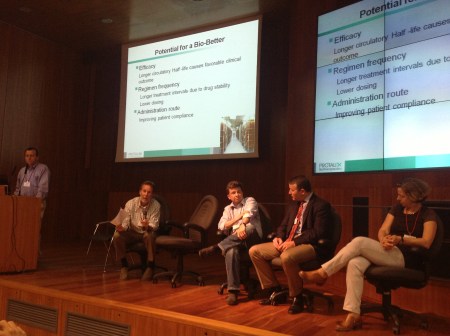
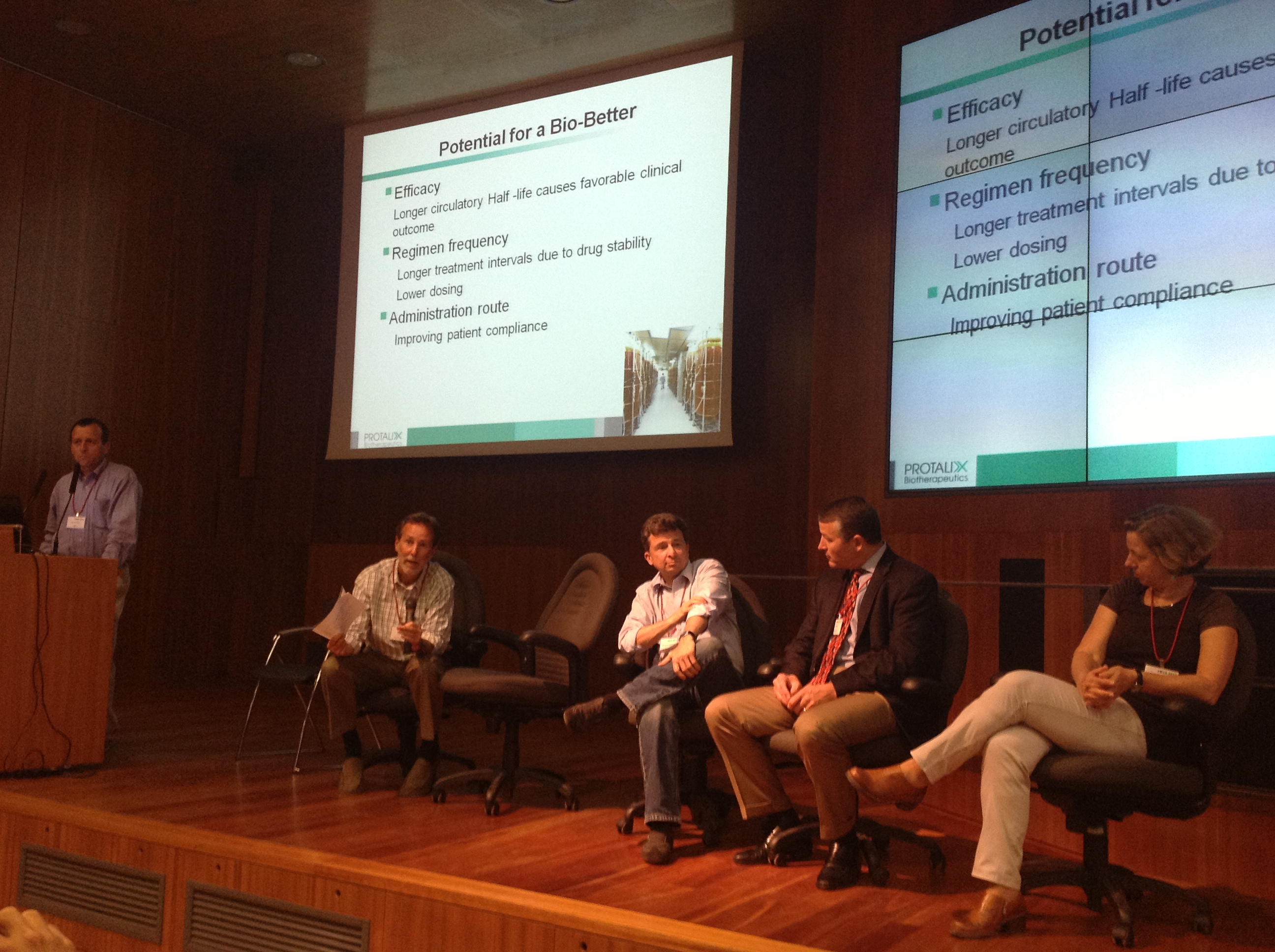
The panel: from left - Hugh Haydon, Kevin Whaley, John Butler, Scott Deeter, Einat Brill

The panel: from left – Hugh Haydon, Kevin Whaley, John Butler, Scott Deeter, Einat Brill

Hugh Haydon of Kentucky BioProcessing (KBP), , speaking on behalf of the new MAPP, KBP and Icon collaboration, addressed product selection.  He noted that MAPP was responsible for product development, Icon for technology development and purification, and KBP for large-scale manufacture.  They had spun out Solmab as a collaborative vehicle for production of MAbs for infectious disease therapy.

He described their product selection rationale: this was based on

  • proof of concept data
  • platform suitability
  • capacity for dual use of product
  • availability of capital
  • speed of the regulatory process
  • regulatory success rate
  • scalability of existing infrastructure

Accordingly, they had selected a “biobetter” of Synagis, and an Ebola MAb cocktail.  The Synagis equivalent was better due platform parameters, known clinical parameters, the fact there were established markets which can grow, government and NGO humanitarian interest, and potential adaptation to other viruses.  For Ebola, they had a 3 MAb cocktail that was known to work, strong government interest (for a stockpile), a more rapid regulatory pathway, and a tropical disease voucher from the FDA.  He pointed out that these products won’t make blockbuster status, but are appropriate for small companies like theirs.

Kevin Whaley (MAPP) spoke on how we needed therapeutics that were multipurpose (disease, indication) as well as multi-vaccines.  The attributes of the new biologics were multi-use, speed of production, scale of production, and cost advantage – especially for global health products costing <$US10/g, at scales of >10K kgs, with increased efficacy (pathology, cancer), increased acceptability and access.  He noted that all modern paediatric vaccines are multi – this saves visits to clinics, especially in developing countries.

Scott Deeter (InVitria) noted that the biologics market was edging up to being worth $US125 billion – and reckons progress with plant-produced products is excellent.

John Butler (Bayer) thinks we are still looking for suitable products!  He was of the opinion that initial targets were too difficult (eg NHL – and flu??!), and that improved product characteristics must benefit from being plant-made.  He was adamant that PMP must not compete on price with other platforms – because there was no such thing as a bottleneck in fermentation capacity world-wide, and established industry could just cut prices if they wanted to.  He spoke of real and perceived hurdles:

  • regulatory pathway isn’t a hurdle
  • plant vs human glycosylation is not either, as plant-specific glycans were not more immunogenic than human

Real risks were that:

  • there were well-established alternatives
  • the plant-made product industry was overstretched in terms of resources

Einat Brill (Protalix) addressed their future strategy:

  • new biologics for orphan indications (clinical trials were smaller, one needed only several 10s kg a year for an entire disease cohort)
  • recombinant vaccines
  • hard to express proteins that were best expressed in plants

ApApproved biologics:

  • Biobetters of commercial products
  • They would continue to establish PMP regulatory environment as a viable route for biologic drugs development
  • Biobetter efficacy: longer circulatory half life for favourable clinical outcome
  • regimen frequency: longer treatment intervals due to increased drug stability, with lower dosing
  • Changing administration route (eg: oral vs injectable): helps to improve patient compliance

This was an excellent session, if only to hear how people who have been involved in getting PMPs to the market viewed the prospects for the industry – and it appeared favourable, despite John Butler’s caveats.

Plant-Based Vaccines, Antibodies and Biologics 5, Part 4

2 September, 2013

PBVAB 5 Part 4

Sessions 5 – 8

The fifth session on Day 2 was “Antibodies 1” – and who better to kick off, than Rainer Fischer (RWTH / Fraunhofer Institute, Aachen), talking about Pharma-Planta – The European project to introduce plant-derived monoclonal antibodies to the clinic’.

One of the most impressive features of the FP6 PharmaPlanta project was its sheer size: 28 academic institutions were involved over 7 years, at a cost of €12 million plus €3 million from the Fraunhofer Institute in Aachen.  Their mission was to move molecular farming beyond proofs of concept, and to develop candidate products.  They selected the anti-HIV-1 subtype B MAb 2G12 as their final candidate, but also developed MAbs to rabies and some vaccine candidates.  Importantly, their IP had a Humanitarian Use Commitment: knowledge created was made freely available for humanitarian purposes.

They had a total of 39 postdocs and 8 students trained; they produced 200 peer-reviewed publications consisting of 150 research papers and 50 reviews, and a spin-out company.  The project also helped to develop a South African plant-made MAb production platform.  Their plant-produced 2G12 was the first plant-made MAb in human clinical trials – and went from gene to clinic in just 7 years.  They had also very materially helped the development of the regulatory regime in Europe, from the viewpoint of pharmaceutical guidelines and environmental safety for PMPs.

Rainer Fischer

Rainer Fischer in full flow

The final yield figures for 2G12 were 5 g of 97% pure MAb from 240 kg of transgenic tobacco, with a recovery of 55%.  The product had a better glycosylation homogeneity than CHO cell-produced 2G12.  In clinical trials of the MAb used as a vaginal microbicide, the product was safe and well tolerated with no serious adverse reactions.  There were no anti-Abs found in serum or in the vagina, with no systemic absorption.  The MAb survived for 8 hrs in the vagina, meaning it had serious potential as a microcode.

The project resulted in great human capital, a manufacturing facility at the Fraunhofer IME, and a number of important follow-on projects.  It also opened bottlenecks in regulatory practice, and in clinical trials of PMPs.  There was a pipeline of additional product candidates, eg anti-rabies MAbs.

Important lessons from the project were the following: one should focus early on on the plants used, the expression technology, the threshold level of production, realistic timelines, the plant line and purification process, production issues, QC stability, regulatory contract – FIND A CLINICAL SPONSOR!, set up contractual framework, draft specifications for drugs, contact authorities in countries for manufacture and testing.

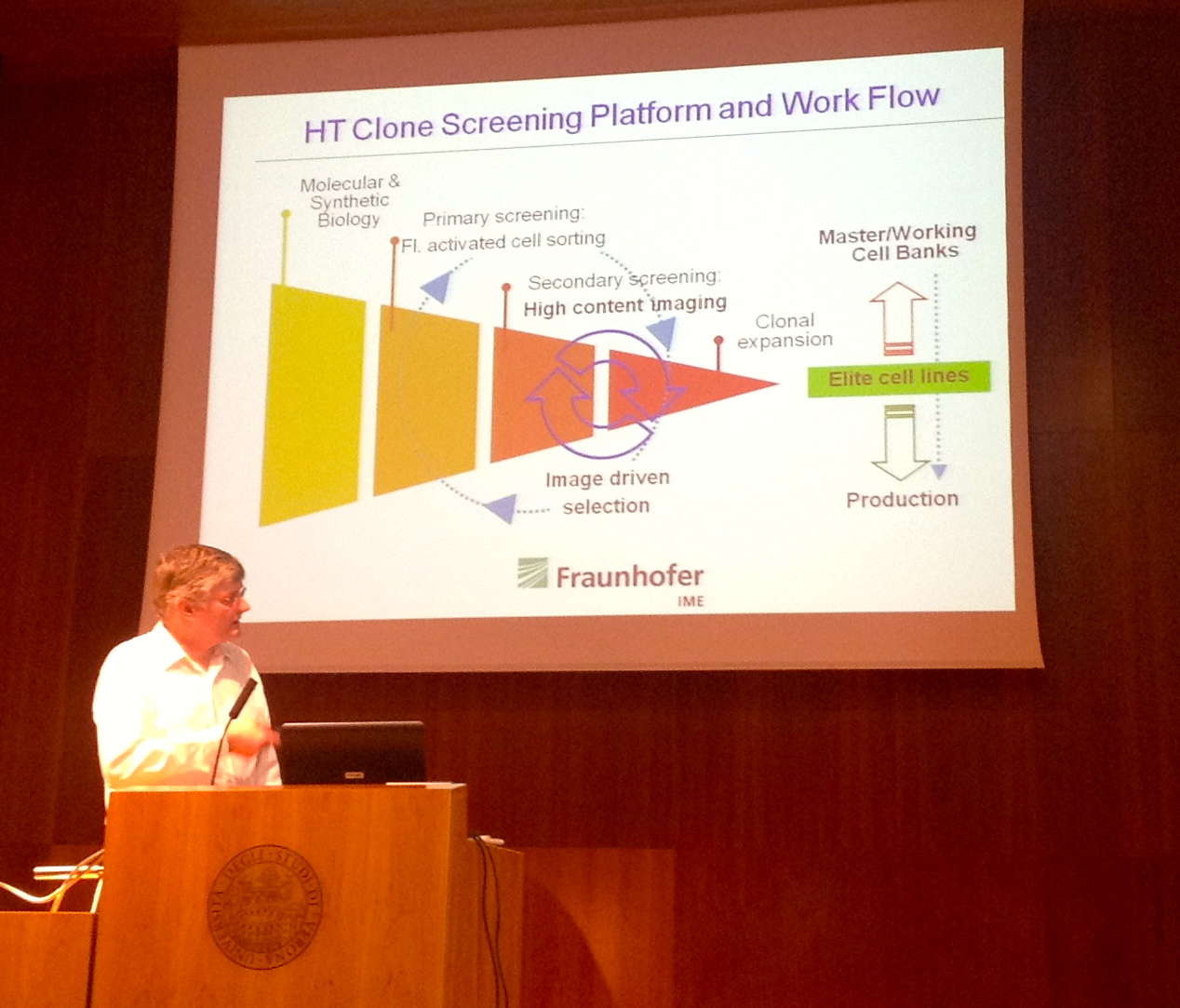
Issues such as smart product selection, synthetic biology/host cell line engineering, glycan/protease profile, hi-throughput cloning, selection of elite lines, scale-up automation / vertical farming, downstream processing, regulatory approval had also surfaced, and were important.

For the future, a fully automated vertical farm unit  for seed development was going to come on stream.  They would move from niche production to mainstream production, taking advantage of economies of scale.  Other developments could be designing an optimal host cell line, with fully human glycosylation, and site-directed transgene integration.

Some day someone should write a book about this endeavour – and I think it should be Rainer.

Larry Zeitlin (MAPP Biopharmaceutical) spoke next, on producing monoclonals against respiratory syncytial virus (RSV): the reason for doing this is that RSV is a major pathogen among small children worldwide, and while there are MAb-based therapeutics (eg: Synagis, from MedImmune), with sales in the order of USD 1 billion annually, these cost around USD 5 000 for one treatment for one child – and premature infants or cardiac / respiratorily challenged children required 4-5 monthly doses per RSV season.  Additionally, infection with RSV in the 1st year of life is associated with development of asthma later, so paediatricians were wanting to treat a much wider spectrum of children.

Accordingly, MAPP was making a Synagis equivalent via Icon vectors in N benthamiana for half the cost of goods, which had the same neutralisation ability and same affinity but a different glycosylation profile and shorter half-life.  When tested in cotton rats it was identical in pharmacokinetics and worked as well as Synagis.  An attempt to reduce the interaction of the IgG1-based MAb with the immune system by changing the subtype to IgG2 failed in rates even though it was neutralising, possibly due to there being less ADCC.  Larry mentioned that they could engineer the Fc region with point mutations to significantly extend the half life – and then use this as a scaffold, possibly for some of their other products.

Michael McLean (Univ Guelph, Canada) described his group’s work on a HIV Ab cocktail theoretically capable of neutralising 99% of HIV strains – this was for PlantForm Corp, who had a mandate to produce biosimilars and novel biologics using plants.  The HIV project was focused presently on demonstrating anti-HIV functionality, and at improving glycosylation profiles of a cocktail of b12, 2F5 and 4E10 broad-spectrum anti-HIV MAbs.

They worked with BeYDV-derived, 2-replicon vectors expressing whole MAbs, as well as their own vectors, using the Steinkellner group glycosylation pathway engineered plants.  With 9 days maximum expression period  they could get 1 g/kg maximum yields.  All the MAbs worked fine, with  similar activity in in vitro HIV pseudovirion neutralisation assays.  Using the deltaFX N benth line, they get uniform glycosylation – and add Gal using their own vectors.

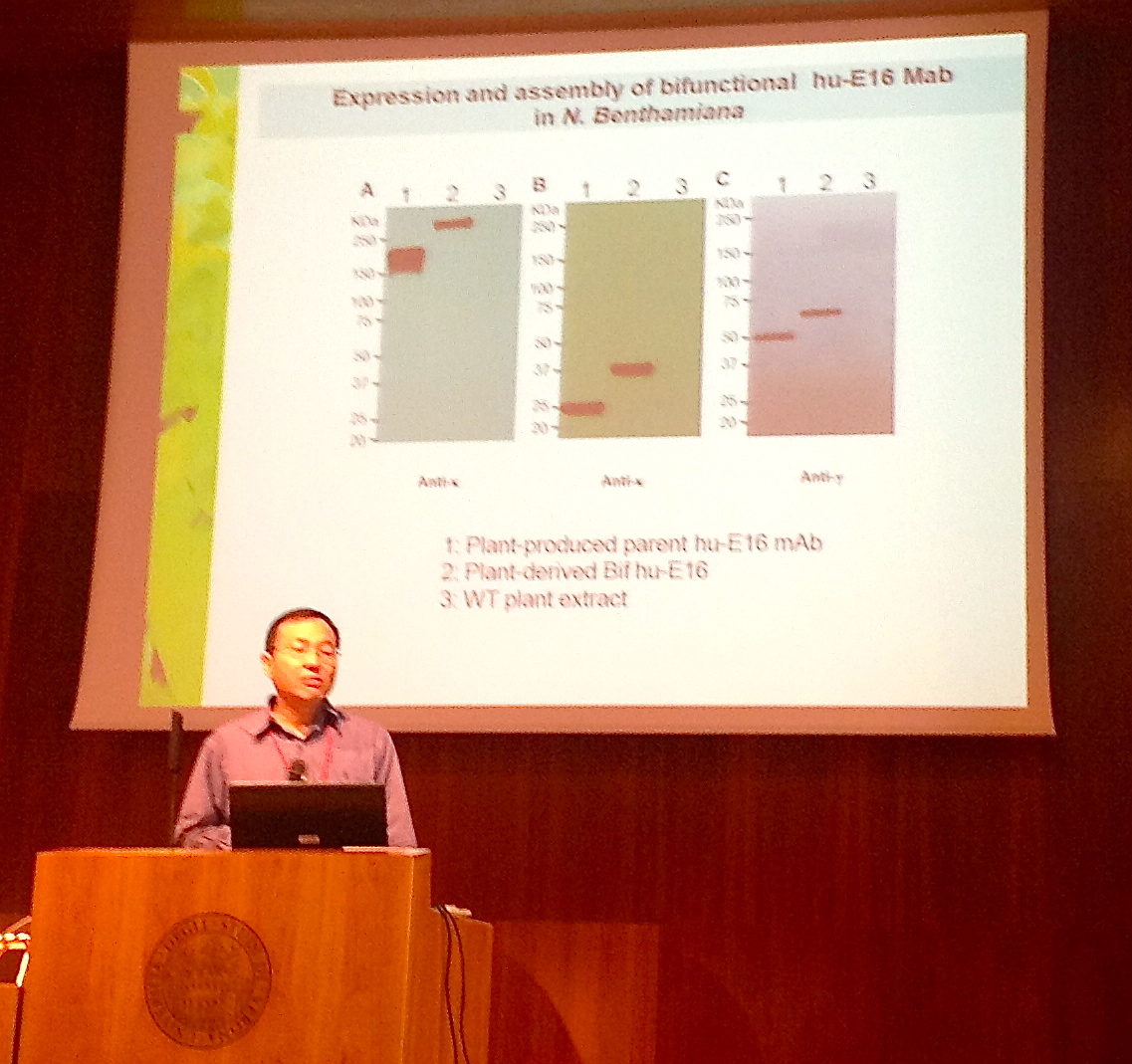
Shawn Chen (BioDesign Inst, Arizona State Univ) described their work on a humanized West Nile virus (WNV) therapeutic MAb which protected mice from WNV infection.  They wanted blood-brain barrier (BBB)-permeable bifunctional Abs to extend efficacy, presently limited because of the barrier.  They got 0.3 – 0.5 g/kg yield of a bifunctional MAb which bound the BBB endothelial receptor and virus Ag, using Icon and BeYDV vectors, and showed endocytosis into brain cells.  He also mentioned that they could “tune” glycoforms to change ADCC.

IMG_0140

Victor Klimyuk (Icon Genetics GmbH, Germany) presented on ‘Biogeneric antibodies made in plants’: these used a generic IgG1 constant region gene codon-optimised for plants, with add-on variable (V) regions derived from other Abs of different types and specificities.  The first product had been the non-Hodgkin lymphoma personalized MAbs: they had done glycotyping of each NHL MAb, all with the same H but diff L chains, to show these were differently glycosylated – and that all the idiotypes were expressed at very different levels.  Interestingly, expression levels had little to do with occupancy of glycosylation sites – and this occupancy could be tuned by directed point mutations.

They had made analogues of trastuzumab and herceptin, etc – and noted that herceptin analogues differed in potency, and wt plants produced lower levels than their engineered plants.  Rituximab analogues were all the same as the original MAb at day 0 of treatment, but MAbs with no fucose were best at persistence – equal to the original.

Vikram Virdi (VIB, University of Gent, Belgium) described passive immunisation of piglets against enterotoxigenic E coli (ETEC) using llama-derived antibodies produced in Arabidopsis.  This was useful in that it extended the maternally-derived passive immunity.  Their product was a “porcinised camellid Ab” against the major adhesion molecule of ETEC, which should survive the digestive tract.  They made MAbs based on a camellid Vh gene fused to IgG and IgA Fc regions, and expressed them in seeds for a piglet feed challenge.  They got a maximum of 15% TSP expressed in seed, 3% of seed weight.  By triple transformation with the 3 genes required for an IgA analogue (Vh:Fc, J chain and secretory component) and then selfing and breeding plant lines, they got in planta assembly of a sIgA analogue (0.2% seed weight).  This worked in inhibiting attachment of  bacteria, so they upscaled production and tested a cocktail of IgG vs IgA types.  The latter was best, with a swift decline of bacterial shedding with a 4  x lower dose than for IgG.  There was also a better weight gain for IgA treated piglets.

Thomas de Meyer (VIB-PSB/University of Gent) compared production of bivalent camellid VHH-derived MAbs in Arabidopsis, N benthamiana and Pichia pastoris, given that the VHH Fc enhanced functional affinity, and led to longer serum 1/2 life, and was a convenient protein tag. They compared VHH and VHH-Fc MAbs with 4 fusions, including anti-globulin, anti-albumin, and anti-GFP.  The products were stable in seed production (with KDEL) in Arabidopsis and also N benthamiana, and  Pichia secreted the products.  They got yields of 1.5 – 27% TSP, 0.1 to 0.82 g/kg in plants, and with Pichia, 15 – 30 mg/l culture.

The MAbs had different size profiles from the different hosts, though all were bivalent VHH, and N benthamiana and Pichia products were fully glycosylated.  Several of the Fc-type MAbs outperformed the VHHs in ELISA.

Overall, it was obvious that expression of a wide variety of antibodies in plants is a maturing technology: yields are high, of antibodies whose glycosylation and retention profiles can be handily engineered, and which perorm equivalently or better than their conventional homologues in in vitro and in vivo assays.

Go Green, he said, not quietly…B-)

Russian Flu, Victorian Anxieties

2 September, 2013

See on Scoop.itVirology News

Although we are now familiar with the sensationalist reporting of epidemics, in the 1890s with the outbreak of Russian Flu, this was a new phenomenon. 

Ed Rybicki‘s insight:

A very nice piece on a pandemic that almost no-one knows anything about any more – but which almost certainly had an influence on the 1918 pandemic, if only to reduce severity in those over 28 at the time who had been infected in 1890.

See on theibtaurisblog.com

PBVAB 5 – Part 3

21 August, 2013

PBVAB 5 Verona, June 2013 – Part 3

Technically, Sue Huddy’s piece should have been Part 3; however, it reports things that happened after what I am reporting on, so I’ll keep that label!

This post will report on Sessions 3 & 4, namely, Technology Advances and Perspectives.

I opened Session 3 with a talk on ‘Virus-derived ssDNA vectors for the expression of foreign proteins in plants’, focusing mainly on geminiviruses (naturally).  I wrote this a couple of years ago as a chapter for a book which seemed to not be forthcoming; however, I was assured during my talk by Yuri Gleba – the co-Editor with Kenneth Palmer of a “Current Topics in Microbiology and Immunology” issue on “Plant Viral Vectors” – that this offering is now in fact available, so here’s a link for anyone who wants to buy it.

Current Topics in Microbiology and Immunology 2011,

Virus-Derived ssDNA Vectors for the Expression of Foreign Proteins in Plants

Edward P. RybickiDarrin P. Martin

Plant viruses with ssRNA genomes provide a unique opportunity for generating expression vehicles for biopharming in plants, as constructs containing only the replication origin, with the replication-associated protein (Rep) gene provided in cis or in trans, can be replicationally amplified in vivo by several orders of magnitude, with significant accompanying increases in transcription and expression of gene(s) of interest. Appropriate replicating vectors or replicons may be derived from several different generic geminiviruses (family Geminiviridae) or nanoviruses (family Nanoviridae), for potential expression of a wide range of single or even multiple products in a wide range of plant families. The use of vacuum or other infiltration of whole plants by Agrobacterium tumefaciens suspensions has allowed the development of a set of expression vectors that rival the deconstructed RNA virus vectors in their yield and application, with some potential advantages over the latter that still need to be explored. Several modern applications of ssDNA plant vectors and their future potential will be discussed.

I noted that several firms are already using geminivirus-derived expression technology – like Kentucky Bioprocessing, who offer use of it as a service, and Medicago Inc, who use it in manufacturing vaccine products – and that it has considerable potential for improvement.  There is also the possibility of using other ssDNA virus-derived vectors, including from bacteria.

E.V. Sheshukova (N.I. Vavilov Institute of General Genetics RAS, Moscow) followed up with an account of how the use of antisense RNA to plant death factor (PDF) could modulate PDF level so as to avoid the necrotisation caused by rapid protein over-expression.  Their group used a TMV-based vector to co-express an antisense with the gene of interest, and got 4-5-fold increase in protein expression, equivalent to using the silencing suppressor p19 from a tombusvirus.

Diego Orzaez (IPMCP-CSIC, Valencia, Spain) spoke next, on the same technology I have previously described (with beautiful pictures from Diego) here: that is, the enabling of tools for multigene engineering of plants – and specifically in this case, the elegant use of superinfection exclusion phenomenon seen with RNA plant virus-derived vectors that are capable of movement, for the expression of polyclonal antibody mixtures in plant leaves.  They had successfully shown expression of 300+ individual clones from a camel VHH clonal library derived against a mixture of 3 snake venoms, in a mosaic on a single leaf.  This was seriously impressive for me: imagine, polyclonal “sera” from a leaf!

Diego noted that the FDA allows the 2-animal rule for products like antivenin, and things used for biodefence: that is, an efficacy trial in an animal, followed by Phase 1 trial in humans (=safety).  This could help expedite approval of such products.

We discussed the paper previously blogged on from this group in Journal Club today, incidentally, to much appreciation of the truly excellent work, and the colour Figures.  Thanks, Richard!

Reza Saberianfar (Agriculture and Agri-Food Canada, Ontario) described their investigations of protein body biogenesis in N benthamiana.  They had looked mainly at hydrophobin and elastin fusion proteins, in order to overcome the joint bottlenecks of inadequate accumulation, and difficulties in purification of recombinant proteins from plants.  He noted that hydrophobin and elastin PBs were different sizes: they had used protoplasts of infiltrated leaves and confococal microscopy and Imaris software to find every PB in individual cells, to determine that  shows hydrophobin-based PBs were 1-2 um, and ELP-based were 2-3 um in diameter, for the same amount of protein.  PBs made from  hydrophobin and ELP-linked proteins shared the same ER origin, but Zera-based PBs had a different origin and Zera fusions did not need a KDEL for ER retention.  An interesting observation was that PBs could form in the ER in the absence of fusion tags if expression levels were high.  One could also increase the expression of other proteins by coexpressing them with a fusion protein, as they get incorporated into PBs anyway – eg: EPO.

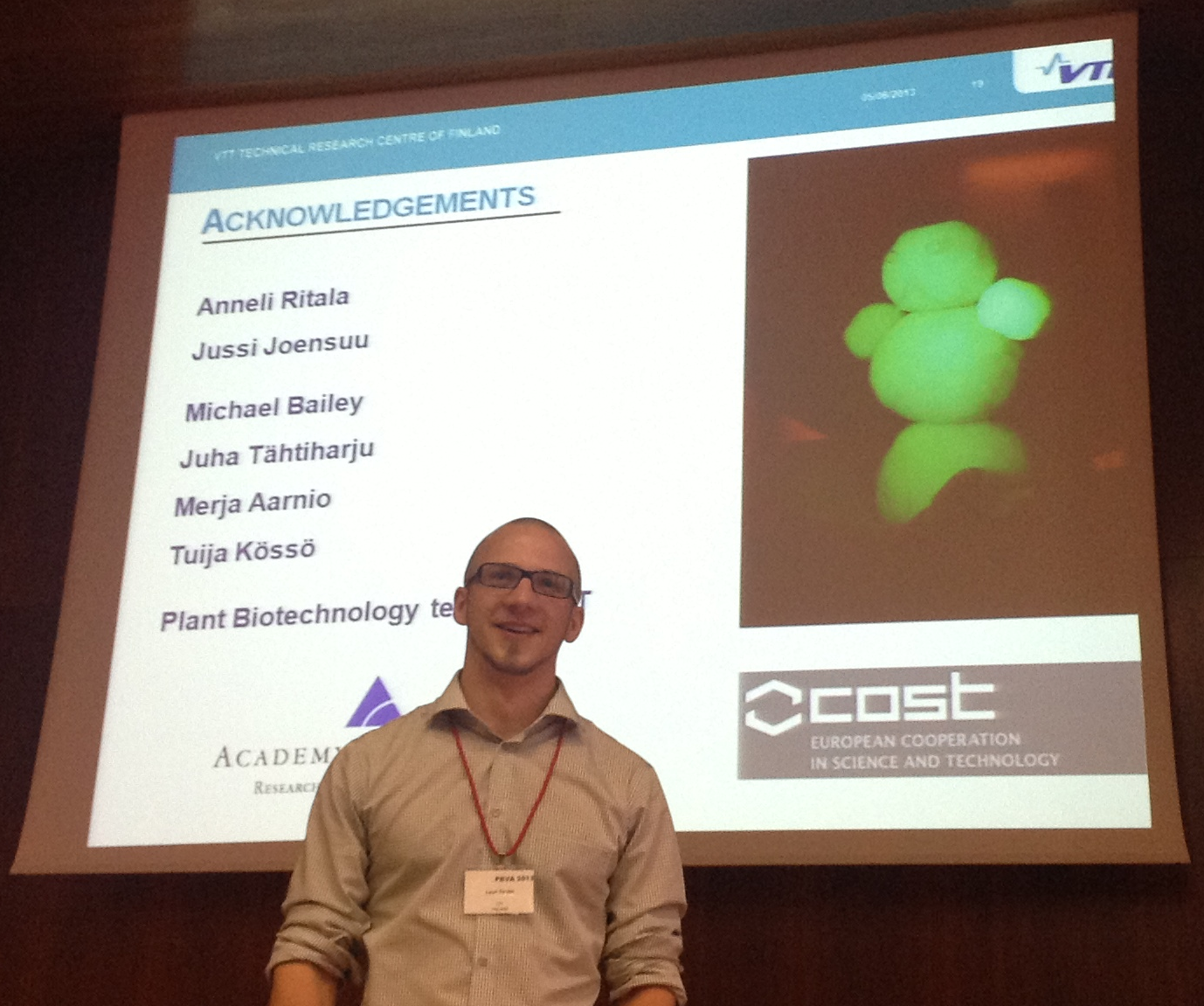
Lauri Reuter (VTT-Technical Research Centre, Finland) continued in the theme of fusion proteins with a talk on the production of hydrophobin fusions in tobacco BY-2 suspension cultured cells.  It was interesting to hear that WAVE bioreactors did not work well because they did not shake fast enough, but that conventional steel bioreactors did – with capacities of 20 – 600 litre, and even up to 20 m3.  The cells are apparently surprisingly tolerant to shear stresses, and yields of GFP::hydrophobin fusion from 600 litre reactors were as good or better as from a 50 ml shake flask – at 300 mg/litre.  Purification was simple, in that reactors could be pumped out onto a filter, and the cell “cake” pressed dry – for subsequent lyophilisation and storage at room temperature, for example.  French pressing of fresh cells was also an option.  Hydrophobin fusions allowed aqueous 2-phase separations, for simple and rapid enrichment.  Inclusion of a Tobacco etch virus self-cleaving motif allowed removal of the hydrophobin.

hphobinThe “Perspectives” Session was notable for two talks, and a proposal: the latter was by Julian Ma for a “Society for Molecular Farming”, which was well supported and will probably kick off sometime this year.

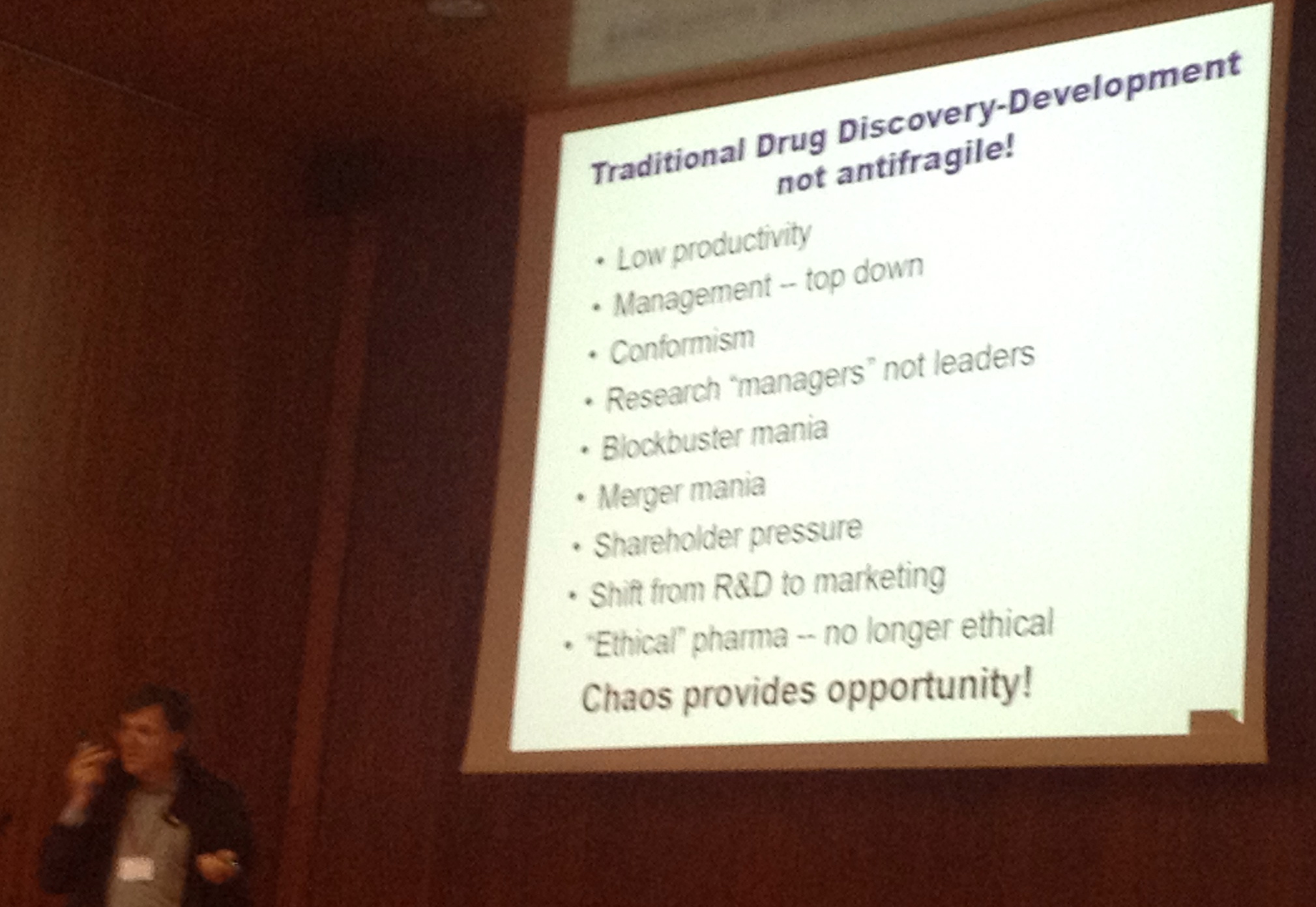
Jim Larrick (Panorama Research, Mountain View, California) gave a typically eclectic, wide-ranging and highly enthusiastic talk on ‘Anti-fragility: Big picture issues in pharmaceutical development’.  He used the “Black Swan” analogy repeatedly to explain how the enterprise funding and pharma research sectors embodied fragile or anti-fragile thinking – with the observation that it was easier to resist black swans (eg: the unexpected) with a raft of small projects, than to have a few big ones.  He also pointed out that the NIH liked big projects – and that a useful alternative name for them was “Not Invented Here”!  Right up there with “Not Real Funding” as the alternative name for our National Research Foundation….

IMG_0133

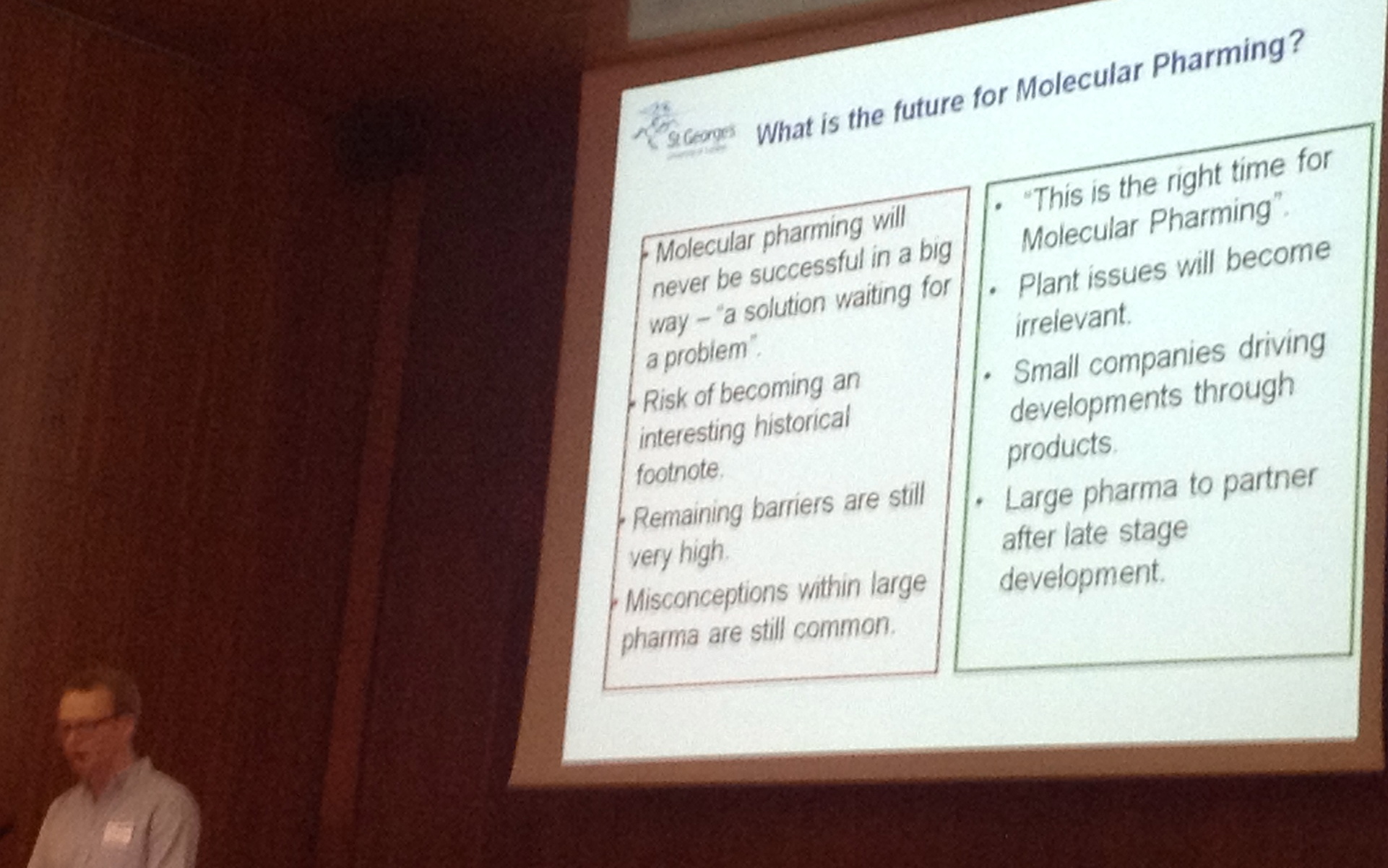
Matthew Paul (St. George’s University of London) presented a set of 15 case studies of commercial paths to introducing molecular farming, which was very interesting to us academic types.  More interesting was the fact that while innovative and protectable technology and products were important to start-ups, the majority of successful ones had their basis in platform development – and the average time from platform to product identification was about five years.  Venture capital firms were considered too greedy for early-stage start-ups, but their involvement later led to stability as their partnering was long term.

Another interesting feature was that many of the successful ventures sold “side products”: for example, Ventria sold cytokines and cosmetic formulations, while KBP sold cell culture reagents.  Several also licenced out technology platforms, but the revenue was not held to be so good.

There were three main indicators of success:

  • Management quality
  • A good lead product
  • Having a panel of products

IMG_0135A good strategy to stay alive was “maximum income / minimum burn” – and he held up the example of Medicago in this regard.  He noted that in the absence of major investment from Big Pharma, Phase 2 trial success was the driver for commercialisation.

Tick by tick: Studying Crimean-Congo hemorrhagic fever virus carried by ticks

20 August, 2013

See on Scoop.itVirology News

When University of Texas Medical Branch at Galveston researchers set out to study Crimean-Congo hemorrhagic fever virus, they faced a daunting challenge.

The deadly virus requires biosafety level 4 containment, and it’s carried by ticks. That meant that if scientists wanted to study the transmission of the virus, they had to do something that had never been done before: find a way to work safely with the tiny, tough bugs in a maximum containment “spacesuit lab.”

“It was completely new territory for us,” said UTMB assistant professor Dennis Bente, senior author of a paper describing the BSL4 tick work in Frontiers in Cellular and Infection Microbiology. “Ticks are very small, and in the BSL4 you have two pairs of gloves on, you have this bulky suit, you have the plastic visor — all these things are a huge handicap. So how do you make sure you contain them?”

The answer: step by painstaking step.

Among other things, the new system will enable the researchers to study the virus’ transmission by a variety of tick species. On the list are North American ticks, to investigate the possibility that Crimean-Congo hemorrhagic fever virus, like West Nile virus, could be introduced into the United States.

Ed Rybicki‘s insight:

Interesting: because the virus is endemic here in South Africa, just a couple of hundred km away from urban Cape Town.  More colloquially known as "Congo Fever" here, we even have isolation wards ready at local hospitals to cope with the rare human infections: rare, because the ticks (bont-legged, or Hyalomma spp.) have only a short window in their life cycle where they like animals our size.  When they are smaller, they go for small animals, and when adult, they go for large ones – like ostriches, cattle, kudu, etc.  In which they do NOT, incidentally, cause disease – so infections are often seen in abattoir workers, from handling viraemic but symptomless carcasses.

I do like the last sentence above: "keeping the US safe from Congo fever!" More important but umentioned, is that the virus is ALSO endemic where the US military likes to go and adventrue: places like Afghanistan, Iraq, Central Asia….

Our lab is, incidentally, working on a plant-made vaccine for CCHFV.  We don’t have to wear space suits B-)

See on www.sciencedaily.com

Gardasil researcher is NOT against the HPV vaccine–another myth debunked

20 August, 2013

See on Scoop.itVirology and Bioinformatics from Virology.ca

Because vaccine deniers lack any scientific evidence supporting their unfounded belief system about immunizations, they tend to rely upon unscientific information like anecdotes, misinterpretation of data, or ignorant Italian provincial courts to make their case. It’s rather easy to debunk these claims, but because of the nature of the internet, old news is recycled as “brand new,” requiring a whole new round of blog posts to discredit the misinformation. It’s impossible to recall one single instance where a vaccine refuser made a statement about vaccines that was not, in fact, rather quickly debunked. Not one.


Cervical cancer / HPV graphic courtesy of Russell Kightely Media


Ed Rybicki‘s insight:

Great article: pity about the originally misleading title, though, which I have fixed for this blog.

See on www.skepticalraptor.com

Damned if you don’t

20 August, 2013

See on Scoop.itVirology and Bioinformatics from Virology.ca

TWO years ago a pair of scientists sparked fears of a devastating virus. Yoshihiro Kawaoka of the University of Wisconsin-Madison and Ron Fouchier of Erasmus Medical Centre, in Rotterdam, separately found ways to make a strain of bird flu called H5N1 more contagious. Critics fretted that terrorists might use this knowledge to cook up a biological weapon. American officials ordered that the papers be redacted. Further research was put on hold. But after much debate, the papers were published in full last year. And now, in a letter to Nature and Science published this week, Dr Kawaoka and Dr Fouchier propose that similar studies of H7N9, another strain of influenza now circulating in China, should be carried out.

….

American health officials… explained how they would review studies that tried to enhance the transmissibility of H7N9. The process is similar to that for H5N1. It is unclear exactly how long such a review would take, however, and viruses may adapt more quickly than bureaucrats and academics.

Ed Rybicki‘s insight:

A really good piece from The Economist – as one should expect, I suppose!

I DO like that last paragraph – because it encapsulates everything I think about the nonsense that surrounds discussions of this kind of work.  Really, the viruses are out there doing what it is that viruses do, and influenza viruses in particular do really well: adapting and changing, by exploring sequence and recombination and reassortment space in order to maximise their own transmission and survival.

And if that survival involves adapting to human-to-human transmission, then so be it: the virus doesn’t care.  And we really, really need to be able to determine how close wild viruses are to doing just that, because the alternative could be The Big One.

Like 1918, but worse.

See on www.economist.com