H5N1 vaccines in humans

24 July, 2013

See on Scoop.itVirology News

Highlights


2 Doses of unadjuvanted vaccine are necessary to elicit robust antibody titers.

Oil-in-water adjuvants permit antigen sparing.

Antibody titers decline rapidly but can be boosted with additional doses of vaccine.

High titers of antibody are associated with cross-reactivity against other clades.

Prime-boost strategies elicit a robust immune response.


Ed Rybicki‘s insight:

Thanks @MicrobeTweets!

See on www.sciencedirect.com

Antibiotic treatment expands the resistance reservoir and ecological network of the phage metagenome

24 July, 2013

See on Scoop.itVirology News

The mammalian gut ecosystem has considerable influence on host physiology1, 2, 3, 4, but the mechanisms that sustain this complex environment in the face of different stresses remain obscure. Perturbations to the gut ecosystem, such as through antibiotic treatment or diet, are at present interpreted at the level of bacterial phylogeny5, 6, 7. Less is known about the contributions of the abundant population of phages to this ecological network. Here we explore the phageome as a potential genetic reservoir for bacterial adaptation by sequencing murine faecal phage populations following antibiotic perturbation. We show that antibiotic treatment leads to the enrichment of phage-encoded genes that confer resistance via disparate mechanisms to the administered drug, as well as genes that confer resistance to antibiotics unrelated to the administered drug, and we demonstrate experimentally that phages from treated mice provide aerobically cultured naive microbiota with increased resistance. Systems-wide analyses uncovered post-treatment phage-encoded processes related to host colonization and growth adaptation, indicating that the phageome becomes broadly enriched for functionally beneficial genes under stress-related conditions. We also show that antibiotic treatment expands the interactions between phage and bacterial species, leading to a more highly connected phage–bacterial network for gene exchange. Our work implicates the phageome in the emergence of multidrug resistance, and indicates that the adaptive capacity of the phageome may represent a community-based mechanism for protecting the gut microflora, preserving its functional robustness during antibiotic stress.

  T4 phage graphic by Russell Kightley Media

Ed Rybicki‘s insight:

This is a fascinating finding, for a number of reasons: however, most importantly it means that the "phageome" – or bacterial virus metagenome in your gut – is a reservoir of genes that can confer survival advantage(s) on your microbial population when this population is stressed.

For example, by antibiotic therapy.

This alters our concept and understanding of phage-bacteria interactions quite significantly, as it can no longer be understood as a simple "predator/prey" relationship.  Rather, and while phages still regulate bacterial numbers by simply killing them, they also act as stewards or gamekeepers, by making it possible for bacteria to survive adverse events.

Quite a concept that: the virus as conserver!

See on www.nature.com

Close Relative of Human Middle East Respiratory Syndrome Coronavirus in Bat, South Africa

24 July, 2013

See on Scoop.itVirology and Bioinformatics from Virology.ca

The severe acute respiratory syndrome (SARS) outbreak of 2002–03 and the subsequent implication of bats as reservoir hosts of the causative agent, a coronavirus (CoV), prompted numerous studies of bats and the viruses they harbor. A novel clade 2c betacoronavirus, termed Middle East respiratory syndrome (MERS)–CoV, was recently identified as the causative agent of a severe respiratory disease that is mainly affecting humans on the Arabian Peninsula (1). Extending on previous work (2), we described European Pipistrellus bat–derived CoVs that are closely related to MERS-CoV (3). We now report the identification of a South Africa bat derived CoV that has an even closer phylogenetic relationship with MERS-CoV.


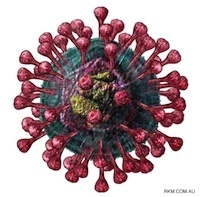
Coronavirus graphic courtesy of Russell Kightley Media

Ed Rybicki‘s insight:

This is interesting and timely work – for which notice, thanks Stephen Korsman! – out of various labs in South Africa and elsewhere.

This almost certainly means that, as with paramyxoviruses in bats, there are a LOT of CoVs out there with the potential to infect other mammals – including humans.

Of course, this one should be the REAL SARSCoV – for "South African respiratory syndrome virus.  Which would make all teh jokes about the SA Revenue Services even more pointed.

See on wwwnc.cdc.gov

Medical Virology of Hepatitis B: how it began and where we are now?

23 July, 2013

See on Scoop.itVirology News

Infection with hepatitis B virus (HBV) may lead to acute or chronic hepatitis. HBV infections were previously much more frequent but there are still 240 million chronic HBV carriers today and ca. 620,000 die per year from the late sequelae liver cirrhosis or hepatocellular carcinoma. Hepatitis B was recognized as a disease in ancient times, but its etiologic agent was only recently identified. The first clue in unraveling this mystery was the discovery of an enigmatic serum protein named Australia antigen 50 years ago by Baruch Blumberg. Some years later this was recognized to be the HBV surface antigen (HBsAg). Detection of HBsAg allowed for the first time screening of inapparently infected blood donors for a dangerous pathogen. The need to diagnose clinically silent HBV infections was a strong driving force in the development of modern virus diagnostics. HBsAg was the first infection marker to be assayed with a highly sensitive radio immune assay. HBV itself was among the first viruses to be detected by assay of its DNA genome and IgM antibodies against the HBV core antigen were the first to be selectively detected by the anti-mu capture assay. The cloning and sequencing of the HBV genome in 1978 paved the way to understand the viral life cycle, and allowed development of efficient vaccines and drugs. Today’s hepatitis B vaccine was the first vaccine produced by gene technology. Among the problems that still remain today are the inability to achieve a complete cure of chronic HBV infections, the recognition of occult HBV infections, their potential reactivation and the incomplete protection against escape mutants and heterologous HBV genotypes by HBV vaccines.


Ed Rybicki‘s insight:

Not only "…the first vaccine produced by gene technology", but the first virus-like particle vaccine, and the first anti-cancer vaccine.

See on www.virologyj.com

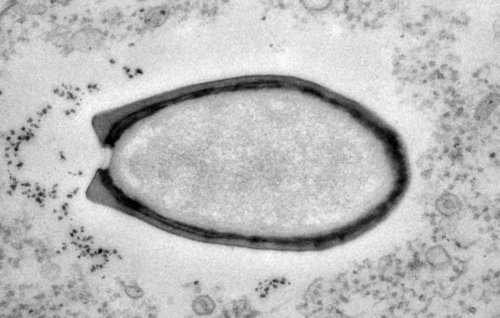
Giant Pandoravirus is 1,000 times larger than influenca virus and contains 2556 genes

19 July, 2013

See on Scoop.itVirology News

Giant viruses turn out to be everywhere. It was the very giant-ness of giant viruses that allowed them to be overlooked for so long. Scientists first discovered viruses in the late 1800s when they were puzzled by a disease that beset tobacco plants. They mashed up wilted tobacco leaves with water and passed the mixture through fine porcelain filters that trapped bacteria and fungi. The clear liquid could still make healthy tobacco leaves sick. The Dutch botanist Martinus Beijerinck dubbed it “a contagious living fluid.”


In the 1930s, the invention of powerful microscopes finally allowed scientists to see viruses. They found that viruses were unlike ordinary cells: they didn’t generate their own fuel; they didn’t grow or divide. Instead, viruses invaded cells, hijacking their biochemistry to make new copies of themselves. Being small and simple seemed like part of the viral way of life, allowing them to replicate fast.


It wasn’t until 2003 that a team of French researchers discovered the first giant virus. They had been puzzling over sphere-shaped objects that were the size of bacteria but contained no bacterial DNA. Eventually they realized that they were looking at a monstrously oversized virus, containing 979 genes, much less than the newly discovered Pandoravirus.


Those first giant viruses were isolated from amoebae living in water from a cooling tower. Once scientists realized that viruses could be so large, they changed their search parameters and started finding other species in all manner of places, from swamps to rivers to contact lens fluid.


And along the way the biggest viruses got bigger. In 2011, Dr. Claverie and his colleagues set a new record with megaviruses, a type of giant virus with 1,120 genes they discovered in sea water off the coast of Chile. They then dug into the sediment below that sea water and discovered pandoravirsues, with more than twice as many genes.


Dr. Claverie speculates that pandoraviruses and other giant viruses evolved from free-living microbes that branched off from other life several billion years ago. “The type of cells they may have evolved from may have disappeared,” he said.


The idea that giant viruses represent separate branches on the tree of life is a controversial one that many other experts aren’t ready to embrace. “They provide no evidence for that notion, so it seems a distraction to me,” said T. Martin Embley, a professor of evolutionary molecular biology at Newcastle University.


Despite those reservations, Dr. Embley and other researchers hail pandoraviruses as an important discovery. “I think it’s wonderful that such crazy and divergent lifeforms continue to be discovered,” said Tom Williams, Dr. Embley’s colleague at Newcastle University.


The new study also drives home the fact that giant viruses are far from rare. Shortly after discovering pandoraviruses in sea floor sediment, Dr. Claverie and his colleagues found them in water from a lake in Australia, 10,000 miles away. “It definitely indicates that they must not be rare at all,” said Dr. Claverie.


Giant viruses may be so common, in fact, that they may be hiding inside of us, too. In a paper published online on July 2 in The Journal of Infectious Diseases, French researchers offered evidence that giant viruses dwell in healthy people. They isolated a new giant virus from blood donated by a healthy volunteer, and then found antibodies and other signs of the virus in four other donors.


Giant viruses may lurk harmlessly in our bodies, invading the amoebae we harbor. Whether they can make us sick is an open question. “I don’t believe we have the proof at the moment that these viruses could infect humans,” said Dr. Claverie.

See on www.nytimes.com

Man, the taurine excreta just keeps coming….

18 July, 2013

See on Scoop.itVirology News

CDC Admits 98 Million Americans Received Polio Vaccine In An 8-Year Span When It Was Contaminated With Cancer Virus

Ed Rybicki‘s insight:

Two comments I made to this piece:

Unbelievable conflation of facts / pseudofacts / nonsense to come up with "evidence" for a conspiracy!

For your info, PCR – Polymerase Chain Reaction, and amplifies DNA, not protein.

As for "Additional tests were performed for Epstein-Barr virus capside and Cytomeglia virus which are used in bioengineering for gene delivery systems through viral protein envelope and adenoviral protein envelope technology. The individual was positive for both; indicating a highly probable exposure to a DNA vaccination delivery system through nasal inhalation.":

Epstein-Barr virus is NOT used for any human purpose; neither is "Cytomeglia" [sic – actually Cytomegalovirus] – but a very high proportion of the human race is naturally infected with one or both. So how the "evidence" indicates an exposure to a DNA vaccination delivery system, I do not understand.


"SV40 is well known cancer causing virus": in? Experimental animals, yes. Humans? No proof, sorry!

The fact is, if I can so easily poke holes in the tail end of the piece, I see no reason to take the rest of it seriously. I teach Virology: I have known about the SV40 in poliovirus vaccines for more than 20 years; it was never kept secret. But did it ever do any harm? Not that anyone has conclusively been able to show, sorry!

As for "SV40 virus has been found in certain types of cancer in humans.": so have many things. Cancer tissue may be infected adventitiously with all sorts of bacteria and viruses; the history of looking for viral causes of cancers is littered with false correlations. For example, people were convinced that cervical cancers were positively correlated with a herpesvirus – until it was found that human papillomaviruses were the ACTUAL cause. All sorts of claims were made about retroviruses and human breast cancer, but none of them have stuck, despite mouse mammary tumour virus being such a good model system.

Thus, while it is a sad fact of of the history of vaccinology that well-meaning researchers managed to contaminate early poliovirus vaccines with live SV40, there STILL has not been any REAL correlation of its presence with a significant elevation in human cancers. None: and I teach the subject, and I’ve looked into it thoroughly.

Now, how about those pesky porcine circoviruses in the human rotavirus vaccines…? I work on both, so I’d be interested to see what conspiracies could be concocted around THAT. See here for my take:https://rybicki.wordpress.com/2...

See on preventdisease.com

WHO: Treat people with HIV early to stop disease’s spread

1 July, 2013

See on Scoop.itVirology News

Young children and certain other people with the AIDS virus should be started on medicines as soon as they are diagnosed, the World Health Organization says in new guidelines that also recommend earlier treatment for adults.

Ed Rybicki‘s insight:

…if it can be afforded…South Africa currently has the world’s largest number of people in any one country on ARVs; 1.7 million out of 6 million infected, in a population of 48-odd million.  Treating more people is effectively unsustainable – which is what would have to happen with these guidelines!

See on www.foxnews.com

PBVAB 5 Part 2

28 June, 2013

Session: Vaccines 1.

This session produced some of the most interesting talks of the conference, so I will go into some detail in describing them.

Charlie Arntzen (ASU, Tempe, AZ) gave a typically excellent presentation on their latest work on norovirus vaccine formulation for stability and oral delivery – using lyophilized aloe gel-derived nanoparticles.

Norovirus outbreaks are tracked by a CDC lab continuously; every 2 years or so new strains circulate, meaning vaccines will have to keep up.  Ligocyte makes VLPs in insect cells currently; however, plant expression has been shown to be able to respond quickly to strain changes, via Icon vectors used at KBP, with the possibility of very quickly making a lot of product.  Downstream formulation has been a problem, however, as the processing throws away lots of antigen protein downstream.

Ligocyte use MPLA and chitosan (an irritant) for nasal immunisation: this has 50% efficacy.  The FDA does not like adjuvants for nasal dosing – so they went for no adjuvant, and chose the nasal route as one gets a more uniform response for 5x less Ag than with oral administration.  The formulation is basically of VLP preparations with lyophilized and milled pectin content from aloe gel: the uniformly-sized nanoparticles absorb water, and stick to each other and to the nasal mucosa for 3 hrs+.

Charlie commented that “This is the one time I recommend putting white powder in your nose!”.

They have tried mixing VLPs of different virus types – and found that with 50 ug of each, you get same immune response as to one.  Apparently this virus is unusual as you can do virus challenge experiments quite easily: these cost $15K/patient, which is a bargain.  The group is looking at annual or biannual dosing for maximum protection, and is also formulating VLPs for oral vaccination.  Interestingly, the aloe gel also works for intramuscular vaccination – possibly as a result of a depot effect?


Yuri Gleba (Nomad / Icon Genetics, Halle, Germany) was supposed to speak on “Technology progress in PMP (=plant-made pharma) research” – but basically said “Transient technologies are the future!”, and then went on to demonstrate it.  He noted that KBP can process 1.2 tonnes biomass/day for agroinfiltrating plants, using a robot from a car factory and a converted industrial autoclave – and consequently have to grow plants in trays for infiltration. Nomad had therefore started investigating how spraying Agrobacterium onto plants might work – with a biosafe Agrobacterium as a prime requirement.  They also took the bold approach of doing transient agronomic trait engineering – for traits such as flowering control, drought tolerance, yield suites, cellulases and anti-microbials – and sold the idea to Bayer Crop Science.

Their technique uses an engineered Agrobacterium that is 100-1000x more efficient at gene delivery than standard strains, with surfactants that allow easy penetration of the leaf tissues.  In combination with the use of replicating vectors that spread cell-to-cell, they could get 100% of standard infiltration yields, by a far easier and much more scalable technique.  They found that spraying worked for most dicots and even for maize, albeit inefficiently, and that they could repeatedly dose plants for the same trait with no apparent harm.  Transient expression of cry1ab and cry2ab Bt toxins delivery worked well, as did delivery of the Cold Shock protein from B subtilis, which also works for drought tolerance.

Their technique does away with need for seed – they can do somatic trait addition / subtraction, they can use the technology outdoors, and there is no trait transmission and so no escape, as the genes do not get into seed.  It means they can produce proteins in  plants at commodity agricultural prices – which considerably broadens the scope of “biofarming” in terms of what products can viably be made!!

One good example was cellulases for bioethanol production: one needs 1-3% w/w relative to cellulose mass, meaning production must be high volume and cheap.  Yuri noted it was possible to store biomass as silage or possibly by vacuum-packing at room temperature for months and that the silage process also eliminated Agrobacterium.  He mused that it might be possible to make a sauerkraut-type oral formulation for recombinant protein delivery…B-)

As for antimicrobials in plants, he said organic crops have more microbes than standard, eg: the recent fatal infections caused by E coli in bean sprouts in Europe – and that a solution would be to make eg colicin E1 in the plants, to kill the bacteria in situ.  One can apply for GRAS status which is MUCH faster than for other routes of approval.  They were currently doing this for phage lysins, bacteriocins, and thaumatin, among others.  Yuri said transient expression tech was like flash drives vs old-style PCs: a versatile set of tools vs a one-trick pony.  He also mused that the technology could lead to reinvention of the old ideal of use of biofarming in undeveloped communities – presumably for low-cost remedies as well as for therapeutics, etc.

To a question on what was the shelf-life of recombinant Agro he replied that there was already field use of live bacteria to combat pathogenic strains; that one can take a Petri dish and dilute in 100l water and spray, and then keep the suspension for two days…it was a very robust bug!  An interesting regulatory point that came up was that the USDA thinks a plant is a GMO even if it is transiently sprayed.


Andres Wigdorovitz (INTA, Buenos Aires, Argentina) spoke on their experience of a decade’s worth of work on plant-made veterinary vaccines.  He opened by noting that he has a major problem of getting money from companies in Argentina – partly die to what a “product” is defined as, because what happens is that a “researcher has an egg, whereas the company wants a butterfly”.

They made the decision to work in platforms – to make diagnostic kits initially, which teaches one how to make recombinant proteins.  They use baculovirus/insect cells and plants – in the form of transgenic alfalfa or transplastomic tobacco – to make the same proteins for comparison purposes, and as products, depending on which was more suitable.  While they had had considerable experience with FMDV vaccines made in plants, which had been protective, their current work focused on making novel vaccines and products.  An example was camellid-derived VHH nanobodies – and the fact that fusing the E2 protein of Bovine viral diarrhoea virus (BVDV) with a anti-E2 VHH gave a better alfalfa-produced immunogen for something that was already protective.  Their experimental vaccine was better than the commercial vaccine from the Ab response – and they could get total protection with 3 ug vaccine, and even better efficacy if they made an E2-HLA fusion.  He believed they will have a commercial vaccine in less than 2 yrs as they were engaged in getting regulatory approval now.

In other work, a FMDV VP1 peptide-GUS fusion expressed 10x better in transplastomic tobacco than in transgenic alfalfa.  A rotavirus VP8* fusion protein was also 10x increased in chloroplasts, and dry leaves preserved the protein very well.  They were also making VHH nanobodies against human rotavirus as vaccine coverage of local strains was not good – and VHH against the conserved VP6 could penetrate the outer capsid and bind and neutralize infectivity whereas larger proteins did not work.  They got 3% TSP expression in tobacco chloroplasts.  They were also making VHH to other rotavirus proteins, and to human noro- and influenza viruses.  All in all, it was a very heartening demonstration of a good business model, and that developing countries too can lead the field in some respects.


The remainder of the session was taken up with two talks from our group: these were given by Drs Ann Meyers and Inga Hitzeroth, on the parrot-infecting Beak and feather disease virus CP-elastin fusion protein production, and Human rotavirus CP and VLP production in N benthamiana via agroinfiltration, respectively.

The BFDV work has just been published with MSc student Lucian Duvenage as first author – from PubMed, then:

J Virol Methods. 2013 Jul;191(1):55-62. doi: 10.1016/j.jviromet.2013.03.028. Epub 2013 Apr 9.
Expression in tobacco and purification of beak and feather disease virus capsid protein fused to elastin-like polypeptides.
Duvenage L, Hitzeroth II, Meyers AE, Rybicki EP.
Department of Molecular and Cell Biology, University of Cape Town, Rondebosch 7700, South Africa.

Abstract

Psittacine beak and feather disease, caused by beak and feather disease virus (BFDV), is a threat to endangered psittacine species. There is currently no vaccine against BFDV, which necessitates the development of safe and affordable vaccine candidates. A subunit vaccine based on BFDV capsid protein (CP), the major antigenic determinant, expressed in the inexpensive and highly scalable plant expression system could satisfy these requirements. Full-length CP and a truncated CP (ΔN40 CP) were transiently expressed in tobacco (Nicotiana benthamiana) as fusions to elastin-like polypeptide (ELP). These two proteins were fused to ELPs of different lengths in order to increase expression levels and to provide a simple means of purification. The ELP fusion proteins were purified by inverse transition cycling (ITC) and it was found that a membrane filtration-based ITC method improved the recovery of ΔN40 CP-ELP51 fusion protein relative to a centrifugation-based method.

Essentially, Lucian managed in some very elegant work to show that BFDV CP fused to a 51-mer ELP allowed production and subsequent simple purification of quite high yields of fusion protein.  It remains to be seen how immunogenic or protective this is – however, it is a breakthrough, as expression of the CP alone has been VERY problematic, in everything from insect cells through E coli, to plants.

Inga spoke on our recent MSc student David Mutepfa’s work on expression in plants of the CPs of a South African rotavirus that is not well matched to current live attenuated vaccines.  The short story is that he succeeded very well indeed in expressing three of the four proteins.  From a recent publication from me and Nunzia Scotti on plant-made VLPs, then:

Current studies in the Rybicki laboratory have focused on expression of capsid proteins of a local isolate of human rotavirus (G9 P[6]) that is not well matched to available commercial vaccines.  Expression of VP2, VP4 and VP6 in N. benthamiana was targeted via co-agroinfiltration to the cytosol, endoplasmic reticulum, apoplast and chloroplast. Electron microscopy showed that co-expressed VP2/6 and VP2/6/4 produced virus-like particles in the cytosol, with yields as high as 1.1 g/kg of plant material, for batches of 100 g.

…with a picture to prove VLPs are made:
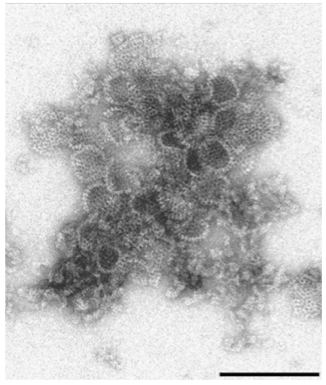
rota pic


Rotavirus VP2/6/4 co-expression in N benthamiana: protein ex- tract partially purified by sucrose gradient centrifugation, particles captured onto electron microscope grids with mouse-anti VP6 antibody. Bar = 200 nm
Plant-Based Vaccines, Antibodies and Biologics 5: Part 1

27 June, 2013

Plant-Based Vaccines, Antibodies and Biologics: the 5th Conference

Verona, Italy, June 2013

The return of this biennial meeting to Verona – the third time it has been held here – was a welcome change; while the previous meeting in Porto in 2011 may have been good, the city was nothing like as pleasant a place to relax.  My group is now familiar enough with Verona that we know just where to go to get pasta by the riverside – or, on this occasion, “colt loin with braised onion and potatoes” and “stewed horse with red wine”.  Which seem more palatable, somehow, as “Costata di puledro con cipolle brasate e patate” and “Stracotto di cavallo speziata” respectively, but were enjoyed anyway.

The conference kicked off with an opening plenary session, chaired by the Local Organizing Chair, Mario Pezzotti, of the University of Verona.  The headline act was a talk on taliglucerase alfa – aka glucocerebrocidase, a Gaucher Disease therapeutic  –  by Einat Almon of Protalix Therapeutics from Carmiel, Israel.  I featured the product here last year, after an earlier feature here; suffice it to say that it has soared since FDA approval, and now Protalix is pushing hard with new plant-made products to follow it up.  While they use carrot cells for taliglucerase alfa, apparently they are using suspension-cultured tobacco cells for other products – and are using an easily-scalable disposable 800 litre plastic bag system, with air-driven mixing of cells suspended in very simple, completely mammal-derived product free media.  Hundreds of patients had been treated with the drug for up to 5 years with no ill effects, and the possibility of switching therapies from mammalian cell-made products to the plant cell-made had been successfully demonstrated.

Scott Deeter of Ventria Biosciences (Ft Collins, USA) spoke next, on “Commercializing plant-based therapeutics and bioreagents”.  His company has possibly the most pragmatic attitude to the production and sale of these substances that I have yet met, and he struck a number of chords with our thinking on the subject – which of course, post-dates theirs!  Ventria use self-pollinating transgenic cereals for production of seed containing the protein of interest, and rice in particular, for safety reasons – and because the processing of the seeds is very well understood, and the purification processes and schedules are common to many food products and so do not require new technology.  He reckoned that a company starting out in the business needed an approved product in order to give customers confidence – but should also engage in contract services and contract manufacture of client-driven products in order to avoid being a one-product shop.  To this end, they had received APHIS Biological Quality Manufacturing Systems (BQMS) certification (similar to ISO9001), with the help of the US Biotechnology Regulatory Services.

Their therapeutic products included diarrhoea, ulcerative colitis and osteoporosis therapeutics which were already in phase II clinical trial.  Scott noted that in particular, recombinant lactoferrin was a novel product, which could only feasibly be produced in the volumes and at the price required for effective therapy, by recombinant plant-based production systems.  It also filled a high unmet need as a therapy for antibiotic-associated diarrhoea in the US, with +/-3 million patients at risk annually who presently cost service providers over $1500 each for treatment.

A third commercialization option was bioreagents and industrial enzymes, which they marketed via a vehicle called InVitria: they had a number of products already in the market, which Scott claimed gave confidence to the market and to partners, while building capacity to make therapeutics.  Something that was particularly attractive to our prospects was that a collection or pool of small volume products – say $5-10 million each – gave a respectable portfolio.  He noted that Sigma Aldrich and Merck were already marketing their human serum albumin, which competed effectively with serum- and yeast-derived products.

George Lomonossoff from the John Innes Centre in Norwich, UK, spoke next on “Transient expression for the rapid production of virus-like particles in plants” – a subject close to our hearts, seeing as we have for the last five years been associated with George and partners in the Framework 7-funded PlaProVa consortium.  He mentioned as an object example the recent success in both production and an efficacy trial of complete Bluetongue virus (BTV) serotype 8 VLPs, made in Nicotiana benthamiana via transient expression using their proprietary Cowpea mosaic virus (CPMV) RNA2-derived pEAQ vector: this was published recently in Plant Biotechnology Journal.

Another very useful technology was the use of CPMV capsids as engineered nanoparticles: one can make empty VLPs of CPMV at high yield by co-expressing the coat protein (CP) precursor VP60 and the viral 24K protease: the particles are structurally very similar to virions in having a 0.85 nm pore at 5-fold rotational axes of symmetry, meaning they can be loaded with (for example) Co ions.  It is also possible to fuse targeting sequences – such as the familiar RGD loop – into the surface loops of the CPMV CPs, and to modify the inner surface too.  One application would be to engineer Cys residues exposed on the inside, which could bind Fe2+ ions: this would result in particles which could be targeted to cancer cells by specific sequences, then heated using magnetic fields.

John Butler of Bayer Innovation GmbH (Leverkusen, Germany) closed out the session with an account of lessons learned from the development of the plant-derived non-Hodgkins lymphoma (NHL) vaccine, that they had acquired with Icon Genetics, who in turn had inherited it from the sadly defunct Large Scale Biology Corp.  It was rather depressing to hear that Bayer had dumped the vaccine, despite the developers having reached their targets in turning 43 of 45 tumour samples into lifetime individualized supplies of vaccine within12 weeks, and despite the phase I trial being as successful as could be hoped.  To this end, the vaccines had been well tolerated and were immunogenic; of the patients who reacted immunologically, all but one were still tumour-free presently.

He felt that the problem was that NHL trials were too long and therefore too expensive as it was a slow-progressing disease; that a different clinical approach was needed, and that using the vaccines as a first-line therapy instead of only after the 2nd or 3rd relapse would be a much better idea.  The main lesson learned was that proving the technology would be far better done with a therapeutic vaccine for a fast-acting cancer, which would allow 1-2 year clinical trials with overall survival as an endpoint.

(more coming)

Polyclonal antibodies from plants

16 June, 2013

I will be blogging in a LOT more detail soon concerning my group’s attendance of the 5th Plant-Based Vaccines, Antibodies and now also Biologics meeting in Verona less than two weeks ago – but one presentation so caught my eye that I thought I would feature it as a preview of my overall report.

It did not hurt that the presenter, one Diego Orzaez, who describes himself in an email as that “…guy from Valencia who showed those pictures of the virus mosaic”, is also a Twitter and Scoop.it Virology News fan, which will always endear someone to me…no, seriously, I think the potential of the technology is huge – so let me get right to it!

A paper describing the basics of the phenomenon Diego and colleagues utilised in order to potentially get expression of multiple monoclonal Abs in a single leaf, is described in the following paper from April 2013:

Plant Molecular Biology
April 2013, Volume 81, Issue 6, pp 553-564

A coat-independent superinfection exclusion rapidly imposed in Nicotiana benthamiana cells by tobacco mosaic virus is not prevented by depletion of the movement protein

José Manuel Julve, Antoni Gandía, Asun Fernández-del-Carmen, Alejandro Sarrion-Perdigones, Bas Castelijns, Antonio Granell, Diego Orzaez

New evidence is emerging which indicates that population variants in plant virus infections are not uniformly distributed along the plant, but structured in a mosaic-like pattern due to limitation to the superinfection imposed by resident viral clones. The mechanisms that prevent the infection of a challenge virus into a previously infected cell, a phenomenon known as superinfection exclusion (SE) or Homologous Interference, are only partially understood. By taking advantage of a deconstructed tobacco mosaic virus (TMV) system, where the capsid protein (CP) gene is replaced by fluorescent proteins, an exclusion mechanism independent of CP was unveiled. Time-course superinfection experiments provided insights into SE dynamics. Initial infection levels affecting less than 10 % of cells led to full immunization in only 48 h, and measurable immunization levels were detected as early as 6 h post-primary infection. Depletion of a functional movement protein (MP) was also seen to slow down, but not to prevent, the SE mechanism. These observations suggest a CP-independent mechanism based on competition for a host-limiting factor, which operates at very low virus concentration. The possible involvement of host factors in SE has interesting implications as it would enable the host to influence the process.

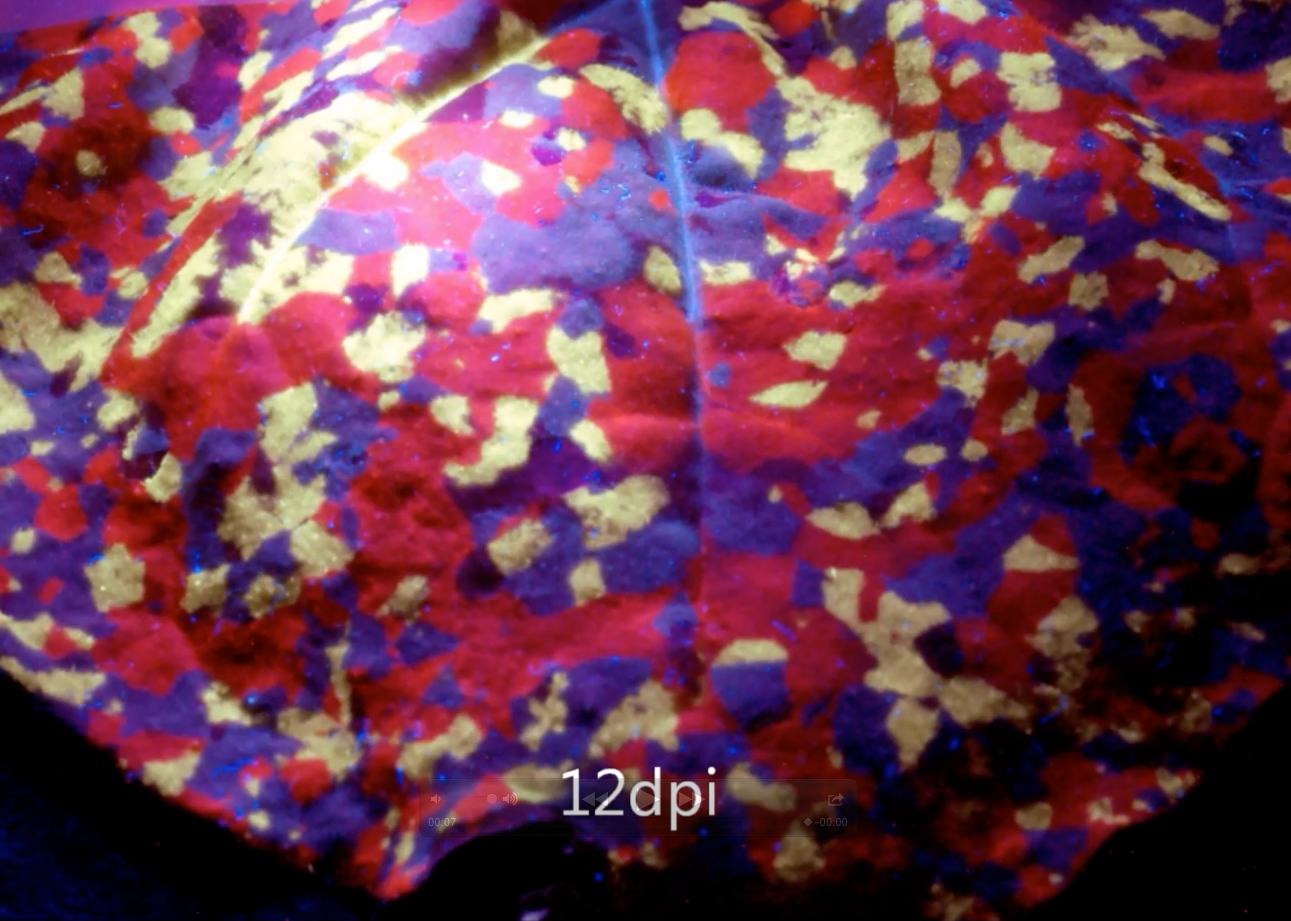
Basically, what this means is that agroinfiltrating a leaf of N benthamiana with a mixture of Agrobacterium tumefaciens clones of deconstructed TMV constructs expressing different fluoresecent proteins, results in “clonal” mosaics of leaf cells, with each individual “tile” expressing a single construct.  This is extremely well shown below, in a screen capture from a MP4 file illustrating progression of the tiling effect from initial stages following agroinfiltration, to several days later.

Expression mosaic in N benthamiana leaf infiltrated with different TMV-based vector constructs

Expression mosaic in N benthamiana leaf infiltrated with different TMV-based vector constructs

This is just a mindblowingly visual proof of superinfection exclusion – and is a phenomenon which could be harnessed for doing things like expressing an Agrobacterium library of an antibody variable region repertoire.

Which would effectively allow a single leaf, or preferably a collection of plants, to express the equivalent of a polyclonal serum, rather than a single monoclonal antibody – something that is pretty much impossible in any other expression system.

Molecular farming is SO cool…B-)

And thanks, Diego!