Rating blogs for assessment purposes

12 August, 2011

Seeing as I was talking with colleagues in the world outside Virology (yes, I do have them) (yes, there is one!) about how one could get assessed in the academic environment for activities like blogging, it was quite heartening to get an email from one Tracy Myers, about this blog featuring in the “OnlineMastersDegrees.net’s list of the Top 50 Blogs about Biology“.

Not in the top 5, I discover, but hey, top 50 in a big class is OK…B-)

But we are distracted from the theme: how does one get material such as I produce in this blog, assessed in the obsessively publication metric-conscious University environment?

With difficulty, it would appear: AJC, I would like your opinion on this!  Access stats are one way, and I have used WordPress’s rather nice summary table for access over the life of this blog to demonstrate that (1) people do actually get to it, and in quite significant numbers, (2) they come from all over the world.  And I would especially like to thank our Saudi Arabian Virology student readers at this juncture!

It’s something the powers-that-be at Unis are going to have to get their heads around – because it’s an increasing trend for academics to blog, and for their students to read said blogs, and to be influenced (hopefully positively) by them.

But I’ll just cherish my badge for a while…B-)  Thanks Tracy!

OnlineMastersDegrees.net

Best Blog Badge
 

Deliberate extinction: now for Number 3

3 August, 2011

I have written previously about the Rinderpest virus eradication campaign – and now it appears as though the final nail has in fact been hammered into the coffin’s lid while I wasn’t looking.  I thank my son Steven for noticing!

It was officially announced on 26th June, in Rome – the headquarters of the Food and Agriculture Organisation (FAO) – that “…for only the second time in history, a disease has been wiped off the face of the earth”.

From a New York Times article:

The long but little-known campaign to conquer rinderpest is a tribute to the skill and bravery of “big animal” veterinarians, who fought the disease in remote and sometimes war-torn areas — across arid stretches of Africa bigger than Europe, in the Arabian desert and on the Mongolian steppes.


The victory is also proof that the conquest of smallpox was not just an unrepeatable fluke, a golden medical moment that will never be seen again. Since it was declared eradicated in 1980, several other diseases — like polio, Guinea worm, river blindness, elephantiasis, measles and iodine deficiency — have frustrated intensive, costly efforts to do the same to them. The eradication of rinderpest shows what can be done when field commanders combine scientific advances and new tactics.

… The modern eradication campaign began in 1945, when the Food and Agriculture Organization was founded. But it became feasible only as vaccines improved. An 1893 version made from the bile of convalescent animals was replaced by vaccines grown in goats and rabbits and finally in laboratory cell lines; a heat-stable version was developed in the 1980s.

The interesting thing about Rinderpest virus is that it is probably a consequence of human’s development of agriculture and especially the keeping of livestock, that got it into animals in the first place: it is closely enough related to measles virus that it probably only diverged from it some time around CE 1000.

So it’s not just us that get animal viruses – our pets and our livestock can get them from us, too.

But it’s now time to concentrate on the next two: polioviruses and measles.  Vaccinate, brothers and sisters, vaccinate!!

Antibodies from plants are GOOD for you!

29 July, 2011

It gives me great pleasure to (re)trumpet the news that – at long last – a monoclonal antibody made in plants that neutralizes a wide range of HIV-1 variants, is going into Phase 1 clinical trial.

The MAb 2G12 is made in transgenic tobacco plants: these are grown in batches of 250 kg, harvested, and the MAb extracted under conditions of Good Manufacturing Practice (GMP).  Simple enough…yet it took years, a great deal of money, and significant exchanges with the regulatory authorities to get the clinical trial of plant-made pharmaceuticals approved.  From the Fraunhofer Institute news website:

Clinical tests for medicines made from genetically modified plants

Antibodies that have been produced in tobacco plants will now for the first time be tested in a clinical study. The decision was announced at a press conference in London on Tuesday July 19th 2011.

UK regulators have approved Europe’s first clinical trial of a monoclonal antibody produced from genetically modified plants. This landmark decision sets the stage for the testing, in humans, of an anti-HIV product made from genetically modified tobacco plants. It will open the door for trials of additional plant-derived medicines treating a range of diseases.

The trial will test the safety of a plant-derived antibody designed to stop the transmission of HIV between sexual partners when applied directly to the vaginal cavity. If proven safe in the 11 participants, the researchers can then go on to test the effectiveness of the product.

The clinical trial marks the culmination of the EU Framework 6 Pharma-Planta project, which was launched by a consortium of 30 academic and industrial partners in 2004 with €12 million in funding from the European Union. The primary goal was to develop an approved manufacturing process for recombinant pharmaceutical proteins made in plants and take one such product through all the development stages including the pivotal clinical trial.

This also represents a reward for years of perseverance by Professor Rainer Fischer, coordinator of the Pharma-Planta FP6 project and Director of the Fraunhofer IME.  From the press release:

Professor Julian Ma, scientific coordinator for Pharma-Planta and Professor of Molecular Immunology at St George’s, University of London, said: “This is a red letter day for the field. The approval from the MHRA for us to proceed with human trials is an acknowledgement that monoclonal antibodies can be made in plants to the same quality as those made using existing conventional production systems. Many people did not ever believe that it could be achieved.”

Amen to that, brother Julian…!  Readers of this blog will know we are big fans of farmed pharmaceuticals – and this is another big step along that road.

From monkeys to humans, or…?

15 July, 2011

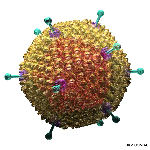
Adenovirus

A new Nature News item makes for interesting reading: it details how a new adenovirus, which had devastated a captive colony of titi monkeys, also jumped into a researcher working with them – and then into a family member who had had no other contact with the monkeys.

I put this comment up there:

While it may be unusual for adenoviruses to do this, there are a number of viruses which jump from monkeys to people – not the least of which are the HIVs.

This article, however, also raises to possibility that the virus may have gone the other way – that is, from humans to monkeys. This is also not that unusual; in fact, measles is a major risk factor in certain primate facilities, as certain monkeys can contract it easily, and often die.

The other possibility – that it came from a rodent or other animal – is potentially worrying, given that the virus was hitherto uncharacterised, and rodents tend to be ubiquitous.

Just goes to show: we really, really do need a Global Virome project, to pick up on all the little nasties out there.

Virus structure visualisation – from here at home!

23 June, 2011

I was most pleased to discover via their blog that two of my colleagues here at UCT – Andrew Lewis and Timothy Carr, who do High Performance Computing support – have (a) been taking a more than passing interest in implementing some quite serious bioinformatics support (see Mr Bayes as well), and (b) doing visualisations of nasty virus proteins, just because they could!

Here is one for an Ebola virus protein, and here is another for Lujo virus, also covered quite extensively here.

And I liked it enough I stole it…B-)

Measles just won’t go away

6 June, 2011

I have written before in ViroBlogy about measles resurging in Africa (see: Measles in Zimbabwe from January 2010) – and now Larry Madoff, the Editor of the very worthy ProMED, makes the case that it is resurging all over.  And in the case of developed countries, largely because of simple stupidity.

From Larry:

Once nearly eradicated in much of the developed world, measles outbreaks are becoming more frequent in 2011. They are the result of increased global travel, lower rates of vaccination in poorer counties – and parents choosing not to vaccinate their children in the U.S., Europe and elsewhere [my emphasis] because of the now widely discredited myth that the measles, mumps and rubella vaccine causes autism.

Whenever people are on the move, there are risks of infectious diseases moving with them.

… [ fundraising message removed: go here to donate]

Measles kills an estimated 165,000 people each year, mostly in poor countries. Since January, however, measles outbreaks reported on ProMED mail have occurred not only in poorer nations such as Bangladesh, Somalia, and Pakistan, but in such countries as France, Spain, England, Canada, Australia, New Zealand, and within the U.S. from Massachusetts to Utah, Minnesota to New Jersey. An outbreak of measles in the Canary Islands and several South American countries, in fact, appears to be the result of unvaccinated British and German tourists bringing the disease to their shores.

As I said, then: stupidity, in the case of unvaccinated tourists.  And lack of vaccine or problems in delivery in the case of the poorer nations.

The first is easy to fix: simply don’t let any tourists in without proof of measles vaccination, as presently happens in Brazil for yellow fever, for example.  It would be done for all the wrong reasons, but hey, whatever works!

The second…is harder.  Measles vaccines are good: they are effective and safe, whether given singly or in combination (eg: measles-mumps-rubella; MMR) – and pretty cheap; cheap enough to be included in the free Extended Programme of Immunisation (EPI) bundle in many countries.  But the simple fact is that they are not getting to many of the folk who need them – and given that you need a minimum of 80% coverage to get “herd immunity”, the virus just keeps on being transmitted around.

And measles is not a trivial disease, whatever the lay population thinks: if it can kill or cause severe complications in healthy, well-fed children, imagine how much worse the consequences of infection are in malnourished, sickly children. As mentioned above, 165 000 people – and mainly children – die every year from measles.

From the WHO Measles Fact Sheet:

Measles is a highly contagious vaccine-preventable disease caused by the measles virus, a member of the genus Morbillivirus in the family Paramyxoviridae. It is spread by droplets or direct contact with nasal or throat secretions of infected persons; less commonly by airborne spread or by articles freshly soiled with secretions of nose and throat. Measles is one of the most readily transmitted communicable diseases and probably the best known and most deadly of all childhood rash/fever illnesses. [my emphasis].

The scale of the problem can be seen here:

Anywhere that isn’t blue has less than 90% coverage – and look at Africa…mostly 50-79% coverage, and that is simply not enough.

Look again at the complications of natural measles infections – from the CDC Measles Complications page:

About 30% of measles cases develop one or more complications, including

  • Pneumonia, which is the complication that is most often the cause of death in young children.
  • Ear infections occur in about 1 in 10 measles cases and permanent loss of hearing can result.
  • Diarrhea is reported in about 8% of cases.

These complications are more common among children under 5 years of age and adults over 20 years old.

Even in previously healthy children, measles can be a serious illness requiring hospitalization. As many as 1 out of every 20 children with measles gets pneumonia, and about 1 child in every 1,000 who get measles will develop encephalitis. (This is an inflammation of the brain that can lead to convulsions, and can leave the child deaf or mentally retarded.) For every 1,000 children who get measles, 1 or 2 will die from it. Measles also can make a pregnant woman have a miscarriage, give birth prematurely, or have a low-birth-weight baby.

In developing countries, where malnutrition and vitamin A deficiency are common, measles has been known to kill as many as one out of four people. It is the leading cause of blindness among African children. [my emphases]

Sub-acute sclerosing panencephalitis (SSPE) is a very rare, but fatal degenerative disease of the central nervous system that results from a measles virus infection acquired earlier in life. Analysis of data from an outbreak of measles in the United States during 1989-1991 suggests a rate of 4-11 cases of SSPE per 100,000 cases of measles. A risk factor for developing this disease is measles infection at an early age.

If this doesn’t scare you, then you are invincibly ignorant.  Or simply stupid.  Which the Bill & Melinda Gates Foundation is not – they have supported new measles vaccine development since 2000; they are also recently involved along with the Lions Club International Foundation in the Measles Initiative, which is:

“…a worldwide effort to protect children from measles and strengthen routine immunization services. UNICEF, World Health Organization (WHO), U.S. Centers for Disease Control (CDC), American Red Cross, and the United Nations Foundation are among the organizations contributing to these efforts since 2001.”

From their site:

An estimated 164,000 people – 450 a day – died from this easily preventable disease in 2008. Costing less than US $1 to vaccinate a child, the measles control strategy represents one of the most cost-effective health interventions available.

Yet, many developing countries that are facing multiple health challenges have limited funds, making financial support from the Measles Initiative critical. A steep decline in donor investment has resulted in a significant funding gap. Unless conditions improve, the shortfall will put the goal and millions of children at risk.

We can eradicate measles.  We really, really can – but it starts with vaccinating your children, and yourself.  Then helping vaccinate others.


XMRV: More nails in the coffin

5 June, 2011

Except that the title could be “More nails from the Coffin”, given the involvement of someone of that name in amassing the growing weight of evidence against XMRV as an actual natural pathogen – but I digress.

The Nature News blog of 31st May has a very damning collation of views and evidence from around the scientific community – but chief among these is the fact that Science, which published the original paper describing the finding of XMRV in human-derived specimens, has called on the authors to retract it.  The evidence – partly gathered by John Coffin – seems clear: XMRV is a recombinant retrovirus which is a chimaera of two mouse viruses which got into cells derived from a human prostate tumour when these were cocultured with mouse cells.  It is not a “natural” virus, but a laboratory accident; it probably has no relevance to any human disease.

Another interesting and more philosophical view derived from the XMRV saga is that of The Independent, of 3rd June: Steve Connor in “Science Studies” points out that this is, in fact, how science really works – or should work.  That is, that someone publishes something that is really interesting – but which becomes contentious because other can’t replicate it, and eventually is wholly or partially discredited.  All out in the open, in the scientific press.

Some folk – acting with perfect hindsight – then bemoan the fact that the original article was published at all; others are horrified at the waste of money as people dig around and around in the same hole.  What they forget is that progress has been made, whether or not the initial revelation was in fact true.  And that is how science should work.

And because of that sort of iteration, XMRV is going the same way as cold fusion, folks.  And here’s a goodbye….

Google where you might go to die

31 May, 2011

Working on the assumption that it’s always best to know where you might contract something that could kill you, Google brings you….dengue!

http://www.google.org/denguetrends/

Prune(lla) juice shall set you free

25 May, 2011

I couldn’t resist that title, even though it has a qualifier for the sake of correctness: it stems from South African graffiti from the 1970s or so (collected into a book by Arnold Benjamin), and I was irresistibly reminded of it by a paper recently published in Virology Journal.  Of course, it is a pity that Prunella vulgaris is in fact a mint, and not a stone fruit, but there you go.  Yet more evidence that herbal extracts can act against viruses – and in this case, against one that really, really does does need some antagonists.

Inhibition of HIV-1 infection by aqueous extracts of Prunella vulgaris L.

ChoonSeok Oh, Jason Price, Melinda A Brindley, Mark P Widrlechner, Luping Qu, Joe-Ann McCoy, Patricia Murphy, Cathy Hauck and Wendy Maury*

Virology Journal 2011, 8:188 doi:10.1186/1743-422X-8-188  Published: 23 April 2011

Background

The mint family (Lamiaceae) produces a wide variety of constituents with medicinal properties. Several family members have been reported to have antiviral activity, including lemon balm (Melissa officinalis L.), sage (Salvia spp.), peppermint (Mentha × piperita L.), hyssop (Hyssopus officinalis L.), basil (Ocimum spp.) and self-heal (Prunella vulgaris L.). To further characterize the anti-lentiviral activities of Prunella vulgaris, water and ethanol extracts were tested for their ability to inhibit HIV-1 infection.

Results

Aqueous extracts contained more anti-viral activity than did ethanol extracts, displaying potent antiviral activity against HIV-1 at sub μg/mL concentrations with little to no cellular cytotoxicity at concentrations more than 100-fold higher. Time-of-addition studies demonstrated that aqueous extracts were effective when added during the first five hours following initiation of infection, suggesting that the botanical constituents were targeting entry events. Further analysis revealed that extracts inhibited both virus/cell interactions and post-binding events. While only 40% inhibition was maximally achieved in our virus/cell interaction studies, extract effectively blocked post-binding events at concentrations similar to those that blocked infection, suggesting that it was targeting of these latter steps that was most important for mediating inhibition of virus infectivity.

Conclusions

We demonstrate that aqueous P. vulgaris extracts inhibited HIV-1 infectivity. Our studies suggest that inhibition occurs primarily by interference of early, post-virion binding events. The ability of aqueous extracts to inhibit early events within the HIV life cycle suggests that these extracts, or purified constituents responsible for the antiviral activity, are promising microbicides and/or antivirals against HIV-1 [my emphasis].

Worm specificity: transmission of a plant virus

20 May, 2011

I have taught – when I did teach that is, two years ago now – for years that most plant viruses are transmitted by one or other form of vector, and that this transmission is very often relatively specific, even though it usually does not involve multiplication of the virus in the vector.  Unfortunately, this is an under-studied area (like most of plant virology), and even more so now in this era of folding plant virology into “biotic stress” and other concocted disciplinary areas.

However: amid the gloom is a bright light (or two – see here as well for some local SA news), and it comes from a PLoS Pathogens paper entitled “Structural Insights into Viral Determinants of Nematode Mediated Grapevine fanleaf virus Transmission” [need to leave out the italics there, guys; only a species name as an abstract concept gets italicised, and this is an entity you’re talking about!].

Schellenberger P, Sauter C, Lorber B, Bron P, Trapani S, et al. (2011). PLoS Pathog 7(5): e1002034. doi:10.1371/journal.ppat.1002034

Many animal and plant viruses rely on vectors for their transmission from host to host. Grapevine fanleaf virus (GFLV), a picorna-like virus from plants, is transmitted specifically by the ectoparasitic nematode Xiphinema index. The icosahedral capsid of GFLV, which consists of 60 identical coat protein subunits (CP), carries the determinants of this specificity. Here, we provide novel insight into GFLV transmission by nematodes through a comparative structural and functional analysis of two GFLV variants. We isolated a mutant GFLV strain (GFLV-TD) poorly transmissible by nematodes, and showed that the transmission defect is due to a glycine to aspartate mutation at position 297 (Gly297Asp) in the CP. We next determined the crystal structures of the wild-type GFLV strain F13 at 3.0 Å and of GFLV-TD at 2.7 Å resolution. The Gly297Asp mutation mapped to an exposed loop at the outer surface of the capsid and did not affect the conformation of the assembled capsid, nor of individual CP molecules. The loop is part of a positively charged pocket that includes a previously identified determinant of transmission. We propose that this pocket is a ligand-binding site with essential function in GFLV transmission by X. index. Our data suggest that perturbation of the electrostatic landscape of this pocket affects the interaction of the virion with specific receptors of the nematode’s feeding apparatus, and thereby severely diminishes its transmission efficiency. These data provide a first structural insight into the interactions between a plant virus and a nematode vector.

And yes, they do – and illuminate very nicely the concept of structural complementarity as a means of ensuring specific transmission by any vector of a plant virus.  That this can happen in the absence of any replication of the virus in the vector, as is the case here and in fact for most plant virus / vector associations, indicates that an evolutionary process that probably started with fortuitous low-efficiency transmission by pure random chance of an ancestor GFLV  by the nematode, resulted in selection of increasingly more efficiently transmitted viral variants.

The same sort of thing has undoubtedly happened for specific aphid transmission of viruses like Cucumber mosaic virus and other cucumoviruses [note to virologists: correct usage!] and Potato virus Y and other potyviruses, and my favourite geminiviruses.

I look forward to an explosion of research in this area, not the least because it may lead to simple agents that specifically block the transmission.  One can hope…B-)