Posts Tagged ‘vaccine’

Thabo Mbeki’s false knowledge

23 January, 2012

Students of HIV history may know that I have picked a number of public fights with our ex-President, Thabo Mbeki: chief among these was when two colleagues and I took him to task in Nature for being an unashamed AIDS denialist (see Retroid Raving link).

Now it appears that he has found more things to deny: it appears that as of six days ago, he does not believe in:

  •  the year 2000 (Y2K) scare
  • that Muammar Khaddafi was about to slaughter Libyan civilians
  • the 2009 H1N1 “swine flu” pandemic

These disbeliefs are part of an argument he developed at a prestigious “Knowledge Management Conference” in Stellenbosch, South Africa, on January 16th 2012: he used them as examples of “false knowledge”, propagated by everyone from the Western Powers (Libya) to the pharmaceutical industry (flu pandemic),

“…which illustrate the grave challenge all humanity faces to confront the critical issues that are the subject of this important Conference, of the management of knowledge in the interests of genuine human advancement”.

His comment on the H1N1 pandemic was as follows:

The Council of Europe has asserted that false ‘knowledge’ was propagated during 2009, which resulted in billions of tax-payer dollars being spent in many countries to respond to a fictional ‘swine flu epidemic’, which benefited the globally dominant and highly profitable pharmaceutical companies.

How.  Breathtakingly.  STUPID!!  a comment.  Right up there with how he knew no-one who had died of AIDS, or how a virus could not cause a syndrome.  Amazing thing, that being ready for something can mean you can forestall it – like the Y2K problem, Crazy Muammar’s intended genocide – and flu pandemics.

As I have done before, then, an open letter to the ex-President.

Dear Mr Mbeki;

It appears that, once again, you rush in where angels fear to tread – and disbelieve the existence of a major human disease.  This time, it is not quite as serious as not believing in AIDS – however, calling into question the existence of a pandemic which killed a significant number of people, simply to further a laboured and rather contrived argument about “false knowledge”, not only betrays your profound ignorance about ANYTHING to do with viruses and disease, it also illustrates a profound and invincible antipathy to conventional medical and pharmaceutical science.

I refer, of course, to your disbelieving in the 2009 H1N1 influenza pandemic – which according to you, was a “fictional swine flu pandemic, which benefited the globally dominant and highly profitable pharmaceutical companies”.

Really?  A fictional pandemic?  So the WHO was completely incorrect in its repeated assessments of the global spread of a novel virus?  And the following statement from a reputable source must obviously be false?

“In the United States, there were 2,117 laboratory-confirmed deaths, yet the Centers for Disease Control estimate actual deaths in the US alone at between 8,870 and 18,300. Applying similar multiples to laboratory-confirmed cases around the world would yield 72,000 to 162,000 deaths. But that number, since it is still based on confirmed cases, still understates the deaths by a wide margin”

So are the folk who died not actually dead – or not dead of pandemic flu?  The fact is, Mr Mbeki, that we were lucky with that pandemic: it turns out the virus was actually reasonably similar to the one which was circulating prior to 1958, meaning anyone born prior to that who had that flu, was probably protected – meaning far fewer older people died than normally do in a flu pandemic.  Which, if you consider that more than 250 000 people die in any NORMAL year of influenza, means a disproportionately larger number of YOUNG people died.

From a flu pandemic which, according to you, did not happen.

You were probably lucky, Mr Mbeki: you were born prior to 1958, and so were probably immune.  You may well not be so lucky the next time – and there WILL be a next time; flu is like that.  It is not, and never has been, an invention of pharmaceutical companies – and in any case, the WHO raised the alarm, not Big Pharma.  They just made the vaccines they were asked to.

I am reminded of a famous graffito from London, sometime in the 1960s – that you may even have seen.  It went something like “God is dead – Nietzche.  Nietzche is dead – God”.

My version would be “Flu pandemic is fake – Mbeki”.

You can fill in the rest.

Regards,

Ed Rybicki

Protection against Killer Flu! No, not H5N1…

17 January, 2012

Depiction of virus mixing in a pig http://www.rkm.com.au

In an issue of Virus Research devoted to commemorating the career of Brian Mahy, who retired recently from the CDC and now as Editor-in-Chief of Virus Research, there is a paper by Taubenberger and Kash on the 1918 H1N1 flu – wherein they say the following:

“In a recent set of experiments, it was shown that mice vaccinated with the monovalent 2009 pandemic H1N1 vaccine were completely protected in a lethal challenge model with the 1918 influenza virus…”

Because the modern pandemic “swine flu” H1N1 HA protein descends directly from the 1918 virus, but in pigs rather than in humans. Remember all the hype around THAT work – resurrecting the legendary Spanish Flu, and how it would kill us all? And here we already have a vaccine, that will completely protect us.

We have vaccine candidates against H5 as well. Time for a universal flu vaccination campaign and pre-emptive strike, people!

Monkeypox vaccine?? We don’t need no monkeypox vaccine….

22 December, 2011

An in-press article in Vaccine that was tweeted by MicrobeTweets (well worth signing up to, BTW) has the intriguing title “Whither monkeypox vaccination?”

Now, some background to this: monkeypox virus is a rather nasty relative of smallpox (family Poxviridae; subfamily Chordopoxvirinae, genus Orthopoxvirus), meaning it is a large dsDNA virus (170-250 kb) with a complex structure.  The virus is endemic in remote forest areas in central Africa – principally in the Democratic Republic of the Congo – and naturally infects a number of animal species, including giant pouched rats (Cricetomys sp.), dormice (Graphiurus sp.) and African squirrels (Heliosciurus, Funisciurus), as well as laboratory monkeys, which is how it was isolated and got its name.

Monkeypox gets transmitted to humans by contact with infected animals: this includes by simple handling, as well as by exposure to meat and blood of butchered animals.  It causes a disease in humans that is very similar in appearance to smallpox, with a case fatality rate of 1-10%, but is apparently far less easily transmitted person-to-person.  It caused only sporadic and limited outbreaks in Africa and was of limited interest until an outbreak in the USA in 2003, which was linked to young prairie dogs kept in a pet store in close proximity to an infected Gambian pouched rat (Cricetomys gambianus) recently imported from West Africa. Seventy-three people were reportedly infected, among whom there were no fatalities.  The CDC recommends vaccination of people exposed to human or suspected animal cases with smallpox vaccine, as this protects animals from experimental lethal monkeypox challenge.

The Vaccine paper makes the point that the potential for monkeypox virus (MPX) to fill the disease niche recently vacated by smallpox was evaluated in the 1970s – and discounted, largely because human-to-human spread was inefficient enough for outbreaks not be self-sustaining – thus, although smallpox vaccine protected against MPX, the WHO thought there was insufficient justification to continue vaccination.

Now, however, the incidence of the virus in humans

“…appears to have markedly increased. In addition to diminished vaccine-induced orthopoxvirus immunity, there have been profound social and demographic changes that have increased human MPX exposures and the likelihood of severe disease. Recurrent civil war and subsequent economic decline have forced rural residents to flee deep into the rain forests for extended periods of time, disrupted traditional village life and increased dependence on hunting for sustenance, thus increasing exposure to animal reservoirs of MPX.”

So, in other words, people are getting a whole lot more exposure to sick animals.  Increasingly, by eating them.  The paper goes on to say:

“Although orthopoxviruses are relatively genetically stable MPX has diverged into two clades with different levels of virulence. As incidence rises, each new MPX infection provides an opportunity for viral evolution or adaptation that may result in a more virulent or contagious variant capable of sustained person-to-person transmission. These new circumstances merit a re-evaluation of the need for immunizing against MPX”.

So – that should be relatively simple, surely?  I mean, South Africa alone has millions of doses of smallpox vaccine safely frozen away from the 1970s?  Not so fast….

“However, in an era where the threat of smallpox is not imminent and there are conditions such as AIDS, tissue transplantation, and therapies for cancer and autoimmunity that cause immunodeficiency, the adverse events associated with live vaccinia are no longer considered acceptable for the general population.”

The paper goes on to mention how all sorts of supposedly safe new smallpox vaccines have been deposited into biodefence stockpiles, based on animal testing.

And there it is again – that word “biodefence”, in the context of human vaccines – implying that there is a “biothreat” to counter.  Specifically, in this case, the spectre of weaponised smallpox.

The authors go on to make reasonable statements about surveilling for monkeypox in central Africa, and vaccinating people at risk, and say that treatment options should also be investigated given that clinical diagnosis is relatively easy.

They also close with this:

“If immunization studies in developing countries are contemplated to support the licensure of orthopoxvirus vaccines for industrialized countries or for military purposes, then provisions from those countries or organizations should be secured to distribute successful products in endemic regions where the products were tested.” [my emphases]

I should hope so.  I should really, really hope so – because then one country’s biodefence interests could end up benefitting quite a few others, who are the ones who really need the product.  Now, while you’re busy with that, what about vaccines for Rift Valley fever, Crimean-Congo haemorrhagic fever and Chikungunya – which are actually far more serious a problem, in a much bigger geographical area?


Virology Africa 2011: viruses at the V&A Waterfront 2

19 December, 2011

We thank Russell Kightley for permission to use the images

Marshall Bloom (Rocky Mountain Laboratories, NIAID) opened the plenary session on Thursday the 1st of December, with a talk on probing the pathogen-vector-host interface of tickborne flaviruses.   Although thoroughly infected with a rhinovirus, he held our attention most ably while reminding us that while many flaviviruses are tick borne, the hard and soft body ticks that vector them are very phylogenetically different – as different as they are from spiders – meaning that if similar flaviruses replicated in them, these viruses may have much wider host range than we know.

He pointed out that while about 95% of the virus life cycle takes place in a tick, transmission to a vertebrate means suddenly adapting to a very different host.  Infection in ticks is persistent, as befits their vector role – but vertebrate infection generally is not.  It was interesting, as a sometime plant virologist, to hear that they look for dsRNA as a marker for replication, and do Ab staining for it: the technique was invented with plant viruses, and very few other virologists seem to appreciate that dsRNA can be quite easily isolated and detected.

They compared Vero and tick cells for virus replication, and saw significant differences: while tick cells could go out to 60+ days and look fine, Vero cells were severely affected at much shorter times post infection.  There was also 100-fold less virus in tick cells, and prominent tubular structures in old infected tick cells.  He noted that ticks evade host defences quite efficiently: eg they suppress host clotting during feeding, and there is huge gene activation in the tick during feeding.  In another study to envy, they are doing array work on ticks to see what is regulated and how.

 Linda Dixon (Institute for Animal Health, Pirbright, UK) recounted her lab’s work on African swine fever (ASFV), a poxvirus-like large DNA virus.  The virus is endemic to much of Africa, and keeps escaping – and there is no effective  vaccine to prevent spread, so regulation is by slaughter.  There are 3 types of isolate, with the most highly pathogenic causing up to 10% fatality and a haemorrhagic syndrome.  She described how in 2007 the virus had spread from Africa to Georgia, then in 2009 to southern Russia and all way to the far north, in wild boar.

There are more than 50 proteins in the dsDNA-containing virion; two infectious forms similar to the poxviruses with multilayer membranes and capsid layers can form, and neutralising Ab play no part in protection as a result.  They studied the interaction of viruses with cells and the immune system, and compared the genomes of pathogenic and non-pathogenic strains, in order to understand how to develop an effective vaccine.

The biggest differences were large deletions in non-virulent isolates, including genes coding for  proteins responsible for binding to RBC, and various immune evasion multicopy genes.  They planned to target regions to delete to make an attenuated virus for vaccine.  They had found non-essential genes involved in immune evasion, and ones that lower virulence, and had been systematically cutting them out.  She noted that pigs can be protected if they survive natural infection and if vaccinated with TC-attenuated virus, and can be protected by passive transfer of Abs from immune pigs – which indicated that an effective live vaccine was very possible.

Subunit vaccines were being investigated, and they had found partial protection with baculovirus-expressed proteins.  They were doing genome-wide screens for protective Ag, and were pooling Ags expressed from predicted ORFs in immunization trials – up to 47 Ags without reduction in specific  T cell responses.

Discovery One

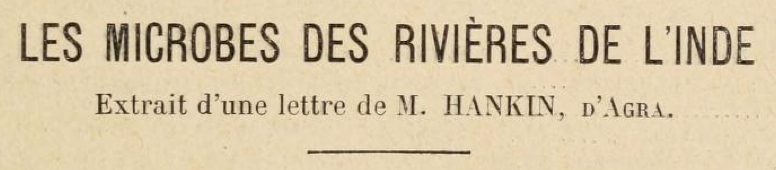
My former labmate Dion du Plessis (Onderstepoort Veterinary Institute, OVI) made a welcome return to Cape Town, with a talk entitled “2011: A Phage Odyssey”.  He explained the title by noting the distinct resemblance of P1 coliphage to the Discovery One spacecraft dreamed up by Arthur C Clarke and Stanley Kubrick – and then went on to exuberantly and idiosyncratically recount a brief history of bacteriophages and their use in biotechnology since their discovery.  A revelation from his talk was that the first discovery of phages was probably described by a gentleman named Hankin, in 1896 in Annales de l’Institut Pasteur: he
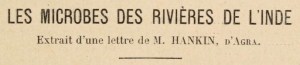
The 1896 paper from Annales de l'Institut Pasteur

showed that river water downstream of cholera-infested towns on the Jumma river in India contained no viable Cholera vibrio – and that this was a reliable property of the water.  We were also introduced to the concept of turtles as undertakers in the Ganges….

He took us through the achievements of the Phage Group of Max Delbruck and others – where science was apparently fun, but also resulted in the establishment of modern molecular biology – through to the use of phages as exquisitely sensitive indicators immunochemistry studies in the 1960s.

All too soon we got to the modern uses of phages, with 3 types of gene library – random peptide, fragmented gene, and antibody V regions – being used to make recombinant phage tail proteins to be used for “panning” and enrichment purposes, in order to select either specific antibodies or antigens.  Dion manages a research programme at OVI aimed at developing a new generation of veterinary vaccines – and has for some years now been making significant progress in generating reagents from a chicken IgY single-chain Fv phage display library.

Carolyn Williamson (IIDMM, UCT) gave us an update on CTL epitopes associated with control of HIV-1 subtype C infections.  She said that it was now known that genome-wide association studies (GWAS) gives you certain HLAs which are associated with low viral load, and others with high – meaning that to some extent at least, control of infection was down to genetic luck.  She noted that they and others had shown that CTL escape was quick: this generally happened in less than 5 weeks in acute phase infections.

They had looked for evidence of a fitness cost of CTL escape – and shown that it exists.  She noted that this meant that even if one has “bad” HLA genes, if one was infected with a virus with fitness cost mutations from another, that one could still control infection.

It had been shown that “controllers” mainly have viruses with attenuating mutations, or have escapes in the p24 region – and it was a possible vaccine strategy to include these mutated epitopes in vaccines to help people with infections control their infections.

An interesting topic she broached was that of dual infections – there was the possibility of modelling if infection with two different viruses results in increased Ab neutralisation breadth, and if one would get different results if infections were staggered, possibly with increased nAb evolution if isolates were divergent.  She noted it was possible to track recombination events with dual virus infections too.

It was interesting that, as far as Ab responses went, there were independent responses to 2 variants and one could get a boost in Ab titres to the superinfecting virus, but not a boost to Abs reacting with the originally-infecting virus

Carolyn was of the opinion that HIV vaccines needed to include CTL epitopes where escape is associated with fitness cost.  She also reiterated that superinfection indicated that one can boost novel responses, which I take to mean that therapeutic applications are possible.

Ulrich Desselberger (University of Cambridge) is a long-time expert on rotaviruses and the vaccines against them, and it was a pleasure to finally hear him speak – and that he was mentoring young people in South Africa.  He said that more than a third of children admitted to hospital worldwide were because of rotavirus infections, meaning that the viruses were still a major cause of death and morbidity – and they were ubiquitous.

He reviewed the molecular biology and replication cycle of rotaviruses in order to illustrate where they could be targeted for prevention of infection or therapy, and noted that drugs that interfere with lipid droplet homeostasis interfere with rotavirus replication because 2 viral proteins associated proteins of lipid droplets.

He stated that there were lots of recent whole-genome sequences – we already there were many types, based on the 2 virion surface proteins; we  now know that other genes are also highly variable.  As far as correlates of immunity were concerned, VP7 & 4 were responsible for eliciting neutralising Ab.  Additionally, protective efficacy of VP6 due to elicitation of non-neutralising Ab had been shown in mice – but not in piglets, and not convincingly in humans.  Abs to VP2, and NSP2 and 4 were also partially protective in humans.  It was interesting that protection was not always correlated with high titre nAb responses.

He noted that in clinical disease primary infections partially protected against subsequent infections which are normally milder; subsequently no disease was seen even when infection occurred.  Cross-protection occurred at least partially after initial infection, and this got better after more exposure.  There was evidence one could get intracellular neutralisation by transcytosed Ab, and especially to VP6.  Ab in the gut lumen was a good indication of protection.

As far as the live modern vaccines were concerned, Merck’s Rotateq elicited type-specific nAb, with 9% of recipients shedding live virus.  GSK’s Rotarix gets elicits cross-reactive nAb and one gets 50% of recipients shedding virus.

While the vaccines seemed safe, he noted that where vaccines had been introduced, efficacy ranged from 90% in the USA and Europe, down to as low as 48% in Bangladesh, Malawi and SA, due to type mismatch, and that efficacy was correlated inversely with disease incidence and child mortality generally.  He mentioned that there had been much VLP work, but that none of the candidates was near licensure.

Johan Burger (Stellenbosch University) spoke on one of the more important non-human virus problems in our immediate environment – specifically, those affecting wine grape production in our local area.  He opened by stating that SA now produced 3.7% of the world’s wine, making grapes a nationally and especially locally important crop.  Leafroll disease was a major worldwide problem – as well as being the reason for the wonderful autumn reddening seen in grapevines, it also significantly limited production in affected vineyards.  His laboratory has done a lot of work in both characterising viruses in grapevine, and trying to engineer resistance to them.  Lately they were also investigating the use of engineered miRNAs as a response to and means of controlling, virus infection.

His group has for a couple of years been involved in “metaviromic” or high-throughput sequencing studies of grapevines, with some significant success in revealing unsuspected infections.  In this connection, he and Don Cowan pointed out that they had lots of data that they ignore – but which we should keep and study, as a resource for other studies not yet thought of.

As far as Johan’s work went, novel viruses kept popping up, including grapevine virus E (GVE), which hitherto had only been found in Japan.  They were presently looking at Shiraz disease, which was unique to SA, and was still not understood.  This was infectious, typified by a lack of lignification which led to rubbery vines, and kills plants in 5 years.  It also limits the production of the eponymous grapes – a crime when SA shirazes seem to be doing so well!

Veterinary Virology and Vaccines parallel session.

I again dodged the clinical / HIV session because of my personal biases, and was again treated to a smorgasbord of delight: everyone spoke well, and to time, and I was really gratified to see so many keen, smart young folk coming through in South African virology.  It was also very interesting to see highly topical subjects like Rift Valley fever and rare bunyavirus outbreaks being thoroughly covered, so I will concentrate on these.

P Jansen van Veeren (NICD, Johaanesburg) was again a speaker, this time representing his absent boss, Janusz Paweska.  He gave an account of the 2010 Rift Valley fever outbreak in SA, and epidemiological findings in humans – something of keen interest to me.  He said there had been some forecasting success for outbreaks in East Africa; however, there were long gaps between outbreaks, which were generally linked to abnormal rainfall and movement of mosquito and animal hosts.  RVFV isolates differed in pathogenicity but were structurally and serologically indistinguishable – because virulence was due to the NSs protein, and not a virion component.  He recounted how artificial flooding of a dambo in Kenya resulted in a population boom in the floodwater Aedes mosquitoes responsible for inititating an outbreak, and then of the Culex which maintained the epidemic.  He said there was a strong correlation between viral load and disease severity.

In terms of South African epidemiology, there had been smaller outbreaks from 2008 round the Kruger National Park (NE SA), then in the Northern Cape and KZN in 2009.  People had been infected from autopsy of animals, and handling butchered animal parts.  The 2010 outbreak started in the central Free State after an unusually wet period, and had then spread to all provinces except Limpopo and KZN.  In-house serological methods at the NICD were validated in-house too: these were HAI screening and IgM and IgG ELISAs and a virus neutralisation test.  They had got 1600+ samples of human serum, and confirmed 242 cases of disease and 26 deaths for 2010.

He noted that with winter rains there was a continuous outbreak in the Western Cape, and in 2011 the epidemic had started again in the Eastern and Western Cape Provinces, but has since tailed off.  Some 82% of human cases were people who occupationally handled dead animals, although there was some possibility of transmission by mosquitoes.

In human cases there was viraemia from 2-7 days, with IgM present transiently from 3 days at low level.  They had sequenced partial GP2 after PCR from 47 isolates, and showed some recombination occurring.  The 2010 isolates were very closely related to each other, and to a 2004 Namibian isolate.  There had been no isolation from mosquitoes yet.

Two talks on FMDV followed: Belinda Blignaut (OVI and Univ Pretoria) spoke on indirect assessment of vaccine matching by serology, and Rahana Dwarka (OVI) on a FMDV outbreak in KZN Province in 2011.  Belinda’s report detailed how 6 of 7 serotypes of FMDV occur in SA, with SAT-1 and -2 and O the most common – and that vaccines needed to be matched to emerging strains.  This was done by indirect vaccine matching tests such as serological r-value, determined by the ratio of the reciprocal serum titre to the heterologous virus against that to the homologous virus.  They had put 4 different viruses into cattle and got sera to test a range of 26 newly isolated viruses.  While they had not got sequence from the test panel viruses, indications were that topotype 3 viruses are antigenically more disparate and that a vaccine consisting of topotype 1 or 2 antigens may not be effective in the control of FMD.

In introducing Rahana’s talk, the chair (Livio Heath, OVI) mentioned that there had been 5 different major animal pathogens causing outbreaks in SA over the last 3 years – and that they had to produce reagents and validate tests for ASFV, classical swine fever (CSF) and FMDV, etc, with each outbreak.  Rahana described how they had neutralisation assays and blocking and competition ELISA for FMDV, as well as a big database of isolates from buffalo in KZN – so they were well-placed to type viruses found in cattle in the region.

C van Eeden (Univ Pretoria) had an intriguing account of their investigation of the occurrence of an orthobunyavirus causing neurological symptoms in horses and wildlife.  Horses seem to be particularly vulnerable to many of the viruses involved in such disease, and so are a useful sentinel species.  Shuni virus was first isolated from Culicoides midges and sheep and a child in Nigeria in the 1960s.  SA workers subsequently found it in some livestock and Culex mosquitoes and in horses.  The virus was shown to be a neurologic disease agent in horses and wildlife – then disappeared for some 30 years, much like Ebola.  There is apparently a new research unit at UP with a BSL3 lab, so they are well equipped to do tests with the virus.

Ms van Eeden noted that the incidence of encephalitic disease in humans and animal in SA is underreported, and the causes are mainly unknown – a revelation to me!  Horses are susceptible to many of the agents, and are useful sentinels – workers have identified flavi- and alphaviruses in some outbreaks, but many are not IDed.  They had done cell culture and EM on samples from an ataxic horse: they got a bunyavirus-like virus by EM, and did bunya-specific PCR, and got Shuni virus back.  Sequence relationships showed no linkage to type of animal or date, in subsequent samplings from horses, crocodiles,  a rhino and a warthog, and from blood, brain and spinal cord.  All positive wildlife were sampled in Limpopo Province; horses only from most other provinces.

She noted that latest cases were neurological, whereas previously these were mainly febrile.  The virus accounted for 10% all neurological cases, with a 50% fatality rate.  She noted further that vets often work without masks or gloves, and so had no protection from exposure in such cases….  There was no idea on what the vector was, but they would like to test mosquitoes, etc.  Ulrich Desselberger suggested  rodents may be a reservoir, but they don’t know if this is true.

Stephanie van Niekerk (Univ Pretoria) investigated alphaviruses as neurological disease agents in African wildlife.  The most common alphaviruses in SA are Sindbis and Middelburg viruses.  Old World alphaviruses are usually not too bad, and cause arthritic and febrile symptoms, while New World cause severe neurological diseases.  Sindbis was been found in SA outbreaks in 1974.  However, Stephanie noted that a severe neurological type had appeared since 2008 in horses.  Accordingly, they looked at unexplained cases in wildlife in the period 2009-2011: brain and spinal cord samples were investigated for all cases.  They found alphavirus in a number of rhinos, buffalo, warthog, crocodiles and jackal – and all except for one rhino were Middelburg virus.  They want to isolate viruses in cell culture, and increase the size of regions used for cDNA PCR.  Stephanie said the opinion was that the values of the animal involved justifies the development of vaccines.

 

Virology Africa 2011: viruses at the V&A Waterfront 1

12 December, 2011

We thank Russell Kightley for permission to use the images

Anna-Lise Williamson and I again hosted the Virology Africa Conference (only the second since 2005!), at the University of Cape Town‘s Graduate School of Business in the Victoria & Alfred Waterfront in Cape Town.  While this was a local meeting, with just 147 attendees, we had a very international flavour in the plenaries: of 18 invited talks, 9 were by foreign guests.  Plenaries spanned the full spectrum of virology, ranging from discovery virology to human papillomaviruses to HIV vaccines to tick-borne viruses to bacteriophages found in soil to phages used as display vectors, and to viromes of whole vineyards.  There were a further 52 contributed talks and 41 posters, covering topics from human and animal clinical studies, to engineering plants for resistance to viruses.

A special 1-day workshop on “Human Papillomaviruses – Vaccines and Cervical Cancer Screening” preceded the main event: this was sponsored by Merck Sharp & Dohme, Roche and Aspen Pharmacare, and had around 90 attendees.  Anna-Lise Williamson (NHLS & IIDMM, UCT) opened the workshop with a talk entitled “INTRODUCTION TO HPV IN SOUTH AFRICA – SCREENING FOR CERVICAL CANCER AND VACCINES”, and set  the stage for Jennifer Moodley (Community Health Dept, UCT) to cover health system issues around the prevention of cervical cancer in SA, and the newly-minted Dr Zizipho Mbulawa (Medical Virology, UCT) to speak on the the impact of HIV infection on the natural history of HPV.  This last issue is especially interesting, given that HIV-infected women may have multiple (>10) HPV types and progress faster to cervical malignancies, and HPV infection is a risk factor for acquisition of HIV.  The Roche-sponsored guest, Peter JF Snijders (VU University Medical Center, Amsterdam), gave an excellent description of novel cervical screening options using primary HPV testing, to be followed by two accounts of cytological screening in public and private healthcare systems in SA, by Irene le Roux (National Health Laboratory Service) and Judy Whittaker (Pathcare), respectively.  Ulf Gyllensten (University of Uppsala, Sweden) described the Swedish experience with self-sampling and repeat screening for the prevention of cervical cancer, especially in groups that are not reached by standard screening modalities.  Hennie Botha and Haynes van der Merwe (both University of Stellenbosch) closed out the session with talks on the effect of the HIV pandemic on cervical cancer screening, and a project aimed at piloting adolescent female vaccination against HPV infection in Cape Town.

The next part of the Workshop overlapped with the Conference opening, with a Keynote address by Margaret Stanley (Cambridge University) on how HPV evades host defences (sponsored by MSD), and another by Hugues Bogaert (HB Consult, Gent, Belgium)) on comparisons of the cross-protection by the two HPV vaccines currently registered worldwide (sponsored by Aspen Pharmacare). Margaret Stanley’s talk was a masterclass on HPV immunology: the concept that such a seemingly simple virus (only 8 kb of dsDNA) could interact with cells in such a complex way, was a surprise for all not acquainted with the viruses.  Bogaert’s talk was interesting in view of the fact that the GSK offering, which has only only two HPV types, raises far higher titre antibody responses than the MSD vaccine with four HPV types, AND seems to elicit better cross-protective antibodies: this should help inform choice of product from the individual point of view.  However, the fact that MSD seems able to respond better to national healthcare system tenders in terms of price per dose is also a major factor in the adoption stakes.

The Conference proper started with a final address by Barry Schoub, long-time but now retired Director of the National Institute of Virology / National Institute of Communicable Diseases in Johannesburg, and also long-time CEO of the Poliomyelitis Research Foundation (PRF): this is possibly the premier funding agency for anything to do with viruses in South Africa, and a major sponsor of the Conference.  He spoke on the history of the PRF, and how it had managed to shepherd an initial endowment of around 1 million pounds in the 1950s, to over ZAR100 million today – AND to dispense many millions in research project and bursary funding in South Africa over several decades.

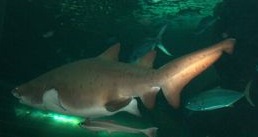
The first session segued into a welcoming cocktail reception and registration at the Two Oceans Aquarium in the V&A Waterfront: this HAS to be one of the only social events for an academic conference where the biggest sharks are the ones in the tank, and not in the guest list!  I think people were suitably blown away – as always, in the aquarium – and the tone was set for the rest of the meeting.  The wine and food were good, too.

The first morning session of the conference featured virus hunting and HIV vaccines, as well as plant-made vaccines and more HPV.  W Ian Lipkin (Columbia University, USA) opened with “Microbe Hunting” – which lived up to its title very adequately, with discussion of a plethora of infectious agents.  As well as of the methods newly used to discover them, which include high-throughput sequencing, protein arrays, very smart new variants on PCR….  I could see people drooling in the audience; the shop window was tempting enough to make one jump ship to work with him without a second thought.  He said that probably 99% of vertebrate viruses remain to be discovered, and that advances in DNA sequencing technology were a major determinant in the rapidly-increasing pace of discovery.  He made the point that while the emphasis in the lab had shifted from wet lab people to bioinformatics, he thought it would move back again as techniques get easier and more automated – meaning (to me) that there is no substitute for people who understand the actual biological problems.  It was interesting that, while telling us of his work on the recently-released blockbuster “Contagion” – where “the virus is the star!” – he showed a slide with a computer in the background running a recombination detection package called RDP, which was designed in South Africa.  It can also be seen in the trailer, apparently.  Darren Martin will not be looking for royalties or screen credits, however.

Don Cowan (University of the Western Cape) continued the discovery theme, albeit with bacteriophages as the target rather than vertebrate viruses.  It is worth emphasising that phages probably represent the biggest source of genetic diversity on this planet – and given how even the most extreme of microbes have several kinds of viruses, as Don pointed out, it is possible that this extends to neighbouring planets too [my speculation – Ed].  He occupies an interesting niche – much like the microbes he hunts – in that he specialises in both hot and cold terrestrial desert environments, which are drastically understudied in comparison to marine habitats.  He made the interesting point that metagenome sequencing studies such as his own generate data that is in danger of being discarded without reuse, given that folk tend to take what they are interested out of it and neglect the rest.

Anna-Lise Williamson (NHLS, IIDMM, UCT) then described the now-defunct SA AIDS Vaccine Initiative vaccine development project at UCT.  It is rather sobering to revisit a project that used to employ some 45 people, and had everything from Salmonella, BCG, MVA, DNA and insect cell and plant-made subunit HIV vaccines in the pipeline – and now employs just 5, to service the two vaccines that made it into into clinical trial.  The BCG-based vaccines continued to be funded by the NIH, however, and the SA National Research Foundation funds novel vaccine approaches.  Despite all the funding woes, the first clinical trial is complete with moderate immunogenicity and no significant side effects, and two more are planned: these are an extension of the first – HVTN073/SAAVI102 – with a Novartis-made subtype C gp140 subunit boost, and the other is HVTN086/SAAVI103, which compprises different commbinations of DNA, MVA and gp140 vaccines.

It was clear from the talk that if South Africa wants to support local vaccine development, the government needs to support appropriate management structures to enable this – and above all, to provide funding.  However, all is not lost, as much of the remaining expertise in several of the laboratories that were involved in the HIV vaccine programme can now involve themselves in animal vaccine projects.

Plant-made HPV16 VLPs

Ed Rybicki made it an organisational one-two with an after-tea plenary on why production of viral vaccines in plants is a viable rapid-response option for emerging or re-emerging diseases or bioterror threats.  The talk briefly covered the more than 20 year history of plant-made vaccines, highlighting important technological advances and proofs of concept and efficacy, and concentrated on the use of transient expression for the rapid, high-level expression of subunit vaccines.  Important breakthoughs that were highlighted included the development of the Icon Genetics TMV-based vectors, Medicago Inc and Fraunhofer USA’s recent successes with H5N1 and H1N1 HA protein production in plants – and the Rybicki group’s successes with expression of HPV L1-based and E7 vaccine candidates.  The talk emphasised how the technology was inherently more easily scalable, and quicker to respond to demand, than conventional approaches to vaccine manufacture – and how it could profitably be applied to “orphan vaccines” such as for Lassa fever.

Ulf Gyllensten had another innings in the main conference, with a report on a study of a possible linkage of gene to disease in HPV infections – which could explain why some people clear infections, and why some have persistent infections.  They used the Swedish cancer registry (a comprehensive record since the end of the 1950s) to calculate familial relative risk of cancer of the cervix (CC): relative risk was  2x for a full sister, the same for a mother-daughter pair and the risk for a half sister was 50% higher while risk was not linked to non-biological siblings or parents, meaning the link was not environmental.  A preliminary study found HLA alleles associated with CC, and increased carriage of genes was linked to increased  viral load.   A subsequent genome wide association study using an Omni Express Bead Chip detecting700K+ SNPs yielded one area of major interest, on Chr 6 – this is a HLA locus.  They got 3 independent signals in the HLA region and can now potentially link HPV type and host genotype for a prediction of disease outcome.  Again, the kinds of technology available could only be wished for here; so too the registry and survey options.

Molecular and General Virology contributed talks parallel session

I attended this because of my continued fascination with veterinary and plant viruses – and because Anna-Lise was covering the Clinical and Molecular session – and was not disappointed: talks were of a very high standard, and the postgraduate students especially all gave very good accounts of themselves.

Melanie Platz (Univ Koblenz-Landau, Germany) kicked off with a description of a fascinating interface between mathematics and virology for early warning, spatial awareness and other applications.  She gave an example using a visual representation of risk using GIS for Chikungunya virus, based on South African humidity and temperature data going back nearly 100 years: this had a 3D plot model, into which one could plug data to get predictions of mosquito likelihood.  They could generate risk maps from the data, to both inform public and policy / planning.  They had a GUI for mobile devices for public information, including estimates of risk and what to do about it, including routes of escape.

Cover Illustration: J Virol, October 2011, volume 85, issue 20

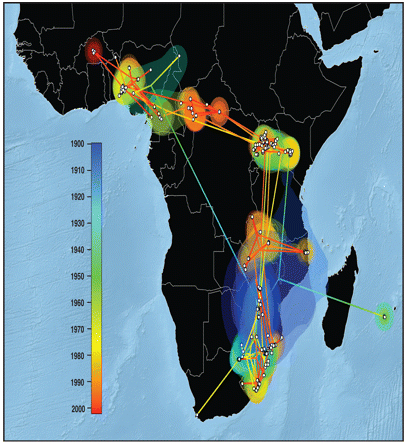
This was followed by one of my co-supervised PhD students, Aderito Monjane – who recently got the cover of Journal of Virology with his paper on modelling maize streak virus (MSV) movement and evolution, so I will not detail more here.  However, even as a co-supervisor I was blown away by the fact that he was able to show animations of MSV spread – at  30 km/yr, across the whole of sub-Saharan Africa.

Christine Rey of Wits University provided another state-of-the-art geminivirus talk, with an account of the use of siRNAs and derivatives for silencing cassava-infecting geminiviruses.  They were using genomic miRNA precursors as templates to make artificial miRNAs containing viral sequences, meaning they got no interference with nuclear processing and there was less chance of recombination with other viruses, a high target specificity, and the transgenes would not be direct targets of virus-coded suppressors.  They could also use multiple miRNAs to avoid mutational escape.  The concept was successful in tobacco, and they had got transformation going well for cassava, so hopes were high for success there.

Dionne Shepherd (UCT) spoke on our laboratory’s 15+ year work on engineered resistance in maize to MSV.  She pointed out that the virus threatens the livelihood of 200 million+ subsistence farmers in Africa, and is thought to be the biggest disease concern in maize – which is still the biggest edible crop in Africa.  Most of the work has been described elsewhere with another journal cover; however, new siRNA-based constructs still under investigation were even more effective than the previous dominant negative mutant-based protection: the latter gave 50-fold reduction in virus replication, but silencing allowed > 200-fold suppression of replication.

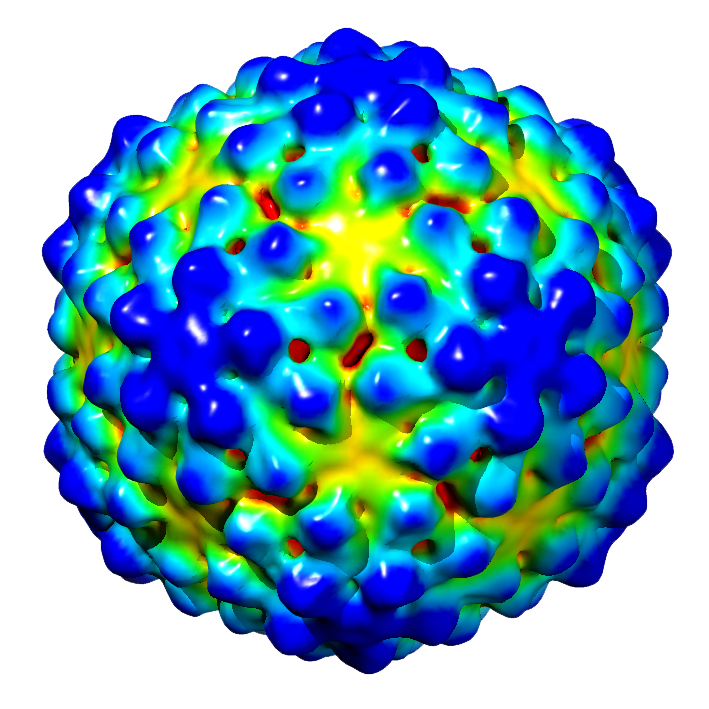
2-colour surface rendition of HcRNAV

Arvind Varsani – a former UCT vaccinology PhD who is now a structural biology and virology lecturer at Univ Christchurch (NZ) – described what is probably the first 3D structure of a virus to come out of Africa.  This was of a 30 nm isometric ssRNA virus – Heterocapsa circularisquama RNA virus (HcRNAV) – infecting a dinoflagellate, which is one of the most noxious red tide bloom agents and is a major factor in killing farmed oysters.  The virus apparently controls the diatom populations.  There are two distinct strains of virus, and specificity of infection is due to the entry process, as biolistic bombardment obviates the block.  The single capsid protein probably has the classic jelly-roll β-barrel fold, but they observe a new packing arrangement that is only distantly related to the other ssRNA (+) virus capsids known.  They will go on to look at structural differences between strains that change cell entry properties.

FF Maree from the Onderstepoort Veterinary Institute and the Univ Pretoria spoke on structural design of FMDV to improve vaccine strains: they wished to engineer viruses by inserting the cell culture adapted HSPG-binding signature sequence and to mutate capsid residues to increase the heat stability of SAT-2 subtype virus vaccines.  If they put the signature sequence in a SAT1 virus, they found it could infect CHO cells – which do not express any of 4 integrins that FMDV binds to, but are far better for large-scale production of the virus than the BHK cells used till now.  It was also possible to increase hydrophobic interactions in the capsid by modeling: eg a VP2 Ser to Tyr replacement gave a considerably better thermal inactivation profile to the virus.

Daria Rutkowska (Univ Pretoria) detailed how African horsesickness orbivirus (AHSV) VP7 protein had significant potential as a scaffold that could act as a vaccine carrier.  The native protein formed as trimers assembled in a VP3+VP7 “core” particle; however, the VP7 when expressed alone could form soluble trimmers – and the “top” domain hydrophilic loop can tolerate large inserts.  The group had very promising FMDV P1 peptide responses from engineered VP7 constructs, including protection of experimental animals.

P Jansen van Veeren of the National Institute of Communicable Disease in Johannesburg finished off the session, with a description of the cellular pathology caused by Rift Valley fever bunyavirus (RVFV) in mice in acute infections.  The virus seems to have been of particular international interest recently as a potential bioterror agent; however, global warming is also responsible for its mosquito vector spreading outside of its natural base in Africa to the Arabian peninsula, and there are fears of the virus getting into Europe soon.  While there are vaccines against the virus, including a live attenuated version, none are licenced for human use.  It was interesting to hear that the viral NP appears to be the main immunogen, as there are massive amounts of NP produced in infection, and huge responses to it in infected animals – and NP immunisation protects mice.  There is a good Ab response but it is not neutralising, while NP is released independently of other proteins from infected cells.  The liver is the major target of virus infection, with a bias to apoptosis of hepatocytes and severe inflammatory responses.  Viral load is linked to these effects and is much lower in vaccinees.  Immunisation reduces liver replication markedly; that in the spleen less so.  A screen of cytokines and other gene responses showed a big down-regulation of many genes in non-vaccinated mice to do with cytokines, and down-regulation of B and T cells and NK cells.  He thinks recombinant vaccine candidates should have both the surface glycoproteins and the NP in order to be effective – and that there is a major need for proper reagents for big animal studies.

Ebola: ex tobacco, semper a vaccine novi

6 December, 2011

Or: just when you thought Ebola was going to get you – tobacco to the rescue!

My second-favourite (hey: I work on this stuff too!) group of plant-based vaccine producers have just got a paper into Proc Natl Acad Sci Sci USA which describes the successful testing in animals of a candidate Ebola virus envelope glycoprotein (GP) vaccine as a fusion partner with an Ebola GP-binding monoclonal antibody.

Waranyoo Phoolcharoen and co-workers, from the Arntzen-Mason lab in the Biodesign Institute at Arizona State University, describe the following results:

Ebola hemorrhagic fever is an acute and often deadly disease caused by Ebola virus (EBOV). The possible intentional use of this virus against human populations has led to design of vaccines that could be incorporated into a national stockpile for biological threat reduction. We have evaluated the immunogenicity and efficacy of an EBOV vaccine candidate in which the viral surface glycoprotein is biomanufactured as a fusion to a monoclonal antibody that recognizes an epitope in glycoprotein, resulting in the production of Ebola immune complexes (EICs). Although antigen– antibody immune complexes are known to be efficiently processed and presented to immune effector cells, we found that codelivery of the EIC with Toll-like receptor agonists elicited a more robust antibody response in mice than did EIC alone. Among the compounds tested, polyinosinic:polycytidylic acid (PIC, a Toll-like receptor 3 agonist) was highly effective as an adjuvant agent. After vaccinating mice with EIC plus PIC, 80% of the animals were protected against a lethal challenge with live EBOV (30,000 LD50 of mouse adapted virus). Surviving animals showed a mixed Th1/Th2 response to the antigen, suggesting this may be important for protection. Survival after vaccination with EIC plus PIC was statis- tically equivalent to that achieved with an alternative viral vector vaccine candidate reported in the literature. Because nonreplicating subunit vaccines offer the possibility of formulation for cost-effective, long-term storage in biothreat reduction repositories, EIC is an attractive option for public health defense measures.

And while this is a VERY worthwhile result, and especially in view of the fact that plants were used to make a vaccine, there it is again: “biothreat” and “public health defense”.  Like US citizens are more likely to die than people in Uganda and the DRC.

Ah, well: if we had a Department of Homeland Security, we’d apply to them for money too…B-)

Help! We’re all going to die! Or – are we??

5 December, 2011

My son has just alerted me to a news item from the Russia Today site, which reports the following dry little item:

“A virus with the potential to kill up to half the world’s population has been made in a lab. Now academics and bioterrorism experts are arguing over whether to publish the recipe, and whether the research should have been done in the first place.

The virus is an H5N1 bird flu strain which was genetically altered to become much more contagious. It was created by Ron Fouchier of the Erasmus Medical Centre in Rotterdam, the Netherlands, who first presented his work to the public at an influenza conference in Malta in September.”

Right – nothing to get upset about, then?  Or….

Some background: what researchers did was to passage – that is, repeatedly infect new animals with virus from another animal – H5N1 influenza virus from birds, in ferrets.

Why ferrets?  Well, it was discovered by accident some 70+ years ago, that human flu viruses are very infectious in ferrets, and the reaction of ferrets to some extent predicts what will happen in humans – although they tend to die rather often from lab infections.

The result of the passaging was that the H5N1 became aerosol-transmissible – in other words, via droplets produced by sneezing – which was a new property.  From the article:

“After 10 generations, the virus had mutated to become airborne, which means ferrets became ill from merely being near other diseased animals.

A genetic study showed that the new, dangerous strain had only five mutations compared to the original one, and all of them were earlier seen in the natural environment – just not all at once. Fouchier’s strain is as contagious as the human seasonal flu, which kills tens of thousands of people each year, but is likely to cause many more fatalities if released.

“I can’t think of another pathogenic organism that is as scary as this one,”
Paul Keim, a microbial geneticist who has worked on anthrax for many years, told Science Insider. “I don’t think anthrax is scary at all compared to this.””

Hence the rather alarming headline on RT – which was

“Man-made super flu could kill half humanity”

Nothing scare-mongering there, then!

Let us dissect this so called apocalypse bug, though.

“Fouchier’s strain is as contagious as the human seasonal flu, which kills tens of thousands of people each year, but is likely to cause many more fatalities if released.”

In ferrets.  No-one has shown that it causes disease in humans at all.  And there’s another problem: the article reports that:

“…the US National Science Advisory Board for Biosecurity (NSABB)…[has] a very difficult decision to make. Fouchier wants his study to be published. So does virologist Yoshihiro Kawaoka, who led similar research in collaboration with the University of Wisconsin, Madison, and the University of Tokyo, and reached comparable results. And it is up to NSABB to give them the green light.”

Pardon me for being confused, but…the NSABB is a US body, right?  And Ron Fouchier and Yoshihiro Kawaoka are Dutch and Japanese, respectively?

And pardon me again, but isn’t it a good idea to know which mutations would turn H5N1 into a ravening, destructive supervirus?  So we can look for it??  I would also think the cat is at least half out of the bag, because didn’t Ron Fouchier report the thing at a large conference already?

Letting paranoid folk in one country decide what is in the best interests of world science is NOT a good idea, in my opinion – but as has already been made abundantly clear, the developed world does not much care about our opinion.

So it goes.

HIV Vaccines From Bangkok – 4, and final….

22 September, 2011

Thursday morning started with three parallel oral sessions – and I chose Symposium 07, Characterization of Breakthrough Viruses.  The second talk – by Morgane Rolland, in the US Military HIV Research Program – detailed a study of the sieve analysis of breakthrough viruses in the RV144 Thai trial.  They wished to see whether or not the vaccine could block infection of specific variants, and thought they might see that viruses in vaccinees were evolutionarily distant from the insert in the vaccine, relative to the placebo arm.

HIV and its life cycle

The saw no differences in virus diversity over 10 sequences per person, in 121 people,  71 of whom were in the placebo arm.  They did note, however, that linked transmissions showed less diversity in the env gene than normal – 1 vs 10%.  Over 75% of cases had a single founder virus, in both placebo and vaccine arms.  There was no significant divergence from the vaccine sequence in either group in anything but the Pro aa sequence – with some non-significant evidence for Env variation.

When they looked for Env sites under selection in gp120, they saw 4 in the placebo group at positions 181, 208, 327 and 359 – with less variation in vaccine than placebo recipients.  Rolland speculated that this could be to do with entry being more restrictive in vaccinees?  4 different sites in the vaccine group were under selection: they found that for MHC I epitopes there was a greater distance for vaccine than placebo groups, with a result that was not significant for MHC II epitopes.

There was a trend toward longer Env V2 loop sequences in vaccinees at later times, and a reduced number of cysteines in Env among vaccinees – this was seen also in the VAX004 trial.

Phil Berman – formerly of VaxGen, which made the gp120 for RV144 and earlier trials – mentioned that there was lower variance in Env than in the unsuccessful VAX 003 trial.  Jerome Kim noted that men seroconverting had a much higher incidence of HCV infection – which could be associated with undeclared IV drug use.

Katharine Barr of Univ Alabama spoke next, on the increased incidence of multiple variant transmission of HIV in VAX003 injection drug users.  She noted that this efficacy trial was of gp120 in IV drug users, while VAX004  was in MSM and high-risk women: they speculated that differences if any could be due to transmission route – as in, IV route vs sexual.  She further noted that in RV144, the best (non-significant) effect was in low-risk heterosexuals.

Something that was a little disturbing to me, given HIV transmission in our part of the world is overwhelmingly by heterosexual sex, was that the IV route is responsible for 10% of world infections.  They had looked at transmitted founder viruses – the ones going in and replicating in recipients.  They predicted that consensus of a low diversity lineage is the sequence of the founder virus – and that several founders would give multiple low variance lineages.

She noted that 80% of heterosexual infections are established by single viruses, so there exists a window of opportunity of viral vulnerability when vaccine-induced immunity could block infection.  However, with MSM, the multiple infection goes up to 40%; while injection drug users (IDUs) are less studied, multiplicity goes up  60% in one study and 31% in another….

Looking at Vax003 results, they had asked how high a barrier there had been for placebo infections, and whether in vaccinees there were more or fewer founder viruses?  While they had found that there was an 44% incidence of multiple variant transmission in the  placebo arm, and  22% in the vaccinees, this was unfortunately not significant, given the low numbers.  There was a median of 1.8 viruses per transmission vs 1.3, but this too was not significant.  However, it could mean there is a higher bar for vaccine protection among IDUs, which has important implications for which groups to use in vaccine trials.

Katherine incidentally gave the best answer yet heard to a long and detailed question: “I think that’s a really good question but I have zero data to address it…” = I don’t know.

Which prompted thoughts of new conference drinking games: take a shot every time you hear a speaker say “I would like to thank the organisers for inviting me…”, or “Our hypothesis [generally pronounced hy-PAH-the-sis] was…”, or a question which starts with either “…really good talk / great data” or “So – ummmm – when you/we did…”.

Paul Edlefsen (Fred Hutchinson Cancer Res Ctr) described a sieve analysis of RV144 [and started: “So…umm…” = another shot!].  He repeated the finding that observed correlates of risk generated two hypotheses; namely, that high IgG response to Env protected from HIV infection while a high IgA response interfered with protection.  Additionally, analysis of the antibody response using scaffold V region showed that a high V2 response correlated with a lower infection rate.  He noted that the STEP trial results showed a distinct difference in Gag between vaccine and placebo groups.  He noted further that were only 110 usable subjects in RV144, so they could only detect large sieve effects in their study of CTL and Ab epitope responses.

MUCH MIND-NUMBINGLY BORING STATISTICAL METHODOLOGY FOLLOWED…sorry, Paul!

There were 2 sites of evidence for sieving – aa positions 169 and 181 in the Env V2 loop, in the middle of a region identified by Ab binding array data.  There was also some evidence of covariation among pairs of aa residues in the V2 loop for vaccinees only.

After a long and complicated structural question, he gave the second-best answer of the conference: “I could say that I do, or that I don’t – but I have so little expertise in this area…(laughter)”.  And after long rambling statement: – “I’m sorry, was there a question in there?”

Brandon Keele (National Cancer Inst, MD) described work on NHPs which they had extended to studying human transmission of HIV, on transmitted/founder viruses.  NHP studies show multiple founders because doses are high generally, in order to get 100% infection rates.  One study using very low dose multiple intrarectal exposures to see if one can immunise macaques showed that one virus could do it.  Animals followed up from early times stayed with one evolving variant.

He noted that the consensus sequences in humans posited to have had one transmitted variant are average in  neutralisation susceptibility.  These viruses are all functional in vitro and in vivo and one can get full length viral clones ex NHPs which recap original founder viral load and pathogenicity.  All such viruses use the CCR5 coreceptor.  All HIV clones replicate in CD4 T-cells but not in  macrophages.  The transmission signature is to increase Env processing and infectivity.

They now mix cloned viruses with tags so can follow them in NHP challenge experiments, as most challenge studies have used virus with <1% diversity, which represents a clone in any one epitope – which he felt to be non-reflective of the real world .

The closing plenary session was opened by IAVI‘s Wayne Koff, who remarked that he had heard someone say “The  airport….”, in answer to the session name “Where do we go next?”….

Jeffrey Boyington (Vaccine Res Ctr) described some very impressive work on using structure of Env for rational immunogen design, specifically to target the CD4 binding site as a good target for broadly neutralising Ab.  They used crytallographic data to make proteins best mimicking the struc and then used them as immunogens.  They had used stabilised resurfaced gp120 with mutations around the binding site and isolated dozens of Abs with them from several infected subjects.  Part of the process involved stabilising flexible regions by bolstering cysteine content, removing glycans from the site of interest and adding them to immunodominant sites, and using Chikungunya virus VLPs to multimerise spike proteins for maximal immunogenicity.  Boyington noted that there were 80 native trimers on the surface of the VLPs, and that one can put the Outer Domain of gp120 on the tip of each monomer.  They get good Ab back for gp120 and get CD4 binding site Ab in rabbits.  In rhesus monkeys primed with gp140 trimers they got good boosting and better Abs to the CD4 BS.

Altogether a very impressive account – and one which advances to possibility of other opportunities for the design of other good broad-binding vaccine epitopes.

Rick King of IAVI followed, with an account of the current status and future directions of vector-based HIV vaccines.  He stated that most HIV vaccines now involve vectors – so there is a wealth of data that can be efficacious, so how to use it?  He thinks that we want the next generation of vectored vaccines to block infection and control virus load – meaning a combination of Ab and cellular responses.He noted that in NHPs, SIV protection is possible, and that it requires Env in the vaccine – and that the mechanism of protection is under intense investigation right now.

He further noted that in a DNA prime MVA boost vaccine regime, protection is associated with the avidity of the Abs.  Thus, a major goal is to improve the response to Env, by identifying the nature of the protective response, and enhancing and using native Envs to do it.  He stated in this context that there were only two vaccine regimens using native spike protein – and that one of them is the SA AIDS Vaccine Initiative (SAAVI) vaccine.

It was possible to engineer Env to bind a broader array of broadly neutralising Ab and to incorporate it into vesicular stomatitis virus (VSV) instead of the native G protein spike, or into canine distemper virus (CDV, a measles relative), which replicates in lymphoid tissue.  One could also bias processing of Env in CDV to get better cleavage and presentation.  The rCDV could be put into ferrets and shown to replicate.

He said that while the RV144 vaccine did not control viral load, vaccines can control SIV replication, so we need to have those components in HIV vaccines.  For instance, recombinant live cytomegalovirus (CMV) expressing the whole proteome of SIV could control the virus, this was associated with CD8 effector memory T-cells.

He thought we need to capitalise on information on mechanisms of control, and to increase immunity by use of replicating vectors and heterologous prime/boost combos, and deal with diversity by broadening the response.  The reason for replicating vectors was because live attenuated virus works for SIV – preventing infection and controlling replication.  Possibilities were vaccinia, measles, VSV, Sendai, CMV, AdV, CDV and VSV-HIV chimaeras.  As for diversity, one could increase the number of epitopes by using mosaics, and direct responses using conserved epitopes, as Tomas Hanke has demonstrated in IAVI-funded trials using chimpanzee Ad as prime then MVA as a boost with his HIVCONS Ag.

Finally, there was what I consider to have been the best talk of the conference – simply because it was much wider in scope than the rest: Steven Reed of the Infectious Disease Res Inst, Seattle, described new generation adjuvants for use with HIV.  He started by noting that adjuvants were necessary for lots of things; eg: for T-cell vaccines for TB and leishmania; for Ab response-broadening (Cervarix, HPV vaccine); Ag dose sparing (eg flu); to combat immune sensescence, and for vaccine therapy.

They had focused on a toll-like receptor (TLR4) agonist as an adjuvant, following work that showed that the well-known MPL was a TLR4 agonist ,and vaccines including TLR agonists had been used unknowingly since 1885.

He thinks the ideal adjuvant should have no effect on lymphocytes, no systemic effects, no non-specific B or T cell responses, should elicit potent long-lived responses, should redirect ongoing immune responses, and should be safe and effective in all age groups.  They had accordingly designed GLA – based on lipid A – to bind TLR4: this was purely synthetic, and induces Th1 CD4 helper cells and a broad humoral immunity.  They used a hexaacyl chain length that was preferred by human TLR4, which is restricted to macrophages and dendritic cells, has transient local effects, and reduces inflammation so as to get better central memory.

They can also formulate it differently for different vaccines and can get very different effects thereby.  For example, emulsion alone stimulates Th2 responses while GLA stimulates Th1 even in combo with an emulsion, which helps in leishmania and TB vaccines.

He noted that alum-based adjuvant stimulated mainly a Th2 response, while adding GLA gives a Th1 response with the same antigen.  They get good Ab diversity with GLA and expansion of it with the malaria vaccine – and Ab diversity leads to better neutralisation (eg transl med 2011).

GLA increases and broadens the haemagglutination-inhibtion (HAI) Ab response to the influenza vaccine Fluzone, which contains lots of inactivated virions.  He noted one gets a better protective response against “drifted” viruses – which have evolved away from the vaccine strains – with GLA.  Baculovirus-made H5N1 vaccine requires 30x less vaccine to get the same response with GLA.

It is also possible to get mucosal immunity by IM vaccination with HIV gp140, according to Robin Shattock’s results.

Reed noted that intradermal adjuvants are very rare – and that this looks good with flu vaccines delivered this way.  They were in the process of optimising the adjuvant formulation for intradermal delivery to increase vaccine potency, get mucosal immunity, and CD8+ T-cell responses.  Dermal dendritic cells have a wider range of TLRs than Langerhans cells – so Sanofi target them with ID delivery, and GLA works well to amplify the response.  It was impressive that they could protect ferrets with a single ID vaccine shot of flu vaccine.  It was also interesting that they are working with Medicago Inc., who have one of the most successful plant-produced influenza virus vaccine candidates, presently in human trial.

Thereafter, closing remarks from the conference organiser were as one would expect; people were honoured for their present and long-term contributions – notably Jose Esparza – and the venue of the next conference was announced to be Boston, with Dan Barouch as Organising Chair.

It was a good conference, with all of the high-intensity interactions and presentations one would expect from such a loaded topic.  However, it possibly suffered from over-emphasis of the “RV144 results” – which weren’t that impressive, in my opinion – as part of an effort to keep up perceived momentum from announcement of the RV144 success (small as it was) from the previous meeting.  For me, the highlights were the envelope antigen design talks, and what I managed to catch of the actual virology, and especially analysis of diversity by massively parallel sequencing.

We still don’t have an effective HIV vaccine – but we’re getting closer. 

HIV Vaccines From Bangkok – 3

20 September, 2011

HIV: a retrovirus. Courtesy of http://www.rkm.com.au

The Wednesday morning agenda for the conference followed a somewhat bemusing Tuesday evening entertainment: one day I will learn NOT to involve myself in anything that involves getting onto a fleet of buses in the company of several hundred other people, and especially not in Bangkok!  It took us one-and-a-half HOURS to go from the venue to the Navy Yard for a reception and supper – but the first half an hour was spent just going around the block, such is the traffic density at rush hour.  There followed the standard fare for a conference in any country with any sort of culture: local entertainment (drummers and folk running around with bolts of cloth in this case), together with so-so food with very little choice, too much noise, and no possibility of being heard more than one person away.  But thankfully, only a twenty minute ride back!

“New Prevention Strategies” was the theme for the second set of plenaries – which were opened (unexpectedly; she was second on the programme, but No 1 overslept) by our very own Carolyn WIlliamson (IIDMM, UCT), speaking on implications for combination prevention strategies from HIV pre- and post-infection studies.  Carolyn noted again a point first raised by Pontiano Kaleebu on the first evening, that future vaccine efficacy trials should as as a matter of ethics offer preventions – eg ARVs – as a minimum standard of care, which will affect size and expense as well as endpoints like acquisition and disease progress.

She pointed out that 80% of infections with HIV were due to single viruses – but 20% were due to multiple infections, influenced by dose, IV injection, MSM transmission, inflammatory genital tract infections and the like.  The lesson from study of the Phambili and STEP trial breakthrough infections by sieve analysis showed vaccination had had a selective effect on T-cell pressure.  Phambili got 277 sequences from 43 people, in vaccine and placebo arms.  The Merck vaccine had no effect on the transmission bottleneck.  Scanning sites across the genome showed 2 sites of selection in Gag and 1 site in Nef were significantly different in the two arms; one in the region p6 of Gag looks like an epitope escape.  There was a weaker signal in Phambili than in STEP, however: this was due in part to the lower number of participants (the trial was stopped before recruitment was complete), the fact that there were men and women involved vs mainly men in STEP, among other factors.

It is worth remembering that the Phambili and STEP trials were stopped in 2007, and reported on at a very gloomy AIDS Vaccine Conference in Cape Town (covered here in ViroBlogy).

There was also no effect of pre-exposure Tenofovir on the transmission bottleneck, or evidence of immunity in highly exposed uninfected individuals using the gel – despite the evidence for “chemovaccination” in macaques, due to abortive infection checked by ARVs in target cells.  Thus, chemovaccination did not enhance the of impact microbicides and preinfection immune responses would not interfere with vaccine monitoring by this assay.

Tenofovir did impact early Ifn-g Gag-specific CD4+ responses post infection – indicating that possibly the drug prevents the initial destruction of CD4 cells in the gut, which would be a very valuable result.

Carolyn finished by noting that the implication for combination of preventive therapies is that it will increase the complexity of trials, make them cost considerably more, and make them longer.  However, microbicides that reduce inflammation may dramatically reduce infections, ARVs may increase the barrier to infections, and also increase the time for the effects of vaccination to kick in and increase post infection immunity, and combination of multiple partially effective interventions may have significantly greater impact than any alone.

Helen Weiss (London School of Tropical Medicine and Hygeine) was the late riser: she spoke on lessons from male circumcision for other prevention strategies.  It was interesting to many of us that it was a study in Nairobi in 1989 that showed the effect first – circumcision protected to some extent against in infection even in the presence of genitourinary diseases (GUDs).  A metastudy combining 15 studies subsequently showed reduced risk in all, to a 60% protection level.  Accordingly, three studies had been set up in Uganda, Kenya and SA  in 2005-2007 to directly study the effect.  They saw 50% efficacy in all locations, and all were stopped early as there was an obvious effect, with all participants being offered circumcision.  The studies saw an overall 58% protective effect, and the  effect in the Uganda trial persists up to 5 years post trial.

As for why this should be, Helen said that some studies say that the inner foreskin has a greater density of Langerhans and T-cells compared to the outer – and there is some evidence the inner is more easily infected in explant studies.  HIV infections also induce retention of Langerhans cells within the epidermis of the inner foreskin.  There is evidence that the inner foreskin facilitates efficient entry and translocation of cell-associated HIV, retention of Langerhans cells, and the incidence of infection is greater in men with larger foreskin area.

The conclusion was that one should offer circumcision in HIV prevention studies where heterosexual contact is the mode of transmission.  Among MSM, habitual penile inserters show some effect of protection, while habitual accepters are obviously not protected.

She closed by commenting that scaling up circumcision to 80 % coverage of adults and newborns by 2014 could save US$ 40 billion US: however, the reality was that uptake was slower than planned, with only 2.6% done by 2010.  However, there was obvious buy-in with a fourfold increase in circumcisions between 2009-2010.

While I thought she oversold the intervention rather – it is decidedly less simple than drug or microbicide interventions after all, benefits only one partner directly, and the lesson in South Africa is that even communities with a high circumcision rate can have very high prevalences of HIV infection – there is no doubt that circumcision in combination with pre- and post-exposure ARVs and microbicides cannot do other than have an additive effect in protection, and possibly even a synergistic one in some cases.

For me that was the morning; I missed three very worthy parallel late morning oral sessions while dealing with nagging emails – but started fresh again in the post-lunch period (an aside: best conference coffee break munchies and light lunches I have ever seen…B-), with Oral Session 11 – Mucosal Immunity.

Anthony Smith introduced us to a fascinating study of transcriptional “imprints” correlating with protective immunity in macaques following vaccination with the live attenuated SIV-∆-Nef virus, done by microarrays on RNAs from the cervix.  Smith noted that live attenuated viruses offer some of the best protection available in monkeys, and that SIV Mac239-∆-Nef was one of the best.  They isolated total RNA ex the cervix of rhesus macaques post-challenge with a heterologous virus at 140 days with native virus and tested unvaccinated and vaccinated samples with an Affymetrix rhesus chip.  There was 103-fold less viral RNA in vaccinated animals, and very little overlap of gene expression – only 1% (eg 5 genes) – of 405 vs 246 unvaccinated to vaccinated samples.  There was greater expression of inhibitors of innate immunity and inflammation in vaccinees; MIP3alpha expression was higher in unvaccinated monkeys – this brings in effector cells, including CD4+ T-cells, which would enhance infection.  Unvaccinated monkeys get a signalling cascade of cytokines which cause an inflammatory response – vaccinees get a short circuit in this signalling by mucosal conditioning with mutant virus.  There were important differences in humoral responses too, which were not reported here.  In light of this one could almost wish that the proposed trial in humans in the 1990s of the natural Nef deletant HIV-1 found in Sydney and associated with long-term non-progression had gone ahead – but only almost, as people with the virus did eventually start to progress to AIDS.

Steve Reeves then spoke on mucosal natural killer (NK) cells in SIV infected monkeys in chronic infection: he noted that NK cells respond early in infection in a variety of tissues.  They act to suppress viral replication in vitro, and are linked to disease control in vivo.  while much of what he said was straight over my head – I really do not have much truck with cytokine signalling cascades and lymphoid cell types and subtypes – it is becoming increasingly evident that not only are NK cells actively involved in controlling HIV infections, but that there are hitherto unsuspected variations among them, and often evidence of specificity in their interaction with infected cells.  Expect to hear much more about these fascinating guys in the future….

There followed a slightly disappointing talk by Shari Gordon, on the use of Human papillomavirus (HPV) pseudovirions (PsV), made in cell culture from co-expression of transfected HPV L1 and L2 capsid proteins and a replicating plasmid vaccine, to immunise mice vaginally.  The idea was to use a mucosa-infecting agent to make a vaccine which induces T-cells and antibody responses at mucosal sites to prevent HIV infection, during the window of opportunity where founder infections are being established.  HPV naturally infects the disrupted vaginal mucosa via interactions of L1 and L2 with receptors on basal keratinocytes – thus it was necessary to disrupt the vaginal epithelium by administration of progesterone and the known inflammatory agent nonoxynol-9 in order to infect.  They used HPV-16 PsV vectoring a SIV gag gene, then boosted with non-cross-reacting HPV-45 PsVs, both expressing red fluorescent protein (RFP) as a marker for in vivo fluorescence tracking.

They got a good response to HPV, and see anti-Gag IgA in vaginal secretions and IgG in serum.  They also see recruitment of T-cells to the site of infection in mucosa – both CD4 and 8 and activated cells.  T-cell responses assayed by intracellular cytokine staining  (ICS) showed that they get CD4+ and 8+ cells in tissue and in blood, which waned over time.  They then set up an experiment to see if systemic priming and mucosal HPV PsV boosting could protect macaques, using a regime consisting of sequential HPV-16, -45 and -58 PsV administration, with and without ALVAC + gag, and gp120 administered with the PsV 45 and 58.  They saw the same gp120 titres at the end of the regimen, with or without ALVAC priming.  They got a Gag-specific response, which expands and recruits T-cells in the genital tract but was lower in blood.  The response was better with ALVAC priming.  There was a primarily monospecific response of both CD4 and 8 T-cells, and primary effector memory.  Upon SIV challenge they saw a similar rate of acquisition despite the immune responses – however, they were only in mid-experiment, and still hoped to see viral control.  She noted the vaccine does not exacerbate the SIV infection rate.

While this was all good science, it was disappointing for a number of reasons.  First, they did not do or report the obvious control, of using DNA only in parallel with PsVs.  Second – in the opinion of my resident HIV/HPV vaccine expert, Anna-Lise Williamson – such vaginal immunisation using PsVs in humans would be a complete non-starter, because it is not ethically acceptable to use agents like nonoxynol-9, which is known to increase HIV infection rates, in a vaccine regimen.  Third, the vaccine did not seem to be very good, despite the supposed advantage of using particles to deliver a DNA vaccine: this is a subject close to my heart, given an interest in both HPV VLPs and DNA vaccines, and I think that oral or intranasal immunisation would have been a far better idea.  Fourth, and although this was not stated, the PsVs are made in immortalised 393TT cells expressing significant amounts of an oncogenic viral protein (polyomavirus T antigen) to enable replication of the vector plasmid – all of which I am sure would be a stern no-no for use in humans.

H Li spoke on the use of recombinant adenovirus vectors in monkeys: he noted that effector memory cells were induced by replicating viruses while non-replicating induced primarily memory cells in blood.  However, people had not looked at mucosal responses.  Accordingly, they used single or double recombinant Ad26 immunisations and showed one could get mucosal T-cells.  With a heterologous Ad5/26 prime/boost they get a potent and widely distributed T-cell response, which they have followed for 4 yrs and still see the responses 2.5 yrs post boost.  Mucosal T-lymphocytes are persistently activated.  They looked at T-cells in PBMC vs colon, duodenum and vaginal tissue: the latter were activated while PBMC were not, so there was only transient activation here.  Memory phenotype shows Tem (effector memory) to Tcm (core memory) evolution in the periphery.  Mucosal T-cells show a persistent Tem1 phenotype.

Ming Zeng revisited the attenuated live SIV vaccine, and its mucosal protective properties.  Live attenuated vaccines offer the best protection yet in monkeys against homologous or heterologous virus challenge – and understanding the correlates would help understand design principles for human vaccines.

They inoculated monkeys with SIV-∆-Nef intravenously, and challenged with repeated intravaginal inoculation.  He showed evidence of a fascinating vaccine-induced Ab concentration at the mucosal border of the monkey cervix, correlated with limited spread and prevention of infection.  They cannot see significant challenge viral growth at portal of entry in vaccinees from 20 weeks post vaccination.  Tissue-associated IgG is concentrated at the port of entry at 20 wk in the cervix and vagina: distribution of the IgG shows one gets plasma cells at the cervix, but also IgG-staining cells especially just underneath the epithelial cell layers.  The cells are epithelial reserve cells and enrich IgG inside cells, presumably by uptake mediated by the neonatal IgG receptor expressed on their surfaces.  This can be shown in vitro by incubating plasma cells with a filter-separated layer of epithelial cells from the female reproductive tract (FRT).

In challenge phase they noticed Ab concentration increased rapidly after challenge in situ.  All genes involved in Ab synthesis were upregulated in challenged monkeys in FRT and germinal centre cells see a dramatic local expansion of plasmablasts after challenge – presumably of memory B cells.

They think the SIV-∆-Nef vaccine converts the FRT to an inductive site for B cell expansion and maturation.  They get 5-10x the amount of IgG produced vs IgA.  They think it is both local recruitment of B cells and activation of local cells that results in the IgG production – which is total and not just HIV-specific IgG.

Again, this is a fascinating result obtained using a controversial vaccine candidate – and one which is not going to go away.

Late afternoon Wednesday was the turn of Symposium Session 02: Recent Advances in B Cell & Protective Antibody Responses – and two talks that took the prize as far as I was concerned were one by Peter Kwong and the following one by Pascal Poignard, both from Scripps in San Diego.

I couldn’t pretend to do justice to the Kwong talk: the graphics were so good, and there was so much detail, that it was like watching a great big complicated shiny machine in motion.  It was very beautiful, but I couldn’t tell you exactly what it is that he did.  Suffice it to say that he introduced us to the concept of mining the “antibodyome” by using structural bioinformatics to get solutions for vaccines by deep sequencing.  A consequence of this was that they could follow the maturation path of specific clones of cells making antibodies binding specific Env epitopes.  An important thing to come out of his talk was a possible reason for why strongly-binding broadly-neutralising antibodies are so rare: they found that, for their preferred target of the CD4 binding site, initially-produced antibodies were of very low affinity and needed a lot of maturation to become strongly neutralising and broadly reactive – which, of course, meant the producing cells were generally selected against and did not make it to being memory B-cells.  Knowing what was possible, however, and being able to make antigens to stimulate those antibodies specifically, would make for a rational vaccine design strategy.

Pascal Poignard described something that has been much in the news lately: the recent discovery of many strongly-binding broadly-neutralising monoclonal antibodies in people living with HIV.  He detailed how the IAVI protocol G search screened 1800 donors, mainly from Africa, for “elite neutralisers”.  They took the top four and did high throughput screening of memory B cells with antigen, and rescued the Ab gene sequences from selected wells, triaged them, and ended up with a selection of potent neutralising MAbs.  These were mostly broadly neutralising, but some were very potent – tenfold better than the previous best.  One group of 5 MAbs – all from the same individual – bind at various sites around the V1 and 2 and 3 loops of Env; another group of 3 from different individuals bind glycans and the V3 loop.  Data suggest protection needs 100x the IC50 value – which was very low for most of them, meaning they could be highly efficacious at low concentration, and synergise each other’s effective in mixtures.  Certain combinations of MAbs would give better protective coverage than others – especially if they did not neutralise the same spectrum of viruses.

Sprawling Bangkok - from the 37th floor

The work raises all sorts of very interesting possibilities, including mimicking the structures bound so well by these MAbs in order to elicit them more frequently, as well as using them therapeutically or in prevention regimes.  As far as antibodies are concerned, it is apparent that we are in a new era of sophistication as regards the potential for both exploiting the natural “antibodyome”, and even designing our own.

There followed a most enjoyable “Faculty Dinner” – my wife got me invited – on the 54th floor of the Centara Grand Hotel, followed by an even more enjoyable sojourn with pleasing beverages on the open deck of the 55th floor, overlooking Bangkok.

Until it rained, anyway.

HIV Vaccines From Bangkok – 2

16 September, 2011

Big News Day: HIV Vaccine Conference, Tuesday 13th September
The first plenary session of the conference had as its theme “Novel approaches in clinical evaluation through global collaboration” – and it was graced by the presence of no fewer than three scientists in full military dress uniform complete with medals, from the USA and Thailand (Nelson Michael and Jerome Kim and Punnee Pitisuttithum), reflecting the significant involvement of both countries’ military in the RV144 efficacy trial.

It was probably fitting, however, that it was led off by Pontiano Kaleebu of the MRC/UVRI Research Unit on AIDS from Uganda, on Africa’s contributions to AIDS vaccines.  He said that Africa had been crucial to the endeavour for a number of good scientific and societal reasons, but principally because most infections are there:  some countries are up to 15% of total population being HIV+ and sub-Saharan Africa contributed 17% of global infections in 2010.  Factors influencing vaccine efficacy that were unique were the great diversity of viruses, the mainly heterosexual transmission of viruses, diverse HLA alleles and significant preexisting vector immunity.

Small Buddha used for offerings, temple of the Reclining Buddha

South African scientists – largely drawn from the University of Cape Town, he says, modestly – had been responsible for the only vaccines designed in Africa, which were now in clinical trial.  Africa had been part of much work on epidemiology and variation of HIV-1.  Africa and Africans had contributed to understanding transmission events, mechanisms of early viral control and immune escape, and had helped in the addition of new broadly neutralising MAb derived from patients in African cohorts.

The first vaccine trial in Africa was done in 2000 in Uganda, and there have been many since:  30 trials or 17% of all trials have been done in Africa, mainly by  IAVI (13)  and the HVTN (11).

He noted that financing had declined and that the  reduced vaccine pipeline was a challenge, as many well-established sites have no vaccine to trial.  Another challenge was that new prevention successes means lower viral incidence, so trials have to be bigger – and may be impossible in certain cohorts.  There was also a challenge in the up and downstream HIV research imbalance in Africa – where there was no research infrastructure in many centres so sampes got shipped out, while clinical trials were large and well serviced.

His conclusion was that Africa had made significant contributions to vaccine research and development, but that challenges such as those mentioned could threaten further work.

Dr Punnee Pittisutithum of Mahidol University in Bangkok described how Thailand had a national plan established as early as 1993, and revised in 2006, to transfer technology, and to collaborate with a variety of institutions and countries, in HIV vaccine research and development and prevention efforts.  A collaboration in 1997 with Japan had used recombinant BCG as a subtype E vaccine prime, boosted with live vaccinia virus.  There had since been14 preventive trials including 2 efficacy trials.  In 1997 they had established a plan to monitor circulating virus – and now 1765 Thai viruses had been sequenced, and they had a very good idea of variation and currently circulating viruses.
They had an impressive infrastructure to set up and monitor clinical trials, which accounted for the success of the Thai trials over the years.  The partially successful RV144 efficacy trial had resulted in a study of correlates of protection involving 35 investigators from many institutes, including in Thailand.  She also made a point – as many others did subsequently of thanking the 16 402 Thai men and women who participated in the RV144trials.

Jerome Kim of the Walter Reed Army Institute of Research and Deputy Director of the US Military HIV Research Program spoke next, on correlates, sieve analysis and clinical development of the RV144 trial.

His first news was that there was a correlation of high Ab concentration to Env in vaccinees with a low risk of infection – resulting from 4000-odd samples analysed in the last two years for correlation. The work was the result of 35 investigators from 25 institutions collaborating on samples gathered during the trial.

A unique finding was that the gp120 and ALVAC vaccines were novel immunogens – the gp 120 from Vaxgen (also used in previous trials) used a N-terminal 11 aa replacement from a HSV gD glycoprotein epitope, which may have affected presention of Env HIV epitopes: its presence changed the binding of mAbs directed against gp120 up to 10-fold better for conformation-specific epitopes in the V2 and V3 loop epitopes, but not for linear epitopes.
There had been a good reaction to V2 peptides by intracellular cytokine staining (ICS) assays, with the response by CD4+ T-cells mainly.  One unfortunate finding was that gp120 Ab binding dropped 1.5 logs from 12 to 24 weeks post the last vaccination.

Sieve analysis – a new term to me, but denoting analysis of breakthough HIV or other infections in vaccine trials for selection pressure by the vaccine – looked at the gp120 V2 loop sequence in placebo and vaccine arm infectees – and saw selection.

It was left to the ununiformed Barton Haynes – Duke Human Vaccine Institute – to actually break the big news on correlates in the RV144 case control study.  Bart gave a lesson in the careful exposition of a complex topic of potentially huge significance in the HIV vaccine world, by starting with an explanation of what they had discovered – correlates of risk rather than of protection – and exactly what it meant.

He explained that a correlate of risk may be causal, or that it could be a surrogate marker.  Their team had looked at 41 infected and  205 uninfected vaccinees and 40 placebo recipients,  followed for 3 yrs.  There were only 41 cases, so the statistical study was only powered to pick up strong correlates and could miss weak ones.

Pilot work noted that most Ab responses were directed to the gp120 V2 loop.  In brief, their work found that there were two correlations associated with infection rate: the first was that serum IgG binding to a scaffolded V2 loop correlated inversely with infection rate.  The second was that Env binding of serum IgA correlated positively with infection rate: the statistical analysis showed a 43% reduction in infection rate associated with high serum IgG to the V2 region and a 54% increase in infection rate with high serum IgA binding.  Their hypothesis to explain this result was that high V2 IgG Ab levels were protective and low plasma IgA was associated with protection.

Ongoing analysis wase focused on looking at 9 PBMC-produced cytokines – and medium to high cytokine levels seemed to be correlated with protection.  Epitope mapping of IgA binding find C1 peptide response was correlated with infection, so maybe plasma monomeric IgA can block antibody dependent cytotoxicity (ADCC) caused by IgG binding?  He noted that only monomeric plasma IgA was collected in this trial, and mucosal dimeric IgA was to be collected next.

Haynes thought the way forward is to see if correlates of risk are causal correlations, by new clinical trials, or by having the trial Abs tested in non-human primates (NHPs) for passive protection.  They were presently testing the IgA association with risk by looking at mAbs in macaques binding all sorts things in Env, to see if IgA inhibited other Ab binding.

While the result was undoubtedly interesting – and unexpected – I was not convinced that it was as significant as it was made out to be, for a number of reasons – and a number of people I spoke to at the conference agreed.  Thus, in my slightly jaundiced opinion, the relatively weak correlations with risk applied for just one region in Env for this one vaccine combination with a unique monomeric gp120 product, for one subtype of HIV-1, in one population, for a trial in which the efficacy was only 30-odd percent, and which even then was only just significant.  They also tested only plasma antibodies, which may not give the full picture, and got next to no cellular response, which could correlate with the total absence of virus control seen in both placebo or vaccine recipients who became infected.

Accordingly, I think the massive obsession with analysing the results of the trial may turn out in retrospect to have been a bit of a waste, compared to testing new products which have markedly better responses in preclinical trials.  Another view can be seen here.

Giuseppe Pantaleo of the Centre Hospitalier Universitaire Vaudois in Lausanne closed out the session, with a presentation on poxvirus vector-based vaccines beyond the RV144 trial.    He pointed out that modified vaccinia Ankara (MVA) was the result of 571 passages in chick embryo fibroblast (CEF) cells; that the ALVAC canarypox vaccine resulted from 200 such passages, and vaccinia Copenhagen had had the deliberate deletion of 18 ORFS to result in the NYVAC vaccine.  The two former vaccines did not replicate in humans; however, replication competent poxviruses give appropriate innate immune cytokine responses and CD4 help.  To this end, NYVAC is known to grow in human primary keratinocytes, is highly attenuated, has no effect on dendritic cell (DC) maturation, and one gets higher levels and longer persistence of expressed antigens, cross presentation of Ag by MHC I and II receptors and stimulation of memory T-cell responses.

They tested replication competent and a replication deficient NYVAC and DNA expressing the same Ag and compared them, with  a boost of type C gp120.  They compared the effect of DNA priming or not, and scarification or intramuscular injection for NYVAC, with DNA and NYVAC both expressing Env and a Gag/Pol polyprotein.  The gag gene in constructs makes particles and a trimeric secreted gp140.  Pantaleo noted that the DNA plus regime elicited much more cellular immunity and a predominantly Gag/Pol response, while NYVAC alone gives 70-80% response to Env.  In the DNA+ group there was a balanced CD4 and CD8 T-cell response.  High Elispot results get long term and durable response.  There was no difference between scarification and im immunisaiton, and no increase of immune response with protein boost.  There was also no difference between rep and non rep NYVAC.  In the no DNA group the rep virus was lots better.

Most HIV-1 neutralising Ab response was in the DNA- groups and SHIV neutralisation was restricted to the DNA- group.

In ADCC assays for the DNA+ group there was no advantage in boosting with protein, and response decayed later with some animals being negative; in the DNA- group responses were considerably higher, there was an advantage to boosting,and all animals were positive.  In cross-type titring assays there was good cross-binding of IgG, with the DNA- groups being better.

The lesson from this was that a greater magnitude of T-cell responses do not necessarily correlate with neutralising (NAb) responses.

For plasma IgA responses they see the same distribution as for IgG.  In the DNA- groups they get very little response up to 3 months, then good responses 8-9 months, which then wane after 12.  Their response would be to boost with poxvirus plus Env at 12 months.  Pantaleo thinks we need compressed regimens to reduce the time of reduced protection, that we should try Env-only regimens, and that we should tailor vectors for optimal Ab responses.

My opinion on this is that one should try for Env-specific Ab responses AND Gag- and other protein-specific T-cell responses, elicited at the same time by immunisation in different limbs.

There were 6 Tuesday afternoon sessions, in two sets of three, so some judicious choices were needed.  I went with Oral Sessions 3 and 5, entitled Novel Immunogens and Inserts, and Acute Infection/Viral Diversity, respectively.

Oral 03: Novel Immunogens and Inserts
Two stand-out talks for me were one by A Flamar, and another by M Zhou – with a third on my favourite virus-like particles, by L Yang.

The Flamar talk reported targetting to CD40 receptors of five 19-32 aa peptides containing a string of known highly conserved CD4 and CD8 T-cell epitopes from Gag, Nef and Pol covalently linked to a lipid tail for antigen presenting cell (APC) uptake.  These have been tested and found to be therapeutic already.  The targetting is done using a MAb targetting CD40 with the HIV5 pep attached to the heavy chain C-terminus. The epitopes are 2 from Gag, 2 from Nef and one from pol.  The MAb is a humanised one with mouse Vh and Vkappa portions, which binds monocytes and APCs specifically.  The immunogen expands HIV peptide-specific CD4 and 8 T-cells from HIV+ patients.  They get broad peptide-specific responses and CD4 and CD8 polyfunctional responses.  The latter are CTL-characteristic and can kill target cells as well as suppressing HIV replication in vitro.

They are presently humanising the V region for clinical manufacture and testing in mice and NHP.

The Zhou talk discussed the use of mimotopes – peptide sequences mimicking native epitopes – displayed via phage surfaces, which mimic a membrane-proximal or MPER gp41 epitope, and bind Ab from an elite controller of virus load.  The M13 display library is made by env-specific PCR and fragmentation followed by cloning, and is bound by immobilised IgG.  “Panned” phage is eluted and amplified.  They get epitopes localised to gp41, inclusing the MPER region, using EC26-2a4 Ab.  The core epitope overlaps the known binding site of the broadly-neutralising MAb 2F5 but is distinct: the sequence is  NEQELLELDK.  They used this as an immunogen after a env DNA prime as phage plus adjuvant x3 – and got neutralising Ab back.  This is a genuinely exciting result, as it builds on much speculation regarding just how good Abs directed against this region are at neutralising a wide rtange of HIV variants – and answers some of the questions about how difficult they are to make.  These two sorts of immunogen – one aimed at T-cell responses, the other at neutralising Ab response – may yet be a valuable adjunct to other vaccines containing more conventional ingredients.

The third talk by Yang was very useful in that it demonstrated the possibility of using insect cells – which can be cultured very reliably at large scale, and are already used to make a major human vaccine (GSK’s anti-HPV Cervarix) – to make genuine HIV virus-like particles, with a Gag shell inside a membrane, studded with processed Env spikes.  I was especially interested as we have already used the same technology to make Gag-only VLPs, which are a real possibility as a subunit vaccine.  However, routine production of VLPs is complicated by the fact thats VLP are usually produced in low quantity, there is poor cleavage of Env, there is often recombinant baculovirus contamination, and poor batch consistency.

They used VLPs Drosophila S2 cells that had been stably transfected with plasmids encoding HIV-1 Gag and Env.  S2 cells are good as they grow up to high density and can easily be cultured in suspension – in a WAVE bioreactor in this case, which is scalable up to hundreds of litres.  They get glycosylated Env which undergoes appropriate cleavage and ends up as spike protein on budded Gag-containing VLPs.  They get 23 million cells per ml, and 8 mg of gp120 / litre – which is an excellent yield for VLPs.  Appropriate Mabs bind the spikes, indicating correct conformation.  Upon immunisation with a DNA prime and VLP plus CpG boost, they get a good Ab response which is weakly neutralising.  An ADCC test was also positive.  The T-cell response was a relatively poor CD4 but good CD8 cell.  The result is not entirely new – there were two posters at the conference describing the same thing, and our group has used stably transfected insect cells to make baculovirus-free VLPs – but they have investigated production at scale, and have shown appreciable and appropriate immunogenicity for what may be a valuable future component of heterologous prime-boost regimens.

Oral 5: Acute Infection/Viral Diversity
While I probably should have been more interested in acute infections, and there were several most worthy talks on this, I am inexorably drawn as a result of my history in virology and with HIV, to studies of virus diversity and especially of virus evolution over time and between individuals.  So there were really only two talks in it….

L Yin presented a fascinating account of the use of deep pyrosequencing to look at the evolution of viral diversity in peripheral blood cells in single individuals over time.  The study used pyrosequencing of cell-associated virus – which of course, reflects the whole history of the individual’s infection as integrated DNA – to look at diversity and both real and inferred longitudinal variation, given multiple blood samples from the individuals over time.  They used samples from children infected at birth, for time spans of 18 months to 6 years.  In six children, 4 of the 6 showed big differences in virus populations, while 2 did not not.  The biggest diversity was for R5 coreceptor binding sequences, illustrating immune selection of viruses.

Their conclusion was that deep sequencing was a robust method for evaluation of complexity and population structure and for evaluation of the virus historical record in an individual.  It was also easily possible to compare cell-associated and plasma-isolated virus, as DNA and cDNA respectively.

V Novitsky from the Essex lab presented on the dynamics of changes in Gag sequences in the global epidemic; how they change over time and the probable age of HIV subtype C in particular.

They sampled databases for sequences of 500 bases and up for gag, and found only 1800 -odd suitable sequences: these were mostly from South Africa, and Zambia, Malawi and Botswana.  The sequences were reduced for dating purposes to 433 by criteria such as <10 per year per country, while  966 were used for diversity.  They arbitrarily defined 9 groups of about 150 viruses over 20 years from 1983.  Interestingly, there was no clustering by year of sampling, or extinguishing of lineages.  SA had profound founder effects for 2 groups of viruses;  for diversity of Gag over time, one could see significant increase over time.  The p17 C terminus had the highest changes for this protein, p24 less so and spread throughout the sequence, with the most changes in the rest of Gag (p15).  Only 20 aa positions over 500 show consistent selection pressure changes, meaning the consensus sequence of Gag fom Subtype C HIV-1 remains pretty much same over more than 25 years.  They estimated the time of viral diversification from other subtypes to have been around 1959 – with a hefty uncertainty.

While the results may not seem exciting – and indeed, some people said “What’s new?” – the fact that Gag consensus sequences have essentially been stable over a protracted period is interesting; so too is the fact that lineages do not seem to have disappeared as one sees with influenza viruses with immune selection.  A very interesting virus, HIV-1….