Archive for the ‘Uncategorized’ Category

World hunger: what the Ebola virus can teach us about saving crops

19 February, 2016

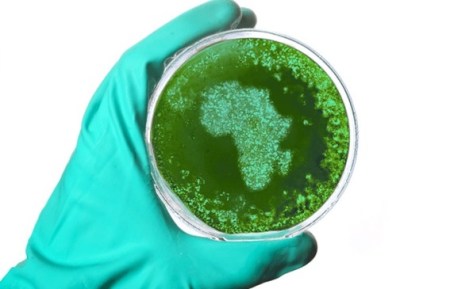
Rapid genetic disease screening will be the key to saving East Africa’s crops – just as it was during West Africa’s ebola crisis.

When the deadly Ebola virus struck West Africa last year, one thing that became clear was that the region lacked access to quick diagnostic toolsthat could help identify those infected and help contain the virus’s spread.

As the world swung into action to combat the emergency, one crucial factor that helped to curb the epidemic was the arrival of backpacks containing portable genetic sequencing computers – a technology not readily available in the affected countries.

What has that story got to do with world hunger, beyond the fact that both hunger and disease are featured in the United Nations’ Sustainable Development Goals?

If we can bring the same technologies to bear against crop diseases as well as human ones, we can help eradicate hunger – a less newsworthy and more slow-burning problem than Ebola, but far more deadly in terms of the human toll.

Sourced through Scoop.it from: theconversation.com

Interesting insight – because in 2007, some of the same folk who wrote this were involved in two workshops that I attended, in Bellagio and in Zanzibar, on setting up a plant disease diagnostic network for Africa.  We had folk from the Rockefeller Foundation there, Gates Foundation too, and we did a lot of good work – to no end, because the proposal did not fly.

Their points are highly valid: I have pointed out elsewhere, and others too, that plant diseases can kill people just as human diseases can.  Indirectly, maybe, and due to lack of food caused by plant pathogens, but taking a deadly toll nonetheless (see here: https://rybicki.blog/wp-content/uploads/2012/01/plvidis-final-11-6-99.pdf).

The sad fact is that there is next to nothing in place in most of Africa for the kinds of molecular diagnostics that folk working with human diseases take for granted.  Oh, there are a few centres in the more sophisticated African countries where ELISA kits can be used, and places like Uganda, Kenya and even Malawi have labs and dedicated people – but these are the exceptions, and the overall picture is dismal.

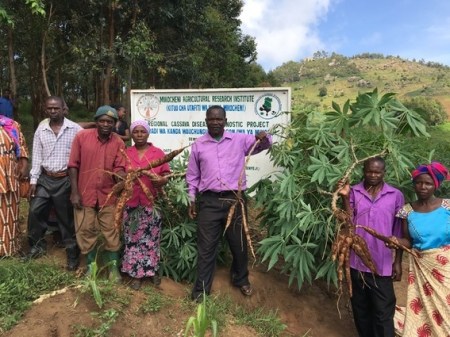
What we need are comprehensive surveys of crops across Africa, in all of the breadbasket countries that supply most of the maize, cassava, sweet potatoes and the like, and of vegetable-growing areas in all countries, to see what is there.

Once that is known, then surveillance programmes could be set up, to monitor outbreaks of dangerous diseases, insect vector populations and their role in spreading plant disease – and provide information to assess real and potential crop losses.

All it would take is money – and some of the kit that came to Africa for the Ebola outbreak in West Africa recently.  We even have a plan that could be dusted off – and a good Africa-wide network to help make it happen.

Oh, and some political will, and some planning.  That’s the difficult bit….

See on Scoop.itVirology News

The scientific journey of AIDS from despair to cautious hope

18 February, 2016

Despite the breakthroughs in HIV and AIDS research, without an effective vaccine, the world will not get to zero new infections and deaths.

Sourced through Scoop.it from: theconversation.com

Nice series of articles – I covered the first one earlier.

HIV/AIDS for many of has been a long and sustained learning experience that has paralleled the pandemic: it has provided numerous invaluable insights into the workings of the human immune system, into how retroviruses work, how they evolve – and how to treat the diseases HIV infection leads to, as well as how to develop therapies for those infected.

I hope we are past the midpoint of the pandemic curve now: as a young academic, I remember the first reports of AIDS the syndrome, the discovery of the viruses involved.

As an old academic who has been involved in research on candidate vaccines against it, I am still hoping that we will conquer the virus in my lifetime.

See on Scoop.itVirology News

Mimivirus – making us think again about virus classification

13 February, 2016

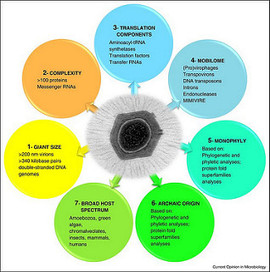
This article – by one of the discoverers of Mimivirus – argues that the new giant DNA viruses are different from other viruses and that as a result, we neew to create a new brach of microbes. Other virologists are more cautious, suggesting that Mimivirus can fit within the current scheme of virus taxonomy. Either…

Sourced through Scoop.it from: microbiologybytes.wordpress.com

I don’t think that The Big Lads justify a new domain of life: while they may be the largest monophyletic group of viruses with the most ancient provenance, they are not the ONLY monophyletic group.  A good case could be made for caudoviruses (Order Caudovirales) too; the ss(+)RNA viruses are also probably ancient and have a variety of origins – so there is nothing special about Mimi and her cousins, other than they are (so far) the most complex viruses in terms of genome size and encoded content.

They are still most certainly viruses, by all of the best accepted definitions (including mine B-), in that they are still obligate intracellular parasites that do not have a translational apparatus, and which cause particles to be assembled to transport their genomes.

See on Scoop.itVirology News

Why Africa can’t afford to have an outbreak of the Zika virus

10 February, 2016

With limited laboratory capacity and a lack of experts and funding, an outbreak of the Zika virus in Africa could be problematic.

Sourced through Scoop.it from: theconversation.com

Yeah…sure.  It could be Bad.


BUT: as South African epidemiologists have pointed out, it’ll only be a problem IF the mosquito that transmits it elsewhere, comes here – because our local A aegypti doesn’t have the same behaviour, and will vastly outnumber and possibly outcompete any import variety.


And it’s endemic in tropical Africa – meaning many people are immune already.


So scaremongering about Zika in Africa is possibly a little irresponsible – unless it’s being used as a stalking horse for an agenda for setting up continent-wide arbovirus surveillance, or spurring on efforts to set up an African CDC.  Which I would heartily endorse.


The stuff about lack of reagents is spot-on: which is why we have a proposal in the works to provide just such, using plants to it.  Watch this space….

See on Scoop.itVirology News

Zika: a realistic view of what we know

2 February, 2016

“As you’ve probably seen, unless you’ve been living in a cave, Zika virus is the infectious disease topic du jour. From an obscure virus to the newest scare, interest in the virus has skyrocketed just in the past few weeks:   I have a few pieces already on Zika, so I won’t repeat myself here.…”

Sourced through Scoop.it from: scienceblogs.com

Nice, cautious piece by Tara Smith.  I have been trying, via Twitter, to damp some of the hysteria and hype about Zika – but who cares about one cautious voice?  So there should be MORE – and this is one such.

Zika virus is a flavirirus related to dengue and yellow fever and Japanese encephalitis and West Nile viruses, and like them, is mosquito-transmitted.  In fact, it is transmitted by the same “yellow fever mosquito” – Aedes aegypti – as transmits YFV and dengue, and like them, has been spread around the tropics of the planet along with the mosquito vector.

The mosquito is an interesting beast, because it is hardy, can breed in very small deposits of water, such as are found in urban areas in flower vases, uncovered barrels, buckets and such, likes preying on humans, and flies during the day – unlike most of its relatives.  It also has a penchant for breeding in places like discarded car tyres, and it turns out that a LOT of these are literally shipped around the developing world from developed countries like Japan and the USA, which has resulted in the mosquito going worldwide from its African origins.

The Zika virus is nothing like as nasty as dengue or YFV or JEV: there are apparently no deaths of children or adults that can be attributed to infection with it, unlike the case with its relatives.  Where it is potentially dangerous is the apparent linkage – in naive populations – with microcephaly, and also a stronger link with the paralytic Guillain-Barre syndrome.

I stress “in naive populations”: the virus was discovered in Uganda’s Zika Forest in 1947, and is endemic over large swathes of tropical Africa, where it is not associated with anything other than mild and often inapparent infections, easily confused with influenza.  Its endemicity also means that literally everyone that can be infected will have been AS A CHILD – and presuming that like YFV, exposure leads to lifelong immunity, adults will be immune to the virus AND the purported side effects.  It is interesting that the African subspecies of A aegypti – which has apparently NOT left Africa – does not like to bite humans and is probably a less efficient vector.

What will probably happen in Brazil and the South, Central and North American countries that it has spread to or is in the process of doing so, is that it will become endemic there – especially if it adapts to being spread by other mosquitoes such as the much more common Culex spp., which may have already happened.  When that happens, the African experience will become the norm – and hopefully the hype and hysteria will die away.

Until then – well, a vaccine would be nice!  It may help that one of the best characterised and safest attenuated vaccines known is the 17D strain of the genetically similar yellow fever virus – and that unlike dengue, there are no distinct or non-cross-protecting strains or types of Zika virus, meaning only one vaccine should be necessary. And a simple thing to do would be to replace one or both of the membrane proteins of 17D with the Zika equivalents.  Remember who told you…B-)

See on Scoop.itVirology News

EPO Revokes Monsanto Patent On Virus-Resistant Melon

26 January, 2016

The European Patent Office on 20 January revoked a patent held by Monsanto on virus-resistant melons for technical reasons, much to the glee of opponents of patents on conventional plants. [updated…

Sourced through Scoop.it from: www.ip-watch.org

Now this is NOT a victory for anti-GMO activists, but more for folk who are against the patenting of natural genomes – which this is, in fact, as "Monsanto was claiming melons with a natural resistance to plant viruses."  Which is not a good thing, in my mind, because it would mean companies could mine germ plasm collections for useful traits and then patent them.

See on Scoop.itVirology News

MCB Honours Blog Project

22 January, 2016

So: you’ve just been told that as part of the teaching requirements for your MCB Honours degree, you have to do an at-least monthly blog (=weblog).

No! you cry.  Yes, Vernon Coyne and Ed Rybicki insist, kindly but firmly.

How?! you ask.

Like this:

  1. Go here (https://wordpress.com/)WordPress_com__Create_a_free_website_or_blog
  2. Click “Create Website”Create_an_account_—_WordPress_com
  3. Choose a themeCreate_an_account_—_WordPress_com
  4. Type “MCB” in the “Enter a domain” slotCreate_an_account_—_WordPress_com
  5. Select the FREE option offered:Create_an_account_—_WordPress_com
  6. And get to work!!mcb9847
  7. …with this as your composition screenNew_Post_‹_mcb9847_—_WordPress_com
  8. EXAMPLE:
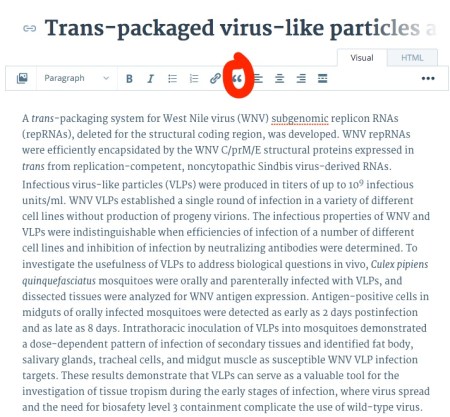
    You want to blog on this paper here that you have just found.  Write as your title:
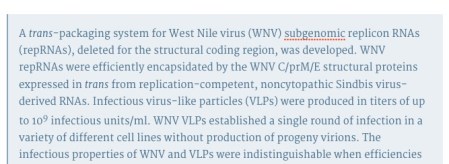
    Trans-packaged virus-like particles as vaccines” then copy and paste the abstract into the body of your post.  Position the cursor within the text, then click the indicated “Quote” control.Edit_Post_‹_mcb9847_—_WordPress_com
  9. This will show the text as being quoted – as in, not yours – and you can then add commentary.Edit_Post_‹_mcb9847_—_WordPress_com
    Here’s the link to the test page.
  10. This is the WHY of the exercise: we want to see that you can both select papers of interest to you and the Honours group, AND that you can write a concise and intelligent commentary to it – pointing out why it is cool / uncool / wrong / so right it’s awe-inspiring / etc.Like this example from my blogs.  To which I linked using the chain symbol at the top of the editing screen, and the URL of that specific blog post.“Online_‘recipes’_for_bird_flu_virus_add_to_bioterrorism_threat_”_No__No__they_don’t____ViroBlogy

What this exercise will hopefully teach you is (1) how to read quickly and analytically, (2) how to succinctly share your insights with others, (3) how to gain an entirely new means of scientific and social expression.

Oh, and we’re going to mark both the frequency with which you do this, and the quality of your contribution, AND the quality (and number) of the comments you make on your colleagues’ pages.

Have fun!  Please email your URL once you have created your site to both Vernon Coyne and Ed Rybicki.  May the Force be with you.

ViroBlogy: 2015 in review

30 December, 2015

The WordPress.com stats helper monkeys prepared a 2015 annual report for this blog.  I thank The Guru Cann for being one of the top referrers to this site!

Here’s an excerpt:

The concert hall at the Sydney Opera House holds 2,700 people. This blog was viewed about 37,000 times in 2015. If it were a concert at Sydney Opera House, it would take about 14 sold-out performances for that many people to see it.

Click here to see the complete report.

Toward Eliminating Poliovirus In the Lab

18 November, 2015

As the world inches closer to polio eradication, laboratories studying the virus will have to bolster biosafety standards. Eventually, most will need to stop working with the pathogen entirely.

Sourced through Scoop.it from: www.the-scientist.com

EVENTUALLY.  I note smallpox is still in freezers; so too is rinderpest – we have vaccines against both of them…oh, wait – we have vaccines against polio too!

Nice thing about rinderpest and polio – not so sure about smallpox – is that they COULD be recreated as needed from synthesised cDNA.

However, we really need to do that ONLY after there’s been significant sequencing of all known variants, just in case we missed something.

See on Scoop.itVirology News

Engineered bat virus stirs debate over risky research 

13 November, 2015

An experiment that created a hybrid version of a bat coronavirus — one related to the virus that causes SARS (severe acute respiratory syndrome) — has triggered renewed debate over whether engineering lab variants of viruses with possible pandemic potential is worth the risks.

Sourced through Scoop.it from: www.nature.com

You know something?  I reiterate my stance on engineered flu viruses.  Which is that it is NOT known that these coronaviruses will have pandemic potential; that they ARE being worked with under stringent containment, and no other similar NATURAL virus has escaped in recent memory; they DO provide valuable information on what is needed for such viruses to infect humans.

Which is all good, right?!

See on Scoop.itVirology News