Archive for the ‘Uncategorized’ Category

First Ebola case linked to bat play – really?

30 December, 2014

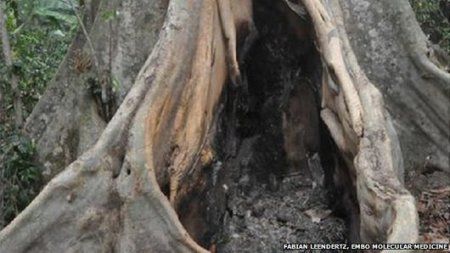
The Ebola victim who is believed to have triggered the current outbreak – a two-year-old boy called Emile Ouamouno from Guinea – may have been infected by playing in a hollow tree housing a colony of bats, say scientists.

They made the connection on an expedition to the boy’s village, Meliandou.

They took samples and chatted to locals to find out more about Ebola’s source.

The team’s findings are published in EMBO Molecular Medicine.

Source: www.bbc.co.uk

Really??  Kids played in a hollow tree where bats USED to be – and the bats in which no-one can find Ebola, are the source of the epidemic? Really??

Now even for one who is prepared to believe the worst of bats – which I am; I am on record as calling them fabulous furry flying cockroaches – the evidence here is VERY thin.

Consider the facts in evidence: 

"Villagers reported that children used to play frequently in the hollow tree"

"Emile – who died of Ebola in December 2013 – used to play there, according to his friends."

"The villagers said that the tree burned on March 24, 2014 and that once the tree caught fire, there issued a "rain of bats""

"A large number of these insectivorous free-tailed bats …were collected by the villagers for food, but disposed of the next day after a government-led ban on bushmeat consumption was announced."

"{While] The scientists …were unable to test any of the bushmeat that the villagers had disposed of, they captured and tested any living bats they could find in and around Meliandou."

"No Ebola could be detected in any of these hundred or so animals, however."

"But previous tests show this species of bat can carry Ebola."

So – the chain of logic goes: 

– Kids played in a tree

– One kid got Ebola

– Bats lived in the tree

– Those bats can be infected with Ebola

– Therefore the one kid was infected by those bats.

Really??  You would convict a whole community of bats for that, IN THE ABSENCE OF ANY EVIDENCE they ACTUALLY carried Ebola??

This is thin – very, very thin.  I am also quite happy to believe the Ebola outbreak started with bats, BUT this proves nothing.  More evidence, less hype!!

See on Scoop.itVirology News

2014 in review: ViroBlogy

30 December, 2014

The WordPress.com stats helper monkeys prepared a 2014 annual report for this blog.

Here’s an excerpt:

The concert hall at the Sydney Opera House holds 2,700 people. This blog was viewed about 31,000 times in 2014. If it were a concert at Sydney Opera House, it would take about 11 sold-out performances for that many people to see it.

Click here to see the complete report.
SO we’re doing alright, then?? Thanks for reading – here’s to a great 2015!

The virus as art: Linda Stannard’s electron micrographs made colourful

3 November, 2014

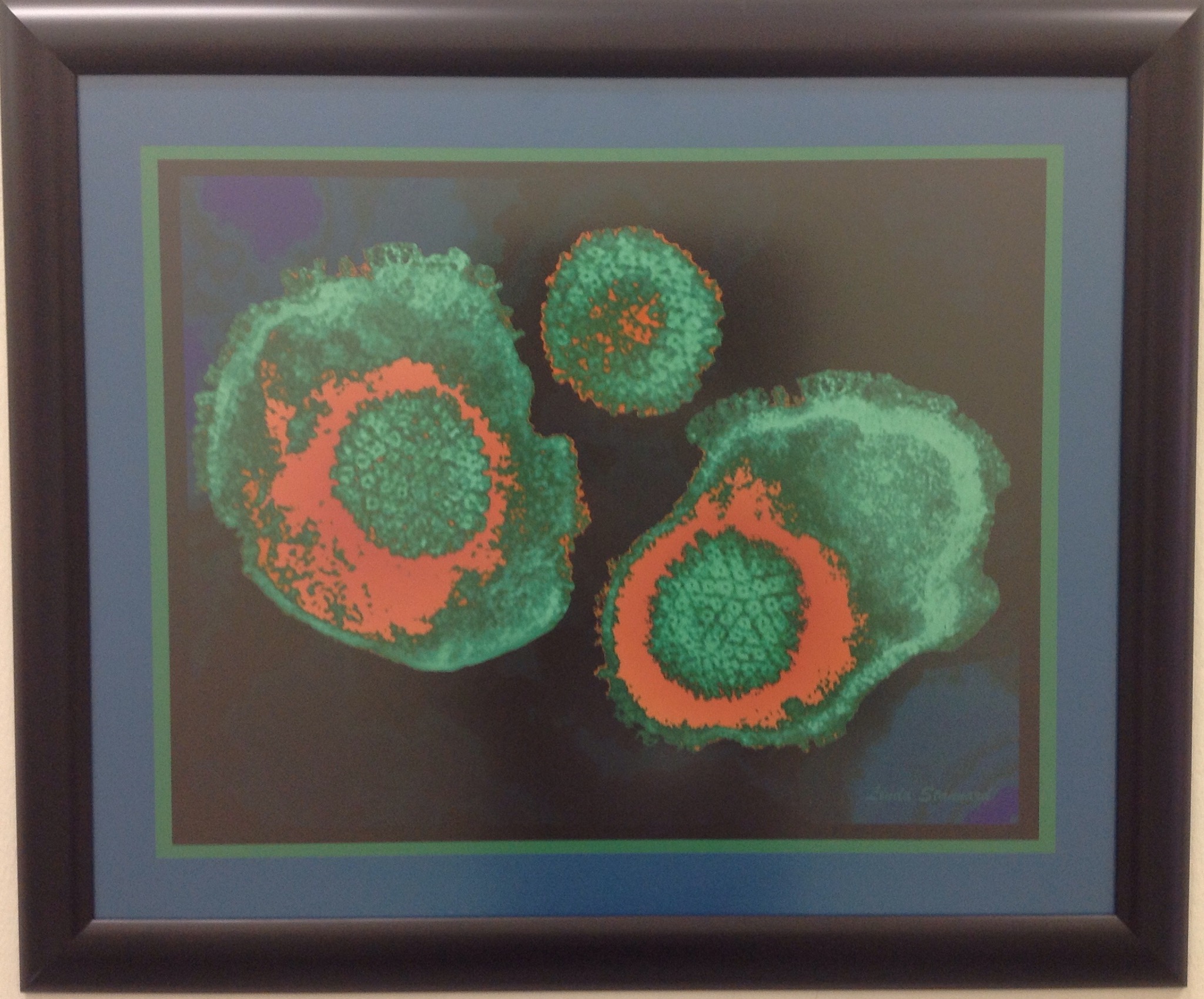
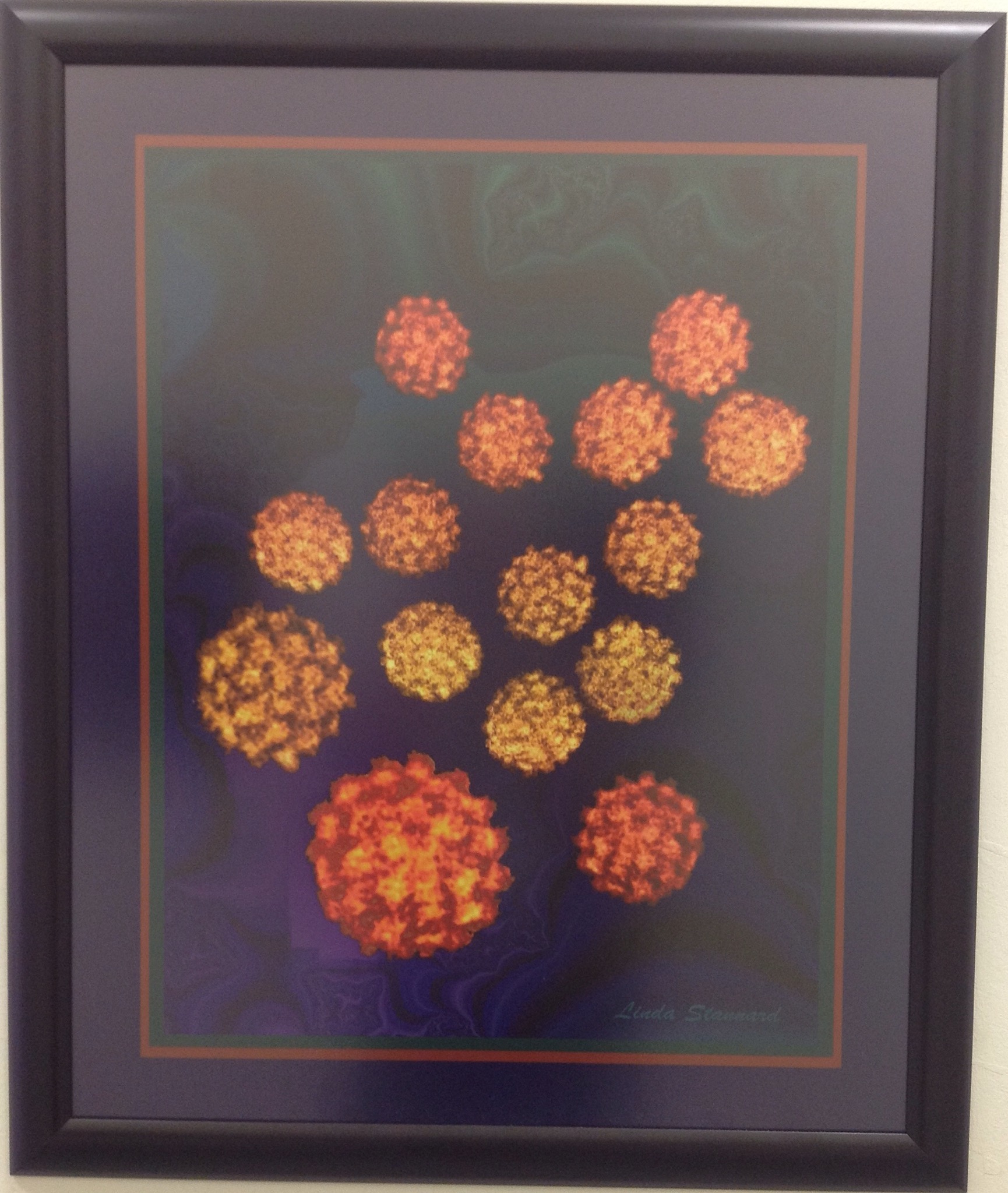
Dr Linda Stannard was a virologist and electron micrsocopist of some repute, here at the University of Cape Town, when she retired some years back. She worked on a lot of interesting viruses, thanks to the diagnostic Virology lab at UCT’s Medical School as well as an eclectic mix of colleagues, and managed to create some stunning images of everything from TMV to poxviruses, herpesviruses, poliovirus, rotavirus, hepatitis B and adenoviruses.
IMG_0731.PNG
Then she retired – and took her image collection with her, to be recycled as imaginative colorised versions for commercial purposes.
So Anna-Lise Williamson commissioned her to beautify the rather sterile environs of the Institute of Infectious Disease and Molecular Medicine (IDM), with the results that you see below. Her corridor and offices now look rather nice!

IMG_0725.JPG

IMG_0728.JPG

IMG_0726.JPG

IMG_0727.JPG

IMG_0679.JPG

We are opening a competition to name each virus: winner to get the satisfaction of knowing they’re smart.

Resurrecting Smallpox? Easier Than You Think

17 October, 2014

The virus’s genome is already online. You just need the right lab.

Source: www.nytimes.com

Weeeeeellll…yes and no. Smallpox is a BIIIIG genome – not far off in size to the bacterial genome famously resynthesised by Craig Venter et al., a while ago.  This means it would be a huge undertaking, cost a LOT of money, and need sophisticated facilities to do it.

Not something your average cave-dwelling fanatic could do, then!

States could do it, however: a well-funded lab in even a country like North Korea could theoretically resynthesise a poxvirus – but why bother??  We have vaccines against smallpox right now; growing poxviruses and vaccinia virus in particular is a well-established biotechnology still.

SO I think this is an artificial concern, to be honest. 

See on Scoop.itVirology News

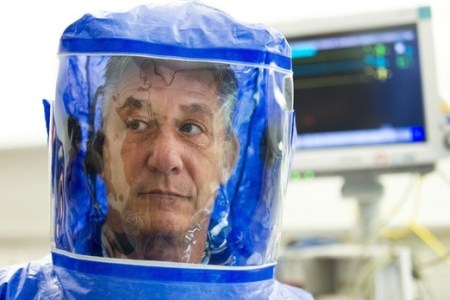
What Would Happen if You Got Ebola?

13 August, 2014

A secondary infection in the U.S. is highly unlikely. But here’s how the healthcare system would respond if there was one.

Source: www.theatlantic.com

Goes without saying that this would happen in a lot of other places, too.  Including our very own South Africa – where it HAS happened, with Marburg, Ebola and Lujo viruses.  Written about right here on ViroBlogy.

See on Scoop.itVirology News

How can geminiviral Rep capture the cell cycle of differentiated plant cells?

12 August, 2014

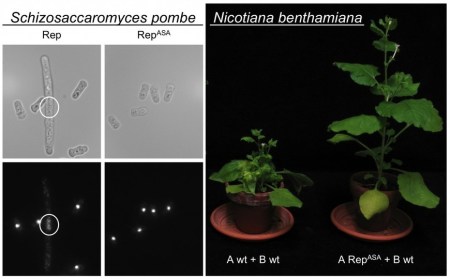
African cassava mosaic virus (ACMV) in the geminivirus family has being affected 500 million people worldwide by devastating cassava crops during the past decades. It has caused severe symptoms and reduced yield up to the complete loss of roots, the main starchy food source especially for subsistence farmers in Africa. How can a tiny virus with a small genome evoke such dramatic effects? The viral key component, the replication-initiator protein (Rep), forces differentiated plant cells in the phloem to reactivate DNA synthesis. Even more, it does the same in model cells of fission yeast. We have identified, now, a potential cyclin interaction motif, RXL, in the sequence of ACMV Rep, which may be important for cell cycle control. This motif is essential to induce rereplication in yeast and necessary for viral infection of plants.


Source: www.virologyhighlights.com

I am a sucker for geminiviruses and their replication – as can be seen in the pages published here and elsewhere over the years.  It is fascinating to me that a small protein like Rep – only ~30 kDa – can do so many things, and especially interfere in such a fundamental way with organised, differentiated cells.

What is even more interesting is that it can do it in such a wide variety of systems: it’s been shown that ACMV can replicate in maize protoplasts as well as in the dicotyledonous cassava; it can evidently function well in yeast as well – and via a pathway that no-one suspected before now.

Truly, a protein of many parts!  Congratulations to Katharina Hipp and to my old friends Bruno and Holger.

See on Scoop.itVirology News

2013 in review: ViroBlogy seems to be doing OK??

5 August, 2014

The WordPress.com stats helper monkeys prepared a 2013 annual report for this blog.

Here’s an excerpt:

The concert hall at the Sydney Opera House holds 2,700 people. This blog was viewed about 24,000 times in 2013. If it were a concert at Sydney Opera House, it would take about 9 sold-out performances for that many people to see it.

Click here to see the complete report.

Has the Time Come to Test Experimental Ebola Vaccines?

30 July, 2014

The Ebola Virus is Spreading Across West Africa in The Largest Outbreak To Date

Mortality rates are currently at 60%, where normally up to 90% of affected people die. Unfortunately, there are no cures or vaccines for the disease, despite its emergence in 1976.

In March of this year, cases of Ebola were reported for the first time in Guinea, Western Africa. Notably, these outbreaks took place in Guinean districts that bordered Sierra Leone and Liberia. In the past, outbreaks have taken place in remote areas of Africa, but this outbreak has had the opportunity to cross border and spread throughout Western Africa, and it has done just that. Now fourth months since the March outbreak, 1,093 people have been infected and there have been a reported 660 deaths attributed to the deadly virus (source: CNN vital signs.)


Source: www.vaccinenation.org

I would say – yes!  I am sure the beleaguered healthcare workers in Guinea, Liberia, Sierra Leone and now Nigeria would welcome the experimental vaccine candidates, and the experimental therapeutics, for that matter.

See on Scoop.itVirology News

Internet archaeology

28 June, 2014

There I was, innocently doing a search on

Search the BIONET methods/bionet.molbio.methds-reagnts

– because my own “Manual of Online Molecular Biology Methods” links to it, and I was a regular there when it was operational – when I typed my own name in (as one does), and discovered that I had written this, as an answer to a post of 21 years ago.  Can’t even remember doing it.


S Poidinger writes:
> Gimme a K...Gimme an I....Gimme a T....whatdoesitspell?

- and I am prompted to reply:

Well, come on all of you bright young men
ProBoehAmPharm needs your help again
Got itself in a bit of a jam -
Stock price falling in the US of Am
So put down your books, pick up a kit
Gonna do a whole lot of sh*t...

And it's 1, 2, 3
What are we working for
Don't ask me, I don't give a sh*t
Long's I can use a kit

And it's 5, 6, 7
Open up the Plastic box
Ain't no cause to wonder why
ProBoehAmPharm ain't gonna die....

- With apologies to Country Joe and the Fish

Virus experiments risk unleashing global pandemic, study warns

21 May, 2014

See on Scoop.itVirology News

Benefits of scientific testing in the area are outweighed by risks of pathogenic strains spreading round world, say researchers

Ed Rybicki‘s insight:

…and others say "Rubbish!"  I particularly like this bit:


"[Ron] Fouchier said…the authors had misinterpreted published data to arrive at their risk of someone picking up a virus in the laboratory. "The truth is that scientific research has never triggered a virus pandemic.""

The report goes on to say:

"Lipsitch and Galvani point out that a flu strain that spread around the world from 1977 to 2009 was probably released in a laboratory accident."

Yes.  But.  That was from the old Soviet Union – and they had a number of nasty things escape from laboratories, including anthrax and weaponised smallpox, by all accounts.


See on www.theguardian.com