Province on rabies alert | The New Age Online

12 June, 2012

See on Scoop.itVirology News

“A three-year-old boy from Umlazi [KwaZulu-Natal, SA] was close to becoming the fourth victim of rabies in the province following an outbreak of the disease that has killed three people in the past month.

The toddler has been at the Prince Mshiyeni Memorial Hospital for the past two weeks and, according to the department of environmental affairs, is showing signs of recovery.

“We have been in contact with his mother since he was admitted to hospital and she says there are improvements. He can now sit and has started swallowing liquids. He also responds when she calls his name but he still cannot speak properly,” said department spokesperson Jeffrey Zikhali.”


If that’s the case, then it’s close to being a miracle.  The problem appears to be lack of general immunisation of domestic animals, and a lack of government-supplied vaccine for free distribution.

See on www.thenewage.co.za

Virus poses added threat to isle honey bees – Hawaii News – Honolulu Star-Advertiser

11 June, 2012

See on Scoop.itVirology News

The varroa mite is causing a highly contagious virus to proliferate in honeybee colonies here and around the globe, Hawaii and British researchers have found.

Researchers from the University of Hawaii, the University of Sheffield in South Yorkshire, the British Marine Biological Association, and the British Food and Environmental Research Agency studied the pest in Hawaii.

Their research, reported Friday in the journal Science, showed how the varroa mite caused the virus, a known pathogen, to increase its frequency among honeybee colonies to 100 percent from 10 percent.

The study showed that along with this change, a millionfold increase in the number of virus particles infect- ing each bee and a huge reduction in viral strain diversity led to the single virulent virus that deforms wings.

See on www.staradvertiser.com

Vaccine gets credit for decline in sex infection [in New Zealand]

11 June, 2012

See on Scoop.itVirology News

“A nationwide drop in the number of genital warts cases has been attributed to the controversial HPV vaccine, which is free for teenage girls.

Sexual health clinics reported a 10 per cent decrease in genital warts last year compared to 2010, according to the Institute of Environmental Science and Research’s annual report on sexually transmitted infections.

Family Planning national medical advisor Christine Roke attributed the fewer first-time cases of genital warts to the HPV vaccine, which was introduced in late 2008.

“It reduces the chances of getting warts if people have it before they are sexually active.”

The vaccine – now a routine immunisation for 12-year-old girls – aims to protect women against human papillomavirus and the risk of developing cervical cancer later in life.”


Nice example of the knock-on effect in public health due to a vaccine – in this case, even though only girls are getting the papillomavirus vaccine, bot sexes are protected against spread of genital warts caused by the viruses.


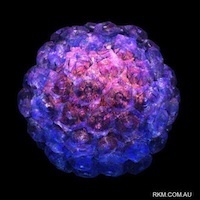
HPV graphic courtesy of Russell Kightley Media

See on www.stuff.co.nz

PLoS Pathogens: Mobilization of HIV Spread by Diaphanous 2 Dependent Filopodia in Infected Dendritic Cells

8 June, 2012

See on Scoop.itVirology and Bioinformatics from Virology.ca

“Paramount to the success of persistent viral infection is the ability of viruses to navigate hostile environments en route to future targets. In response to such obstacles, many viruses have developed the ability of establishing actin rich-membrane bridges to aid in future infections. Herein through dynamic imaging of HIV infected dendritic cells, we have observed how viral high-jacking of the actin/membrane network facilitates one of the most efficient forms of HIV spread. Within infected DC, viral egress is coupled to viral filopodia formation, with more than 90% of filopodia bearing immature HIV on their tips at extensions of 10 to 20 µm. Live imaging showed HIV filopodia routinely pivoting at their base, and projecting HIV virions at µm.sec−1 along repetitive arc trajectories. HIV filopodial dynamics lead to up to 800 DC to CD4 T cell contacts per hour, with selection of T cells culminating in multiple filopodia tethering and converging to envelope the CD4 T-cell membrane with budding HIV particles. Long viral filopodial formation was dependent on the formin diaphanous 2 (Diaph2), and not a dominant Arp2/3 filopodial pathway often associated with pathogenic actin polymerization. Manipulation of HIV Nef reduced HIV transfer 25-fold by reducing viral filopodia frequency, supporting the potency of DC HIV transfer was dependent on viral filopodia abundance. Thus our observations show HIV corrupts DC to CD4 T cell interactions by physically embedding at the leading edge contacts of long DC filopodial networks.”


A really nice microscopy paper, backed up by some good good molbiol, revealing another way virus – and in this case HIV – can hijack natural interactions of cells of the immune system to further its own spread.

See on www.plospathogens.org

Seasonal Trivalent Inactivated Influenza Vaccine Protects against 1918 Spanish Influenza Virus Infection in Ferrets

8 June, 2012

See on Scoop.itVirology News

“The influenza virus H1N1 pandemic of 1918 was one of the worst medical catastrophes in human history. Recent studies have demonstrated that the hemagglutinin (HA) protein of the 1918 virus and 2009 H1N1 pandemic virus [A(H1N1)pdm09], the latter now a component of the seasonal trivalent inactivated influenza vaccine (TIV), share cross-reactive antigenic determinants. In this study, we demonstrate that immunization with the 2010-2011 seasonal TIV induces neutralizing antibodies that cross-react with the reconstructed 1918 pandemic virus in ferrets. TIV-immunized ferrets subsequently challenged with the 1918 virus displayed significant reductions in fever, weight loss, and virus shedding compared to these parameters in nonimmune control ferrets. Seasonal TIV was also effective in protecting against the lung infection and severe lung pathology associated with 1918 virus infection. Our data demonstrate that prior immunization with contemporary TIV provides cross-protection against the 1918 virus in ferrets. These findings suggest that exposure to A(H1N1)pdm09 through immunization may provide protection against the reconstructed 1918 virus which, as a select agent, is considered to pose both biosafety and biosecurity threats.”


So, all you doomsayers – and yes, NSABB, I’m talkin’ to YOU – as expected by some, the resurrected Spanish Flu virus is NOT going to be an all-conquering scourge that depopulates the planet if it gets out.  Basically, anyone who has either had the H1N12009pdm or the modern vaccine, is almost certainly protected against the old virus.


Graphic courtesy of Russell Kightley Media

See on jvi.asm.org

Adam Baker – Zombie Apocalypse Survival.

6 June, 2012

See on Scoop.itVirology News

Adam Baker, author of Outpost and Juggernaut, shares a few survival tips for surviving the zombie apocalypse.


I thought I’d include this useful little “how to survive” video, seeing as engineered rabies viruses and whatnot will shortly precipitate the Viral Zombie Apocalypse…B-)

See on www.youtube.com

Differential assembly of Hepatitis B Virus core protein on single- and double-stranded nucleic acid suggest the dsDNA-filled core is spring-loaded

5 June, 2012

See on Scoop.itVirology and Bioinformatics from Virology.ca

“Hepatitis B Virus (HBV) cores assemble on viral RNA, which is reverse transcribed within the core to the partially dsDNA genome of mature HBV. However, constraining dsDNA, a stiff polymer, within a core necessarily requires far greater capsid stability than constraining ssRNA. We hypothesized that, unlike ssRNA, dsDNA would be a poor substrate for assembly. We examined titrations of ssDNA and dsDNA with purified HBV core protein, Cp183, by EMSA, EM, DLS, and etheno-DNA fluorescence. Cp183 bound ssDNA with high affinity to form virus-like capsids. However, Cp183 bound dsDNA poorly, forming a mixture of irregular complexes. Nonetheless, we observed some normal cores in dsDNA assembly reactions, indicating that the energy required to bend DNA could be similar to the protein–protein association energy. This similarity of energies suggests that dsDNA stresses mature HBV cores, in agreement with calculation, which may be the basis for the virus maturation signal and DNA release.”


A great paper – and one which harks back to an age where many studies on viruses were biophysical, because the molecular biological techniques we use now had simply not been invented.  I note frequent reference to Bancroft, 1970 – to a paper on self-assembly of plant viruses.  I also like the concept of HBV cores as a Jack-in-a-box: ready to pop open to deliver the goodies.

See on www.sciencedirect.com

Endogenous RNA viruses of plants in insect genomes

5 June, 2012

See on Scoop.itVirology News

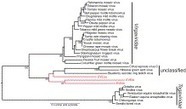
“Endogenous viral elements (EVEs) derived from RNA viruses with no DNA stage are rare, especially those where the parental viruses possess single-strand positive-sense (ssRNA +) genomes. Here we provide evidence that EVEs that share a sequence similarity to ssRNA + viruses of plants are integrated into the genomes of a number of insects, including mosquito, fruit flies, bees, ant, silkworm, pea aphid, Monarch butterfly, and wasps. A preliminary phylogenetic analysis places these EVEs as divergent relatives of the Virgaviridae and three currently unclassified plant viral species.”

I have covered this before, in ViroBlogy, (and here, in 2007)as an interesting and probably under-appreciated phenomenon.  I note Eddie Holmes and colleagues have now taken it much, much further – which incidentally lends significant credence to my supposition that virus/vector/plant coevolution was probably a fair bit more intimate than has been supposed, with the newly-emerged (in evolutionary terms) insects and their viruses meeting terrestrial plants and THEIR viruses.  And mixing everything up, as I have speculated elsewhere (Origins of Viruses).

I thank Jean-Marie Verchot for drawing my attention to this!

See on www.sciencedirect.com

Narcolepsy traced to specific [flu] vaccine batches

4 June, 2012

See on Scoop.itVirology News

“A new Swedish study shows that all Swedes who developed narcolepsy from the swine flu vaccine Pandemrix received the vaccine from 12 of the 35 batches, despite the claim by the responsible agency that no such connection exists.”

There are some slightly disturbing connections between the H1N1 2009 pdm virus and narcolepsy: the virus itself seems to have caused narcolepsy in some of those infected; now a vaccine is implicated – is this an innate property of certain of the virus proteins, possibly?

See on www.thelocal.se

PLoS Pathogens: Evolutionary Reconstructions of the Transferrin Receptor of Caniforms Supports Canine Parvovirus Being a Re-emerged and Not a Novel Pathogen in Dogs

3 June, 2012

See on Scoop.itVirology News

“Parvoviruses exploit transferrin receptor type-1 (TfR) for cellular entry in carnivores, and specific interactions are key to control of host range. We show that several key mutations acquired by TfR during the evolution of Caniforms (dogs and related species) modified the interactions with parvovirus capsids by reducing the level of binding. These data, along with signatures of positive selection in the TFRC gene, are consistent with an evolutionary arms race between the TfR of the Caniform clade and parvoviruses. As well as the modifications of amino acid sequence which modify binding, we found that a glycosylation site mutation in the TfR of dogs which provided resistance to the carnivore parvoviruses which were in circulation prior to about 1975 predates the speciation of coyotes and dogs. Because the closely-related black-backed jackal has a TfR similar to their common ancestor and lacks the glycosylation site, reconstructing this mutation into the jackal TfR shows the potency of that site in blocking binding and infection and explains the resistance of dogs until recent times. This alters our understanding of this well-known example of viral emergence by indicating that canine parvovirus emergence likely resulted from the re-adaptation of a parvovirus to the resistant receptor of a former host.”


Nice to see Colin Parrish is still working on canine parvoviruses: I remember playing a Nintendo game with him in Ithaca, NY in 1991, and talking about viruses….

It is interesting that the arms race between virus and host can revive, as it has in this case: for the canine lineage to have lost susceptibility to parvovirus, and then have the virus regain the ability to infect is an excellent example of how host-pathogen interactions can change.

See on www.plospathogens.org