Via Scoop.it – Virology News
A new study, published in PLoS Computational Biology, shows how worries over vaccine risks can allow preventable contagious diseases, such as measles and whooping cough, to make a comeback.
Via Scoop.it – Virology News
A new study, published in PLoS Computational Biology, shows how worries over vaccine risks can allow preventable contagious diseases, such as measles and whooping cough, to make a comeback.
Via Scoop.it – Virology News
Tissue samples have been used to reconstruct the 1918 influenza epidemic and to illuminate the proliferation of the AIDS virus.
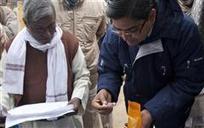
Preserved human tissue can help shed light on why diseases — caused by microbes, environmental exposures and lifestyle changes — emerged when they did. It might even help scientists predict disease trends or outbreaks. Michael Worobey, an evolutionary biologist at the University of Arizona, is among the top researchers responsible for establishing the most credible date for when HIV entered the human population. He was able to do so in part thanks to analysis of tissue samples such as the ones pictured, from Congo, where some of the earliest HIV cases were discovered. The tissues are stored in blocks of wax.
A good archive is a wonderful thing – as I have discovered, when I have found that my first-ever clone is just a bit of dried-up agar in a cracked Petri dish….
Via Scoop.it – Virology News
“The end of an impassioned and often strident global debate over the proper balance between scientific openness and security began with 2 hours of mandatory, studious silence in a room protected by an armed guard.
When members of a U.S. government advisory panel gathered last week on the campus of the U.S. National Institutes of Health (NIH) near Washington, D.C., to reconsider their controversial December 2011 recommendation that two groups of scientists redact key details from papers describing how they made the H5N1 avian influenza virus more transmissible between mammals, one of the first items on the agenda was to read revised versions of the manuscripts.”
Well, I would hope so – and then stop being silly.
Image courtesy Russell Kightley Media
Via Scoop.it – Virology News
PROJECT GENESIS: Triumph, Tragedy, & Romance in the Futuristic Realm of Biotechnology [Kindle Edition] Markus Fredericks (Author). “Our story begins in year 2055 A.D. Felix and Monique are two attractive bioengineers …
I said “and other things”. This is one of them.
Via Scoop.it – Virology News
This site explores the history of polio, the science and philanthropy behind the vaccines, the experiences of people who contracted polio and their influence on American culture, and current global efforts at stopping transmission of the poliovirus.
Vaccine denialists really, really need to go and have a look at this…15 000 kids paralysed and 1000 died per year in teh USA in the mid-1950s. And now parents don’t want to vaccinate.
Via Scoop.it – Virology News
On April 12, 1955, scientists and reporters gathered in Ann Arbor, Michigan, for a momentous event. Millions of Americans huddled around radios and televisions that day to learn whether the world’s first polio vaccine, developed by Dr. Jonas Salk at the University of Pittsburgh, could prevent a devastating disease that killed and paralyzed thousands upon thousands of people, mainly children.
It’s hard to overstate the terror of polio back then. It would arrive each summer, like clockwork, leaving behind vivid reminders for all to see: wheelchairs, crutches, leg braces, iron lungs, deformed limbs. When Dr. Salk’s injectable vaccine was declared “safe, effective, and potent” that remarkable day in Ann Arbor, a nation celebrated. In churches, department stores, and coffee shops people wept openly with relief. President Eisenhower invited Dr. Salk to the White House where, in a trembling voice, he thanked the young researcher for saving children everywhere.
Via Scoop.it – Virology News
Because they are rich in stem cells, the cord blood of babies is being stored in blood banks, fueling a growing industry. Human stem cells, after all, have been credited with vast medical powers.
But can stem cells be used to cure one of the major scourges of the modern age: HIV-AIDS?
A series of studies conducted by researchers at the University of California in Los Angeles (UCLA) suggest that this might indeed be possible. In the most recent study, published on April 12 in the journal PLoS Pathogens, the researchers demonstrated that these stem cells can actually attack HIV-infected cells in a living organism.
Nice account of an interesting topic.
Via Scoop.it – Virology News
“Vaccine scares that lead portions of the population to forgo vaccination could become more common as more diseases become eradicated.”
This is becoming a major problem for developed countries – that is to say, high GDP countries where people mostly have jobs and houses and electricity, and TV – and of course, that bringer of disinformation about vaccines, the internet.
Seriously: there are some 300 000 ANTI-vaccine sites out there, according to contacts in the USA, and some of them are so rabid they would make neo-nazis look respectable.
As I have written elsewhere – in a comment on an article in The Scientist – it would be ironic if developing countries started instituting stricter vaccination controls for travellers from the more affluent world. It is coming, though: the first importations of diseases like measles from Europe to the Americas have already occurred, and I am sure the incidence of these reports will rise as vaccine paranoia grows.
Via Scoop.it – Virology News
Are sexual relations closely intertwined with oral health? Jo-Anne Jones, RDH, addresses that question by sharing some of the latest statistics regarding a possible connection between the human papillomavirus (HPV) and oral cancer.
Via Scoop.it – Virology News
In 2009, researchers reported that an AIDS vaccine had for the first time protected people against HIV. Since then, the researchers have been wondering, How did it work?
AIDS researchers have only been able to guess at what these critical weapons against HIV could be, which is partly why their efforts to create a vaccine have thus far been marked by a long line of failed attempts. But when the RV144 trial in Thailand showed promise in 2009, scientists finally had something to work with. The vaccine was only modestly effective — protecting just 31% of heterosexual adults from infection — especially compared with inoculations against other common infectious agents like measles or mumps, which are 95% to 98% effective. But it was a start.
Ummmmm…yes. Well – sort of. The vaccine was only marginally effective, and my opinion is that it may not have very much to say to us at all.






 ViroBlogy