Current Opinion in Virology – Mass extinctions, biodiversity and mitochondrial function: are bats ‘special’ as reservoirs for emerging viruses?

5 April, 2012

Via Scoop.itVirology News

For the past 10–15 years, bats have attracted growing attention as reservoirs of emerging zoonotic viruses. This has been due to a combination of factors including the emergence of highly virulent zoonotic pathogens, such as Hendra, Nipah, SARS and Ebola viruses, and the high rate of detection of a large number of previously unknown viral sequences in bat specimens.

Via www.sciencedirect.com

Opinion: The Risk of Forgoing Vaccines | The Scientist

4 April, 2012

Via Scoop.itVirology News

Opinion: The Risk of Forgoing Vaccines |…

“Given the direct benefit to the individual of immunity against disease, vaccination, is not completely altruistic. However, immunization provides a significant benefit to society. One can liken a human newborn, or a person who cannot get vaccinated, to a vulnerable bird with ticks on the top of its head. As individuals, we cannot fully protect these people from infectious disease, and instead we rely on herd immunity. If society is made up mostly of “suckers” that have expended the energy and cost to get vaccinated, then the vulnerable will be protected due to the absence or reduction of disease transmission. But if a significant percentage of individuals decides against vaccination, for one reason or another, we may lose herd immunity, and infectious disease will spread.”


I cannot get over how stupid some people can be.  I certainly won’t let their children play with my children – they might benefit from a herd imunity they are not entitled to.

Via the-scientist.com
ScienceDirect.com – Current Opinion in Virology – Selected approaches for increasing HIV DNA vaccine immunogenicity in vivo

4 April, 2012

Via Scoop.itVirology News

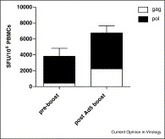
The safety, stability, and ability for repeat homologous vaccination makes the DNA vaccine platform an excellent candidate for an effective HIV-1 vaccine. However, the immunogenicity of early DNA vaccines did not translate from small animal models into larger non-human primates and was markedly lower than viral vectors. In addition to improvements to the DNA vector itself, delivery with electroporation, the inclusion of molecular adjuvants, and heterologous prime-boost strategies have dramatically improved the immunogenicity of DNA vaccines for HIV and currently makes them a leading platform with many areas warranting further research and clinical development.


Nice review – even if they don’t mention our extended HIV vaccine group’s work once…ah, the imperialism inherent in HIV vaccine research!

Via www.sciencedirect.com

ProMED mail: RABIES, HUMAN, PRESUMED ABORTIVE 2009 – USA: (TEXAS) UNRESOLVED OUTCOME

4 April, 2012

Via Scoop.itVirology News

Map of the latest alerts on infectious disease around the world…

Houston rabies case poses new questions about age-old illness
————————————————————-
At the US Centers for Disease Control and Prevention [CDC], she’s called the “Texas wild child.” She was a 17-year-old who had run away from home when she walked into a Houston hospital with a fever and puzzling neurological symptoms. Her name is veiled by medical privacy laws, as is the identity of her family back in Missouri; exactly how she was exposed to the virus that sickened her 3 years ago is a mystery. Where she is now, no one seems to know. Her disappearance is part of one of the area’s most intriguing medical mysteries: The CDC says she is the only known person in the US to survive rabies after the onset of clinical symptoms, and without prior vaccination or intensive hospital care.


Good account of the current state of rabies therapy – or lack of it.

Image courtesy of Russell Kightley Media

Via www.promedmail.org

HPV Vaccine May Help Those Who Had Cervical Cancer Surgery

3 April, 2012

Via Scoop.itVirology News

A new study suggests that the vaccine can significantly cut the likelihood of HPV-related disease even among women who have had surgery for cervical cancer caused by HPV.

Via www.nytimes.com

Future Virology Introducing yesterday’s phage therapy in today’s medicine

3 April, 2012

Via Scoop.itVirology News

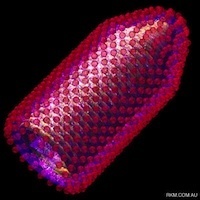
The worldwide emergence of ‘superbugs’ and a dry antibiotic pipeline threaten modern society with a return to the preantibiotic era. Phages – the viruses of bacteria – could help fight antibiotic-resistant bacteria. Phage therapy was first attempted in 1919 by Felix d’Herelle and was commercially developed in the 1930s before being replaced by antibiotics in most of the western world.


I have long had a fascination for the use of phages to treat disease – and now it looks like its the new-new wave of the future, as antibiotics begin to fail.

Image courtesy of Russell Kightley Media

Via www.futuremedicine.com

Future Virology Introducing yesterday’s phage therapy in today’s medicine

3 April, 2012

Via Scoop.itVirology and Bioinformatics from Virology.ca

The worldwide emergence of ‘superbugs’ and a dry antibiotic pipeline threaten modern society with a return to the preantibiotic era. Phages – the viruses of bacteria – could help fight antibiotic-resistant bacteria. Phage therapy was first attempted in 1919 by Felix d’Herelle and was commercially developed in the 1930s before being replaced by antibiotics in most of the western world.


I have long had a fascination for the use of phages to treat disease – and now it looks like its the new-new wave of the future, as antibiotics begin to fail.

Image courtesy of Russell Kightley Media

Via www.futuremedicine.com

Infection prevention strategies employing cartoon microbes (nanobugs) to entertain and educate people of all ages – Nanobugs, Inc www.nanobugs.com

3 April, 2012

Via Scoop.itVirology News

Intriguing website to learn about practical infection prevention strategies through the nanobugs ™. More than 50 cartoon microbes (bacteria, viruses, and fungi) that entertain and educate.


Desperately simplistic, but fun.


Via www.nanobugs.com

Febrile Seizure Risk Not Linked to MMRV Vaccine Booster in New Study

3 April, 2012

Via Scoop.itVirology News

A new study examining the link between the Measles, Mumps, Rubella and Varicella vaccination (MMRV) booster in 4 to 6 year old children found no link between the shot and febrile seizures.


Yet more reasons to GET YOUR CHILDREN VACCINATED!!

Via www.inquisitr.com

Inovio gets second grant to fund bioterrorism synthetic vaccines

3 April, 2012

Via Scoop.itVirology News

Inovio Pharmaceuticals (AMEX:INO) received a second grant by the U.S. Defence Department to fund bioterrorism synthetic vaccines program, the company said Monday.

The grant allows Inovio to advance development of a low-cost, non-invasive surface electroporation delivery device and test its utility with its novel synthetic DNA-based vaccines against viruses with a bioterrorism potential, including hanta, puumala,
arenavirus and pandemic influenza.


Good may come of the bioterror hype yet!

Via www.proactiveinvestors.com