+MaryMangan over there on Google+ made an interesting point about simple messages to refute the kinds of nonsense promulgated by vaccine denialists, among others.
Here’s my contribution:
Vaccines!
+MaryMangan over there on Google+ made an interesting point about simple messages to refute the kinds of nonsense promulgated by vaccine denialists, among others.
Here’s my contribution:
Vaccines!
I  have been thinking about this paper (see last post), and it and other people’s posts (eg: Tommy Leung’s) have prompted more response.
I note the authors say the following:
“There is other published literature that challenges the dogma of the strict boundaries between plants and vertebrates for viruses. In non-vertebrate animals, it was shown that plant pathogenic viruses displayed complex interactions with insects, and the transcription and replication of some plant viruses within insects was described [29]–[32]. In addition, in some cases, insects were found to be affected by plant viruses [33]. Furthermore, it was recently shown that Tomato spotted wilt virus (TSWV) could infect two human cell lines, HeLa and diploid fibroblasts, depending on the expression of a viral polymerase-bound host factor[34]. Additionally, despite plant virus replication was not observed in animals, Cowpea mosaic virus (CPMV), a plant comovirus in the picornavirus superfamily, was able to bind and enter mammalian cells, including endothelial cells, and the binding protein for the virus was identified as a cell-surface form of the intermediate filament vimentin [35]. Furthermore, CPMV was found to persist for several days post oral or intravenous inoculation in a wide panel of body tissues in mice, including in the lung and the liver [36]. Additionally, it was demonstrated that TSWV induced a strong immune response in its insect vector Frankliniella occidentalis [37] and that oral administration of Cowpea severe mosaic virus, Alfalfa mosaic virus and chimeric plant virus particles induced a durable and systemic immune response in mice [38], [39]”
Yes. Um. Well. The “dogma of the strict boundaries between plants and vertebrates for viruses”? I have been teaching virology for 32 years, and I am not aware of actual DOGMA – as in, “that which has to be believed”. Rather, there has been the cumulative set of OBSERVATIONS that nothing that anyone has ever isolated out of a plant – and that replicates in it – has infected a vertebrate. I make that distinction, because there is always the possibility that, as we and others have found with insect viruses, plants can act as a “circulative, non-propagative vector” for insect viruses (for Rhopalosiphum padi aphid virus in barley, from my lab, and Leafhopper A virus in maize) – and if one realises that male mosquitoes, and often also females, feed on plants…you see where I’m going here? As in, it might well be possible for a virus that multiplies in an insect and also in a vertebrate, to POTENTIALLY be found in a plant?
In ay case, this is largely beside the point, because the authors get sidetracked into discussing Tomato spotted wilt – which happens to be a plant-adapted bunyavirus, most closely related to insect and vertebrate phleboviruses – “depending on the expression of a viral polymerase-bound host factor”. Really?? And if it isn’t there? Does the virus in fact spread? For that matter, my lab has cell-free translated two aphid picorna-like virus genomes in rabbit reticulocyte lysates, but we made no claim that it could happen in rabbit cells. Moreover, they make much of the fact that “a plant comovirus in the picornavirus superfamily, was able to bind and enter mammalian cells…[and] was found to persist for several days post oral or intravenous inoculation in a wide panel of body tissues in mice, including in the lung and the liver”.
Yes? And? A REALLY stable plant virus was able to bind and enter animal cells, and persist? The problem with that is…?
We in the virus-like particle vaccine field RELY on the fact that VLPs will be taken up by cells of the immune system in vertebrates, and that they will elicit immune responses – so why is this regarded as a problem? In fact, TMV has itself been tested as an RNA vaccine delivery system, due to its ability to protect a RNA payload, and get itself delivered into reticulocytes and macrophages – meaning this property has been known for some time, and has not hitherto been seen as a problem!
I think these authors have hyped something that is quite interesting into what THEY regard as a potential problem, for the purposes of getting their article accepted – and I think this needs to be recognised, and that the perceived risks need to be minimised by the knowledgeable.
See on Scoop.it – Virology News
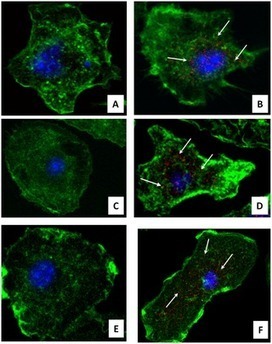
“Plant viruses are generally considered incapable of infecting vertebrates. Accordingly, they are not considered harmful for humans. However, a few studies questioned the certainty of this paradigm. Tobacco mosaic virus (TMV) RNA has been detected in human samples and TMV RNA translation has been described in animal cells. We sought to determine if TMV is detectable, persists, and remains viable in the lung tissues of mice following intratracheal inoculation, and we attempted to inoculate mouse macrophages with TMV. In the animal model, mice were intratracheally inoculated with 1011 viral particles and were sacrificed at different time points. The virus was detected in the mouse lungs using immunohistochemistry, electron microscopy, real-time RT-PCR and sequencing, and its viability was studied with an infectivity assay on plants. In the cellular model, the culture medium of murine bone marrow derived macrophages (BMDM) was inoculated with different concentrations of TMV, and the virus was detected with real-time RT-PCR and immunofluorescence. In addition, anti-TMV antibodies were detected in mouse sera with ELISA. We showed that infectious TMV could enter and persist in mouse lungs via the intratracheal route. Over 14 days, the TMV RNA level decreased by 5 log10 copies/ml in the mouse lungs and by 3.5 log10 in macrophages recovered from bronchoalveolar lavage. TMV was localized to lung tissue, and its infectivity was observed on plants until 3 days after inoculation. In addition, anti-TMV antibody seroconversions were observed in the sera from mice 7 days after inoculation. In the cellular model, we observed that TMV persisted over 15 days after inoculation and it was visualized in the cytoplasm of the BMDM. This work shows that a plant virus, Tobacco mosaic virus, could persist and enter in cells in mammals, which raises questions about the potential interactions between TMV and human hosts.”
Interesting paper! Which proves…which proves…which proves TMV is seriously resistant to degradation in animals and in mammalian cells; that it can enter macrophages; and that it…what? What, exactly, are the “…questions about the possible interactions…”? What would TMV do in mammalian cells? Yes, it might be uncoated and be translated; it is far less likely that it MIGHT be able to replicate its RNA – and then? While it can apparently be taken up quite efficiently by macrophages – a property which, incidentally, has led to its being trialled as an RNA vaccine delivery system – this is a dead end, and one that is quite normal for particles of any kind being introduced into mammals.
Which is something that happens every day, as we and our cousin mammals eat: it has been shown elsewhere that animals are actually quite good spreaders of plant viruses, some of which – like TMV and the even tougher Cauliflower mosaic virus – pass right through at high survival rates, and remain infectious. We will all probably have eaten many grams of various viruses in our lives, and derived nothing more than nutrition from them.
I also remember, even though it was very late at night, 31 years ago, and in a bar in Banff in Canada, a conversation with one Richard Zeyen. He told me they had used ELISA to test everyone in their lab for antibodies for TMV, seeing as they worked with it, and had newly developed a test. And everyone was immune – presumably, to aerosolised TMV that had been breathed in or otherwise ingested. Proving…that oral vaccines based on TMV could work, and that most of us are probably immune to all sorts of viruses that don’t replicate in us – and nothing more!
Including, in the case of many people in the Eastern Cape Province of South Africa, sampled by one Don Hendry via the local blood bank, to a virus of Pine Emperor moths – because it multiples to such high levels in its host that anyone walking in the pine forests was bound to be exposed via the environment.
So this is an interesting paper – and no more. It will, of course, lead to alarmist articles and blog posts, and people calling out for urgent surveillance of food, in which people will find many viruses. And so what? They have been with us for as long as we have been eating plant-derived food, and have NEVER been associated with any disease, transmissible or otherwise – so my best advice is that we ignore them.
See on www.plosone.org
So: thank you, anyone who clicked in, and regular visitors. You make it worthwhile!!
The WordPress.com stats helper monkeys prepared a 2012 annual report for this blog.

Here’s an excerpt:
4,329 films were submitted to the 2012 Cannes Film Festival. This blog had 33,000 views in 2012. If each view were a film, this blog would power 8 Film Festivals
Introduction:
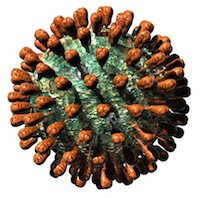
Haemagglutinin-only Influenza A virus VLP. Courtesy of Russell Kightley Media
The new international conference on virus-like particles and nano-particles (VLPNPV) took place in Cannes, France at The Novotel Montfleury Hotel from the 28th to the 30th of November 2012. The scope of the conference included virus-like particles (VLPs), the plant-based expression of VLP vaccines as well as expression and optimisation of VLPs.
Other topics included in the conference were:
A multitude of topics were covered during the conference and many of the talks pertained to the immunogenicity of the VLPs and nano-particles and how they compared with the immunogenicity of DNA or subunit vaccines.
Talks were given by researchers from companies such as Medicago, Mucosis, Pevion Vaccines and Novavax. These talks gave a perspective on factors that need to be considered when commercialising VLP/nano-particle vaccines and to be GMP compliant.
Compelling presentations:
Developing plant-made virus-like particle vaccine products: An integrated platform from discovery to commercial scale
Marc-Andre D’Aoust, Nathalie Landry, Sonia Trepanier, Michele Dargis, Manon Couture and Louis-Philippe Vezina (Medicago, Quebec City, Quebec, Canada)
This talk was about a plant-made VLP against both pandemic and seasonal influenza- these vaccines are now in the clinical trial phase. What was especially interesting was the view from an industry point of view where expression had to be scaled up to produce large amounts of vaccine. The Medicago platform can synthesize and clone approximately 100 gene constructs in two weeks, they can prepare 100 bacterial cultures per week and they have automated infiltration where 200 plant transformations can be performed per day and 150 VLP engineering approaches can be tested in one week. For influenza Medicago tested 48 different infiltration approaches in one day for HA, NA, M1, M2 as well as P1 Gag and HGalT. Medicago has been able to produce 10 million doses of HA VLPs in just one month.
See also:
Development of RNA-free plant VLPs a source of novel therapeutics
George Lomonossoff (John Innes Centre, Norwich, UK)
This group made empty Cowpea Mosaic Virus (CPMV) VLPs that contained no RNA. CPMV VLPs are versatile nanoparticles to which organic, inorganic and biological molecules can be bound. The empty nature of the particle means that they can be used as carrier molecules for therapies; this could prove to be potentially useful as a cancer-treatment therapy. The system is advantageous because of the lack of RNA which makes the particles non-infectious and no bio-containment is needed for the production of these VLPs.
Immunogenicity of VLPs: an immunological perspective
Martin Bachmann (University of Zurich, Zurich, Switzerland)
Background was given from immunological point of view about what makes VLPs so immunogenic. Three properties contribute to the immunological properties of VLPs (1) their size, (2) the repetitiveness of the particle capsid which provides multiple sites for antibody binding and (3) TLR ligands – the particle can be disassembled, the RNA removed and replaced with a TLR ligand to enhance immunogenicity. Also, the size of VLPs is optimal for drainage to the lymph nodes.
Immunogenicity optimization strategies for public-sector development of vaccines: the critical role of optimizing the antigen.
Martin Howell Friede (WHO, Geneva, Switzerland)
This talk was about looking at VLPs from the vaccine development view. Monomeric antigens are not very immunogenic; therefore adjuvants were developed and came into use. For an efficient vaccine the antigen must be multimeric as antigen alone is insufficient to be immunogenic without adjuvant. Two factors have to be considered when producing a vaccine for FDA approval; (1) optimise the antigen before using an adjuvant, (2) use an adjuvant that has already been approved by the FDA. VLPs as vaccines provide the potential for immune-stimulation without the addition of adjuvant as the multimeric presentation of the antigen will enhance its immunogenicity.
Enhancing the immunogenicity of VLP vaccines
Richard W. Compans (Emory University, Atlanta, Georgia, USA)
This talk highlighted strategies which could be used to enhance the immunogenicity of VLPs.
See also:
Innate and adaptive responses to plant-made VLP vaccines
Brian Ward (McGill University, Montreal, Quebec, Canada)
Brain Ward is also the medical officer at Medicago. Humans rarely react to plant proteins/antigens. The plant glycans fucose/xylose at the N-terminal is an allergen and can cause anaphylaxis in humans. During trial experiments with influenza no individuals developed IgE responses to plant glycans, therefore plant produced vaccine is safe. The H1 VLP induced long lasting memory multifunctional T-cell responses in humans.
Impressions of the conference:
The conference was well organised with leaders in the field presenting their work. Interaction with the delegates aid in building crucial networking opportunities and work relationships. The international arena is packed with new technology development allowing us the opportunity to learn and improve our own understanding of various concepts.
This conference proved to be an invaluable learning experience and I thank the NRF for this opportunity and for providing me with the funding to attend this conference. The exposure to conferences, especially those in the international arena, aid in the development of students and contribute to the quality of research that is conducted at UCT.
References:
1. VLPNPV website
(http://www.meetingsmanagement.co.uk/index.php?option=com_content&view=article&id=33&Itemid=83)
2. Personal notes taken at the conference
…like a rocket…flashed past; I’m still emotionally in August or so!
I meant to do some more substantive posts instead of only copying Scoop.it Virology News posts here; however, the best-laid plans and such, and I didn’t. I will in 2013, though – and there will be an iBook coming or possibly even two (influenza and PCR), so I will use this forum to announce glad tidings.
Then there’s the ZA Virus [=Zombie Apocalypse, obviously] novel, and Green Vaccines, and…OK, getting ahead of myself here!
Thanks for the support and readership, I hope everyone has a good solstice break!
Best,
Ed
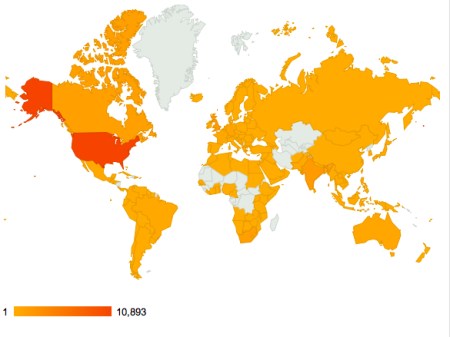
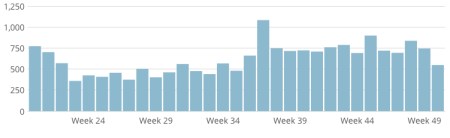
PS: some access stats for 2012 for you. Looks like the only places that DON’T access ViroBlogy are parts of central and west Africa, central Asia and Greenland.

See on Scoop.it – Virology News
Medicago Announces 2012 Second Quarter Financial Results PR Newswire QUEBEC CITY, Aug. 14, 2012 QUEBEC CITY , Aug. 14, 2012 /PRNewswire/ – Medicago Inc.
“Subsequent to the second quarter:
Announced the successful completion of a key milestone under an agreement with the Defense Advanced Research Projects Agency (DARPA). The milestone was the production of at least 10 million doses of H1N1 VLP influenza vaccine candidate in one month (the “rapid fire test”). The rapid fire test was conducted at Medicago’s facility in Durham, North Carolina. As part of the rapid fire test, production of the H1N1 VLP influenza vaccine candidate began on March 25th, 2012, and was completed in 30 days on April 24th, 2012. The production lots were then tested by a third party laboratory to confirm both the immunogenicity of the vaccine candidate and the number of doses produced. Testing confirmed that a single dose of the H1N1 VLP influenza vaccine candidate induced protective levels of neutralizing antibodies in an animal model. The production of significantly more than 10 million doses, as defined by the testing conditions, were confirmed.”
This is a big, big deal – because they did this via transient epxression in plants, thus proving pretty much beyond doubt that this is now a serious vaccine manufacturing technology.
See on money.msn.com
See on Scoop.it – Virology News
“In Uganda, where food insecurity has been the order of the day, enterprising scientists have taken biotechnology a step further by producing bananas that are rich in vitamin A and iron and that have the colour of carrots once peeled.
During a media tour at the National Agricultural Research Laboratories in Kampala this week, scientists said they aimed to ensure that bananas, a staple food in Uganda, were rich in vitamin A and iron and resistant to nematodes.”
And behind that effort were two things: the Bill and Melinda Gates Foundation, and an Australian scientist named James L Dale. I photographed him in his office at the Queensland University of Technology in 2010, when he had literally just opened the picture file associated with latest results being reported from his research crew – the banana picture in the background, with the golden vitamin A-containing version on top.
See on www.iol.co.za
Our Department has a journal club every Friday, when research folk (staff and students) get together to hear a postgrad student present an interesting new paper. Last Friday Alta Hattingh from my lab gave a thought-provoking and insightful presentation on whether or not smallpox virus should be destroyed – so I asked her to turn it into a blog post.
Raymond S. Weinstein
Emerging Infectious Diseases (2011), Vol 17(4): 681 – 683
Smallpox virus replication cycle. Russell Kightley Media
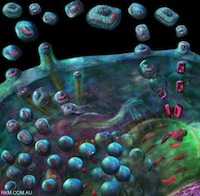
Smallpox is believed to have emerged in the Middle East approximately 6000 to 10 000 years ago and is one of the greatest killers in all of human history, causing the death of up to 500 million people in the 20th century alone. Smallpox is the first virus to ever be studied in detail and it is also the first virus for which a vaccine was developed. Smallpox was beaten by the Jenner vaccine (first proposed in 1796) and the disease was declared eradicated in 1980 in one of the greatest public health achievements in human history.
The last officially acknowledged stocks of variola are held by the United States at the Centres for Disease Control and Prevention (consisting of 450 isolates) and in Russia at the State Research Centre of Virology and Biotechnology (various sources place the number of specimens at ~150 samples, consisting of 120 strains). This includes strains that were collected during the Cold War as potential for biological weapons due to their increased virulence. Then, there is also the added possibility that stolen smallpox cultures are in the hands of terrorists organizations.
In 2011 the World Health Organisation (WHO) plans to announce its recommendation for the destruction of all known remaining stockpiles of smallpox virus. They have wanted to destroy the virus ever since 1980 when the Secretary of Health and Human Services, Louis Sullivan, promised destruction of US stockpiles within 3 years. This never happened in the US or Russia and no official recommendation for destruction have been recommended by the World Health Assembly. In 2007 the final deadline for a decision was postponed until 2011 as no consensus could be reached among the executive board of the WHO.
The only real benefit that could be gained from destroying all known remaining stockpiles of smallpox virus in the world would be the prevention of causing a lethal epidemic due to theft or accidental release of the virus. However, according to Weinstein destruction would only provide an illusion of safety and that the drawbacks of eliminating variola from existence are many.
In this paper Weinstein mentions the possible reasons behind the hesitance to destroy smallpox. The prolonged existence of smallpox along with the important clinical implications of its high infectivity and mortality rates suggests that the human immune system evolved under the disease’s evolutionary influence. In the last decade research has been done which suggests that variola (and vaccinia) have the ability to alter the host immune response by targeting various components of the immune system. We are only beginning to understand the complex pathophysiology and virulence mechanisms of the smallpox virus. An example of the importance of smallpox in human evolution is the CC-chemokine receptor null mutation (CCR5Δ32), which first appeared in Europe ~3500 years ago one person and today it can be found in ~10% of all those from northern European decent. The mutation prevents expression of the CCR5 receptor on the surface of many immune cells and provides resistance to smallpox. This same mutation also confers nearly complete immunity to HIV. In a recent study done by Weinstein and co-workers (2010) it was postulated that exposure to vaccinia and variola may have previously inhibited successful spread of HIV, suggesting that we swopped out one major disease for another. By eliminating the variola stockpiles from existence on-going research in this direction might be hampered and the possibility future studies employing intact virus will be rendered impossible.
Finally, we are capable of creating a highly virulent smallpox-like virus from scratch or a closely related poxvirus through genetic manipulation. This renders moot any argument for the destruction of remaining stockpiles of smallpox in the belief that it would be for the benefit of protecting mankind.
In an editorial of the Vaccine journal, the editors make a compelling case in favour for the destruction of remaining stockpiles of smallpox virus. To follow is their take on the situation:
Editorial (by J. Michael Lane and Gregory A. Poland)
Vaccine (2011), Vol 29: 2823 – 2824
The Advisory Committee on Variola Virus Research (created in 1998 as part of the WHO) concluded that live variola is no longer necessary except to continue attempts to create an animal model which might mimic human smallpox and assist in the licensure of new generation vaccines and antivirals.
The editors feel that scientific recommendation for keeping smallpox stocks need to be scrutinized and that a number of political and ethical issues need to be addressed. Below are comments by editors on these issues:
Scientific issues:
The smallpox virus is no longer needed to elucidate its genome, 49 strains have been sequenced and published, the editors feel that there is no need to sequence additional strains. The smallpox virus can be destroyed as it is possible to reconstruct it from published sequences or to insert the genes of interest into readily available strains of vaccinia or monkeypox. Refinements regarding diagnostics can be made by using other orthopoxviruses or parts of the smallpox strains already sequenced; vaccines have been produced that are far less reactogenic than the first and second generation of vaccinia vaccines and they are very effective against other orthopoxviruses. Finally, the development of an animal model is difficult to perfect as variola is host-specific, thus there are no guarantees that a model will be found that mimics the pathophysiology of smallpox in humans.
Political/ethical issues:
The US is a supporter of the WHO and the UN and failure to comply with the request of the World Health Assembly jeopardizes the US’s potential to work with the UN to further their foreign policy and population health goals. Biological weapons have been banned from the US military arsenal and there is no way they would use a biological weapons such as smallpox whether it be in offense or defence. The editors reckon that the risk of a biological warfare attack using smallpox is highly unlikely as terrorists who have the knowledge and sophistication to grow and prepare smallpox for dispersal would realize that they could cause harm to their own countries. Apart from that, Western nations have the facilities to isolate and vaccinate against smallpox in a timely manner.
According to the editors there is no ethical way to justify maintaining an eradicated virus. Even though the possibility of accidental release is very small, it is an unacceptable risk. Maintenance of the smallpox virus stocks is expensive and time consuming, it also burdens the CDC without scientific merit and their resources are better used to protect the public from infectious diseases.
In conclusion the editors maintain that the remaining smallpox stocks should be destroyed and the world should make possession of the virus an “international crime against humanity”.
We are presented with two very different views with regards to whether or not smallpox virus stocks should be destroyed forever. The WHO meets again this year to decide the final fate of smallpox. Will the board reach consensus or will the smallpox virus yet again receive a stay of execution?
Interestingly, I found the following text written by me in my archive of articles – published as a Letter in the now sadly defunct HMS Beagle, in 1999:
HMS Beagle
( Updated May 28, 1999 · Issue 55) http://news.bmn.com/hmsbeagle/55/viewpts/letters
The destruction of all (known) stocks of smallpox virus (Reprieve for a Killer: Saving Smallpox by Joel Shurkin) seems to be a very emotive issue. Perhaps, if people looked at it less in terms of a threat, and more in terms of a resource, most of the problem would go away. For example, although the original article made mention of monkey pox, and how it was almost as dangerous as smallpox, and appeared to be adapting to human-to-human spread, nothing has been said about investigating why smallpox was so much more effective at spreading within human populations than monkey pox is. It is all very well having the smallpox genome sequence; however, without the actual DNA, it is difficult to recreate genome fragments of the size that may be needed to make recombinant viruses to investigate the phenomenon of host/transmission adaptation. Additionally, without the actual virus, it will be impossible to compare the effects of a doctored vaccine strain with the real thing. Destroying known stocks of the virus will not affect the stocks that are most likely to be used for bioterrorism. It will, however, handicap research into ways of combating the virus/understanding how it worked in the first place.




 ViroBlogy