Archive for the ‘General Virology’ Category

Five Mutations Make H5N1 Airborne | The Scientist

23 June, 2012

See on Scoop.itVirology News

“After more than 6 months of heated discussion, the second group that succeeded in making the H5N1 avian flu transmissible between ferrets, considered a good model for human transmission, has published its results. The paper, which came out today (June 21) in Science, demonstrates that only five mutations are needed to confer this aerosol transmissibility among mammals, and that re-assortment between different types of viruses—a technique used by the other group, which published its results last month in Nature—is not necessary.

Said Fouchier in a press conference “We both find … loss of glycosylation at the tip of the HA molecule, and this loss of glycosylation seems to increase the receptor binding specificity of the HA”. And though not all the mutations identified in the two studies match, “the mutations that are not identical still have a similar phenotypic trait,” he added.”


So this is what all the fuss was about?  This is what the NSABB did not want everyone to know?  How could they POSSIBLY think that the international virology and infectious disease community should be kept in the dark about this?  What this work has done has pointed the way along a path that will lead us to understand why and how influenza viruses change in order to more effectively get transmitted when they switch hosts – which is a good thing, surely.

And yet all they see is bioterrorism.

See on the-scientist.com

Avian flu viruses which are transmissible between humans could evolve in nature

23 June, 2012

See on Scoop.itVirology News

It might be possible for human-to-human airborne transmissible avian H5N1 influenza viruses to evolve in nature, new research has found.

The findings, from research led by Professor Derek Smith and Dr Colin Russell at the University of Cambridge, were published June 22 in the journal Science.
Currently, avian H5N1 influenza, also known as bird flu, can be transmitted from birds to humans, but not (or only very rarely) from human to human. However, two recent papers by Herfst, Fouchier and colleagues in Science and Imai, Kawaoka and colleagues in Nature reveal that potentially with as few as five mutations (amino acid substitutions), or four mutations plus reassortment, avian H5N1 can become airborne transmissible between mammals, and thus potentially among humans. However, until now, it was not known whether these mutations might evolve in nature.
The Cambridge researchers first analysed all of the surveillance data available on avian H5N1 influenza viruses from the last 15 years, focusing on birds and humans. They discovered that two of the five mutations seen in the experimental viruses (from the Fouchier and Kawaoka labs) had occurred in numerous existing avian flu strains. Additionally, they found that a number of the viruses had both of the mutations.
Colin Russell, Royal Society University Research Fellow at the University of Cambridge, said: “Viruses that have two of these mutations are already common in birds, meaning that there are viruses that might have to acquire only three additional mutations in a human to become airborne transmissible. The next key question is ‘is three a lot, or a little?’ “


So: was it a good idea to publish those two papers on mutating H5N1 viruses, or not?  Given that as I and many other more famous people pointed out, if you don’t know what makes the viruses mammal-to-mammal transmissible, you don’t know what to look for – and now we do, and look what they found.  This story will run, and run, and run – so we really, really should include an H5 consensus HA in seasonal flu vaccines!!

See on www.sciencedaily.com

Endogenous RNA viruses of plants in insect genomes

5 June, 2012

See on Scoop.itVirology News

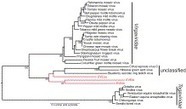
“Endogenous viral elements (EVEs) derived from RNA viruses with no DNA stage are rare, especially those where the parental viruses possess single-strand positive-sense (ssRNA +) genomes. Here we provide evidence that EVEs that share a sequence similarity to ssRNA + viruses of plants are integrated into the genomes of a number of insects, including mosquito, fruit flies, bees, ant, silkworm, pea aphid, Monarch butterfly, and wasps. A preliminary phylogenetic analysis places these EVEs as divergent relatives of the Virgaviridae and three currently unclassified plant viral species.”

I have covered this before, in ViroBlogy, (and here, in 2007)as an interesting and probably under-appreciated phenomenon.  I note Eddie Holmes and colleagues have now taken it much, much further – which incidentally lends significant credence to my supposition that virus/vector/plant coevolution was probably a fair bit more intimate than has been supposed, with the newly-emerged (in evolutionary terms) insects and their viruses meeting terrestrial plants and THEIR viruses.  And mixing everything up, as I have speculated elsewhere (Origins of Viruses).

I thank Jean-Marie Verchot for drawing my attention to this!

See on www.sciencedirect.com

Narcolepsy traced to specific [flu] vaccine batches

4 June, 2012

See on Scoop.itVirology News

“A new Swedish study shows that all Swedes who developed narcolepsy from the swine flu vaccine Pandemrix received the vaccine from 12 of the 35 batches, despite the claim by the responsible agency that no such connection exists.”

There are some slightly disturbing connections between the H1N1 2009 pdm virus and narcolepsy: the virus itself seems to have caused narcolepsy in some of those infected; now a vaccine is implicated – is this an innate property of certain of the virus proteins, possibly?

See on www.thelocal.se

Nano Patents and Innovations: Powerful New Approach To Attack Flu Virus

28 May, 2012

See on Scoop.itVirology and Bioinformatics from Virology.ca

An international research team has manufactured a new protein that can combat deadly flu epidemics.

The paper, featured on the cover of the current issue of Nature Biotechnology, demonstrates ways to use manufactured genes as antivirals, which disable key functions of the flu virus, said Tim Whitehead, assistant professor of chemical engineering and materials science at Michigan State University.

See on nanopatentsandinnovations.blogspot.fr

ProMED-mail | MEASLES UPDATE 2012 (22)

28 May, 2012

See on Scoop.itVirology and Bioinformatics from Virology.ca

ProMED Mail is possibly THE premier infectious disease updating service in the world today, having sprung to fame during the Kikwit Ebola outbreak in 1995.  This is one of a series of posts on measles, which is documenting a very disturbing trend: the incidence of the disease is increasing in places where it should have been eradicated, because well-educated and sophisticated communities are not vaccinating their children – or themselves.


One very telling quote from the post:

“Measles is highly infectious so we must all do
everything possible to prevent the spread of it, particularly with an outbreak on our doorstep. … MMR vaccination is the only way to prevent
measles. If parents haven’t arranged for their children to be vaccinated – it’s not too late to have the jab. Parents don’t realise that measles is not just a case of a few spots – it can be a very serious illness. Symptoms include fever, cough, soreness of the eyes and a rash which spreads rapidly over the body. Serious complications affect one in 15 children. These include chest infections, fits, encephalitis (swelling of the brain), and brain damage. In very serious cases, measles can kill.”

See on www.promedmail.org

Pandemic 2009 H1N1 vaccination produces antibodies against multiple flu strains

27 May, 2012

See on Scoop.itVirology News

“The pandemic 2009 H1N1 vaccine can generate antibodies in vaccinated individuals not only against the H1N1 virus, but also against other influenza virus strains including H5N1 and H3N2.”


And a possible reason for this could be that the H1N1pdm virus’ haemagglutinin is a natural “ancestral” sequence – the kind that HIV vaccine researchers are looking for for gp120/160, which have been shown to elicit a wider spectrum of cross-reacting antibodies than “evolved” proteins, or ones that have been selected for antigenic escape in humans for a good few viral generations.


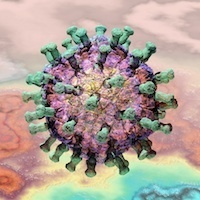
Flu vaccine graphic by Russell Kightley Media

See on www.eurekalert.org

Risk factors for West Nile virus – by Dr Pandula Siribaddana – Helium

27 May, 2012

See on Scoop.itVirology News

“The disease is more common in temperate and tropical geographical areas and usually the disease is said to be found in Africa, Middle East and West Asia. But, from recent times, almost all American states have got affected and from time to time there are outbreaks of large number of patients with West Nile Disease.”


Useful little review on the how/why/what of WNV.  Including the fact that we Africans have been living with it forever…B-)

See on www.helium.com

Trends in Intussusception Hospitalizations Among US Infants Before and After Implementation of the Rotavirus Vaccination Program, 2000–2009

27 May, 2012

See on Scoop.itVirology News

“A small increase in intussusception rates was seen among infants aged 8–11 weeks, to whom most first doses of rotavirus vaccine were given, but no sustained population-level change in overall intussusception hospitalizations rates in US infants was observed after implementation of the US rotavirus vaccination program. Although an association between intussusception and rotavirus vaccination cannot be established by this ecologic analysis alone, even if the low risk with the first dose exists, it is outweighed by the well-documented benefits of vaccination of US infants”

This is a big deal- a very important, big deal: human rotavirus kills more than 500 000 people a year (mainly very little), and rotavirus vaccines have been bedevilled with the suspicion that they cause telescoping of the intestine, or intussusception.  Which can be fatal, and is not something you want happening to your healthy baby.

However, and however: I have taught my students for years to be aware of relative risks when talking about vaccines, and there is absolutely no doubt that even the Wyeth vaccine could have been considered “safe” in a developing country environment, where the threat of death due to diarrhoea and dehyderation caused by rotavirus, would have been far greater than any threat from the vaccine.

I thank Rusdsell Kightley Media for the rotavirus graphic

See on jid.oxfordjournals.org

Radical Therapy for HIV-Infected People?

18 May, 2012

To mark HIV Vaccine Awareness Day, 18th May – Journal Club – Lucian Duvenage:

Excision of HIV-1 Proviral DNA by Recombinant Cell Permeable Tre-Recombinase

Mariyanna, L., Priyadarshini, P., Hofmann-Sieber, H., Krepstakies, M., Walz, N., Grundhoff, A., Buchholz, F., Hildt, E., Hauber, J., 2012. Excision of HIV-1 proviral DNA by recombinant cell permeable tre-recombinase. PloS One 7, e31576.

Introduction

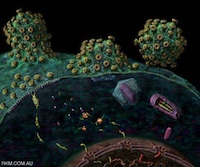
HIV Life Cycle. Russell Kightley Media, http://www.rkm.com.au

Highly active antiretroviral therapy (HAART) is a combination of drugs that has significantly elongated the lifespan HIV-infected people. HAART targets viral reverse transcriptase, protease and integrase. There are disadvantages including drug toxicity and the appearance of drug resistant HIV strains in people not adhering to or withdrawing from their treatment. There is a need for new therapies that not only block virus replication but also eliminate HIV from persistent viral reservoirs. An attractive option is Tre-recombinase, which been shown to excise provirus from the genomic DNA of infected cell cultures. The development of Tre recombinase is a previous publication (Sarkar, I., Hauber, I., Hauber, J., Buchholz, F., 2007. HIV-1 proviral DNA excision using an evolved recombinase. Science 316, 1912-5.)

The Tre recombinase was created from the Cre recombinase which is a well-known tool in mouse genetics. The authors were able to alter the specificity of the enzyme by many cycles of directed protein evolution.

The Cre recombinase precursor removes genomic DNA that is flanked by two loxP sites by recombination. The authors were able to alter the specificity for loxP sites to HIV-1 LTR (long terminal repeat) sites. LoxP and the HIV LTR had 50% sequence similarity.

The main problem with the development of antiviral agents is the delivery to infected cells in vivo, without causing adverse side effects.  There are many reported technologies for the delivery of macromolecules such as proteins, nucleic acids or peptides. The most popular currently is the use of protein transduction domains (PTD) also known as cell penetrating peptides (CPP) from different sources. These have been useful for the delivery of various genes and proteins, including site-specific recombinases. The best studied and most applied PTD’s are peptides derived from the basic domain of HIV-1 Tat. But recently a powerful cell permeable translocation motif (TLM) has been described. This TLM is derived from a hepatitis B virus surface antigen. This TLM peptide is able to enter cells very efficiently, without affecting the integrity of the cells, or interfering with intracellular signal transduction cascades.

This paper describes the delivery of Tre-recombinase into cells using these PTD’s including HIV Tat and the HBV TLM. These so-called cell-permeable Tre-recombinases could eventually be useful for antiretroviral therapy, especially for virus eradication.

Results

Proteins

Different protein fusions were created and expressed in E. coli ; Tre-recombinase is fused to His tag, with/without nuclear localisation signal (NLS) and with the PTD (HIV Tat) or TLM (translocation motif derived from hepatitis B) or TLM as an inverted repeat.

They tested the cellular toxicity of the protein at their highest concentration by alarmBlue assay in HeLa cells. The proteins were incubated with the cells for 48 h. None of the proteins had any significant effect on the cellular metabolism

Cell permeability

Interestingly, all of the proteins entered cells, even those without a PTD or nuclear translocation signal. The authors explain that the Cre enzyme precursor to Tre has been shown to transduce into mammalian cells without any help, and therefore it is likely that the Tre enzyme shares this property. The authors did remark that the signal intensities were higher for those proteins with a PTD, indicating higher transduction efficiency.

Analysis of Tre activity in HeLa cells

A transient reporter assay demonstrated the activity of the Tre fusions: The reporter construct contains the target LTR sites that flank a puromycin resistance gene. Tre enzyme activity results in the loss of this gene, and gives a smaller PCR product using primers that anneal to the vector backbone. Cells transfected with the reporter construct were incubated with the 1 µM of the various proteins for 5 hours. The positive control was co-transfected with a construct expressing the Tre enzyme. PCR was performed on DNA extracted from cells after 48 hours. The presence of the smaller PCR product indicated that recombination had happened, as in the positive control. All of the proteins had varying degrees of activity, but notably the protein with the TLM PTD had the highest activity, with no un-recombined product detected by the PCR.

The authors went on to demonstrate that the Tre fusion proteins were active on at the genomic level, i.e. on chromosomal DNA. They used cells with the reporter construct was stably integrated into the genome.

Interaction of proteins with LTR sequences in living T-cells

Co-immunoprecipitation (ChIP) assays were done on using HIV-1 -infected T-cells (CEM-SS) to demonstrate the interaction of two of the Tre fusion proteins with the HIV LTR target sequences. The results showed that the proteins interacted with target LTR sequences in the genome of infected T-cells.

Microarray

The authors performed a transcriptome anaylsis on cells exposed to the Tre fusion proteins, using human whole genome microarrays. They concluded that the proteins were unlikely to have a significant effect on gene expression in the host cells, as very few genes were regulated more than 2.5-fold.

Recombination of the full-length HIV proviral genome:

Up to this point, the Tre fusion proteins had been shown to be capable of excising reporter construct gene flanked by LTR sequences both at the episomal level and the chromosomal level. The authors also showed that the proteins bind to the target sequences in HIV-infected living T cells.

It was essential that the Tre fusions could excise that HIV proviral genome from the chromosomal DNA of HIV-infected cells. The aouthors generated HeLa cells and T cells infected with pseudotype HIV-1. These are cells with the full-length HIV provirus integrated into the genome.They chose one of their proteins (TLM fusion showing highest activity in the reporter assays) for transduction into these cells. After transduction, PCR was performed to detect the HIV circular recombination product. They found that the recombination activity increased in a dose-dependent manner in both the HeLA cells and the T-cells. They also sequenced the PC products and were able to confirm HIV sequences.

Discussion

Some novel therapies for the treatment of HIV focus on the eradication of the virus in infected individuals. These include RNA-based technologies such as RNA aptamers, siRNA and ribozymes, but while these have shown to reduce viral load and viral replication, they have so far failed in virus eradication. A recent approach aimed at virus eradication is the reduction of surface CCR-5 receptors, through the expression of engineered zinc finger nucleases. This results in fewer CCR-5 surface receptors and could prevent new infection by CCR-5 tropic HIV.

The other approach is the use of site specific recombinases like Tre, which can excise the provirus from the host genome, thus potentially eradicating the virus from the individual. Ideally, the gene expressing Tre could be delivered to and expressed in target cells using a viral vector. But there are safety concerns as most of these are derived from pathogenic viruses. Therefore it may be advantageous to deliver the Tre enzyme directly to host cells. One way of doing this is through protein translocation domains (PTD’s). Protein transduction domains (PTD’s) can deliver bioactive molecules, including genes, siRNA, proteins or liposomes into all types of cells in vitro and furthermore into various organs in vivo. But they have not been applied yet for human use. PTD’s are easily fused to any target protein through cloning and expression of the fusion protein. The LTM used in this paper, derived from hepatitis B virus surface antigen, has low immunogenicity and high spreading capacity.

One strategy of using cell-permeable Tre enyme could be to harvest T-cells from the patient by apheresis and transduce them in vitro. They could then potentially be expanded and reinfused into the patient. This could complement or even replace gene transfer procedures.

In this paper the expressed Tre fusion proteins could enter cells and act on the target sequences to excise the HIV provirus from the genome, but the Tat fusion and the TLM fusion had higher activity than those that didn’t have a PTD tag. In particular, fusion to the newly described domain (TLM) from hepatitis B was resulted highest activity. This may explained by the fact that, in contrast to HIV Tat, TLM does not rely on endocytosis to enter cells. This might preserve enzyme activity and protein half-life.

In conclusion, cell permeable Tre enzyme could eventually be useful as an anti-HIV therapy in the post-HAART era.