Archive for the ‘Uncategorized’ Category

Key TB vaccine trial fails; more waiting in the wings – Reuters

1 March, 2013

See on Scoop.itVirology News

NPR (blog) Key TB vaccine trial fails; more waiting in the wings Reuters CHICAGO (Reuters) – A highly anticipated study of the first new tuberculosis vaccine in 90 years showed it offered no added benefit over the current vaccine …

Ed Rybicki‘s insight:

And that’s the way it SHOULD be: a whole pipeline of stuff waiting to go into people.

Unlike the South African HIV vaccine development effort….

See on www.reuters.com

Influenza animation – flu virus mechanism

1 March, 2013

See on Scoop.itVirology News

Animation of the mechanism of an influenza virus and how Crucell’s antibodies target the HA1 proteins on the virus and prevent further spread of influenza. C…

Ed Rybicki‘s insight:

I am sure I’ve done this or similar before – and this one’s an advert for Crucell’s MAbs.

But never mind!  It’s a SUPERB animation, showing things as accurately as anyone could wish for – complete with proteins moving around in membranes and being flexible.  An excellent way of getting over to students exactly how viruses get into cells.

See on www.youtube.com

Phages hijack a host’s defence

28 February, 2013

See on Scoop.itVirology News

“Bacteria have developed a formidable arsenal of sophisticated strategies to neutralize viruses, but phages always seem to find a way to evolve, persist and abound. Studies of the complex evolutionary dynamics between phages and bacteria led to the discovery of a widespread bacterial defence system called CRISPR/Cas. On page 489 of this issue, Seed et al. report the remarkable finding that some phages that infect the bacterial pathogen Vibrio cholerae have also acquired a functional CRISPR/Cas system in their own genome which allows them to neutralize an unrelated antivirus system in their bacterial host”

Ed Rybicki‘s insight:

So many people have pointed this out to me today that I just HAD to do something on it.


This is a seriously big deal, in our understanding of the arms race between viruses and their hosts: here we have a virus that is circumventing a widespread antiviral defence system in bacteria, by using elements of the system against the bacteria – and it can adapt to match its hijacked system to that of the host.


Not only stranger than we imagine; sometimes stranger than we CAN imagine – or just way more sophisticated than we thought.

See on www.nature.com

Boy’s death from bat virus sparks calls for action to reduce flying fox populations

25 February, 2013

See on Scoop.itVirology News

THE mother of a Cairns boy who died from lyssavirus on Friday has said no one should have to suffer the bat-borne virus’ deadly effects.

Ed Rybicki‘s insight:

And so the inevitable happens, and a sick little boy dies – from Australian bat lyssavirus infection.

Now, while I keep going on about "flying rats", one needs to get the "bat threat" in perspective: ONE child died in recent history due to a bat-borne rabies-like virus, and FOUR people since 1994 of bat-borne Hendra virus.  Yet people are calling for a cull: that’s right up there with the "kill all Great White Sharks" campaigns there have been over the years, for a threat of death of injury that is considerably less than you expereince every morning driving to work.

See on www.couriermail.com.au

US bird flu research to resume under new restrictions

25 February, 2013

See on Scoop.itVirology News

Back in January 2012, the US government announced it was joining with scientists around the world and temporarily suspending research on the deadly pathogen H5N1, also known as avian flu or “bird…

Ed Rybicki‘s insight:

" "the policy aims to preserve the benefits of life sciences research while minimizing the risk of misuse.""


OK – can’t argue too hard with that, I suppose?  EXCEPT that it probably limits access to the research of countries where the virus is ACTUALLY a problem.

See on www.theverge.com

Pulse polio vaccine administered

25 February, 2013

See on Scoop.itVirology News

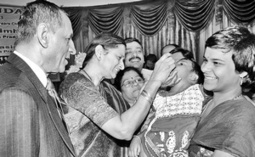
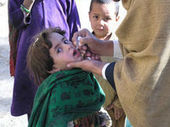
As a part of pulse polio immunisation programme, over 5.63 lakh children below five years including new born babies were administered with oral polio vaccine in  the twin cities and cantonment area here on Sunday….

Ed Rybicki‘s insight:

Just shows you the sheer scale of the effort – nearly a million babies in ONE district in India! – still needed to contain a virus that was almost eradicated.  Almost, that is, until politics and selfish policies made people in neighbouring Pakistan suspicious of vaccinators.

See on newindianexpress.com

A geographic analysis of population density thresholds in the influenza pandemic of 1918-19

25 February, 2013

See on Scoop.itVirology News

Geographic variables play an important role in the study of epidemics. The role of one such variable, population density, in the spread of influenza is controversial.

Prior studies have tested for such a role using arbitrary thresholds for population density above or below which places are hypothesized to have higher or lower mortality. The results of such studies are mixed.

The objective of this study is to estimate, rather than assume, a threshold level of population density that separates low-density regions from high-density regions on the basis of population loss during an influenza pandemic. We study the case of the influenza pandemic of 1918–19 in India, where over 15 million people died in the short span of less than one year.

Pandemic recombinant influenza virus graphic from Russeel Kightley Media

Ed Rybicki‘s insight:

This is an interesting paper, because it is one of the ONLY ones I have ever seen that analyses ANYTHING to do with the 1918 H1N1 pandemic, that comes from a developing country.  Moreover, it makes what I think is possibly quite a valuable contribution to "health geographics", especially for high-denisty low-income populations.

I also note that 15 MILLION PEOPLE were estimated to have died in India ALONE: this is close to the old estimate for the WORLD total (20 million), which was revised upwards to 50-100 million after developing country stats were taken into account, in the late 1990s.

Makes you think what a new version might do….


See on 7thspace.com
Polio Virus Spreads From Pakistan to Egypt

3 February, 2013

See on Scoop.itVirology News

Health officials in Egypt and the world are scrambling to prevent an outbreak of polio after poliovirus from Pakistan was discovered in sewage samples collected at two sites in Cairo in December.

Genetic analysis just completed has linked the Egyptian viruses to one that was last seen in Pakistan in September 2012. How it got to Cairo remains unclear, but the genetic evidence suggests that the virus made the long journey sometime in the past 3 months. Egypt has been polio-free since 2004.

Ed Rybicki‘s insight:

It really is too bad that this should happen: while it is to be hoped that virus is being shed by people who are not / will not get sick, and that the population is sufficiently well vaccinated that it will not spread, the fact that there is still uncontrolled spread of wild-type poliovirus is hugely concerning.

See on news.sciencemag.org

Genetically modified tobacco plants produce antibodies to treat rabies

2 February, 2013

See on Scoop.itVirology News

Smoking tobacco is bad for your health, but a genetically altered version of the plant might provide an inexpensive cure for the deadly rabies virus.

Ed Rybicki‘s insight:

Going green…seriously, plants represent an extremely useful alternative production system for many biologicals – and especially for antibodies.  Some day, all monoclonals will be made this way…B-)

See on www.sciencedaily.com

Aging cells lose their grip on DNA rogues | News | R&D Magazine

1 February, 2013

See on Scoop.itVirology News

Transposable elements are mobile strands of DNA that insert themselves into chromosomes with mostly harmful consequences.

Cells have evolved ways to defend themselves, but in a new study, Brown University researchers describe how cells lose this ability as they age, possibly resulting in a decline in their function and health.

Ed Rybicki‘s insight:

Yet ANOTHER reason not to get old…B-(

See on www.rdmag.com