Archive for the ‘Uncategorized’ Category

Patients can emit small, influenza-containing particles into the air during routine care

1 February, 2013

See on Scoop.itVirology News

A new study suggests that patients with influenza can emit small virus-containing particles into the surrounding air during routine patient care, potentially exposing health care providers to influenza.

Ed Rybicki‘s insight:

…so not just sneezing, and larger particles, then!  Sounds like a good justification for barrier nursing especially for severely infected patients.

See on www.sciencedaily.com

Why Death for Distributing Polio Vaccine in Pakistan?

1 February, 2013

See on Scoop.itVirology News

Vaccine News Daily (blog)
Why Death for Distributing Polio Vaccine in Pakistan?
Global Voices Online
The huge rise in militancy across Pakistan (pdf), is also creating a number of hazards for aid workers.

Ed Rybicki‘s insight:

I have three little letters for you: C.I.A.  Oh, and throw in the big bad Osama.

See on globalvoicesonline.org

Genetically modified version of herpes virus ‘can block spread of ovarian and breast cancer’

1 February, 2013

See on Scoop.itVirology News

A genetically modified type of herpes has been created by scientists at the University of Bologna to limit the spread of breast and ovarian cancer.

Scientists believe the virus, which has been reprogrammed so it no longer harms humans, could form the basis of a potent new cancer treatment.

The ‘oncolytic’ herpes simplex virus (HSV) attacks especially aggressive tumours that have an over-active Her-2 gene.


The HSV virus attacks aggressive breast cancer tumours and limits how much they spread

Breast cancer drug Herceptin was designed to target the same cell sub-group.

When the modified virus was injected into mice growing human breast and ovarian tumours, it strongly inhibited the spread of cancer cells.

Read more: http://www.dailymail.co.uk/sciencetech/article-2271532/Genetically-modified-version-herpes-virus-block-spread-ovarian-breast-cancer.html#ixzz2JeAqvAP7 ;
Follow us: @MailOnline on Twitter | DailyMail on Facebook

Ed Rybicki‘s insight:

I do so like the idea of putting viruses to work – another piece of good news for today using viral vectors for other purposes!

See on www.dailymail.co.uk

Virus study may signal trouble for animal populations facing climate change

1 February, 2013

See on Scoop.itVirology News

A new study suggests that some organisms, such as manatees, polar bears or cheetahs, may be in for a rough time as they try to adapt to climate change.

Ed Rybicki‘s insight:

Fascinating stuff, and a tour de force in in vitro virology – but extrapolating from vesicaulr stomatitis virus to polar bears??  Bit of a stretch!

See on www.sciencedaily.com

‘Universal HPV vaccination’ call

1 February, 2013

See on Scoop.itVirology News

School boys in the UK should receive the HPV vaccine to protect against throat cancer, a charity has urged.

The jab was introduced in 2008 for girls, to immunise them against the virus that causes cervical cancer.

The Throat Cancer Foundation says the vaccine protects against other cancers and has urged the government to extend the programme to all 12-year-olds.

So far Australia is the only country to routinely offer universal vaccination to boys and girls.

The measure has also been recommended by the US Centers for Disease Control.

Ed Rybicki‘s insight:

Too true – but not ONLY for oropharyngeal cancer; men are the other half of the sexually-transmitted HPV equation, after all.

See on www.bbc.co.uk

INSIGHT-Revived search for a TB vaccine may be about to pay off

1 February, 2013

See on Scoop.itVirology News

CHICAGO, Feb 1 (Reuters) – After nearly 100 years,researchers could be on the verge of finding a vaccine thatwould eradicate tuberculosis infections, a scourge that kills1.4 million people a year.Global…

Ed Rybicki‘s insight:

OK, it’s not a virus, but it’s an honorary member of the nasties club.  And big news is just around the corner – out of South Africa!

See on www.reuters.com

Crimean-Congo Haemorrhagic Fever in South Africa

1 February, 2013

See on Scoop.itVirology News

Ed Rybicki‘s insight:

Nice little info sheet on a potentially big problem

See on www.nicd.ac.za

Schmallenberg Virus Pathogenesis, Tropism and Interaction with the Innate Immune System of the Host

1 February, 2013

See on Scoop.itVirology News

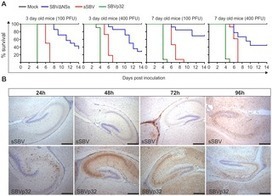
Schmallenberg virus (SBV) was discovered in Germany (near the town of Schmallenberg) in November 2011 and since then has been found to be the cause of malformations and stillbirths in ruminants. SBV has spread very rapidly to many European countries including the Netherlands, Belgium, France and the United Kingdom. Very little is known about the biological properties of this virus and there is no vaccine available. In this study (i) we developed an approach (called reverse genetics) that allows the recovery of “synthetic” SBV under laboratory conditions; (ii) we developed a mouse model of infection for SBV; (iii) we showed that SBV replicates in neurons of experimentally infected mice similar to naturally infected lambs and calves; (iv) we developed viral mutants that are not as pathogenic as the original virus due to the inability to counteract the host cell defenses; and v) we identified mutations that are associated with increased virulence. This work provides the experimental tools to understand how this newly emerged virus causes disease in ruminants. In addition, it will now be possible to manipulate the SBV genome in order to develop highly effective vaccines.


Ed Rybicki‘s insight:

A timely paper on a serious new emerging virus of livestock.

See on www.plospathogens.org

PLOS Pathogens: The Importance of Prions

1 February, 2013

See on Scoop.itVirology News

While agent host-range and strain properties convinced early researchers of a viral etiology, the once unorthodox postulate that prion transmission occurs by conformational corruption of host-encoded cellular prion protein (PrPC) by a pathogenic isoform (PrPSc) is now widely accepted. Indeed, conformational templating is increasingly understood to be a general mechanism of protein-mediated information transfer and pathogenesis. The high infectivity of prions, their capacity to cause neurodegeneration in genetically tractable animal models, as well as the ability to culture prions in cells, or under cell-free conditions using defined components, provide finely controlled experimental settings in which to elucidate general mechanisms for all diseases involving protein conformational templating, and thus to develop integrated therapeutic approaches.

Ed Rybicki‘s insight:

These things have fascinated me since I heard and read about kuru and scrapie as a student – and they still do.  Alternative protein folding as a route to pathology – and transmissible!


Prion transmission graphic by Russell Kightely Media.

See on www.plospathogens.org

Dual Short Upstream Open Reading Frames Control Translation of a Herpesviral Polycistronic mRNA

1 February, 2013

See on Scoop.itVirology News

Kaposi’s sarcoma-associated herpesvirus (KSHV) is the etiologic agent of multicentric Castleman’s disease, primary effusion lymphoma and Kaposi’s sarcoma. KSHV expresses a number of transcripts with the potential to generate multiple proteins, yet relies on the cellular translation machinery that is primed to synthesize only one protein per mRNA. Here we report that the viral transcript encompassing ORF35–37 is able to direct synthesis of two proteins and that the translational switch is regulated by two short upstream open reading frames (uORFs) in the native 5′ untranslated region. uORFs are elements commonly found upstream of mammalian genes that function to interfere with unrestrained ribosomal scanning and thus repress translation of the major ORF. The sequence of the viral uORF appears unimportant, and instead functions to position the translation machinery in a location that favors translation of the downstream major ORF, via a reinitiation mechanism. Thus, KSHV uses a host strategy generally reserved to repress translation to instead allow for the expression of an internal gene.

 
See on www.plospathogens.org