Archive for the ‘Vaccines: General’ Category

PLOS ONE: Tobacco Mosaic Virus in the Lungs of Mice following Intra-Tracheal Inoculation

13 February, 2013

See on Scoop.itVirology News

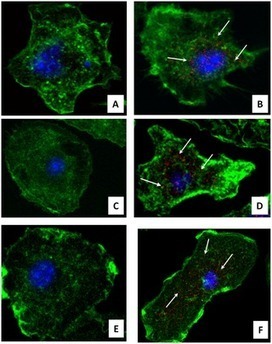
“Plant viruses are generally considered incapable of infecting vertebrates. Accordingly, they are not considered harmful for humans. However, a few studies questioned the certainty of this paradigm. Tobacco mosaic virus (TMV) RNA has been detected in human samples and TMV RNA translation has been described in animal cells. We sought to determine if TMV is detectable, persists, and remains viable in the lung tissues of mice following intratracheal inoculation, and we attempted to inoculate mouse macrophages with TMV. In the animal model, mice were intratracheally inoculated with 1011 viral particles and were sacrificed at different time points. The virus was detected in the mouse lungs using immunohistochemistry, electron microscopy, real-time RT-PCR and sequencing, and its viability was studied with an infectivity assay on plants. In the cellular model, the culture medium of murine bone marrow derived macrophages (BMDM) was inoculated with different concentrations of TMV, and the virus was detected with real-time RT-PCR and immunofluorescence. In addition, anti-TMV antibodies were detected in mouse sera with ELISA. We showed that infectious TMV could enter and persist in mouse lungs via the intratracheal route. Over 14 days, the TMV RNA level decreased by 5 log10 copies/ml in the mouse lungs and by 3.5 log10 in macrophages recovered from bronchoalveolar lavage. TMV was localized to lung tissue, and its infectivity was observed on plants until 3 days after inoculation. In addition, anti-TMV antibody seroconversions were observed in the sera from mice 7 days after inoculation. In the cellular model, we observed that TMV persisted over 15 days after inoculation and it was visualized in the cytoplasm of the BMDM. This work shows that a plant virus, Tobacco mosaic virus, could persist and enter in cells in mammals, which raises questions about the potential interactions between TMV and human hosts.”

Ed Rybicki‘s insight:

Interesting paper!  Which proves…which proves…which proves TMV is seriously resistant to degradation in animals and in mammalian cells; that it can enter macrophages; and that it…what?  What, exactly, are the “…questions about the possible interactions…”?  What would TMV do in mammalian cells?  Yes, it might be uncoated and be translated; it is far less likely that it MIGHT be able to replicate its RNA – and then?  While it can apparently be taken up quite efficiently by macrophages – a property which, incidentally, has led to its being trialled as an RNA vaccine delivery system – this is a dead end, and one that is quite normal for particles of any kind being introduced into mammals.

Which is something that happens every day, as we and our cousin mammals eat: it has been shown elsewhere that animals are actually quite good spreaders of plant viruses, some of which – like TMV and the even tougher Cauliflower mosaic virus – pass right through at high survival rates, and remain infectious.  We will all probably have eaten many grams of various viruses in our lives, and derived nothing more than nutrition from them.

I also remember, even though it was very late at night, 31 years ago, and in a bar in Banff in Canada, a conversation with one Richard Zeyen.  He told me they had used ELISA to test everyone in their lab for antibodies for TMV, seeing as they worked with it, and had newly developed a test.  And everyone was immune – presumably, to aerosolised TMV that had been breathed in or otherwise ingested.  Proving…that oral vaccines based on TMV could work, and that most of us are probably immune to all sorts of viruses that don’t replicate in us – and nothing more!

Including, in the case of many people in the Eastern Cape Province of South Africa, sampled by one Don Hendry via the local blood bank, to a virus of Pine Emperor moths – because it multiples to such high levels in its host that anyone walking in the pine forests was bound to be exposed via the environment.

So this is an interesting paper – and no more.  It will, of course, lead to alarmist articles and blog posts, and people calling out for urgent surveillance of food, in which people will find many viruses.  And so what?  They have been with us for as long as we have been eating plant-derived food, and have NEVER been associated with any disease, transmissible or otherwise – so my best advice is that we ignore them.

See on www.plosone.org

ViroBlogy: 2012 in review

1 February, 2013

So: thank you, anyone who clicked in, and regular visitors.  You make it worthwhile!!

The WordPress.com stats helper monkeys prepared a 2012 annual report for this blog.

Here’s an excerpt:

4,329 films were submitted to the 2012 Cannes Film Festival. This blog had 33,000 views in 2012. If each view were a film, this blog would power 8 Film Festivals

Click here to see the complete report.

Virus-like particle and Nano-particle vaccines 2012: a conference report

30 January, 2013

Alta van Zyl, Virology Group, Molecular & Cell Biology Department, UCT

Introduction:

VLP flusm

Haemagglutinin-only Influenza A virus VLP. Courtesy of Russell Kightley Media

The new international conference on virus-like particles and nano-particles (VLPNPV) took place in Cannes, France at The Novotel Montfleury Hotel from the 28th to the 30th of November 2012.  The scope of the conference included virus-like particles (VLPs), the plant-based expression of VLP vaccines as well as expression and optimisation of VLPs.

Other topics included in the conference were:

  • VLP platform delivery systems
  • VLP vaccines
  • Nano-particles and nano-particulate vaccines

A multitude of topics were covered during the conference and many of the talks pertained to the immunogenicity of the VLPs and nano-particles and how they compared with the immunogenicity of DNA or subunit vaccines.

Talks were given by researchers from companies such as Medicago, Mucosis, Pevion Vaccines and Novavax. These talks gave a perspective on factors that need to be considered when commercialising VLP/nano-particle vaccines and to be GMP compliant.

Compelling presentations:

Developing plant-made virus-like particle vaccine products: An integrated platform from discovery to commercial scale

Marc-Andre D’Aoust, Nathalie Landry, Sonia Trepanier, Michele Dargis, Manon Couture and Louis-Philippe Vezina (Medicago, Quebec City, Quebec, Canada)

This talk was about a plant-made VLP against both pandemic and seasonal influenza- these vaccines are now in the clinical trial phase. What was especially interesting was the view from an industry point of view where expression had to be scaled up to produce large amounts of vaccine.  The Medicago platform can synthesize and clone approximately 100 gene constructs in two weeks, they can prepare 100 bacterial cultures per week and they have automated infiltration where 200 plant transformations can be performed per day and 150 VLP engineering approaches can be tested in one week.  For influenza Medicago tested 48 different infiltration approaches in one day for HA, NA, M1, M2 as well as P1 Gag and HGalT.  Medicago has been able to produce 10 million doses of HA VLPs in just one month.

See also: 

  • D’Aoust et al (2010) PBJ 8:  607-619 – The production of hemagglutinin-based virus-like particles in plants: a rapid, efficient and safe response to pandemic influenza.
  • http://www.medicago.com

Development of RNA-free plant VLPs a source of novel therapeutics

George Lomonossoff (John Innes Centre, Norwich, UK)

This group made empty Cowpea Mosaic Virus (CPMV) VLPs that contained no RNA.  CPMV VLPs are versatile nanoparticles to which organic, inorganic and biological molecules can be bound.  The empty nature of the particle means that they can be used as carrier molecules for therapies; this could prove to be potentially useful as a cancer-treatment therapy.  The system is advantageous because of the lack of RNA which makes the particles non-infectious and no bio-containment is needed for the production of these VLPs.

Immunogenicity of VLPs: an immunological perspective

Martin Bachmann (University of Zurich, Zurich, Switzerland)

Background was given from immunological point of view about what makes VLPs so immunogenic. Three properties contribute to the immunological properties of VLPs (1) their size, (2) the repetitiveness of the particle capsid which provides multiple sites for antibody binding and (3) TLR ligands – the particle can be disassembled, the RNA removed and replaced with a TLR ligand to enhance immunogenicity. Also, the size of VLPs is optimal for drainage to the lymph nodes.

Immunogenicity optimization strategies for public-sector development of vaccines: the critical role of optimizing the antigen.

Martin Howell Friede (WHO, Geneva, Switzerland)

This talk was about looking at VLPs from the vaccine development view.  Monomeric antigens are not very immunogenic; therefore adjuvants were developed and came into use. For an efficient vaccine the antigen must be multimeric as antigen alone is insufficient to be immunogenic without adjuvant. Two factors have to be considered when producing a vaccine for FDA approval; (1) optimise the antigen before using an adjuvant, (2) use an adjuvant that has already been approved by the FDA. VLPs as vaccines provide the potential for immune-stimulation without the addition of adjuvant as the multimeric presentation of the antigen will enhance its immunogenicity.

Enhancing the immunogenicity of VLP vaccines

Richard W. Compans (Emory University, Atlanta, Georgia, USA)

This talk highlighted strategies which could be used to enhance the immunogenicity of VLPs.

  1. Look at alternate routes for vaccine delivery (intranasal, intramuscular, subcutaneous etc)
  2. Increase the breadth of immunity by enhancing responses to conserved antigens/epitopes
  3. Increase the amount of antigen incorporated into VLPs
  4. Incorporate the adjuvant into the VLPs as part of the structure

See also:

  • Ye et al (2011) PLoS One 6(5):  e14813
  • Wang et al (2008) J Virol

Innate and adaptive responses to plant-made VLP vaccines

Brian Ward (McGill University, Montreal, Quebec, Canada)

Brain Ward is also the medical officer at Medicago.  Humans rarely react to plant proteins/antigens. The plant glycans fucose/xylose at the N-terminal is an allergen and can cause anaphylaxis in humans. During trial experiments with influenza no individuals developed IgE responses to plant glycans, therefore plant produced vaccine is safe. The H1 VLP induced long lasting memory multifunctional T-cell responses in humans.

Impressions of the conference:

The conference was well organised with leaders in the field presenting their work. Interaction with the delegates aid in building crucial networking opportunities and work relationships. The international arena is packed with new technology development allowing us the opportunity to learn and improve our own understanding of various concepts.

This conference proved to be an invaluable learning experience and I thank the NRF for this opportunity and for providing me with the funding to attend this conference.  The exposure to conferences, especially those in the international arena, aid in the development of students and contribute to the quality of research that is conducted at UCT.

References:

1. VLPNPV website

(http://www.meetingsmanagement.co.uk/index.php?option=com_content&view=article&id=33&Itemid=83)

2.  Personal notes taken at the conference

And so it went – 2012, that is

14 December, 2012

…like a rocket…flashed past; I’m still emotionally in August or so!

I meant to do some more substantive posts instead of only copying Scoop.it Virology News posts here; however, the best-laid plans and such, and I didn’t.  I will in 2013, though – and there will be an iBook coming or possibly even two (influenza and PCR), so I will use this forum to announce glad tidings.

Then there’s the ZA Virus [=Zombie Apocalypse, obviously] novel, and Green Vaccines, and…OK, getting ahead of myself here!

Thanks for the support and readership, I hope everyone has a good solstice break!

Best,

Ed

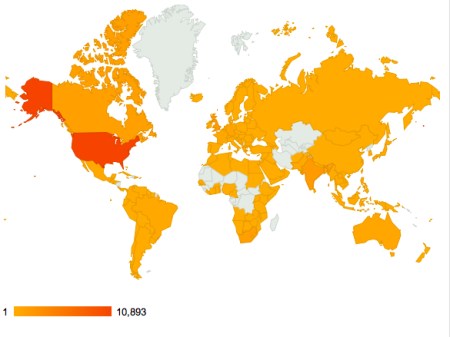
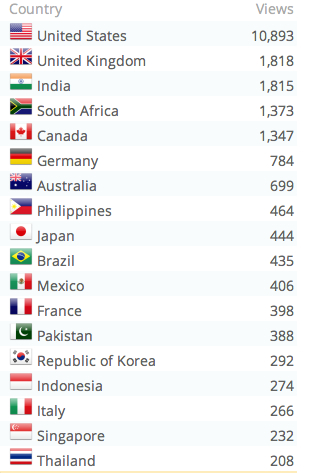
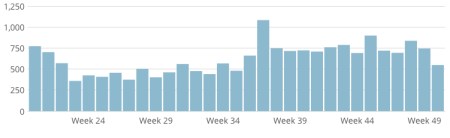
PS: some access stats for 2012 for you.  Looks like the only places that DON’T access ViroBlogy are parts of central and west Africa, central Asia and Greenland.

Screenshot 14:12:2012 12:11

Screenshot 14:12:2012 12:09


Screenshot 14:12:2012 12:20

A Brief History of Influenza

10 September, 2012

I am TRYING to write an eBook on influenza, which stubbornly refuses to be finished – as part of a sabbatical project, which finished in December 2010.  So, like my History of Virology, I am trialling the material on you, the Web community.  Enjoy / comment / be enlightened / whatever!

NEW NOTE: The ebook is finished, and is available here on the iBooks Store: please try it out (you can read it on any Mac / iPad / iPhone using the free iBooks app)

History of Influenza

A useful online history in pictorial form can be accessed here.

While they were not recognised as such at the time, major or pandemic outbreaks of influenza disease have occurred throughout recorded history.  Medical historians have used contemporary reports to identify probable influenza epidemics and pandemics from as early as 412 BCE – and the term “influenza” was first used in 1357 CE, describing the supposed “influence” of the stars on the disease.  The first convincing report of an epidemic of the disease was from 1694, and reports of epidemics and pandemics in the 18th century increased in quality and quantity.

The first pandemic that historians agree on was in 1580: this started in Asia, and spread to Africa, took in the whole of Europe in 6 months, and even got to the Americas.  Subsequent pandemics with significant death rates occurred in 1729 and 1781-2; there was a major pandemic in 1880-1883 that attacked up to 25% of affected populations, and another in 1898-1900 that was probably H2N2.  There is an excellent account here of the first “modern” pandemic, in 1890 – or at least, the first one to be followed essentially in real time via newspapers.
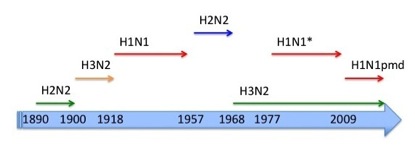
Influenza A pandemics in modern times. * = probably reintroduced from a laboratory from the H1N1 circulating from 1918 until 1957.

The “Spanish Flu” Pandemic 1918-1920

While the first reports of this pandemic were from Spain, this was largely because theirs was possibly the only uncensored press in Europe at the time because of the 1914-1918 War.  In fact, it seems generally accepted that the virus originated in the United States, possibly in a military camp, and was then taken via infected personnel travelling by troop transport, to France by April 1918.  The virus spread quickly across Europe, and via troop transports again to northern Russia, north Africa and India.  Further spread then occurred, to China, New Zealand and The Philippines, all by June 1918.
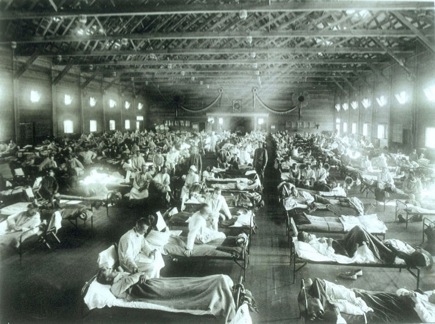
Historical photo of the 1918 Spanish influenza ward at Camp Funston, Kansas, showing the many patients ill with the flu

Initially, there was nothing unusual: infections spread quickly for a while and then declined, and death rates were not higher than in previous pandemics.  However, from August 1918 – marked by a ship-borne outbreak in Sierra Leone in west Africa – the virus seemed to have become markedly more virulent, and the death rate is supposed to have increased 10-fold.  The virus quickly spread through Europe, to the USA, to India by October 1918, and to Australia by January 1919, all the while spreading through and around Africa.

Some countries had second and even third waves of infection, in 1918-1919 and 1919-1920.  The pandemic was initially calculated as having killed some 20 million people: however, later estimates which took into account in particular the African, Indian and Chinese death tolls have increased the death toll to at least 50 million, and possibly up to 100 million.

The virus probably infected over one third of the humans alive at the time, with a case mortality rate of up to 5%.  Some regions, like Alaska and parts of Oceania, had death rates of up to 25% of the total population.  By contrast, the normal mortality rate for seasonal flu is 0.1 – 0.3% of those infected.

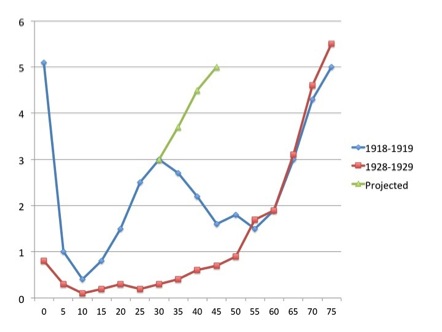
The pandemic was unusual in that it seemed to affect mainly young adults: The graph shows case mortality rates in percent for pneumonia and influenza combined for 1918-1919, and for seasonal influenza for 1928-1929, for different age groups.  The “W” shape for the 1918-1919 figures is most unusual; the later seasonal data show a far more usual “U” curve.  The green line shows what could have happened if – as is suspected – people over 30 had not had some immunity to the virus, due to prior exposure to the H1 and/or N1 – possibly during the 1880 or 1893 pandemics.
Although secondary bacterial infections of the lungs were common in fatal cases in 1918, and contributed significantly to mortality, there were also many cases of rapid death where bacterial infection could not be demonstrated – so these were due to a so-called “abacterial pneumonia”.  Incidentally, the archiving of pathology specimens from  especially military cases in the USA proved invaluable in “viral archeology” studies as late as 1997.

Discovery of Influenza Virus

As early as 1901, investigators had shown that the agent of fowl plague was a “filterable virus”: however, this was not linked to human disease, as it was only shown to be an influenza virus in 1955.

Charles Nicolle and Charles  Lebailly in France proposed in 1918 that the causative agent of the Spanish Flu was a virus, based on properties of infectious extracts from diseased patients.  Specifically, they found that the infectious agent was filterable, not present in the blood of an infected monkey, and caused disease in human volunteers.  However, many scientists still doubted that influenza was a viral disease.

A paper presented in 1918 to the Academie Francaise, describing the influenza agent as a filterable virus

In 1931, Robert Shope in the USA managed to recreate swine influenza by intranasal administration of filtered secretions from infected pigs.  Moreover, he showed that the classic severe disease required co-inoculation with a bacteriumHaemophilus influenza suis – originally thought to be the only agent.  He also pointed out the similarities between the swine disease and the Spanish Flu, where most patients died of secondary infections.

Pigs in the USA and elsewhere probably caught the H1N1 “Spanish Flu” from people – and it has circulated in them continuously until the present day

Patrick Laidlaw and others, working in the UK at the National Institute for Medical Research (NIMR), reported in 1933 that they had isolated a virus from humans infected with influenza from an epidemic then raging.  They had done this by infecting ferrets with filtered extracts from infected humans – after an observation that ferrets could catch canine distemper – and then found that ferrets could transmit influenza to investigators by sneezing on them!  The “ferret model” was very valuable, as strains and serotypes of influenza virus could be clinically distinguished from one another.  Their  serotype was named “influenza A”, and it was later typed as H1N1: this virus was a direct descendant of the Spanish flu virus, and had circulated in humans since 1918.  It was the same subtype, incidentally, as that isolated by Shope from pigs.

Frank Macfarlane Burnet from Australia in 1936 showed that it was possible to do “pock assays” for influenza virus on the chorioallantoic membranes of fertilised chicken eggs, and subsequently said that:

“It can probably be claimed that, excluding the bacteriophages, egg passage influenza virus can be titrated with greater accuracy than any other virus.”
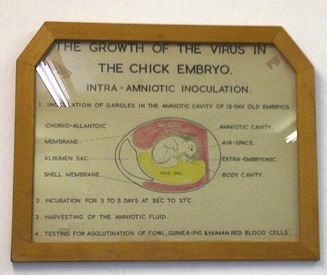
Historic picture on the wall in the routine influenza isolation laboratory at the National Institute of Communicable Diseases, Johannesburg.

This finding led directly to the development of the first influenza A vaccine – a killed virus preparation made in eggs – by Thomas Francis in the USAin late 1943.  He had earlier, in 1940, isolated the first influenza B, which was made into a vaccine by 1945.  It was then clear that seasonal influenza was caused by two viruses: the A H1N1 type, and influenza B.

The “Asian Flu” of 1957-1958

After the influenza pandemic of 1918-1920, influenza went back to its usual seasonal pattern – until the pandemic of 1957.  This started with the news that an epidemic in Hong Kong had involved 250 000 people in a short period.  This was a unique event in the history of influenza, as for the first time the rapid global spread of the virus could be studied by laboratory investigation.  The virus was quickly identified as an H2N2 subtype.

Except for people over 70, who had possibly been exposed to an influenza pandemic in 1898 – also probably a H2N2 pandemic – the human population was again confronted by a virus that was new to it – and again, the virus alone could cause lethal pneumonia.  However, better medical investigation showed that chronic heart or lung disease was found in most of these patients, and women in the third trimester of pregnancy were also vulnerable.

The 1957 pandemic was the first opportunity for medical people to observe the vaccination response in the many people who had not previously been exposed to the novel virus.  This was very different to  the 1918 virus that had been circulating ever since, meaning that most people had no immunity to it at all.  More vaccine was initially needed to give protective immunity than with the earlier type A vaccines. However, by 1960 as the virus recurred as a seasonal infection, immunity levels in the general population increased  and vaccine responses were better, due to “priming” of the response by natural infection or first immunisation.

The death toll for this pandemic was around two million people – even though a vaccine was available by late 1957.  Infections were most common among school children, young adults, and pregnant women in the early pandemic. Elderly people had the highest death rates, even though this was the only group that had any prior immunity, and there was a second wave in this group in 1958.

The new H2N2 virus completely replaced the previous H1N1 type, and became the new seasonal influenza type.

The “Hong Kong Flu” of 1968 – 1969

This pandemic started in mid-1968 in Hong Kong, and rapidly spread in a few months to India, the Philippines, Australia, Europe and the USA.  By 1969, it had reached Japan, Africa and South America.  Worldwide, the death toll peaked in December – January.  However,  although around one million people died, the death rate was lower than in 1957 – 1958 for a number of reasons, including the following:

The virus was similar in some respects to the Asian Flu variant –  it was an H3N2 isolate, similar to the pre-1918 seasonal type, sharing N2 – meaning people infected then had partial immunity

The better availability of antibiotics meant secondary bacterial infections were less of a problem.

A vaccine to the new virus became available a month after the epidemic peaked in the USA – following a trend which had started with the 1958 pandemic, of vaccines becoming available only after the peak of the pandemic had passed.

An interesting development soon after this was the finding that waterfowl are the natural hosts of all influenza A viruses – and that there was a greater diversity of viruses in birds than in humans.

The “Red Flu” of 1977

Between May and November of 1977, an epidemic of influenza spread out of north-eastern China and the former Soviet Union – hence the name “Red Flu”.  The disease was, however, limited to people under the age of 25 – and was generally mild.  It was soon found that virus responsible was effectively identical to the H1N1 that had circulated from 1918 through to 1958, and which had been replaced by the Asian flu, which was in turn supplanted by the Hong Kong flu.  This was a most unlikely scenario, given that it was already known that influenza A viruses mutated rapidly as they multiplied – and it had been twenty years since the Spanish or H1N1 flu had been seen in humans.  It also explained why infections were limited to young people: anyone who had caught the seasonal flu prior to 1958 was protected.

There has been speculation that the pandemic was due to an inadequately-inactivated or attenuated vaccine released in a trial; there has even been mention of escape from a freezer in a biological warfare lab.  There is no firm evidence for either possibility; however, the result is that the virus that had reappeared then co-circulated with the H3N2 as a seasonal virus, continuously until the next pandemic.  This was unusual, as a pandemic virus usually becomes the next seasonal strain.

The “Swine Flu” of 2009

The next major pandemic to follow on from the 1968 outbreak was again a type A H1N1 virus – which this time, originated in Mexico or the south-western USA, and probably came directly from intensively-farmed pigs.  This had been an unusually long interval between pandemics, and warnings of the coming plague had been issued regularly for years: however, it had been expected that the next pandemic would involve the highly pathogenic avian influenza virus H5N1, which had been popping up since 1997, and had been established as an endemic virus in farmed chickens since 2004.  This was therefore rather a surprise – but a reasonably welcome one, as the virus turned out to be relatively mild in its effects.

Intensive research on the origin of the virus threw up some very interesting results: it was effectively a direct descendant of the original Spanish flu H1N1 virus, but which had been circulating in pigs ever since 1918 – and had had contributions of genetic material from swine, humans and birds (see Chapter 3, here).

By June 2009 the World Health Organisation had raised the pandemic alert level to Phase 6 – the highest level, indicating that the virus had spread worldwide and that there were infected people in most countries.  The “swine flu” pandemic was not as serious as had been feared, however: symptoms of infection were similar to seasonal influenza, albeit with a greater incidence of diarrhoea and vomiting.  The virus was also found to preferentially bind to cells deeper in the lungs than seasonal viruses: this explained both why it was generally mild – it did not often get that far down – but also why it could be fatal, as it could cause severe and sudden pneumonia if it did penetrate deep enough, similar to the 1918 influenzaBinding to cells in the intestines also explained the unusual nausea and vomiting.  It was also found that there were distinct high-risk groups, including pregnant women and obese individuals.  In these respects it was similar to the 1918 flu, as this also predominantly affected young people, and pregnant mothers.

Vaccine manufacture was initiated in June 2009 by the WHO and manufacturers: while there was some concern over the slower-than-normal growth rate of the vaccine strains of the virus, this was rectified in a few months.  However, as also happened with the other pandemics, there was not enough vaccine made soon enough to deal effectively with the pandemic – even though similarities between the pandemic virus and the 1977 outbreak virus meant that most middle-aged people had pre-existing immunity to it, which either prevented infection, or reduced the severity of infections.  This also meant a single dose was sufficient in adults, similar to the seasonal vaccine.

While the disease may have been mild in most cases, and initially the death toll was thought to be low, by 2012 it was calculated that 300 000 or more people probably died, mainly in Africa and Southeast Asia.  A sobering quote: “since the people who died were much younger than is normally the case from influenza, in terms of years of life lost the H1N1 pandemic was significantly more lethal than the raw numbers suggest”. The virus has now become a normal seasonal strain, replacing the previously-circulating H1N1, but interestingly, has not replaced the H3N2 that has circulated since 1968.

All material Copyright EP Rybicki, except for the Camp Funston image, which is in the public domain.
Scientists Find Compound That Helps HIV, Flu Vaccines – Health News – redOrbit

28 August, 2012

See on Scoop.itVirology News

“Oxford University scientists have discovered a compound that greatly boosts the effect of vaccines against viruses like flu, HIV and herpes in mice.”


Well, no, theyt haven’t: what they HAVE done is find that a very well known chemical has activity as an adjuvant – and very strong activity, it appears.


“The Oxford University team found that PEI, a standard polymer often used in genetic and cell biology, has strong adjuvant activity.
redOrbit (http://s.tt/1lPjE)”


It is also useful as a mucosal adjuvant, which is very useful for intranasal / oral vaccination strategies.

See on www.redorbit.com

Nonviral delivery of self-amplifying RNA vaccines – NOT!!

27 August, 2012

See on Scoop.itVirology and Bioinformatics from Virology.ca

“Despite more than two decades of research and development on nucleic acid vaccines, there is still no commercial product for human use. Taking advantage of the recent innovations in systemic delivery of short interfering RNA (siRNA) using lipid nanoparticles (LNPs), we developed a self-amplifying RNA vaccine. Here we show that nonviral delivery of a 9-kb self-amplifying RNA encapsulated within an LNP substantially increased immunogenicity compared with delivery of unformulated RNA. This unique vaccine technology was found to elicit broad, potent, and protective immune responses, that were comparable to a viral delivery technology, but without the inherent limitations of viral vectors. Given the many positive attributes of nucleic acid vaccines, our results suggest that a comprehensive evaluation of nonviral technologies to deliver self-amplifying RNA vaccines is warranted.”


I would re-ttitle this “Non-delivery of non-viral vectors…”.  Seriusly, folks, this is just the old Alphavax VEE vectors dressed up with with an in vitro synthesis step, and what amounts to a liposome delivery system.  Which means that it would be HIDEOUSLY expensive to produce, and is of no practical significance as a candidate vacine system whatsoever.


But I thank Alan Cann for pointing it out B-)

See on www.pnas.org

PLoS Pathogens: ADCC Develops Over Time during Persistent Infection with Live-Attenuated SIV and Is Associated with Complete Protection against SIVmac251 Challenge

24 August, 2012

See on Scoop.itVirology and Bioinformatics from Virology.ca

“Here we show that live-attenuated SIV induces progressive increases in ADCC over time, and that the development of these antibodies is dependent upon the persistent replication of the vaccine strain. In two different experiments, the animals immunized with live-attenuated SIV that remained uninfected after pathogenic SIV challenge had higher measures of ADCC than those that became infected. Our results suggest that antibodies contribute to protection by live-attenuated SIV, and that persistent stimulation of antibody responses may be essential for HIV-1 vaccines to induce high ADCC activity.”


Shit HOT results, in that they demonstrate that – as some have said repeated ly over years – that neutralising Ab are NOT necessarily the Holy Grail, and that ADCC and other mechanisms are also really important.  Good Stuff…B-)

See on www.plospathogens.org

Vaccination with Adenovirus Serotypes 35, 26, and 48 Elicits Higher Levels of Innate Cytokine Responses than Adenovirus Serotype 5 in Rhesus Monkeys

24 August, 2012

See on Scoop.itVirology and Bioinformatics from Virology.ca

“These data demonstrate that Ad35, Ad26, and Ad48, which utilize CD46 as their primary cellular receptor, induce significantly greater innate cytokine responses than Ad5, which uses the coxsackievirus and adenovirus receptor (CAR). These differences in innate triggering result in markedly different immunologic milieus for the subsequent generation of adaptive immune responses by these vaccine vectors.”


Important news for the vectored vaccine community in general, and for HIV vaccine in particular: Ad5 was the vehicle of choice; now it looks as though it shouldn’t be.


Adenovirus graphic courtesy of Russell Kightley Media

See on jvi.asm.org

Gag-Specific Cellular Immunity Determines In Vitro Viral Inhibition and In Vivo Virologic Control following Simian Immunodeficiency Virus Challenges of Vaccinated Rhesus Monkeys

24 August, 2012

See on Scoop.itVirology News

“We observed that CD8+ lymphocytes from 23 vaccinated rhesus monkeys inhibited replication of SIV in vitro. Moreover, the magnitude of inhibition prior to challenge was inversely correlated with set point SIV plasma viral loads after challenge. In addition, CD8 cell-mediated viral inhibition in vaccinated rhesus monkeys correlated significantly with Gag-specific, but not Pol- or Env-specific, CD4+ and CD8+ T lymphocyte responses. These findings demonstrate that in vitro viral inhibition following vaccination largely reflects Gag-specific cellular immune responses and correlates with in vivo virologic control following infection. These data suggest the importance of including Gag in an HIV-1 vaccine in which virologic control is desired.”


In other words: having Gag or a gag gene included in a vaccine against SIV given to monkeys was more important than having Pol or Env when it came to control of virus replication – although, as has been shown elsewhere, Env responses are important for protecting against acquisition.  This has important implications for human vaccines – although “monkeys aren’t men, and mice lie” – and in particular for the South African SAAVI vaccines, which elicit quite good Gag-specific cellular responses.


We wait in hope.  Graphic showing immune cells associated with HIV control courtesy of Russell Kightley Media.

See on jvi.asm.org