See on Scoop.it – Virology News

China DailyWhat’s Causing the Spike in HIV Infection in Old Chinese Men?
See on www.businessinsider.com
See on Scoop.it – Virology News
China DailyWhat’s Causing the Spike in HIV Infection in Old Chinese Men?
See on www.businessinsider.com
See on Scoop.it – Virology News
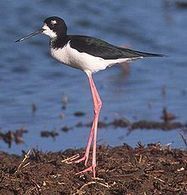
It’s a virus family!! Or – a bird?? How confusing. Someone needs to change their taxonomy. Thanks to Russell Kightley for the keen observation.
See on en.wikipedia.org
See on Scoop.it – Virology News
This is actually an article in The Economist from 2007 – forwarded to me by a Professor of Philosophy, as it happens, and which has mouldered on my desk lo, these past five years. Thanks David Benatar!
“Whiteflies are pests in every continent that they are found in—and they are found in every continent except Antarctica. They cause damage directly, by consuming plant juices, and indirectly, by spreading viral diseases. But Liu Shusheng, of Zhejiang University, in Hangzhou, and his colleagues have found a strain of the species that delivers a double whammy. Not only does it spread diseases, but it is also vastly more successful when it lives on plants infected with the diseases in question [tomato yellow leafcurl and tobacco curly shoot begomoviruses, both ssDNA geminiviruses] than when it subsists on healthy plants.”
This is a fascinating example of just why it is that certain vector-virus-host combinations can lead to success of the vector, and increased spread of the virus. Basically,
“…type B insects lived six times longer on infected plants than uninfected ones, and their population per infected plant might rise as high as 13 times that on an uninfected one”
This means that geminivirus infection of host plants actually gives a survival advantage to the insects which transmit them. Simple if unfortunate!!
See on www.economist.com
See on Scoop.it – Virology News
This is synchronicity, of a sort, seeing as I recently blogged on whole-virus electrophoresis done in our labs sometime in the late 1970s. This is a whole lot more complicated, as it happens, but still a useful tool. If you can get enough virus, that is!
See on www.starhi.com
I started working on human papillomaviruses (HPVs) some 22 years ago, back at the dawn of PCR: I helped my then-new major collaborator (and wife of 2 years), Anna-Lise Williamson, design some degenerate primers for amplifying as wide a range as possible of high-risk HPVs from cervical biopsy samples. These worked pretty well, and are still highly useful for the purpose, despite the many novel types found since then.
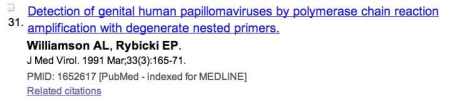
 We went on to do another two papers together on looking at variation and typing of HPVs via PCR and and sequencing, then took a deviation into making candidate vaccines for HPV and HIV. Anna-Lise carried on with surveilling for HPVs, however, and has ended up with a WHO Regional Laboratory for HPV work. She also started working on HPV infections in HIV-infected women: work on a study cohort showed that while HIV-free women usually had only 1 HPV type, the 109 HIV-infected often were infected with multiple HPV types. In association with Anna Salimo in my lab, we started a deep sequencing pilot study on the sample with the most HPVs. This turned this into a regional study, with help on assembling and interpreting sequence data from Prof Johan Burger’s lab at the University of Stellenbosch, and it was revelatory: while a commercial kit could detect 12 HPV types in one sample, next-gen sequencing found 16.
We went on to do PCR on all 109 samples in the cohort with specific primers for the types not found by the kit, and showed prevalences up to 15% in the HIV-infected group. This is an important result, because otherwise-innocuous HPV types that do not show up in normal women, may well be associated with disease in the HIV-infected – and will probably not be protected against by the current HPV vaccines.
We continue to do work on these samples, and it will be very interesting to see what the new methodologies show up. Especially as sequencing becomes cheaper, and we can do more samples…! Meantime, we have published the pilot study:
Human papillomavirus (HPV) is the aetiological agent for cervical cancer and genital warts. Concurrent HPV and HIV infection in the South African population is high. HIV positive (+) women are often infected with multiple, rare and undetermined HPV types. Data on HPV incidence and genotype distribution are based on commercial HPV detection kits, but these kits may not detect all HPV types in HIV + women. The objectives of this study were to (i) identify the HPV types not detected by commercial genotyping kits present in a cervical specimen from an HIV positive South African woman using next generation sequencing, and (ii) determine if these types were prevalent in a cohort of HIV-infected South African women.
Total DNA was isolated from 109 cervical specimens from South African HIV + women. A specimen within this cohort representing a complex multiple HPV infection, with 12 HPV genotypes detected by the Roche Linear Array HPV genotyping (LA) kit, was selected for next generation sequencing analysis. All HPV types present in this cervical specimen were identified by Illumina sequencing of the extracted DNA following rolling circle amplification. The prevalence of the HPV types identified by sequencing, but not included in the Roche LA, was then determined in the 109 HIV positive South African women by type-specific PCR.
Illumina sequencing identified a total of 16 HPV genotypes in the selected specimen, with four genotypes (HPV-30, 74, 86 and 90) not included in the commercial kit. The prevalence’s of HPV-30, 74, 86 and 90 in 109 HIV positive South African women were found to be 14.6 %, 12.8 %, 4.6 % and 8.3 % respectively.
Our results indicate that there are HPV types, with substantial prevalence, in HIV positive women not being detected in molecular epidemiology studies using commercial kits. The significance of these types in relation to cervical disease remains to be investigated.
I thank Russell Kightley Media for use of the HPV and cervical cancer graphic.
See on Scoop.it – Virology News
Medicago Announces 2012 Second Quarter Financial Results PR Newswire QUEBEC CITY, Aug. 14, 2012 QUEBEC CITY , Aug. 14, 2012 /PRNewswire/ – Medicago Inc.
“Subsequent to the second quarter:
Announced the successful completion of a key milestone under an agreement with the Defense Advanced Research Projects Agency (DARPA). The milestone was the production of at least 10 million doses of H1N1 VLP influenza vaccine candidate in one month (the “rapid fire test”). The rapid fire test was conducted at Medicago’s facility in Durham, North Carolina. As part of the rapid fire test, production of the H1N1 VLP influenza vaccine candidate began on March 25th, 2012, and was completed in 30 days on April 24th, 2012. The production lots were then tested by a third party laboratory to confirm both the immunogenicity of the vaccine candidate and the number of doses produced. Testing confirmed that a single dose of the H1N1 VLP influenza vaccine candidate induced protective levels of neutralizing antibodies in an animal model. The production of significantly more than 10 million doses, as defined by the testing conditions, were confirmed.”
This is a big, big deal – because they did this via transient epxression in plants, thus proving pretty much beyond doubt that this is now a serious vaccine manufacturing technology.
See on money.msn.com
See on Scoop.it – Virology News
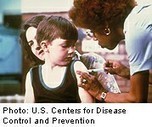
“Children younger than 2 who are given the hepatitis A vaccine are protected from the virus for 10 years, a new study shows.
Hepatitis A is a virus that causes inflammation of the liver, and typically is found in areas with poor sanitation where it is transmitted through contaminated food and water.
Researchers from the U.S. Centers for Disease Control and Prevention found that the transfer of a mother’s hepatitis A antibodies — which help defend against the virus — to her child does not reduce the effectiveness of the vaccine, which is routinely given to children between 12 months and 18 months old.”
Good news indeed – because the vaccine hasn’t been around that long, and it’s always useful to know just when you might need re-jabbing. A seriously good idea for people travelling in Africa, Asia, South America….
See on www.drugs.com
See on Scoop.it – Virology and Bioinformatics from Virology.ca
The Nucleo-Cytoplasmic Large DNA Viruses (NCLDV) constitute an apparently monophyletic group that consists of at least 6 families of viruses infecting a broad variety of eukaryotic hosts. A comprehensive genome comparison and maximum-likelihood reconstruction of the NCLDV evolution revealed a set of approximately 50 conserved, core genes that could be mapped to the genome of the common ancestor of this class of eukaryotic viruses.
Results
We performed a detailed phylogenetic analysis of these core NCLDV genes and applied the constrained tree approach to show that the majority of the core genes are unlikely to be monophyletic. Several of the core genes have been independently acquired from different sources by different NCLDV lineages whereas for the majority of these genes displacement by homologs from cellular organisms in one or more groups of the NCLDV was demonstrated.
Conclusions
A detailed study of the evolution of the genomic core of the NCLDV reveals substantial complexity and diversity of evolutionary scenarios that was largely unsuspected previously. The phylogenetic coherence between the core genes is sufficient to validate the hypothesis on the evolution of all NCLDV from a common ancestral virus although the set of ancestral genes might be smaller than previously inferred from patterns of gene presence-absence.
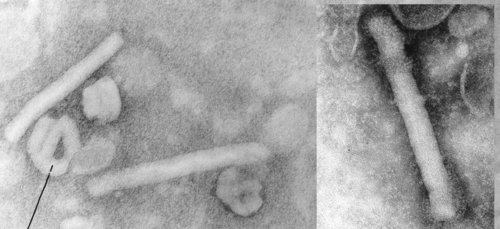
Interesting stuff! Strengthens my contention that “…a virus is an infectious acellular entity composed of compatible genomic components derived from a pool of genetic elements” – https://rybicki.wordpress.com/2012/07/10/a-feeling-for-the-molechism-revisited/
Baculovirus image from my collection
See on www.virologyj.com
See on Scoop.it – Virology and Bioinformatics from Virology.ca
“Genetic, phylogenetic, and biochemical data presented here support an evolutionary scenario for the natural history of alphaviruses, in which the acquisition of DLP structure in their mRNAs probably allowed the colonization of vertebrate host and the consequent geographic expansion of some of these viruses worldwide.”
I have taught for some time now that the evolution of many mammalian viruses must have involved adaptation of originally (and sometimes still) insect-infecting agents – given that insects crawled out onto dry land quite a long time before vertebrates did. This is a nice illustration of that. Pity I don’t teach anymore B-(
See on jvi.asm.org
See on Scoop.it – Virology News
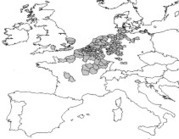
“In the summer-fall of 2011, a nonspecific febrile syndrome characterized by hyperthermia, drop in milk production and watery diarrhea was reported in adult dairy cows from a series of farms located in North-West Europe. Further, in November 2011, an enzootic outbreak of abortion, stillbirth and birth at term of lambs, kids and calves with neurologic signs and/or head, spine or limb malformations emerged throughout several European countries. Both syndromes were associated with the presence in the blood (adults) or in the central nervous system (newborns) of the genome of a new Shamonda-Sathuperi reassortant orthobunyavirus provisionally named Schmallenberg virus after the place where the first positive samples were collected. The clinical, pathological, virological and epidemiological facts that were made publicly available during the first 6 months after the emergence are presented here. Current knowledge of the epidemiology of the phylogenetically closest relatives of the newcomer (Shamonda, Sathuperi, Aino and Akabane viruses) is not exhaustive enough to predict whether the current outbreak of Schmallenberg virus is the prelude to endemicity or to a 2 years long outbreak before the infection burns out when serologically naïve animals are no longer available. In the future, cyclic epizootic reemergences are a possibility too, either synchronized with a global decrease of herd immunity or due to antigenic variants escaping the immunity acquired against their predecessors. The latter hypothesis seems unlikely because of the wide array of biologic constraints acting on the genome of viruses whose life cycle requires transmission by a vector, which represses genetic drift. The remarkable stability of the Shamonda virus genome over the last forty years is reassuring in this regard.”
See on www.sciencedirect.com




 ViroBlogy