See on Scoop.it – Virology News

Circulating RNAs carry messages between the cells of plants and invertebrates. Do they do the same for us?
See on www.wired.com
See on Scoop.it – Virology News
Circulating RNAs carry messages between the cells of plants and invertebrates. Do they do the same for us?
See on www.wired.com
See on Scoop.it – Virology News
The Scientist, in collaboration with Biosearch Technologies, invited Kary Mullis to reflect back on these 30 years in terms of his initial discovery, how things stand today, and where he thinks PCR is headed in the future.
I got into PCR sometime in around 1988 – and have since developed amplifications for multicopy genes, virus genes, whole virus genomes, and taught students to do the same. I have worked with papillomaviruses, HIV, geminiviruses, chicken infectious anaemia virus and potyviruses; my students do PCR for gene assembly and verification of cloned inserts, and do quantitative PCR and cDNA PCR for quantitation of gene expression and assay of virus replication in the presence of inhibitory constructs.
It revolutionised our work more than 30 years ago, and continues to be a fundamental workhorse technique in our labs today.
Viva, PCR, viva!
Kary Mullis – not so much. The man’s a HIV denialist, or has been, and I have no time for them.
See on Scoop.it – Virology News
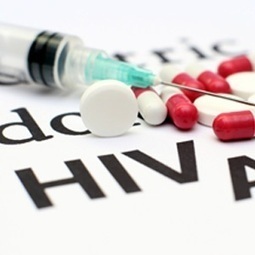
New data show that new HIV infections have been reduced by about a third from 2004 and 2012. The South Africa 2012 HIV Estimates and Projections at-a-glance report was launched in Durban, South Africa on 10 January by the Deputy President of South Africa, Kgalema Motlanthe and UNAIDS Executive Director, Michel Sidibé. Additionally, the Premier of KwaZulu-Natal, Senzo Mchunu launched the Operation Sukuma Sakhe Best Practices Publication at the same event.
There are 6.1 million people living with HIV in South Africa. Since 2009, the government has massively scaled up HIV prevention and treatment programmes. According to the National Department of Health, in 2012, some 2.2 million people were accessing HIV treatment, making it the largest HIV treatment programme in the world. The data show that the number of new HIV infections has dropped from 540 000 new infections in 2004 to 370 000 in 2012.
At last! We may have passed the peak of the HIV pandemic – at least in SA – at last!!
It’s been a hard road: denialism, activism, the biggest roll-out of ARVs in the world, socially engineering a whole population to change their behaviour – and maybe it’s finally working!
South Africa needs a "viva!"!!
But we’ve still got 6 million-odd people infected with HIV – and they will be around for a while. Time for therapeutic vaccines!!
See on www.unaids.org
See on Scoop.it – Virology News
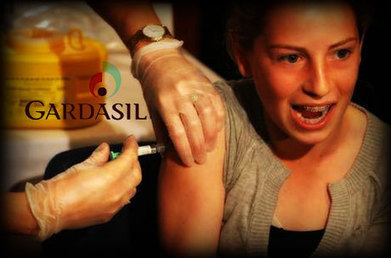
PRETORIA, Jan 19 (NNN-SANEWS) — Primary school girls in South Africa will from this year be immunised against the Human Papilloma Virus (HPV), which causes cervical cancer.
Announcing its launch at Ngidini Primary School in Libode in the Eastern Cape, President Jacob Zuma said government will target girls aged between nine and 12 years of age, through the Integrated School Health Programme.
“The Departments of Basic Education and Health will work closely together in this national programme to protect our girls from this disease.
“Vaccination teams from the Department of Health will visit schools twice a year to ensure that each girl-child receives two doses of the HPV vaccine. We urge parents to cooperate with us and help us succeed in fighting cervical cancer,” said President Zuma.
Cervical cancer graphic by Russell Kightley Media
At last! South Africa will finally make HPV vaccines available for free to schoolgirls between 9-12 – in preparation for their eventual exposure, via sex, to the viruses that cause cervical cancer.
HPV vaccines are blockbusters for a reason: they are one of only two viral vaccines that will almost certainly prevent cancer developing in a proportion of those who get infected with the viruses in question – which are, of course, HPV and hepatitis B.
And given that most humans have sex, a pretty high percentage of sexually active humans will be exposed to HPV and – to a lesser extent – HBV.
Sex is a normal activity. Vaccinating against sexually transmitted diseases is therefore a sensible thing to do. Vaccinating against HPV in a country where over 12% of the population have HIV, is even more sensible – because HIV worsens the effects of HPV.
Vaccination: the sensible thing to do.
See on www.namnewsnetwork.org
See on Scoop.it – Virology News
Health minister Aaron Motsoaledi is livid about a pharmaceutical company campaign he says will restrict access to crucial drugs.
Interesting…as an inventor named on a bunch of patents, I should be concerned – but I’m not, because I also believe that people shouldn’t die for want of affordable drugs.
I really, really do.
We have negotiated terms on every licencing deal we have been involved in, that would allow us exclusivity in the African and sometimes other developing world markets – with the intention of ensuring that prices of our product(s) (if any EVER get to market) remain affordable in these regions.
As it is, what the legislation intends to do is to make it more difficult for Big Pharma to extend their patent protection on drugs by simply making changes to formulations, which is a common practice. I note India is doing the same, and for the same reasons.
Seriously: while companies should receive financial reward for developing drugs, this should not be allowed to continue in perpetuity.
I also don’t think they should be allowed to gouge the market, but that’s another argument.
See on mg.co.za
See on Scoop.it – Virology News
South Africa’s HIV/Aids treatment programme is in a state of disarray, and could result in the deaths of thousands of people dependent on it for life-prolonging drugs.
This is actually unconscionable: given that SA was doing so well, with the largest number of people in any country on ARVs, to fail them now is to completely discredit our health system – and our government.
Seriously: why do we have a problem? First, failures in local and national government; second, indefensible behaviour by local government and others in intimidating whistle-blowers, rather than dealing with the problem at hand.
See on www.health24.com
See on Scoop.it – Virology News
News that most of the 10 people in Alberta who’ve died from the flu were young, healthy adults has many concerned about who is at risk.
Isn’t that exactly what happened in the pandemic in 2009 – and in 1918? A disproportionate number of young healthy adults dying, compared to babies and old folk?
I blogged about this during the pandemic (https://rybicki.wordpress.com/2009/09/14/ah1n1-2009-gets-to-parts-the-other-flu-doesnt-reach/) and noted somewhere (that I can’t find) that the death toll was about as high as normal seasonal flu – but WITHOUT people over 50, who seemed to be protected by prior exposure.
This is a nasty virus: if I weren’t protected by prior exposure – being over 50, I would be worried enough to be vaccinated against it specifically. So should you be!
See on globalnews.ca
See on Scoop.it – Virology News
HPV Vaccine: The Earlier, the Better. HPV Vaccine: The Earlier, the Better
Women who were 18 and up or had abnormal cervical cytology when vaccinated against human papillomavirus (HPV) subsequently had rates ofCervical dysplasiasimilar to those of unvaccinated women, Canadian investigators reported.
Women ≥18 without cervical abnormalities at vaccination had a 23% reduction in the risk of high-grade squamous intraepithelial lesions (HSIL) as compared with unvaccinated women. The quadrivalent vaccine did not appear to protect against HSIL among women who had abnormal cytology at the time they were vaccinated, they reported online in the Journal of Clinical Oncology.
Read more:HPV Vaccine: The Earlier, the Better -Gynecology news –http://www.health.am/gyneco/more/hpv-vaccine-the-earlier-the-better/#ixzz2pnmaeo3A
Yup! The wait-and-see brigade who say there’s no evidence the vaccine(s) prevent cancer should really shut up: successfully preventing the precursor stages of cervical disease that have been shown to lead to cancer MUST be evidence enough – surely?
See on www.health.am
See on Scoop.it – Virology News
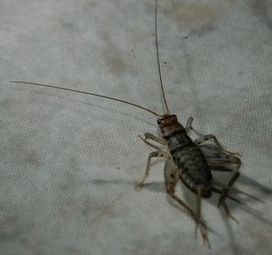
Love may be a battlefield, but most wouldn’t expect the fighters to be a parasitic virus and its cricket host.
Just like a common cold changes our behavior, sick crickets typically lose interest in everyday activities. But when Shelley Adamo of Dalhousie Univ. found her cricket colony decimated by a pathogen, she was shocked that the dying insects didn’t act sick. Not only had the infected crickets lost their usual starvation response, but they also continued to mate. A lot. How were the pathogen and the exuberant amorous behavior in the sick crickets connected?
Sex zombie crickets…the mind boggles!
But it’s becoming increasingly obvious that, in insects at least, viruses can cause very significant behavioural alterations. There are also tantalising hints that they MAY do the same in humans.
I see a burgeoning field of endeavour in our future.
See on www.laboratoryequipment.com
See on Scoop.it – Virology News
For a human, developing a cold sore is a minor, if irritating, inconvenience. But if a horse contracts that same virus, it can mean a death sentence.
Researchers are hopeful that a chemical compound, derived from a micro-algae known as dinoflagellate, will successfully fight the virus in horses. The algae, isolated from sediments off the coast of Bermuda, are grown on-site at the MARBIONC culture facility, populating over time in large glass containers of liquid. They’re microscopic, visible to the naked eye only when populations are dense enough to change the color of the liquid. Once the algae are mature, researchers harvest the organisms and extract chemical compounds from individual samples, then isolate the compound containing the anti-viral activity.
Herpesvirus graphic from Russell Kightley Media
I like that: using easily-cultured microalgae to make an antiviral compound.
Of course, they could go one step further: use said microalgae to make one of the viral antigens – like gD – to act as a vaccine.
Going green: the sensible thing to do.
See on www.jdnews.com







 ViroBlogy